

What do you think?
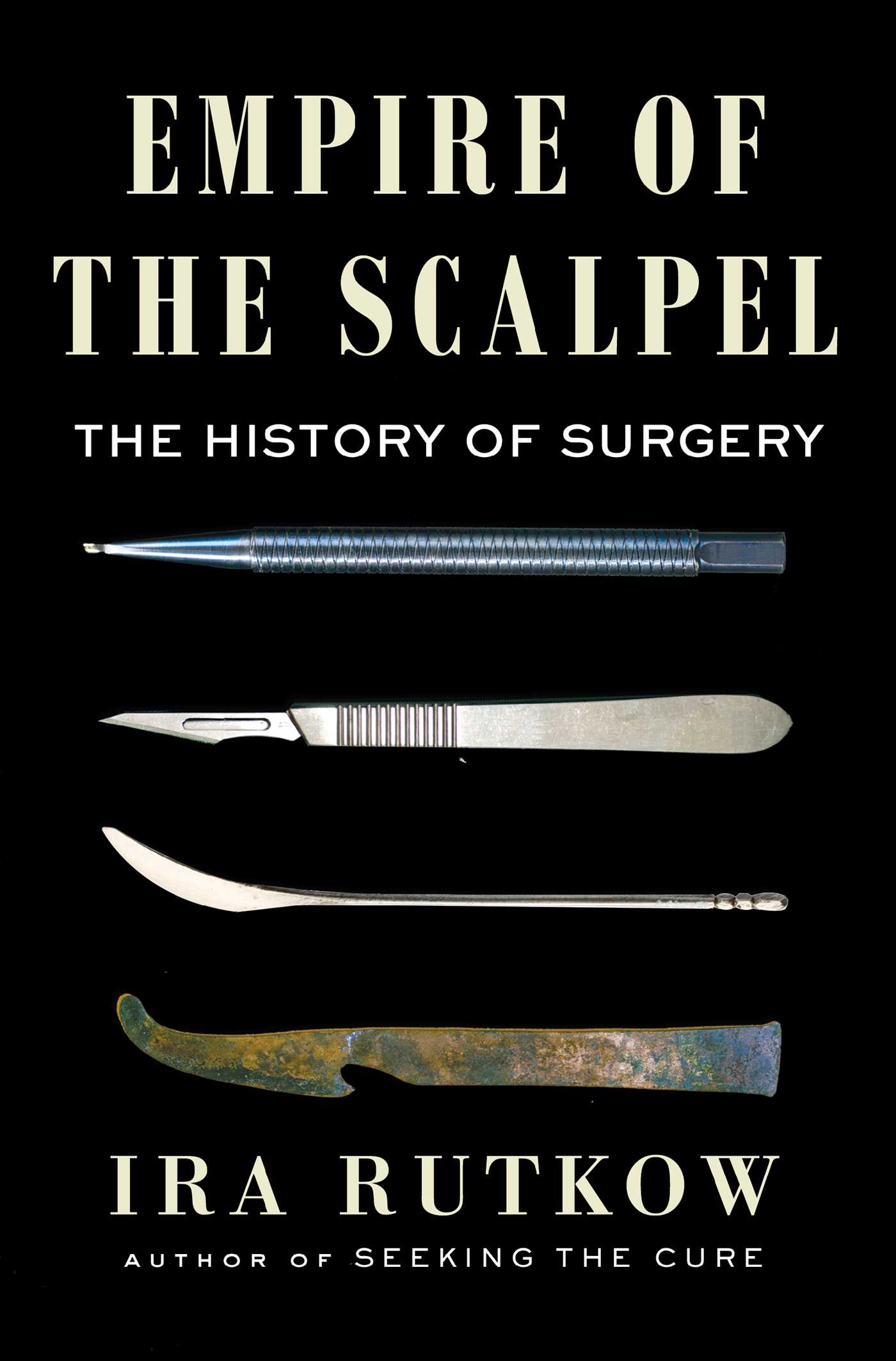
Empire of the Scalpel: The History of Surgery
From an eminent surgeon and historian comes the “by turns fascinating and ghastly” (The New York Times Book Review , Editors’ Choice) story of surgery’s development—from the Stone Age to the present day—blending meticulous medical research with vivid storytelling.
There are not many life events that can be as simultaneously frightening and hopeful as a surgical operation. In America, tens-of-millions of major surgical procedures are performed annually, yet few of us consider the magnitude of these figures because we have such inherent confidence in surgeons. And, despite passionate debates about health care and the media’s endless fascination with surgery, most of us have no idea how the first surgeons came to be because the story of surgery has never been fully told. Now, Empire of the Scalpel elegantly reveals surgery’s fascinating evolution from its early roots in ancient Egypt to its refinement in Europe and rise to scientific dominance in the United States.
From the 16th-century saga of Andreas Vesalius and his crusade to accurately describe human anatomy while appeasing the conservative clergy who clamored for his burning at the stake, to the hard-to-believe story of late-19th century surgeons’ apathy to Joseph Lister’s innovation of antisepsis and how this indifference led to thousands of unnecessary surgical deaths, Empire of the Scalpel is both a global history and a uniquely American tale. You’ll discover how in the 20th century the US achieved surgical leadership, heralded by Harvard’s Joseph Murray and his Nobel Prize–winning, seemingly impossible feat of transplanting a kidney, which ushered in a new era of transplants that continues to make procedures once thought insurmountable into achievable successes.
Today, the list of possible operations is almost infinite—from knee and hip replacement to heart bypass and transplants to fat reduction and rhinoplasty—and “Rutkow has a raconteur’s touch” ( San Francisco Chronicle ) as he draws on his five-decade career to show us how we got here. Comprehensive, authoritative, and captivating, Empire of the Scalpel is “a fascinating, well-rendered story of how the once-impossible became a daily reality” ( Kirkus Reviews , starred review).
There are not many life events that can be as simultaneously frightening and hopeful as a surgical operation. In America, tens-of-millions of major surgical procedures are performed annually, yet few of us consider the magnitude of these figures because we have such inherent confidence in surgeons. And, despite passionate debates about health care and the media’s endless fascination with surgery, most of us have no idea how the first surgeons came to be because the story of surgery has never been fully told. Now, Empire of the Scalpel elegantly reveals surgery’s fascinating evolution from its early roots in ancient Egypt to its refinement in Europe and rise to scientific dominance in the United States.
From the 16th-century saga of Andreas Vesalius and his crusade to accurately describe human anatomy while appeasing the conservative clergy who clamored for his burning at the stake, to the hard-to-believe story of late-19th century surgeons’ apathy to Joseph Lister’s innovation of antisepsis and how this indifference led to thousands of unnecessary surgical deaths, Empire of the Scalpel is both a global history and a uniquely American tale. You’ll discover how in the 20th century the US achieved surgical leadership, heralded by Harvard’s Joseph Murray and his Nobel Prize–winning, seemingly impossible feat of transplanting a kidney, which ushered in a new era of transplants that continues to make procedures once thought insurmountable into achievable successes.
Today, the list of possible operations is almost infinite—from knee and hip replacement to heart bypass and transplants to fat reduction and rhinoplasty—and “Rutkow has a raconteur’s touch” ( San Francisco Chronicle ) as he draws on his five-decade career to show us how we got here. Comprehensive, authoritative, and captivating, Empire of the Scalpel is “a fascinating, well-rendered story of how the once-impossible became a daily reality” ( Kirkus Reviews , starred review).
416 pages, Hardcover
First published March 8, 2022
Ratings & Reviews
Friends & Following
Create a free account to discover what your friends think of this book!
Community Reviews
Displaying 1 - 30 of 135 reviews
June 10, 2022
Wow. I'm struggling with rating this book. I am both happy to be done with it and happy to have read it. As a surgeon (ob/gyn), I found the history and stories of surgical pioneers very interesting. Rutkow is clearly devoted to his subject, an excellent researcher, and an articulate writer. He excels in placing the reader in the context and viewpoint of the pioneers, and in the true stories of actual surgeries and surgeons' lives. He is passionate about his subject, clearly, but his writing is so dry in places as to diminish that passion. Surprisingly little of the book captures the feeling of actually being a surgeon, though the parts that do capture it are compelling. SO much about where each prominent surgeon trained, and at what age and how he (almost always he, understandably) was unique, first or best. I do appreciate that he has undertaken a daunting task in summarizing the history of surgery. Interestingly, there are several major developments/people involved in surgical history that I am aware of which are not detailed here; whether that is due to his focus on the institutions to which he is most tied (Johns Hopkins, Harvard) or something else isn't clear to me.
My issues with the book concern the narrative style, which is very repetitive. I also came to find his use of "knife bearers" and "scalpel wielders" for surgeons irritating. Once or twice would have been fine, but their repeated and alternating use drove me mad. The distinction between surgeons and barber-surgeons was historic and worth making, but the other terms ceased to resonate.
I think that the author's passion for and deep interest in his subject allowed him to over-explicate. How many times does the reader need to be told about the four main principles of modern surgery? Or that modern surgeons (really-more than any other specialty?) owe a significant debt to their forebears and should honor that? Seemingly every major development in surgical history was breathlessly recounted as the one which would revolutionize the field, expressed often in nearly identical language.
I think the book could be at least 30% shorter with no significant loss of impact, and that it could have benefited from significant editing.
Again, the author's lifelong passion for his subject, obvious devotion to it, and sheer effort in writing it make me want to like this book more.
My issues with the book concern the narrative style, which is very repetitive. I also came to find his use of "knife bearers" and "scalpel wielders" for surgeons irritating. Once or twice would have been fine, but their repeated and alternating use drove me mad. The distinction between surgeons and barber-surgeons was historic and worth making, but the other terms ceased to resonate.
I think that the author's passion for and deep interest in his subject allowed him to over-explicate. How many times does the reader need to be told about the four main principles of modern surgery? Or that modern surgeons (really-more than any other specialty?) owe a significant debt to their forebears and should honor that? Seemingly every major development in surgical history was breathlessly recounted as the one which would revolutionize the field, expressed often in nearly identical language.
I think the book could be at least 30% shorter with no significant loss of impact, and that it could have benefited from significant editing.
Again, the author's lifelong passion for his subject, obvious devotion to it, and sheer effort in writing it make me want to like this book more.

February 1, 2023
This is a book having its innards loaded with ghoulish content to trace the history of ancient to modern surgical practices. Dr. Ira M. Rutkow tells of the tens of millions major surgical procedures that are performed year after year on timid patients who leave their lives in the hands of a surgeon (at one time surgeons and barbers were at the same status on the pole).
"The bulging dura came into view. The chief resident took a scalpel and split its membranous fibers. Immediately a gelatinous maroon-colored blood clot oozed out of its confines...the small button of removed skull was not replaced."
---Ira M. Rutkow MD, PhD, MPH
Though Andreas Vesalius (16th century) makes an attempt to accurately describe human anatomy while appeasing clergy---who desired to have him burned at the stake. Many surgeons laughed at Joseph Lister’s innovation of antisepsis and this shun led to thousands of deaths (from infection). Within we learned of Harvard’s Joseph Murray and his Nobel Prize–winning, kidney transplant. Exceptional writing by Dr. Rutkow (five decades as a surgeon) who is a skilled anecdotalist. Read.
"The bulging dura came into view. The chief resident took a scalpel and split its membranous fibers. Immediately a gelatinous maroon-colored blood clot oozed out of its confines...the small button of removed skull was not replaced."
---Ira M. Rutkow MD, PhD, MPH
Though Andreas Vesalius (16th century) makes an attempt to accurately describe human anatomy while appeasing clergy---who desired to have him burned at the stake. Many surgeons laughed at Joseph Lister’s innovation of antisepsis and this shun led to thousands of deaths (from infection). Within we learned of Harvard’s Joseph Murray and his Nobel Prize–winning, kidney transplant. Exceptional writing by Dr. Rutkow (five decades as a surgeon) who is a skilled anecdotalist. Read.
This entire review has been hidden because of spoilers.

December 6, 2021
Surgery is scary. Just the idea of being under general anesthesia and getting cut open...shudder!
I don’t scare easy but that scares me. And bugs.
Nothing is scarier than real life.
But, surgery was horrifying 100 years ago. Life was fragile when a toothache could kill you.
Now, in the USA, hundreds of millions of life-saving operations, including procedures never dreamed of before like face transplants, occur.
Yet, the evolution of surgery was long and arduous, spearheaded by revolutionary visionaries, brilliant minds and people who defied conventional thinking and thought outside the box.
Empire of the Scalpel is the history of surgery; the scalpel bearers, once thought of as mere laborers, a job anyone can do, and looked down upon by the educated physicians from the ancient past and modern age.
The author does a fantastic job tracing the origins of surgery; how it began, who once wielded the scalpel, the impediments and obstacles that prevented surgery from becoming a safe procedure; sanitation and hygiene controls; the creation of anesthesia, controlling blood loss and surgical shock.
Empire of the Scalpel is about the world and about America; how surgery evolved from medieval and ancient times, from Europe's rise to surgical prominence and eventually to America's reign of surgical innovations, transforming the scope of surgery forever.
Dr. Rutkow's writing style is easy to read, comfortable and fluid; his research is copious and comprehensive.
I appreciate the part where he reflects that surgery is always evolving and that before surgery can take place, the surgeon must be empathetic and aware of his or her patient's well being, mental and emotional health before a procedure.
Today, modern surgery is an incredible achievement, inspiring and wondrous, after so many drawbacks and failures, but we must not forget who came before us, who paved the way for surgery to attain the respectability it holds now.
I don’t scare easy but that scares me. And bugs.
Nothing is scarier than real life.
But, surgery was horrifying 100 years ago. Life was fragile when a toothache could kill you.
Now, in the USA, hundreds of millions of life-saving operations, including procedures never dreamed of before like face transplants, occur.
Yet, the evolution of surgery was long and arduous, spearheaded by revolutionary visionaries, brilliant minds and people who defied conventional thinking and thought outside the box.
Empire of the Scalpel is the history of surgery; the scalpel bearers, once thought of as mere laborers, a job anyone can do, and looked down upon by the educated physicians from the ancient past and modern age.
The author does a fantastic job tracing the origins of surgery; how it began, who once wielded the scalpel, the impediments and obstacles that prevented surgery from becoming a safe procedure; sanitation and hygiene controls; the creation of anesthesia, controlling blood loss and surgical shock.
Empire of the Scalpel is about the world and about America; how surgery evolved from medieval and ancient times, from Europe's rise to surgical prominence and eventually to America's reign of surgical innovations, transforming the scope of surgery forever.
Dr. Rutkow's writing style is easy to read, comfortable and fluid; his research is copious and comprehensive.
I appreciate the part where he reflects that surgery is always evolving and that before surgery can take place, the surgeon must be empathetic and aware of his or her patient's well being, mental and emotional health before a procedure.
Today, modern surgery is an incredible achievement, inspiring and wondrous, after so many drawbacks and failures, but we must not forget who came before us, who paved the way for surgery to attain the respectability it holds now.

June 10, 2022
This is not a history of surgical operations, or even of techniques, although it traces and follows their evolution: it is, as the title states, a history of surgery, as art, craft, trade, and, ultimately, science. Potential readers expecting gory details or technicalities are likely to be disappointed and will do well to look elsewhere. Like any good history, this one focuses on individuals and their stories to bring life to what might otherwise be an overly dull backdrop.
All of the boldfaced names of Western surgical history are here: Celsus, Galen, Vesalius, Paré, through Hunter and Halsted, to Harken and Barnaard. Yes, this is a history of Western surgery (largely European before the turn of the 20th century, largely American thereafter), and so, of necessity, it is a history of white men. The author is clear on this from the outset, and his motives seemed to me well thought out and convincingly explained. He is clear-eyed about gender imbalances in medicine and inequality in healthcare, and forcefully (though belatedly) advocates for continued improvement on both fronts.
The writing is excellent throughout (although the constant references to “scalpel wielders” and “knife bearers” are grating). Pre-scientific surgery, particularly the centuries-long bureaucratic infighting between clinicians/physicians and (barber-)surgeons, gets a decidedly more in-depth treatment than later developments. Any popular-minded book on so ample and ancient a subject will be brief, and broad, and often shallow, of necessity; however, the later chapters focusing on post-1930s surgery—precisely the time he calls a watershed moment—felt far too hasty and underdeveloped.
Overall I wish this book had been longer, and not so superficial a treatment; a “Halstedian” procedure, slow, gentle, and meticulous, rather than an outpatient “lap chole”. Perhaps I will give Dr. Rutkow’s other works the old college try.
All of the boldfaced names of Western surgical history are here: Celsus, Galen, Vesalius, Paré, through Hunter and Halsted, to Harken and Barnaard. Yes, this is a history of Western surgery (largely European before the turn of the 20th century, largely American thereafter), and so, of necessity, it is a history of white men. The author is clear on this from the outset, and his motives seemed to me well thought out and convincingly explained. He is clear-eyed about gender imbalances in medicine and inequality in healthcare, and forcefully (though belatedly) advocates for continued improvement on both fronts.
The writing is excellent throughout (although the constant references to “scalpel wielders” and “knife bearers” are grating). Pre-scientific surgery, particularly the centuries-long bureaucratic infighting between clinicians/physicians and (barber-)surgeons, gets a decidedly more in-depth treatment than later developments. Any popular-minded book on so ample and ancient a subject will be brief, and broad, and often shallow, of necessity; however, the later chapters focusing on post-1930s surgery—precisely the time he calls a watershed moment—felt far too hasty and underdeveloped.
Overall I wish this book had been longer, and not so superficial a treatment; a “Halstedian” procedure, slow, gentle, and meticulous, rather than an outpatient “lap chole”. Perhaps I will give Dr. Rutkow’s other works the old college try.

June 5, 2022
Disappointing. Dr. Rutkow gives us a by the numbers history of surgery with an uncritical eye. The non-medical historical background he provides for context is mostly an outdated high school level view of what happened, at least for the ancient and medieval world, so it made me wonder whether some of his medical history might also be flawed and dumbed down to the point of inaccuracy. Most of the medical history is breathless praise for great men who led us in a seemingly unbroken chain of progress and triumph. He occassionaly mentions incorrect theories or unnecessary surgery or personal foibles of his great doctors, but all of that quickly gets buried in a flood of goggle eyed praise.
I would have liked to know more about false starts and dead ends. I would have liked to know more about surgical technique - details of how it is done and the difference between surgery done well and done poorly. It would have been possible to add that kind of information without making it too technical for a lay reader. I would have enjoyed learning more about institutional history, the growth of hospitals and government support and regulation; there was a bit of that, but there could have been more. More information about health outcomes, recovery and post operative quality of life would have been interesting. What about the give and take between surgical and non-surgical treatments for the same condition? What about malpratice and the impact on surgery of our flawed legal system? There are a hundred ways that this book could have been better. It was a missed opportunity.
I would have liked to know more about false starts and dead ends. I would have liked to know more about surgical technique - details of how it is done and the difference between surgery done well and done poorly. It would have been possible to add that kind of information without making it too technical for a lay reader. I would have enjoyed learning more about institutional history, the growth of hospitals and government support and regulation; there was a bit of that, but there could have been more. More information about health outcomes, recovery and post operative quality of life would have been interesting. What about the give and take between surgical and non-surgical treatments for the same condition? What about malpratice and the impact on surgery of our flawed legal system? There are a hundred ways that this book could have been better. It was a missed opportunity.

Did Not Finish
March 25, 2022Medical history is my jam, but it is really hard to ignore all the “surgeons are god's gift to the world” parts. Maybe the rest of the book is really good, but I just don't feel the motivation to push through, especially after that 'inspired' introduction about how the author's view is limited so don't expect him to try and offer perspectives besides his own very narrow one.

June 16, 2025
This was a look at a fascinating subject that unfortunately ended up being too dense and dry for me to appreciate and absorb in an audiobook format - I couldn’t listen while I worked because nothing would stick but focusing on it ended up feeling like having to sit through a lecture. I would love to give this another go in print format but this experience listening to it just didn’t work which is a real shame. 2.5 stars.

March 8, 2026
Interesting content, mediocre writing

March 9, 2022
This is a fascinating look at the history of surgery starting way back in the day with Neanderthals supposedly performing complex neurosurgery, or so far as we can tell. It details breakthroughs in surgical history, such as controlling bleeding, controlling pain (with anesthesia), controlling infection and understanding human anatomy.
I appreciated the breakdown of physicians versus barber surgeons, although I would not want someone with no formal surgical training treating my cataracts (yes they did that - how? Not explained... not sure I want to know either).
I am not sure of the audience for this book but since I geek out on all things medical, the weirder the better, I found this book interesting. However, the writing was dry at times and I was surprised there is no mention of miasma, which is what physicians thought caused illness for quite a time before Joseph Lister's breakthrough studies. It is alluded to but not described in detail, which was disappointing because it was the core of belief in medicine for such a long time.
However, the overall outline of the book is well thought out and well put together. Medical personnel and students of history will surely find the look into medicine's past intriguing and at times, a bit horrifying.
My thanks to Netgalley and the publisher for this ARC. My opinions in this review are my own.
I appreciated the breakdown of physicians versus barber surgeons, although I would not want someone with no formal surgical training treating my cataracts (yes they did that - how? Not explained... not sure I want to know either).
I am not sure of the audience for this book but since I geek out on all things medical, the weirder the better, I found this book interesting. However, the writing was dry at times and I was surprised there is no mention of miasma, which is what physicians thought caused illness for quite a time before Joseph Lister's breakthrough studies. It is alluded to but not described in detail, which was disappointing because it was the core of belief in medicine for such a long time.
However, the overall outline of the book is well thought out and well put together. Medical personnel and students of history will surely find the look into medicine's past intriguing and at times, a bit horrifying.
My thanks to Netgalley and the publisher for this ARC. My opinions in this review are my own.

April 12, 2022
Hmmm. Not what I was hoping for. Maybe this would be more interesting for a surgeon? I was hoping for lots of detailed clinical/physical information on the history of surgery, including details on primitive surgeries (all the fascinating stuff that non-surgeons wouldn’t know). Instead, this book contains lots of organizational/bureaucratic info on the history of surgery. It’s not nearly as comprehensive as I expected. Also, it’s entirely focused on Europe and the United States. And on men (until women get a few perfunctory pages at the end of the book.)
As a non-surgeon, I was hoping for a history of the mechanics of surgery…with a few exceptions, this is not that. Rather, this is a well-written, very general history of the environment in which (Western) surgery developed, including short bios of some of the (male) stars of medicine.
As a non-surgeon, I was hoping for a history of the mechanics of surgery…with a few exceptions, this is not that. Rather, this is a well-written, very general history of the environment in which (Western) surgery developed, including short bios of some of the (male) stars of medicine.

April 17, 2022
Much better at describing the foundations of surgery than later years (say, 1960+), and poor information on 21st century surgical developments. Therefore a lot of the ground covered was familiar. Still, Rutkow tells the story in his own way, and I certainly learned from it.
> The original [Hippocratic] Oath specifically forbade cutting: “I will not use the knife; not even on sufferers from stone, but will withdraw in favor of such men as are engaged in this work.” The proscription established an unmistakable division between Hippocratic-influenced physicians and the class of individuals who performed surgical operations. Like that of their Babylonian predecessors, who consigned surgery to a lesser standing within Medicine, the Greeks left the craft and its work of the hand to itinerant craftsmen and roustabouts
> As the first major medical author writing in Latin, Celsus translated hundreds of Greek medical terms into the language of ancient Rome. Many of these words remain in modern professional usage. I recall, fifty years ago as a freshman medical student, memorizing the four cardinal signs of inflammation enunciated by Celsus, ones that he urged every surgeon to be on the lookout for: “calor, dolor, rubor, tumor; calor, dolor, rubor, tumor.” This assonant phrase, with its English rendition—“heat, pain, redness, swelling”—is tattooed onto every surgeon’s psyche.
> In the sixteenth century, Vesalius and Paré created a revolution in anatomy and surgery: the former, by demonstrating that knowledge of human anatomy can only be gained through the hands-on dissection of cadavers; the latter, by showing how to control bleeding during an operative procedure.
> "All his profession would allow him to be an excellent anatomist, but I never heard of any that admired his therapeutique ways. I knew severall practisers in London that would not have given 3 ducats for one of his bills." Favoritism or not, Harvey’s middling work as a physician should not be conflated with his astounding accomplishments as a researcher. During Harvey’s early years of practice, no one knew that he was investigating the action of the heart and the movement of blood. … What Harvey could not explain was how the arteries and veins were connected to one another to complete the circular pathway. He was unable to visualize the capillaries, the arterial-venous go-betweens, because they were microscopic sized. Proof of their existence would wait several decades until the microscope was invented
> In early 1865, his approach changed when he read a newspaper account of how engineers at a nearby sewage plant used carbolic acid (aka phenol, a derivative of coal tar) to reduce the smell of cesspits. Lister deduced that the carbolic acid killed the microorganisms in the refuse … Joseph Lister joins the elite list because of his notable efforts to introduce systematic, scientifically based antisepsis in the treatment of wounds and the performance of surgical operations.
> In 1686, the surgical treatment of Louis XIV’s anal fistula required construction of a handmade, three-pronged, metal retractor that allowed his surgeon to adequately view the king’s anal canal. The success of the operation demonstrated the curative powers of a knife bearer’s scalpel and brought about a key shift in how the public viewed the craft of surgery.
> Railway accidents in the nineteenth century were so common and catastrophic they brought about the long forgotten specialty of railway surgery. It was America’s earliest large surgical specialty with its own journals, textbooks, and local, state, and national societies. However, railway surgery ultimately failed to gain recognition within mainstream Medicine and suffered a precipitous decline.
> Charles Drew was a celebrated African-American scientist and surgeon. His research in the area of blood banks and techniques for blood storage led to the large-scale use of blood transfusions during World War II.
> Surgeons could not repair major cardiac defects without a way to stop the heart from beating while ensuring that the patient’s blood was still oxygenated. John Gibbon, with the assistance of his wife, Mary, developed the heart-lung machine and their success meant that heart surgery, an elusive vision in 1950, became practical and routine by 1960.
> In 1954, the world’s first successful transplant of an organ, a kidney, changed surgery in profound ways. It broke a psychological, perhaps spiritual, barrier that viewed the human body as a sacrosanct object able to receive care but not designed to provide it. An individual’s body could now provide a cure, along with drugs, minerals, and plants.
> The original [Hippocratic] Oath specifically forbade cutting: “I will not use the knife; not even on sufferers from stone, but will withdraw in favor of such men as are engaged in this work.” The proscription established an unmistakable division between Hippocratic-influenced physicians and the class of individuals who performed surgical operations. Like that of their Babylonian predecessors, who consigned surgery to a lesser standing within Medicine, the Greeks left the craft and its work of the hand to itinerant craftsmen and roustabouts
> As the first major medical author writing in Latin, Celsus translated hundreds of Greek medical terms into the language of ancient Rome. Many of these words remain in modern professional usage. I recall, fifty years ago as a freshman medical student, memorizing the four cardinal signs of inflammation enunciated by Celsus, ones that he urged every surgeon to be on the lookout for: “calor, dolor, rubor, tumor; calor, dolor, rubor, tumor.” This assonant phrase, with its English rendition—“heat, pain, redness, swelling”—is tattooed onto every surgeon’s psyche.
> In the sixteenth century, Vesalius and Paré created a revolution in anatomy and surgery: the former, by demonstrating that knowledge of human anatomy can only be gained through the hands-on dissection of cadavers; the latter, by showing how to control bleeding during an operative procedure.
> "All his profession would allow him to be an excellent anatomist, but I never heard of any that admired his therapeutique ways. I knew severall practisers in London that would not have given 3 ducats for one of his bills." Favoritism or not, Harvey’s middling work as a physician should not be conflated with his astounding accomplishments as a researcher. During Harvey’s early years of practice, no one knew that he was investigating the action of the heart and the movement of blood. … What Harvey could not explain was how the arteries and veins were connected to one another to complete the circular pathway. He was unable to visualize the capillaries, the arterial-venous go-betweens, because they were microscopic sized. Proof of their existence would wait several decades until the microscope was invented
> In early 1865, his approach changed when he read a newspaper account of how engineers at a nearby sewage plant used carbolic acid (aka phenol, a derivative of coal tar) to reduce the smell of cesspits. Lister deduced that the carbolic acid killed the microorganisms in the refuse … Joseph Lister joins the elite list because of his notable efforts to introduce systematic, scientifically based antisepsis in the treatment of wounds and the performance of surgical operations.
> In 1686, the surgical treatment of Louis XIV’s anal fistula required construction of a handmade, three-pronged, metal retractor that allowed his surgeon to adequately view the king’s anal canal. The success of the operation demonstrated the curative powers of a knife bearer’s scalpel and brought about a key shift in how the public viewed the craft of surgery.
> Railway accidents in the nineteenth century were so common and catastrophic they brought about the long forgotten specialty of railway surgery. It was America’s earliest large surgical specialty with its own journals, textbooks, and local, state, and national societies. However, railway surgery ultimately failed to gain recognition within mainstream Medicine and suffered a precipitous decline.
> Charles Drew was a celebrated African-American scientist and surgeon. His research in the area of blood banks and techniques for blood storage led to the large-scale use of blood transfusions during World War II.
> Surgeons could not repair major cardiac defects without a way to stop the heart from beating while ensuring that the patient’s blood was still oxygenated. John Gibbon, with the assistance of his wife, Mary, developed the heart-lung machine and their success meant that heart surgery, an elusive vision in 1950, became practical and routine by 1960.
> In 1954, the world’s first successful transplant of an organ, a kidney, changed surgery in profound ways. It broke a psychological, perhaps spiritual, barrier that viewed the human body as a sacrosanct object able to receive care but not designed to provide it. An individual’s body could now provide a cure, along with drugs, minerals, and plants.

July 8, 2026
After recently experiencing my first surgery, this book just made me feel grateful I live in this time period and I didn’t have to go through surgery without pain control, sterilization, modern less invasive techniques, and germ theory.
This book dives into the history of surgery from ancient times to now. It covers all different kinds of surgical advances that changed the trajectory of surgery forever, like Joseph Lister’s germ theory and Joseph Murray’s transplanting of a kidney. While this does cover a wide swath of history, it never felt boring to me because Rutkow did a good job at presenting just the right amount of information about the person and technique. It felt like the timeline was constantly moving forward and it felt like we ended up in relatively modern times pretty quickly.
This wraps up with the current state of surgery and what the future might hold. I was very surprised by some of the predictions Rutkow had about possible futures for surgery, but after thinking about it I can see a future where remote surgery is possible. Overall, this was a very interesting book about the history of surgery and I felt like I learned a lot.
TW: graphic depictions of medical content, wounds, and surgery; death; animal
This book dives into the history of surgery from ancient times to now. It covers all different kinds of surgical advances that changed the trajectory of surgery forever, like Joseph Lister’s germ theory and Joseph Murray’s transplanting of a kidney. While this does cover a wide swath of history, it never felt boring to me because Rutkow did a good job at presenting just the right amount of information about the person and technique. It felt like the timeline was constantly moving forward and it felt like we ended up in relatively modern times pretty quickly.
This wraps up with the current state of surgery and what the future might hold. I was very surprised by some of the predictions Rutkow had about possible futures for surgery, but after thinking about it I can see a future where remote surgery is possible. Overall, this was a very interesting book about the history of surgery and I felt like I learned a lot.
TW: graphic depictions of medical content, wounds, and surgery; death; animal

August 6, 2023
A very comprehensive and detailed history of surgery and surgeons in the past thousands of years in the world. The author is a surgeon and a historian of his craft. He provided so much context and research. What I found interesting was back many centuries ago, surgeons were looked down on because they worked with their hands. It was seen as dirty and not sophisticated. They had what were known as “barber surgeons “. Literally, a hair barber would perform surgery! Honestly, some of the primitive surgeries were so barbaric, it’s amazing human race survived. And the concept of antiseptic technique and anesthesia didn’t come around till nineteenth century. Again, amazing humans have survived this long.

July 6, 2022
A very long book, by necessity, because it begins in the Stone Age and stones were used as scalpels to cut out the bad humors in fellow cavemen’s bodies. A few, very few, survived, usually with part of their skull removed!
Fortunately, surgery advanced over the centuries but there still were three major things missing: anesthesia, the ability to control bleeding, and the recognition and danger of post-op infection.Great book for aspiring surgeons to read or nurses who work on surgical cases. I know I’ll reread whole sections again inn the future.
Fortunately, surgery advanced over the centuries but there still were three major things missing: anesthesia, the ability to control bleeding, and the recognition and danger of post-op infection.Great book for aspiring surgeons to read or nurses who work on surgical cases. I know I’ll reread whole sections again inn the future.

July 11, 2022
Really interesting read. My only gripe is that I wanted more of the old history of surgery, and less about the last 200 years of western culture. Sure, that's where a lot of advancements have been made in terms of modern surgery, but I was really hoping for more ancient history. Still a super interesting book though.

September 19, 2023
2.5 stars :( was really excited for this one because I love learning more about the history of medicine, but it definitely reads like a history book. Had to trudge through it to finish and noticed myself skimming a lot to try to get through it faster.

September 7, 2026
made it 1/3-1/2 of the way through — like the premise but found the analysis and prose to be flat. more of a surgeon than a historian so insufficiently critical; predisposed to the whole “great man” theory of history

July 8, 2022
Listened on audio so there were some more technical parts where I lost interest. The examples given of surgery firsts were really interesting, the bios of important surgeons less so.

October 9, 2025
a little dry, however, incredibly interesting

May 27, 2026
3.5⭐️
June 14, 2026
Him calling surgeons “scalpel wielders” and “knife bearers” was kinda cringey, go into anesthesia instead.

August 7, 2026
3.5, Fascinating but very dry. One of the only books to ever make me squeamish!

September 14, 2026
Morbidly Curious Book Club September 2026

October 25, 2025
4.5/5
Super interesting even if it does take me way to long to read a non-fiction book. I like how to could really feel the authors interest in surgery and medical history through his writing.
Super interesting even if it does take me way to long to read a non-fiction book. I like how to could really feel the authors interest in surgery and medical history through his writing.

January 5, 2025
Fascinating trip through surgical history. Very good read. Four stars bc it leaves our major ob/gyn surgical advances and how surgery is practiced outside of well-resources areas.

July 1, 2023
Most of the time I rate a book and move on. Sometimes I need the catharsis of typing a review. This book requires the latter.
1. Pet phrases
By 95, "scalpel wielders" and "knife bearers" became ridiculous. If the attempt was to avoid overuse of the word "surgeons," the idea backfired by overusing the alternatives in places where "surgeons" would have been less distracting.
2. Comma splices
"The root of the problem that held back surgery, infection." There should be a colon between "surgery" and "infection," not a comma. If the author didn't constantly profess his love of writing, I might have been less picky. He commits the dreaded sin of comma splice in this manner throughout the book. Please do not quit your day job, sir.
The ONE TIME he does use a colon, he uses it in the one place he shouldn't have:
"This occurred primarily due to: an expanding number of board certified surgeons..."
When you launch directly into a list you don't use a colon. He should've said "This occurred primarily due to an expanding..." OR "This occurred primarily due to three reasons: an expanding..."
3. Weirdly religious
There are many religious words sprinkled throughout the book, but at no point does the author use them to make a point or otherwise suggest that they're there for a reason. These include chapters/parts titled "Genesis," "Exodus," "Baptisms," and use of the words "imprimatur," "novitiates," and "hagiography." Hagiography is a particularly weird choice that compares surgeons of the past to saints. That's either blasphemous (weird choice for a guy sprinkling biblical terminology throughout his book) and/or an inflated opinion of the importance of the seminal figures of his field.
4. Redundant
For example, in one paragraph the author writes: "Painless and infection-free surgery, coupled with a preoperative diagnosis established by X-rays and the presence of electric lights..." and on the same page states "Two scientific/technologic [not a word] innovations were largely responsible for these changes: the discovery of X-rays in 1895 and, by 1900, the widespread use of electric lighting." I wouldn't mind if this book weren't 400 pages long and riddled with examples of such redundancy.
5. Gets SO CLOSE to calling out modern medicine for being bogged down by capitalistic greed, but stops short. "The fear was that corporate capitalism would dominate American Medicine and strip doctors of their clinical and financial independence." COME ON, IRA, SAY IT'S HAPPENING NOW!
6. The book is full of choices that made me wonder if the editor was taking ether.
For example:
"Beth and I were the parents of a four-and-one-half-year-old daughter and a one-and-a-half-year-old son." First, we as the reader don't care about the half-years of your progeny. Four and one would've worked fine. Four years and eighteen months would've worked too. Secondly, the first is "one-half" and the second is "a-half." Those should be the same, and I feel that an editor should have caught that.
7. Double quotes
I hate when authors use a quote to open each chapter. I loathe when authors choose to use TWO quotes to open every chapter. Why use other people's words to open your own work? Why do it twice? This was the case in BOTH books I've read on the history of surgery recently. Why?
8. One excellent pun
"This first human-to-human heart transplant was welcomed by some heart surgeons as establishing a needed precedent. Others were not so sanguine." Sanguine meaning "optimistic or positive" but also "a blood-red color" when discussing heart transplants. That one was clever and I hope it was on purpose.
9. [Tr]ouble Negatives
Author can't seem to work out how double negatives function and managed to negate his own point twice:
"Few in the industrialized world escape having an illness that does not call for a surgeons know-how." He's trying to say that almost everyone encounters need for surgery in their life, but his double negative says not many people escape having an illness NOT requiring surgery. So not many people escape having a common cold? I don't think that was the point he was trying to make!
He does it again here: "The New England Journal of Medicine should remove any doubts that the previously impossible will not become possible." So the Journal currently doubts that the impossible will NOT become possible? I'm fairly certain Ira meant to say the Journal should remove doubt that the impossible WILL BECOME possible.
1. Pet phrases
By 95, "scalpel wielders" and "knife bearers" became ridiculous. If the attempt was to avoid overuse of the word "surgeons," the idea backfired by overusing the alternatives in places where "surgeons" would have been less distracting.
2. Comma splices
"The root of the problem that held back surgery, infection." There should be a colon between "surgery" and "infection," not a comma. If the author didn't constantly profess his love of writing, I might have been less picky. He commits the dreaded sin of comma splice in this manner throughout the book. Please do not quit your day job, sir.
The ONE TIME he does use a colon, he uses it in the one place he shouldn't have:
"This occurred primarily due to: an expanding number of board certified surgeons..."
When you launch directly into a list you don't use a colon. He should've said "This occurred primarily due to an expanding..." OR "This occurred primarily due to three reasons: an expanding..."
3. Weirdly religious
There are many religious words sprinkled throughout the book, but at no point does the author use them to make a point or otherwise suggest that they're there for a reason. These include chapters/parts titled "Genesis," "Exodus," "Baptisms," and use of the words "imprimatur," "novitiates," and "hagiography." Hagiography is a particularly weird choice that compares surgeons of the past to saints. That's either blasphemous (weird choice for a guy sprinkling biblical terminology throughout his book) and/or an inflated opinion of the importance of the seminal figures of his field.
4. Redundant
For example, in one paragraph the author writes: "Painless and infection-free surgery, coupled with a preoperative diagnosis established by X-rays and the presence of electric lights..." and on the same page states "Two scientific/technologic [not a word] innovations were largely responsible for these changes: the discovery of X-rays in 1895 and, by 1900, the widespread use of electric lighting." I wouldn't mind if this book weren't 400 pages long and riddled with examples of such redundancy.
5. Gets SO CLOSE to calling out modern medicine for being bogged down by capitalistic greed, but stops short. "The fear was that corporate capitalism would dominate American Medicine and strip doctors of their clinical and financial independence." COME ON, IRA, SAY IT'S HAPPENING NOW!
6. The book is full of choices that made me wonder if the editor was taking ether.
For example:
"Beth and I were the parents of a four-and-one-half-year-old daughter and a one-and-a-half-year-old son." First, we as the reader don't care about the half-years of your progeny. Four and one would've worked fine. Four years and eighteen months would've worked too. Secondly, the first is "one-half" and the second is "a-half." Those should be the same, and I feel that an editor should have caught that.
7. Double quotes
I hate when authors use a quote to open each chapter. I loathe when authors choose to use TWO quotes to open every chapter. Why use other people's words to open your own work? Why do it twice? This was the case in BOTH books I've read on the history of surgery recently. Why?
8. One excellent pun
"This first human-to-human heart transplant was welcomed by some heart surgeons as establishing a needed precedent. Others were not so sanguine." Sanguine meaning "optimistic or positive" but also "a blood-red color" when discussing heart transplants. That one was clever and I hope it was on purpose.
9. [Tr]ouble Negatives
Author can't seem to work out how double negatives function and managed to negate his own point twice:
"Few in the industrialized world escape having an illness that does not call for a surgeons know-how." He's trying to say that almost everyone encounters need for surgery in their life, but his double negative says not many people escape having an illness NOT requiring surgery. So not many people escape having a common cold? I don't think that was the point he was trying to make!
He does it again here: "The New England Journal of Medicine should remove any doubts that the previously impossible will not become possible." So the Journal currently doubts that the impossible will NOT become possible? I'm fairly certain Ira meant to say the Journal should remove doubt that the impossible WILL BECOME possible.

September 2, 2022
It was fun learning about the stories and origins of a lot of what is still done in clinical/surgical practice today, and about the characters that made it possible. All doctors —not just surgeons— can get a lot of value out of this history
January 23, 2022
My thanks to NetGalley and the publisher Scribner for an advanced copy of this book on medical history.
Trust in science and medicine seems to ebb and flow like a tide. One person swearing they will never take a vaccine because they don't know what's in it, will take pills hawked by media personalities on late night cable. A lot can be ascribed to a lack of literacy on medicine how it's developed, why its developed or even the history of medicine and surgery. That's why a writer like Doctor Ira Rutkow is so important, someone who can clearly describe the most basic and most advanced of medical technology clearly and passionately. Dr. Rutkow's book Empire of the Scalpel: The History of Surgery tells the history of the development of surgery and its techniques, on what has been learned, what can be done, and more importantly what can't be done.
The book traces the history of surgery, first with a real experience that effected Dr. Rutkow's professional life introducing him to the idea that a procedure he had just witnessed was done thousands of years ago, with success. From their we move to the fossil remains of a skull showing the effects of trepanning, where a hole is drilled, or scrapped into the skull to allow blood to be released, easing pressure in the brain. From there the book covers the ancient and medieval times, the influence religion had on surgery, how early surgeons were treated, and what had been known, forgotten and relearned again. Dr. Rutkow also goes into how American money, brains and technology changed and created so many new kinds of safer surgical techniques, and what the future might hold.
The book is very well researched and even better well written. Dr. Rutkow is very passionate about his writing and the field of medical history and it shows in his style. The writing never overwhelms or overawes the reader, everything from the easiest to the most complex is ably explained and interesting without being all technobabbly. Another aspect that comes clear in the writing is the human factor. Yes we have progressed so far and so fast, but it is still the relationship between doctor and patient that is so important to last in health and a successful procedure.
A interesting book not only for medical aficionados or professionals, but for readers who enjoy very good history books. As a reader I found myself lost in the story amazed by the knowledge that has been passed down, and how it was discovered.
Trust in science and medicine seems to ebb and flow like a tide. One person swearing they will never take a vaccine because they don't know what's in it, will take pills hawked by media personalities on late night cable. A lot can be ascribed to a lack of literacy on medicine how it's developed, why its developed or even the history of medicine and surgery. That's why a writer like Doctor Ira Rutkow is so important, someone who can clearly describe the most basic and most advanced of medical technology clearly and passionately. Dr. Rutkow's book Empire of the Scalpel: The History of Surgery tells the history of the development of surgery and its techniques, on what has been learned, what can be done, and more importantly what can't be done.
The book traces the history of surgery, first with a real experience that effected Dr. Rutkow's professional life introducing him to the idea that a procedure he had just witnessed was done thousands of years ago, with success. From their we move to the fossil remains of a skull showing the effects of trepanning, where a hole is drilled, or scrapped into the skull to allow blood to be released, easing pressure in the brain. From there the book covers the ancient and medieval times, the influence religion had on surgery, how early surgeons were treated, and what had been known, forgotten and relearned again. Dr. Rutkow also goes into how American money, brains and technology changed and created so many new kinds of safer surgical techniques, and what the future might hold.
The book is very well researched and even better well written. Dr. Rutkow is very passionate about his writing and the field of medical history and it shows in his style. The writing never overwhelms or overawes the reader, everything from the easiest to the most complex is ably explained and interesting without being all technobabbly. Another aspect that comes clear in the writing is the human factor. Yes we have progressed so far and so fast, but it is still the relationship between doctor and patient that is so important to last in health and a successful procedure.
A interesting book not only for medical aficionados or professionals, but for readers who enjoy very good history books. As a reader I found myself lost in the story amazed by the knowledge that has been passed down, and how it was discovered.

March 6, 2022
I received a free digital version of this book via NetGalley.
Empire of the Scalpel: The History of Surgery is Ira Rutkow's broad and loving exploration of the practice of surgery in European and American history. Rutkow is both a historian who has published other works of medical history, and a surgeon who spent much of his career repairing hernia's to allow time for other pursuits.
Claiming to span the history of surgery from the Stone Age to the present, Empire of the Scalpel is intended "to be a comprehensive and revelatory history, one that is educational and entertaining and showcases the development of the profession..." (Author's Note). I felt these goals were not all met equally. It is certainly comprehensive and educational, but I did not feel particularly entertained.
The beginning sections of this book offer fascinating summaries of the findings of medical archeologists working without the benefit of the written record. Rutkow delves into medical care in the Bible, before transitioning into brief biographies and accomplishments of notable medical practitioners that fill out the remainder of the book, excluding the final two chapters. In this last section Rutkow offers a summary of the current practice of surgery and the possibilities for the future further aided by technology.
Interspersed with all of the history is Rutkow's own personal experience in training and practicing as a surgeon. Offering the occasional first hand view of what has been shared.
While at times fascinating and illuminating, I found in general the book slow to get through. Some of this is no doubt due to me, and some of my prior readings in medical history. As this book is meant to be a summary history of surgery the bulk of the content is introduced, explained and then linked to other points, without much depth.
While rather dry, Rutkow makes a point to keep the language consistent with the medical field, not adjusting it to the lay reader. He also does take advantage of notes to expand upon a topic. For those interested in the history of medicine this might be a book of interest, and would certainly point a reader to topics for further exploration.
Empire of the Scalpel: The History of Surgery is Ira Rutkow's broad and loving exploration of the practice of surgery in European and American history. Rutkow is both a historian who has published other works of medical history, and a surgeon who spent much of his career repairing hernia's to allow time for other pursuits.
Claiming to span the history of surgery from the Stone Age to the present, Empire of the Scalpel is intended "to be a comprehensive and revelatory history, one that is educational and entertaining and showcases the development of the profession..." (Author's Note). I felt these goals were not all met equally. It is certainly comprehensive and educational, but I did not feel particularly entertained.
The beginning sections of this book offer fascinating summaries of the findings of medical archeologists working without the benefit of the written record. Rutkow delves into medical care in the Bible, before transitioning into brief biographies and accomplishments of notable medical practitioners that fill out the remainder of the book, excluding the final two chapters. In this last section Rutkow offers a summary of the current practice of surgery and the possibilities for the future further aided by technology.
Interspersed with all of the history is Rutkow's own personal experience in training and practicing as a surgeon. Offering the occasional first hand view of what has been shared.
While at times fascinating and illuminating, I found in general the book slow to get through. Some of this is no doubt due to me, and some of my prior readings in medical history. As this book is meant to be a summary history of surgery the bulk of the content is introduced, explained and then linked to other points, without much depth.
While rather dry, Rutkow makes a point to keep the language consistent with the medical field, not adjusting it to the lay reader. He also does take advantage of notes to expand upon a topic. For those interested in the history of medicine this might be a book of interest, and would certainly point a reader to topics for further exploration.

November 14, 2022
This was easily the worst book I read this year. I learned almost nothing about the history of surgery, but I did learn a lot about how this author is both bad at writing and blames being bad at doctoring on his preoccupation with writing (badly). If you encounter this book, its value lies almost entirely in the materials it was made from.
Displaying 1 - 30 of 135 reviews