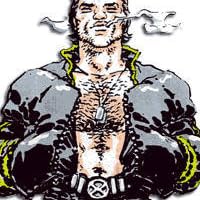
In a world where most of the earth has become a harsh desert, the Rainbow Council of the Peace Corps has a growing crisis on its hands. No. 5, one member of a team of superpowered global security guardians and a top marksman, has gone rogue. Now the other guardians have to hunt down No. 5 and his mysterious companion, Matryoshka. But why did No. 5 turn against the council, and what will it mean for the future of the world?
With disbandment imminent, Mike—No. 1, the leader of the Rainbow Brigade—goes renegade, and uses his awesome powers to take many members of the unit with him. Now holed up in his citadel while the Peace Corps lays siege, he awaits his fate at the hands of the only person who can kill him … or understand him—No. 5.
Although Taiyo Matsumoto desired a career as a professional soccerplayer at first, he eventually chose an artistic profession. He gained his first success through the Comic Open contest, held by the magazine Comic Morning, which allowed him to make his professional debut. He started out with 'Straight', a comic about basketball players. Sports remain his main influence in his next comic, 'Zéro', a story about a boxer.
In 1993 Matsumoto started the 'Tekkonkinkurito' trilogy in Big Spirits magazine, which was even adapted to a theatre play. He continued his comics exploits with several short stories for the Comic Aré magazine, which are collected in the book 'Nihon no Kyodai'. Again for Big Spirits, Taiyo Matsumoto started the series 'Ping Pong' in 1996. 'Number Five' followed in 2001, published by Shogakukan.
Although Taiyo Matsumoto's No. 5 started out as a fairly intriguing series, the last two volumes are rather insubstantial, even though Matsumoto's artwork is always glorious to behold.
The non-linear story of the superhuman Rainbow Brigade and their complicated efforts to save humanity held a lot of promise in the first two volumes, but ultimately Matsumoto doesn't take the story to any clear resolution, choosing instead to simply kill off his most symbolic character (the near-divine Mike Ford Davis, aka No. 1).
Matsumoto's work is always psychedelic and impressionistic, and in some of his series these traits serve him very well, as with Tekkonkinkreet and Cats of the Louvre. But in the case of No. 5, the payoff just isn't there, and the artist's ambition seems to have outpaced his narrative skills.
This entire review has been hidden because of spoilers.
An excellent series. Something I’ll be recommending for years to come. It was bizarre and beautiful and hit all the right beats for me. Open for interruption and get a story that held, well some sense. Read it.
Ok, here's the thing: I have a vague idea of what's going on here, but I wouldn't say I totally get it, and I'm cool with that. Sometimes it's nice to just go with the flow. This has such a trippy, weird vibe, it's easy to let it wash over you. There are lots of battles in this volume, someone important dies, we learn a bit about Matryoshka's past, Mike (No. 1) holes up in the citadel and dreams of a utopia, and waits for No. 5. And the end? It happens, that's all you need to know. I wish this had been made into an anime (though I doubt it will), I would've like to watch this play out onscreen. The art is very detailed, there's lots of sort-of dream sequences, some crazy action scenes, and a whole mess of "what the bleep" to mess with your head. This can be vague, but it's addictive, and I really enjoyed it.
The narrative pulled itself together for a rather muted ending.
As always the art is a triumph.
The political structure of this world seems to be the hardest part to pin down. There's some sort of global government but then they've let a mad scientist kind of run it with his genetically engineered super beings through a global "peace corps" but at the same time he's not really in control. There seems to be global peace possibly due to the peace corps but also that same peace corps seems to be the cause of all conflict, which is completely internal. Now the "peace corps" has been disbanded and it's not really clear what's left.
Most importantly it's not clear at all what Yuri's motives were.
I guess love.
As with this whole series I think it's best to experience it not so much as a story but as an experience.
This beautifully surreal post-apocalyptic fever dream of a tale comes to an end in a final showdown between the No 5 backed human army and the No 1’s peace keeping force of bioengineered lab creations. The whole series was a trip and the Moebius infused world it took place in was amazingly brought to life with one awe inpiring page after another. I still have a few things I struggled to wrap my head around, Viktor and Matryoshka were very important characters to the story, that much is obvious but I still can’t discern why 😅. Despite this I still view No 5 as a masterpiece and I look forward to read it again.
Reads like a dream that fades after waking. I picked the series up for the surreal art style and the story is just as strange. Post-post-apocalypse, science gone wrong, philosophical meandering, and action adventure all wrapped in a beautifully bizarre package. I feel like a second read would put the pieces in place but I might prefer to remember the experience of reading No.5 as vague and mysterious.
The sorta montagey energy of this, which is also in Tekkon Kinkreet is a lot more disorienting here at first -- the energy of it reminds me of the montage sequences in Mind Game - there is this embrace of like MULTIPLE characters - the simultaneity of events - something that like the manga medium as one that is not AS linear temporally works with welll - and add to that a lot of like psychic telepathy stuff and a lot of dream imagery and yeah it gets quite a lot to sorta visually process but there is definitely this sense of settling into the world
And yeah this is the kinda "scifi" / "fantasy" thing that's presented in a way that's more magical realism-y? It just kinda thrusts you into this world disorientingly and you do learn a lot more about the characters and their origins but like a lot of fundamental BIG things are left vague - like WHY no. 5 chose to run away with matryoshka in the first place - where you don't have a CLEAR answer but you do SORT OF get it - the like facade of utopia that the rainbrow brigade represents - felt like a parody of the UN and the Japanese SDF mixed with a bit of The Boys? And yeah One as this figure who wants to will that facade into utopian reality but No. 5 seeeems to not want that? Maybe HE'S sorta influenced a lot by Matroyshka - im rambling but ultimately you kinda get it but dont GET it in a clear way and I like that?
The Kuro/Shiro - black/white dynamic that tekkon kinkreet has is sorta played with a lot here as well - it isn't as binary and clear-cut here but there is this similar sense of binarisms - Matroyshka and One especially are like a Shiro/Kuro vibes but it's all more messy -- another similar thing is this larger more spiritual-y magic-y End of Eva-y plot like the Kuro/Shiro stuff in Tekkon (which ig is less EoE but still) - and at the same time like the Yakuza and the like foreign businessmen subplot you have the whole military industrial complex political stuff here which is COOL - And by the end stuff does feel incredibly dismal? Like okay we killed One because his utopia would kill everyone's egos - but at the same time - what is left is cyclical - the Military controls the narrative - and they are ONCE AGAIN trying to use technology and eugenics to transcend humanity bla bla -
And the final end with the children's voices and this haunting presence of One as Utopia is a lot less HOPE and a lot more... yeah there is a sort of IDEAL he stands for but BECAUSE it comes out of this fabricated marketing utopia space - it kinda blinds everything else and is apocalyptic - idk if i make sense - much like Tekkon the narrative is disorienting at first but then becomes a lot simpler but then there is this sense of vagueness thematically by the end that's kinda comfy but also spooky -
ALSOO ONE OF THE COOLEST LOOKING MANGA - sooo many cool visual styless - all the action is a lot less like cinematic and like not as readable as tatsuki fujimoto but it's consistently doing something visually interesting? And yeah all the montages - the inner voice chapter that felt like a virginia woolf thing in manga form - every time a chapter switches perspectives to a minor character is super fun - and yeah all the like EMOTIONAL EMPATHY CONNECTING MINDS DREAM BLA - soooo good hard to describe it verbally but anyway
This def like took a bit for me to get into but then I v much dug it even tho im still like UNCLEAR on it but that's a good thing imo
This entire review has been hidden because of spoilers.
Is it possible to wrap up a series this experimental in a satisfying way? Probably not, but I was still left a little underwhelmed by the conclusion to this bizarre saga. It's not so much that the threads aren't resolved, but that some of them don't really develop into anything brilliant. The imagery is as brilliant as ever, the moments where time seems to freeze are still executed so chillingly, but I guess I was hoping for something a little more in the conclusion.
I just realized that this is pretty much Matsumoto's Dune: desert planet, genetically manipulated messiah with a tragically precocious sister, the next stage of human evolution jumpstarted by war...It plays better than the Lynch adaptation but, much like after watching that film, when I finished this series I kind of just shrugged my shoulders and moved on to the next thing.
This whole series is like nothing I've read. a pop culture blasted manga fever dream. Moebius meets Otomo meets Tarantino meets Jodorowsky. Beautiful and confounding. Less one star for the plot being so obtuse, although that kinda seems like a feature?
This series has all of the elements that make Matsumoto's work stand out so distinctly; the breathtaking imagery, the exhilaratingly kinetic action sequences, the imaginative and distinct character designs. But it also falls trap to some of the elements of Matsumoto's writing that I think maybe work better in some of his more down to earth, slower paced slice of life work than in something leaning so hard into from-the-ground-up world building and fast paced plotting.
The same sparse yet poetic narration that makes his other works like Sunny or Ping Pong so emotionally affective, sometimes seems like a barrier into knowing what the actual fuck is happening in this book. The same vague or hidden character motivations of those previous works that felt like an invitation to peer closer into the damaged characters and uncover their dreams, again, sort of seemed to blur the lines of why the things that were happening in this book were happening, and why we should care. There was a point in book 3 where it felt like we might have a few more answers, but this last book seemed to confirm that it was definitely more about the (very strange) journey than having some sort of satisfying conclusion.
And you know what? That is totally fine. No, this isn't gonna land at the top of my recommended Matsumoto books (I am way too much of a narrative nerd to simply accept the vagueness and call it brilliant lol) but for what it was, the journey was totally worth it. A weird, psychedelic mess that sort of reminds me of one of the LSD trips of my early 20s that probably lasted way too long and got a bit too weird and confusing at times, but also offered scattered moments of clarity and beauty that made it all feel worth it. Would I read it again? Maybe not. But like the LSD, I'm always gonna remember it fondly for what it was, and a part of me will always wonder what it would be like to dip back in. Maybe one day.
I personally think this manga is great, but I'll also admit that there's plenty of room for improvement. There are certain problems that arise, I think, when a mangaka tries to tell a multifaceted story with a large cast of characters and a totally wacky universe, with Matsumoto drawing his text-sparse chapters at a pace of 28 pages per month. It takes real patience and foresight to be able to come up with something resembling a coherent whole when you can only slowly chip away at the story like that, and I think the exposition that a story like Number Five demands is what might have caused Matsumoto to struggle more than he did with, say, Hanaotoko or Ping Pong.
I think the main source of irritation I feel is the fact that there are too many characters that I don't really know anything about. Matsumoto's work isn't dialog-dense enough for such a big cast to be fleshed out within only a few volumes. The military commander Donovan, for instance, has a strong presence throughout the manga and is probably given just as much screentime as some of the major characters, but Matsumoto never really gets around to doing anything with him. The whole Number Seven and Dominick thing seems to similarly provide little payoff. It seems to me that the best way for Matsumoto to fix these half-baked characters is to draw a chapter from their perspective. This totally worked in Ping Pong, I think, in which a chapter from Dragon's perspective did wonders for that character. This re-edition of Ping Pong just so happens to include a bonus story about Number Five as a child on a mission together with Viktor and Nazarov, and it's pretty much exactly the sort of thing I'm looking for; it alone probably gives us more of a look into what kind of person Five is than all the other chapters combined. I could have gone for a few more of those.
It is worth mentioning again that I do still really like this manga, though.
One of the greatest comics I've ever read. Matsumoto's grasp of the comics form is total and utterly unique to him. Fish eye lenses, rendering styles that vary in level of detail, a shaky line that creates a feeling of unease and intimacy, and above all the panels of animals, nature, architecture, and people unconnected to the main plot that punctuate and fracture his narrative. His panel layouts are like nobody else's, a controlled chaos that feels spontaneous and intuitive.
As a story this left me near tears. The switch in focus from pragmatic Yuri/No. 5 to idealistic Mike/No. 1 about halfway through deepens what came before and carries the series toward inevitable, overwhelming tragedy. Lots of stories deal with the paradox of trying to create a better world through force but Matsumoto makes the theme feel new. Watching childlike, hopeful, almost Zen Mike succumb to the rage within him--rage at the idiot power systems and ceaseless hunger of man that have destroyed the Earth, as well as rage at the truth of what he is: a Frankenstein's Monster created in a lab whose very thought processes are not his own--is so heartbreaking because Matsumoto's deft command of character makes us feel the slow poisoning of his soul as if it were happening to a cherished friend, or a vulnerable, much-loved child. His breakdown in the final chapters, where he becomes aware of his descent into darkness as if struck by divine revelation (and perhaps he has been), is one of the saddest and most harrowing sequences of a comic I've ever read.
Matsumoto seriously grapples with the prospect of course-correcting humanity's stewardship of the Earth through violence and authoritarian control. Although violence is sometimes necessary, a truly better world won't be built by killing. A better world can only be created by taking responsibility for the next generation, by teaching children what a better world looks like, that one is possible.
Un extraño postapocalíptico entre "¿Sueñan los androides con ovejas eléctricas?" y "Watchmen" con unas gotas de Moebius, en el que una Tierra del futuro arrasada por una catástrofe bélica/climática es vigilada/protegida por un grupo de superhombres creados en laboratorio, The Rainbow Brigade. La acción arranca cuando que uno de estos superhombres comienza a asesinar a sus compañeros tras secuestrar a una misteriosa mujer. Arranca muy bien, de un modo intrigante y sugestivo para acabar perdiéndose completamente en los vericuetos del argumento a mitad de la historia, dejando montones de cabos sueltos y a un lector confundidísimo tanto por los importantes elementos de worldbuilding que se mencionan pero que no están bien explicados, como por las motivaciones o propósito de varios de los personajes, dejándonos con una fábula bastante manida sobre la Utopía construida sobre el capricho de una sola persona. Aún así se disfruta si te dejas llevar y te gusta el peculiar estilo de Matsumoto y su fascinante imaginación visual; hay un par de episodios (el origen de Matrioshka, en lápiz sin tintas, o el penúltimo capítulo) donde se exhibe a un nivel al alcance de muy pocos.
The conclusion. On the whole I would say this was a satisfying end to a mind expanding piece of work. Everything that has been in previous volumes comes to a head here. The fate of life on Earth, the fates of the characters. It’s all one and the same.
Things are revealed, a big battle ensues. No 1 takes a look at the stars again. There’s so many pages without words, or with just fragments of sentences, but it works. The images breathe. Some stuff is sketchy, pencilled without inks, other stuff uses the blackness on the page to show barely discernible figures. It all works, regardless. There’s lots of bombast and action here, but it’s handled so deftly, and softly, it feels like gliding. From the first page to the last, this feels like a complete statement. On many things, I suppose. The themes mentioned in the other review of course, but it feels like there’s more. Definitely one to reread someday.
That’s the sensation I got finishing this. A sense of ahhh-ness, kind of like an Ozu movie. As said before, I highly recommend this series as a whole.
Interesting. I love Matsumoto's style and that's why I picked up No. 5 in the first place and it is fundamentally what I ended up liking the most, but in particular I want to mention how well he does pacing. The way he uses panel layouts and changes in style to make sequences feel faster or slower and to convey movement is masterful. Will definitely read this one again. (This review is for the whole series)
Welp that didn’t end very well. I mean i assume its an anti-war book but it mad zero fkn sense. Like what happened to papa’s daughter who was more powerful than mike aka no. 1? And why was this called no.5? The guy was a assh0l3. This whole story had to be drug induced or mental breakdown, maybe both🤷🏽
En dit was dan het laatste deel van deze serie. Het tekenwerk was geweldig fantasierijk en erg mooi, ik vond het leuk er van die kleine typische details in terug te vinden die zo kenmerkend zijn voor Taiyo Matsumoto's werk. Het verhaal, of eerder het ongrijpbare ervan, miste doel, ook in de schaarse interviews kwam daar helaas niet echt een antwoord op.
I’m just glad it’s over. This volume had a couple good moments, but the ending was just so weird. This series was not for me, no matter how much I wanted to like it…