Jump to ratings and reviews
Rate this book

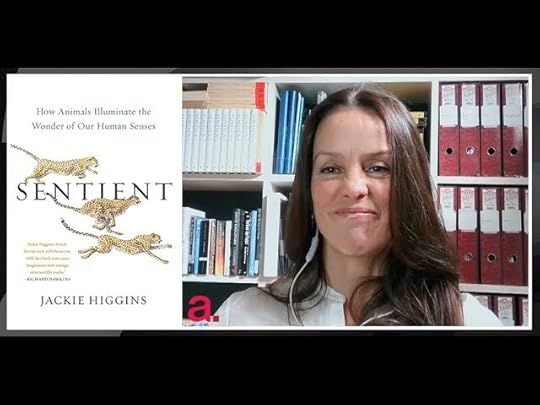
Sentient: How Animals Illuminate the Wonder of Our Human Senses

Rate this book
Perfect for fans of The Soul of an Octopus and The Genius of Birds , this “ masterpiece of science and nature writing” ( The Washington Post) explores how we process the world around us through the lens of the incredible sensory capabilities of thirteen animals, revealing that we are not limited to merely five senses.

There is a scientific revolution stirring in the field of human perception. Research has shown that the extraordinary sensory powers of our animal friends can help us better understand the same powers that lie dormant within us.

From the harlequin mantis shrimp with its ability to see a vast range of colors, to the bloodhound and its hundreds of millions of scent receptors; from the orb-weaving spider whose eyes recognize not only space but time, to the cheetah whose ears are responsible for its perfect agility, these astonishing animals hold the key to better understanding how we make sense of the world around us.

“An appealingly written, enlightening, and sometimes eerie journey into the extraordinary possibilities for the human senses” ( Kirkus Reviews , starred), Sentient will change the way you look at humanity.

320 pages, Hardcover

First published June 24, 2021

310 people are currently reading
6793 people want to read

About the author

Jackie Higgins

4 books26 followers
There is more than one author in the Goodreads database with this name.

Ratings & Reviews

What do you think?
Rate this book

Friends & Following

Create a free account to discover what your friends think of this book!

Community Reviews

5 stars
571 (41%)
4 stars
546 (39%)
3 stars
229 (16%)
2 stars
24 (1%)
1 star
11 (<1%)
Displaying 1 - 30 of 207 reviews
Profile Image for Petra X.
2,455 reviews35.7k followers
July 23, 2023
4.75 stars rounded up. It got a bit tedious about spiders. No matter what spiders do or feel or how that relates to people, I have a hard time in getting any interest up in them. Actually if they are bigger than a dime I am mostly disgusted by them. Now octopuses whose arms can act independently but only when the octopus can see them, that was interesting. Imagine only being able to control your limbs if you could see them. Going for a pee in the night would be a nightmare as it was for a man who lost the ability to use his limbs without thinking and had to see them and direct them in order to do so. Turning off the light at night would mean he fell. The book didn't explain what the octopus did at night if something happened that it would need to move.

One thing that really made me think was the harlequin shrimp. It is perhaps the strongest creature on earth - its punch can shatter aquarium walls. In other book I read that the same shrimp has 12 photoreceptors as opposed to our three, so could it see a vast range of colours we cannot even imagine? We'll probably never know.

This same shrimp appears to be sentient too. A scientist and author (I forget which book) wrote that he tried the mirror test on his favourite shrimp he used to visit under the sea. He put a blob on the little creature's 'forehead' and then placed a mirror in front of them. The shrimp touched its forehead... it had recognised itself in the mirror. Children don't do that until they are about 2, elephants, dolphins, magpies, rays, great apes, even strangely, cleaner wrasses pass it. Dogs don't, it's impossible to know if cats do but don't feel like doing anything about it, parrots don't, most creatures don't. But a shrimp...

I think the study of animal sentience is not very far advanced but this book goes some way to showing non-scientists the senses that animals have that we don't and don't necessarily understand - migration is the big one. There isn't one way to do vast migrations - it might be through magnetism, through a kind of GPS oriented on the sun, through learning a path with landmarks or most mysteriously, monarch butterflies, all of whom are of a new generation so it is not known how they do it.

A good book with a lot to think about and very engagingly written.
Profile Image for Lee Allan.
18 reviews
July 17, 2021
My first goodreads review ever (after over 300 books rated).
The reason why I decided to write this review is because I am flummoxed to how such an intriguing and interesting read could have no reviews and so few ratings.

If you are interested in Animals. You will get something from this.
If you are interested in humans, likewise.

Jackie Higgins propels straight into the senses that most of us take for granted on a daily basis. She compares animals which harbour the 'best' of these senses to that of our own. Combining science with philosophy to make you ponder and question our own reality and how it differs for everyone and other living beings. I also feel that most people could pick up this book and take something from it, the language used can be difficult at times due to how scientific it can be, that is my only minute 'gripe'.

Thank you for writing this thoroughly enjoyable read.
Profile Image for Kasia.
271 reviews40 followers
April 7, 2022
**ARC provided by publisher in exchange for an honest review**

There are 12 short chapters in this book:

1. The Peacock Mantis Shrimp and Our Sense of Color
2. The Spookfish and Our Dark Vision
3. The Great Gray Owl and Our Sense of Hearing
4. The Star-Nosed Mole and Our Sense of Touch
5. The Common Vampire Bat and Our Senses of Pleasure and Pain
6. The Goliath Catfish and Our Sense of Taste
7. The Bloodhound and Our Sense of Smell
8. The Giant Peacock of the Night and Our Sense of Desire
9. The Cheetah and Our Sense of Balance
10. The Trashline Orbweaver and Our Sense of Time
11. The Bar-Tailed Godwit and Our Sense of Direction
12. The Common Octopus and our Sense of Body

The book provides nice overview of what is happening in science when it comes to exploration of our senses. It's an "entry-level" book with a lot of basic information like how the eyes are build or where the sense of balance is coming from making it accessible for anyone. It's also very uneven with some chapters dripping with author's awe and some of them being very dry and dissertation-like. It's impossible to write about senses and not touch neuroscience and author did not shy away from it but unfortunately she cited Oliver Sacks way too often leaving me thinking that maybe I should re-read The Man Who Mistook His Wife for a Hat instead of reading this one. On the other hand there are a lot of materials mentioned (from YouTube videos through books to TED talks) that I found very intriguing so if you are looking for a book that will set you on the path of exploration this one is really good at it.

Overall it is a very solid non-fiction with a lot of intriguing information but unfortunately it never dives too deep and repetition of information makes it a bit tiring. Would recommend.
Profile Image for Nancy Mills.
457 reviews33 followers
November 28, 2022
Amazing book about how various beings perceive their world. Includes species who see different wavelengths, giving them different color perceptions, and explains how fish living in dark abysses miles deep in the oceans are able to see.
Author Jackie Higgins discusses hearing and another important function of ears: balance. She describes the world of Helen Keller and how her sense of touch evolved to fill some of the functions of ears and eyes.
The unusual creatures such as the star nosed mole and the platypus are fascinating, and no book on perception would be complete without mention of what it is like to be a bat-- in this case, the vampire bat, who is revealed to be a surprisingly kind, generous and sensitive soul.
A giant catfish who has taste buds all over his face, the keen-nosed bloodhound, the cheetah which his incredible turn-on-a-dime balance, marathon migratory birds, spiders with peculiar inner clocks, are all characters.
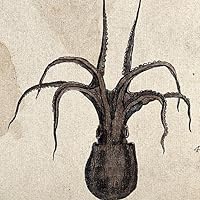
The octopus with his unusual sense of his own body was particularly interesting to me:
"Amputated cephalopod had been investigated...with strange and startling results. A scientist had discovered that when a piece of dried sardine was placed on the tip of a disembodied arm, it continued to act as if it were a normal day on the reef. Its suckers grasped the scrap of food, passing it along over hundreds more, like a conveyor belt, and transporting it back to where the mouth would have been, were it still there. Moreover, when that piece of food had been infused with noxious chemicals, the same suckers would promptly reject it. Our arms pick out the best bits on offer at the buffet, but imagine if they did so after being severed from our body."
Truly a must-read for anyone interested in animals or perception.
Profile Image for Peter Tillman.
4,038 reviews476 followers
March 24, 2024
A better book than I was expecting. I'm glad I finally read it. 2021 book.
The review to read first is the Inquisitive Biologist's: https://inquisitivebiologist.com/2021...
As usual, he's my go-to for biology topics. Good, detailed review.
As he says, "Sentient is a smart survey of twelve such senses with each chapter juxtaposing research on animals with that on humans." And humans don't do badly by comparison. Well-written and very interesting book. My rating: a solid 4 stars, recommended reading. Plus, it's short.

One of the most memorable moments, for sheer horror, was the vampire bats chapter. Not the bats, who turn out to be sweet-tempered and altruistic. But the colonies in Costa Rica the biologist studied were in hollow trees, and getting inside was challenging: tight spaces infested with 3-inch long cockroaches. Researchers often came out screaming!

Higgins quotes Oliver Sacks classic works on several occasions. Long-distance bird navigation feats are impressive: the current (as of 2021) record holder, an arctic tern, made a round trip of 44,000 miles (71,000 km) in one year. Apparently, magnetite inclusions in animals' tissues provide a magnetic compass. Some humans appear to be able to find directions without instruments as well.

So. A solid read on human and animal senses, that I commend to your attention. I liked it a lot.
Profile Image for Corvus.
743 reviews272 followers
November 18, 2024
DNF. The callousness with which she discussed dissection and dismembering of each species without even mentioning the death that occurs between life and study harms the central thesis. How can you argue that other animals are so advanced and magnificent while also telling the reader they are merely objects to be taken apart? This is common in science books but this one is especially noticeable in how it discusses vivisection as if the animal just magically transformed into a happy clump of data.

I tried to push through but gave up when we got to the abuse and killing of owls. If you want to teach humans how wonderous other animals are, maybe consider the actual experiences and desires of the individual animals you're discussing, not just what pieces of their dead bodies look like under a microscope or how they act when their senses are mutilated and robbed from them. The only thing this book uses other animals to tell us about humans is to show how cruel we can be.
Profile Image for Lewis Trussler-McCaskill.
67 reviews2 followers
July 18, 2021
Jackie Higgins has written a fascinating and delightfully enlightening account of how we interact with the world around us, through the lens of the animal kingdom. She takes us on a tour of the natural world, illuminating the differences and similarities between human and animal senses. Each chapter is full of insight and wonder as Higgins delivers a series of lessons on what it means to have senses and the limits that can have on our perceptions. Rich in detail and impeccably researched, Sentient is an educational, unique and engrossing read.
Profile Image for Dan Drake.
197 reviews14 followers
January 2, 2022
This is a book about the "hardware" of senses -- the physical, biological structures of our bodies (and animals' bodies!) -- and how they work. It follows the standard structure and form of a popular science book: many chapters include some intriguing anecdote of some person with a mysterious, intriguing condition related to some sense, and then interweaves the continuing story of that person with stories of some animal and its corresponding sense and descriptions of the scientific research on those senses, generously peppered with quotations from the scientists involved or familiar with the research.

Other chapters are structured around a sort of Hegelian dialectic: describe some animal with a sense that seems incomparably superior to our own; then describe the human sense -- then bam! Show us that the human sense is actually very, very good.

That's not to throw shade on this book -- it is very well written, and it amply delivers on its subtitle: it uses animals to illuminate the wonder of our own senses.

I do think there's a companion or followup book that could be even more interesting. Higgins, in may places through the book, touches upon the fact that our sensory hardware -- the nerves, cells, and the spectacular physics and chemistry of how they work -- is, in some (ahem) sense, that's not how our senses work: it's our brain that takes the input and integrates it into some kind of sense.

For example, sight: the information sent to your brain from your eye is upside down, poorly focused, and because the optic nerve is in the middle of your retina, has a big hole right in the middle. You don't perceive -- sense -- that, though, because your brain fixes up the input: it flips it right-side-up, and uses what it knows from recent information and its experience of the world to generate the "correct" input.

(But wait, what is "correct"? For an extreme and amazing thought-provoking take on this, see The Beginning of Infinity: Explanations That Transform the World, in which David Deutsch advances the claim that there's no real reason to suppose that our conscious experience of the world delivered to us via our senses be any kind of faithful, true, or accurate representation of the external, objective physical world.)

It would be interesting to see the "software" companion to this book that investigates how the brain takes all this input and does stuff with it. David Eagleman has done a lot of fascinating research into creating new senses for humans. In fact, our brains are not only capable of rewiring themselves for new senses, but they are very fast and aggressive about doing so -- see his "defensive activation" theory for why we dream: basically, if we didn't, then our brains would see that our visual cortex hadn't been used at all for a few hours and start repurposing it for something else. We dream so that we can see when we wake up!

For the moment, though, Higgins has written a very good book on how humans and animals alike are sentient -- sensing -- creatures.
Profile Image for Richard.
Author 1 book57 followers
August 2, 2023
“Sentient” here refers to our ability to sense the world around us—but by “our” I mean the entire animal kingdom. And as for the idea that we use just five senses to do that (sight, hearing, smell, taste and touch), well that’s an idea which has been out of date for a very long time now. There are at least a couple of dozen senses, and probably more.
    So we have the mantis shrimp, which looks a lot like a small lobster and has an incredible twelve types of cone cell in its retinas for seeing colours, compared to our three. There’s the spookfish of the deep ocean, the only species in five hundred million years of vertebrate history to have an extra pair of eyes which form an image using, not lenses, but curved mirrors (and which possibly makes them reflecting telescopes, I’m still not sure). Then there’s a mole with a nose which looks like a tiny hand but acts as an extra eye, seeing underground. The Goliath catfish tastes the world with its whole body, nose to tail. Trained avalanche dogs can smell skiers buried under twenty-four feet of snow. And so on (if I told you all the rest, this review would be as long as the book itself).
    But Sentient isn’t only about going “wow” at their extraordinary abilities; its point is very much about better appreciating our own too, our more familiar human senses. For example, the human eye can register a single photon of light—even a physicist would struggle to convey just how tiny that is; a photon is one of the fundamental quantum particles of the universe. That’s astounding, I had no idea. In an utterly silent room, like Beranek’s Box constructed in a lab at Harvard, the human ear can hear its owner’s nervous system functioning. If our ears were just a smidgeon more sensitive than that we’d be hearing (and being distracted by) the very atoms of the air around us vibrating. Our hearing, in other words, is as acute as it could be without becoming a liability. Like dolphins and bats, we too have echolocation, we locate silent and immobile objects from the sounds they reflect—even their shapes and compositions. A very limited echolocating ability it’s true, but we do have it and some biologists suspect we unconsciously use it all the time. And even that’s not the half of it…
    To sum up the theme of this wonderful book: the animal kingdom is endlessly astonishing—and as fully paid-up members ourselves, so are we.
Profile Image for Emma Ann.
569 reviews843 followers
November 24, 2022
Full of fun animal facts and fun human facts, although the connections stitching the two together occasionally feel a bit forced.
18 reviews
March 27, 2022
Popular science titles have become a go-to for me in recent months - a little something that provides some level of escapism (in tackling topics I hardly deal with on an everyday basis) yet also gets me intellectually engaged / excited as I find myself learning something new. Sentient definitely checked the boxes on this one, with charming lessons on how more can sometimes be less (sorry, mantis shrimp), that asymmetry can also have surprising benefits (the grey owl), and most importantly, to truly appreciate the wonder on how our bodily experience comes together so effortlessly day-to-day, when it in fact truly is a biological marvel. Strength of the chapters do vary though, with some feeling less compelling than others - especially the somewhat abrupt end - but for those with an interest in animals and wanting to get a little closer to nature, in spite of our mostly urban environments, this will be a great escape for you.
Profile Image for Jimmy.
513 reviews905 followers
October 28, 2022
Love this kind of book. Where it takes some real world scientific subject, but not just with a mind to inform but also inspire a world of thoughts and urge us to think of where we stand in the world, what we perceive vs what's really there, how we experience the world and how we're trapped or not in a certain perspective, what we take for granted and also what is revealed once certain senses are deprived, what we never even thought about but is such a big part of our existence that it defines us, etc. etc. Highly recommended.
Profile Image for Tuck.
2,264 reviews252 followers
October 6, 2022
Awesome book about the hyper senses of other animals in relation to human animal, and the implications.. practically perfect balance of science writing facts, personalities, and synthesis.

Has useful fun endnotes, chapter bibliographies and good index. And beautiful line draw pictures for each chapter. I think this her first book.
Profile Image for Douglas.
126 reviews195 followers
February 3, 2024
More than a book about the cognition of other living species on earth, this book explores the variety of senses and how we as humans could be limited in our perceptions or we could learn from other animals about to heighten the senses we do have.
Profile Image for Cav.
907 reviews205 followers
July 3, 2024
"WE HUMANS ARE OFTEN DESCRIBED as sentient beings, but what does this mean?"

Although I was excited to start Sentient, the writing here really fell flat for me. More below.

Author Jackie Higgins is a graduate of Oxford University with an MA in zoology and has worked for Oxford Scientific Films for over a decade, along with National Geographic, PBS Nova, and the Discovery Channel. She has also written, directed, and produced films at the BBC Science Department. She lives in London.

Jackie Higgins:
sddefault

Unfortunately, Higgins writes in a style that is somewhat stereotypical of British prose. I found much of this book's writing to be extremely dry and long-winded. I found my finicky attention wandering numerous times here. I was close to putting the book down more than a few times. I am admittedly very particular about how readable my books are, and this one really missed the mark for me...

She drops this quote early on, about the concept of sentience:
"The word, from the Latin sentire, to feel, is so mercurial that the philosopher Daniel Dennett has, perhaps playfully, suggested, “Since there is no established meaning… we are free to adopt one of our own choosing.” Some use sentience interchangeably with the word consciousness, a phenomenon that in itself is so elusive as to reduce the most stalwart scientific mind to incantations of magic.
Marveling at how brain tissue creates consciousness, how material makes immaterial, Charles Darwin’s staunch defender T. H. Huxley once pronounced it “as unaccountable as the appearance of Djin [sic] when Aladdin rubbed his lamp.”


******************

While the book covers some super-interesting subject matter, the telling of it fell way short for my tastes.
I did not enjoy the overall presentation of this one.
2 stars.
Profile Image for Philip.
434 reviews68 followers
September 20, 2023
"Sentient" should be on every curious reader's list. A gifted storyteller, Jackie Higgins weaves animal and human stories into each other helping the reader get closer to how and what various animals sense, and how our understanding of the same sometimes helps us understand each other better.

If none of the above sparks an interest though, there are also some truly weird and fascinating animal facts here. And they're delivered in a packaging that is simultaneously (frequently molecularly) detailed and astonishingly easy to both read and understand. Higgins' has the touch.

She also made me feel somewhat silly for only now learning just how Helen Keller did and learned how to communicate - something which, stupefyingly, had eluded me (don't ask me how as I'm trying to hide under the metaphorical desk in the metaphorical corner of the metaphorical closet).

Highly recommended!
Profile Image for sevdah.
398 reviews73 followers
Read
June 7, 2023
I should have realised it straight from the subtitle of the book, which already tells us that the author sees a strange separation between non-human and human animals - only others are "animals". She explores the incredible senses exhibited by everyone else in the animal world, in which I did learn quite a lot. But all this turned out to be important only as a kind of backstory for humans who posses a similar (usually - much, much worse) sense. Even the circadian rhythm, she tells us, is so perfect as if it was designed by a human... - of course, as we are so much more and better than all nature. Many things were unchallenged simply because another scientist had done them - even when they killed half a million of the species they were studying, the author didn't really seem to notice even the sheer number of deaths of these animals she's supposedly interested in. This book would not age well - she wonders if octopuses are conscious, and goes as far as to say that our brains is what allow us to have language. Even ants have language, and they would never go about writing a book which insinuates other animals are blank computers - so I do wonder who's smarter in that regard.
Profile Image for Amber.
30 reviews
April 29, 2022
I'd rather not read a book about how we humans hold captive, and mutilate other species for our own studies and interests.
Profile Image for Elentarri.
2,066 reviews65 followers
March 9, 2025
Higgins uses the definition of sentience to describes our ability to sense the world around us. So, this isn't a philosophical text on being human, but rather a broad survey that examines the science, psychology and neurology behind our (and other creature's) ability to perceive the the environment. "Sentient" is a nicely-written, interesting and approachable comparison of twelve "senses" that humans and a variety of animals share, and what we can learn about human senses from those animals. The senses examined in this book are: colour, dark vision, hearing, touch, pleasure and pain, taste, smell, desire (pheromones), balance, time, direction, and body. A fascinating subject and nice overview of some of the research going on in this field.
Profile Image for Paula.
24 reviews2 followers
October 8, 2025
Super interessant!!! he après moltíssim amb aquest llibre. La nostra percepció del món és només una versió, cada ésser té una realitat pròpia, i és molt fort les capacitats i els sentits que alguns tenen... Si t'agraden els animals, recomano segur
143 reviews14 followers
March 1, 2024
What a fascinating and surprising book! I was a little leery based on the title, as I wasn't sure what type of animal "sentience" Jackie Higgins was going to champion. But she acknowledges right away (in the first pages of the Introduction) the elusiveness of the term "sentient" and makes clear that her goal is not to make claims for animal "consciousness" but to show different ways that particular animal's sensory abilities compare to, or illustrate something extraordinary about, our own human senses. (Clearly, I should have read all the way to the end of the book's title, and taken it seriously.)

It's an incredibly interesting journey. In each of the book's twelve chapters she begins with an examination of some amazing sensory power possessed by a particular animal -- for example, the bloodhound's sense of smell -- but then finds a way to connect it to us humans, showing how we match up with her animal exemplar, and often concluding that our comparable sensory ability is just about as remarkable (mostly due to our large and adaptable brains). And she does this for each of our five senses. Wait, did I say five? Haha, Aristotle was wrong; we have way more than five senses -- as many as 22, or maybe 33, depending on which neuroscientist you ask. Well, Higgins starts with the old school five senses, but by the end of the book we've moved on to more exotic senses like our sense of balance, sense of time, and sense of body.

This book reminded me a lot of my favorite writings by Oliver Sacks. Higgins is clearly a fan of Sacks, quoting or referring to him frequently, and the book seems very much inspired by his work. The difference is that where Sacks typically starts with some human patient with an unusual sensory or neurological malady and uses that as a jumping off point for a broader examination of a topic, Higgins does the same thing but starts with an animal with an unusual sensory power. So instead of the Man Who Mistook His Wife for a Hat, her protagonists are fish, bats, birds, spiders, an octopus, and (my favorite) the Star-Nosed Mole.

Highly recommended.
Profile Image for Mary Arkless.
290 reviews1 follower
September 29, 2021
I loved this book!

First of all, the author explains that there are more than the five senses which most of us were taught about. Not only do we have touch, sight, smell, taste, and hearing, but also balance or direction, for example. Biologists agree there are more than five sense, but they can not agree on just how many there are. Some think there are ten or so, some think there are dozens.

Higgins then took an animal that is widely accepted at being very good at that particular sense and explores that. She then compares that to humans and some other animals. For example, when talking about smell, most people believe that dogs are experts at smell, and that bloodhounds in particular are the best. Let's just say, humans aren't all that bad at these things as we think we are when compared to other species on this earth.

I believe that this book is very well researched, and I liked learning more about each of these senses. I want to know more!! The notes and resources at the end look really interesting, too. I borrowed this from the library, and it isn't due back for a couple more weeks. I'll hold on to it and look up some of these things and learn a bit more.

I really do recommend this book highly.
445 reviews
October 29, 2021
This book is pure science, sometimes it's not easy to follow while listening and driving, sometimes it's down right way over my head with scientific terminologies. But I still find it super interesting.
It's a very encompassing book and well researched. Each chapter focuses on one sense, starting with an animal that possesses the most amplified ability with such sense in the natural world, then comparing with our human body, showing how deep down at cell level it's the same mechanism all along. So while our human senses are not superior than animals, our body is an amazing combination of millions and billions tiny tiny sensory robots that function without our conscious to give us our beautiful perception of the world around, the world as we sense it.
The writing is not at all dry. The author told a lot of stories of many scientists and doctors who spent decades dedicating to researching each topic, describing their experiments and theories. She told us of patients who lost certain sense and how they manage to live without such sense. And on the opposite scale, there are individuals who possess an abundance of said senses too.
Profile Image for Stella.
151 reviews15 followers
May 23, 2023
Before I started reading this book, I was still in the mood for a mystery book (having just finished reading "Appeal" and still shocked by its twist). However, as soon as I began reading the introduction, I became attached immediately and having no problem to switch to a different genre. This is always a good sign when reading a book!

There are millions of colors that our human eyes will never know; talents for finding orientation without sight; smells, tastes, and sensations that are perceived differently by other humans. This book has affected how I see the world: the world is just waves that our senses perceive and imagination that our brain creates. The world is much larger than it seems, and there are curious phenomena in the science of animal senses that reveal a different version of the world that we already know. This book explores another world through the senses of other animals.

This book is very eye-opening. The pacing is perfect and the writing is accessible to everyone. This book is ideal for studying zoology, biology, neurology and psychology!
Profile Image for Linden.
374 reviews
June 27, 2023
3.5 A great amassment of facts and insights about animal as well as human senses, but the author’s tendency to fanciful phrasing, repetitive restatement, and hyperbole annoyed me, and the overall ideas of the book were not as novel as I’d have liked. Still, good information.
Profile Image for Mike Mikulski.
139 reviews1 follower
April 25, 2022
A very interesting scientific exploration of the senses. We commonly think of the five senses, sight, hearing, taste, smell and feel. Higgins explores 12 unique aspects of animal and human sensation. starting each section with an animal that has evolved to an extreme in one particular sense. The Peacock Mantis Shrimp who has nine unique types of cone cells compared to a human's three giving them a broader perception of a spectrum of color and the Great Grey Owl whose dish shaped face and asymmetrical positioning of their ears give them a very acute sense of hearing allowing them to hunt prey as they move under to snow are just two examples.

The interesting part of the book is how sense is broken down into nerve's that sense such as rods and cones, olfactory nerves, the auditory nerves that sense the movement of tiny hairs in our inner ears and the way parts of the brain processes input from these nerves. Higgins lays out how a bran can actively adapt with certain sections of the brain compensating for a loss of input from another pathway of nerves. Scanning brain activity has also given scientists new insight on how sense is processed both in the animal kingdom and in humans. Scientists are able to see parts of the human brain that normally process optical inputs begin to react to touch sensations in blind subjects.

Higgins provides a view on how the scientific community is studying and changing thought about the senses. Specific examples are how the sense of touch has been split into touch sensors in our finger tips and sensors that detect pleasure and pain in other parts of the body. The fingertip aspect of touch is a survival tool how we sense what is around us and how we manipulate things. The sensations of pleasure and pain that come from input throughout our body use a different type of nerve pathway leading to the part of the brain where emotions and feelings are processed. Higgins askes if an evolving society that is less comfortable coming in contact with each other is leading to the rise in autism and emotional disabilities.

Branching out from the Aristotelian five senses, Higgins explores circadian rhythms and animal and human sense of time, animal sense of direction seen particularly in migrating birds, pheromone research and the sense of desire and the inner ear and the sense of balance.

Higgins is an Oxford educated zoologist who has written, directed and produced wildlife and science documentaries for the BBC, National Geographic and PBS. I would not be surprised to see Sentient as a multipart documentary on the senses in the near future. The chapters in the book read like a treatment for an episode of the science series Nova, I would not be surprised if it appears as a series on television in the near future.
Displaying 1 - 30 of 207 reviews

Can't find what you're looking for?

Get help and learn more about the design.