

What do you think?

Making History: The Storytellers Who Shaped the Past
A “supremely entertaining” ( The New Yorker ) exploration of who gets to record the world’s history—from Julius Caesar to William Shakespeare to Ken Burns—and how their biases influence our understanding about the past.
There are many stories we can spin about previous ages, but which accounts get told? And by whom? Is there even such a thing as “objective” history? In this “witty, wise, and elegant” ( The Spectator ), book, Richard Cohen reveals how professional historians and other equally significant witnesses, such as the writers of the Bible, novelists, and political propagandists, influence what becomes the accepted record. Cohen argues, for example, that some historians are practitioners of “Bad History” and twist reality to glorify themselves or their country.
“Scholarly, lively, quotable, up-to-date, and fun” (Hilary Mantel, author of the bestselling Thomas Cromwell trilogy), Making History investigates the published works and private utterances of our greatest chroniclers to discover the agendas that informed their—and our—views of the world. From the origins of history writing, when such an activity itself seemed revolutionary, through to television and the digital age, Cohen brings captivating figures to vivid light, from Thucydides and Tacitus to Voltaire and Gibbon, Winston Churchill and Henry Louis Gates. Rich in complex truths and surprising anecdotes, the result is a revealing exploration of both the aims and art of history-making, one that will lead us to rethink how we learn about our past and about ourselves.
There are many stories we can spin about previous ages, but which accounts get told? And by whom? Is there even such a thing as “objective” history? In this “witty, wise, and elegant” ( The Spectator ), book, Richard Cohen reveals how professional historians and other equally significant witnesses, such as the writers of the Bible, novelists, and political propagandists, influence what becomes the accepted record. Cohen argues, for example, that some historians are practitioners of “Bad History” and twist reality to glorify themselves or their country.
“Scholarly, lively, quotable, up-to-date, and fun” (Hilary Mantel, author of the bestselling Thomas Cromwell trilogy), Making History investigates the published works and private utterances of our greatest chroniclers to discover the agendas that informed their—and our—views of the world. From the origins of history writing, when such an activity itself seemed revolutionary, through to television and the digital age, Cohen brings captivating figures to vivid light, from Thucydides and Tacitus to Voltaire and Gibbon, Winston Churchill and Henry Louis Gates. Rich in complex truths and surprising anecdotes, the result is a revealing exploration of both the aims and art of history-making, one that will lead us to rethink how we learn about our past and about ourselves.
784 pages, Hardcover
First published November 10, 2020
About the author
Richard Cohen
5 books25 followersRichard A Cohen is the author of Chasing the Sun: the story of man's relationship to that star, By the Sword: a history of sword fighting and How to Write Like Tolstoy: A Journey into the Minds of Our Greatest Writers.
From 2015 to 2017, he was been the tour expert for the New York Times tour of the World War I battlefields of France and Belgium.
He is a former publishing director of Hutchinson and Hodder & Stoughton, and the founder of Richard Cohen Books, as well as former director of the Cheltenham Festival of Literature.
He is a five-time U.K. national sabre champion and was selected for the British Olympic fencing team in 1972, 1976, 1980, and 1984. He lives in New York City with his wife, the literary agent Kathy Robbins.
From 2015 to 2017, he was been the tour expert for the New York Times tour of the World War I battlefields of France and Belgium.
He is a former publishing director of Hutchinson and Hodder & Stoughton, and the founder of Richard Cohen Books, as well as former director of the Cheltenham Festival of Literature.
He is a five-time U.K. national sabre champion and was selected for the British Olympic fencing team in 1972, 1976, 1980, and 1984. He lives in New York City with his wife, the literary agent Kathy Robbins.
Ratings & Reviews
Friends & Following
Create a free account to discover what your friends think of this book!
Community Reviews
Displaying 1 - 30 of 75 reviews

Read
January 26, 2024Absolutely honking great book, like 700pp+ and a right pain in physical copy, about the writers of history. It covers a lot--overviews of the practice of writing history, how it developed as a study, bios of the most famous and influential, and lots of chapters on eg women historians, Black history, fraudulent history like David Irving and the official rewriting of China and Russia and the US regarding slavery; TV historians; a focus on John Keegan; the Taylor/Trevor Roper feud, etc.
It's very well written and well informed and it rattles along. I kind of started to feel that I wasn't sure why it had to be so long. It's not comprehensive, it can't be (and freely acknowledges it isn't) and there's some absolutely glaring great holes (Africa? India?), but given that, quite a lot of the material did just feel like the author telling us stuff he was interested in. Which, indeed, is what he points out historians basically do, but on the other hand it's over SEVEN HUNDRED PAGES LONG and you'd think an editor might have recommended some self control. Then again the author has had an incredibly distinguished publishing career so no, they probably might not.
An interesting book all the way, and very much worth a look if you're interested in the actual practice of history as she is written, but personally I'd get it in e.
It's very well written and well informed and it rattles along. I kind of started to feel that I wasn't sure why it had to be so long. It's not comprehensive, it can't be (and freely acknowledges it isn't) and there's some absolutely glaring great holes (Africa? India?), but given that, quite a lot of the material did just feel like the author telling us stuff he was interested in. Which, indeed, is what he points out historians basically do, but on the other hand it's over SEVEN HUNDRED PAGES LONG and you'd think an editor might have recommended some self control. Then again the author has had an incredibly distinguished publishing career so no, they probably might not.
An interesting book all the way, and very much worth a look if you're interested in the actual practice of history as she is written, but personally I'd get it in e.

October 31, 2022
While there are memorable opening captions for each of the chapters in Making History: The Storytellers Who Shaped the Past by Richard Cohen, the one that has long been my favorite commentary on history is not among them. Rather, it is one with existential overtones that I came upon in Boris Pasternak's novel Dr. Zhivago, suggesting that...History is the centuries upon centuries of systematic study of the riddle of death, with a view of overcoming it.
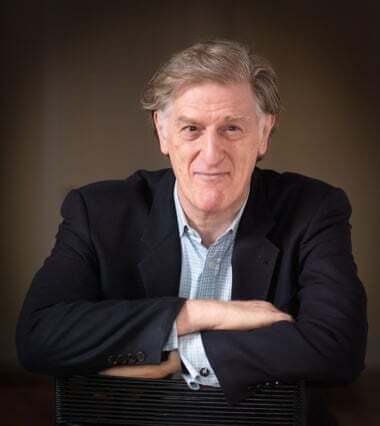
The author is a longtime editor, a Cambridge-educated former Olympic fencer for Great Britain, a distinguished author & a compelling speaker, whose expansive book I bought when he came to a address a Chicago club. Over a matter of months, I proceeded to read all 650+ pages of the book, not including its lengthy bibliography. Making History is really quite formidable, as much because of its comprehensive interpretation of what constitutes history, as for its page-count.
One might call it an informal historian's account rather than a professorial take on history, with Cohen's book illuminating all manner of historians in a lively, often humorous & exceedingly interesting narrative. For starters, I found it intriguing that a fellow named Cohen had attended schools run by Benedictine monks prior to going off to the University of Cambridge.
Making History begins with oral history traditions that were later transcribed by historians who gathered the details by hearsay as it were, often translating the accounts into verse, for "anything that took place more than 3 generations earlier would at best be loosely remembered if not forgotten." And oral customs tended to focus on pleasing details rather than stories the audience doesn't want to hear.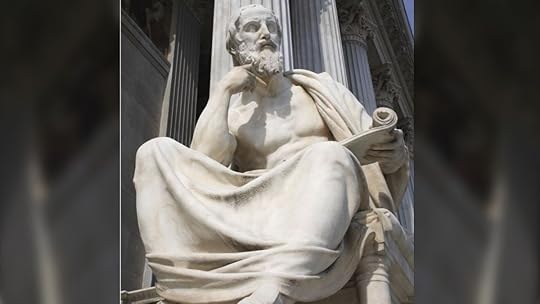 Herodotus, being aware of posterity, lamented that the absence of romance within his historical writings would probably limit interest in his work for future readers.
Meanwhile, it is said that Homer had many "attributed works" & is best treated as a "plural noun". We are told that Rome's most formidable historians were all "high achievers" who also served as senators (Tacitus), consuls, tribunes (Sallust) & mayors, as in the case of Plutarch. Julius Caesar claimed descent from one of the oldest families in Rome. Cohen tells us that none of them "had to sing for their suppers", a fact that affected the kind of history they composed.
Here is just one of my favorite included quotes, from Adam Nicolson in Why History Matters:
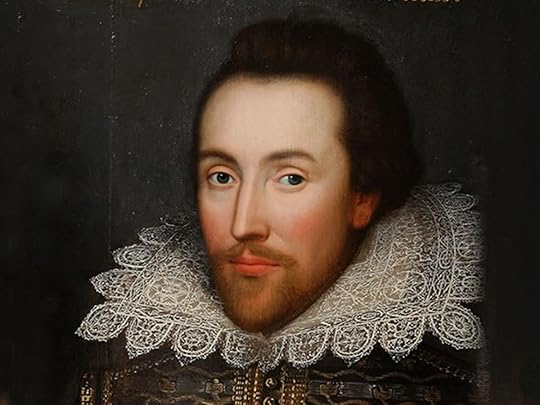
Another of my favorite sections dealt with Shakespeare as historian, with a focus on the drama of history at a time when English had only recently become the "mother tongue" of what became Great Britain, employing a mixture of chronicles, surveys, antiquarian records, with Shakespeare "blending fact with fabrication, not just reporting British history but shaping it."
And there is naturally coverage of Gibbon, Macaulay, Voltaire & also Machiavelli, with the last called "the accidental historian". But prior to that, the treatment of Venerable Bede & medieval historians, as well as Muslim/Arab interpretations of history are all quite good. The Bayeux Tapestry is examined as a considerable account of a historical period in cloth form.
Novelists, including Sir Walter Scott, Mark Twain, Tolstoy & Toni Morrison are given a substantial role as historians, with the novel termed "the private history of nations". Joseph Conrad declared that "fiction is history, or it is nothing."
E.L. Doctorow is quoted as suggesting that "the historian will tell you what happened but the novelist will tell you what it felt like." Toni Morrison stated that through fiction she was "rewriting history, changing the very color of the shadows, showing whites what they look like in black mirrors."
Beyond that Tolstoy even pleaded that War & Peace not be labelled a novel but rather "a document portraying history", especially since the great Russian epic contains several essays about war & power. And well beyond Tolstoy, there is coverage of Marx, Engels & Solzhenitsyn as politically-based historians.
John Hope Franklin & other African-American historians are explored and in a chapter entitled Herstory: From Ban Zhao to Mary Beard, women historians are as well, though perhaps not enough to keep some from judging this comprehensive work by Richard Cohen as slanted toward journalists, white males & British historians. Still, I enjoyed the coverage of Barbara Tuchman & Doris Kearns Goodwin, as well as Frantz Fanon & Henry Louis Gates.
George Orwell is counted as an important historical commentator and I found this inclusion meaningful, with Orwell someone who attempted to experience historical moments prior to transcribing them into his novels & other books. Studs Terkel is discussed as a more contemporary oral-historian, with Richard Cohen having served as editor for a book by Studs.
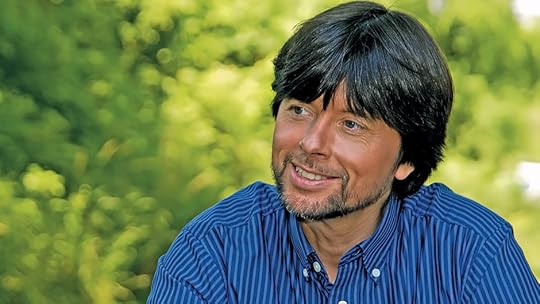
And more recently, there is Ken Burns documentary video takes on historic periods, including the sport of baseball, Hemingway, the Holocaust & the American Civil War. As historian George Will phrased it, Burns' multiple series represent a masterpiece of national memory. Our Iliad has found its Homer." Burns describes his work as "exercises in emotional archeology." Cohen adds that America's Civil War "is not yet over."
There is even a chapter titled Bad History that begins with a quote from Mr. Dickens via David Copperfield:
However, if one accepts that Bob Dylan can be awarded a Nobel Prize for Literature &/or that history is often not much more than rather subjective storytelling as Cohen contends, then the book will eventually be of keen interest to far more readers than have thus far found their way to reviewing Making History at Goodreads.
While one might find fault with some of Cohen's choices for inclusion & the book can seem at times a bit disjointed, Making History is a work I'd long sought to encounter, a book that looks at the process of writing history, while considering that historians of whatever stripe are at heart "storytellers", with their lenses at least somewhat obscured by their own lives, no matter how much they may strive for objectivity.
Thus, for me at least, Richard Cohen's comprehensive overview of the craft of history is a 5* book!
*Within my review are photo images of the author, Richard Cohen; a statue of Herodotus; a portrait of William Shakespeare; lastly, documentary filmmaker Ken Burns. **There are many photos within the book, including photos of historians, cartoons & two eight-page color insets. ***There is an interesting review of Cohen's book by Louis Menand in the April 18th, 2022 issue of the New Yorker.
The author is a longtime editor, a Cambridge-educated former Olympic fencer for Great Britain, a distinguished author & a compelling speaker, whose expansive book I bought when he came to a address a Chicago club. Over a matter of months, I proceeded to read all 650+ pages of the book, not including its lengthy bibliography. Making History is really quite formidable, as much because of its comprehensive interpretation of what constitutes history, as for its page-count.
One might call it an informal historian's account rather than a professorial take on history, with Cohen's book illuminating all manner of historians in a lively, often humorous & exceedingly interesting narrative. For starters, I found it intriguing that a fellow named Cohen had attended schools run by Benedictine monks prior to going off to the University of Cambridge.
Making History begins with oral history traditions that were later transcribed by historians who gathered the details by hearsay as it were, often translating the accounts into verse, for "anything that took place more than 3 generations earlier would at best be loosely remembered if not forgotten." And oral customs tended to focus on pleasing details rather than stories the audience doesn't want to hear.
In 492, Phrynikhos, a rival to Aeschylus presented a play that focused on the destruction of Miletus by the Persians, causing the audience to burst into tears, with the author being fined 1,000 drachmas for reminding the people of their own evils & forbidding all future performances of the play.
Thus Thucydides & Herodotus would have known that all poets & writers were primarily tasked with pleasing those who had come to hear them & so often made things up, even while declaring that they never did such things.
Herodotus, being aware of posterity, lamented that the absence of romance within his historical writings would probably limit interest in his work for future readers. Meanwhile, it is said that Homer had many "attributed works" & is best treated as a "plural noun". We are told that Rome's most formidable historians were all "high achievers" who also served as senators (Tacitus), consuls, tribunes (Sallust) & mayors, as in the case of Plutarch. Julius Caesar claimed descent from one of the oldest families in Rome. Cohen tells us that none of them "had to sing for their suppers", a fact that affected the kind of history they composed.
Here is just one of my favorite included quotes, from Adam Nicolson in Why History Matters:
The epic was invented after memory & before history, occupying a third space in the human desire to connect the present to the past. It is the attempt to extend the qualities of memory over the reach of time embraced by history.There is a discussion of history merged with myth, the Bible as history, the Synoptic Gospels as a form of history, with the comment that "all story-lines are full of interpretive fictions, self-censoring, a filling in of gaps & a forging of connections."
Another of my favorite sections dealt with Shakespeare as historian, with a focus on the drama of history at a time when English had only recently become the "mother tongue" of what became Great Britain, employing a mixture of chronicles, surveys, antiquarian records, with Shakespeare "blending fact with fabrication, not just reporting British history but shaping it."
And there is naturally coverage of Gibbon, Macaulay, Voltaire & also Machiavelli, with the last called "the accidental historian". But prior to that, the treatment of Venerable Bede & medieval historians, as well as Muslim/Arab interpretations of history are all quite good. The Bayeux Tapestry is examined as a considerable account of a historical period in cloth form.
Novelists, including Sir Walter Scott, Mark Twain, Tolstoy & Toni Morrison are given a substantial role as historians, with the novel termed "the private history of nations". Joseph Conrad declared that "fiction is history, or it is nothing."
E.L. Doctorow is quoted as suggesting that "the historian will tell you what happened but the novelist will tell you what it felt like." Toni Morrison stated that through fiction she was "rewriting history, changing the very color of the shadows, showing whites what they look like in black mirrors."
Beyond that Tolstoy even pleaded that War & Peace not be labelled a novel but rather "a document portraying history", especially since the great Russian epic contains several essays about war & power. And well beyond Tolstoy, there is coverage of Marx, Engels & Solzhenitsyn as politically-based historians.
John Hope Franklin & other African-American historians are explored and in a chapter entitled Herstory: From Ban Zhao to Mary Beard, women historians are as well, though perhaps not enough to keep some from judging this comprehensive work by Richard Cohen as slanted toward journalists, white males & British historians. Still, I enjoyed the coverage of Barbara Tuchman & Doris Kearns Goodwin, as well as Frantz Fanon & Henry Louis Gates.
George Orwell is counted as an important historical commentator and I found this inclusion meaningful, with Orwell someone who attempted to experience historical moments prior to transcribing them into his novels & other books. Studs Terkel is discussed as a more contemporary oral-historian, with Richard Cohen having served as editor for a book by Studs.
And more recently, there is Ken Burns documentary video takes on historic periods, including the sport of baseball, Hemingway, the Holocaust & the American Civil War. As historian George Will phrased it, Burns' multiple series represent a masterpiece of national memory. Our Iliad has found its Homer." Burns describes his work as "exercises in emotional archeology." Cohen adds that America's Civil War "is not yet over."
There is even a chapter titled Bad History that begins with a quote from Mr. Dickens via David Copperfield:
I suppose history never lies, does it?, said Mr. Dick, with a gleam of hope. Oh, no, sir! I replied most decisively. I was ingenious & young, and I thought so.At book's end, Cohen offers his readers some sage advice from William Prescott, author of History of the Conquest of Mexico & others works, who tells us that:
The historian must strive to be a paragon--strictly impartial, a lover of truth under all circumstances; he must be deeply conversant with whatever may bring into relief the character of the people he is depicting, not merely their laws, constitution, general resources & all the more visible parts of machinery of government but with nicer moral & social relations, informing the spirit which gives life to the whole.In the midst of this lengthy tome, there are names that will seem somewhat obscure if not even completely unfamiliar but I stayed on board for the the long ride. And, it might be said that there is too much peripheral commentary in Making History, especially the insertion of copious intersections with figures that Cohen has had a direct relationship with.
Beyond that, the historian must be conscientious to geography, chronology & so many other details, while always retaining a mastery of style. It is hardly necessary to add that such a monster never did & never will exist.
However, if one accepts that Bob Dylan can be awarded a Nobel Prize for Literature &/or that history is often not much more than rather subjective storytelling as Cohen contends, then the book will eventually be of keen interest to far more readers than have thus far found their way to reviewing Making History at Goodreads.
While one might find fault with some of Cohen's choices for inclusion & the book can seem at times a bit disjointed, Making History is a work I'd long sought to encounter, a book that looks at the process of writing history, while considering that historians of whatever stripe are at heart "storytellers", with their lenses at least somewhat obscured by their own lives, no matter how much they may strive for objectivity.
Thus, for me at least, Richard Cohen's comprehensive overview of the craft of history is a 5* book!
*Within my review are photo images of the author, Richard Cohen; a statue of Herodotus; a portrait of William Shakespeare; lastly, documentary filmmaker Ken Burns. **There are many photos within the book, including photos of historians, cartoons & two eight-page color insets. ***There is an interesting review of Cohen's book by Louis Menand in the April 18th, 2022 issue of the New Yorker.
April 11, 2022
This is a history of writing history. It is difficult to write an entertaining and reliable history of writing history. Many of these types of books descend into the pits of theory. It becomes easy to forget that individual, peculiar, fallible humans are responsible for writing history, not abstract theories. Another risk is that we get a catalog of historians arranged chronologically without a sense of the big sweep of history and the connections between historians across time.
Richard Cohen does an excellent job of avoiding both pitfalls. He does not have a grand overarching theory of history and he is fascinated by the individuals who did it. At the same time, he is very good at drawing connections and comparisons.
He starts, as you must, with Herodotus and Thucydides. He travels fairly quickly. It takes him 80 of the books 660 pages to get through the Greeks and the Romans. The chapters of the book are roughly chronological. He stops to explore. We get a chapter on historians wrestling with the Bible from 200 AD to the present. The chapter on Muslim history argues that history served a different purpose in the Muslim world than it did in the Western world.
The second half of the book is chapters dealing with modern historical issues and controversies. Cohen has a wonderful dual profile of Hugh Trevor-Roper and A. J. P. Taylor. They were two of best-known English historians of the 50s and 60s. They were both public intellectuals. They couldn't stand each other. Trevor-Roper eventually was humiliated when he authenticated the fake Hitler diaries.
Cohen tells the story of the team which allowed Winston Churchill to "write" his best-selling histories. His chapter on historians who overcame physical limitations features John Keegan. Keegan's book, "The Face of Battle" is one my favorite military histories. I have reread it several times. I did not know that Keegan suffered his entire life from a crippling back issue. He ended up almost doubled over but he continued to write brilliant history.
The chapter on the American Civil War seemed a bit cursory, perhaps because it is a field I know pretty well. There are chapters on woman historians and black historians. He has an interesting section on Ken Burns and TV history in general. He discusses the use of history in Shakespeare and in novels. He reviews Marxist history.
Cohen is an entertaining writer. He writes in a personal tone and has an eye for interesting and significant details. "In Churchill's own estimate, he consumed half a bottle of champagne a day for forty-eight years", which was, of course, in addition to the copious wine, cognac, brandy and other liquor he drank every day.
This is a non-academic survey of the people who wrote history, but it is packed with intelligent discussions of how it was done over the last 2500 years.
Richard Cohen does an excellent job of avoiding both pitfalls. He does not have a grand overarching theory of history and he is fascinated by the individuals who did it. At the same time, he is very good at drawing connections and comparisons.
He starts, as you must, with Herodotus and Thucydides. He travels fairly quickly. It takes him 80 of the books 660 pages to get through the Greeks and the Romans. The chapters of the book are roughly chronological. He stops to explore. We get a chapter on historians wrestling with the Bible from 200 AD to the present. The chapter on Muslim history argues that history served a different purpose in the Muslim world than it did in the Western world.
The second half of the book is chapters dealing with modern historical issues and controversies. Cohen has a wonderful dual profile of Hugh Trevor-Roper and A. J. P. Taylor. They were two of best-known English historians of the 50s and 60s. They were both public intellectuals. They couldn't stand each other. Trevor-Roper eventually was humiliated when he authenticated the fake Hitler diaries.
Cohen tells the story of the team which allowed Winston Churchill to "write" his best-selling histories. His chapter on historians who overcame physical limitations features John Keegan. Keegan's book, "The Face of Battle" is one my favorite military histories. I have reread it several times. I did not know that Keegan suffered his entire life from a crippling back issue. He ended up almost doubled over but he continued to write brilliant history.
The chapter on the American Civil War seemed a bit cursory, perhaps because it is a field I know pretty well. There are chapters on woman historians and black historians. He has an interesting section on Ken Burns and TV history in general. He discusses the use of history in Shakespeare and in novels. He reviews Marxist history.
Cohen is an entertaining writer. He writes in a personal tone and has an eye for interesting and significant details. "In Churchill's own estimate, he consumed half a bottle of champagne a day for forty-eight years", which was, of course, in addition to the copious wine, cognac, brandy and other liquor he drank every day.
This is a non-academic survey of the people who wrote history, but it is packed with intelligent discussions of how it was done over the last 2500 years.

July 22, 2022
Take everything in 'Making History' with a grain of salt and a serious amount of skepticism. While this book does include citations, there are a lot of 'facts' that are included without references or citations that lead me to not trust the author.
For example, in a chapter concerning the Muslim world mainly during the 8th through 15th centuries, the author writes the following on page 127 "One finds that ownership of a printing press, across many parts of the Middle East and North Africa, could be a capital offense [...] By the time Napoleon invaded Egypt in 1798, only 3 percent of Muslims could read (as against 68 percent of English men and women in the same period)." No citation or source is given for these numbers (and also no reason is given for the jump in centuries from the time period that was being discussed). There was also no context given here that most of Europe also had laws controlling or limiting the ownership or use of a printing press. For example in France in 1535 the unlawful printing of books was also punishable by death (see: 1911 Encyclopædia Britannica/Press Laws).
In another example, an anecdote is included on page 160 about Caterina Sforza that casts her as lewd, vicious and depraved, but then the author fails to reference that the anecdote is mainly attributed to Machiavelli, who openly disliked her, and that its accuracy is questioned by modern historians (see: 'Skirting the Issue: Machiavelli's Caterina Sforza' by Julia L. Hairston).
Then there are the things that the author includes and gives citations for that provide an unbalanced point of view. For example, he devotes a quarter of page 123 to including quotes from the 15th century Islamic historian Ibn Khaldun that show him to be "gullible", "obsessed with the occult" and that he "also imbibed and built upon the unchallenged racism of his time", but then he amazingly does not have anything to say about racism by any other historians until he reaches his section about the American Civil War. I also find it interesting that the rampant antisemitism and anti-Muslim bias of many Medieval European historians is also not mentioned in the appropriate chapter.
I could go on, but I think that can give you enough of a sense of whether or not this book is worth your time, unfortunately it was a waste of mine.
For example, in a chapter concerning the Muslim world mainly during the 8th through 15th centuries, the author writes the following on page 127 "One finds that ownership of a printing press, across many parts of the Middle East and North Africa, could be a capital offense [...] By the time Napoleon invaded Egypt in 1798, only 3 percent of Muslims could read (as against 68 percent of English men and women in the same period)." No citation or source is given for these numbers (and also no reason is given for the jump in centuries from the time period that was being discussed). There was also no context given here that most of Europe also had laws controlling or limiting the ownership or use of a printing press. For example in France in 1535 the unlawful printing of books was also punishable by death (see: 1911 Encyclopædia Britannica/Press Laws).
In another example, an anecdote is included on page 160 about Caterina Sforza that casts her as lewd, vicious and depraved, but then the author fails to reference that the anecdote is mainly attributed to Machiavelli, who openly disliked her, and that its accuracy is questioned by modern historians (see: 'Skirting the Issue: Machiavelli's Caterina Sforza' by Julia L. Hairston).
Then there are the things that the author includes and gives citations for that provide an unbalanced point of view. For example, he devotes a quarter of page 123 to including quotes from the 15th century Islamic historian Ibn Khaldun that show him to be "gullible", "obsessed with the occult" and that he "also imbibed and built upon the unchallenged racism of his time", but then he amazingly does not have anything to say about racism by any other historians until he reaches his section about the American Civil War. I also find it interesting that the rampant antisemitism and anti-Muslim bias of many Medieval European historians is also not mentioned in the appropriate chapter.
I could go on, but I think that can give you enough of a sense of whether or not this book is worth your time, unfortunately it was a waste of mine.

July 18, 2022
The review to read is Louis Menand's at the NYer: https://www.newyorker.com/magazine/20...
-- which has a splendid illo too.
800 pages! Wow. Several reviewers here mention bogging down halfway in. But that's OK too, and I also don't mind skimming past boring stuff. On the TBR priority list.
Well. This one just didn't work for me. I didn't get that far. I tried several different topics that should have worked, but didn't. Oh, well. Not for me! Your mileage may vary. Take my 2-star with a grain of salt, since I didn't read that much of it. Massive book!
-- which has a splendid illo too.
800 pages! Wow. Several reviewers here mention bogging down halfway in. But that's OK too, and I also don't mind skimming past boring stuff. On the TBR priority list.
Well. This one just didn't work for me. I didn't get that far. I tried several different topics that should have worked, but didn't. Oh, well. Not for me! Your mileage may vary. Take my 2-star with a grain of salt, since I didn't read that much of it. Massive book!
November 10, 2022
Occasionally (well, all the time, if I am honest) I am told by my wife and daughter — and friends, relatives, and even complete strangers I encounter at the grocery store — that I am a nerd. Guilty as charged: what else could explain why I picked up this book in the first place and, more, enjoyed it as much as I did? Simply stated, because it sounded like it might be fun to read, as indeed it was. Lest anyone dismiss this as mere nerd-talk, let me make clear at the beginning that the book is filled with great stories, scandals, lies large and small, fascinating bits of trivia, oversize personalities and egos, and so much more.
Richard Cohen describes his program as an exploration of "how our accounts of the past come to be created and what happens to them after they have been set down; how the use of sources—from archives to contemporary witnesses and the development of “dumb” evidence (buildings, gravesites, objects)—has changed through the centuries; the nature of bias, its failings and, counterintuitively, surprising strengths, as passionate subjectivity in a historian, when combined with talent, can be a blessing; the relationship of historians to governments and the demands of patriotism; the role of storytelling and the relationship between narrative and truth."
Cohen succeeds wonderfully in this effort. As the book’s title suggests, history is something that is “made,” not discovered. What’s more, the making of history is a form of story-telling, which obliges us to ask: Who is telling the story? Why? What motivates him/her? What is included in the story and what left out? What is deemed worthy of study and what not? Who is entitled to write history? What can be believed?
For many — perhaps most — people, the word “History” conjures up the image of classrooms and scholars, musty libraries and such. Yes, these things are part of what History is, but so too are the other sources of what we know (or think we know) about the past. And this will include novelists, dramatists, filmmakers, journalists, and TV shows.
In teasing all this out, Cohen covers a lot of ground — thousands of years, in fact — and he does so with wit, clarity, and a playful spirit. The cast of characters is huge:. It runs from Homer, Herodotus (whom Plutarch called “father of lies”), Thucydides, Julius Caesar, through medieval clerics and storytellers, Shakespeare, Machiavelli, Voltaire, Edward Gibbon, Islamic historians, Sir Walter Scott, Karl Marx, famous (and no longer famous) Victorians, Victor Hugo, Tolstoy, Stalin, Trotsky, George Orwell, Winston Churchill (who threw his dentures at the wall when battles went badly, resulting in the need for hiring a staff person to repair them), Toni Morrison, W.E.B. Dubois, Ken Burns, Solzhenitsyn, Hilary Mantel… the list goes on and on. In covering this ground, Cohen looks at shifts in how history was understood — from heroic stories celebrating the empire to works that exemplified some religious doctrine or world view, from large scale movements of armies to examinations of gender roles and disease and trash.
At the risk of oversimplifying, let me note that Cohen's gaze tends somewhat less toward the history than it does on the history-teller. Machiavelli, for example, had particular and original view of history but he also had a particularly interesting history himself, and let's face it, the times he lived in were, um, noteworthy -- Borgias, DaVinci, renegade Popes. One of the topics Cohen looks at is how certain experiences in the historian’s life shaped what and how they wrote. Thucydides, for example, was a high-ranking citizen-soldier who fought many battles, endured a plague that killed two-thirds of the residents of Athens, but then he was sent into exile after losing important battles and took up writing. And John Keegan: as a boy he was diagnosed with a severe, often fatal, form of tuberculosis and was confined to bed in an open-air ward, even during the coldest winter in decades. He spent two years in the company of other TB patients, most of them older men who had served in World War 2 who felt protective of the bright boy. Their stories led Keegan to become one of the world’s greatest military historians and had a profound influence on the manner in which he spoke of war. Many of the west's most famous historians suffered from painful, even crippling disabilities.
As I read about these men and women, I made a list of the questions — broad and more focused — Cohen used their lives and works to look at. In addition to those I’ve already mentioned are these: the uses to which history is put (viz, controversies surrounding the 1619 Project and the myth of the Lost Cause; key people and events that are deliberately excluded from history for political reasons), history as propaganda, journalism as “the first draft of history,” the important shifts that opened the study of history to women and people of color, the rise of celebrity historians, activism in the guise of history and the often delicate but necessary balance between the two, and more.
All interesting and important, of course, but what really enlivened the book for me was how engaging Cohen was telling their stories. The book is filled with interesting facts and observations, hings I knew nothing about. For example:
• The first public library in Rome was created in 39 BCE. By the fourth century Rome had eleven public baths, twenty-eight libraries—and forty-six brothels. Also, Cohen informs us, “By Nero’s day, Rome had 159 public holidays a year—three a week—effectively one holiday for every day of work, itself only six hours long.” (No, holiday time-and-a-half pay was not a thing.)
• French first developed as a written language not in France but in England in the hundred years or so after the Norman Conquest. Not until 1362 did French cease to be the language of Parliament.
• Through the centuries, people tended to "learn" history not through scholarship but through popular entertainment. "The Globe Theatre " Cohen writes, "was a mass-education facility, seating just under three thousand people a day, six days a week. Audiences could see England on the stage almost before it existed in reality." This meant that the liberties Shakespeare took with historical figures in his plays took on a level of legitimacy they didn’t deserve; to wit, Hotspur is presented as a young man, when at the time given in the play [Henry IV, Pt 1] he was well into middle age, while in Richard II Queen Isabel is a woman of mature years, whereas in life she was just eleven. ..No matter that in Shakespeare’s play Richard kills the Duke of Somerset, while in fact Richard was only three years old at the time.
• Machiavelli was sent on a mission to the city of Forli, which was ruled by the “courageous and strikingly beautiful” Caterina Sforza. Her father, who ruled before her, was evidently quite cruel and consequently was assassinated. In time, the threat turned to Caterina, Cohen tells us. Despite the danger, she, um, persisted: “When rebel leaders took her two young children hostage and threatened to murder them unless she surrendered, she leapt onto the parapet of her castle, pulled up her skirts, pointed to her genitals, and declared, “Do it, if you want to: even hang them in front of me.… Here I have what’s needed to make others!” The rebellion collapsed.” (What's the Renaissance Italy equivalent of a mic drop?)
• In 1983, it was announced to great fanfare that the secret diaries of Adolph Hitler had been unearthed. The world was abuzz with anticipation. English-language rights to the work were purchased by Rupert Murdoch, who had taken over the London Times in 1981. Murdoch paid noted British historian Hugh Trevor-Roper a large sum to travel to Zurich and judge their authenticity. Trevor-Roper, Cohen tells us, knew exactly who and what Murdoch was: “He aims to moronize and Americanize the population,” the historian wrote of the publisher, “[and] wants to destroy our institutions, to rot them with a daily corrosive acid.” Trevor-Roper took the job anyway and pronounced the diaries authentic. They weren’t. At his passing, the Times obituary for Trevor-Roper referred to this as the time when the historian “made an egregious ass of himself. (In fairness, Trevor-Roper — who held the title of Baron Dacre of Glanton — tried to retract his endorsement. Murdoch’s response was to tell his editorial team, “Fuck Dacre. Publish.” How uncharacteristically brash of the gentleman who was later to create Fox News.) Incidentally, Trevor-Roper was quite a character. He was constantly engaged in widely publicized squabbles with colleagues and contemporaries. He once described his former colleagues at Peterhouse/Cambridge University as "a gaggle of muddle-headed muffaroos bumbling and fumbling blindly after each other in broken circles.” Which obliges me to ruefully ask, why is it American English doesn’t have words like “muffaroo"?
I should stop here, otherwise I won’t stop at all because there's so much more to share -- surprising, amusing, shocking, and somber stuff. I would, for example, write about Cohen's thoughtful and revealing discussion of the particular barriers women and Black historians encountered because of bias in academic and publishing circles, but also because the subjects of their research were so often invisible themselves. An example: “Researchers found that women’s writings had been lost in family correspondences catalogued under male members’ names.”
Or this very interesting question Cohen articulates about ancient historians: How, for instance, did they take in such a multitude of facts and experiences or write them down—with what, on what—lacking the help of aids they could not even name—pens, notepaper, encyclopedias, a universal calendar, almanacs? Finally, how did they garner any kind of reputation for their work?
And... no, I'll end here. The nerd is done. The nerd abides.
Richard Cohen describes his program as an exploration of "how our accounts of the past come to be created and what happens to them after they have been set down; how the use of sources—from archives to contemporary witnesses and the development of “dumb” evidence (buildings, gravesites, objects)—has changed through the centuries; the nature of bias, its failings and, counterintuitively, surprising strengths, as passionate subjectivity in a historian, when combined with talent, can be a blessing; the relationship of historians to governments and the demands of patriotism; the role of storytelling and the relationship between narrative and truth."
Cohen succeeds wonderfully in this effort. As the book’s title suggests, history is something that is “made,” not discovered. What’s more, the making of history is a form of story-telling, which obliges us to ask: Who is telling the story? Why? What motivates him/her? What is included in the story and what left out? What is deemed worthy of study and what not? Who is entitled to write history? What can be believed?
For many — perhaps most — people, the word “History” conjures up the image of classrooms and scholars, musty libraries and such. Yes, these things are part of what History is, but so too are the other sources of what we know (or think we know) about the past. And this will include novelists, dramatists, filmmakers, journalists, and TV shows.
In teasing all this out, Cohen covers a lot of ground — thousands of years, in fact — and he does so with wit, clarity, and a playful spirit. The cast of characters is huge:. It runs from Homer, Herodotus (whom Plutarch called “father of lies”), Thucydides, Julius Caesar, through medieval clerics and storytellers, Shakespeare, Machiavelli, Voltaire, Edward Gibbon, Islamic historians, Sir Walter Scott, Karl Marx, famous (and no longer famous) Victorians, Victor Hugo, Tolstoy, Stalin, Trotsky, George Orwell, Winston Churchill (who threw his dentures at the wall when battles went badly, resulting in the need for hiring a staff person to repair them), Toni Morrison, W.E.B. Dubois, Ken Burns, Solzhenitsyn, Hilary Mantel… the list goes on and on. In covering this ground, Cohen looks at shifts in how history was understood — from heroic stories celebrating the empire to works that exemplified some religious doctrine or world view, from large scale movements of armies to examinations of gender roles and disease and trash.
At the risk of oversimplifying, let me note that Cohen's gaze tends somewhat less toward the history than it does on the history-teller. Machiavelli, for example, had particular and original view of history but he also had a particularly interesting history himself, and let's face it, the times he lived in were, um, noteworthy -- Borgias, DaVinci, renegade Popes. One of the topics Cohen looks at is how certain experiences in the historian’s life shaped what and how they wrote. Thucydides, for example, was a high-ranking citizen-soldier who fought many battles, endured a plague that killed two-thirds of the residents of Athens, but then he was sent into exile after losing important battles and took up writing. And John Keegan: as a boy he was diagnosed with a severe, often fatal, form of tuberculosis and was confined to bed in an open-air ward, even during the coldest winter in decades. He spent two years in the company of other TB patients, most of them older men who had served in World War 2 who felt protective of the bright boy. Their stories led Keegan to become one of the world’s greatest military historians and had a profound influence on the manner in which he spoke of war. Many of the west's most famous historians suffered from painful, even crippling disabilities.
As I read about these men and women, I made a list of the questions — broad and more focused — Cohen used their lives and works to look at. In addition to those I’ve already mentioned are these: the uses to which history is put (viz, controversies surrounding the 1619 Project and the myth of the Lost Cause; key people and events that are deliberately excluded from history for political reasons), history as propaganda, journalism as “the first draft of history,” the important shifts that opened the study of history to women and people of color, the rise of celebrity historians, activism in the guise of history and the often delicate but necessary balance between the two, and more.
All interesting and important, of course, but what really enlivened the book for me was how engaging Cohen was telling their stories. The book is filled with interesting facts and observations, hings I knew nothing about. For example:
• The first public library in Rome was created in 39 BCE. By the fourth century Rome had eleven public baths, twenty-eight libraries—and forty-six brothels. Also, Cohen informs us, “By Nero’s day, Rome had 159 public holidays a year—three a week—effectively one holiday for every day of work, itself only six hours long.” (No, holiday time-and-a-half pay was not a thing.)
• French first developed as a written language not in France but in England in the hundred years or so after the Norman Conquest. Not until 1362 did French cease to be the language of Parliament.
• Through the centuries, people tended to "learn" history not through scholarship but through popular entertainment. "The Globe Theatre " Cohen writes, "was a mass-education facility, seating just under three thousand people a day, six days a week. Audiences could see England on the stage almost before it existed in reality." This meant that the liberties Shakespeare took with historical figures in his plays took on a level of legitimacy they didn’t deserve; to wit, Hotspur is presented as a young man, when at the time given in the play [Henry IV, Pt 1] he was well into middle age, while in Richard II Queen Isabel is a woman of mature years, whereas in life she was just eleven. ..No matter that in Shakespeare’s play Richard kills the Duke of Somerset, while in fact Richard was only three years old at the time.
• Machiavelli was sent on a mission to the city of Forli, which was ruled by the “courageous and strikingly beautiful” Caterina Sforza. Her father, who ruled before her, was evidently quite cruel and consequently was assassinated. In time, the threat turned to Caterina, Cohen tells us. Despite the danger, she, um, persisted: “When rebel leaders took her two young children hostage and threatened to murder them unless she surrendered, she leapt onto the parapet of her castle, pulled up her skirts, pointed to her genitals, and declared, “Do it, if you want to: even hang them in front of me.… Here I have what’s needed to make others!” The rebellion collapsed.” (What's the Renaissance Italy equivalent of a mic drop?)
• In 1983, it was announced to great fanfare that the secret diaries of Adolph Hitler had been unearthed. The world was abuzz with anticipation. English-language rights to the work were purchased by Rupert Murdoch, who had taken over the London Times in 1981. Murdoch paid noted British historian Hugh Trevor-Roper a large sum to travel to Zurich and judge their authenticity. Trevor-Roper, Cohen tells us, knew exactly who and what Murdoch was: “He aims to moronize and Americanize the population,” the historian wrote of the publisher, “[and] wants to destroy our institutions, to rot them with a daily corrosive acid.” Trevor-Roper took the job anyway and pronounced the diaries authentic. They weren’t. At his passing, the Times obituary for Trevor-Roper referred to this as the time when the historian “made an egregious ass of himself. (In fairness, Trevor-Roper — who held the title of Baron Dacre of Glanton — tried to retract his endorsement. Murdoch’s response was to tell his editorial team, “Fuck Dacre. Publish.” How uncharacteristically brash of the gentleman who was later to create Fox News.) Incidentally, Trevor-Roper was quite a character. He was constantly engaged in widely publicized squabbles with colleagues and contemporaries. He once described his former colleagues at Peterhouse/Cambridge University as "a gaggle of muddle-headed muffaroos bumbling and fumbling blindly after each other in broken circles.” Which obliges me to ruefully ask, why is it American English doesn’t have words like “muffaroo"?
I should stop here, otherwise I won’t stop at all because there's so much more to share -- surprising, amusing, shocking, and somber stuff. I would, for example, write about Cohen's thoughtful and revealing discussion of the particular barriers women and Black historians encountered because of bias in academic and publishing circles, but also because the subjects of their research were so often invisible themselves. An example: “Researchers found that women’s writings had been lost in family correspondences catalogued under male members’ names.”
Or this very interesting question Cohen articulates about ancient historians: How, for instance, did they take in such a multitude of facts and experiences or write them down—with what, on what—lacking the help of aids they could not even name—pens, notepaper, encyclopedias, a universal calendar, almanacs? Finally, how did they garner any kind of reputation for their work?
And... no, I'll end here. The nerd is done. The nerd abides.

June 29, 2023
Attempting to write a history of History and Historians is no small undertaking, but in think that this book made a very good effort at it with surprising results. For starters, don’t get too discouraged at the start, this book gets better as it goes, with roughly the first third being okay, the second third being good, and the last third being great.
Throughout the book, the idea of what a historian is and what the purpose of history serves is analyzed as it evolves over time. From the earliest of western “history” with Herodotus, to studious works of Christian monks and Islamic scholars, the history/entertainment industry of Shakespeare, the use of history in empire building, and finally into today’s multiple incarnations of history in print, television, internet, and radio as both study and entertainment.
Throughout the history of History, there is a dynamic tension between the narrative and the scientific approaches to what constitutes history, and I think that this book works well as a good indicator that history works best when it is a mix of the both. Rather than dodging some of the awkward questions, like when is “history” really historical fiction, the author rather satisfyingly tackled them head on. The later chapters on women, black history, historical revisionism, and the translation of historical work into modern media is very thought provoking.
There is however, one big glaring omission from this book, and that is the entire history of history outside of the mostly European centric Western world. Yes, Islamic history is discussed, but nothing further East than Baghdad is here unless a European is writing about it. Now, that’s fine, the subject matter here is expansive enough without trying to tackle all of the history of Eastern history, or African history, or pre-Columbian history, and so on, but if the author was looking for a follow up it would be a great place to start. It’s just interesting that our common idea of History really does start with Herodotus and continues through mostly European male eyes through today.
Throughout the book, the idea of what a historian is and what the purpose of history serves is analyzed as it evolves over time. From the earliest of western “history” with Herodotus, to studious works of Christian monks and Islamic scholars, the history/entertainment industry of Shakespeare, the use of history in empire building, and finally into today’s multiple incarnations of history in print, television, internet, and radio as both study and entertainment.
Throughout the history of History, there is a dynamic tension between the narrative and the scientific approaches to what constitutes history, and I think that this book works well as a good indicator that history works best when it is a mix of the both. Rather than dodging some of the awkward questions, like when is “history” really historical fiction, the author rather satisfyingly tackled them head on. The later chapters on women, black history, historical revisionism, and the translation of historical work into modern media is very thought provoking.
There is however, one big glaring omission from this book, and that is the entire history of history outside of the mostly European centric Western world. Yes, Islamic history is discussed, but nothing further East than Baghdad is here unless a European is writing about it. Now, that’s fine, the subject matter here is expansive enough without trying to tackle all of the history of Eastern history, or African history, or pre-Columbian history, and so on, but if the author was looking for a follow up it would be a great place to start. It’s just interesting that our common idea of History really does start with Herodotus and continues through mostly European male eyes through today.

April 30, 2022
Excellent work on the writers of history, not restricted only to the Western European historical tradition and how in many instances, how they viewed things affect how we talk about the past. Cohen takes you through centuries of historical writing, including Herodotus, Tabari, Bede, Machiavelli, Booker T Washington, Madame De Stael, Mary Wollstonecraft, Communist historians like EP Thompson and Hobsbawm, the Annales School, and ending with the ways history gets rewritten and perverted to suit the aims of tyrants. Peppered with fascinating anecdotes and insights throughout, this is a compelling work on the writers and their processes,and mtivations, who have influenced the way we look at the past. A must read!

September 18, 2022
This is a story of who writes history and why beginning with Herodotus and Thucydides down to A.J.P. Taylor and Henry Lewis Gates, Jr. into the television age. I particularly liked the chapters History and Myth, Closing Down the Past, The Red Historians and The wounded Historian.
December 14, 2022
Written with sparkle, wit and erudition, this book is a big, bold and sprawling account of people who created our histories, from Herodotus to Ken Burns and beyond. Like Heisenberg, Cohen teaches us that from earliest times events observed are inevitably changed by the observation itself. Every historian's background, political or social caste, agenda, biases, culture and times will determine how events are recorded. Call to mind the erstwhile Confederacy's "Lost Cause" and you get the picture. Nonetheless, this is the history we have come to know and believe-- but we would do well to take it with a grain of salt or two.

September 8, 2022
This is a very engaging and sometimes eye-opening (if only to the obvious, which we sometimes are if not blind are at least dulled to) exploration of the discipline of history-writing from the viewpoint of the people, with all their foibles and prejudices, who write it. As the subtitle explains, they are storytellers who shape the past as we then know it. (Except for those moments that we have lived through personally, but that's a whole 'nuther story on its own ...)
In commenting on his selection of historians presented in the book, Cohen disclaims, "It is impossible to eradicate every bias, and I have not eradicated mine. But that is my point." I was quite happy to read on, trying to account for smudges of bias and laudable essays at objectivity both, but mostly engaged in the storytelling, which is superb, both the author's overall and his selection of vignettes to help illustrate the personalities that he chose to profile.
Cohen unapologetically includes journalism and video documentaries under the umbrella of "history" and while I am a bookish snob I was easily persuaded to assent from the standpoint of "storytelling". After all, back to Homer and going forward, the activity of storytelling is embellished with historical events which shape and are shaped by the society in which they unfold.
Cohen qualifies the accuracy of news reporting, specifically war correspondence, saying that "journalists will get things wrong, all the more likely given that they are writing under pressure of a deadline. [Or writing under the pressure of an editorial or political slant, either imposed or voluntarily adopted - my editorial comments, only!] Missiles are being fired at them from every direction, and they manage to spot one or two. Writing about events as they occur is categorically different than looking back at them with the luxury of many sources and the knowledge of the end result". We should all apply this caution in interpreting our daily newsfeeds as well. As an illustration of the possible reporting blinkers to be found, especially in reporting from the battlefield, Cohen cites the "infamous error of judgment [that was] perpetrated by the New York Times journalist Walter Duranty, who won a Pulitzer in 1932 for his coverage of the Soviet Union but overlooked both the famine in Ukraine and the fact that Stalin was on his way to becoming the second biggest mass murderer of the twentieth century." Oops, missed seeing those missiles so they didn't happen ...
Cohen writes easily, wryly and authoritatively without slipping into stuffy academia and without resorting to casual terms and imprecision. I strongly recommend this investigative excursion into the art and discipline of researching and writing history and some of the individuals to which, both for better and for worse, we owe how we see the past.
In commenting on his selection of historians presented in the book, Cohen disclaims, "It is impossible to eradicate every bias, and I have not eradicated mine. But that is my point." I was quite happy to read on, trying to account for smudges of bias and laudable essays at objectivity both, but mostly engaged in the storytelling, which is superb, both the author's overall and his selection of vignettes to help illustrate the personalities that he chose to profile.
Cohen unapologetically includes journalism and video documentaries under the umbrella of "history" and while I am a bookish snob I was easily persuaded to assent from the standpoint of "storytelling". After all, back to Homer and going forward, the activity of storytelling is embellished with historical events which shape and are shaped by the society in which they unfold.
Cohen qualifies the accuracy of news reporting, specifically war correspondence, saying that "journalists will get things wrong, all the more likely given that they are writing under pressure of a deadline. [Or writing under the pressure of an editorial or political slant, either imposed or voluntarily adopted - my editorial comments, only!] Missiles are being fired at them from every direction, and they manage to spot one or two. Writing about events as they occur is categorically different than looking back at them with the luxury of many sources and the knowledge of the end result". We should all apply this caution in interpreting our daily newsfeeds as well. As an illustration of the possible reporting blinkers to be found, especially in reporting from the battlefield, Cohen cites the "infamous error of judgment [that was] perpetrated by the New York Times journalist Walter Duranty, who won a Pulitzer in 1932 for his coverage of the Soviet Union but overlooked both the famine in Ukraine and the fact that Stalin was on his way to becoming the second biggest mass murderer of the twentieth century." Oops, missed seeing those missiles so they didn't happen ...
Cohen writes easily, wryly and authoritatively without slipping into stuffy academia and without resorting to casual terms and imprecision. I strongly recommend this investigative excursion into the art and discipline of researching and writing history and some of the individuals to which, both for better and for worse, we owe how we see the past.

October 8, 2022
Fascinating exploration of the history of history writing. We begin with the Ancient Greek and Roman historians and end up with the tv historians of today. Along the way is such material as the Anglo Saxon chronicle and Bede, and emergent social history. Shakespeare and his impact on the psychology of history is here too. . There are also,solid entries on things like the emergence and battle for acceptance of female historians and black history.
There are flaws - it’s been noted that the author conflates Marxism and Stalinism too much. The chapter on Bible history history is outdated in it’s archaeology and trots out tired cliches such as the supposedly non existent census when these are explainable easily.
But these are nit picks in a very rich book.
There are flaws - it’s been noted that the author conflates Marxism and Stalinism too much. The chapter on Bible history history is outdated in it’s archaeology and trots out tired cliches such as the supposedly non existent census when these are explainable easily.
But these are nit picks in a very rich book.

May 30, 2022
As someone who majored in history in college, I was definitely interested in reading this book. I didn't find all the chapters compelling; I preferred the latter chapters about the more recent historians. However, I did find the chapter on women historians fascinating--of course. I am also a dedicated consumer of history programs on television (Henry Louis Gates, Jr. and Lucy Worsley are some of my favorite historians). I didn't realize that often, the historians are characters in themselves, perhaps just as interesting as the people they write about.

April 18, 2022
Easily one of the best books on history that I’ve ever read. Highly recommended for anyone who reads history for pleasure-or for work. I’ve already purchased several of the books that are referred to in this book.

November 17, 2024
Richard Cohen's "Making History: The Storytellers Who Shaped the Past" is a captivating exploration of the art and craft of history-making, offering readers a behind-the-scenes look at the individuals who have shaped our understanding of the past. This ambitious work spans from ancient chroniclers like Herodotus and Thucydides to modern-day filmmakers such as Ken Burns, examining the biases, motivations, and circumstances that influenced their narratives. Cohen's book is a treasure trove of fascinating anecdotes and insights. Did you know that Ancient Egyptian men reportedly urinated sitting down, while their women stood up? Or that the version of Holinshed's Chronicles that Shakespeare used for his historical plays was largely written by other authors? These tidbits are just a taste of the rich tapestry Cohen weaves throughout his narrative. The author doesn't limit himself to traditional historians. He broadens the scope to include novelists, journalists, and even television producers, arguing that all contribute to our collective understanding of history. Cohen explores the tension between academic historians and historical novelists, quoting author J.L. Doctorow's unapologetic approach to blending fact and fiction: "The historian will tell you what happened, the novelist will tell you what it felt like.” One of the book's strengths is its examination of how personal experiences and societal contexts shape historical narratives. Cohen delves into the impact of patronage, physical disabilities, changing fashions, and even love affairs on the work of historians. He recounts how Voltaire's mistress once stole his first historical work because it interfered with their romantic life – a reminder that even the greatest minds are not immune to personal drama. “Making History" is not without its critics. Some reviewers have noted that certain chapters, such as those on women and Black historians, could have been more comprehensive. However, the overall consensus is that Cohen has produced a "scholarly, lively, quotable, up-to-date, and fun" work, as praised by acclaimed author Hilary Mantel. In essence, Cohen's book is a compelling reminder that history itself has a history, and that the stories we tell about our past are as much a product of their tellers as they are of the events they describe. It's an essential read for anyone interested in how our understanding of the past is shaped and who gets to do the shaping.

January 16, 2026
Excellent book that shows you the power of writing, the power of reading and the journey of historians and writers through time in an entertaining way. The books is a long read but every chapter is a short movie and a good learning about history and writing. Thank you for the efforts Richard.

February 27, 2024
There were many essays that I enjoyed, but others that I found dull and difficult to finish.

July 17, 2022
if you have a wide-ranging love of history, you will almost certainly find this book interesting, possibly even delightful. Written by a British historian who relocated to New York in the late 90's, it is a survey of historians down through the ages, beginning with the obligatory discussion of Herodotus and Thucydides from the classical Greek era, and continuing up to the present. It's more or less chronologically organized, leading in the more recent past to a certain amount of thematic organization around female historians (Doris Kearns Goodwin and Mary Beard in particular), TV historians (Ken Burns foremost), US Civil War historians or even two British historians (AJP Taylor and Hugh Trevor-Roper) who were contemporaries who hated each other and carried out a very public feud in public over a period of decades. Winston Churchill and his history factory (consisting of an entire squad of researchers, writers and editors) merits an entire chapter all his own.
The author clearly gets across the message that the history created by historians is really a product of the present, however much the subject matter may deal with the past. Hence, history is always changing as it is re-interpreted according to the current theories, political passions, fashions and personal quirks of historians of the present. In this, the author is very much within the tradition of the school of thought best expounded in the book "What is History?"
The extreme example of the reinterpretation of history is the version practiced in authoritarian and even more so in totalitarian states. In the Soviet era, for example, each new edition of modern histories of the country would change as figures such as Trotsky fell out of favor with the current regime and were literally airbrushed out of historical photos. Putin practices a similar version of flexible history as he discovers, for example, that Ukraine was never a real country in the first place and is simply a renegade part of Russia, which then becomes the official line promoted in state-controlled media.
In the US, the canonical example of rewritten history is the Civil War, which has generated literally hundreds of thousands of books in the century and a half since it ended. Originally understood as being about about slavery, over the decades it was rewritten as a struggle about states' rights, with subthemes of industrial vs agrarian societies, urban vs rural, and other such causes that were more morally defensible than the enslavement of human beings. It was a very successful campaign of revisionist history, and if anything is still gaining momentum across large swathes of the country even today. Again, history serves the needs of the present.
Your enjoyment of this quite lengthy 660 page book will be enhanced if you focus on chapters about the historians you are most interested in, which might exclude, for example, the chapter about the eccentric wayward monk who wrote the definitive history of English monasteries.
The author clearly gets across the message that the history created by historians is really a product of the present, however much the subject matter may deal with the past. Hence, history is always changing as it is re-interpreted according to the current theories, political passions, fashions and personal quirks of historians of the present. In this, the author is very much within the tradition of the school of thought best expounded in the book "What is History?"
The extreme example of the reinterpretation of history is the version practiced in authoritarian and even more so in totalitarian states. In the Soviet era, for example, each new edition of modern histories of the country would change as figures such as Trotsky fell out of favor with the current regime and were literally airbrushed out of historical photos. Putin practices a similar version of flexible history as he discovers, for example, that Ukraine was never a real country in the first place and is simply a renegade part of Russia, which then becomes the official line promoted in state-controlled media.
In the US, the canonical example of rewritten history is the Civil War, which has generated literally hundreds of thousands of books in the century and a half since it ended. Originally understood as being about about slavery, over the decades it was rewritten as a struggle about states' rights, with subthemes of industrial vs agrarian societies, urban vs rural, and other such causes that were more morally defensible than the enslavement of human beings. It was a very successful campaign of revisionist history, and if anything is still gaining momentum across large swathes of the country even today. Again, history serves the needs of the present.
Your enjoyment of this quite lengthy 660 page book will be enhanced if you focus on chapters about the historians you are most interested in, which might exclude, for example, the chapter about the eccentric wayward monk who wrote the definitive history of English monasteries.

May 25, 2022
One of my favorite lines from the play "Hamilton" is "who lives, who dies, who tells your story?" For a very long time, the answer to the last question was "white cis gender men," but as Richard Cohen proves in this very compelling look at the history of history, it's beginning to open up to more diverse voices and indeed has been receptive to more of them at various points in time (while also being shut against non-white, non-heterosexual voices as well).
"Making History: The Storytellers Who Shaped the Past" is a fascinating trek through centuries of history-writing, presenting us with portraits of the authors and film-makers who have shaped the way that we consume history. Beginning with the ancient Greeks and continuing to our present day, Cohen provides a guided tour of some of the more notable personalities behind the history books we've all seen on the library shelf (as well as some that might not be readily familiar to the general reader). The portraits of historians over the ages is a bit iffy at first, as we don't always have the most documentation of the men (and the few women) who wrote history before the modern era. But Cohen unearths some great tidbits about the lives and works of historians like Hugh Trevor-Roper, A.J.P. Taylor, Barbara Tuchman, Henry Louis Gates, Junior, and others.
Cohen writes eloquently about the struggles to get the past right, and how even the most fair-minded historians have sometimes been influenced by bias, conscious or unconscious. He shows that the men and women who write our stories don't always get it right, and what can happen when they stick to their guns as opposed to admitting when they've messed up. History is not impartial or objective; sometimes the winners get to write it, but sometimes the losers do, too. And the most critical voices to our understanding of a particular period can be lost to the ravages of time or the neglect of sources, not to mention the willful omission by malignant forces bent on crafting a version of the past that shows them in the best light. Figures such as Thucydides, Churchill, and Trevor-Roper are all examined for their fealty to the past (or lack thereof), and Cohen often shows how historians can tarnish a scholarly legacy (Trevor-Roper's authentication of the supposed "Hitler Diaries") or allow themselves to promote dubious or dangerous theories (David Irving's infamous record of Holocaust denial).
This is an important survey of a literary genre, but also a critical examination of the ways in which we tell stories of our past and whose stories we tell, and why that matters. It is a rollicking good read as well, and I highly recommend it.
"Making History: The Storytellers Who Shaped the Past" is a fascinating trek through centuries of history-writing, presenting us with portraits of the authors and film-makers who have shaped the way that we consume history. Beginning with the ancient Greeks and continuing to our present day, Cohen provides a guided tour of some of the more notable personalities behind the history books we've all seen on the library shelf (as well as some that might not be readily familiar to the general reader). The portraits of historians over the ages is a bit iffy at first, as we don't always have the most documentation of the men (and the few women) who wrote history before the modern era. But Cohen unearths some great tidbits about the lives and works of historians like Hugh Trevor-Roper, A.J.P. Taylor, Barbara Tuchman, Henry Louis Gates, Junior, and others.
Cohen writes eloquently about the struggles to get the past right, and how even the most fair-minded historians have sometimes been influenced by bias, conscious or unconscious. He shows that the men and women who write our stories don't always get it right, and what can happen when they stick to their guns as opposed to admitting when they've messed up. History is not impartial or objective; sometimes the winners get to write it, but sometimes the losers do, too. And the most critical voices to our understanding of a particular period can be lost to the ravages of time or the neglect of sources, not to mention the willful omission by malignant forces bent on crafting a version of the past that shows them in the best light. Figures such as Thucydides, Churchill, and Trevor-Roper are all examined for their fealty to the past (or lack thereof), and Cohen often shows how historians can tarnish a scholarly legacy (Trevor-Roper's authentication of the supposed "Hitler Diaries") or allow themselves to promote dubious or dangerous theories (David Irving's infamous record of Holocaust denial).
This is an important survey of a literary genre, but also a critical examination of the ways in which we tell stories of our past and whose stories we tell, and why that matters. It is a rollicking good read as well, and I highly recommend it.

July 31, 2025
Making History is a lengthy biographic review of noted historians, from Herodotus to the present, organized around the ideas of "what makes for good history?" and "who is empowered to write it?" Cohen is a senior figure in the British community of letters, an editor and publisher since the early 70s who's worked with almost every significant literary and historical author since then, and he's also served as public intellectual giving lectures and writing newspaper articles.
This perspective carries through the book, for both good and ill. History is primarily about storytelling, about engaging the imaginative and emotional faculties of readers to make the past come alive. Of course, fidelity to the truth and hard work in the archives and organizing primary sources is important, but the argument of this book is that it's better to be engaging and a little wrong (even knowingly wrong, sometimes history requires mythmaking) than it is to be boring.
Some of the word portraits are quite engaging. I didn't know that Edward Gibbon was tiny (4' 8"), with a shock of ginger hair and a notably bulbous and ugly face. The way that different societies have seen the past, and the flourishing of history since the Enlightenment, it quite a story. And yet there are gaps. A whole chapter on the sprawling and bitter conflict between British historians Hugh Trevor-Roper and A.J.P. Taylor left me unclear about what the conflict was about. There are chapters on women and Black historians, though shoved in at the back in a way that these types of history are often secondary concerns.
I will say that this book was good enough to make me get the author's By The Sword, a history of that weapon and people who used it, but I also feel at loose ends.
This perspective carries through the book, for both good and ill. History is primarily about storytelling, about engaging the imaginative and emotional faculties of readers to make the past come alive. Of course, fidelity to the truth and hard work in the archives and organizing primary sources is important, but the argument of this book is that it's better to be engaging and a little wrong (even knowingly wrong, sometimes history requires mythmaking) than it is to be boring.
Some of the word portraits are quite engaging. I didn't know that Edward Gibbon was tiny (4' 8"), with a shock of ginger hair and a notably bulbous and ugly face. The way that different societies have seen the past, and the flourishing of history since the Enlightenment, it quite a story. And yet there are gaps. A whole chapter on the sprawling and bitter conflict between British historians Hugh Trevor-Roper and A.J.P. Taylor left me unclear about what the conflict was about. There are chapters on women and Black historians, though shoved in at the back in a way that these types of history are often secondary concerns.
I will say that this book was good enough to make me get the author's By The Sword, a history of that weapon and people who used it, but I also feel at loose ends.

April 30, 2024
I’ll never forget chapter 8 absolute obliteration of Edward Gibbon,
Virgina Woolf says “the body in Gibbons case was ridiculous, prodigiously fat, enormously top-heavy, precariously balanced upon little feet upon which he spun round with astonishing alacrity.”
Like dude
His proposal of marriage was met with her helpless laughter, but when she begged him to rise he was unable to do so and had to be HELPED UP
Historians did him dirty
Virgina Woolf says “the body in Gibbons case was ridiculous, prodigiously fat, enormously top-heavy, precariously balanced upon little feet upon which he spun round with astonishing alacrity.”
Like dude
His proposal of marriage was met with her helpless laughter, but when she begged him to rise he was unable to do so and had to be HELPED UP
Historians did him dirty
This entire review has been hidden because of spoilers.

October 10, 2022
As a lay/amateur historian I found the chapters which dealt with more recent history more readable, more interesting, probably because I am familiar with the period and even the various interpretations of those periods. But what’s with the bit about Howard Zinn’s book nearly being voted the “least credible history book” currently in print?

couldn-t-finish
July 21, 2025I was enjoying this hugely until chapter 18, and now I don't think I want to finish. For most of the book, the author identifies a particular style or aspect of historical writing, picks a few figures he thinks best represents it, and provides long and vivid biographical sketches of each one. Almost all of them are men, and pretty much all of those from Europe, North America, and West Asia, but for what it is, it's a good book.
Then we get to women.
Women, as a monolith, get one chapter, titled "Herstory" and written in a pretty condescending tone. He starts with Ban Zhao, a Chinese woman writing in AD 89. Then he briefly describes Anna Komnene, writing in the Byzantine empire in the 11th century. "Thereafter," he says, "the locker is empty."
The author seems to fully accept the false narrative that women around the world were completely uninvolved in the recording of history until fairly modern times. He doesn't acknowledge the existence of early female writers (including Enheduanna, currently the earliest known author in the world). He doesn't write about medieval female chroniclers writing in Europe. He doesn't write about court women writing in Heian Japan. He doesn't write about female Vedic scholars in India (so far--I'm on page 544--he doesn't write about India at all). He doesn't mention Mesoamerican codices, in which female scribes were known to have been involved. He doesn't write about folklore, or about the private diaries, housekeeping books, and family Bibles that preserved individual families' histories even if they weren't meant for broader publication. He mentions the Bayeux tapestry, but doesn't broadly consider the idea of textile art as a contribution to the historical record. (I don't think I'm reaching here: he does give a lot of space to playwrights and novelists, considering them a form of popular history, and in that section he does graciously mention a few female writers.) Most importantly, he doesn't acknowledge the vast chasms of historical knowledge that have been lost to time: the fragmentary knowledge we have of female writers in ancient Greece, for example, and the thousands of oral traditions that have been murdered by colonialism around the world. "The locker is bare." It's an appalling cop-out. (By the way, if you're looking for queer history, keep looking. He acknowledges the existence of same-sex couples, including among the historians he writes about, but that's about it.)
The following section is on Black history, and his treatment of these historians is a bit more respectful. The profiles are not nearly as detailed or engaging as the ones about white Europeans, though, and by midway through the chapter it devolves into a kind of rapid-fire who's-who that's not nearly as much fun to read as the first half of the book. (As far as I can tell, the African and European diasporas are the only one he covers; Asian, Oceanic, and Latin American history don't really exist in this book. African historians outside of the diaspora are also ignored.)
So at this point, with three-and-a-half chapters to go, I don't really want to continue. The author lost a LOT of credibility for me with his general dismissal of women, to the point where I'm not really interested in what else he has to say. That said, I did really enjoy the first two-thirds of the book, and I'd like to flick back through and build a reading list from some of the books he mentioned, a lot of which sounded fantastic. So I'll keep it on the shelf, and I'm not sorry to have read this far, but in the end, I was a bit disappointed.
Then we get to women.
Women, as a monolith, get one chapter, titled "Herstory" and written in a pretty condescending tone. He starts with Ban Zhao, a Chinese woman writing in AD 89. Then he briefly describes Anna Komnene, writing in the Byzantine empire in the 11th century. "Thereafter," he says, "the locker is empty."
The author seems to fully accept the false narrative that women around the world were completely uninvolved in the recording of history until fairly modern times. He doesn't acknowledge the existence of early female writers (including Enheduanna, currently the earliest known author in the world). He doesn't write about medieval female chroniclers writing in Europe. He doesn't write about court women writing in Heian Japan. He doesn't write about female Vedic scholars in India (so far--I'm on page 544--he doesn't write about India at all). He doesn't mention Mesoamerican codices, in which female scribes were known to have been involved. He doesn't write about folklore, or about the private diaries, housekeeping books, and family Bibles that preserved individual families' histories even if they weren't meant for broader publication. He mentions the Bayeux tapestry, but doesn't broadly consider the idea of textile art as a contribution to the historical record. (I don't think I'm reaching here: he does give a lot of space to playwrights and novelists, considering them a form of popular history, and in that section he does graciously mention a few female writers.) Most importantly, he doesn't acknowledge the vast chasms of historical knowledge that have been lost to time: the fragmentary knowledge we have of female writers in ancient Greece, for example, and the thousands of oral traditions that have been murdered by colonialism around the world. "The locker is bare." It's an appalling cop-out. (By the way, if you're looking for queer history, keep looking. He acknowledges the existence of same-sex couples, including among the historians he writes about, but that's about it.)
The following section is on Black history, and his treatment of these historians is a bit more respectful. The profiles are not nearly as detailed or engaging as the ones about white Europeans, though, and by midway through the chapter it devolves into a kind of rapid-fire who's-who that's not nearly as much fun to read as the first half of the book. (As far as I can tell, the African and European diasporas are the only one he covers; Asian, Oceanic, and Latin American history don't really exist in this book. African historians outside of the diaspora are also ignored.)
So at this point, with three-and-a-half chapters to go, I don't really want to continue. The author lost a LOT of credibility for me with his general dismissal of women, to the point where I'm not really interested in what else he has to say. That said, I did really enjoy the first two-thirds of the book, and I'd like to flick back through and build a reading list from some of the books he mentioned, a lot of which sounded fantastic. So I'll keep it on the shelf, and I'm not sorry to have read this far, but in the end, I was a bit disappointed.

August 24, 2026
This is a big, messy, meandering book- enjoyable, but not really more than the sum of its parts. Cohen doesn't have any particular thesis to advance, other than, perhaps, the value of storytelling as part of the practice of history; the book touches on historiography at times, but the main focus is really on the personalities of the people who practice history (in text or on television), and how this manifests itself in their style and interpretations. But Cohen has little of his own to say about historical practice per se, or about the uses of history per se. He wanders off freely, and there are sections of the book that are palpably present because they interest the author, rather than because they complete a picture he's constructing or advance a thesis; some parts might be interesting, demonstrate little to do with the practice of history (eg the chapters on Machiavelli and Shakespeare, and the half-chapter on Voltaire, all focused on style and biography over the writers' involvement with history), and some are, frankly, just not that interesting, period (to me, anyway, and I'd guess to others) as they seem to be as to Cohen (eg the chapter on John Keegan, who Cohen knew, but who is presented as a human interest story more than a major historian). The book is also very firmly Eurocentric and English-centric, and increasingly so over its length- the only 20th-Century non-Anglophone writer to get anything like in-depth coverage is Leon Trotsky. Chinese historiography, in particular (as a well-developed tradition with its own personalities and upheavals) is treated almost not at all. So this was fine as (protracted) light reading, but not really what I had hoped for.
(NB: Multiple references are made in the text to A History of Histories: Epics, Chronicles, Romances and Inquiries from Herodotus and Thucydides to the Twentieth Century, a similar but much drier and more historiographically-oriented book I read a few years ago.)
(NB: Multiple references are made in the text to A History of Histories: Epics, Chronicles, Romances and Inquiries from Herodotus and Thucydides to the Twentieth Century, a similar but much drier and more historiographically-oriented book I read a few years ago.)

June 13, 2023
This is a very impressive book in respect of its breadth and readability, and one that grew on me as I read through. The first chapters on the Greeks, Romans and the Bible did not particularly capture my attention, but with Gibbon onwards the pace increased and my interest quickened. The book is in many ways a series of short biographies of leading historians (using the term loosely - Shakespeare is included) but thankfully it is so much more than a Wikipedia cut and paste, which these books can sometimes feel like. There is analysis as well as story-telling and as you come towards the end of the book you meet historians that the author himself has interviewed. From Herodotus the book takes us right up to Simon Schama, Mary Beard, Niall Ferguson and David Starkey, including the latter's fall from grace (not that he occupied that much grace...)
The breadth of the material is impressive, and you get the impression that Cohen has done his research well. Only one inaccuracy came to my attention, Mary Beard's Cambridge College, Newnham, still is an all-female college. Cohen may have muddled it with Girton. Some historians may have deserved a longer treatment but I can think of very few historians of note who don't get a mention (the biggest lacuna I think is the seventeenth century. Clarendon gets a sentence, John Aubrey doesn't get a mention at all). Bigger gaps must include non-European and American historians. There is a chapter on Black historians, and the difficulties over twentieth century Japanese history are included in a chapter on patriotism, but is it really true that there are no notable historians to come out of India and China? Perhaps so, but it feels surprising.
I also wondered about historians of science, religion and culture, and whether they deserved an entry to themselves. And what about the influence of Freud on biography whether it is Lytton Strachey on Elizabeth and Essex or more recently Lyndal Roper on Martin Luther.
But those are tiny criticisms. By page 400 Making History had started to become compulsive reading which seems to be the sort of history that the author appreciates most.
The breadth of the material is impressive, and you get the impression that Cohen has done his research well. Only one inaccuracy came to my attention, Mary Beard's Cambridge College, Newnham, still is an all-female college. Cohen may have muddled it with Girton. Some historians may have deserved a longer treatment but I can think of very few historians of note who don't get a mention (the biggest lacuna I think is the seventeenth century. Clarendon gets a sentence, John Aubrey doesn't get a mention at all). Bigger gaps must include non-European and American historians. There is a chapter on Black historians, and the difficulties over twentieth century Japanese history are included in a chapter on patriotism, but is it really true that there are no notable historians to come out of India and China? Perhaps so, but it feels surprising.
I also wondered about historians of science, religion and culture, and whether they deserved an entry to themselves. And what about the influence of Freud on biography whether it is Lytton Strachey on Elizabeth and Essex or more recently Lyndal Roper on Martin Luther.
But those are tiny criticisms. By page 400 Making History had started to become compulsive reading which seems to be the sort of history that the author appreciates most.
November 21, 2022
Interesting book about history. The author is not a historian but was a director at publishing houses in London. So, he worked with historians who wrote books and encouraged other authors to write. The book is kind of huge (long and occasionally long winded.) He starts stating the book is arranged chronologically and begins with ancient Greek historians and ends with 21st century historians who are well-known from television. Basically, he discerns various types of history—was it based on actual/factual experience and or original documentation? Or was the history a work of imagination? The author seems to conclude it is often the work of both. The ancient Greeks did not have written documentation but had a long tradition of oral history and historical stories were memorized and recited. The author covers everything from the bible (Jesus was real but the Bible more a work of imagination in his opinion). History Making is the art of storytelling which has often been repurposed. In his chapter on the Muslim View of History he references historian Ibn Khaldun whose “ideas are taken up in Bruce Chatwin’s novel-cum-travelogue The Songlines, underpin Frank Herbert’s Dune cycle, shape Isaac Asimov’s science fiction foundation trilogy and cumulatively outline an entirely new science—a disquisition of the past’s “inner meaning,” pioneering what would become known as the philosophy of history.” (p.121). He covers authors as historians from Shakespeare to Winston Churchill. As well as journalists as historians and ventures into topical areas such as women as historians—Herstory (Hilary Mantel, Mary Beard among others) and Black historians (Fredrick Douglass, Ibram X. Kendi, Henry Louis Gates, Jr.) There are areas that may not be of interest to some (I’m not interested in Marxist/Communist history) or feuding academic historians at Oxbridge, but the book or portions of the book will be of interest to anyone interested in history and you will be adding many titles for books and DVDs to your reading/watching list.
October 2, 2022
I want to say this book is a magnificent accomplishment. I would like to give it 5-Stars. Unfortunately, I struggled hard NOT to give it a 3-Star rating. The work in putting this book together must have been immense. To cover history (literally) by using its authors was audacious. Choosing who makes the list is an act of bravery; everyone who reads it will probably have their own preferences. The author has wide-ranging detail about the eras and subjects covered and has produced a work well worth the reading. He includes important, but often neglected areas and is fair and balanced in much of his writing. It tends to be Anglo-centric, but with one glaring exception, it is not a distraction. There seem to me to be several sloppy errors, not significant but niggling, where he has people or events misplaced. I repeat minor. The next bone to chew is his listing of H. Rider Haggard as a worthy in historical fiction. Really? Has the author read Imperial Leather? Not only that, but he ignores two Americans who have done major works of historical fiction, Herman Wouk and James A. Michener. Ok. File that under pet peeve, perhaps. In his chapter Bad History, he does a very good job of making his point. However, he manages to omit a very glaring example from British history. Following WWII, the Uni d States produced an immense trove of history and documentation known as the Green Books. It was written with the 'bark on.' The British version was completed when Field Marshall Montgomery was Chief of Staff and is strangely lacking in, shall we say, thoroughness? Still, overall, this is must read for the history lover.
October 7, 2022
The central thesis is that history doesn't happen but is made by historians and that historians make history by telling stories. This is Cohen's story about how history is made, and he's chosen a fine caste of characters and the stories of their often quirky, often tortured lives. He includes many writers of historical fiction and cinema. By necessity Cohen leaves out many of the history makers, but when he gets to the 19th and 20th Century his omissions must be deliberate and biased.
In the 19th century writing about the history of slavery the former slave Frederick Douglass is absent though white abolitionists are present. Douglass, of course, praised the Constitution and the men who wrote it even while excoriating government for failure to apply it to blacks. (The fashionable 1619 Project of the NY Times and its supporters, of course, revert back to historians like Howard Zinn and the Beards who saw the Constitution as a self-serving, racist document created by rich white men.) Absent too are black writers Zora Neal Hurston, Thomas Sowell, and Shelby Steele. These omissions are unforgiveable at a time when the faux history of shallow thinkers like Ibrahim X Kendi and Nicole Hannah Jones are foisting on gullible readers a Dick and Jane fable of an America based on racism and still rotten to the core.
In the 19th century writing about the history of slavery the former slave Frederick Douglass is absent though white abolitionists are present. Douglass, of course, praised the Constitution and the men who wrote it even while excoriating government for failure to apply it to blacks. (The fashionable 1619 Project of the NY Times and its supporters, of course, revert back to historians like Howard Zinn and the Beards who saw the Constitution as a self-serving, racist document created by rich white men.) Absent too are black writers Zora Neal Hurston, Thomas Sowell, and Shelby Steele. These omissions are unforgiveable at a time when the faux history of shallow thinkers like Ibrahim X Kendi and Nicole Hannah Jones are foisting on gullible readers a Dick and Jane fable of an America based on racism and still rotten to the core.

December 22, 2022
Making history refers to the idea of leaving a lasting impact or legacy on the world through your actions and accomplishments. There are many ways in which individuals and groups can make history, including:
Leading social or political movements: You can make history by advocating for change and working to bring about positive social or political reforms.
Achieving scientific or technological breakthroughs: Through scientific research or innovation, you can make significant contributions to your field and advance our understanding of the world.
Making cultural or artistic contributions: You can make history through your artistic or cultural contributions, such as through music, literature, film, or other forms of artistic expression.
Making philanthropic or humanitarian contributions: You can make a difference in the world through charitable work and efforts to address social and environmental issues.
Setting records or achieving personal milestones: You can make history by setting records or achieving personal milestones in your field or area of expertise.
Remember, making history doesn't have to mean achieving world-renowned fame or making a global impact. It can also mean making a difference in your own community or leaving a lasting impact on the people around you.
Leading social or political movements: You can make history by advocating for change and working to bring about positive social or political reforms.
Achieving scientific or technological breakthroughs: Through scientific research or innovation, you can make significant contributions to your field and advance our understanding of the world.
Making cultural or artistic contributions: You can make history through your artistic or cultural contributions, such as through music, literature, film, or other forms of artistic expression.
Making philanthropic or humanitarian contributions: You can make a difference in the world through charitable work and efforts to address social and environmental issues.
Setting records or achieving personal milestones: You can make history by setting records or achieving personal milestones in your field or area of expertise.
Remember, making history doesn't have to mean achieving world-renowned fame or making a global impact. It can also mean making a difference in your own community or leaving a lasting impact on the people around you.

September 8, 2025
An overwhelmingly rich and immersive exploration of the way our modern knowledge of history has evolved over the years, ebbing and flowing as all manner of fact, fiction, and authorial bias contributed to vastly different readings of events. Some of the variations of the historical record have been based in good faith on incomplete knowledge, while others have been based in bad faith on an incomplete thought process.
I wouldn't even know where to begin summarizing everything here, but it really is a fascinating and easy-to-read pseudo-chronological illustration of how everything we've come to understand about the world shouldn't be taken for granted, and, in fact, our knowledge of our own past is one of the most precious gifts we as a species can give ourselves. Which, of course, makes the current US admin's troglodytic policy of whitewashing history to elide or remove anything that doesn't flatter our country that much more horrifying and increasingly unbearable.
Started reading this during the holidays last year and only got around to finishing it over the past week or so after dropping my iPad in February, shattering the screen, and purchasing a proper Kindle for a change about a month ago (please do not mistake this as an ad for their product, but I have enjoyed reading a lot more ever since I got it).
I wouldn't even know where to begin summarizing everything here, but it really is a fascinating and easy-to-read pseudo-chronological illustration of how everything we've come to understand about the world shouldn't be taken for granted, and, in fact, our knowledge of our own past is one of the most precious gifts we as a species can give ourselves. Which, of course, makes the current US admin's troglodytic policy of whitewashing history to elide or remove anything that doesn't flatter our country that much more horrifying and increasingly unbearable.
Started reading this during the holidays last year and only got around to finishing it over the past week or so after dropping my iPad in February, shattering the screen, and purchasing a proper Kindle for a change about a month ago (please do not mistake this as an ad for their product, but I have enjoyed reading a lot more ever since I got it).
Displaying 1 - 30 of 75 reviews