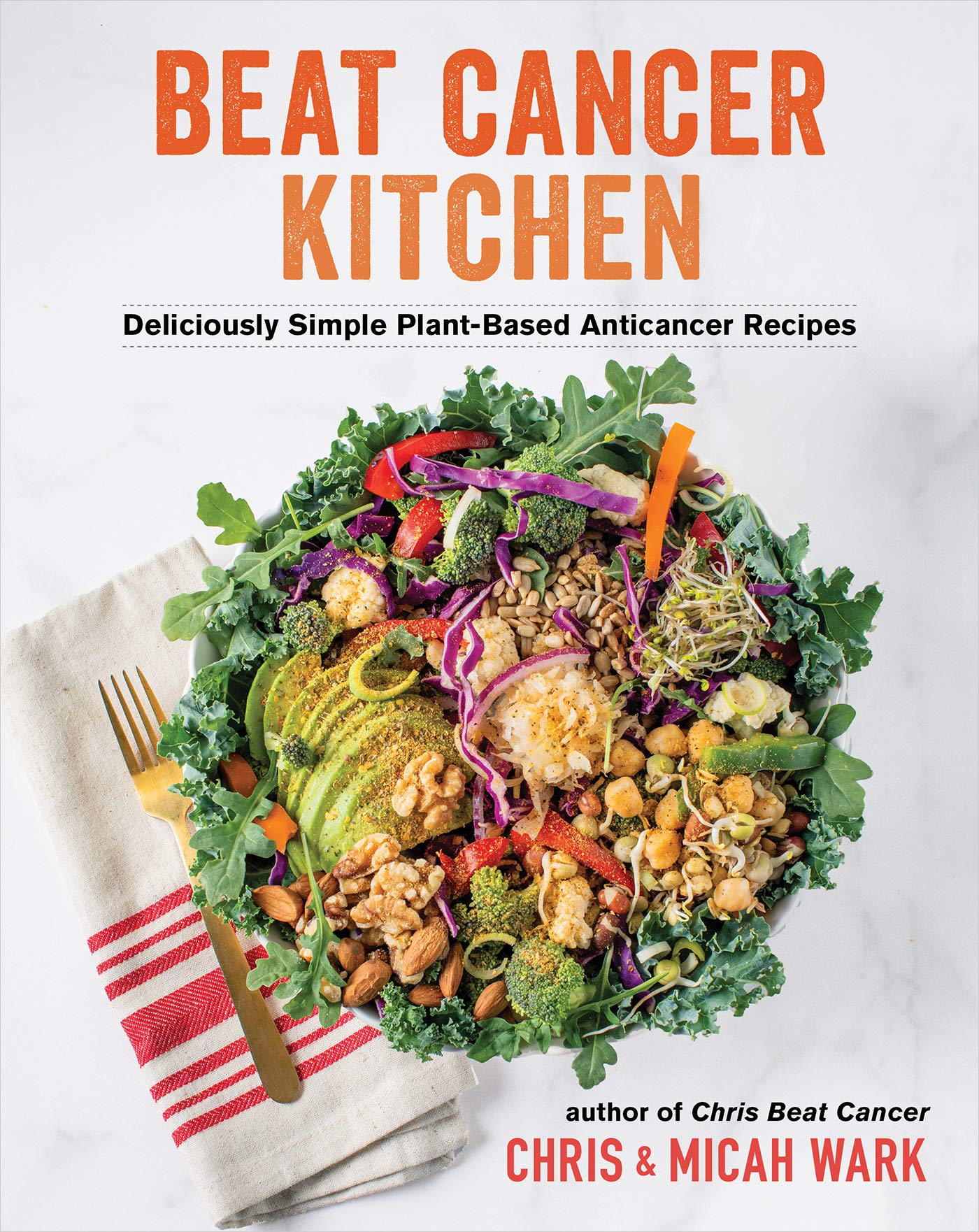
Supply your body with an abundance of life-giving nutrients to repair, regenerate, detoxify, and heal, all while providing the comfort that all good food should. Following the success of Chris Beat Cancer, Chris Wark and his wife, Micah, share whole-food, plant-based recipes that appeal to the whole family, whether you are healing from cancer, actively eating a diet to prevent it, or simply seeking a healthy lifestyle for you and your loved ones.
Fruits, vegetables, mushrooms, nuts, seeds, legumes, whole grains, herbs, and spices are the foundational ingredients of Chris's anticancer diet. Complete with tips for diet optimization, this cookbook will get you in the Beat Cancer Mindset and guide you onto the road to wellness.
Inside you will · easy-to-make nutrient-rich recipes for healing, · family-friendly recipes for prevention and overall health, · full-color photos of each recipe, and · salad, juice, smoothie, soup, side, veggie bowl, breakfast, lunch, dinner, and dessert recipes galore!
This cookbook has glossy full colour photos of each recipe and over 125 recipes for prevention and healing. I found many easy to make recipes that I want to try and listed them on a bookmark. 4 stars
What a wake up call! Knowing now we need to make a change, this book is truly a wonderful way to continue our love for cooking while using plants. So many delicious recipes here. The Mushroom Oat burgers are so good.
This is an excellent cookbook. I am not a vegan, but I do enjoy many vegan meals and was looking for some new recipes. I have tried a number of recipes that don’t disappoint. The blueberry-lime- hibiscus smoothie is so delicious and refreshing! I make it over and over. The cookbook has pictures for each recipe (very helpful). The author is also not annoyingly preachy about everything being perfect or it’s no good. He just kindly says for you to do your best - like if there’s no organic celery, just get regular, okay and live life. A number of recipes were also appealing to my kids - like the tamale pie. I appreciate this approachable cookbook to increasing my fruit and veggie intake.
This book is just not good. Chris says, he’s not a good cook and doesn’t like to do it and he is not kidding. The 3-5 recipes worth maybe trying are actually in his original book Chris Beat Cancer and the rest of recipes presented here are just gross. They’re put together by someone who will just kind of hold their nose and drink or eat whatever in the name of health so this isn’t really a “cookbook,” in my opinion. Half of it is salads, smoothies and the roasting of a few vegetables. There are so many better healthy cookbook options out there, plus Pinterest. Therefore, this isn’t something I would recommend.
I liked that many of the recipes were accompanied by science regarding the cancer fighting benefits of the ingredients.
The author recommends 13:11 fasting (5). “A study found that breast cancer patients who did not eat their meals within an 11 hour window each day were found to have a 36% higher risk of [cancer] recurrence than those who did. Eating your meals in a smaller 8 hour window with up to 16 hours of nightly fasting could be even more beneficial, especially if you have weight you want to lose” (5). “Late-night eating is a destructive habit that interferes with the incredible healing benefits of sleep and promotes excess body-fat retention and weight gain. As a general rule, it’s best to go to bed on an empty stomach several hours after dinner” (5). “Do not skip breakfast and eat only lunch and dinner. Your body processes food most efficiently and burns more calories from food eaten early in the day. One study found that a meal eaten at 8 p.m. caused twice the blood sugar spike in humans as the exact same meal eaten at 8 a.m. A late dinner is like eating double the calories” (5).
Meat: “Eating just 1.75 oz of processed meat per day—that’s about two strips of bacon—increases your risk of colorectal cancer by 18%” (5). Red meat and processed meat consumption is correlated with increased risk of colorectal, esophageal, liver, lung, and pancreatic cancers” (6). “Another notable study found that middle-aged Americans who reported eating a high-protein diet with more than 20% of calories coming from animal protein were four times more likely to die of cancer or diabetes, and twice as likely to die of any other cause over the next 18 years. But those who ate a plant-based diet did not have any increase in risk” (6). Saturated fat from whole plant food (such as nuts, seeds, and avocados) doesn’t increase cancer risk, but saturated fat from animals does (6). Heme iron is found in meat, but excesses of it in the body increases cancer; non-heme iron is safer, and it’s found in plants (7). “One large study found that people with the highest consumption of meat cooked at high temperatures had a 70% greater risk of pancreatic cancer compared to those with the lowest consumption of well-done meats. . . . Chicken cooked without the skin has been found to have twice the levels of mutagens as chicken cooked with the skin on” (7). Methionine is an amino acid in animals products, and cancer cells depend on it (6). I guess not all amino acids are a good thing? Avocado, lentils, and sweet potatoes are the foods on my spreadsheet which are low in methionine.
“Gas ovens and cooktops produce air pollutants, namely carbon monoxide and nitrogen dioxide, which is also found in car exhaust. A major study found that children who live in a home with a gas stove have a 42% higher risk of asthma symptoms and a 24% increased risk of being diagnosed with asthma. Nitrogen dioxide has been identified as a contributer to respiratory, cardiovascular, and immune system dysfunction and deterioration” (10).
“Don’t be afraid of the sugars in fruit. Fruit is not the cause of obesity, chronic disease, or cancer. You don’t get cancer from eating too much fruit” (3).
“Choosing organic produce reduces your exposure to toxic chemical herbicides, fungicides, and pesticides like atrazine and chlorpyrifos, as well as Roundup, which is a glyphosate-based herbicide that is sprayed on genetically modified crops as well as many conventionally grown crops to dry them out before harvest. A study worth mentioning found that urinary pesticide levels in humans dropped by about 89% after just one week on an all-organic diet. . . . If organic produce is not available to you, eat tons of fruit and vegetables anyway. They are still incredible health-supporting foods and the benefits outweigh the risks” (3). “The most effective way to reduce up to 74% of the pesticides from produce appears to be soaking them in a simple homemade solution of one part salt in nine parts water for 20 minutes” (4).
Rice can have arsenic in it, but you can protect against arsenic by eating turmeric and beta-carotene foods like carrots and yams (what a coincidence that they’re all orange!) (9).
Foods that fight cancer: Allium foods: garlic, leeks, onions (raw is better) Cruciferous veggies: broccoli (sprouts even better - but don’t eat more than four cups daily), cabbage (especially red/purple), cauliflower, kale (raw is better for those four), arugula, watercress, brussels sprouts, bok choy, collard greens, radishes, turnips, kohlrabi, mustard, horseradish, wasabi Asparagus Beets Black beans Blueberry Dandelion greens Green beans Honey Kimchi Maple syrup Molasses Nutritional yeast Nuts Oils: olive, flax, sesame Oregano Peppers Pineapple Rutabaga Sweet potato (especially purple) Tomato Turmeric Whole grains If you already have cancer, eat 100% raw food for the first 90 days, then 80% raw from there. After you’re out of the high-risk zone, you can eat less raw food.
Tips: “Cruciferous veggies are most potent when consumed raw, but if you plan to cook them, chop them and allow them to sit for 40 minutes before cooking to allow the sulforaphane reaction to take place. You can also add mustard powder to cooked cruciferous veggies to facilitate this chemical reaction” (21). “Let the broccoli, cauliflower, cabbage, onion, leek, and garlic rest for 20-40 minutes after chopping and before cooking to maximize the formation of anticancer compounds like sulforaphane” (23). Whole oat groats and steel-cut oats are healthier, but rolled and quick oats are better than none (47). “Nearly all the heat in peppers is in the seeds, ribs, and membranes. If you prefer a milder jalapeno, simply slice the pepper lengthwise and use the top of your knife to scrape out the seeds and lighter-colored ribs and membranes, discarding those parts” (48). “A meta-analysis of more than 180 observational studies and 50 clinical trials from the past 40 years found a 15%-30% reduced risk of death and chronic disease in people who ate the most fiber, compared to those who ate the least. A fiber-rich diet was linked to a 22% lower risk of stroke, a 16% lower risk of type 2 diabetes, a 16% lower risk of colorectal cancer, and a 30% lower risk of death from heart disease. To drop your risk, you need at least 30 grams of fiber per day. But fiber supplements aren’t the solution. The majority of fiber studies are on people who consume fiber from whole-food sources” (125).
A beautifully illustrated and delightful book filled with wholesome plant-based recipes. The nutrional yeast added to his sprinkles and vinaigrettes may not be suitable or safe for everyone, depending on their health condition, and the same applies to incorporating citrus fruits, which can interfere with certain types of medication. Other than that the book includes a lovely mix of soups, salads, tasty bowls and deserts using fresh, organic ingredients believed to contain cancer-fighting properties. Although the dishes presented here are marketed to 'beat cancer', I can see how many of these recipes might be helpful for people suffering from a variety of non-cancerous chronic conditions too.
You'll want to read this book if you're looking for great information on foods that help fight cancer. Not only does this book explain why certain foods help prevent cancer, but it also includes recipes. Even if you don't like the recipes given, you'll be inspired to use your new knowledge to be creative in ths kitchen and make your own new recipes.
Thank you Chris and Michah for publishing this cookbook. My late partner had lung cancer so during his chemotherapy and radiation treatments his food palette changed so I had to add new meals into the daily rotation. Not only is he eat well we still had our regular proteins but had added more of a plant-based diet to our lifestyle.
Lord of tasty looking plant based recipes but too intensive for what I’m looking for right now. All plant based and leafy greens are not sounding appealing at the moment
Love learning new recipes for healthy foods. The most interesting one in the book has to be the BBQ brussels. Book was well organized. I loved that pictures of the finished recipes were included.
Delicious recipes sure to please the most picky palates. Everything is natural and plant-based. No fussy recipes with hard to find ingredients. Easy to follow and easy to cook!
I went through every page as soon as I got it. I definitely loved the content. I was a bit shocked to not see more squash options. I definitely love how Chris and Micah addressed and provided recipes for all meals of the day even some desserts.