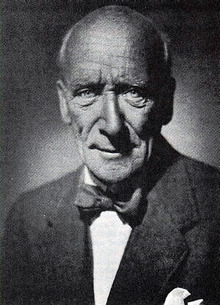
”Certain houses, like certain persons, manage somehow to proclaim at once their character for evil.”
This first sentence of Algernon Blackwood’s short story collection The Empty House may already suggest that we are about to experience more traditional in-door horror rather than the kind of fare we might expect of Blackwood – stories like “The Willows” or “The Wendigo” that deal with the more nameless, whispering horrors hovering over a seemingly idyllic countryside. In fact, most of the stories presented in this book tend to be classical ghost stories, telling us of haunted houses, spectres that are made to haunt the places of their sufferings or crimes, or others that return to keep a promise made in a more light-hearted vein. The stories fitting into this category are the following:
The Empty House: A young man and his aunt spend a night in a house that is rumoured to be haunted. The story itself is not really very remarkable, but there is one outstanding passage in which Blackwood describes the effect of the terror experienced by the aunt, on her outward appearance.
A Case of Eavesdropping: Another classical ghost story, which accidentally has the same protagonist as the story mentioned above, namely young Jim Shorthouse, who will appear in two more stories in this collection. It seems, however, as though, there are at least two Jim Shorthouses in the four stories concerned, because the character does not really act coherently. The story plays in rented rooms, where Jim Shorthouse involuntarily eavesdrops on the conversations of his neighbours, and it is also remarkable for the grim humour linked with the extremely practically-minded Yankee landlady.
Keeping His Promise: Here a young student who is cramming for an exam is surprised by a nocturnal visit of an old friend of his, who has fallen into disgrace with his family. Soon, however, the old friend displays some unsettling characteristics.
Smith: An Episode in a Lodging-House: A story about a student who is bothered by his mysterious neighbour that seems to dabble in black magic. It is an atmospheric tale, but it reminded me of a similar story written by Arthur Conan Doyle.
There are two more unusual ghost stories, namely The Wood of the Dead, which is quite a melancholy tale reminding us of the inevitability of death as a fact that one may just as well embrace with equanimity no matter how sad it might make us. This story has quite a brooding touch to it. Quite another mood will be created in With Intent to Steal, a tale that witnesses an older Jim Shorthouse and a younger man (the first-person narrator) spend the night in a barn that is haunted by a particularly malicious ghost intent on stealing people’s vital energy.
The Strange Adventures of a Private Secretary in New York would be a very good story, had the author found it beneath him to peddle anti-Semitic stereotypes. Those bigoted slurs aside, however, the story will enthral its readers because of its grotesque absurdity and the nightmarish menace that becomes more and more obvious behind the genial façade of the old businessman Jim Shorthouse has to pay an important visit to. All in all, this story may remind you of the style of Poe or Robert Aickman.
There are two stories that do not really deal with supernatural horror but more with crime. Whereas A Suspicious Gift is a most silly and exaggerated endeavour – additionally spoiled by a shaggy-dog ending –, the story that concludes the collection, Skeleton Lake: An Episode in Camp is of more interest. Suppose you see two people go out hunting, and later find only one of them returning, in a distraught state of mind, telling a story that not only has holes but also inconsistencies – what would you believe had happened in that dark forest, with only the two people around?
The best story in this collection is the second one, A Haunted Island, where a young man wants to use the seclusion of a Canadian island in order to prepare for an exam. Haunted by vague premonitions, he one day no longer finds himself able to sleep in the room he has hitherto occupied without seconds thoughts, and consequently moves into another part of the lonely house. Then, at night, a canoe with two ghostly Indians arrives … This story shows how Blackwood is able to create a chilling atmosphere of terror and suspense, keeping his reader involved and ready to share the emotions experienced by the protagonist. This foreshadows a lot of Blackwood’s later writings.
To conclude, one might say that the bulk of the stories may be traditional with regard to its subjects and settings but still Blackwood enriches most of these tales by his fine manner of describing human emotions, which was to reach its full scope in his later stories. I could not help noticing, however, that most of these stories end rather abruptly, giving some of them a rather unfinished touch, which does not always leave the reader in a satisfied state of mind.