Amsterdam, August 1928. The crowd goes wild as the world's star athletes take off from the starting line for the crowning event of the Olympic the marathon. Few so much as notice the short, slight Algerian runner—a factory worker by day—who wears the French jersey. But that was before a strong wind, cramps, and 42.195 kilometers of ruthless competition combined to produce an astonishing upset...
Nicolas Debon is a freelance illustrator in Versailles, France. In addition to his illustrations for the Warlord Series, he is also the author/illustrator of several other books, including two Canadian Governor Generalís Literary Award finalists.
Great little book showing part of the 1928 Olympics in Amsterdam, and how a true underdog becomes the winner of the men's marathon. It's a book full of pages of Dutch flat landscape, with corn waving in the wind, and the runners exhausting themselves. We also get to see sports jounalists trying to get their hands on the story, which becomes a race in and of itself, because nobody is really covering the underdog.
I really liked the art, and the soft, reduced sepia-like colouring. It captures a sense of time, and with the Dutch country, a lot of space.
Nicolas Dabon, Marathon adlı çizgi romanında, 1928 yılında Amsterdam'da düzenlenmiş olan Yaz Olimpiyatları'nda maraton dalında Fransa adına yarışan Cezayirli atlet Boughera El Ouafi'nin hikayesini ele almaktadır. Yarışmanın favorileri arasında gösterilmeyen El Ouafi, azmi ve mental sağlamlığıyla ipi önde göğüslemeyi başarmıştır.
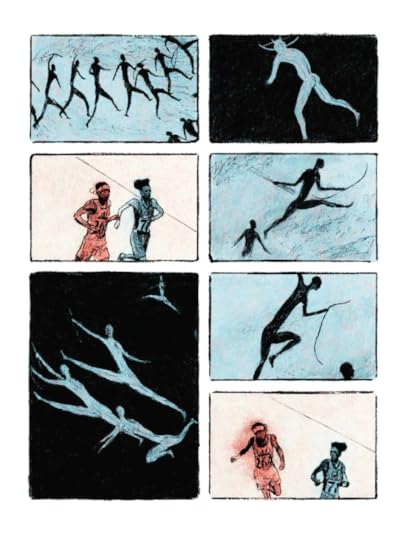
Dabon, maraton koşusunun yalnızca fiziki zorlayıcılığının olmadığını, bununla birlikte mental olarak da güçlü olmak gerektiğinin altını çizmektedir. Bir fabrikada işçi olarak çalışan, henüz bağımsızlığını kazanamamış bir ülkenin evladı olarak (Cezayir 1962 yılında bağımsızlığını kazanmıştır) ikinci sınıf vatandaş muamelesi gören El Ouafi, maraton boyunca sporcu kimliğinin dışında kendi varlığının tanınması için de koşmaktadır adeta. Dabon, maraton boyunca zaman zaman El Ouafi'nin zihnine girerek, yarışta onun mental olarak güçlü kalmasını sağlayan düşüncenin, spor dışında da hayata tutunabilmek için güçlü olmasından kaynaklandığını vurgulamaktadır. Çünkü sömürge bir ülkenin vatandaşı olarak varlığını ispat etmek iki kat daha zordur. 1. Dünya Savaşı'nda Fransa adına savaşan ve hayatını kaybeden Cezayirlilerin yaşadıkları koşu boyunca El Ouafi'nin zihninde canlanmaktadır.
Dabon, çizimlerinde kullanmış olduğu kırmızı ve bordo ağırlıklı renklerle adeta Amsterdam şehrine saygı duruşunda bulunmaktadır.
Not: 1959 yılında El Ouafi'nin Paris yakınlarında işlettiği restoranına kimliği belirsiz kişiler tarafından silahlı saldırı düzenlenmiş ve bu saldırıda El Ouafi ve kız kardeşi hayatını kaybetmiştir. Cinayeti kimin işlediği aydınlatılamamıştır.
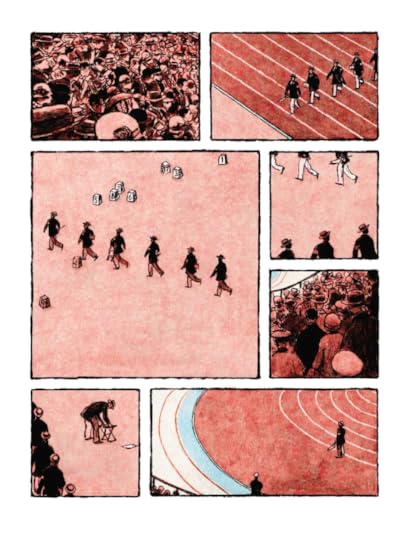
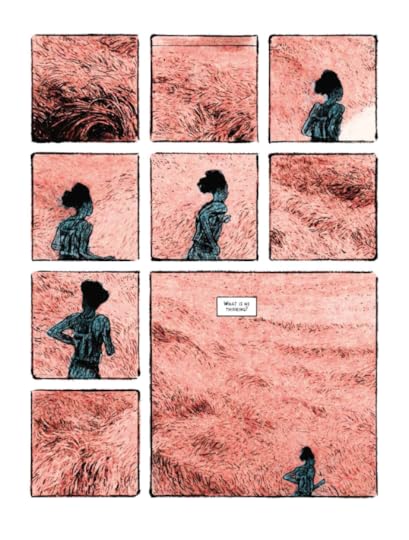
When you consider a graphic novel about a marathon – here, the one for the 1928 Dutch Olympics – has to be frame after frame after frame of people running, this is actually a lot more compelling than you might imagine. Visually, at least. Starting with the immense, bulldozing kind of grandeur of the Amsterdam stadium (or so it looks here, it's actually a squat, one-tier arena now, as it was back then) we see the race play out – leaving the city, stringing out into the countryside, and passing wheat field after wheat field, before turning into what was apparently a rather fierce headwind.
Now, I could mention what the book is really about, but that would kind of spoil the surprise of seeing who won. And the text needs all the help it can get, almost – it starts with one chap yacking on and on from the stands of the stadium to the chap next to him, discussing all the key entrants, and letting us know Japan had a track and field team at the Olympics for the first time ever. That kind of thing. But lo and behold, the guy next to him gets up, and dashes for the press bus, where one wordsmith reporter per country could tag along, bypassing the racers copious times and watching them pass from every check- and relief-point along the course. All of the text, then, is exposition, with very little in the way of dialogue, and even less in the way of realism when it comes to having people monologue the way they do here.
I still think I liked the book, however – the stark lack of colour, with a brick sepia (were such a thing to exist) and some touches of blue wash the only palette used, quite distinctive. Yes, the number of non-diegetic images (river, fields, river, fields, etc) is clearly there to provide visual interest, but it actually works. This is a marathon, after all, not a sprint, and the same applies to the book as the race itself. It can't just concentrate on the runners, not when the boring scenery is there too. It also has the appeal of dipping into what should be quite well-known sports history (this is the Olympics, after all), and reviving an unsung legend of road-racing. Get past the clumsiness of the script, and this is a three and a half stars read – not the full five onion rings, but for sports book fans well worth the investment.
I’m not generally into sports related films, books, or comics, but Marathon by Nicolas Debon is different than your usual overdone inspirational schlock. I’m not sure if it’s the minimalist artwork that captures the feel of watching old historical footage, or the gorgeous panoramic scenes, but this book is a work of art. Taking place during the Ninth Summer Olympiad in Amsterdam, Netherlands, this tells not only the story of a marathon, but a story of the world rebuilding and clinging to peace after a bloody world war that scarred Europe forever. Many men participated in the marathon, all from every corner of the Earth, but none would be prepared for their worst adversary for such a race – incredibly strong wind running head-on.
This graphic novel has dialogue, but the majority of the book is completely wordless, allowing the reader to savor the artwork. We see Amsterdam’s Industrial cityscapes, lush fields, and crowded streets. The majority of the story doesn’t really have a POV character, but it does follow Algerian-born marathon runner Boughera El Ouafi quite a bit in the back half. That’s no surprise as he was the man that won a gold medal for France in this very race. The book tries to get in his mind as he runs, thinking about his relationship to his sponsoring country. Is he upset about the numerous friends and family he had that were lost in the endless meat-grinder that was World War I? Is he upset about the fact that he did not chose to become “civilized” when Frenchmen came into his village as a youth? We don’t really know for sure, but what we do know is that he perseveres and triumphs.
This book contains an afterward full of historical photos and information about the race and Boughera El Ouafi in particular. I enjoyed seeing these pictures to see how closely the artist realized the event.
I really liked this book, despite not generally caring too much about running. I went into this not too sure about how I would feel, but the analysis of post World War I Europe and gorgeous artwork impressed me. This would be a great gift for someone who runs, a history buff, or anyone that likes more subdued comics. I will definitely need to follow Nicolas Debon more in the future!
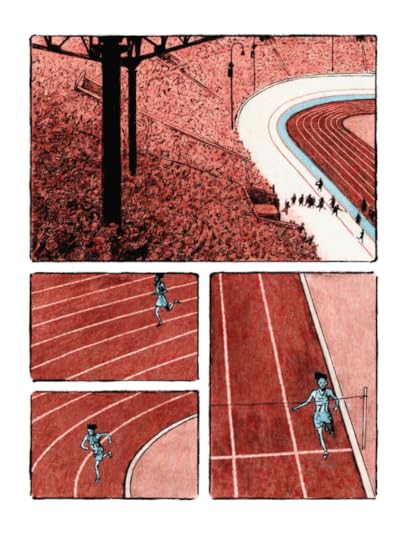
This is surprisingly gripping. It is short but packs a punch as it tells the story of Boughèra El Ouafi who was an Algerian marathon runner who ran for France in the 1928 Olympics.
El Ouafi’s victory was a surprise. According to Wiki ‘he ran behind the leaders for the first three quarters of the race, overtaking them some 5 km before the end. He was never caught by any of the other runners, and finished first, 26 seconds ahead of second-placed Manuel Plaza from Chile.’ El Ouafi was the only representative of French athletics to win gold at the 1928 Olympics.
He toured the United States but was then disqualified as an amateur. He opened a cafe in Paris but was forgotten until 1956, when another Algerian, Alain Mimoun, also won the Olympic Marathon. At this time El Ouafi was a pauper struggling to get by. He was shot dead some years later during the French/Algerian war. The shooters were never found.
I am not going to say anything about French policing and whether they even bothered to conduct a proper investigation. It is a sad story about a man who came from nowhere and won the gold for a country that seemed less than grateful. At least these days France does seem far more appreciative of its athletes and footballers irrespective of their ethnicity.
I wish I knew more about El Ouafi and his struggles. Even to be entered into the Olympics was a huge challenge during that era of colonialism and just a few years before the outbreak of World War Two. What an amazing man.
I enjoyed this graphic novel. It had a very simple way of telling this emotive story. I don’t think I liked the colouring that much. It was just too drab but it doesn’t take away from the story. I now have to go and find out more about this amazing man. The best stories are always the ones that leave you wanting to know more.
Copy provided by Europe Comics via Netgalley in exchange for an unbiased review.
Dit boek nam ik voor mijn vriend Job mee van de bibliotheek, omdat we dit jaar onze eerste marathon gaan lopen, in Amsterdam.
Heel leuk om de prachtige tekeningen te zien van de perfecte looppassen van deze marathon-mannen. Hoewel mijn favoriete plaatje het bewegende riet* is, langs de rivier de Amstel.
De winnaar finishte na een inspanning van 2 uur, 32 minuten en 57 seconden. Bijna 100 jaar later raakt de snelste atleet na 2 uur, 3 minuten en 31 seconden het finish-koord. Wij hopen dit jaar in ruim 4 uur het Olympisch Station in Amsterdam te bereiken.
Ce roman graphique a été une bonne surprise. Ayant eu la chance de rencontrer Nicolas Debon au salon du livre de cette année, j’ai décidé de le prendre car la couverture et le synopsis m’avaient interpelée. Les couleurs donnent un côté assez vintage que j’ai bien apprécié. L’histoire est intéressante, d’autant plus que l’auteur, a la suite du roman, nous partage la vie post-olympique de l’athlète. Une histoire méconnue et ce livre est une belle mise en lumière d’El Ouafi Boughéra.
Le 5 août 1928, l’Olympisch Stadion d’Amsterdam est en effervescence. C’est les IXe Jeux Olympiques et les coureurs du marathon s’apprêtent à rentrer en piste pour s’élancer pour les 42,195 kilomètres du circuit sillonnant les marais et la ville. Parmi les concurrents, il y a les favoris : l’équipe finlandaise, qui rafle presque toutes les médailles en athlétisme, les Américains toujours bien équipés, les Anglais solides sur leurs jambes, les Japonais qui se révèlent redoutables, et l’équipe française avec parmi les participants, El Ouafi Boughéra, un jeune ouvrier algérien travaillant à l’usine Renault de Billancourt … J’avoue que je ne suis pas fan de sport donc je ne suis sûrement pas la meilleure lectrice pour lire ce genre d’album ! Mais il était dans la sélection de titres pour mon club lecture spécial BD donc je me suis lancée malgré mon peu d’intérêt pour le sujet. La première chose qu’on ne peut que remarquer, c’est le graphisme (d’autant plus que l’album est assez grand) aux tons rouge-orangé qui replonge les lecteurs en 1928 et qui rappelle les photos de l’époque, avec un petit côté un peu flou sur les détails (il y a aussi des touches bleu-vert pour souligner certains coureurs mais j’avoue que j’ai été moins fan de ce choix). Donc, visuellement, cela m’a quand même assez plu et j’ai trouvé que cela mettait bien dans l’ambiance, comme si on regardait un vieux film. Car il faut dire que le récit est très axé sur le visuel, avec une découpe des évènements très cinématographique : on suit littéralement les coureurs dans leur avancée, au côté du journaliste qui effectue son reportage. Mais au fur et à mesure de ma lecture, je me demandais quand même s’il allait y avoir autre chose que cette course suivie pas à pas (ou foulée par foulée, ce qui serait mieux adapté !). Et bien, non, pas vraiment ! L’essentiel de l’album se limite à ça jusqu’à la victoire finale inattendue. Le plus intéressant pour moi se trouva dans les dernières pages, quand l’auteur évoque le ressenti du marathonien, qui se révèle poétique et juste. De même, j’ai apprécié le mini dossier (deux pages) qui revient sur l’histoire de cette victoire et sur la vie du vainqueur et son devenir (on voit alors comment les choses se passaient à l’époque avec tout ce qui pouvait être écoeurant dans la réaction des instances sportives). C’est un album vite lu mais que j’ai trouvé malgré tout un peu trop long et peu passionnant (mais mon chéri a beaucoup plus aimé donc mon manque d’intérêt pour le sport a dû jouer !).
This is a marvellous comic that covers the marathon of the 1928 Olympic games and is a true story. What is there not to love about a true story comic. The pictures in this comic are so powerful the author was a genius putting this comic together. The pictures are rather simple but that is so fitting and really adds to tension of the book. What stood out the most was the use of colour throughout. This really created such a wonderful and powerful atmosphere. The use of a brown as a base colour was rather brave of the author but it works perfectly creating the old feel to the story. Then to use the splashes of colour to allow things to stand out was pure genius. This comic had me gripping the edge of my seat wanting to shout out who is going to win! All the different elements of this book really tied together to make a spectacular reading experience. Its such a powerful and very fitting tribute to the winner of the race. I loved the extra information at the end about the winner and the injustices of the rules of racing in past Olympics. I can't recommend this comic enough its brilliant, inspirational and suitable for all ages. So much praise goes out to the author and publishers for creating this perfect comic. I will definitely be keeping my eye out for more comics by this author.
A graphic novel about the 1928 Olympic (men’s) marathon race. Expressive art combined with an inspiring story.
[What I liked:]
•I really like the art style. Muted colors & a sketchy style are balanced with an astute eye for detail & realistic depictions of the human form in motion.
•The way the panels are arranged, with some large, panoramic views, & some smaller closeups create a sense of time progressing & movement through space. It has a nice forward momentum.
•The notes at the back give great context & background on the race, the characters, & the inspiration for this graphic novel. It’s clearly well researched, & I appreciate the notes & reference materials cited.
[What I didn’t like as much:]
•I enjoyed this quite a bit, but if you’re not interested in sports/running/history you may not find it interesting. It’s basically a depiction of a particular historical marathon race.
CW: racism/colonialism
[I received an ARC ebook copy from NetGalley in exchange for my honest review. Thank you for the book!]
A sepia-coloured documentary graphic novel telling the story of the marathon race at the 1928 Amsterdam Olympics. I personally didn't think enough really happened in the race to pad out this fairly lengthy book, much like the Tour de France graphic novel I read recently, with lots of redundant panels of feet and runners from every angle. This was nicely drawn and moody, just not particularly unusual compared to pretty much any other marathon that was ever run. At the end, there are a few textual pages about the real participants, along with a few photos from those Olympics. Some of the details about the high jumper jumping over 3m and the backwards caption to the French line-up make me wonder about the accuracy of all this, but it was arguably more interesting than the comic part of the book anyway. 3/5
(I received an ARC of this book through NetGalley in exchange for my honest opinion.)
Amsterdam, August 1928. The Olympic Games are taking place and now it's the time for the marathon. Some of the runners are introduced to the reader before the race begins and then we follow them as they try their best to keep up and get their long-awaited medal.
It was definitely an interesting story, but I did not really enjoy this. I think it is because of the lack of structure and the messiness of it all. It was maybe intentional on the part of the author, but it just wasn't for me. I liked the ending of the story a little more, especially finding out who the winner was and then getting to read more of his story and what happened to him after his victory.
I received a Free digital version of this book via NetGalley.
Marathon retells the Marathon race of the August 1928 Olympics held in Amsterdam.
We're introduced to the setting and the hopeful competitors by a journalist watching from the stands. The rest of this short work covers the race and its victor, Boughera El Ouafi, a French Algerian. Told from the perspective of the journalist we see the runners as they compete and what they might be thinking.
While short in length, this book is full of beautiful art work rendering the city and fields through which the runners pass. It also touches on colonialism, but serves as a fascinating study on the mental motivation and discipline of runners.
'Marathon' with story and art by Nicolas Debon is a graphic novel about the marathon at the Amsterdam Olympics in 1928.
Told by a reporter at the 1928 games, this book follows the various runners in the marathon event. From crowd and country favorites emerges an unknown runner from Algeria. He is a factory worker wearing the French jersey. While other runners falter in the wind and terrain, he plods on and plots his chance to win.
Told in a mostly wordless format, I liked this story of athletes battling the elements and each other. The sepia tone style art really worked for this story.
I received a review copy of this graphic novel from Europe Comics and NetGalley in exchange for an honest review. Thank you for allowing me to review this graphic novel.
Aux jeux olympiques d’été à Amsterdam en 1928, a eu lieu une petite surprise lors de la dernière épreuve, le marathon.
Nicolas Debon s’empare de cet événement pour raconter bien plus que ça. Et c’est vraiment là où cet album est très impressionnant.
Car c’est avec une grande économie de texte que cette histoire se révèle finalement très parlante. Au travers du cette épreuve d’endurance, elle nous raconte le racisme et sa violence, le dédain colonialiste, toute sa suffisance et son arrogance.
Pour se donner l’envie d’aller chercher encore un petit peu plus loin, un court explicatif et une brève biographie complète cette magnifique BD au style très affirmé
Amsterdam. Jeux olympiques de 1928. Épreuve du marathon. Dans les favoris, les Américains, qui se croient si forts, un Chilien qui n’a rien perdu chez lui, quelques Anglais, les “Finlandais volants” qui remportent tout. Les Français sont quatre, dont un “petit arabe”, manœuvre chez Renault, qui, après avoir “grandi sous le soleil des colonies”, a forcément en lui “une paresse héréditaire, une passive nonchalance qui l’empêche même de concevoir la compétition”. Mais, ce petit arabe, El Ouafi Boughéra, va le gagner ce marathon. Cet album est magnifique, par le dessin, par les couleurs, par l’histoire disparue de l’Historie qu’il raconte. Extrêmement touchant et finalement plutôt triste.
I thought this was an excellent example of sequential art. I imagine some of the panels could be made into an effective flip book—in a way it was like watching a documentary of the 1928 Olympic marathon runners. I loved the low-color images, and the contrast of running with scenes of the wind in fields, horses running through a field, scenes of a factory, and cave art were beautiful. The historic record this was based on made a good story, and it was powerfully told.
Très beaux dessins, mais j’ai l’impression de ne rien avoir compris à l’histoire… surtout la première moitié du livre. Peut-être que les connaisseurs d’athlétisme se sentiront moins perdus en le lisant!
The story of an underdog, slowly overtaking the competition. It does feel like a slow read overall though and the art doesn't really help to maintain focus.