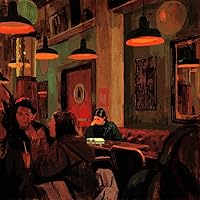
Когда Роман Михайлов сообщил, что заканчивает новый текст, КРОТ принялся гадать, что же получилось у него на этот раз: трактат о воздушных змеях, каталог граффити старой Калькутты, остросюжетный детектив, сборник анималистических рассказов? В результате выяснилось, что это любовный роман. Впрочем, ничего другого мы на самом деле и не ждали. Кроме лета.
По старой доброй и давно заведенной традиции КРОТ публикует полностью новый, седьмой по счету роман Романа Михайлова «Дождись лета и посмотри, что будет» (в авторской редакции). Вопрос выпуска бумажной версии пока не решен, но мы будем надеяться на лучшее. С уважением, КРОТ.
This novel has won Andrei Bely prize this year, the Russian equivalent to the Goldsmith prize. Unfortunately, I am not sure it would be translated any time soon as even in Russia it is still on the margins. But….
I’ve been thinking about this book a lot. And I am still not totally sure what is that I’ve read. But I can say categorically that it is the one of the most puzzling, unusual texts I’ve read. I should not like it. Superficially it is about the 90s and it is about coming of the age in this time. It is the most exploited topic in the Russian literature for the last 20 years or so. All these metamorphoses and transitions - bandits and thieves are becoming the politicians and businessman; education is replaced by money; the falling of the old social system and the absence of the immediate legitimate replacement; its impact on people: disorientation, despair, loss. It has been done so many times that I am almost immune to those stories especially knowing that they somehow very similar to each other while they are missing something essential. It was not only about that in real life.
This is superficially the same. It is told from the perspective of a boy from a provincial town. But reading about all these bandits, card swindlers, junkies, corrupted officials etc., I could not get rid of feeling that I am deciphering a certain code. There is of course a perfectly visible much deeper layer as well. The book is about idea of love. Love as concept, love as an attempt to maintain the constant attention on. The subject in someones mind. This could be a tiresome effort and come at high cost. Also it is about borderline states between sanity and madness. Is there a border at all? However, I still think there is something even deeper than that in this text which is difficult to verbalise per se. It is the relationship between the metaphysical and real. And how sometimes the one is been forcefully thrown into the other.
Carl Jung quipped: “People don't have ideas. Ideas have people.” And, I think this text is about it. But, in this case, it is not necessary ideas, it is more like the totality of visions and thoughts and they are amplified by the mental states of the characters.
The boy possess a number of books. He recognises his real life friends and acquaintances in the illustrations within the books. The symbolism of the books’ characters seems to be projecting into the fates of the real people. Or so it seems to the boy who sometimes searches for the explanation and sometimes just let it play its course. Here, it is not a tired magic realism trope. It is more archetypical. I was thinking about some plausible explanation how this resemblance could exist even in his mind. Only solution I could think of is that any image is an accumulation of the centuries worth knowledge of the human nature which is getting passed on through certain mechanisms, the most obvious - culture, but many less obvious ways probably exist as well. So it is not surprising that a certain personality in real life would correspond to an image which was conceived totally independently from that person. It is my version. But it could be many. Just interesting puzzle to think about. And there are many others.
There are playing cards. Infinite amount of their combinations leads to infinite possibilities of creating a symbolic language. Who could think that a process of shuffling the cards in a certain way might trigger the boy feeling physically dizzy and eventually ending up for a spell in a mental hospital. The cards play both meta-fictional and the direct role in the plot.
Mental institution as a mirror image of the world with its topology, symbolism, language and even performances as a therapeutics is another theme.Though the word “theme” is the last word which comes to mind when I think about this novel.
But whatever ideas behind this, it is an exciting text. The words are simple, but the metaphors are weird and beautiful. The syntax is unusual as well. For example:
“Behind the window, the snow was falling, or bits of a paper, or tea leaves. The downed birds.”
That full stop there splits the series of images as if the camera moves away from one window to another.
Or this one about memory:
“Childhood dreams are floating in memory like in opaque water. And not only the childhood ones. Memory in general is one eerie opaqueness. The more you work with it the more amazed you are by its cunning and perfidy. It can suck you in like a bog and then spit you out and leave you in a full oblivion. What did really happen and what did not.”
The main narrative imbeds several smaller texts, something like fairytales or little legends. They by themselves are pretty striking philosophical etudes. They are referred in the text as “the keys” that might be spotted or not. It might be another reference to the archetypes in the Jungian sense. But again more importantly how beautiful those little stories are. Here is the one:
People are setting up a screen looking at the sea. In the dusk, a performance starts. The girls from the village sing gentle songs and the lighting works in such a way that the floating silhouettes are appearing on the screen - big fluttering fins, shapes and sails of ships…The performance could continue for a whole night. But where is the audience sitting?
It is appeared to be that the show is performed for the fish. It reveals the human gratitude to it for being a prey. But also it shows that there is nothing to be afraid of getting into the net. On the contrary, it would start a long and pleasant journey of the fish’s soul to paradise.
Creativity and madness is always a popular subject in the arts. However in this novel the author is trying to show something different. Madness makes possible reaching something unknowable otherwise. People who are mentally divergent possess a sensitivity enabling them to travel in the places where the majority cannot go. Though this gift comes at a very high price.
----- Я исчерпала своё красноречие по-английски, поэтому просто пару цитат (quotes):
"Нет, снова я что-то не то описал. Есть многослойный пирог, в разных слоях которого — разные присутствия. В одном из них преодоления, становления и захват ресурсов. В другом — распознавания. В третьем — просто красота."
"Я им тогда рассказал про тоннели между событиями. Встречаешь какого-то человека, случайно, заходишь в магазин, например. И у тебя внезапно вспыхивает фрагмент из фильма или другая встреча, или не встреча даже, а незначительный и неприметный эпизод. И если смотреть на разумную связь, ее не найдешь. События связываются какой-то нитью, незаметной для ума."
"Ведь все эти годы я о ней только и думал. Не было ни одного дня, да не то, что дня, а даже мгновения, когда она не была бы в мыслях. Даже если и думал о другом, она все равно присутствовала. Как постоянное ощущение чистой и нежной жизни, как предчувствие радости и оправдание существования. Ведь не так просто оправдать существование. Требуется особая мелодия, проходящая через все моменты, леска, на которую нанизывается данность, и благодаря которой вся мыслимая реальность не рассыпается на бессмысленные фрагменты."
"Как будто то, что мы делаем в данное мгновение, кем-то рисуется и нам же сразу показывается. И все наши движения можно предсказать. Карта комнаты, мои перемещения, взгляды в окно, даже то, как лежу на кровати, нарисовано. Смотрю на эти рисунки и пытаюсь из них вырваться, придумать движение, которого там нет, и ничего не получается. Тело как будто закреплено и зажато конкретными действиями. И не только тело, но и мысли. Даже мысль о том, как вырваться из нарисованных карт."
Прекрасная книжка. Но зачем такой финал? Такое ощущение что автор под конец сам заблудился в своих картах и смог выбраться только пойдя на свет относительного хэппи энда… Хотя ладно :) Пусть всё будет хорошо. Что уж …
Я не поняла ничего, что можно было бы выразить словами, а, может, и вообще ничего. Но это было легко, и будто бы заговорщически повстречалась со своими. А ещё я не синестет вроде как, но как же всё переливается то бензиново, то интересным светом, цветом. Жду лето.
Рефлексия по детству это неизбежная тема таких книг, современная русская проза малых уровней наполнена всё-таки поисками себя, слога, а упирается в воспоминания. У Романа Михайлова получилось в почти три сотни страниц вместить калейдоскоп событий, но к концу что-то метафорично захлестнуло и не вкатило.
Любовь как проводник в схему жизни, там теряешь разум, рядом друзья из психушки, доктор, бандиты, выстрелы и выживание.
Фантастическая смесь Петровых в гриппе, лихих 90х, Ста лет одиночества, Мастера и Маргариты - магический реализм at it's best. Невозможно оторваться, но если-таки сделать паузу - очень сложно снова вернуться, настолько плотное письмо, в текст проваливаешься, каждый абзац хочется утащить в цитаты и выучить наизусть.
Когда только начал читать, думал что либо не стану дочитывать, либо дочитаю из принципа и поставлю 2 звёзды. Но в итоге ставлю пять, и с готовностью заявляю, что это весьма обаятельная книжка, с интересным тоном повествования, весьма шизовая и многих, думаю, может натолкнуть на разного рода рефлексию. Не для всех. И я бы не назвал это "лёгким чтивом". Слог лёгкий, да, но не смыслы.
Тыкает именно туда, куда и должно, идеально резонирует со стремительно обезумивающей действительностью окружающей среды, пятницы и, иногда, субботы, заставляет сомневаться в себе, своей реальности, делает это идеально, чётко выверенным ударом в челюсть, костяшками чуть правее восьмёрки, но потом больно и трудно придти в себя. 5 *