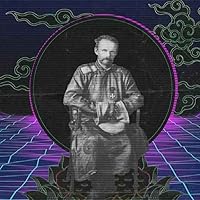
O livro " O Erro Espírita ", de René Guénon, é uma rica e valorosa denúncia das mentiras, heresias e desinformações da pseudo-religião do Espiritismo – infelizmente, tão popular e influente no Brasil. O autor, em um estudo de verdadeira erudição e sagacidade, expõem os "figurões" do Espiritismo, desmoralizando -- justamente -- as suas ações e doutrinas contraditórias; assim como retrata, com nitidez, os ambientes, circunstâncias e motivos desse movimento, desde as primeiras tentativas fracassadas na Europa, até seu surgimento oficial nos EUA, em 1848, onde foram protagonistas as Irmãs Fox. Ao ler a obra, o leitor compreenderá a natureza materialista desta seita, e entenderá o porquê de existirem tantos espíritas socialistas, comunistas, liberais e maçons.
René Guénon (1886-1951) was a French author and intellectual who remains an influential figure in the domain of sacred science,traditional studies, symbolism and initiation.
It's an interesting book, and the author makes a nice exploration on both spiritism and ocultism, but his approach to prove the fallacy based on his metaphysics concepts ends up falling short, leaving the exposed inconsistencies and incoherencies as the strongest argument, which isn't actually what he wanted.
Just like his "General Introduction", this book is much better than expected.
"D’autre part, la réfutation du spiritisme, en dehors de l’intérêt qu’elle présente par elle-même, nous a permis, comme nous l’avions annoncé au début, d’exprimer certaines vérités importantes ; les vérités métaphysiques surtout, alors même qu’elles sont formulées à propos d’une erreur, ou pour répondre à des objections, n’en ont pas moins une portée éminemment positive." **************** "On the other hand, the refutation of spiritism, apart from its self-interest, enabled us, as we had announced at the beginning, to express certain important truths; above all, metaphysical truths, even though they are formulated with regard to an error, or to answer objections, have nevertheless an eminently positive range."
Guenon's quintessential polemic style was insulting the intelligence of those he didn't agree with, but in the case of the spiritists, broadly defined as those who believe in communication with the dead, it's hard to object to such an approach. Examples cited of these neo-spiritualists of the 19th and early 20th centuries come off as so childish that it borders on parody, yet nonetheless many of their ideas managed to permeate modern culture even to this day. Many will scoff at the road-side psychics or the sensationalist television series about ghost hunters and mediums, yet Guenon sees goes beyond the banal and identifies the truly insidious elements behind the movement.
While spiritism today has largely been supplanted by rationalism and scientism as a consequence of the digital age, its residues still offer insight as to the development of the modern deviation, something which Guenon claims cannot be some mere coincidence.