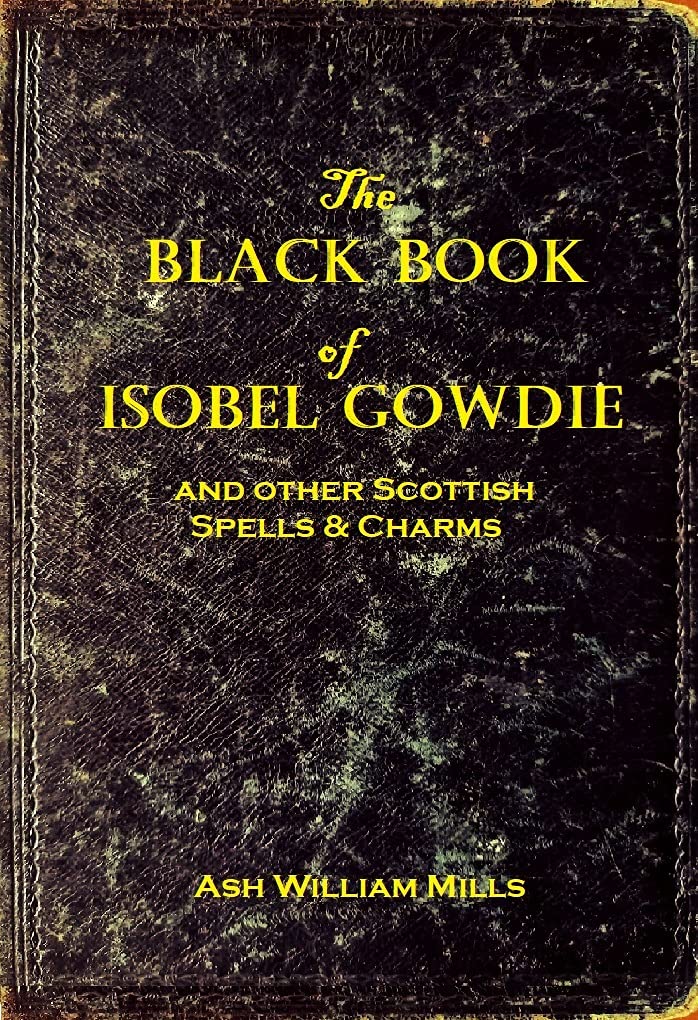
Britain’s most notorious accused witch Isobel Gowdie gave such a wealth of information regarding magical practices during her confessions, that it would have been worthy of a Black Book or Svartkonstbök as found recently by her Scandinavian neighbours. In this book, I have compiled together and translated the charms, spells, and magical operations of Isobel Gowdie as were relayed in her confessions. In such a way that it is applicable and operational to the modern folk magic practitioner, with additional notes to some of the charms tried and tested by the author. The book also includes the spells and charms from other Cunning Folk in Scotland accused as witches under the Witchcraft Acts during the early modern period or recorded by early folklorists from the 18th century to the present day. Also, a complete 19th-century Scottish chapbook on Fortune-telling. So now come sit yourself by the hearth fire, grab yourself a wee hot toddy and listen as Isobel Gowdie teaches you the charms and spells from her own personal repertoire and more some, from the other wise men and women she knows around Scotland.
Foreword by Graham King, previous curator of thr Museum of Witchcraft amd Magic and author of The British Book of Spells and charms. Kelden, author of The Crooked An Introduction to Traditional Witchcraft and The Witches' An Exploration of History, Folklore, and Modern Practice.
The premise is fine. A lot of the material in the first half has been covered by Whilby, but I understand that not every reader of this book will have had the fortitude to tackle Whilby’s seminal work, and the charms and spells are fine.
It’s the lack of editing and the typos that appear on nearly every page that spoil the work. In the opening acknowledgments, Kelden Mercury’s name is misspelled in a sentence thanking him for his help with proofreading. Owen Davies also gets a misspelled name, Isobel Gowdie and Janet Braidhead are confused in the transcript of their court trials, Walter Scott is savagely partially italicized, research speculation is presented as fact, and poor Robert Burns becomes Rorbet Burns. We also get excessive exclamation usage and confusing sentence structure. It’s a slog sleuthing through the sloppy editing to try to get at what the author is trying to convey. I wish more care had been given.
During the 15 hundreds toward the 16 hundreds there lived a magical person named Isobel Gowdy. She was accused of being a witch a long with hundreds of others. Being accused of witchcraft meant torture, death and sometimes other bizarre things the priests could imagine. Most of the confessions were extracted through force or torture and are hence not reliable. For Isobel Gowdy she was captured and interrogated without torture. What she yielded over was a treasure trove of Scottish folk magic. Her confessions tell how she became initiated into a coven by the devil himself. He wrote he name in a black book and then sucked blood from a teat on her body. When done he spit the blood on his hand sprayed it on her head. Her revelations include ding with the king and queen of faerie. She also told how she used magic to sabotage her neighbors crops, cow milk and fishing. Sometimes she redirected the wealth to herself and at others she did for spite or revenge. If you are looking for anything Pagan you will not find it here. The spells used old gaelic or old English and they do not call on Cernunnos or Hekate but rather they call on God, Angels, Saints and even the devil. The spells are simple to enact and there is no elaborate ritual like you find with Wicca or Ceremonial Magic. The Book consists of magical workings taken from Isobel Gowdy and a collection of Scottish spells. It is an easy to read book but there are typographical errors. Magical workers were always the same in the mind of Scottish authorities whether one is a witch or not mattered not at all to them. In the old country there were all sorts of magical workers. There were the cunning folk who fought against witchcraft. You had healers, wisewomen and midwives. Not to mention you also had wizards in the mix. They were all treated the same. Burned at the stake. Magical workers back them did not write stuff down in grimoires. First off most of the people were illiterate and could not write. Second to have a written book period would put one in danger much less a book of spells. But witches did sometimes possess blackbooks. Black books were not grimoires. In fact they are said to be magical items in and of themselves. They could protect a person and give them blessing. If one tried to get rid of it by burning it or throwing it in a lake it would always come back to them. The only to be rid of it is to give it to someone or sell it for less then you bought it for. The book consists of a brief history of Isobel gowdy and what her background was. No one knows what ultimately happened to her. It is assumed that she was burned at the stake or hung in the gallows. The book contained the working of Isobel Gowdy and then goes into the magical operations of other Scottish witches . Finally at the end the manual from another witch is included. It tell how to tell someone’s fortune from palm reading and how to tell fortunes from regular playing card. By and large most of the working can be done today. Some of them call for ingredients you cannot lawfully obtain. Either forget the spell or tweek it. Most of the working deal with weather control, there are some curses to be sure and some are even death curses. There are working for shapeshifting and night flights. All in all a great historical reference and good book for simple workings.
An interesting and very curious book. It’s definitely not for everyone. If you follow the path of Traditional Witchcraft or have an interest in Scottish folk magic, you’ll find plenty of interesting material here. It includes everything from transcripts of witch trials to formulas, charms, prayers, and quite a few other things.
There’s also a section on divination, which I thought was pretty good overall. This isn’t really the kind of book you sit down and read from beginning to end; it works much better as a reference book and a source of inspiration.
3.5 / 5 rounded up. A fascinating compilation of its kind! The only real complaint I have is that there were more typos and formatting errors than I would have expected. I am not counting when the originals of charms were in scots or gaelic, nor the irregular spellings of the period.
I actually adore this book and the way Ash William Mills discusses the history, the nuances, and the troubles of the time. It's interesting to learn other incantations from Isobel Gowdie and fellow accused witches in 17th Century Scotland, and I'd love to read more on her.
If you enjoy collections of folk magic in the vein of The Long Lost friend this is up your alley. Includes at the end the text of “The Spaewife, or, Universal fortune-teller”
This was honestly such an amazing read. And to hear the transcripts of Isobel Gowdie and see some of the charms and spells she would have used was really great. I am really appreciative to have read this on Kindle and hope to get my hands on a physical copy!