Jump to ratings and reviews
Rate this book

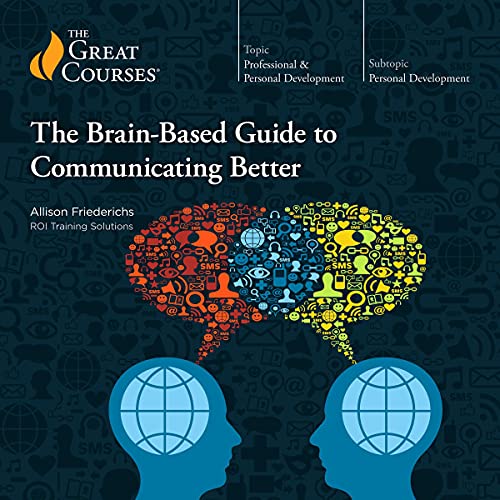
The Brain-Based Guide to Communicating Better

Rate this book

Audiobook

Published July 9, 2021

4 people are currently reading
39 people want to read

About the author

Allison Friederichs

3 books6 followers

Ratings & Reviews

What do you think?
Rate this book

Friends & Following

Create a free account to discover what your friends think of this book!

Community Reviews

5 stars
42 (18%)
4 stars
74 (32%)
3 stars
95 (42%)
2 stars
13 (5%)
1 star
2 (<1%)
Displaying 1 - 26 of 26 reviews
Profile Image for January.
2,818 reviews127 followers
November 20, 2022
The Brain-Based Guide to Communicating Better by Allison Friederichs
3h 3m narrated by the author

Genre: Nonfiction, Psychology

Featuring: How Your Brain Works, Miscommunication, Types of Memories, How to use Memories and Analogies to Communicate, Using Useless Trivia to Pique Interest in Others and Cultivate Their Attention

Rating as a movie: G

My rating: 🌟🌟🌟🌟🌟

My thoughts:📱18% 33:32 Lesson 2 - I often say listening to a nonfiction audiobook is like sitting in on a lecture. I'm going to stop saying that. This feels like you're in a classroom, they even encourage you to take notes. I decided to skip the note-taking but I felt unprepared by the end of the lesson, there was even a pop quiz.
📱35% 1:03:20 Lesson 3 - Okay, the second lesson was fantastic. I really enjoyed exploring the types of memories. I already speak in analogies so it's nice to know I've been planting visualizations in the heads of others all this time.
📱84% 2:33:52 Ch. 6 - I am very surprised that I am taking a break just before the last lesson but I really do eat this break. Information overload. This book is pretty much about how we store information and using that information to get people to remember what you tell them. I was particularly interested in the fact that we speak about a 125 words a minute but comprehended a much faster rate therefore when someone is talking to us we find other things to stimulate us with. This explains why some people need to do an activity during an audiobook or why I need to speed it up. However it does not explain why we are incapable of multitasking if I have no problem driving and absorbing an audiobook simultaneously. I'm a little confused about that one. I totally understand the bouncing back-and-forth but sometimes you literally are multitasking if one is physical and what is auditory.

This book was basically like taking a class through an audiobook. I enjoyed it and will be looking for more topics in this series.

Recommend to others?: Yes. This was great and relatable.
Profile Image for Chad Schultz.
441 reviews8 followers
August 17, 2021
This is extremely short for an entry in the great courses. There also isn't anything particularly new or memorable to this. What sticks out to me most is the suggestion to use multiple "modalities" when teaching - for example, lecture and show visual aids and ask questions.
Profile Image for Mohammed RABHI.
22 reviews1 follower
July 23, 2022
It is a short book, although interesting facts but not so many aha! Moments and hard to follow, would have appreciated takeaways breaks and recaps!

Nonetheless, these are my take aways!

  It is nearly impossible and time wasting to make others change, it's better to improve one self communication skills. Making ours clear and more impactfull.

Sections of the brain:

• Our brain's primary function is social thinking, it is through social interactions that learning is facilitated.
• Our brains are alike at most but the way we constructe meaning is different, therefore, we see the world differently! (Depending on how we put a meaning to sensory data, previous experiences, associated pictures, we could associate a smell with a happy memory whereas others finding it disgusting..)
• We use 100% of our brains all the time!
• There is no particular section or hemisphere response for rational or intuitive thinking.
• Neuroplasticity: the more we challenge our brains, we learn more and better.

Memory :

Sensory Memory : classifies which sensory input directs our attention toward and saving it into our short term memory which hold around 7 items and lasts between 20 to 30sec (it can be improved though!)

Working memory : usage of short and long term memory to work out something (addition calculation..)

Long term memory:
• Sementic memories: facts you recall.
• Episodic memories: happened in a particular time, place, context..
• Procedural memories : how to do things.
• Prospective memories: things you are planning to do in the future.

Tips on improving memory :
• Why you are learning something and how are you planning on using it. (Emphasis on its importance, storytelling, emotional connection..)
• Association of new data with old one. (Cues, patterns..)

We notice things that we deem important and that matches our beliefs.

There are no studies pointing to the negative impact of technology on learning but they do show that it does impact attention! However, it's not the fact of using technology but multitasking while using it.

Ask someone for their individed attention, if they start looking at their phone,  simply stop talking, this appears as a a polite behaviour but it's more of a chance to get their full attention, if you multitask you allow others to do so as well..

Spark curiosity of the person you are communicating to helps cultivate their attention.

Say things other people relate to, something in which they could see themselves. They need to connect with your story!

Pre conceptions should be addressed or taken into consideration when sharing new ideas or learning new things (fishes story about land life).
   You should always try to connect with existing knowledge to the listner prior knowledge.

"No one can understand anything if it's not connecting to something they already know"

  You could ask them what they already know, question to evaluate their knowledge and know where to create the link to the building bloc.

  Inquires about prior knowledge:
• What is your experience with..?
• Do you remember...?
• Have you ever..?

It is not only necessary to cultivate others attention but you need to be a good listner as well!

Analogy :
  The story about faith, being married to someone although you don't know 100% that he is the only one who you could have had a happy marriage with them.

Churchill "a speech should be like a women dress, long enough to cover the subject but short enough to keep interest "

Our brain process things at a much faster rate than someone's speech or lecture (that's why we quickly get bored and search for other stimulantes)
Humans can talk at a 100 word per minute*

Teaching information makes it easier to remember.

Space repetition.

Assisted learning (scafelding): give clearer directions, share or teach small pieces each time, understand when and where your communicator require assistance.

Avoid using jargon.

Anxious mind vs Curious mind.
  Back in the day,  the brain had 2 states only (anxious vs safe)
   Until this date, our brain prioritises safety as first then emotional input then it can attend to whatever we have down the list (learning for instance), so if we feel safe and the environment is positive , we feel connected with the content we can learn better!

  Don't push their mind to become anxious, don't be the source of stress!

Do not challenge someone ideas or beliefs as having two opposed thoughts brings in the anxious mind, it's at that time that they sink and block any new information. It's better to understand why they think the way they do and start from there..
Profile Image for Keith.
937 reviews12 followers
December 15, 2024
This is a pretty good, if short, entry into the The Great Courses series. Professor Allison Friederichs examines the complexities of human communication and offers advice using the latest research from neuroscience and cognitive psychology. Much of the information was review for me, but it is always good to have reminders for learning things in long-term memory.

The Contents:

Lesson 1: How the Adult Brain Communicates

Major Areas of the Brain, How Data is Turned into Knowledge, Social Learning, How We Make Meaning

Lesson 2: Messages That Active Our Brains

How Memory Works, Types of Memoires, Emphasizing Context and Purpose, Creating an Emotional Experience, Employing Mnemonic Devices

Lesson 3: How to Get and Hold Our Brains’ Attention

The Cocktail Party Effect, Task-Switching, The Power of Inquiry, Borrowing Tips from Good Writing

Lesson 4: Guiding Brains with Inquiry and Analogy

Growing Synaptic Connections, "Fish Is Fish", Inquiry, Being a Good Listener, Analogy

Lesson 5: Enriching the Conversational Environment

Creating Enriched Environments, Strategies for Adding Modalities, Chunking and Scaffolding, Jargon

Lesson 6: Overcoming Roadblocks to Communication Well

Anxious versus Curious Brain, Creating a Safe Space, Cognitive Entrenchment, Incomplete Connection

***************************************************************************

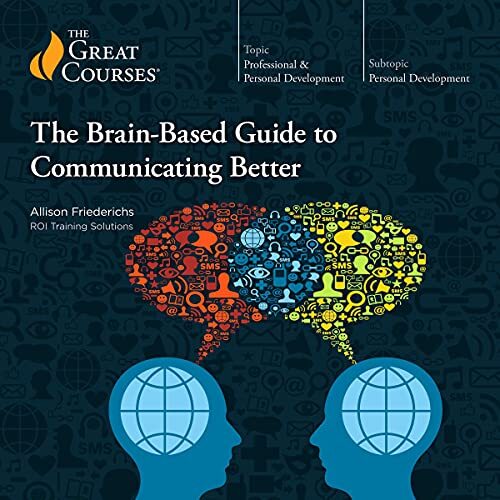
[Image: Book Cover]

Citation:
Friederichs, A. (2021). The brain-based guide to communicating better. The Great Courses. https://www.audible.com/pd/The-Brain-...

Title: The Brain-Based Guide to Communicating Better
Author(s): Professor Allison Friederichs
Series: The Great Courses
Year: 2021
Genre: Nonfiction - Psychology, neuroscience, social studies
Length: 3 hours and 3 minutes, 68 pages (PDF course guide)
Date(s) read: 12/11/24 - 12/13/24
Book # 225 in 2024
***************************************************************************
Profile Image for James.
119 reviews1 follower
November 24, 2023
She says that we can't multitask, and can only task switch or do multiple things badly with little care. Everyone says this nowadays, I mostly agree but; I was able to walk home and listen to this on audible while doing breathing meditation/training. Are those not tasks being done simultaneously? It needs to be clarified that the brain cannot focus on multiple tasks simultaneously with good attention, but we can perform a mental task while our body does concurrent physical tasks with ease, as long as your parts are not competing to be used for those different tasks.


Since, as noted in this lecture, the brain thinks faster than someone can speak so it's normal for it to drift while someone is speaking then there is some validity to listening to audiobooks or videos on 1.2x - 1.5x speed. People think i'm weird for it but it may help my attention so I might learn the information better because of the increased spped.
316 reviews1 follower
October 16, 2024
We are meant to learn together. Learning with peers makes things easier. If you want people to remember things you can attach a request to an emotional experience instead of making it an emotional experience. It’s pretty much how to get people to listen and remember what you want them too. It’s wonderful. I appreciate the portion where they talk about how you need breaks when learning concepts in order to digest information.
This entire review has been hidden because of spoilers.
Profile Image for Matthew Bee.
244 reviews1 follower
December 18, 2025
A very short series that I think is most applicable if you’re aiming to improve workplace communication.

A lot of the information feels like “well duh obviously, ofc that’s how you should do that” but isn’t how we always actually act.

Would probably recommend for anyone struggling to get someone else to remember or focus on information.
Profile Image for Gregg.
628 reviews9 followers
June 14, 2022
This is a very quick read but it does not break any new ground. At best, this course pools existing psych/meta-cognition concepts and re-packages them as communication. I didn’t learn anything I didn’t already know, hence the two stars…
Profile Image for Jill.
2,208 reviews62 followers
July 17, 2025
This is really short but useful information. It's one I'd like to come back to and redo, hence it's on my reread shelf. Friederichs is really cheerful, animated, and very easy to listen to and understand. She is relatable, which is one of the tenets she uses in the better communication model.
Profile Image for Abby Matthews.
52 reviews
September 29, 2025
I love the relation to neuroscience explanations behind what really makes good and effective communication. If you are an educator, this is a great pairing with Culturally Responsive Teaching by Zaretta Hammond to understand the difference between adults and children in communication and learning.
Profile Image for Daniel Noventa.
322 reviews1 follower
August 9, 2021
Easy advise to cultivate communication, expanded with real world examples.
Profile Image for Des.
25 reviews
April 5, 2022
I really enjoyed this course. Interesting information is provided and the performance is beautiful.
Profile Image for Ashley.
934 reviews18 followers
December 8, 2022
The Brain Based Guide to Communicating Better is a quick read about how to communicate effectively. It had lots of great tips in a short block.
Profile Image for John Harris.
601 reviews2 followers
February 24, 2023
This course ties how our brains work with communications. Nothing ground breaking in communication
161 reviews1 follower
June 14, 2023
Great course. Gave insights and food for thoughts and task to try!
Profile Image for Rick Wilson.
957 reviews408 followers
February 2, 2024
The “brain based” part of this is silly and likely just Fugazi. But there are some good tips about communication within
Profile Image for Rodney Hall.
213 reviews2 followers
January 13, 2025
Great short course on how to leverage our current understanding of the way the brain works to improve communications in a variety of settings.
Profile Image for Kiyomi.
262 reviews3 followers
February 5, 2025
It is short, lots of information and definitely one that is more like a lecture course where you should take notes and have information guides to follow along than just listening to.
297 reviews2 followers
March 27, 2022
Added Notes to Note Audible Book
This entire review has been hidden because of spoilers.
Displaying 1 - 26 of 26 reviews

Can't find what you're looking for?

Get help and learn more about the design.