All Henri of Maron wanted was to stay with his family on his country estate, surrounded by lemon groves and safety. But in 13th century Palestine, when noble-born boys are raised to fight for the Holy Land, young Henri will be sent to live and train among men who hate him for what he is: a French nobleman of an Arab mother. Robbed of his humanity and steeped in cruelty, his encounters with a slave soldier, a former pickpocket, and a kindly scribe will force Henri to confront his own beliefs and behaviors. Will Henri maintain the status quo in order to fit into a society that doesn’t want him, or will fate intervene first?
The first book in The Two Daggers series, The Scribe takes readers on a sweeping adventure through the years and months that lead up to the infamous Siege of Acre in 1291 CE and delves into the psyches of three young people caught up in the wave of history.
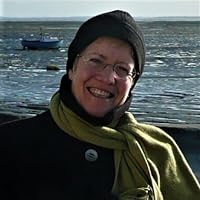
Elizabeth R. Andersen lives in the Seattle area with her young son and energetic husky named Riva. On the weekends she usually hikes in the stunning Cascade mountains to hide from people and dream up new plotlines and characters.
- Join Elizabeth's monthly newsletter and receive the first two chapters of The Scribe for free. Sign up at https://www.elizabethrandersen.com - Find photos of hikes and daily author life (as well as Medieval marginalia takeovers every month) at Elizabeth's Instagram/Threads: @elizabethrandersen - Watch Elizabeth attempt to feel comfortable on camera on her TikTok channel: @elizabethrandersen
Elizabeth is a member of the Historical Novel Society, the Crime Writers Association, and the Alliance of Independent Authors.
This is a well-written, entertaining work of historical fiction set in late 13th century Palestine and involves a family of French nobles, some Christian Templar knights, Muslim warriors, and Muslim and Jewish locals. It involves the coming of age of 2 main characters, and a minor one (which I suspect may end up being a major one as well—who knows?)
The plot consists of separate character threads that are slowly woven together—and the story really starts to take off and intensify about 2/3 of the way in. There are some truly poignant, heartbreaking, and brutal moments, and even though it took a while, I really started to empathize strongly with these main characters. The book ends on a huge cliffhanger as well, so I now I have to read the next one in the series! Damn it, I’m hooked! 4 stars.
After I passed 3-4 chapters, I was hooked. The characters were set in so different locations and circumstances, first I could not imagine how they would fit together. But they did. And they did it wonderfully. The writing is excellent, done with a lot of research into that difficult period of our history.
This historical fiction adventure takes place in 1290 Palestine and the world building was fantastic. One of the challenging parts about writing historical fiction is getting the details of the time period correct, and wow, I was blown away by the detail in this book! The reader is introduced to a lot of characters (I would recommend reading this in a paperback format so you can flip back and forth) who at first seem to have nothing to do with one another. Andersen slowly and expertly weaves their stories together into a thrilling tale of deceit and intrigue that kept me guessing until the last chapters. There are so many characters to love in this story and most of my favorites were the incredibly strong and multi-dimensional women that are sometimes absent or used only sparingly in stories from this time period. They were incredibly real and inspirational and yet they didn't feel weirdly modern or out of place. All of the characters, including the man who is the MC, went through some incredible transformations. I highly recommend picking this one up and I can't wait to read the sequel, The Land of God, which is out now!
Very riveting book and hard to put down. A little difficult following the multitude of characters at first. Immediately began reading the second in the series!
Acre, one of the oldest continually-inhabited settlements on earth, has had a long and sometimes violent history. From about the middle of the 7th century CE, it was an Islamic city, until it fell to Baldwin of Jerusalem in the First Crusade in 1104. In 1187 the Ayyudib sultan Salah al-Din reclaimed Acre as a Muslim city, but lost it again to a combined European Christian force in 1191. Both militarily and economically important due to its strategic position and its access to the Asian trade, Acre would be fought over even by those who were meant to represent the same interests.
Elizabeth Andersen’s debut novel, The Scribe, is set in the years leading up to the siege of Acre in 1291 by Al-Ashraf Khalil, the eighth Mamluk sultan. Rumours of invasion are building, but harrying by the Mongolian Golden Horde is dividing Mamluk attention. But while this may concern the military and religious leaders of Acre, more immediate concerns occupy the three young people whose lives the novel follows.
Two are brother and sister, Emra and Ela, later known as Zahed and Sidika. Their village destroyed and their parents killed by Mamluk forces, both will become enslaved in different ways. The third is a noble child, Henri de Maron: European nobility, but also an outsider; his mother is ‘Saracen’, Arab. As the years progress and war looms, the lives of these three become, through a series of plausible coincidences, intertwined.
Henri is the central character, a bitter young man who must, on the sudden death of his father, take control of his family’s fortunes. Threatened not only by the political situation, but by an enemy, Philip, who wants Henri’s lands for his own, Henri must grow up – a lot. He has both his mother and his sisters to protect, and his duties as the lord of his manor. But Henri is neither old enough nor wise enough to make the correct choices very often.
The Scribe is well-researched, and of particular interest to me was the inclusion of the Mongolian incursions into the area, something rarely mentioned in the history of the wars for control of Acre, Jerusalem, and the middle East. The Scribe is not a story that glorifies the Crusades, but acknowledges the cultural and scientific knowledge of both Jews and Muslims, as well as the cruelty and violence imposed on them by Christian crusaders.
The device of the intertwined lives of the three young people, each of a different religion, works well for the most part, and the intrusion of the antagonist Philip adds to the sense of danger and intrigue. Description is effective, and the pacing kept my interest.
There are a few proof-reading errors, and a warning: there is a cliff-hanger ending. (The book is subtitled The Two Daggers: Part 1, and it is an incomplete story.) But a solid debut, and a more comprehensive look at the historical background surrounding the struggles for control of the Middle East in medieval times than I usually see. The Scribe should interest readers who like personal stories set against the turmoil of historical events.
I so wanted to enjoy this book and parts of it were so interesting . But it was spoilt for me . I found it quite disjointed so that by the time a character reappeared I had trouble recalling their details . I also found inaccuracies that annoyed me , a dooryard , which is a North American expression , certainly not used in the period . Tamrat studied the Koran , really ? He was Jewish , surely he studied the Torah . In another part “his tephillin swayed beneath the tassels .. does the author know what tephillin are ? I do ! Certainly not what the author thinks . Askari soldiers ? They were late 19th. Century African soldiers . I understand the premise of a series , but this book finished with no resolutions at all , as if the author said , that’s enough , let’s start another book . Sorry , but just my opinions
Perfect example of a meticulously well written historical novel. It was amazing! It begins with many different storylines being introduced at the same time. But not to worry, the individual threads do begin to interweave themselves together into the three principal characters before long. The author clearly has a love of history, and she paints accurate pictures of not only various locations, but also of the time period.
*I received a complimentary copy of this book from the author via Voracious Readers Only*
This tale features a rich tapestry of interwoven perspectives from characters of diverse religious, ethnic, and social backgrounds in 13th century Palestine: slaves, amirs, nobility, orphans, knights, scholars, soldiers. Wonderfully complex, best enjoyed with a notebook and pen at hand to keep track of characters and their relationships to one another. A masterful debut novel! I am looking forward to reading the rest of the series.
This is the first book I have read by this author, but it won't be the last. The story line is well done with multiple lives interwoven through a number of years during the 13th century. The character and world building are excellent. If you enjoy real life based history and I look forward
The characters in this book -- especially the main character -- have the complications, nuance, and soul of living people. That would be compelling enough, but Andersen puts these three-dimensional people in a rich and detailed historical time period filled with drama. Great debut!
This book is well written and as far as I know a fascinating look at 13th century Holy Land. I don't often give 5 stars so my 4 stars is high praise. Looking forward to the second book!
The first chapter didn't grab me, I was nearly tempted to put it down. I am SOOOOO glad I kept going!! It is a wonderful novel - brilliantly written and brilliantly researched. I enjoyed it so much, I nearly felt guilty for not liking the beginning! Fantastic read!!
Damascus 1277. Tamrat lives with his wife Sara and son Dejen. In the Amanos Mountains, Emre trains with the other captive Mamluk boys, but he longs for home. He is selected by Amir Qalāwūn to train as Bhadir’s right hand man. Sarangerel picks her way through the wreckage and takes in an orphaned girl. Acre 1279. Abdülhamit and Nasir play with the half-Saracen boy Henri Jean-Rogier Maron. King Henry and his sons Amalric and Henry are with Henri’s father Lord Rogier. Tamrat invites 6-year-old Sidika to cut his moneybag every morning. The sultan Qalāwūn wants to drive the Franj out of Acre. He decides to marry his sons to Mongol wives. His father murdered, Henri inherits the title, but the servants are not happy. Henri is spoiled and tyrannical. He is not attentive to them as his father had been. He marries his widowed mother to the unpleasant Mafeo. Acre 1290. Tamrat works as a scribe, the adopted Sidika helping him. She is out hunting one day and rescues a tall Franj, Lord Henri. He asks her to join his household as maidservant, and she very rudely refuses. Having no other men-at-arms, Henri joins the Templars on patrol. They apprehend ‘a spy’. It is Tamrat, and Lord Henri knows he’s innocent. He makes a decision, the only humane option, and yet it’s not an easy one. There are multiple story lines and a plethora of characters. This makes interesting reading, but it was hard to keep up. It’s well written and has a mediaeval ‘feel’ and sense of place. Andersen captures well the social interplay in a complex society comprising Templars, Frankish nobles, Bahri sultans, Mamluk slaves, Arab servants. The ending, ‘to be continued’, is simply unacceptable. I know it’s Book One in a series, but I still want each book to have a proper ending.
I love historical fiction when it is down correctly, meaning when it is researched and the reader is placed in a situation of learning the true historical background as well as enjoying a challenging narrative. Elizabeth begins her novel by spinning a beautiful delicate web with you caught in the middle. She spins that web and you have a front row seat to see those characters develop and mature. You watch their lives and it is if you are right there able to talk with them you tryto intervene here or there, but no they do not hear you, You are the audience to the lives they live. This is a brilliant read! It pulled me in from beginning to end and held my attention. The world building is detailed and imaginative. This novel has strong, well developed characters and an interesting story line that keeps you turning the pages. I recommend this novel and would read more novels by this author. I gave this honest, voluntary review after being given a free copy of the novel.
What an interesting tale ... and it ends on a real cliffhanger!
As someone who reads (and writes) Mongolian historical fiction, I was really excited to find something not set in the "western" world -- though there are certainly pieces of western culture laced in it. This book reveals the brutal truth about the Templar Knights, as well as the devastatingly dangerous world residents of Israel lived in at the time.
I will be honest and say that I had a hard time getting into the book because it starts with a set of characters who leapfrog through time in ways that seem completely unattached. But as I read on, the story became clearer and I really loved Sidika and hated Henri (until the ending, at least). I really want to see these two reconcile their clearly deeply suppressed feelings for each other at some point!
I have never read a book set in this time period or location and was really excited to escape to this world. The writer creates a compelling world with characters that bring you in where you both are cheering and sneering all in one. You follow different stories that at first seem unrelated but they all come together in an integrated story that showcases the deeper nature of humanity because the characters are not all good shiny people but very complex and real. This first book sets up for the rest in the series so I can't wait to see how the cliff hanger is worked out in the coming books. A definite good read and I can't recommend it enough!
I received this book in a member giveaway on LibraryThing and this is my honest review!
I quite enjoyed the story, the setting and the characters. I thought the prose was easy to read while transporting me to the historical time period of the templars. But the setting of Acre was truly unique and a place I knew little about.
I found the many characters very difficult to get into (I am a busy online teacher and sometimes I just don't have the energy to read a book with so many names and perspectives), but I am truly glad I stuck with it because I look forward to the second book.
A beautifully written very atmospheric novel set in 13th century Palestine. I enjoyed this, although I struggled to relate to one of the characters, and I felt it got slightly bogged down in the middle. But the action picked up later and although the ending was rather abrupt, it didn't bother me too much as this is the first part of a trilogy. It will be interesting to see how the various characters develop in the follow-on novels.