"An essential document of our time." —Charles D’Ambrosio, author of LoiteringIn search of answers and action, the award-winning poet and essayist Lisa Wells brings us Believers, introducing trailblazers and outliers from across the globe who have found radically new ways to live and reconnect to the Earth in the face of climate change We find ourselves at the end of the world. How, then, shall we live?Like most of us, Lisa Wells has spent years overwhelmed by increasingly urgent news of climate change on an apocalyptic scale. She did not need to be convinced of the stakes, but she could not find practical answers. She embarked on a pilgrimage, seeking wisdom and paths to action from outliers and visionaries, pragmatists and iconoclasts. Believers tracks through the lives of these people who are dedicated to repairing the earth and seemingly undaunted by the task ahead.Wells meets an itinerant gardener and misanthrope leading a group of nomadic activists in rewilding the American desert. She finds a group of environmentalist Christians practicing “watershed discipleship” in New Mexico and another group in Philadelphia turning the tools of violence into tools of farming—guns into ploughshares. She watches the world’s greatest tracker teach others how to read a trail, and visits botanists who are restoring land overrun by invasive species and destructive humans. She talks with survivors of catastrophic wildfires in California as they try to rebuild in ways that acknowledge the fires will come again. Through empathic, critical portraits, Wells shows that these trailblazers are not so far beyond the rest of us. They have had the same realization, have accepted that we are living through a global catastrophe, but are trying to answer the next How do you make a life at the end of the world? Through this miraculous commingling of acceptance and activism, this focus on seeing clearly and moving forward, Wells is able to take the devastating news facing us all, every day, and inject a possibility of real hope. Believers demands transformation. It will change how you think about your own actions, about how you can still make an impact, and about how we might yet reckon with our inheritance.
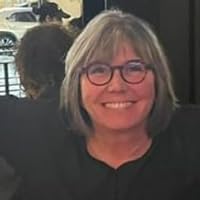
Lisa Wells is the author of Believers: Making a Life at the End of the World (Farrar, Straus & Giroux, 2021) and The Fix (2018), winner of the Iowa Poetry Prize. Her poems and essays have appeared in The New York Times, Harper’s Magazine, Granta, The Believer, N+1, The Iowa Review, at The Poetry Foundation and elsewhere. She lives in Seattle and is an editor for The Volta and Letter Machine Editions.
Believers is a selection of somewhat dense essays and an impassioned call to action for those who care about our environment and our future. Like many of us, Lisa Wells has spent years overwhelmed by news of apocalyptic-scale climate change and a coming sixth extinction. She did not need to be convinced of the stakes. But what can be done? Wells embarked on a pilgrimage, seeking answers in dedicated communities—outcasts and visionaries—on the margins of society. With so much focus now on our doomed future should we continue to live in the same selfish, unrestrained way we do at present, Wells approaches things using a different strategy and in a more optimistic manner by traversing the land conversing with those who seek to connect and restore nature as much as humanly possible.
What is interesting is they each have their own ideas about how to save the natural world. Some of those she interviewed are known to be confrontational and awkward, but Wells felt it necessary to include their important contributions towards making the world a better place, and rightly so. Among those she explores is Matthew Trumm who cofounded the Camp Fire Restoration Project in 2019, alongside John D. Liu, a land restoration expert and documentarian, after suffering due to 2018’s Camp Fire in Paradise, California. In New Mexico, she spent time among Taos Initiative for Life Together whose objective is to abandon reliance on fossil fuels by growing their own food, sourcing their own water and bartering services within the community in order to generate no waste and repair the local ecosystem.
Effectively blending reportage, memoir, history, psychology and philosophy, Wells opens up seemingly intractable questions about the damage we have done and how we might reckon with our inheritance. Believers demands (radical) transformation: if the Earth is our home, if our home is being destroyed– how then shall we live? A fascinating, accessible (yet verging on academic) and impeccably researched/detailed meditation on how we can tip the balance back in our favour when it comes to our ecosystems, biodiversity, sustainability and in particular climate change and its environmental impact. Unexpectedly poetic in places, touching and powerful while maintaining an air of both hope and resilience, it is a richly informative, thought-provoking book. Recommended.
One of the ways we humans organize and make sense of our experience is through the telling of stories. And the stories we tell, in turn, have profound effects on how we relate to ourselves and to those entities on which our lives depend. Many of us are learning that the stories we inherited are not only suspect but in large part responsible for the threats we now face and will visit upon our heirs: the story of infinite growth, of survival of the fittest; the story of human supremacy, and, incongruously, an innate human selfishness and propensity to destroy. Chiefly, the story that tells us that we are separate from the whole, at once alienated from the broader community of life and above its laws of ecological reciprocity.
New stories are in order, but often the dominant culture responds to the crisis at hand by replicating old themes. Features about doomsday preppers, Silicon Valley tech bros with “go bags” and ATVs, million-dollar compounds in decommissioned missile silos in central Oklahoma (my particular vision of hell) – stories about life support systems devised to keep self-interested individuals alive while the rest of us burn. Stories that are, of course, no deviation at all from the dominant narrative. Perhaps the fullest expression of this lack of imagination is the techno-utopian dream of colonizing other galaxies, as if colonization wasn’t at the root of our trouble but its solution: the ultimate geographic cure. Even if some eccentric but benevolent billionaire invented a machine to spirit the human race to outer space (big if), it’s delusional to think we wouldn’t take our problems with us.
It seems to me there is a surplus of terror and delusion in the ether, but spare few visions of how you and I, relatively ordinary people, might live otherwise. I believe the future of the world depends on those visions. If our descendants are alive and well in a hundred years, it will not be because we exported our unexamined lives to other planets; it will be because we were, in this era, able to articulate visions of life on earth that did not result in their destruction.
*
Put bluntly, one of the greatest barriers to realizing energy independence is our addiction to stuff – to having what we want whenever we want it. It may be true, as Finisia and her crew sometimes said, that it’s easier to jump off a structure that is standing than a structure that is collapsing, but so long as the structure stands, most people will – in ignorance or out of fear or habit – return to its eaves when the rain arrives. This is why some frustrated rewilders I’ve spoken to doubt very much that consciousness-raising will create lasting change. Change will come when the collapse of our current way of life demands it. Communal subsistence living inevitable results in periods of discomfort and strained relationships, and so long as warm beds and Netflix and grocery stores exist, most people will return to those comforts when the going gets tough.
That’s why Peter believes social skills like cooperation and conflict management are far more crucial than the so-called hard skills of wilderness survival. And that’s why Todd Wynward believes that that if it’s just up to us, we’re fucked, that spiritual conviction is required to bridge the divide.
*
“Attentiveness is the natural prayer of the soul,” wrote the seventeenth-century philosopher-priest Nicolas Malebranche. If we believe him, it follows that whatever commands our attention will determine the form of our god. If we mainly train our attention of the screens of our devices – that’s one kind of prayer. If we train it on the dirt, or the birds, or the faces of those we love – that’s another. Most of us run a gauntlet of rotating concerns, with little agency over the convulsions of our minds. Or else we forgo agency entirely and remit our attention, via any number of substances, to a high. In any case, our preoccupations become objects of worship.
*
Human beings are social animals, and it’s a central paradox of human life that other people should confront us with our most difficult problems while possessing our only hope for a solution. “That’s life,” to quote Sinatra. A cynic might call it pharmakon – we are, at once, each other’s poison, scapegoat and remedy. However you want to cut it, we require other people to survive, to love, to be loved by, to reflect that we exist in time. Or at least, we used to.
In a technocentric society, isolation – or the illusion of isolation – is not only possible, it is increasingly unavoidable. But for most of human history, isolation meant death; so human cultures, by necessity, developed ceremonies, laws, rituals, and stories to redress common conflicts that arise between people and to teach their members how to live in accord. Metabolizing conflict while maintaining the bonds of the group was not so much a moral endeavor as a practical one.
What becomes, then, of a people who invent a way to live without relying on others directly? I think we’re finding out.
As is true of other survival skills we’ve lost, social skills atrophy with disuse, and once our survival no longer depends on our togetherness, what impetus do we have to tolerate the conflict, confusion, and vulnerability that are the price of relationship? I’m not certain that it’s possible to sustain communalism long-term based on ideas alone. So long as there exists a more comfortable world to defect to – even if that world is laced with depression, anxiety, and isolation – we will be tempted to take the out.
This goes for noncommunal endeavors as well. Time and again I hear stories about idealistic people, wholly devoted to worthy causes, who wind up tearing one another apart over relatively minor disagreements before retreating to their former lives of quiet desperation.
*
I’m interested in the limit of forgiveness. Where it is, and why, and how some people are able to forgive those who’ve done them the greatest harm, often when they haven’t earned it.
Just reading reports from Standing Rock, I found my mind drifting into violent fantasy. A part of me wanted the police and the corporate VPs and private security people to feel the pain they’d inflicted, to be hit with hoses in freezing temperatures, to have their snarling dogs turn against them – and it wasn’t my home that had been invaded. This was a problem. Not because violence isn’t warranted in defense of the planet but because the violent fantasies of a distant observer like me might serve a shadow purpose.
If there is such a thing as evil, I presume Big Petroleum is high on the list. But it’s a divided self who daydreams about eviscerating the hocks of an economy in which she participates. And if those violent daydreams provide catharsis, if they serve to further distance her from her own culpability, to mutilate that which implicates her, and thereby help her dodge the imperative to effect material change – then aren’t those fantasies an extension of the evil at hand? And so long as we’re at it, why not acknowledge that by she and her I mean me.
This is a powerful book. One that is not about bemoaning the state of the Earth today, but instead on how we can heal, ourselves and the land. Lisa Wells introduces us to several people who are living wildly, living to restore nature and some with unusual ways. We are first introduced to Finisia Medrona who replants prairies and deserts with edible foods, who now has a group of followers. Her group of “Prairie Faeries” or landtenders on occasion plant a hillside of edibles in the shape of letters such as “This is food.” Finisia’s dedication to replanting is tied with religious overtones while spouting a foul mouth being quite cantankerous to outsides and those who live a “typical” western lifestyle. She’s lived an itinerant lifestyle, for years living in a cave or traveled by covered wagon.
Starting the book with an outlier, it is a sharp awakening that there are other ways to live, or how to interact with the environment. Much of the book is infused with religion, talk of healing ourselves from the trauma that has happened (something is wrong when we have so many people addicted to various vices), and restoring nature.
Wells interweaves her own personal story as well, leaving high school in Portland and along with her friends, joins a wilderness survival school. Wells interlaces the people that shaped her life, important books such as Daniel Quinn’s book Ishmael, and her friends. We are also introduced to many others, people who have done something radically different and have results that prove that the ecosystem can be restored, and at an amazingly fast pace.
This book is about people who believe that we can move beyond this current climate crisis, we have the ability to heal what is broken. Wells shows us people who are doing just that.
‘How, then, shall we live’ is asked many times. Some answers are here. It is a hopeful book, albeit not an easy read at times. It can be eye-opening or maybe, world changing.
Thanks to Farrar, Straus and Giroux and NetGalley for an uncorrected electronic advance review copy of this book.
This was a cool book. I feel like it was sort of a punk/nihilist version of Braiding Sweetgrass. You met lots of very different people and came to a similar conclusion, that there isn't this divide between what is "human" and what is "natural" and that optimization of biodiversity and natural productivity requires human maintenance in a lot of systems. Of course, this book was also about a lot of other things, from trackers to communes to hippies vs. anarchists. It was honestly a little bit hard at points to connect what she was talking about to the thread of what the book was about, which is why I felt compelled to knock it down to four stars. Otherwise, it was beautifully written, succinct, and her voice, experience, and passion shine through. Definitely give it a ride if you feel like being both a lil depressed and hopeful.
My connection to this book is, no doubt, deepened due to my close proximity in age, geography, and experiences to Lisa Wells, but Believers is the most impactful book I've yet to read on living in the Anthropocene. Much of this is due to Wells's intelligence, empathy, humor, and curiosity, but I think what makes this a singular text is her willingness to really dig into the issues of climate change all-the-while refusing to offer any easy answers (notably the trap I occasionally fall into in simply writing off humanity). There's something powerfully refreshing in Wells's embracing of the paradoxes of our situation, particularly her consistent refrain that, while "civilization" is what got us into this mess, "ecological sustainability [is] fundamentally a social project."
Part memoir, part commentary on the climate disaster and remediation/adaptation required for societies going forward. Unflinching, intellectual, inspiring.
I don’t want to rate books anymore. Seriously. I mostly never give below a 3 star anyway because writing books is hard and I don’t think my opinion matters that much in the world. I did like this book. 4 ⭐️ or five ⭐️ like who cares? The information is not quite what I expected, I was somewhat hoping to get a glimpse into what regular old not ecologist people could do. Which more and more is becoming less and less in terms of making an impact. It is up to big leaders and huge corporations in many ways to make a large enough dent in what needs to change regarding climate now. Of course we should all still do what we can, consume less, drive wise, engage with representatives etc. We aren’t off the hook at all. PBut I did find many interesting take away from this one. Lots to ponder. The big gift was the realization there is not a ‘perfect’ way to proceed. There are imperfections in many of the ways in which humans try, whether in personality, reality, wear and tear, ego, infighting, fighting among factions and opinions of who does it right or best, etc. There is no perfect way to proceed. Just that we MUST. It is beyond optional and we have to figure out how to put our need to be right behind our need to survive and repair this plot called earth for future generations. Lots to consider.
I delayed reading this for months, thinking it was going to be another semi-boring mainstream tale of environmental activists. The first page quickly shattered that misconception. Some readers will be offended, but I was pleasantly surprised to see it was from a major publisher.
I always enjoy books which question our modern civilization and how we live. This one is a mix of personal stories and broader histories; I found the personal aspects more interesting. The author and I have similar thoughts about our society, but have made different choices on how to live, at least in part because we’re from different generations which was a fascinating topic to consider.
Many topics are touched on among the mini-bios of the people she writes about, including rewilding, invasive plants, wildfires, infighting over minor differences, ALF and ELF.
I was particularly intrigued by mention of some books which had been important to her, and which I’d also read earlier. We had similar reactions to Tom Brown Jr’s books—initial love and later disillusionment. The novel Ishmael had a major effect on her, which I recall it having on many people. In my case, I’d already become familiar with its deep ecology type ideas in earlier, more serious publications, so while I appreciated the novel spreading the ideas, to me it seemed more like reading an elementary school version of those ideas.
I found Believers much more interesting than most books published these days, and an important topic which is still too much ignored. Thanks to Farrar, Straus and Giroux and NetGalley for the advance copy to review.
A book about solving its author's mind as much as it is a story about a scattered selection of people in the continental United States who have visions of survival outside the most common normative systems. There's little that is surprising here, but there's much that is nourishing.
I really appreciate the honesty of this one. She admits a lot of personal failures that I can relate with. My life followed a pretty similar trajectory where I got really fired up before I fully figured things out and slowly came to realize that my heroes weren't right about everything and that my ideals were a bit off. My own health was another limiting factor that I had to deal with too, making the manly lifestyle of Stone Age self-sufficiency essentially impossible for me to survive, which actually helped me realize that long-term transition plans for society are more important than my own personal survival skills. I wasn't terribly naive when I started getting into environmentalism and radical politics. I was at least humble enough to keep listening to alternate explanations and criticisms from people I disagreed with. Writing also helped me organize my thoughts so I could get all the pieces together, eventually leading me to write my own anti-civ manifesto since I ended up not agreeing with anyone else enough to just recommend their books. Even that had to be corrected quite a bit a couple years later after I'd had a little more time to think. Like a lot of other similarly minded writers I'd rushed through it, figuring the economy could collapse any day now. The first draft was probably done in about a week, making it too sloppy for most readers to take seriously. The updated version got maybe another 2 weeks worth of editing, still very rushed by most writer's standards but at least good enough in my opinion (that can be read here if anyone's curious https://aproposalforprimitivism.blogs... ).
This is one reason that I'm usually skeptical of environmentally minded writers who spend so much time trying to make everything sound pretty. I've read stuff like Braiding Sweetgrass and David Abram's books. When I reviewed a Rebecca Solnit book on here I said something like "pretty good but I did find myself rolling my eyes and making a jerking off hand gesture on more than one occasion." So poetry's usually not my thing. Arundhati Roy is probably the only other poetic writer I've ever taken seriously. I became even more skeptical when I was listening to one of Lisa Wells' interviews and heard her say something like "I prefer to read more for art than for information." That was almost enough for me to cancel the library request but I decided to just go with it. There aren't exactly a ton of new anti-civ books out there to choose from, not real ones from respected publishers anyway.
All that said, there is no shortage of information in here. A lot of her explanations are worded kind of poetically but there's not anything cheesy or New Agey about them. She is someone that I'd say genuinely "gets it." Instead of shying away from solutions the way so many others do (Paul Kingsnorth's Confessions of a Recovering Environmentalist comes to mind) she focuses on inspirational projects that might actually get people to do something. Instead of scaring off potential recruits with a dogmatic prescription for the ideal society of the future, she invites us to come up with our own versions of utopia that can all coexist together. I might not agree with all her personal opinions but I can't remember a single idea in here that I don't at least respect, and that's very rare for me. Even my favorite books all say something that disgusts the hell out of me. Her life story of growing up with Urban Scout is interesting as well. This is one area where our lives are totally different, her growing up where anarcho-primitivism is relatively common among teenagers and college kids, whereas I've had literally nobody in my life who agrees with me on any of this stuff. Always wondered what that would be like. I've listened to Peter Michael Bauer (Urban Scout's real name) a bit over the years. I'd heard of his alter ego but never really got what that was about so this cleared up some things for me.
Looking back on my more idealistic days I still wonder sometimes if I've "matured" or just lost the energy. As a kid, adults always seemed like complete idiots to me. If younger me could see the me of today would he think the same thing? I fear sometimes that he might. When I look back, the younger version of myself actually seemed better in a lot of ways. He definitely had some things to learn but I'd kill to have that energy again. I think that's why books like this matter. They can help the younger generation of activists make sense of things earlier so that this energy isn't wasted on shit that anyone with experience knows won't make any difference. This also helps reach an audience that prefers to "read for art", something my more mathematical writing will never do. So yeah, I like her. I think this book is something that could really help push people in the right direction.
This collection of essays poses and tries to answer that question.
In the second essay - On the Rise and Fall of a Teenage Idealist - Lisa Wells covers her attendance at Tom Brown's Tracker School (for which I wrote a registration database around that time), her subsequent disillusionment, and arrival at the question above. It's an arc familiar to many of us who have been involved in the environmental movement. My own disillusionment, for example, comes from a recognition that the environmental industrial complex is not going to grant fund us out of this mess while simultaneously avoiding any inconvenience to the industry, development, and agriculture that got us into it in the first place and continues to keep us there. "What was left to us then, if we couldn't work within the system, we couldn't walk away, and we couldn't take it down?"
In the other essays in this collection of essays, the author reaches out to individuals and communities who are trying to answer these questions.
The author's writing is clear, honest, and well researched, and vulnerable, poetic, beautiful, and funny all the same time. She has a fine eye and ear for the characters that populate these stories. I found myself wanting to meet them all!
What these wildly varying characters have in common is finding purpose in acting locally - building an intimate relationship with a small piece of ground.
The author concludes "It’s my hope that the stories in this book throw a few small sparks. Long live the blaze."
I started reading this book based on the back cover description. I was expecting a book that would provide helpful insights into how to find a positive outlook in life through various peoples’ experiences and hardships. I was really hoping for an in depth account of people’s stories that had some type of underlying message that the reader could relate to or take something away from, but after getting through the first two chapters I just kept wondering why I was even reading the book. I eventually decided to give up on the book because it genuinely felt like a laborious task with no reward at any point. I never felt invested in any of the characters the author introduced the reader to and I genuinely didn’t care that much for the author’s own experiences or self descriptors as well. Honestly I was off-put by the majority of individuals that the stories centered around in what I read.
Personally, I felt the book’s description was a little inaccurate and misleading. I unfortunately didn’t find any value in what I was reading but that may just be due to my preference for more science and psychological based readings. This felt more of an account of stories that were grounded more in personal accounts and anecdotal storytelling rather than anything grounded in scientific fact (at least the first half anyways, since I decided to abandon the book)
This was like going on several adventures with a chatty yet moody, brilliant friend who knows the history of everything you are visiting. I appreciated the personal memoir aspects woven in with climate change science, among many other things. I also love how tenderly the author describes the lives of the "revolutionaries" she encounters, simultaneously showing their earnest commitment to their work while also not shying away from their (what some might diagnose as) pretty intense mental illnesses. And as a child of Boomers (just as the author is), I really resonate with the very critical light she shines on "utopian community movements" and how they all invariably fall apart due to ridiculous personal squabbles within the group. So many of these idealized "off the grid" communities can face the harshest winter surviving on next to nothing, but can't get through a personal conflict with another human being. I read this in tandem with Underland: A Deep Time Journey and I have to say, it's a good double bill.
Maybe a 3.5...but I was so surprised by how much I liked this book that I'm rounding it up.
This is a book that turns environmentalism and sustainably on their heads through telling the story of some truly radical people. It was fascinating on both an ideological and a human level. Early on, the author talks about the often heard wisdom of "leave no trace" when in the wilderness and immediately refutes it by saying we SHOULD leave a trace. A good trace. An improved space. We are not separate from nature but a part of it and we need to learn how to exist in nature without destroying it.
That's a fundamentally radical mindset and the author spends the rest of the book trying to understand people who are doing exactly that in different ways. I recommend this book to anyone who likes to learn about people on the fringes of society and unique ways of looking at the problems our world faces.
In the face of civilizational collapse, we "are devouring the planet at an accelerating rate." Knowing that "collapse is inevitable," Wells dares to ask the question, "How, then, shall we live?" She understands the power of stories, stitching together a mosaic of narratives from botanists, environmentalists, horticulturists, trackers—outliers on the edge of the 'empire'—counterculture seeking to rewild the planet. Rather than lamenting the ecocide, she offers practical solutions, survival and ancestral skills from back-to-the-landers to regain a sustainable way of living. Her humanity struck me in the connection she makes with the natural world. In the collection of experiences Wells gathers in her book, she shows examples of how we can persist in the face of Anthropogenic activities that have degraded the planet to an irrecoverable degree. And even reverse the desolation to the landscape by sowing the land with seeds and roots of future ecologies.
“The rain precipitates and falls on us all.” The environmentalist movement and its many subgroups often find their way into apocalyptic pessimism. This is a book about some of that… but also some of the opposite, the optimism of working for change and seeing beneficial results. The realism in the middle is seeing that the good things are comparatively small, but to appreciate the momentum. The struggle between disengagement and activism is mood oriented, and I guess I’ve been more manic lately. If the ship is sinking and not enough people bail water, did you waste your time trying? Is a sacrifice in a losing fight worth it? If you think you are going to fail you already have. “We know for certain we will one day die; how, then, shall we live?”
Thanks to Netgalley and FSG for the ebook. The author took an early interest in solving the problems of the planet. She moved on to other areas of a writing life, but the cause was always close to her heart and with this book she spends time and interviews the specialists on the margins who are still fighting. It’s a very enlightening book of essays where you’ll meet people who are not always so easy to get along with, but each is fighting, in their own way, to save the planet.
I deeply appreciated many parts of this book. Wells’ hope is to showcase stories of people grappling with the prospects of an unlivable future. They are models to the rest of us. This isn’t a story of how bad things are, but rather creative approaches to myriad kinds of solutions. It’s both beautiful and sad, and resists any clear answers or tidy solutions. The portraits are moving and messy. The writing is poetic. The intellectual sources are rich. I highly recommend.
This book was fascinating. To follow the author on her journey of trying to make sense of the world was quite moving. At times it was depressing, but also joyful. Like life. Lisa Wells opened my eyes to some new thoughts about navigating this world in which we find ourselves: stay awake, stay connected, find the tribe...
A fascinating yet necessary for the possibility of the end of the world as we experience today, although already in crisis mode. An interesting, thought provoking look into the future and watch those who have expecting such a scenario and their adaptions. I passed this along to a friend as I had already read the book..
What a gift this book is. Wells weaves together personal truth; climate-healing technology and science; art; and the power of human connection to heal ourselves and our planet. I’m confident I’ll return to the brilliant wisdom in these pages often.
Love this book's narrative voice which carried me through with great assurance and openheartedness. Information conveyed is also very worthwhile. Learned stuff, felt stuff.
(I read an advance reading copy of this book, which I received from its publisher.)
I received a copy of this book in exchange for an honest review.
Lisa Wells delivers a inquisitory account of her study of our planet and its deforestation, overpopulation and other piquant questions. Well put together, asking so many questions that so many of us ponder, and offers the possibility of our survival.
Wells shares the tales of people trying to save the planet from the damaging choices made during the industrialization period. Some are more radical than others and some of the people are less " mainstream" than others and some of the stories are more interesting then the others. It's worth reading for both environmentalists and folks that have concern and want to see how others are taking action.
Listened to the audiobook, now I need to get the paperback so I can look up some of the people she highlights. Many I was already familiar with but a few I wasn't. Overall this was a bit different than I expected, more personal, but it grew on me the more I listened to it.