

What do you think?

Here Lies Arthur
Gwyna is just a small girl, a mouse, when she is bound in service to Myrddin the bard - a traveller and spinner of tales. But Myrdin transfroms her - into a lady goddess, a boy warrior, and a spy. Without Gwyna, Myrddin will not be able to work the most glorious transformation of all - and turn the leader of a raggle-tagglear-band into King Arthur, the greatest hero of all time.
297 pages, Hardcover
First published April 2, 2007
About the author
Philip Reeve
149 books2,756 followersPhilip Reeve was born and raised in Brighton, where he worked in a bookshop for a number of years while also co-writing, producing and directing a number of no-budget theatre projects.
Philip then began illustrating and has since provided cartoons for around forty children's books, including the best-selling Horrible Histories, Murderous Maths and Dead Famous series.
Railhead, published by Oxford University Press, will be published in the UK in October 2015
Pugs of the Frozen North, written with Sarah McIntyre, is out now.
Philip then began illustrating and has since provided cartoons for around forty children's books, including the best-selling Horrible Histories, Murderous Maths and Dead Famous series.
Railhead, published by Oxford University Press, will be published in the UK in October 2015
Pugs of the Frozen North, written with Sarah McIntyre, is out now.
Ratings & Reviews
Friends & Following
Create a free account to discover what your friends think of this book!
Community Reviews
Displaying 1 - 30 of 433 reviews

January 7, 2009
There are eleventy billion books out there based on the King Arthur story, but this is one of the best I've read. It's one of the "realistic" ones: Arthur isn't a king or a hero; he's a thug who wants to take as much as he can from the other thugs of post-Roman Britain and Merlin is a smooth-talking PR man who's trying to convince everyone Arthur is the one who will save them from the Saxons. The author imagines believable origins for all the stories that have been passed down as glorious myths, but he also explores how important stories are to people who are afraid of dying in battle or just living hard, boring lives. The narrator is a girl who sometimes pretends to be a boy and the differences between these two existences are thoughtfully explored. Because of the unflinching descriptions of life in the Dark Ages (abuse, rape, wholesale slaughter) it's not for younger teens. The writing is beautiful.

November 24, 2022
Well, although the last word of Phillip Reeve's 2008 (and Carnegie Medal winning) historical fantasy young adult novel about King Arthur actually is "Hope" (to leave an ending that at least even if only vaguely suggests that there might be a better future for the British Isles on the horizon), basically ALL of Here Lies Arthur is in my opinion not only deeply and lastingly cynical (and in a very politically modern but absolutely refreshingly so fashion), but that Here Lies Arthur is also kind of meant to destroy the internationally cherished and beloved concepts of King Arthur always being valiant, heroic and honourable, something that I as a reader do very much, do hugely appreciate with regard to Here Lies Arthur, since I have from my childhood on found King Arthur and his men, including Merlin, just too good to be true and as such not really believable (and yes, even as figures of English, of Celtic legend).
For as Phillip Reeve (speaking in the entertainingly engaging and personable voice of young Gwyna/Gwyn) tells us readers, in Here Lies Arthus (King) Arthur is not a noblesse oblige hero but a rather brutal and selfish thug and brigand (actually, pretty much a someone with little to no redeeming qualities whatsoever) and Myrddin (Merlin) is not a talented (and beneficent) magician either, but a politically motivated spin doctor and charlatan possessing no magical abilities but a major talent for storytelling, fraud and concocting elaborate lies and propaganda (Myrddin is a bard, a storyteller, and is trying to make the rather massively loathsome and horrid Arthur into a kind of heroic rallying figure against the Saxon invaders of what is now the UK, but that really, if in Here Lies Arthur one truly looks at Arthur the actual and textually featured person, he is certainly not shiningly glowing but rather horrible and perhaps even possibly worse than the Saxons themselves, than the invaders are). And while young Gwyna (the narrator of Here Lies Arthur, who is taken by Myrddin to at first impersonate the Lady of the Lake for Arthur and then becomes Myrddin's apprentice, masquerading as a boy and being renamed Gwyn) soon learns to trust no one, doubt everything and scorns both male and female roles and of course also being skeptical of the empire-building ambitions behind Myrddin's efforts to recast Arthur's at best unremarkable exploits as the stuff of legend, Gwyna still does what Myrddin demands of her (and also upon both Myrrdin and Arthur's deaths buries both of them, whilst seeing a ship on the horizon with just perhaps a tiny bit of hope).
Nodding a bit to both legend and history while not particularly following either (as for example both Lancelot and Morgan le Fay are notably absent from the cast of characters in Here Lies Arthur). Phillip Reeve has his Myrddin take a generally rather negatively perceived individual (Arthur) and spin doctor his brigandry, his actual reign of terror and horror for political purposes, neatly skewering the modern-day cult of spin and the age-old trickery behind all of this, not a historical story (and who knows if Arthur even existed), but yes, for me, the totally deconstruction and demystification of the King Arthur of legend has been both textually delightful and wonderfully refreshing (and I really cannot help but laugh majorly derisively at the rather large amount of very personally angry reviews regarding the fact that with Here Lies Arthur Phillip Reeve totally makes the legends crumble and shows an Arthur not at all heroic but in fact pretty much horrible and villainous).
For as Phillip Reeve (speaking in the entertainingly engaging and personable voice of young Gwyna/Gwyn) tells us readers, in Here Lies Arthus (King) Arthur is not a noblesse oblige hero but a rather brutal and selfish thug and brigand (actually, pretty much a someone with little to no redeeming qualities whatsoever) and Myrddin (Merlin) is not a talented (and beneficent) magician either, but a politically motivated spin doctor and charlatan possessing no magical abilities but a major talent for storytelling, fraud and concocting elaborate lies and propaganda (Myrddin is a bard, a storyteller, and is trying to make the rather massively loathsome and horrid Arthur into a kind of heroic rallying figure against the Saxon invaders of what is now the UK, but that really, if in Here Lies Arthur one truly looks at Arthur the actual and textually featured person, he is certainly not shiningly glowing but rather horrible and perhaps even possibly worse than the Saxons themselves, than the invaders are). And while young Gwyna (the narrator of Here Lies Arthur, who is taken by Myrddin to at first impersonate the Lady of the Lake for Arthur and then becomes Myrddin's apprentice, masquerading as a boy and being renamed Gwyn) soon learns to trust no one, doubt everything and scorns both male and female roles and of course also being skeptical of the empire-building ambitions behind Myrddin's efforts to recast Arthur's at best unremarkable exploits as the stuff of legend, Gwyna still does what Myrddin demands of her (and also upon both Myrrdin and Arthur's deaths buries both of them, whilst seeing a ship on the horizon with just perhaps a tiny bit of hope).
Nodding a bit to both legend and history while not particularly following either (as for example both Lancelot and Morgan le Fay are notably absent from the cast of characters in Here Lies Arthur). Phillip Reeve has his Myrddin take a generally rather negatively perceived individual (Arthur) and spin doctor his brigandry, his actual reign of terror and horror for political purposes, neatly skewering the modern-day cult of spin and the age-old trickery behind all of this, not a historical story (and who knows if Arthur even existed), but yes, for me, the totally deconstruction and demystification of the King Arthur of legend has been both textually delightful and wonderfully refreshing (and I really cannot help but laugh majorly derisively at the rather large amount of very personally angry reviews regarding the fact that with Here Lies Arthur Phillip Reeve totally makes the legends crumble and shows an Arthur not at all heroic but in fact pretty much horrible and villainous).

July 22, 2008
Compelling read. With its super-short chapters, I found it incredibly difficult to put it down. I love books where the title and flap copy make the book appear to be about one thing but then, once you get into it, you realize that there is a much larger theme. In this case, the book appears to be about...well...the man who would be King Arthur. And Merlin, Lancelot, etc.
But it's so much bigger than that. Ultimately, the book is about the power of story to change history and change lives; people will believe what they want to believe, particularly in times of trouble and depression. Merlin (or Myrddin, as he is called here in Welsh) playing the original spin doctor is brilliant!
I have yet to read a single Reeve story I haven't liked.
But it's so much bigger than that. Ultimately, the book is about the power of story to change history and change lives; people will believe what they want to believe, particularly in times of trouble and depression. Merlin (or Myrddin, as he is called here in Welsh) playing the original spin doctor is brilliant!
I have yet to read a single Reeve story I haven't liked.
August 26, 2008
An excellent, gritty take on the Arthurian legend, basically a look at the possible reality vs the legend. It reminded me very much of The Crystal Cave or one of Rosemary Sutcliffe's books. A quick, interesting read, there's a nice author's note at the end as well.

May 19, 2012
3.5 stars
I read this book over two years ago, so it's definitely been awhile. What made me remember Here Lies Arthur was a conversation I overheard yesterday in which a mother was looking for more Arthurian tales to recommend to her 13-year-old, who "just loved 'The Mists of Avalon.'" When my eyes uncrossed themselves at the madness of a 13-year-old reading thatpiece of crap clearly adult novel or watching the miniseries (which I did - accidentally - at 13 and was incredibly disturbed/scarred by it)...I remembered Here Lies Arthur, and how I would have offered it up as a suggestion just to be cheeky.
First, though, a confession: I have not had the best of luck with Philip Reeve books. I tried and ultimately gave up on that steampunk novel of his a few years ago. However, I remember liking Here Lies Arthur enough, and actually finding it rather interesting and entertaining, which brings me to my next confession: I have a deep loathing of King Arthur stories. Seriously, I hate them with every fiber of my being. The only non-gag-worthy King Arthur story or rendition, in my opinion, is Monty Python and the Holy Grail. Ah, for the saving grace of humor. But like most people in the US, I'd reckon, I had to read the King Arthur legends in high school. For us, we compared/contrasted Malory's Le Morte d'Arthur with White's The Once and Future King. I am still waiting on someone to explain to me where "virtue" and "chivalry" come into the mix with these stories, because I've always seen Arthur - and his knights (except Galahad) - as wanton, misogynistic, and somewhat authoritarian. I've never understood the "great truth" that these stories supposedly represent. Like I'm waiting for someone to come up and pull the wool over my eyes, too, so I'll see what everybody else sees.
So what do I do with a novel that imagines legendary, "heroic" King Arthur as a brute and a bully? I devour it. In the caes of Here Lies Arthur, Reeve goes in the direction of realism, trying to portray a 5th/6th century England as it probably was: grim, gritty and violent. Yeah, okay. Frankly, the work of any fiction author is, at the end of the day, just guesswork, no matter how much research they say was undertaken. I don't actively seek out realism in the books I read, mainly because I get enough of the "real world" and all its amorality/existentialism in real life, so I actively seek out fantasy.
So while I'm not one to usually like stories in which humanity-in-general is devoid of goodness or virtue, I do think that it worked in this story. Why? Because like I said, I didn't think the original source material had any of these positive qualities, either. In my opinion, "huzzah" to Reeve for showing Arthur as I've always seen him: a brutish brigand who manages to achieve renown not by his own efforts, but by the ensemble cast working around him.
You can read other reviews to get the 411 on the general premise of this book. A servant girl named Gwyna is drawn in by the bard Myrddin ("Merlin," seen here as the ultimate Spin Doctor) to create a legendary king out of a warlord thug. In order to observe the action, girl-Gwyna spends most of the story in disguise as a boy (*yawn*). I do remember thinking that most of the characters fell a bit flat - but then again, one does not read Here Lies Arthur for the character exposition. Rather, I'd say that the worth of this novel comes from the overall idea of taking a legendary premise and flipping it around. The best part of the story, for me, was in reading the portrayal of the Mordred character (he goes by a different, more Welsh-sounding name in this novel). But I've always been intrigued by Mordred's character (since I can't stand Arthur, see). . I have always had a "thing" for Mordred and though he only plays a supporting role in this story, I still thought that his scenes were among the best.
I do agree with many other reviewers who question the appropriateness of this book in the "young adult" label. The violence is pretty excessive (and I have a pretty high threshold for war violence), and some of the themes here are pretty mature (yeah, Gwenhyfar still has an affair with Whosit, though she's thankfully given more sympathetic treatment here, from what I remember - . The weirdest thing about the story, though, was the boy-who-dresses-like-a-girl character. My WTF-o-meter was off the charts with that one. But still, Here Lies Arthur is much, much more suitable to young adults than The Mists of Avalon (although frankly, I wouldn't give either to a young reader. Instead, I'd refer them to the first and second season of the BBC's "Merlin." Good stuff, even if the writing is a little simplistic).
I read this book over two years ago, so it's definitely been awhile. What made me remember Here Lies Arthur was a conversation I overheard yesterday in which a mother was looking for more Arthurian tales to recommend to her 13-year-old, who "just loved 'The Mists of Avalon.'" When my eyes uncrossed themselves at the madness of a 13-year-old reading that
First, though, a confession: I have not had the best of luck with Philip Reeve books. I tried and ultimately gave up on that steampunk novel of his a few years ago. However, I remember liking Here Lies Arthur enough, and actually finding it rather interesting and entertaining, which brings me to my next confession: I have a deep loathing of King Arthur stories. Seriously, I hate them with every fiber of my being. The only non-gag-worthy King Arthur story or rendition, in my opinion, is Monty Python and the Holy Grail. Ah, for the saving grace of humor. But like most people in the US, I'd reckon, I had to read the King Arthur legends in high school. For us, we compared/contrasted Malory's Le Morte d'Arthur with White's The Once and Future King. I am still waiting on someone to explain to me where "virtue" and "chivalry" come into the mix with these stories, because I've always seen Arthur - and his knights (except Galahad) - as wanton, misogynistic, and somewhat authoritarian. I've never understood the "great truth" that these stories supposedly represent. Like I'm waiting for someone to come up and pull the wool over my eyes, too, so I'll see what everybody else sees.
So what do I do with a novel that imagines legendary, "heroic" King Arthur as a brute and a bully? I devour it. In the caes of Here Lies Arthur, Reeve goes in the direction of realism, trying to portray a 5th/6th century England as it probably was: grim, gritty and violent. Yeah, okay. Frankly, the work of any fiction author is, at the end of the day, just guesswork, no matter how much research they say was undertaken. I don't actively seek out realism in the books I read, mainly because I get enough of the "real world" and all its amorality/existentialism in real life, so I actively seek out fantasy.
So while I'm not one to usually like stories in which humanity-in-general is devoid of goodness or virtue, I do think that it worked in this story. Why? Because like I said, I didn't think the original source material had any of these positive qualities, either. In my opinion, "huzzah" to Reeve for showing Arthur as I've always seen him: a brutish brigand who manages to achieve renown not by his own efforts, but by the ensemble cast working around him.
You can read other reviews to get the 411 on the general premise of this book. A servant girl named Gwyna is drawn in by the bard Myrddin ("Merlin," seen here as the ultimate Spin Doctor) to create a legendary king out of a warlord thug. In order to observe the action, girl-Gwyna spends most of the story in disguise as a boy (*yawn*). I do remember thinking that most of the characters fell a bit flat - but then again, one does not read Here Lies Arthur for the character exposition. Rather, I'd say that the worth of this novel comes from the overall idea of taking a legendary premise and flipping it around. The best part of the story, for me, was in reading the portrayal of the Mordred character (he goes by a different, more Welsh-sounding name in this novel). But I've always been intrigued by Mordred's character (since I can't stand Arthur, see). . I have always had a "thing" for Mordred and though he only plays a supporting role in this story, I still thought that his scenes were among the best.
I do agree with many other reviewers who question the appropriateness of this book in the "young adult" label. The violence is pretty excessive (and I have a pretty high threshold for war violence), and some of the themes here are pretty mature (yeah, Gwenhyfar still has an affair with Whosit, though she's thankfully given more sympathetic treatment here, from what I remember - . The weirdest thing about the story, though, was the boy-who-dresses-like-a-girl character. My WTF-o-meter was off the charts with that one. But still, Here Lies Arthur is much, much more suitable to young adults than The Mists of Avalon (although frankly, I wouldn't give either to a young reader. Instead, I'd refer them to the first and second season of the BBC's "Merlin." Good stuff, even if the writing is a little simplistic).

November 10, 2010
Philip Reeve's Here Lies Arthur is not my favourite retelling of the Arthurian story -- it's probably not even in the top ten -- but it is a fun version, and it's a quick and easy read. It's historical, rather than fantastical, and in the guts and gore school rather than any kind of romance. It references a lot of Arthurian legends, sometimes from several varying sources, with the spin that Arthur was a brute and Merlin his clever PR guy, with the help of some trickery. It feels a bit cursory at times -- e.g. the very brief references to 'Culhwch ac Olwen' -- but it is nice to see the range of sources, including the oldest ones, the Welsh ones.
I'm not sure how I feel about the narration. It changes tense a lot, obviously intentionally, but while the idea behind it makes sense, it wasn't seamless and invisible to me, so it wasn't always well executed. It was very jarring, a couple of times, though most of the time it didn't get too much in the way. The first person narrator is a little flat, at times, to me -- Myrddin's death got to me, yes, but the deaths of Gwenhwyfar and Bedwyr, who Gwyna was less ambivalent to than Myrddin, should have felt more raw, and they didn't. Actually, the parts with Myrddin were the best: I believed in him, and in his stories.
I like what Philip Reeve has done with the stories, and I will read more of his work, but I am picky about my Arthuriana. Cue a resounding silence where no one is surprised...
I'm not sure how I feel about the narration. It changes tense a lot, obviously intentionally, but while the idea behind it makes sense, it wasn't seamless and invisible to me, so it wasn't always well executed. It was very jarring, a couple of times, though most of the time it didn't get too much in the way. The first person narrator is a little flat, at times, to me -- Myrddin's death got to me, yes, but the deaths of Gwenhwyfar and Bedwyr, who Gwyna was less ambivalent to than Myrddin, should have felt more raw, and they didn't. Actually, the parts with Myrddin were the best: I believed in him, and in his stories.
I like what Philip Reeve has done with the stories, and I will read more of his work, but I am picky about my Arthuriana. Cue a resounding silence where no one is surprised...

February 10, 2009
A postmodern take on the Arthurian legends that brilliantly deconstructs these timeless myths through the eyes of a gender-bending narrator -- could there be a more perfect retelling of these stories for little ole postmodern-feminist me? Reeve's wonderful book cleverly demonstrates how the lives of ordinary, imperfect people become dazzling, entrancing myths -- and the high price that is paid to create them. In this version, Arthur is no gentle Christian king but rather is the brutish leader of a pack of mercernaries roaming the British countryside, meting out swift and severe punishment to all who refuse to pay proper tribute. Merlin is Myrddin, a silver-tongued bard who creates the Arthur we know today through his captivating tales. The narrator, Gwyna, is a unlucky young girl who stumbles across their path during one of Arthur's raids, and is transformed multiple times -- from Lady of the Lake to boy servant to handmaiden spy and back again.
Reeve is one of my favorite fantasy authors writing today and this book is just as stellar as his outstanding Hungry City Chronicles. Highly recommended for anyone who's deeply skeptical about chivalry but still loves a good story.
Reeve is one of my favorite fantasy authors writing today and this book is just as stellar as his outstanding Hungry City Chronicles. Highly recommended for anyone who's deeply skeptical about chivalry but still loves a good story.
June 17, 2008
Writers frequently play with the legendary story and Reeve's version is about the how the legend might have come to be. He gives us an Arthur who isn't a very nice guy and a Merlin who was the orginal spin doctor - creating the stories that people wanted to hear about a king they yearned to believe in. The narrator, a scorned and abused peasant girl, tells an unflinching story of what life was really like and perhaps why the stories took on a life of their own. An intriguing take on the familiar tale.
November 1, 2021
3.5 stars
I did not enjoy this as much as I would have liked. I hadn't tried any of the author's books before, so I didn't know what to expect. The writing was good and the book was fun to read, but it lacked a solid plot. I would have liked for something more to have happened. It was a unique take on the Arthurian legend though, and even as someone who has read many of those, I have not come across one such before.
There are no spoilers in this review.
Plot - 2/5
The pacing was good, and a lot of things seemed to be happening, but none of them was of actual consequence. The same events took place over and over again, with different groups of people riding off to war, and a few of them dying along the way. I cannot say anything about its overall predictability, as some happenings were surprising, while most were expected. I liked that everything felt real, though, and nobody was forcefully killed nor unnaturally saved. To add a twist to something on which so many stories have already been written takes creativity, and the author's imagination showed.
Characters - 5/5
I liked reading about the characters. Gwyna's transition from a scared slave to an independent survivor was well-written. In the beginning, she was shown to be scared of wars and being awed when she saw warriors riding past. By the end, she was used to all of it and could ride a horse as well as anyone else. The author has also kept her basic nature constant throughout the book. She was never a great warrior and, knowing that, she hid from battles rather than risk her life in them. All her actions made sense according to her personality, and reading the whole book from her point of view was better than I'd initially thought.
Myrddin was fun to read about as well. His character stayed constant all through the story, and I was interested in knowing about him. Arthur has been depicted differently in this book, but it all makes sense with the backdrop of the story. He was said to be a bearish man, only interested in raids and conquests, and the spoils of war. He marries a woman on the advice of his men, for political advantage, without the intention of ever being good to her. During the narration, Gwyna hints that she is perhaps being kinder to Arthur than he really was. The distinction between Arthur as a person and the one in Myrddin's stories has also been made clear, to account for the difference between him and how is he is remembered.
Writing - 4/5
I like the writing style of the author, but I thought a few parts were rather repetitive. The pacing was good, without too many descriptions or dialogues, and the chapters were kept short. The story was concise and to the point, and I liked how the author did not delve too much into the character's histories and narrated the events in a simple, straightforward manner.
All-in-all, I liked reading the book, it would not be my first recommendation. The writing was good though, so anyone interested in Arthurian legends could check it out.
I did not enjoy this as much as I would have liked. I hadn't tried any of the author's books before, so I didn't know what to expect. The writing was good and the book was fun to read, but it lacked a solid plot. I would have liked for something more to have happened. It was a unique take on the Arthurian legend though, and even as someone who has read many of those, I have not come across one such before.
There are no spoilers in this review.
Plot - 2/5
The pacing was good, and a lot of things seemed to be happening, but none of them was of actual consequence. The same events took place over and over again, with different groups of people riding off to war, and a few of them dying along the way. I cannot say anything about its overall predictability, as some happenings were surprising, while most were expected. I liked that everything felt real, though, and nobody was forcefully killed nor unnaturally saved. To add a twist to something on which so many stories have already been written takes creativity, and the author's imagination showed.
Characters - 5/5
I liked reading about the characters. Gwyna's transition from a scared slave to an independent survivor was well-written. In the beginning, she was shown to be scared of wars and being awed when she saw warriors riding past. By the end, she was used to all of it and could ride a horse as well as anyone else. The author has also kept her basic nature constant throughout the book. She was never a great warrior and, knowing that, she hid from battles rather than risk her life in them. All her actions made sense according to her personality, and reading the whole book from her point of view was better than I'd initially thought.
Myrddin was fun to read about as well. His character stayed constant all through the story, and I was interested in knowing about him. Arthur has been depicted differently in this book, but it all makes sense with the backdrop of the story. He was said to be a bearish man, only interested in raids and conquests, and the spoils of war. He marries a woman on the advice of his men, for political advantage, without the intention of ever being good to her. During the narration, Gwyna hints that she is perhaps being kinder to Arthur than he really was. The distinction between Arthur as a person and the one in Myrddin's stories has also been made clear, to account for the difference between him and how is he is remembered.
Writing - 4/5
I like the writing style of the author, but I thought a few parts were rather repetitive. The pacing was good, without too many descriptions or dialogues, and the chapters were kept short. The story was concise and to the point, and I liked how the author did not delve too much into the character's histories and narrated the events in a simple, straightforward manner.
All-in-all, I liked reading the book, it would not be my first recommendation. The writing was good though, so anyone interested in Arthurian legends could check it out.

June 14, 2011
What a disappointment. I expected to like this book--the cover is awesome, the summary on the back sounded intriguing, and it seems like most people on here thought it was pretty great.
This book about King Arthur makes him into a selfish, unlikable thug and murderer. His character is so much worse than I can describe. I disliked him from the very first chapter, and I wondered how the author was possibly going to spin him into someone I would care about. In fact, the author just made him more horrible, more bloodthirsty, more philandering. There was not one redeeming thing about his character. Really, there was very little to like about any of the characters. Even Gwyna, the main character, was quite shallow and uninteresting.
I was at first interested to read a book written from a young girl's perspective, but written by a man. I soon realized that Gwyna had no distinguishable voice and was, essentially, genderless. Partly because of the brutishness of the world Reeve created, I didn't have strong feelings for her one way or the other.
There was lots of brutal, descriptive, and pointless fighting that took place. I quickly tired of observing Arthur chop yet another person's head off, tie it onto his saddle and carry it around for a few days until it stunk and the flies were too thick. I don't know or care if that's what life really was like back then. I don't find it entertaining; I find it sick and disturbing.
I only finished this book because I was kind of hoping for a redemptive ending that could somehow make up for the rest of the book, but it didn't happen.
This book about King Arthur makes him into a selfish, unlikable thug and murderer. His character is so much worse than I can describe. I disliked him from the very first chapter, and I wondered how the author was possibly going to spin him into someone I would care about. In fact, the author just made him more horrible, more bloodthirsty, more philandering. There was not one redeeming thing about his character. Really, there was very little to like about any of the characters. Even Gwyna, the main character, was quite shallow and uninteresting.
I was at first interested to read a book written from a young girl's perspective, but written by a man. I soon realized that Gwyna had no distinguishable voice and was, essentially, genderless. Partly because of the brutishness of the world Reeve created, I didn't have strong feelings for her one way or the other.
There was lots of brutal, descriptive, and pointless fighting that took place. I quickly tired of observing Arthur chop yet another person's head off, tie it onto his saddle and carry it around for a few days until it stunk and the flies were too thick. I don't know or care if that's what life really was like back then. I don't find it entertaining; I find it sick and disturbing.
I only finished this book because I was kind of hoping for a redemptive ending that could somehow make up for the rest of the book, but it didn't happen.
May 20, 2023
A unique tale for Arthurian legend, but not in line with the ones I prefer. The stories of Arthur as the People's King stand out as we usually hear of rulers and kings not having the best of intentions for their people. It was interesting to see how the tales and stories got twisted, but I thought it made Arthur more commonplace in that he was no different than all the other old rulers with the only difference being the stories woven about him to make the people worship him. If any of that makes sense.
February 5, 2022
I loved it so much made me all warm and fuzzy inside, and a great story to discuss

May 18, 2010
Here Lies Arthur by Philip Reeve- This novel is a different story about the King Arthur legend.
The story follows a girl named Gwyna, who is running away from her home, which is in flames. During her escape she meets a man named Myrddin (who is Merlin) who takes pity on her and allows her a place to stay for a while. However, Myrddin has another use for little Gwyna, she becomes the Lady of the Lake and is the one who gives Arthur his sword Caliburn (Excalibur). After Gwyna gives the sword to Arthur, Myrddin makes her into a boy so she would be able to come with them. During the war-bands travels, Gwyna, now Gwyn, met a girl her age named Peri (who is really a boy named Peredur, or better known as Perceval). The duo play a trick on a “holy man” that causes the holy man to become more holy. Later the war-band takes over the city Aquae Sulis, making it Arthur's capital. There Arthur meets Gwenhwyfar, whom he is really forced into marrying him. By this time, Gwyna is starting to look more and more like a young woman than a man. Myrddin seeing this decides to change Gwyn back into Gwyna and she goes into to serve Gwenhwyfar. Things slowly goes from bad to worse, almost shadowing the legend. This story is a different viewpoint and a whole different take on the legend of King Arthur.
Negatives:
1) Myrddin. He goes from likable, to vile, to just delusional. The problem I have is that he has all these various mood swings and it throws the reader off. But it's more than that. For the longest time, I thought that Myrddin seemed to be really likable and enjoyable. Then he just changes and becomes a bitter, vile man. Then later on, you learn that the reason he becomes this way seems like a hurried explanation. Because of this, you realize that he was always lost within his own false stories he made up about Arthur. He's still an interesting character, however.
2) Children Story? I saw that this was short-listed for some children story award. Is this really meant to be a children's story? Really? With all the nudity, sex, graphic bloodshed, and the curse words, this really doesn't seem to be child friendly. Unless the children stories have changed from when I was young to today.
Positives:
1) Pacing. The story was a really fast read. It really kept me entertained and excited when I was reading. In fact, I really didn't want to put the story down to long. The chapters were short and quick, only lasting a few pages. The story wasn't bogged down in fancy wording or unimportant details. Gwyna's narration was simple, yet riveting. It was like I was listening to own of Myrddin's tall tales.
2) Villainous Arthur. Arthur was a villain! Seeing him as someone who I really hated was a shock but a shock I really enjoyed. Everyone thinks that Arthur is some sort of immortal hero, always just and true. Yet here, he is a vile, hateful, stupid, cruel man. I have to say I enjoy him like this than as a good man.
3) Dark. The whole story had a darker feel to it. From the beginning, seeing Gwyna's home burn is dark. Then you have the tragic parts of Gwenhwyfar, Bedwyr, and Cei. On top of that Arthur isn't noble and kind. It just felt dark. But it felt so right.
Side Notes:
1) Movies. It really seems that Philip Reeve took a lot, a lot of inspiration from movies like 1981's Excalibur. There are some scenes from Excalibur that are, for the most part, taken word for word in this story, the best example the endings are very similar.
2) Legends to Characters. It was fun to try to figure out who was who from the legend to the story. Some were very obvious; Cei was Kay, Myrddin was Merlin, and Peredur was Perceval. Some where harder to figure out, but it still was interesting seeing who was who.
3) Cover Art. Simple, yet interesting. It seems clean. Seeing Caliburn being held by the Lady of the Lake reminiscent of the movie Excalibur really works well.
Overall: 5/5
Final Thoughts:
This was a fun take on King Arthur's legend. The reason why I thought it was fun is because of how unlike the legend it is. Seeing Arthur as a vile character was different and I thought it works really well. Gwyna is an interesting character, going from girl to boy to girl again and how she deals with everything was fun to read about. It just was a fast paced story and exciting like nothing else.
The story follows a girl named Gwyna, who is running away from her home, which is in flames. During her escape she meets a man named Myrddin (who is Merlin) who takes pity on her and allows her a place to stay for a while. However, Myrddin has another use for little Gwyna, she becomes the Lady of the Lake and is the one who gives Arthur his sword Caliburn (Excalibur). After Gwyna gives the sword to Arthur, Myrddin makes her into a boy so she would be able to come with them. During the war-bands travels, Gwyna, now Gwyn, met a girl her age named Peri (who is really a boy named Peredur, or better known as Perceval). The duo play a trick on a “holy man” that causes the holy man to become more holy. Later the war-band takes over the city Aquae Sulis, making it Arthur's capital. There Arthur meets Gwenhwyfar, whom he is really forced into marrying him. By this time, Gwyna is starting to look more and more like a young woman than a man. Myrddin seeing this decides to change Gwyn back into Gwyna and she goes into to serve Gwenhwyfar. Things slowly goes from bad to worse, almost shadowing the legend. This story is a different viewpoint and a whole different take on the legend of King Arthur.
Negatives:
1) Myrddin. He goes from likable, to vile, to just delusional. The problem I have is that he has all these various mood swings and it throws the reader off. But it's more than that. For the longest time, I thought that Myrddin seemed to be really likable and enjoyable. Then he just changes and becomes a bitter, vile man. Then later on, you learn that the reason he becomes this way seems like a hurried explanation. Because of this, you realize that he was always lost within his own false stories he made up about Arthur. He's still an interesting character, however.
2) Children Story? I saw that this was short-listed for some children story award. Is this really meant to be a children's story? Really? With all the nudity, sex, graphic bloodshed, and the curse words, this really doesn't seem to be child friendly. Unless the children stories have changed from when I was young to today.
Positives:
1) Pacing. The story was a really fast read. It really kept me entertained and excited when I was reading. In fact, I really didn't want to put the story down to long. The chapters were short and quick, only lasting a few pages. The story wasn't bogged down in fancy wording or unimportant details. Gwyna's narration was simple, yet riveting. It was like I was listening to own of Myrddin's tall tales.
2) Villainous Arthur. Arthur was a villain! Seeing him as someone who I really hated was a shock but a shock I really enjoyed. Everyone thinks that Arthur is some sort of immortal hero, always just and true. Yet here, he is a vile, hateful, stupid, cruel man. I have to say I enjoy him like this than as a good man.
3) Dark. The whole story had a darker feel to it. From the beginning, seeing Gwyna's home burn is dark. Then you have the tragic parts of Gwenhwyfar, Bedwyr, and Cei. On top of that Arthur isn't noble and kind. It just felt dark. But it felt so right.
Side Notes:
1) Movies. It really seems that Philip Reeve took a lot, a lot of inspiration from movies like 1981's Excalibur. There are some scenes from Excalibur that are, for the most part, taken word for word in this story, the best example the endings are very similar.
2) Legends to Characters. It was fun to try to figure out who was who from the legend to the story. Some were very obvious; Cei was Kay, Myrddin was Merlin, and Peredur was Perceval. Some where harder to figure out, but it still was interesting seeing who was who.
3) Cover Art. Simple, yet interesting. It seems clean. Seeing Caliburn being held by the Lady of the Lake reminiscent of the movie Excalibur really works well.
Overall: 5/5
Final Thoughts:
This was a fun take on King Arthur's legend. The reason why I thought it was fun is because of how unlike the legend it is. Seeing Arthur as a vile character was different and I thought it works really well. Gwyna is an interesting character, going from girl to boy to girl again and how she deals with everything was fun to read about. It just was a fast paced story and exciting like nothing else.
October 27, 2012
For some reason, I cannot read this title without intuitively reading it in Latin hic iacit Arcturus.
I attended a literacy conference this week where Philip Reeve was - for wont of a better phrase - the keynote speaker and I was lent this book as an introduction to his work as - to my total shame - I've never read any! I've been aware of Mortal Engines and intending to read it - being a definite steampunk fan - but something's always got in my way!
So... onto hic iacit Arctururs which is obviously based on the King Arthur legend.
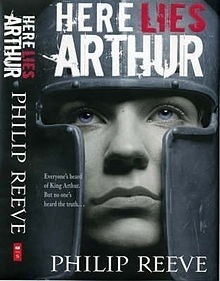
Lets look at the cover above. We see a youthful face, armoured, with piercing blue eyes raised to Heaven in a saintly way. No one tells us that this face is Arthur's but it is the assumption we make. But let's look at it in more detail. The metaphor Reeve uses to describe Arthur is the bear: petty, violent and brutally violent. This is not the picture that decorates the cover.
So who else could it be? Gwyna the main character and narrator? Is the face sufficiently feminine rather than saintly to be a young woman? Possibly, but she is never a soldier and far more earthy than this character looks.
No, I think the picture is Peredur. A relatively minor character introduced a few chapters in and dismissed to return in the second half and become really very important! And there is a very obvious reason why this would fit with the femininity of the image.
Reeve seems to be creating a world that is closer to historical reality - with it's hardships, horrors, tedium and petty brutality as well as beauty, stink and death. Listening to him yesterday, he described how he was inspired by John Boorman's Excalibur and "lifted" ("stole"?) both the opening and closing scenes from it. It was lovely hearing him describe how as a teenager inspired by this film he devoured Arthurian mythology - in a remarkably similar way to the way I did myself.
Reeve sets the story deeply into the Celtic world, translating familiar names like Merlin into the more Welsh - and more authentic sounding - Myrddin; Tintagel become Din Tagel.
Myrddin is for Arthur what Alastair Campbell was for Tony Blair: Reeve shows him spinning and weaving the legends of Arthur from half-formed truths, ancient myths, lost religions and outright lies.
It is an explicitly metafictional book - a book about books - a tale of tales - a story of songs - which explores the powers of the transformative narrative word to bind and inspire, to create belief out of the air. We hear the tales we all know - Uthr transformed into the shape of his enemy to seduce Ygraine; the Lady of the Lake; Excalibur or Caliburn here; the Holy Grail - and we see the sleight-of-hand by which they were created.
And what I find amazing is that, just like Gwyna, we both recognise the lies for what they are and we are seduced by them ourselves.
There is something beautifully Shakespearean here. The gender ambiguities of Gwyna who becomes a boy, Gwyn, to be safe upon the road and the parallel story of Peredur kept safe from the army by being dressed as a girl echoes As You Like It's Rosalind.
I recall the series on Channel 4 not many months back called Camelot starring Joseph Fiennes as a not dissimilar Merlin - albeit one with genuine magic. In reflection, it's such a shame they didn't just dramatise this book which - despite the lack of raunchiness (breasts were bared nearly moment by moment and maidens defiled each episode!) - was so much more authentic, genuinely moving and just interesting.
On a separate point: Philip Reeve is fabulous! Clad in a three piece suit which my untrained eye wants to claim as gabardine and walking upright he looked like he had strode out of Dartmoor - which I guess he literally had! - where no doubt he was to return to find the footprint of a monstrous hound by his garden gate! He is, however, a truly inspirational speaker and I feel privileged to have heard him speak!
I attended a literacy conference this week where Philip Reeve was - for wont of a better phrase - the keynote speaker and I was lent this book as an introduction to his work as - to my total shame - I've never read any! I've been aware of Mortal Engines and intending to read it - being a definite steampunk fan - but something's always got in my way!
So... onto hic iacit Arctururs which is obviously based on the King Arthur legend.

Lets look at the cover above. We see a youthful face, armoured, with piercing blue eyes raised to Heaven in a saintly way. No one tells us that this face is Arthur's but it is the assumption we make. But let's look at it in more detail. The metaphor Reeve uses to describe Arthur is the bear: petty, violent and brutally violent. This is not the picture that decorates the cover.
So who else could it be? Gwyna the main character and narrator? Is the face sufficiently feminine rather than saintly to be a young woman? Possibly, but she is never a soldier and far more earthy than this character looks.
No, I think the picture is Peredur. A relatively minor character introduced a few chapters in and dismissed to return in the second half and become really very important! And there is a very obvious reason why this would fit with the femininity of the image.
Reeve seems to be creating a world that is closer to historical reality - with it's hardships, horrors, tedium and petty brutality as well as beauty, stink and death. Listening to him yesterday, he described how he was inspired by John Boorman's Excalibur and "lifted" ("stole"?) both the opening and closing scenes from it. It was lovely hearing him describe how as a teenager inspired by this film he devoured Arthurian mythology - in a remarkably similar way to the way I did myself.
Reeve sets the story deeply into the Celtic world, translating familiar names like Merlin into the more Welsh - and more authentic sounding - Myrddin; Tintagel become Din Tagel.
Myrddin is for Arthur what Alastair Campbell was for Tony Blair: Reeve shows him spinning and weaving the legends of Arthur from half-formed truths, ancient myths, lost religions and outright lies.
It is an explicitly metafictional book - a book about books - a tale of tales - a story of songs - which explores the powers of the transformative narrative word to bind and inspire, to create belief out of the air. We hear the tales we all know - Uthr transformed into the shape of his enemy to seduce Ygraine; the Lady of the Lake; Excalibur or Caliburn here; the Holy Grail - and we see the sleight-of-hand by which they were created.
And what I find amazing is that, just like Gwyna, we both recognise the lies for what they are and we are seduced by them ourselves.
There is something beautifully Shakespearean here. The gender ambiguities of Gwyna who becomes a boy, Gwyn, to be safe upon the road and the parallel story of Peredur kept safe from the army by being dressed as a girl echoes As You Like It's Rosalind.
I recall the series on Channel 4 not many months back called Camelot starring Joseph Fiennes as a not dissimilar Merlin - albeit one with genuine magic. In reflection, it's such a shame they didn't just dramatise this book which - despite the lack of raunchiness (breasts were bared nearly moment by moment and maidens defiled each episode!) - was so much more authentic, genuinely moving and just interesting.
On a separate point: Philip Reeve is fabulous! Clad in a three piece suit which my untrained eye wants to claim as gabardine and walking upright he looked like he had strode out of Dartmoor - which I guess he literally had! - where no doubt he was to return to find the footprint of a monstrous hound by his garden gate! He is, however, a truly inspirational speaker and I feel privileged to have heard him speak!

June 1, 2013
Ultimately, I did not care for this book.
Unlike other readers, I wasn't put off by how Reeve depicted a less than heroic King Arthur. This is not a new concept... Arguably it was done as early as the 12th century in Chretien de Troyes works! I bring this up not to be a literary snob, but to dispel the idea that the Arthurian legend is sacrosanct. It never has been. Add in recent high profile movies and tv shows that try to deconstruct this myth and arguably Reeve is part of a trend.
What does he bring to the table? Not much, unfortunately. Technically the writing is a bit off. Gwyna was an appealing character to me in many ways. She had a clearly defined personality, for one. Furthermore, Reeve was pretty good at delineating how characters had lives and histories before Arthur blundered into their path. Their lives don't shape themselves to fit HIS plot and HIS story. There's a quote early on about how no one cares about Gwyna, scurrying around the edges of Arthur's war. And this book sets out to tell the story of someone who would be a side character- at best- in a story like this. As a result, Gwyna is not charitable towards Arthur. Why should she be? He trampled all over her life! She's angry much of the time and in that respect I found her refreshing.
Unfortunately the actual prose lets her down. Entire chapters pass with very little dialogue. Writing goes from past to present tense without any clear rhyme or reason. It jumps from first person to third person with very little indicators about whether the latter portions are reliable, or how Gwyna even knows what she knows. Entire relationships begin and end without any conversation between the participants at all. Things just kind of happen and Gwyna recites them. Case in point: She tells us that Guinevere and Kay struck up an unlikely friendship and wonders what they had to talk about. We never get to listen in on any of these conversations so their relationship is flat and underdeveloped.
I like that it explicitly got into gender roles because yes women almost certainly had opinions on this sort of thing, even before there was an organized women's liberation movement. I also enjoyed that we got a twist on the "tomboy girl pretends to be a boy!" narrative by also having a male character who's had to pretend to be a girl. Unfortunately, the narrative is very muddled about what it wants to do with gender. There are many moments when Gwyna explicitly calls out the patriarchy and how it screws people (male and female) over. However, she also states outright that women do nothing but wait at home and sew and gossip - not necessarily the case in medieval Europe!- and Reeve does very little to dispel the idea that women are much more than damsels in distress.
Furthermore Gwyna has a great deal of angst and uncertainty about going back to being perceived as a woman after spending years as a man. Understandable; this would probably create identity issues, especially after experiencing the freedom afforded to her as a man. Meanwhile, the male character who lived life as a female... Once they are outed, they live as a male with comparative ease and seemingly very little internal conflict. At least in comparison to Gwyna. This ultimately paints a picture that it's far more preferable to be a man. Everyone would want to live as one given the opportunity!
Now the exposition says something else, but the actions of the characters speaking louder. Because showing- and not telling- always creates a stronger impact.
Unlike other readers, I wasn't put off by how Reeve depicted a less than heroic King Arthur. This is not a new concept... Arguably it was done as early as the 12th century in Chretien de Troyes works! I bring this up not to be a literary snob, but to dispel the idea that the Arthurian legend is sacrosanct. It never has been. Add in recent high profile movies and tv shows that try to deconstruct this myth and arguably Reeve is part of a trend.
What does he bring to the table? Not much, unfortunately. Technically the writing is a bit off. Gwyna was an appealing character to me in many ways. She had a clearly defined personality, for one. Furthermore, Reeve was pretty good at delineating how characters had lives and histories before Arthur blundered into their path. Their lives don't shape themselves to fit HIS plot and HIS story. There's a quote early on about how no one cares about Gwyna, scurrying around the edges of Arthur's war. And this book sets out to tell the story of someone who would be a side character- at best- in a story like this. As a result, Gwyna is not charitable towards Arthur. Why should she be? He trampled all over her life! She's angry much of the time and in that respect I found her refreshing.
Unfortunately the actual prose lets her down. Entire chapters pass with very little dialogue. Writing goes from past to present tense without any clear rhyme or reason. It jumps from first person to third person with very little indicators about whether the latter portions are reliable, or how Gwyna even knows what she knows. Entire relationships begin and end without any conversation between the participants at all. Things just kind of happen and Gwyna recites them. Case in point: She tells us that Guinevere and Kay struck up an unlikely friendship and wonders what they had to talk about. We never get to listen in on any of these conversations so their relationship is flat and underdeveloped.
I like that it explicitly got into gender roles because yes women almost certainly had opinions on this sort of thing, even before there was an organized women's liberation movement. I also enjoyed that we got a twist on the "tomboy girl pretends to be a boy!" narrative by also having a male character who's had to pretend to be a girl. Unfortunately, the narrative is very muddled about what it wants to do with gender. There are many moments when Gwyna explicitly calls out the patriarchy and how it screws people (male and female) over. However, she also states outright that women do nothing but wait at home and sew and gossip - not necessarily the case in medieval Europe!- and Reeve does very little to dispel the idea that women are much more than damsels in distress.
Furthermore Gwyna has a great deal of angst and uncertainty about going back to being perceived as a woman after spending years as a man. Understandable; this would probably create identity issues, especially after experiencing the freedom afforded to her as a man. Meanwhile, the male character who lived life as a female... Once they are outed, they live as a male with comparative ease and seemingly very little internal conflict. At least in comparison to Gwyna. This ultimately paints a picture that it's far more preferable to be a man. Everyone would want to live as one given the opportunity!
Now the exposition says something else, but the actions of the characters speaking louder. Because showing- and not telling- always creates a stronger impact.

December 9, 2016
I really don't know. This was a weird, weird book. I'm just surprised I was able to finish it.

June 30, 2017
It was an interesting take on the legends, but I felt that it didn't stay true to the spirit of the old stories. That ruined it for me. It stripped away the magic, and instead of feeling like a historical take, it felt (IMO) too pessimistic for me to like it.
I don't recommend this to lovers of the legends.
I don't recommend this to lovers of the legends.


May 24, 2009
I don’t know what took me so long to get to this book, seeing as how I’m a huge fan of both Reeve’s Immortal Engines quartet and practically anything even remotely Arthurian (including books that simply take place in the cold and mucky England of yore – very long-ago yore).
Here Lies Arthur was well worth the wait. After Myrddin the bard rescues young Gwyna from the aftermath of one of war-band leader Arthur’s slash-and-burn raids, she is transformed from a slave who just tried to get through each day to a person who suddenly has the opportunity and perspective to think about the world around her and even to change the course of events.
It starts with a cliché of many historical novels with strong female characters – Gwyna must be disguised as a boy, not only to ensure her safety in a rough, male-dominated world, but also to conceal the fact that she took part in a Myrddin-designed ruse to convince Arthur’s soldiers and enemies that the Lady of the Lake (little Gwyna, actually) gifted him with an ancient and powerful sword.
Although Gwyna is forced by her own growing body and by circumstance to change from Gwyn to Gwyna and back again several times, this is not the focus of the tale. Rather, it is Gwyna’s observations of Arthur’s small fiefdom, of the ways of its men and women, and most of all of the way people see mainly what they expect to see that form the backdrop of this tale. There are some small and brutal battles, but mainly Gwyna is able (as a girl) to avoid being in the thick of these. However, what she can’t avoid is the knowledge that the kingly, heroic Arthur created by Myrddin’s songs and tales is very different from the actual power-hungry, thoughtless Arthur who lives to hunt and raid.
Myrddin wants to be a king-maker, not through any desire for power of his own but because his own childhood, spent as a Saxon slave after his village was destroyed, convinced him of the urgent necessity for safety and order in Britain. Myrddin is smart and clear-eyed – he knows that Arthur is just as brutish and short-sighted as any other petty leader of an insignificant warband. However, his status as the son of Uther is one advantage Arthur has, and the other is having Myrddin as his advisor. Myrddin has a keen understanding of human nature and politics, and he hopes that the legends he spreads throughout Britain will take on a life of their own and sweep the real, less-than-perfect Arthur along with them until all of Britain is united and strong under his rule.
That nothing quite works out as Myrddin plans, and that he has to set in motion several nefarious schemes in order to get closer to his grand goal, is one of the tragedies of the book. Not only do people lose their lives and loves, but his plan fails – and Gwyna is disillusioned in her old mentor, who she discovers too late has always loved her like a father.
The tension between the relatively new Christian religion and the old gods is underscored in many key ways throughout the book, with Myrddin providing a third (and very modern-feeling) perspective with his disbelieving and cynical views. To believe in nothing is freedom, he says, as he isn’t shackled by the fear and superstition that hamper other people and thus he can manipulate them more easily.
Gwyna’s story was so engrossing and so vividly told that I was absolutely bereft when she and her companion buy passage on a ship called Hope, “outbound for somewhere better.” I want to know what she does next and what her life is like. Whether she becomes a wandering bard herself or finds a safe croft in which to settle down and raise a family, I’m sure Gwyna will continue to observe the world around her closely and to come to her own conclusions.
Highly recommended for grades 5 and up.
Here Lies Arthur was well worth the wait. After Myrddin the bard rescues young Gwyna from the aftermath of one of war-band leader Arthur’s slash-and-burn raids, she is transformed from a slave who just tried to get through each day to a person who suddenly has the opportunity and perspective to think about the world around her and even to change the course of events.
It starts with a cliché of many historical novels with strong female characters – Gwyna must be disguised as a boy, not only to ensure her safety in a rough, male-dominated world, but also to conceal the fact that she took part in a Myrddin-designed ruse to convince Arthur’s soldiers and enemies that the Lady of the Lake (little Gwyna, actually) gifted him with an ancient and powerful sword.
Although Gwyna is forced by her own growing body and by circumstance to change from Gwyn to Gwyna and back again several times, this is not the focus of the tale. Rather, it is Gwyna’s observations of Arthur’s small fiefdom, of the ways of its men and women, and most of all of the way people see mainly what they expect to see that form the backdrop of this tale. There are some small and brutal battles, but mainly Gwyna is able (as a girl) to avoid being in the thick of these. However, what she can’t avoid is the knowledge that the kingly, heroic Arthur created by Myrddin’s songs and tales is very different from the actual power-hungry, thoughtless Arthur who lives to hunt and raid.
Myrddin wants to be a king-maker, not through any desire for power of his own but because his own childhood, spent as a Saxon slave after his village was destroyed, convinced him of the urgent necessity for safety and order in Britain. Myrddin is smart and clear-eyed – he knows that Arthur is just as brutish and short-sighted as any other petty leader of an insignificant warband. However, his status as the son of Uther is one advantage Arthur has, and the other is having Myrddin as his advisor. Myrddin has a keen understanding of human nature and politics, and he hopes that the legends he spreads throughout Britain will take on a life of their own and sweep the real, less-than-perfect Arthur along with them until all of Britain is united and strong under his rule.
That nothing quite works out as Myrddin plans, and that he has to set in motion several nefarious schemes in order to get closer to his grand goal, is one of the tragedies of the book. Not only do people lose their lives and loves, but his plan fails – and Gwyna is disillusioned in her old mentor, who she discovers too late has always loved her like a father.
The tension between the relatively new Christian religion and the old gods is underscored in many key ways throughout the book, with Myrddin providing a third (and very modern-feeling) perspective with his disbelieving and cynical views. To believe in nothing is freedom, he says, as he isn’t shackled by the fear and superstition that hamper other people and thus he can manipulate them more easily.
Gwyna’s story was so engrossing and so vividly told that I was absolutely bereft when she and her companion buy passage on a ship called Hope, “outbound for somewhere better.” I want to know what she does next and what her life is like. Whether she becomes a wandering bard herself or finds a safe croft in which to settle down and raise a family, I’m sure Gwyna will continue to observe the world around her closely and to come to her own conclusions.
Highly recommended for grades 5 and up.

March 11, 2019
[T]hey weren't thinking of the Arthur I'd known. It was Myrddin's Arthur they wanted back, the story-Arthur, the wisest and fairest and best king they had ever heard of. You can't blame people for wanting to believe there'd been a man like that once, and might be again.Actually amazed. Reeve is one of my favourite authors so I knew it'd be good, but I wasn't expecting to enjoy this so much! More historical fiction than fantasy, Reeve has entwined historical research with a splash of drama grounded in realism, and this made for a very engrossing retelling of the King Arthur legend. In a time where 'fact' and history is centred around oral tradition, the very mortal Myrddin (aka the legendary wizard Merlin) works his own sort of magic with words rather than spells. A skilled story-spinner, Myrddin (and later, Gwyna) turns Arthur from "a little tyrant in an age of tyrants" to one of the longest-standing legends of all time, the emblem of Hope itself.

I didn't feel maidenly. I felt like I'd ridden a long way, through battles and bad country, and he was my girl, waiting for me at journey's end.All in all...I highly recommend. One of the best retellings I've read of any legend at all!

August 4, 2011
My expectations for a fictional Arthur-type character are rather specific. I don't rate at all highly any back-projection of Malory, Tennyson or even Geoffrey of Monmouth into a sub-Roman context, with medieval concepts of round tables, grails and swords embedded in stones appearing anachronistically in Late Antiquity. And so my heart sank when I began reading a scenario involving a Lady in a Lake in this young adult fiction book.
But, dedicated Arthurian that I am, I persisted, and am very glad to have done so. For the essence of every good story-teller--and Philip Reeve is one of these--includes the gift of using such motifs sensitively. What we have presented here is a tale within a tale, where Reeve weaves a story of how Myrddin embroiders narratives around the exploits of a minor warlord, so that we almost believe that this was the way the Arthurian legends could have come about: with pagan mythology and imagination hijacked by a bard to boost the reputation of a barbarian chieftain.
In a note the author reminds us that this isn't a historical novel, nor did he set out to portray "the real King Arthur". His geography is deliberately kept vague, set somewhere in the West Country, with Bath particularly identifiable. Many of the characters, including the cross-dressing narrator, have Brythonic-sounding names though these don't all aim to be accurate transcriptions. Still, the feel of both the times and the circumstances is magically conjured up, making this, for me, one of the better evocations of Arthurian Britain.
My previous experience of Philip Reeve was with his gripping Mortal Engines fantasy quartet for young readers; Here Lies Arthur is an unexpected but welcome departure for the author, inspired, he tells us, by the film Excalibur (John Boorman's affectionate tribute to Malory) when Reeve was only 15.
But, dedicated Arthurian that I am, I persisted, and am very glad to have done so. For the essence of every good story-teller--and Philip Reeve is one of these--includes the gift of using such motifs sensitively. What we have presented here is a tale within a tale, where Reeve weaves a story of how Myrddin embroiders narratives around the exploits of a minor warlord, so that we almost believe that this was the way the Arthurian legends could have come about: with pagan mythology and imagination hijacked by a bard to boost the reputation of a barbarian chieftain.
In a note the author reminds us that this isn't a historical novel, nor did he set out to portray "the real King Arthur". His geography is deliberately kept vague, set somewhere in the West Country, with Bath particularly identifiable. Many of the characters, including the cross-dressing narrator, have Brythonic-sounding names though these don't all aim to be accurate transcriptions. Still, the feel of both the times and the circumstances is magically conjured up, making this, for me, one of the better evocations of Arthurian Britain.
My previous experience of Philip Reeve was with his gripping Mortal Engines fantasy quartet for young readers; Here Lies Arthur is an unexpected but welcome departure for the author, inspired, he tells us, by the film Excalibur (John Boorman's affectionate tribute to Malory) when Reeve was only 15.

March 10, 2009
Fans of the Arthurian legends should enjoy this fresh revisioning. Personally, I think his "Larklight" series is far better.
Almost three stars. A reinvention of the Arthurian myths, with a much more "authentic" feel than most, esp. the Roman and Welsh touches.
Here, Arthur was no hero, no great king. Nothing more than a bully and a tyrant, surrounded by men just as petty and small - minded as himself. It was Myrrddin, the bard, whose stories gave Arthur power and prestige. It was the idea of someone as honourable, powerful, valorous and virtuous as Arthur was said to be that captured the imagination of the people and which allowed them to band together against the Saxons under his leadership, which was Myrddwin's goal all along. It was those stories that he wove and spread throughout the length and breadth of England that are purported to have been the real magic and mystery.
Gwyna is a good narrator, never too whiny, nor is she invulnerable. The book is definitely for older teens in my opinion, given the content which includes affairs, nudity and generally more mature content.
Almost three stars. A reinvention of the Arthurian myths, with a much more "authentic" feel than most, esp. the Roman and Welsh touches.
Here, Arthur was no hero, no great king. Nothing more than a bully and a tyrant, surrounded by men just as petty and small - minded as himself. It was Myrrddin, the bard, whose stories gave Arthur power and prestige. It was the idea of someone as honourable, powerful, valorous and virtuous as Arthur was said to be that captured the imagination of the people and which allowed them to band together against the Saxons under his leadership, which was Myrddwin's goal all along. It was those stories that he wove and spread throughout the length and breadth of England that are purported to have been the real magic and mystery.
Gwyna is a good narrator, never too whiny, nor is she invulnerable. The book is definitely for older teens in my opinion, given the content which includes affairs, nudity and generally more mature content.

April 17, 2009
You can find almost every kind of fantasy within the Arthurian tradition, such as classic fantasy (The Once and Future King), feminist fantasy (The Mists of Avalon), and semi-historical fantasy (The Crystal Cave). "Here Lies Arthur", perhaps, represents something new: anti-fantasy. Despite the pretty unicorn sticker affixed to my copy's spine by the Oakland Public Library, "Here Lies Arthur" contains not a single fantastic event. Reeves bursts just about every bubble in the Arthurian soap. Merlin is a charlatan, Arthur a thug, the Lady of the Lake is an urchin with admirable breath-holding ability, and Genievere, if she lived in modern times, would be required to register as a sex offender. Reeve relates this story in prose that matches the starkness of the tale, and manages to weave in a great deal of commentary about gender roles through the narrator, a girl who masquerades as a boy, and another character, a boy raised to believe he's a girl. (Yes, cross-dressing knights, but this is a far cry from Monty Python.)Most of all, though, Reeve's book is a meditation on the uses and abuses of the tales we tell ourselves.

December 11, 2008
We’ve all heard the story of King Arthur and the Knights of the Round Table. A young Arthur learns of his kingly destiny by pulling the sword from the stone. He is a fair and much loved ruler who weds the beautiful Guinevere. We also know of Guinevere’s betrayal and her deep love for Lancelot.
It’s a fabulous story but what if that’s all it is? Maybe it’s not the true story at all. Perhaps the real story is much grittier and far less polished.
Here Lies Arthur tells of an alternative Arthur and Camelot. No magic, just some very good spin doctoring and a few well acted out scenes to create a certain persona for Arthur. The story is told through the eyes of Gwyna, the girl who acted the part of the Lady of the Lake. This little scene went over so well that even Arthur himself believed that the incident actually occurred. Then there’s the truth behind the Queen’s betrayal…You’ll have to read the book and find out yourself.
It’s a fabulous story but what if that’s all it is? Maybe it’s not the true story at all. Perhaps the real story is much grittier and far less polished.
Here Lies Arthur tells of an alternative Arthur and Camelot. No magic, just some very good spin doctoring and a few well acted out scenes to create a certain persona for Arthur. The story is told through the eyes of Gwyna, the girl who acted the part of the Lady of the Lake. This little scene went over so well that even Arthur himself believed that the incident actually occurred. Then there’s the truth behind the Queen’s betrayal…You’ll have to read the book and find out yourself.

January 31, 2022
I have so many things I could say about this, but I went into this blindly so I think you should too

April 27, 2009
“They’re only stories,” he would say, “What do stories matter?” But he wasn’t stupid. He knew as well as Myrddin that in the end stories are all that matter.
--Here Lies Arthur
“The heroes, the Trows--the stories that bind us, Halli. The stories we live by, that dictate what we do and where we go. The stories that give us our names, our identities, the places we belong, the people we hate.”
--Heroes of the Valley
Story seems to be the theme of my reading lately (see here for more), and these two books made for interesting companion reads. One is about the creation of legends and the other is about how legends create us. Both are roughly medieval, one quite historically so and the other purely an author’s invention.
You’ve heard of him. Everyone’s heard of Arthur Artorius Magnus; the Dux Bellorum; the King that Was and Will Be. But you haven’t heard the truth. Not till now. I knew him, see. Saw him, smelled him, heard him talk. When I was a boy, I rode with Arthur’s band all up and down the world, and I was there at the roots and beginnings of all the stories.
That was later, of course. For now, I’m still a snot-nosed girl.
Here Lies Arthur is a fascinating conjecture about the creation of the Arthurian legends, set in a grittily realistic Britain of 500 A.D. The story is told by Gwyna, a young servant girl who is initially fleeing the burning of her estate by a roving war-band led by a powerful brute of a man. An excellent swimmer, she flees by means of the river and washes up near a man who shelters her. That man is Myrddin (i.e. Merlin). He is a bard, a traveler and spinner of tales. The Romans have abandoned Britain and the Saxons have started moving in to fill the void. Myrddin wants to see the invaders driven from their shores, but the country has fallen into the chaos of warring bands of strongmen and he sees their only hope as uniting under a strong leader. He has made it his task to turn Arthur into that man, using his bardic craft as his tool.
Having seen what a good swimmer Gwyna is, Myrddin decides to adapt one of his schemes around her. Within a day or two, after the dust has settled from the raid and Arthur seeks to gain the allegiance of the area, Myrddin is leading Gwyna away from the group with a special task. He hides her behind a waterfall at the back of a pool of water with a glamorous sword and some instructions: when Arthur makes a spectacle of wading into the pool to ask for the blessing of the Lady of the Lake, she is to take off her clothes, swim under the waterfall, and thrust the sword into the air for him to take, then return to the cave unseen.
Myrddin later returns for Gwyna and takes her in, disguised as his serving boy, and we see how the rest of the legends are created from her perspective. And why they remain legends, with no clear historical record of who the man really was. I found this a fascinating read and loved the way it examines its themes. Unfortunately, I was never entirely caught up in the story and had trouble sustaining my interest for long periods of reading. I’m not sure it would make an engaging read for someone not familiar with all of the legends. Still, for those who are I highly recommend it.
Heroes of the Valley, on the other hand, drew me in and wouldn’t let me go. Stroud finds just the right balance of exciting action with dwelling on details and letting the story unfold in its proper time. And even though there’s no Bartimaeus in this one, he manages to once again work in a good bit of dry humor. I loved it.
This is the tale of a valley of roughly Nordic folk at the edge of the sea. They are not a sea-faring people, so it is one boundary of their world. The other boundaries are the cairns that surround the edge of their valley, the burial mounds of their 12 founding heroes and all of their ancestors since. You see--according to the Beowulf-like stories--when the valley was first being settled by those who had descending from the high surrounding peaks, it had been beset nightly by trows (trolls). They terrorized the people until the strong leaders of the 12 houses decided to make a final stand. All 12 died, but they slaughtered so many trows in the process that the creatures took flight. The heroes were buried with their swords as sentries, creating a protective barrier that has not been crossed to this day. Within a couple of generations laws were established and swords forgotten, and the people have been enjoying a peaceful agrarian existence ever since.
Halli Sveinsson is the second son of the current arbiter of Svein’s House (a ruling estate with many smaller farms and households on their land). Someday Leif, his older brother, will inherit their father’s role and Halli will tend some of the fields on the edge of their lands. But Halli has always been restless, a practical joker who creates mischief and gets into trouble. He most looks up to his uncle Brodir, who often wanders the valley and has some dark secret from his past. When it is the Sveinsson’s turn to host the annual festival and leaders of the other houses visit, that secret rears its ugly head. Halli, who idolizes the heroic ways of his house’s founder, decides to take action in response and learns more about himself, his valley, and the legends than he ever expected.
”Your mistake, Halli Sveinsson, is that you aspire to the wrong thing. You did a hundred brave acts during your trip down here, but they weren’t the ones you were expecting. You kept waiting to find a sword somewhere so you could fight outlaws and monsters, and finally lop off Olaf’s head. None of that happened, did it? So you’re disappointed. But you shouldn’t be, Halli, because it’s all nonsense, all of that. It’s just stuff that happens in the stories. None of it’s real. . . .
“Think how the stories overlap and contradict each other, how they’re told differently up and down the valley. Think of what the heroes are supposed to have done. Take Arne, dear Founder of this House. He could throw boulders the size of cowsheds and leap over rivers in full spate. He once climbed the cataracts holding a baby in one hand. . . . He took on ten men with his hands tied behind his back, though what he fought with in that instance I don’t dare guess. Oh, and he went into the hill and killed the Trow-king before coming home for breakfast. . . .
“It’s true you’re a bit extreme, but you’re not the only one at it. Everyone’s fixated with the tales. Remember Brodir and Hord swapping insults about each other’s heroes during the feast? Say something rude about someone’s Founder and it’s like you’ve struck them in the face. It’s pathetic. And you know what? Deep down it’s all about the rules, all about keeping everyone in their place.”
-----
“There’s nothing a man can do that can’t be turned into a tale,” he used to tell me as we rode from one hall to the next through the hills of summer. “Arthur can do nothing so bad that I can’t spin it into gold and use it to make him more famous and more feared. If the tales are good enough, even the poor man who goes hungry from paying Arthur taxes will love him. I am the story-spinning physician who keeps his reputation in good health.”
-----
But when we had eaten, Myrddin took out his harp and spun the day’s fight into stories, listing the brave deeds that each man had done, leaving out none of them, not even Bedwyr. He touched his story with humor, telling us how none of the enemy had dared face Owain, because he was so beautiful they thought he was an angel sent to help Arthur, and how they had fled before Cei, who was so ugly they thought he was a devil come to help Arthur. And slowly, as we listened, we started to forget how afraid we’d all been and began to remember it as he told it: Arthur’s shining victory.
-----
In the silence as the story ends, I look about. I see their faces, and I feel the same look on my own. An enchanted look. It’s not that we believe the story. We all know no green man really came here or walked around with his head held in his hand. But we feel we’ve heard a kind of truth. Even Arthur feels it, lounging in his big chair with Cunaide at his side and his hound Cabal at his feet. For a moment, the real Arthur and the story Arthur are one and the same, and we know that we are all part of the story, all of us.
-----
What stories define you?
--Here Lies Arthur
“The heroes, the Trows--the stories that bind us, Halli. The stories we live by, that dictate what we do and where we go. The stories that give us our names, our identities, the places we belong, the people we hate.”
--Heroes of the Valley
Story seems to be the theme of my reading lately (see here for more), and these two books made for interesting companion reads. One is about the creation of legends and the other is about how legends create us. Both are roughly medieval, one quite historically so and the other purely an author’s invention.
You’ve heard of him. Everyone’s heard of Arthur Artorius Magnus; the Dux Bellorum; the King that Was and Will Be. But you haven’t heard the truth. Not till now. I knew him, see. Saw him, smelled him, heard him talk. When I was a boy, I rode with Arthur’s band all up and down the world, and I was there at the roots and beginnings of all the stories.
That was later, of course. For now, I’m still a snot-nosed girl.
Here Lies Arthur is a fascinating conjecture about the creation of the Arthurian legends, set in a grittily realistic Britain of 500 A.D. The story is told by Gwyna, a young servant girl who is initially fleeing the burning of her estate by a roving war-band led by a powerful brute of a man. An excellent swimmer, she flees by means of the river and washes up near a man who shelters her. That man is Myrddin (i.e. Merlin). He is a bard, a traveler and spinner of tales. The Romans have abandoned Britain and the Saxons have started moving in to fill the void. Myrddin wants to see the invaders driven from their shores, but the country has fallen into the chaos of warring bands of strongmen and he sees their only hope as uniting under a strong leader. He has made it his task to turn Arthur into that man, using his bardic craft as his tool.
Having seen what a good swimmer Gwyna is, Myrddin decides to adapt one of his schemes around her. Within a day or two, after the dust has settled from the raid and Arthur seeks to gain the allegiance of the area, Myrddin is leading Gwyna away from the group with a special task. He hides her behind a waterfall at the back of a pool of water with a glamorous sword and some instructions: when Arthur makes a spectacle of wading into the pool to ask for the blessing of the Lady of the Lake, she is to take off her clothes, swim under the waterfall, and thrust the sword into the air for him to take, then return to the cave unseen.
Myrddin later returns for Gwyna and takes her in, disguised as his serving boy, and we see how the rest of the legends are created from her perspective. And why they remain legends, with no clear historical record of who the man really was. I found this a fascinating read and loved the way it examines its themes. Unfortunately, I was never entirely caught up in the story and had trouble sustaining my interest for long periods of reading. I’m not sure it would make an engaging read for someone not familiar with all of the legends. Still, for those who are I highly recommend it.
Heroes of the Valley, on the other hand, drew me in and wouldn’t let me go. Stroud finds just the right balance of exciting action with dwelling on details and letting the story unfold in its proper time. And even though there’s no Bartimaeus in this one, he manages to once again work in a good bit of dry humor. I loved it.
This is the tale of a valley of roughly Nordic folk at the edge of the sea. They are not a sea-faring people, so it is one boundary of their world. The other boundaries are the cairns that surround the edge of their valley, the burial mounds of their 12 founding heroes and all of their ancestors since. You see--according to the Beowulf-like stories--when the valley was first being settled by those who had descending from the high surrounding peaks, it had been beset nightly by trows (trolls). They terrorized the people until the strong leaders of the 12 houses decided to make a final stand. All 12 died, but they slaughtered so many trows in the process that the creatures took flight. The heroes were buried with their swords as sentries, creating a protective barrier that has not been crossed to this day. Within a couple of generations laws were established and swords forgotten, and the people have been enjoying a peaceful agrarian existence ever since.
Halli Sveinsson is the second son of the current arbiter of Svein’s House (a ruling estate with many smaller farms and households on their land). Someday Leif, his older brother, will inherit their father’s role and Halli will tend some of the fields on the edge of their lands. But Halli has always been restless, a practical joker who creates mischief and gets into trouble. He most looks up to his uncle Brodir, who often wanders the valley and has some dark secret from his past. When it is the Sveinsson’s turn to host the annual festival and leaders of the other houses visit, that secret rears its ugly head. Halli, who idolizes the heroic ways of his house’s founder, decides to take action in response and learns more about himself, his valley, and the legends than he ever expected.
”Your mistake, Halli Sveinsson, is that you aspire to the wrong thing. You did a hundred brave acts during your trip down here, but they weren’t the ones you were expecting. You kept waiting to find a sword somewhere so you could fight outlaws and monsters, and finally lop off Olaf’s head. None of that happened, did it? So you’re disappointed. But you shouldn’t be, Halli, because it’s all nonsense, all of that. It’s just stuff that happens in the stories. None of it’s real. . . .
“Think how the stories overlap and contradict each other, how they’re told differently up and down the valley. Think of what the heroes are supposed to have done. Take Arne, dear Founder of this House. He could throw boulders the size of cowsheds and leap over rivers in full spate. He once climbed the cataracts holding a baby in one hand. . . . He took on ten men with his hands tied behind his back, though what he fought with in that instance I don’t dare guess. Oh, and he went into the hill and killed the Trow-king before coming home for breakfast. . . .
“It’s true you’re a bit extreme, but you’re not the only one at it. Everyone’s fixated with the tales. Remember Brodir and Hord swapping insults about each other’s heroes during the feast? Say something rude about someone’s Founder and it’s like you’ve struck them in the face. It’s pathetic. And you know what? Deep down it’s all about the rules, all about keeping everyone in their place.”
-----
“There’s nothing a man can do that can’t be turned into a tale,” he used to tell me as we rode from one hall to the next through the hills of summer. “Arthur can do nothing so bad that I can’t spin it into gold and use it to make him more famous and more feared. If the tales are good enough, even the poor man who goes hungry from paying Arthur taxes will love him. I am the story-spinning physician who keeps his reputation in good health.”
-----
But when we had eaten, Myrddin took out his harp and spun the day’s fight into stories, listing the brave deeds that each man had done, leaving out none of them, not even Bedwyr. He touched his story with humor, telling us how none of the enemy had dared face Owain, because he was so beautiful they thought he was an angel sent to help Arthur, and how they had fled before Cei, who was so ugly they thought he was a devil come to help Arthur. And slowly, as we listened, we started to forget how afraid we’d all been and began to remember it as he told it: Arthur’s shining victory.
-----
In the silence as the story ends, I look about. I see their faces, and I feel the same look on my own. An enchanted look. It’s not that we believe the story. We all know no green man really came here or walked around with his head held in his hand. But we feel we’ve heard a kind of truth. Even Arthur feels it, lounging in his big chair with Cunaide at his side and his hound Cabal at his feet. For a moment, the real Arthur and the story Arthur are one and the same, and we know that we are all part of the story, all of us.
-----
What stories define you?
June 4, 2023
"That's the trouble with a story-spinner. You never know what's real and what's made up. Even when they are telling the truth, they can't stop themselves from spinning it into something better; something prettier, with more of a pattern to it."
Don't get me wrong, a three-star rating doesn't mean that I disliked the story. This story paints a more humane picture of (king) Arthur instead of focussing on his heroism. I particularly enjoyed the references to warrior culture (status, feasts in the hall, gift-giving) and the focus on the way in which stories can shape what people see as the truth.
Personally, I thought the first part of the story quite boring and I was glad that the book had a little under 300 pages. It would have been interesting if the second part of the story was a bit more fleshed out, because it felt rushed at some points near the end. Nonetheless, it is an interesting take on the story of Arthur, even though concepts such as the power storytelling, the role of men and women, and heroism are more central to the novel than Arthur himself.
Don't get me wrong, a three-star rating doesn't mean that I disliked the story. This story paints a more humane picture of (king) Arthur instead of focussing on his heroism. I particularly enjoyed the references to warrior culture (status, feasts in the hall, gift-giving) and the focus on the way in which stories can shape what people see as the truth.
Personally, I thought the first part of the story quite boring and I was glad that the book had a little under 300 pages. It would have been interesting if the second part of the story was a bit more fleshed out, because it felt rushed at some points near the end. Nonetheless, it is an interesting take on the story of Arthur, even though concepts such as the power storytelling, the role of men and women, and heroism are more central to the novel than Arthur himself.

June 10, 2018
Gwyna is 10 or 11 and a servant/slave girl at a time when Arthur is roaming the countryside looting and doing Mafia like stuff in order to rule his bit of England. Meriddyn is his story teller who manages to weave magic out of the tawdry. When all 3 meet up then you get the "truth" about Arthur and Merlin and not all the hoop-la that we read nowadays.
A new take on the Pendragon myths.
Spoiler alert.
Arthur is a psycho and a jerk.
Meriddyn is a con man.
Everyone else is just in it for the loot and the chicks.
Great story. I enjoyed it, but I really disliked Arthur and felt real sorrow for the women in the story, raped, used, married off as they were. Bet it's more like Reeve's take on it than anything else.
A new take on the Pendragon myths.
Spoiler alert.
Arthur is a psycho and a jerk.
Meriddyn is a con man.
Everyone else is just in it for the loot and the chicks.
Great story. I enjoyed it, but I really disliked Arthur and felt real sorrow for the women in the story, raped, used, married off as they were. Bet it's more like Reeve's take on it than anything else.

November 11, 2022
I read this like a billion times when in middle school and finally decided to reread it now that I'm taking a class on medieval literature and history where we talk a lot about post-Rome Britain, and I am pleased to say that this totally holds up! It does a really good grounded exploration of what the historical King Arthur might have been, does its own spin on some of the more famous legends (Gwenhwyfar and Bedwyrr … ouch) has some cool explorations of the power of stories. Plus, it was just generally fun reading this with a greater knowledge of medieval history so whenever they mentioned something like the kingdom of Dummonia or King Vortigern I was like "hey I know what that is!" Definitely one of my favorite reinterpretations of King Arthur that I've encountered.

October 15, 2023
My son is reading this book for school, and I love the King Arthur legend, so I thought I’d read it too, and help him with it (if he even needs my help).
It’s a clever re-imagining of the King Arthur story (or stories, as there are so many variations). In this version, Arthur is a petty tyrant, and he and his knights are a ragtag, opportunistic, mercenary lot. They haunt a misty, primitive Britain of disintegrating Roman ruins, populated by peasants and (other) marauding barbarians. Crucially, though, master storyteller Merlin believes in him, and the stories Merlin spins around him make Arthur much more than he is.
Our heroine (and sometimes hero, for she switches gender fluidly throughout the tale) and narrator is an apprentice of Merlin, and from him she too learns the power of stories. She learns from Merlin that the stories she creates can have the power to influence and manipulate those around her; but she discovers mostly for herself that, more powerful than any ‘truth’, stories also have the power to create posterity’s idea of what really happened. They’re more important than the truth. The truth hardly matters. She creates the Arthur legend that we know today through the power of her own imagination.
This is a great book. It seems historically quite accurate, and also has great respect for the ancient Arthurian legends, and doesn’t do them a disservice. It really does bring something fresh, a new angle, to the King Arthur (the man, the legend). More, although this is a story about how stories (one meaning of ‘lies’ in the title) are more powerful than, and can replace, the truth; what the book gives us, by showing us the ‘truth’ before the stories (and magic) are spun around it, is perhaps closer to a likely truth than any of the well-known Arthur stories. Clever.
It’s a clever re-imagining of the King Arthur story (or stories, as there are so many variations). In this version, Arthur is a petty tyrant, and he and his knights are a ragtag, opportunistic, mercenary lot. They haunt a misty, primitive Britain of disintegrating Roman ruins, populated by peasants and (other) marauding barbarians. Crucially, though, master storyteller Merlin believes in him, and the stories Merlin spins around him make Arthur much more than he is.
Our heroine (and sometimes hero, for she switches gender fluidly throughout the tale) and narrator is an apprentice of Merlin, and from him she too learns the power of stories. She learns from Merlin that the stories she creates can have the power to influence and manipulate those around her; but she discovers mostly for herself that, more powerful than any ‘truth’, stories also have the power to create posterity’s idea of what really happened. They’re more important than the truth. The truth hardly matters. She creates the Arthur legend that we know today through the power of her own imagination.
This is a great book. It seems historically quite accurate, and also has great respect for the ancient Arthurian legends, and doesn’t do them a disservice. It really does bring something fresh, a new angle, to the King Arthur (the man, the legend). More, although this is a story about how stories (one meaning of ‘lies’ in the title) are more powerful than, and can replace, the truth; what the book gives us, by showing us the ‘truth’ before the stories (and magic) are spun around it, is perhaps closer to a likely truth than any of the well-known Arthur stories. Clever.
Displaying 1 - 30 of 433 reviews