Jump to ratings and reviews
Rate this book

سایه

Rate this book
هانس کریستیان آندرسن در کتاب داستان سایه موضوعات جالب و جذابی را روایت می‌کند. انسان در جهان هستی احساس تنهائی می‌نماید لذا همواره در این فکر و اندیشه بوده است که دنیاهای موازی دیگری را برای خودش بیافریند، با اجسام و حیوانات به گفتگو بپردازد، به دنیاهای زیرزمینی، زیرآبی و فضا دست یابد و دنیای سایه‌ها را فتح کند اما با وجود کوشش‌های بسیاری که تاکنون در این زمینه‌ها به انجام رسانده است، توفیق چندانی حاصل نکرده است. البته انسان در برخی موارد نظیر اکتشافات اعماق زمین و اعماق دریاها به موفقیت‌هایی دست یافته است اما دنیاهای غیرواقعی و غیرمادی نظیر ارتباط با اجسام، دنیای سایه‌ها و ارواح در گذشتگان هم‌چنان برای وی ناشناخته و ابهام‌آمیز باقی مانده‌اند لذا همواره درباره‌ی آن‌ها به داستان‌سرایی می‌پردازد.

30 pages, Paperback

First published January 1, 1847

14 people are currently reading
392 people want to read

About the author

Hans Christian Andersen

7,820 books3,545 followers
Hans Christian Andersen (often referred to in Scandinavia as H.C. Andersen) was a Danish author and poet. Although a prolific writer of plays, travelogues, novels, and poems, Andersen is best remembered for his fairy tales. Andersen's popularity is not limited to children; his stories — called eventyr, or "fairy-tales" — express themes that transcend age and nationality.

Andersen's fairy tales, which have been translated into more than 125 languages, have become culturally embedded in the West's collective consciousness, readily accessible to children, but presenting lessons of virtue and resilience in the face of adversity for mature readers as well. Some of his most famous fairy tales include "The Little Mermaid", "The Ugly Duckling", "The Nightingale", "The Emperor's New Clothes" and many more. His stories have inspired plays, ballets, and both live-action and animated films.

Ratings & Reviews

What do you think?
Rate this book

Friends & Following

Create a free account to discover what your friends think of this book!

Community Reviews

5 stars
125 (24%)
4 stars
193 (38%)
3 stars
150 (29%)
2 stars
36 (7%)
1 star
3 (<1%)
Displaying 1 - 30 of 66 reviews
Profile Image for Cecily.
1,325 reviews5,362 followers
February 8, 2025
After I emerged from Murakami’s Hard-Boiled Wonderland and the End of the World (see my review HERE) I was curious about other stories of people being separated from their shadows and was surprised how common a theme it is. They all make some connection between shadow and soul or personhood, and illustrate the danger of poor choices and careless wishes.

1814, Peter Schlemihl, by Adelbert von Chamisso
Read it HERE.

A Faustian tale where a man sells his shadow to the Devil in exchange for limitless wealth. But he discovers that a person without a shadow is a social outcast, regardless of their riches. The Devil offers to return his shadow in exchange for his soul.


Image: A Shadow, detaching a man’s shadow (Source)


1847, The Shadow, by Hans Christian Andersen (this story)
Read it HERE.

Note: “Thou” used to be the informal term of address, and “you” was formal. (Because Anglican liturgy is one of the last outposts of thou, and is rare even there, it’s easy to assume it’s the reverential term.)

A learned young man moves from a cold country to a hot one, in Africa. He is fascinated by the apartment on the opposite side of the street: always dark, no one to be seen, but the lush balcony flowers are watered, and strains of music reach his ears. One evening, he catches a glimpse of a slender maiden inside. His Shadow stretches to the balcony, and he says:
Now if only the Shadow was sharp enough to go in and look about and then come and tell me what it saw!

When, next morning, he realises he is still without a shadow, he remembers Chamisso’s tale:
He knew that there was a story about a man without a shadow which everyone at home in the cold countries knew; and if the learned man went there and told them his own story they would say he was merely imitating the other.

Nevertheless, he returns home, having grown a bit of a new shadow, to write books about true, good, and beautiful things. Many years later, a finely-dressed but incredibly thin man knocks at his door: it’s his former Shadow, claiming he's seen everything, knows everything, and is very wealthy. He tells his story and departs.

After a year and a day (very fairytale), the Shadow visits again, and the story takes a darker turn. Despite the addition of a princess, it’s not really a children’s story.


Image: A Shadow presenting demands (Source)


1885, My Shadow, a poem in A Child's Garden of Verses, by Robert Louis Stevenson
Read it HERE.

In four four-line verses a small child contemplates the purpose and meaning of their shadow. The child is not very complimentary. It ends with a separation, purely because the shadow is too lazy to get out of bed. There's no suggestion of other consequences.

1888, The Fisherman and His Soul, by Oscar Wilde
Read it HERE, and read my review HERE.

I don’t know if Wilde knew of Andersen’s tale (or Chamisso’s), but there are many parallels: a good and innocent man gives up his shadow for love of an ethereal female figure (a mermaid, in Wilde’s story), but there is, inevitably, a high price to pay. You cannot live in two worlds, and having made a choice, there’s no going back, as Persephone in the Underworld and Lot’s wife in the Old Testament discovered. It has a very Christian ending, with flowers symbolising God’s benevolent love, as with the peach trees in The Selfish Giant.

1902, Peter Pan, by JM Barrie. Until Helle mentioned it in a comment, I'd forgotten Peter's shadow getting left behind when he flees, and later, Wendy sewing it back on.

1926, The Charwoman's Shadow, by Lord Dunsany
Read about it HERE.
This one’s a full novel, and I’ve not read it, but it’s another allegory of shadows and souls, and someone who regrets giving up their shadow for possible wealth.


In a totally different vein


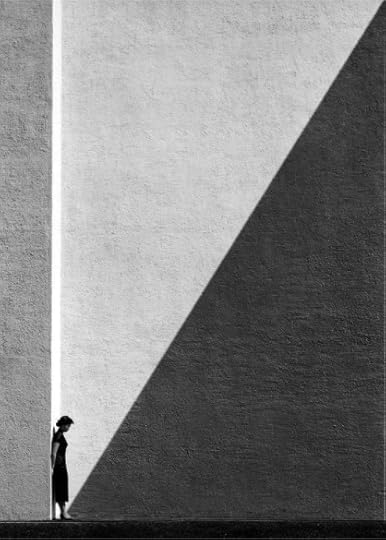
Image: “Approaching the Shadow” by Fan Ho, 1954 (Source)

Jun'ichirō Tanizaki’s In Praise of Shadows (see my review HERE) is a fascinating, surprising, occasionally amusing essay that lauds and explains traditional Japanese aesthetics relating to light and its absence. The shadows are mainly of objects, rather than people.
Profile Image for Peiman E iran.
1,436 reviews1,097 followers
January 18, 2019
‎دوستانِ گرانقدر، تلاش نمودم تا چکیده ای مناسب از داستانِ "سایه" را برایِ شما ادب دوستانِ گرامی، در زیر بنویسم
----------------------------------------------
‎این داستان در موردِ مردی اندیشمند است که به سرزمینی بسیار گرم و حاره ای بر رویِ خط استوا سفر کرده است و همچون ساکنینِ آنجا، مجبور است روزها در خانه بماند و شبها یا بیرون برود و یا به رویِ ایوانِ خانه هوا خوری کند
‎روبرویِ خانه اش، منزلی بزرگ قرار گرفته که بسیار عجیب است و گویا دربِ ورودی ندارد و اهالیِ آنجا میگویند تا حالا کسی را ندیده اند که در آنجا رفت و آمد و زندگی کند... از طرفی از درونِ خانه صدایِ آهنگی عجیب در اثرِ نواختنِ ساز به گوش میرسد.. مردِ اندیشمند، گل و گیاهانی تازه و سرحال در آنجا دید و با خود گفت: حتماً باید کسی در آن خانه باشد
‎شبی از شبها مرد اندیشمند در ایوان ایستاده بود و شمعی پشتِ سرش روشن بود و سایه اش در حیاطِ خانهٔ روبرو افتاده بود... مرد با خود گفت: ای کاش سایهٔ من نیز خرد و هوش داشت و به درونِ اتاق میرفت و از اخبارِ آن خانهٔ مرموز، من را آگاه مینمود
‎خلاصه، مرد به حالتِ شوخی به سایه اش گفت: خجالت را کنار بگذار و کاری کن تا بفهمم وجودت بی فایده نیست.. زود برو داخل و برایم خبر بیاور
‎مرد برگشت و واردِ اتاقش شد و سایه هم در امتدادِ مرد واردِ اتاقِ خانهٔ روبرو شد... صبح که مردِ اندیشمند از خواب بیدار شد، به درونِ ایوان رفت، با تجعبِ فراوان دید که سایه ای ندارد!!.. با خودش گفت: نکند دیشب سایه به درونِ اتاقِ آن خانهٔ مرموز رفته و بازنگشته است
‎مرد برایِ از دست دادنِ سایه اش بسیار ناراحت بود، ولی پس از چند هفته، سایه ای جدید همچون یک نوزاد برایش درست شد و دوباره، سایه اش آرام آرام قد کشید و بزرگ شد
‎مرد با سایهٔ جدیدش به سرزمینِ خود بازگشت و نوشتنِ کتابی را آغاز کرد... پس از مدت ها، روزی دربِ خانه به صدا درآمد و مردِ خوش پوش و ثروتمندی به دیدنِ او آمد و گفت: من همان سایهٔ قدیمیِ شما هستم و شروع کرد به تعریف کردن که در این مدت چه کرده است... در آن خانهٔ مرموز با شخصی به نامِ <شعر> آشنا شده است و شرح داد که چگونه توانسته همچون انسان، لباس بپوشد و غیره و غیره
‎خلاصه عزیزانم، سایه که هم ثروتمند شده بود و هم خودخواه بود.. به مرد پیشنهاد داد تا همراهِ او به شهری سفر کنند که آبِ گرمِ طبیعی و معدنی دارد... مردِ بیچاره قبول کرد و همراهِ او رفت
‎سایه در آنجا با دخترِ پادشاه آشنا شد و به شاهزاده گفت که این مردِ لاغری که مرا همراهی میکند، سایهٔ من است که به تنِ او لباس پوشانیده ام، چراکه من دوست دارم از دیگران متفاوت باشم.. دخترک بسیار تعجب کرد... ولی از این سایهٔ خودخواه خوشش آمد و با یکدیگر قرارِ ازدواج گذاشتند
‎این سایهٔ خودخواه، به این مردِ بیچاره گفت: من حاضرم به تو پولِ خوبی بدهم، ولی در ازایِ آن باید نقشِ سایه را برایِ من بازی کنی... همانطور که من یک عمر به زیرِ پایِ تو بودم و همراهت بودم، تو نیز برایِ من اینکارها را انجام بده و دستمزدت را بگیر
‎مردِ اندیشمند، عصبانی شد و گفت: تو در موردِ من چه فکر کرده ای؟ من میروم و حقیقت را به شاهزاده میگویم که تو سایه هستی، نه یک انسان..... ولی سایه که به ثروت و قدرت دستیافته و بُرش و نفوذِ فراوانی نیز در میانِ همه بدست آورده بود، دستور داد تا مرد را به زندان بیاندازند... و برایِ آنکه روزی روزگاری کسی از این راز مطلع نشود، سرِ پیرمردِ بیچاره را قطع کردند و سایه و شاهزاده با یکدیگر ازدواج نمودند
---------------------------------------------
‎امیدوارم این چکیده را پسندیده باشید
‎<پیروز باشید و ایرانی>
Profile Image for Bionic Jean.
1,394 reviews1,574 followers
February 7, 2025
The Shadow is a dark fantasy story by Hans Christian Andersen, which was first published in 1847. It is almost the opposite of a moral fable as it is so unremittingly bitter and depressing. The protagonist is a man of learning, very modest and gentle by nature. He often writes about the good, the beautiful and the true, but finds that nobody is interested in what he writes.

The story has a similar theme to the later play by Harold Pinter, called "The Servant", and a similar black ending.


Illustration by Hans Christian Andersen's original illustrator Vilhelm Pedersen

A very bleak view of human nature is shown in this tale, in which the shadow becomes separated from the man.

The only conclusion to be drawn, is that it is not always good that triumphs. In this story evil has a powerful and lasting grip over the good, and the just. Two stars, as it is cleverly told, but I do not like this one at all.
Profile Image for Théo d'Or .
625 reviews307 followers
Read
December 8, 2022
You know that moment when you look into somebody's eyes and you can feel them staring into your soul, and the whole world goes quiet for a second ?
I don't.
Profile Image for Fatema Hassan , bahrain.
423 reviews840 followers
June 11, 2015
لمحبي الكلاسيكية الأندرسنية
قصة قصيرة .. الظل
قرأتها مسبقًا ضمن مجلد قصصه القصيرة ولكن الإستماع لها مجددًا رائع كذلك
هذا الخيال الخصب يستحق إعادة المحاولة و التأني في فهم مغزاه
قصة الظل الذي سئم كونه نكرة و أصبح سيدًا لصاحبه بعد أن راقت له لعبة الإنفصال التي تقمصها

قطار خيال أندرسن يعجّ بالأفكار الرائدة التي تقرع باب القلب
Profile Image for Oda.
131 reviews35 followers
May 5, 2017
One of my favourite stories from my youth! A quick read and a really fascinating one.

Although chilling and sinister for a fairytale, this story was just as splendid now as the time I watched it animated on kids' television years and years ago. The characters had me mesmerized from the start, Anderson really did a thorough job for such a short story.

The protagonist is only referred to as "the master", an educated and curious man, kind and somewhat shy. The Shadow is nothing at first - only a shadow, until it later develops into the antagonist. One day, the master asks his shadow to enter a party instead of him, to see what is going on inside. He does not think anything of it - I mean, who thinks they can actually separate from their shadow? So he does not notice that when he turns around to go home, his shadow walks in the opposite direction.

Years go by and the Shadow returns to his master. Upon their first reunion he is pleasant and impressive, wearing diamond rings and talking about how well his life is going. The shift begins. The educated man runs into troubles and misfortunes, and his former shadow is there, seemingly only to offer a helping hand. The Shadow only asks for one thing in return; that when they are out and about, the master may walk beside and behind him as if he were his shadow. Only pretending, of course.

A long while passes and The Shadow starts to refer to himself as a real man, and with his charm and lack of conscience, he fools everyone around him - blackmailing, conning and using other people's weaknesses in order to rise on the social ladder. At the end of the story, the roles have reversed: The real man has become a shadow and the Shadow has become the master.

The Shadow slowly drops his pretense around his former master and tells him to - not pretend - but to become his shadow for the rest of their lives (for a good pay and comfortable living, of course). The master finally realizes what has happened and is repulsed by the idea. He throws a fit, saying he'll tell everyone that the Shadow is an impostor and a liar, and that in fact he is the real man.

The Shadow laughs at him. Who would question his realness? The Shadow is rich, handsome and very well liked, about to be married to a beautiful princess. In contrast, the master is a shell of his former self; he has nothing except his shadow, which he has been clinging to for months. In essence he has actually become the shadow, even though he is the rightful master.

With his upcoming beneficial wedlock, the Shadow has his former master arrested and put in prison. The next day the Shadow tells his fiance that his shadow companion has gone mad. He pretends moroseness as he explains to the princess that the madness caused his shadow to imagine himself to be a real man - all the while accusing him of being a shadow! The Shadow marries the princess and the master is executed the same day.

The tale of The Shadow is precise, bitter and sweet. It is filled with symbolism and analogies to the brink, and it strikes me as eerily dark for a story written in the Romantic era of literature. Or perhaps perfectly dark, considering the gothic traits that surfaced towards the end of the Romanticism (i.e. Mary Shelley's Frankenstein).

The contrast of a man's character - both between other men and the dualism of the self - is portrayed beautifully. We have the polar opposition of two characters that are essentially one; where one decides to act while the other flunked the opportunity.

One is kind, the other lacks empathy, one is reserved, the other is flamboyant - and then there are all the greys in between. They don't start out as opposites because they are initially one person. However, as they take on separate lives and meet again years later, they have have become two completely different characters. Through individual decisions and personal aspirations, they have developed and furthered their traits.

The story is a fascinating study of the human mind, philosophy and morals. It turns the perspective back and forth on how we view ourselves as humans, and how our thoughts mould our behavoiur. The different masks we put on when exiting our homes; the facade and importance of appearances - the appeal of it, it is all there, between the lines.

The power and thrill of painting a picture of oneself exactly as one entertains to be seen by others; not necessarily to fool or dupe others, but to heighten the idea of oneself and import the picture of something more refined into others' minds. The greed and need for fame, power, love, respect and recognition - I daresay this story is as relevant today as it was back in 1847.

There is often a certain distance between the "real" human self and the virtual self; how we are perceived by others through social media. We separate from ourselves, just like the master, by sending out our shadows. The Shadow presents a pretty picture, but it is shallow and it will never be the equivalent to a complete picture. I think we will do well to remember that. As masters of our individual shadows and as observers of fellow humans, the truthful picture has more depth and complexity than a two dimensional shadow.
Profile Image for Sara.
1,802 reviews562 followers
February 22, 2025
داستان چهاردهم از همخوانی هانس کریستین اندرسن
به نظر یه جورایی بحث هویت یابی و تغییر جایگاه رو میخواست نشون بده و اینکه بگه در نهایت قرار نیست اون درستکاره پیروز بشه، دنیا این‌طور نمیچرخه که هرکس به اون چه فکر می‌کنه لایقشه و درسته برسه.
اسفند ۱۴۰۳
Profile Image for Preetam Chatterjee.
7,028 reviews378 followers
August 24, 2025
#Binge Reviewing My Previous Reads #Classic fairy tales with Modern Implications

This story is, on first glance, one of his strangest and most disturbing works, but when read in the 21st century, it becomes clear that it was decades, even centuries, ahead of its time—anticipating Freud’s psychoanalysis, Jung’s archetypes, and the postmodern obsession with doppelgängers, simulacra, and the instability of selfhood.

What Andersen presents in this tale is not a moral fable in the usual fairy-tale sense, but rather a philosophical parable about power, identity, and the dissolution of the human into its image.

The story follows a learned man whose shadow detaches itself, grows independent, and eventually returns to dominate its former master. It begins innocently enough: the man lives opposite a mysterious balcony, illuminated by a strange light. His shadow goes exploring while he remains behind. Years later, the shadow reappears, fully fleshed, self-possessed, confident, and worldly.

The master and the shadow reverse roles until, in the climax, the shadow triumphs completely, consigning the man to death.

Already, Andersen was playing with a leitmotif that psychoanalysis would only later codify: the uncanny return of the double. The shadow, traditionally a figure of lack or absence—a mere dark silhouette—becomes here an entity of plenitude, of excess. The man, meanwhile, diminishes into fragility, abstraction, and finally obliteration. In this sense, The Shadow stages what modern theorists would call the “revenge of the simulacrum”: the copy not only replaces the original but asserts itself as more real, more legitimate, than what it displaces.

For 21st-century readers, the allegory is uncomfortably prescient. In the age of social media, digital avatars, and algorithmically curated personas, who is more real—the fragile human body behind the screen, or the shadow-self performing on Instagram, TikTok, or LinkedIn? Like Andersen’s shadow, these curated projections travel further, command more authority, and eventually threaten to eclipse the vulnerable, embodied self. We have all become the learned man, watching our digital shadows walk away into a world where they flourish without us.

The tale also carries a political resonance that contemporary readers cannot ignore. The learned man is soft, intellectual, and bookish, while his shadow becomes powerful, pragmatic, and ruthless.

The story thus dramatises a reversal of hierarchies: those who dwell in appearances, manipulation, and spectacle triumph over those who seek truth or knowledge. It is the logic of the 21st-century media ecosystem: perception is power, not reality. To govern, one must be a shadow, not a man.

Andersen’s ending is chilling because it offers no redemption, no balancing of forces. Unlike in “The Ugly Duckling” or “The Little Mermaid”, there is no cathartic transformation, no transcendence. Instead, there is only annihilation: the learned man dies, and the shadow lives on. This stark refusal of moral consolation makes The Shadow radically modern.

It does not instruct us how to live, but rather warns us that the structures of identity are unstable, porous, and always already under siege.

The uncanny effect lies also in its linguistic and narrative strategy. Andersen destabilises the reader by never fully clarifying whether the shadow is supernatural or psychological, allegorical or literal. This ambiguity — is the shadow “really” independent, or is it the man’s madness? — makes the story an early exemplar of literary modernism, or even postmodernism. Its slipperiness forces the reader into complicity, to oscillate between believing and doubting.

For modern readers, The Shadow becomes less a fairy tale than a mirror. It reflects the fragility of subjectivity in a world of proliferating images and doubles. It reminds us that our shadows — our avatars, our projections, our unconscious desires — are not passive. They watch us, learn from us, and may one day claim our place.

Thus, Andersen’s strange, unsettling tale can be read as prophecy: in a century dominated by shadows that walk and talk more convincingly than their human originals, it is not the man but the shadow who survives.

And perhaps the true horror of The Shadow is not its fantasy, but its accuracy.
Profile Image for Oziel Bispo.
537 reviews85 followers
December 26, 2018
Imagine se sua sombra se libertasse , e quisesse te fazer de sombra!! É o que acontece nesse Belo conto de Andersen, que narra a história de um sábio cuja sombra se liberta e retorna, anos depois, como homem com a intenção de fazê-lo de sombra . Como terminará essa história? Garanto que surpreenderá a muitos.
Profile Image for Piero Marmanillo .
331 reviews33 followers
May 10, 2022
Asombrado por este cuento fantástico. La sombra no solo se pierde sino que adquiere una independencia tal que ejercerá poder sobre su amo.
Profile Image for Laila.
14 reviews1 follower
May 14, 2020
(Kinda Creepy) but, one of my FAVORITE stories.
Profile Image for Klowey.
220 reviews18 followers
February 3, 2025
All in all, a delightful, witty, absurdist surprise.

One of many stories loosely following the trope of selling one's soul to the devil. A circumstantially cloistered man finds his shadow offering to venture outside to explore the world for him. As the shadow becomes self-aware, it takes on a life of its own, leading to a sinister twist.

Among the authors inspired by this story appears to be Oscar Wilde in his short tale The Fisherman and His Soul.
Profile Image for Martyna Antonina.
393 reviews233 followers
Read
March 4, 2025
Kolejna lektura sobowtórowa, tym razem oklepańsza i mniej domyślna, ale jako ilustracja narzędzia, jakim w bliźniactwie jest cień – b. dobra.
Profile Image for Gemma Herrero Virto.
Author 92 books226 followers
January 5, 2016
El cuento más oscuro y amargo de Andersen que he leído. Aunque había oído que en él podían encontrarse rastros del interés de Andersen por el esoterismo, para mí lo que muestra el cuento es la amargura del autor por haber sido devorado por su propia fama como contador de cuentos.

Es un cuento extraño, pero me ha gustado.
Profile Image for Vaishali.
1,178 reviews314 followers
July 2, 2016
Highly imaginative! A shadow inexplicably leaves a man, only to return as a separate person, cunning and full of adventures. He even gets the girl in the end!

Said the learned man... "You must tell me everything you saw."

"Everything," said The Shadow. "For I saw everything, and I know everything."
Profile Image for Elinor  Loredan.
666 reviews29 followers
Read
August 31, 2021
I am not sure if this story has a "moral," but it is a fascinating and chilling tale of role reversal. Perhaps it questions what defines us and makes us our "real" selves?
Profile Image for Jln.
46 reviews
January 14, 2025
Imagina que eres tan pringado que tú sombra te suplanta la identidad
Profile Image for Angel Torres.
Author 1 book9 followers
July 30, 2022
This was quite eerie and disturbing despite the lighthearted first half.

I must say I quite enjoyed it but still, this was quite a weird trip.
Profile Image for K. Anna Kraft.
1,176 reviews38 followers
January 30, 2023
I have arranged my takeaway thoughts into a haiku:

"Assuming low stakes,
You give your power away.
Not knowing the game."
18 reviews
December 18, 2024
Сказка, о молодом ученом, который, отпустив свою тень, стал ее заложником и, в конечном итоге, был ею убит.

Есть мнение, что именно эта история стала прообразом «тени» Юнга. Юнг ввёл архетип «тени» .Тень - это те негативные или неприятные качества/стороны каждого человека, которые он в себе отказывается принимать.

2024/12:
История Андерсена - напоминание, что нужно учиться принимать свои недостатки и менее благоприятные стороны, вместо того, чтобы изгонять их из себя, ибо это невозможно. В противном случае, Тень, будучи уже полностью сформированной и автономной личностью, возвратиться в жизнь человека, но тот уже будет не в состоянии повлиять на ее властвование над его разумом и будет ею погублен.

5/156
This entire review has been hidden because of spoilers.
Profile Image for Joseph Knecht.
Author 5 books53 followers
May 27, 2025
This is one of his best ones yet.

A scholar goes to a dark country where he eventually loses his shadow.

His shadow eventually returns to take his place.

There could be multiple ways to interpret the story, a sign of its depth. On one level, it can be about disowning the Freudian shadow, which is not the right move. On another level, it could be about letting go of knowledge since knowledge is here to serve us, not us serve it.

We must know the true master, which is often within, and not just a shadow reflection.
683 reviews73 followers
September 28, 2020
Üldse mitte see, mida oleks Andersenilt oodanud.
Kummastav ja kõhe. Iga mõtte algus tundub nagu ilus fantaasiarikas lõngajupp, kuid selle jupi teine pool on kaetud tõrva, tuha ja kõige koleda sisse.
On põnev vaadelda, kuidas meie imiteerija võid meid endeid mängida paremini kui me ise. Kuidas muutuda võime iseenda varjuks. Kuid lõpp taaskord jättis mind segadusse ja tunnen, et mingi oluline mõte jäi mulle tabamata. Kes aru sai võib muga jagada seda, thänkjuverimeni.
Profile Image for Daze.
334 reviews1 follower
September 3, 2022
I was shy of a few a stories from finishing the Collected Short Stories of Andersen, but then my reading selection took a turn. To return to this one, just reminds me of the magic behind short stories. From the way the plot unfolds, I was enthralled though I could sort of predict what would become of the man's shadow... This is a cautionary tale of what happens when you don't see things for yourself, and rely on other's for understanding.
Profile Image for Greyce Freitas.
56 reviews2 followers
November 21, 2022
Neste conto temos a separação de um homem (o sábio) e sua sombra.A medida que os anos passam, mesmo o sábio tendo adquirido outra sombra, a sua antiga sombra retorna em forma humana, pois seu encontro com a poesia (como um ser mesmo), resultou nisto.A cada encontro, que são divididos por anos de intervalo, a vida do sábio piora, enquanto a sombra próspera, até que em uma inesperada viagem entre os dois, a sombra começa a dizer que o sábio é que é sua sombra, e não o contrário.
Profile Image for kugahor.
37 reviews26 followers
Read
November 29, 2022
2.5 ☆

I enjoyed the transition I felt between the first and second parts of the story: from pure (almost innocent) light-hearted storytelling to something that feels so cruel and evil. I also liked the way the story ended
Yet there’s nothing incredible about it and neither did I fall in love with the author’s writing

And if there is any moral here, then I clearly did not get it 🫤
Profile Image for Solomon Bauer.
78 reviews8 followers
September 4, 2020
Ummm que injusto y amargo cuento.
Pero creo que aveces así es la realidad con gente que llega más astuta que tú y te saca ventaja.
Me dio algo de coraje el cinismo y a la ve la astucia de la sombra, creepy, extraño, raro, amargo.
Profile Image for marcy.
97 reviews5 followers
Read
January 26, 2025
it's so funny how the Grimm brothers have all this street cred for being dark, violent, and, well, grim, while being relatively vanilla and then there's our queer ballerina-never-been Hans casually writing this shit
Profile Image for Sieara DeLone.
113 reviews2 followers
September 20, 2018
A nice read, love the way he writes. Sad story but definitely worth a read. Great writing on risk and fear.
Displaying 1 - 30 of 66 reviews

Can't find what you're looking for?

Get help and learn more about the design.