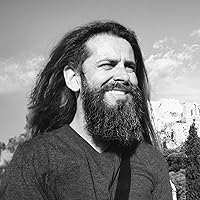
Benjamin Shapiro was born in 1984 and entered UCLA at the age of 16, graduating summa cum laude and Phi Beta Kappa in June 2004 with a BA in Political Science. He graduated Harvard Law School cum laude in June 2007. Shapiro was hired by Creators Syndicate at age 17 to become the youngest nationally syndicated columnist in the U.S.
His columns are printed in major newspapers and websites including Townhall, ABCNews, WorldNet Daily, Human Events, FrontPage Mag, Family Security Matters, the Riverside Press-Enterprise and the Conservative Chronicle. His columns have also appeared in the Christian Science Monitor, Chicago Sun-Times, Orlando Sentinel, Honolulu Star-Advertiser, RealClearPolitics.com, Arizona Republic, and Claremont Review of Books, among others. He has been the subject of articles in the Wall Street Journal, the New York Times, Associated Press, and Christian Science Monitor; he has been quoted on "The Rush Limbaugh Show," "The Dr. Laura Show," at CBS News, in the New York Press, in the Washington Times, and in The American Conservative magazine, among many others.
The author of the national bestsellers, Brainwashed: How Universities Indoctrinate America's Youth (WND Books, May 2004), Porn Generation: How Social Liberalism Is Corrupting Our Future (Regnery, June 2005), and Project President: Bad Hair and Botox on the Road to the White House (Thomas Nelson, 2008), Shapiro has appeared on hundreds of radio and television shows around the nation, including "The O'Reilly Factor" (Fox News), "Fox and Friends" (Fox News), "In the Money" (CNN Financial), "DaySide with Linda Vester" (Fox News), "Scarborough Country" (MSNBC), "The Dennis Miller Show" (CNBC), "Fox News Live" (Fox News Channel), "Glenn Beck Show" (CNN), "Your World with Neil Cavuto" (Fox News) and "700 Club" (Christian Broadcasting Network), "The Laura Ingraham Show," "The Michael Medved Show," "The G. Gordon Liddy Show," "The Rusty Humphries Show," "The Lars Larson Show" (nationally syndicated), "The Larry Elder Show," The Hugh Hewitt Show," "The Dennis Prager Show," among others.
If you already like Shapiro, this is an unnecessary read. If you hate Shapiro, then he’s probably writing about you. If you have no idea what I’m talking about, consider reading it.
Maybe I’ll review this at length later, but honestly, it’s such a task to review a Ben Shapiro book. It’s a task because every time I ever have, I’ve been questioned by people for daring to even read him… which happens to cogently prove the thesis of this book. Ironic.
The child prodigy turned young gun conservative activist/pundit turned motor-mouth king of the normie Right's internet and podcast space is at it again, minting political content as if it's free MMT money from our U.S. Treasury. This time Shapiro's penned a slender volume called The Authoritarian Moment, essentially a redux of Jonah Goldberg's Liberal Fascism (which I recommend to readers) but designed for a broader audience and updated for the post-Obama/Trump era.
In The Authoritarian Moment, Shapiro argues that through varied mechanisms, especially through "renormalization" or what is sometimes called the heckler's veto, the Left (meaning progressives and social democrats not liberals) have ideologically captured most American institutions (higher ed, Hollywood/TV/news, tech/high finance, etc) and subsequently wield this influence in illiberal fashion against bêtes noires of their choosing, especially conservatives. Although somewhat simplistic for punch and digestibility, I find this a persuasive argument generally. Moreover, the illiberal elements on the Right don't escape criticism either, but probably deserve a deeper discussion from Shapiro; he largely ignores the Catholic integralist and national populist elements that associate with the Right. Shapiro does opine on the causes and possible solutions to the authoritarian phenomenon (with the causes being the really interesting, critical issues), but this is where the commentary can be a bit too thin or without requisite depth.
Shapiro's prose is well organized and incredibly accessible to readers, making The Authoritarian Moment a quick, engaging read. I wouldn't necessarily recommend this to those who regularly consume Shapiro's podcast/writing as the content will be familiar, but I hope some young progressive or liberal or politically interested person picks it up and engages honestly with Shapiro's argument (understanding of course that Shapiro's periodic flamethrowing and acerbic rhetoric may alienate him from this audience). Further, I hope Shapiro's work (whether it enrages or satisfies) inspires further reading into the works that he references throughout. Overall, this is a good entry level work for commentary on current concerning political trends on the Left.
It's just so hilarious to me how he keeps going on about identity politics and how it's the devil while his identity as an American governs his entire view of politics. This man is good at making himself sound smart when he's little more than a hypocrite with a fanbase that keeps giving him a lot of money.
Again, not a bad book, I'm not sure Ben Shapiro is capable of producing a 'bad' book. When you are that smart and have that much practice at writing, it's a vanishingly small possibility.
At the same time. It was nothing new. If you listen to him regularly, or even not so regularly, you would have been introduced to all of these concepts. The title is very apt he explains how we got into the situation we find ourselves in today, and he presents solutions to getting out of those problems, but the solutions represent maybe 1% of the final part of the book and the explanation of how we got there takes up the other 99%. I do listen to Ben regularly so I'm already familiar with his analysis of how we got to this point, that's the bad part of the book. I don't think that it is necessarily meant for hard-core listeners. It's meant for the general public, but I'm not sure it reaches them. Maybe it's intended for hard core listeners to buy it and then give it away. That makes a little more sense, but I'm not sure it's a good business model.
Anyway, it's a good book. It's a summary of everything Ben has said on his radio show for the past two and a half years. If you've already listened for the past 2 and a half years...I don't think you will get much new out of it. If you haven't, then this is a great book for you because then you don't have to go listen to the last 500 hours of radio, you can get this brilliant summary.
As if the pain of reading this book on its own wasn’t enough, Shapiro decided to narrate his own audiobook so I had to actually listen to him whine about these concepts in his misguided attempt to demonize the left.
Not only does Shapiro attempt to simplify highly nuanced and complex topics into simple minded “good or bad” categories, he panders to the right in a way they’ve come to understand as “tough talk” and “hard truths”.
The real truth is Shapiro stands in line behinds dozens of other incompetent conservatives who rather than put in the time and effort to learn complex concepts, execute the offices in which they’re elected, and apply ethics to their behavior, take the lazy way out by rationalIzing their dehumanizing behavior and justifying their outlandish and immoral ways of life in order to continue protecting their ability to hoard resources.
What’s worse is that Shapiro has managed to victimize himself and the Republican Party. They’re being unfairly cancelled; they’re being blamed for poorly planned coup attempts and sloppy failed insurrections; they’re being censored….all the while failing to see the harm he and others with his mindset cause and absolutely denying any culpability or responsibility. Speaking in hyperbole got conservative in this mess to begin with and instead of taking a step back to autopsy the body, they decided to double down and parade around the zombified remains of the Conservative party.
I give everyone fair platform and I extended the same to Shapiro. He expectantly disappoints and fails in every way possible. It’s ok Ben, we get it; thinking is hard. I personally wouldn’t have written an entire book displaying my incompetence, rotten privilege, and low emotional intelligence….but pop off boo 🥳
Full disclosure, I do listen to Ben Shapiro with some regularity and generally consider myself, to some extent, a libertarian, although I'm aware there are all sorts of stereotypes and nasty connotations that label provides, so I'm going to do my very best at giving a perspective on this short book from my own frame of mind.
The premise of The Authoritarian Moment is that modern day leftists, clearly distinguishable from liberals, are using authoritarian tactics to push specific political agendas that are in overt opposition to the principles which America was founded on. The argument seems to open with an open acknowledgement that any political party can be driven to authoritarianism when left unchecked, but that the present state of affairs seems to learn toward radical leftism as the primary threat in the modern American age. These authoritarian tactics are shown by Shapiro to be present America's educational institutions, scientific communities, large corporations, sports and entertainment institutions, media institutions, and so-called Big Tech, with a focus on the role social media plays in pushing authoritarian goals.
Given the extreme polarity of our political environment, the immediate impression is that readers of this book who intentionally sought the book out because they agree with Shapiro (and like to be angry) are going to generally nod in agreement that, yes, indeed, there are concerning trends toward leftist authoritarianism. Conversely, those who read the book because they are leftists and for whatever reason want to seek out an opposition opinion (and like to be angry), I'm somewhat certain they'll rebuff at the exaggerations of agenda-pushing by all of their favorite institutions. So it goes.
The fundamental conceit, then, is whether or not Shapiro's argument is convincing enough to support his thesis. For the sake of simplicity, that thesis is that the left is using authoritarian tactics to weaponize institutions against conservatives and moderates. I include moderates because there is some brief discussion in the book over this topic. Again, as a biased observer and regular listener of Shapiro (meaning none of his arguments are particularly new to me), I can't help but feel like the argument is sound. There is plenty enough evidence (to me) that the absurdity of institutional agenda-pushing has reached new heights in the last decade, enough even to refute the general tendency toward whataboutism, that being but what about Fox News? What about Rush Limbaugh? What about...Ben Shapiro?. Blatant and unapologetic political bias in a media forum is not enough for me to drop consideration for the overt institutionalized adoption of leftism's ideals, although, at heart, it should be noted that there isn't much discussion in the book on why these ideals are inherently bad unless they directly contradict with some founding principle of the United States.
Shapiro's arguments occasionally falter, however, when he lapses into occasional hyperbole, like insinuating that the left wants us all to "walk around with Robin DiAngelo's book in hand proclaiming our racism" and similar attitudes. I've never been a fan of this exaggerated prose as it tends to sound juvenile and does Ben no favors in his image as a fast-talking conservative poster-boy over that of a qualified intellectual media personality.
I find it a very unfortunate mistake that Shapiro incorrectly credited Heather Heying, formerly of Evergreen State College and involved in a race controversy with her husband Bret Weinstein, as Heather Heyer, who was killed in the 2017 Unite-the-Right rally in Charlottesville. I hope this gets corrected in later printings.
Lastly, I found no real inspiration in his final call to action, which was disappointing, in that it was essentially "don't accept cancel culture" and "don't give your money to institutions that embrace this leftist authoritarianism." That's all fine and good I suppose, but it left me feeling no better in echoing Ben's sentiments that I worry for our future generations and their potential embrace for an America with fewer freedoms than those the country was founded upon.
All in all, I think this was a serious attempt in at the very least providing a digestible overview into the absurdity at which our political system exists from a conservative perspective, and I certainly think Shapiro is a serious voice in that discussion, whether or not I agree with everything he says. Indeed, that's the great tribal problem, isn't it? We have so forcefully placed ourselves in myriad identity groups that it seems to be nearly impossible to communicate these days that individuals within those groups are able to hold conflicting beliefs. Of course, that is not the reality of our political climate, but then so it goes with any political book.
No one who needs to read this is going to agree with it. Everyone who already agrees with it doesn't really need to read it.
It's nearly impossible to review a Ben Shapiro book. He's brilliant and his points are data provable in great majority. He never ignores the real for the feeling or easy deduction.
This one gets wordy and long / slow in the beginning- but is spot on in reality outcomes. An Introduction that is that lengthy is a mistake. He should have motor mouthed it.
But nevertheless, the message and reality of his definitions and what we American citizens observe and experience in reaction and process of work/ living is entirely 5 star true. The chapter on what they have made of "science" is 6 stars.
This should be read by the very people who hold core American Constitutional freedoms and much else of real dissent as merely "redefinable" "throwaways" no longer needed or wanted because elitist group think emergency or some other "more valid" reason has superseded their importance.
As another reviewer has suggested Jonah Goldberg’s classic on liberal fascism is this book’s predecessor. Both are well worth reading. But there are a couple of additions to this book that, even if you read Goldberg’s book - you should read this.
First, Shapiro analyzes the problem of the Authoritarian Left in a number of areas but more importantly he has some very explicit calls to action. Let’s stop letting these nutcases who are always a tiny minority determine the very narrow acceptable bounds of public discussion.
Let me offer a very specific example of how to use his suggestion. I am growing increasingly skeptical of soft liberals who respond when someone criticizes Critical Race Theory saying something like “OH I know there are a lot of nutcase ideas in CRT but there are also some good things.” I’ve started responding - OK give me one, just one, example of anything in CRT which promotes greater racial reconciliation!” SO far none of these people have been able to offer anything. I have read Kendi, Crenshaw and DiAngelo (sounds like a law firm doesn’t it?). I read Hannah Jones laughable “history” of the US. So why not just say no - if you can’t prove the assertion then don’t say it. Shapiro says we can no longer expect the Authoritarians to eventually fall on the folly of their ideas. Let’s help give them a push and fight for the positive values that the country and our political system was founded on.
There are plenty of other opportunities to force the Authoritarians into narrow casting - if you were upset as I was about MLBs decision to move the AllStar game from a city like Atlanta, with a substantial Black and poor population to Denver - one with fewer than 10% Blacks. Boycott baseball. IF you think the whining of the Oscar ceremonies has become too much - don’t watch. So in the words of that immortal movie Network - I’m mad as hell and not going to take it anymore. Shapiro offers some good ideas, along with his well developed method of mocking the absurdities of Authoritarian positions, about how to stop these miscreants in their tracks.
My views on most issues (economic and social) differ vastly from Ben Shapiro's. But, I do have pretty strong feelings about free speech as both a legal and cultural right. Having personally lived in more than one Western democracy where free speech wasn't actually guaranteed, I'm grateful for the United States' granting it as a constitutional right. I worry when people lose their jobs, or in some countries, face lawsuits, for speaking their values - even when i don't agree with their values. I believe sunlight is the best disinfectant: if an idea is bad, i want it out in the open so we can all see how bad it is. I don't like the idea of pushing dissent underground to fester.
All that to say, i was onboard with Shapiro's premise (that free speech is in danger) from the start. I appreciated hearing his views on how we got here: he gives a brief historical overview of bias and the culture of media, for example.
I also appreciated Shapiro's action items for what we can do about it. But i wished they'd been more concrete for people without a big platform. I don't feel super empowered to do much, from his suggestions. Still, I'm glad that he's doing what he is to foster free speech and push back against legal and cultural censorship.
Of course, being liberal, I grade this on a curve of sorts, trying to put my biases to the side. That being said, I give this book a 2.7. Shapiro starts off with a solid thesis statement: namely, that while both the right and left are prone to authoritarianism, that the left is the group that holds the power in government, media, and big tech, so one can easily make the case that they are the biggest danger. (Of course this depends on how one measures "danger" -- some may consider being banned from Twitter not as big a deal an authoritarian deal as, say, the January 6th insurrection. That is, if you believe it was an insurrection. So there are lots of caveats to this.)
But let's ignore such details. I thought Shapiro had a solid premise. The only problem was the body of his argument was filled with subjective and dubious claims. For instance, he claims that Gina Carano, who appeared to liken conservatives being silence on Twitter to the Jews being persecuted under Nazi Germany, was not being anti-Semitic in that comparison. Because, trust him, he knows what anti-Semitism is because he endured anti-Semitism. That's his argument.
Now, I don't know either way as to whether it was anti-Semitic or not and there is a nuanced discussion to be had over what is anti-semitic and what is not and how do we determine what is. People on both sides of the aisle have an opinion on the matter, but when Shapiro's argument is based on the left being irrational on bigotry and reaching irrational conclusions based on flimsy evidence, he can't "debunk" it with his own flimsy explanation of "trust me". Among Shapiro's faux pas is misrepresenting the definition of systemic racism, superimposing ulterior motives onto tech companies, and flat out lying by accusing Obama of saying that all white people are racist.
Usually, none of this would be a big deal and I could look the other way and proceed with charitability toward most of his declarations. I do this by chocking up certain statements to hyperbole (Ann Coulter does this a lot) or if the claim is not fundamental to his thesis, then it can simply be ignored. But when accepting these claims become FUNDAMENTAL to his arguments and charitability requires me doing nothing less than accepting that the people he's talking about (including me) are just bad, bad, horribly people AND he provides ZERO evidence for his claim, I have no choice but to soundly reject his argument. He just doesn't do the rhetorical work to make many of the logical leaps he makes about the left.
All that being said, he is correct in his general assessment that no matter your political affiliation, you should stand up to those who try to silence you. If you truly believe in what you are saying, you should stand by your principles and stand up to whatever mob or person in authority that is trying to cancel you. Of course, he was only referring to liberals, but I think both sides have a tendency to behave in a mob like fashion and exert power to try to silence (but that would take an entire book to explain).
The core points here are true enough, but there is poor execution especially for someone of Shapiros intelligence. Disappointing, but still enough intellectual meat to jog the mind. Don't be afraid to take an Authoritarian Moment to pick this one up.
The Authoritarian Moment: How the Left Weaponized America's Institutions Against Dissent by Ben Shapiro is a very highly recommended examination of authoritarianism, where it is most prevalent, and how it is influencing society today. Shapiro clearly sets forth all of his points with examples and explanations, which are backed up by facts and an abundance of chapter notes. He also proposes how the majority must speak up to oppose the authoritarian actions of the few.
There has been a great deal of authoritarian behavior lately and the real question at this point is who is looking at the conduct of various groups or people and, from their point-of-view, determining who is right or wrong and why, as well as how they have been endowed with the job of pronouncing judgments over the rest of the country. The problem is that right now, "More than six in ten Americans say they fear saying what they think, including a majority of liberals, 64 percent of moderates, and fully 77 percent of conservatives." Obviously, the media and academia have placed themselves in the forefront as judges of what behavior and opinions they will espouse. The "mostly peaceful" protests burning down city blocks and causing up to $2 billion dollars in damage is a good example of people being told to overlook and accept. And, according to another recently released book by a researcher in journalism, the media bias is toward the liberal left in cities.
Shapiro makes a compelling case that the authoritarian left has spent decades suppressing the ideas of those who disagree with them by using people's inherent politeness against them. What this small percentage of the population doesn't seem to realize is that just because people are silent doesn't mean they are bending their will to what they are being told to believe nor are they abiding by the arbitrary rules set by them. Turning against a majority of people and demanding that they conform to your beliefs is itself intolerant and rigid. It doesn't accept the wide variety of beliefs and backgrounds, the free exchange of ideas, and most importantly our first amendment rights of freedom of speech for all of us, not just a liberal radical left leaning minority. "[B]uried in authoritarianism is always one deep flaw: its insecurity. If authoritarians had broad and deep support, they wouldn’t require compulsion. The dirty secret of our woke authoritarians is that they are the minority." "The Authoritarian Moment lays bare the intolerance and rigidity creeping into all American ideology – and prescribes the solution to ending the authoritarianism that threatens our future."
Yet another display of Shapiro's misguided half baked political ideology regurgitating tired conservative views to the masses, McCarthy is alive and well in books like this that seek only to rile up those who don't know any better. Ben Shapiro is a grifter who knows full well how to make you angry about the fantasies he concocts and drain your wallets for his constant flow of new books and "liberal tears" mugs. If you want to read this book there's likely no convincing you not to but on the off chance a sensible person finds this, read something else, there is nothing of value in this book, nothing but watered down ideology made to feed Fox News to those who would call themselves "skeptical".
Another excellent book by Ben Shapiro! I am never disappointed by his writing and his books. He is very much so to the point with great and in-depth explanations. He is always well worth the time to read, or listen to. This book delves into the ideology of those who seek to coral you up and make you walk as they desire, thereby following as good servants. Excellent book which digs into "wokeism" and other new concepts of the leftest mind.
Ben Shapiro hates that "The (authoritarian) Left" is doing so much gaslighting, straw-manning, and just flat out idea quashing. He says, waving a false flag.
They're ruining America, and "the silent majority" is letting them. He claims, and in the dim light of gas it makes some sense.
They should stop and/or we should all ignore them. He argues, hoping that the reader won't apply the strategy to the same tactics when he's employing them.
He makes a few good points - points that his ideological adversaries would actually benefit from not ignoring outright - which is the reason for this being a two star book for me (well, that, and the fact that I knew what to expect from Shapiro).
Nonetheless, it would be a boon to this book - and his own arguments - if he thought hard about heeding his own advice and lived up to the same standards he purports to seek with and in others.
Therefore, I would never recommend this book. I think it's too dishonest and partisan to contribute much to any debate. However, Shapiro is a loud and pretty influential voice, so I don't think it's a bad idea to read "The Authoritarian Moment" altogether. It contributes a valuable insight into a political movement and a way of thinking that is foreign to many on the political left.
However, neither this book nor Shapiro come even close to being the authoritative (pun intended) source far too many think it and he is.
Maybe the book should come with a trigger-warning! :D
I have read almost 100 books over the past couple of years. This was not even close to being the worst, however, it was by far the most intellectually dishonest book that I have ever read. From quoting opinion pieces in The Wall Street Journal as a proper citation for the claim there is no systemic racism in contemporary America, to citing the notoriously Exxon funded climate denial think tank Heritage Foundation for a multitude of citations on climate change. This does not even begin to scratch the surface of the idiocies associated with this book.
Shapiro's newest book is a book for all Americans who still love our basic freedoms and the values espoused in our Founding documents. Moderate left, right, and center should find in this book the way to take back their country. As Shapiro so aptly points out, we are not the minority whatever media and government may say. It is time We the People mobilized to stop the insanity and take our institutions back from those seeking to radicalize them and disenfranchise us all.
I don't care whether you generally agree with right or left wing policies. And neither do the authoritarians in charge. The reality is that if you're not on board with the woke mob's agenda, you too will find yourself suffering backlash for refusing to get on board eventually. Right now, we are seeing this happen with even non conservatives from the Left who dare to voice concerns or disagreements with the radical Left. This attitude of destroying and silencing any opposition no matter the source is authoritarian fascism in the form of Marxism, and every American who values freedoms like free speech, individual opinion, and the right to make our own decisions even if someone else doesn't like them needs to hear Shapiro's call to stand up and just say no.
The one criticism I do have for the book is Ben's use of voice impressions. While many are hilariously spot on when he's quoting individuals from Obama to Trump, they do become just a tad bit distracting. Not enough that I wouldn't recommend the audiobook, but still something to be aware of. If impressions really bug you in nonfiction narration, consider a Kindle or print version of the book instead.
4 stars because the book got off to a slow start. Ben Shapiro is certainly a controversial figure whom many people love to hate. As a conservative who wasn’t crazy about President Trump, he got used to having the renegade opinion. I like his books because he is brilliant, educated in the classic sense, and eager to explain his conclusions rationally rather than emotionally. I like smart people who respect the intelligence of others. This book chronicles the slide of the Democratic Party from classic liberalism toward authoritarian leftism. It’s a change I’ve watched with dismay in my lifetime. Like I’ve always told my children, “ Everyone has their own way.” A good book, not too long, with an interesting perspective.
Very shallow analysis on the most recent events of American politics. But I guess that is the point. Obviously biased, if you are looking for propaganda to reinforce what you read on social media, this book is for you. Most of Shapiro's arguments revolve around the fact that the "left", a gross generalisation, is authoritarian for not tolerating hate speech, racism and homophobia. Apparently, manifesting against these, and according to the author, is being against free-speech. Still a long way to go, I'm afraid. P.S. It's been a year since I've read, and reviewd, this and I would like to add: This guy is a dick.
Labai geras atsiliepimas buvo pateiktas kažkurioje goodreads apžvalgoje - tie kas mėgsta B. Shapiro, tie dievins šią knygą. Tie kas jo nemėgsta dar labiau jo nemėgs. Taip, kad knyga skirta susipažinti su autoriumi ir jo politinėmis pažiūromis, nei kad rasti stiprių argumentų į vieną ar kitą pusę. Tai duosiu manau neutralų vertinimą 3* iš 5*
This is not a decent book. The book is incoherent. This is the controlled opposition of books. You know, controled opposition are those guys who pretend to be on your side, but when it comes to radical issues, to the crux of the matter, they side with the enemy and fully accept the enemy values. For example, recenty Shapiro called the Jan 6 Capitol Protestors "terrorists who should rot in prison"... And a lot of so called conservatives are surprised he did that. But you shouldnt, because Shapiro isnt real a conservative in the way you think. He pretends to be a conservative, but the honest and truthfull description for him would be a Jewish Supremacist. He calles jan 6 protestors terrorists because their beliefs and their very existence threated the jewish domination of the USA.
I'm a right winger, and I'm ashamed to say that I have wasted time in the past watching Shapiro. Ben Shapiro as well as the great majority of neocons are Jews (former leftists), part of the spearate jewish ethnicity.
Its a purposefully incoherent book, because if Shapiro and the people who know the truth were to say the truth they would be labeled antisemites.
Let me tell you what Shapiro DOESNT say in this book.
Shapiro doesnt say that almost all the banks are jew owned or controlled. Shapiro doesnt say that the USA central bank the FED Reserve was created by Jew capitalists.
Shapiro doesnt say that the great majority of wall street investors and speculators are Jews.
Shapiro doesnt say that 80% of the Trump and Biden administration are Jews. Jews were a large part of previous administrations too. For example neocon Jews where the biggest war mongers that sent American soldiers to die for Israel. Shapiro doesnt say that at least half of the politically appointed generals are Jews.
Shapiro doesnt say that 7/8 Ivy league Universities are controlled by Jews.
Shapiro doesnt say that Jews controll all major media corporations and their subsidiaries. Fox News is christian zionist, but all their top dirigents are Jews.
Shapiro doesnt say that the great majority of feminist theorists were jews.
First generation psychoanalists were all jews. Freud later invited 2 gentiles in order to break this truthfull impression that his movement was a jewish movement.
Did Shapiro tell you that the great majority of Bolsheviks were jews?
That the Founders of the Frankfurt school were jews bankrolled by a jewish capitalist?
No he doesnt! And you wont ask further questions because you are a sheep! America is a Jewish colony. American values are judaic values.
For these and other reasons this book is not worth it. Shapiro doesnt know himself or omits these basic facts!
Fact doesn't care about your feelings unless that feeling is fear in which case facts do definitely care about your feelings.
I feel like the research was surface level and his definitions of things like leftist and liberalist didn't align with how I or anyone I know would self define or the dictionary. I also don't necessarily agree with the definition of conservative.
His takes on LGBTQ2s+ communities is.... wrong. Biological pronouns aren't a thing and since he uses she pronouns to describe America (pg 216) , which as a country cannot be biologically female, He is aware of this. He also talks abut pronouns as going against freedom of speech but doesn't cite any sources. Freedom of speech isn't the same as freedom from consequences. You have the rights to be a dick but if you are gonna be a dick you can face consequences for being a dick.
I wouldn't say I disagree with every point but he still lost me in his conclusions. I am glad I wasted my time with this one.
This entire review has been hidden because of spoilers.
Reading "The Authoritarian Moment," I wondered what the intended audience of Ben Shapiro's new book is. Surely anyone who would buy this book are already familiar with its content: cancel culture, COVID-19 lockdowns, Black Lives Matter, the ever-expanding power of the federal government, and the general authoritarian tendencies of Democrats and other Leftists that have become increasingly obvious over the last five years and more. Those who need to hear his message would likely never listen. What Shapiro has to say here is certainly important, but those most in tune to the political climate won't come away learning anything new. His prose is good and his arguments are sound, but it feels as though he is preaching to the choir.
Another narcissistic book written by Small Man Ben Shapiro. This poor man child is filled with such anger and rage. I can only imagine the childhood trauma he suffered as a kid, most likely by his crazy parents. His mother belonged to a crazy Los Angeles Cult so this explains his truly sociopath behavior and he just can't comprehend any other opinions but his own - sad. This book truly shows Shapiro's inner demons. I feel bad for his doctor wife and three kids. Ben, go to therapy now before it is too late. Don't buy this book. Full of lies and truly disturbing like Ben.
Shapiro clearly explains the origins, the tactics and the objectives of the hard left and their influence over government, corporations, entertainment, sports and social media. He then issues a call to liberals, moderates and conservatives to join together in standing up to and opposing the Socialist/Marxist extremists who are seeking to tear down our country and build their own utopian (dystopian) ideal in its place.
If you don’t have time for anything else, read chapter 8. The early part of this chapter could be called “Mr. Zuckerberg goes to Washington” or maybe “Facebook does Congress” - they’re equally scary, given the results over the following 5 years. Shapiro calls this chapter UNFRIENDING AMERICANS and starts with restricted access to information about Hunter Biden and moves to breaking the intent of Section 230, censorship, crowd sourcing, the destruction of Parler and other non conforming companies.
Shapiro spent 7 other chapters discussing all the ways the left has transgressed and most of it you will have heard many, MANY times over. He’s a good writer and it’s easy to be drawn in by his style. He’s not famous for documentation but does common sense require it? Your call on that.
Speaking about common sense, that would be chapter 9 - THE CHOICE BEFORE US - Ben begins his summary of suggestions to combat the Left’s weaponization with a story about an actress that was a victim of liberal social media. After loosing her job and series being canceled, Ben’s company hired her and drew the attention of many H’wood professionals in the process: “they can’t cancel us if we don’t let them.”
Ben has just a few, but mighty suggestions for the fight against the authoritarian Left:
1. RE EDUCATE AMERICA - we’re not systemically racist; racism does exist; slavery was a great evil, history has consequences, America was founded in 1776 not 1619.
2. OUR REFUSAL IS A WEAPON - reject the notion that silence is violence, that speech is violence and that being cordial means being inoffensive. You CAN stand up for your opinions and beliefs! You don’t have to be rude…
3/4. RENORMALIZING & PRYING OPEN OUR INSTITUTIONS - this one is not so easy and takes a collective effort, building an intransigent minority to take on, take back or create new institutions. I have summarized mightily, Shapiro’s book has more.
Ben will have his haters on this one but after the last 6 months and the stark changes that are easily measured with common sense by most folks, many are ready to listen, I think. Gasoline prices are up about 50% and the grocery store is a nervous breakdown. Going out after dark is flat out dangerous, I’m ever so thankful not to live in a city or anywhere near the southern border. I’ve just about completely withdrawn from social media and main stream news has been gone for a long time. It’s time for “The Authoritarian Moment”📚