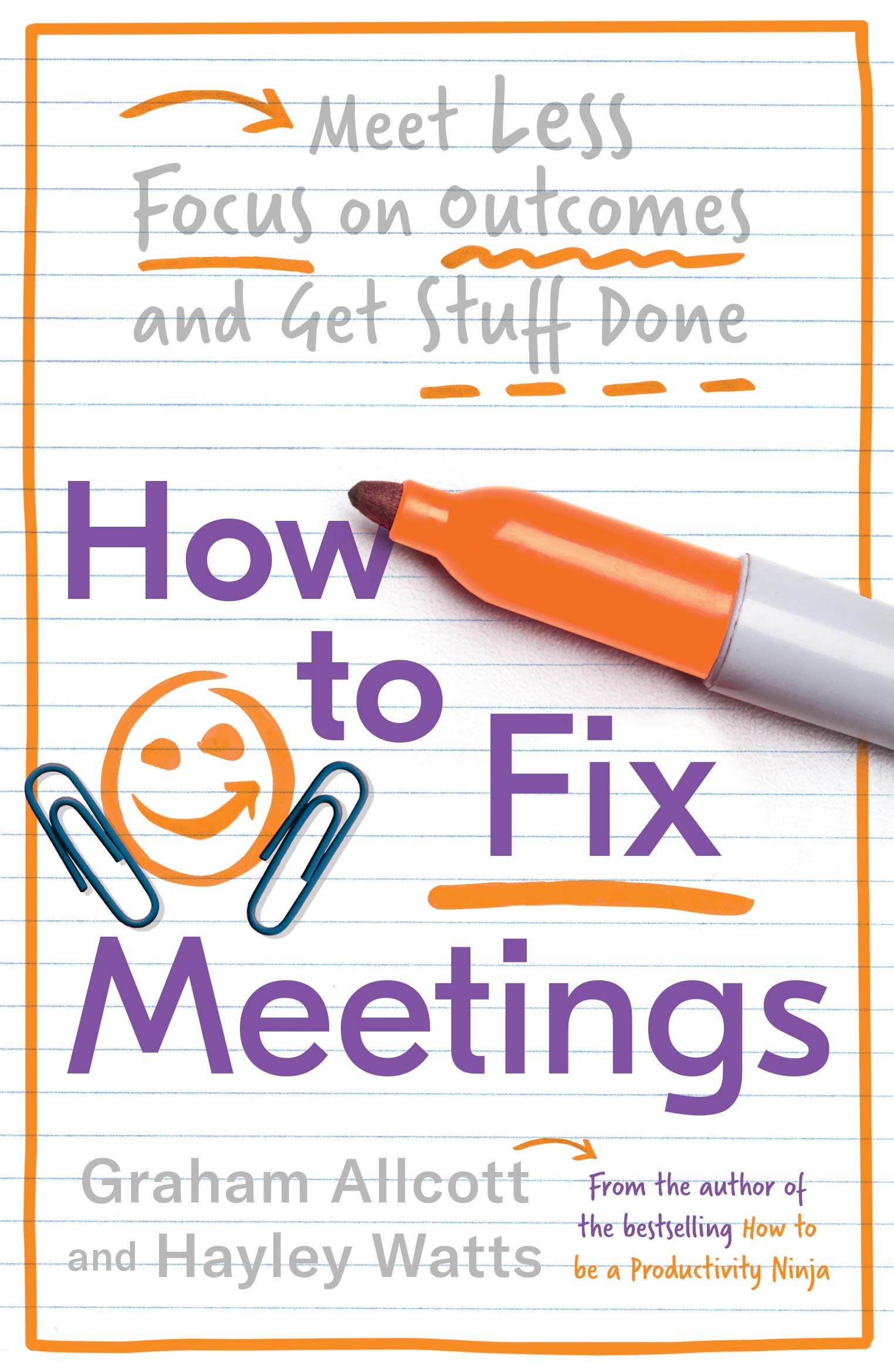
The average employee spends nearly 23 full days a year in meetings – over 50% of which are deemed ‘unproductive’ by attendees. Poorly-organised meetings are wasting workers valuable time, and money – $541 billion globally in 2019. With realistic and practical advice this book shows how to reduce the amount of time you and your colleagues spend in meetings, and ensure that the ones that you do attend or hold are genuine opportunities to collaborate and get things done. Learn how to ensure a meeting’s focus is on the outcome; get to grips with the 40–20–40 Continuum, so that only 20 per cent of your attention for each meeting is spent in the meeting itself – the rest is in the preparation and the follow-through; and understand when it’s necessary to say that you won’t be attending – and how best to do so.
Effective meetings require thoughtful planning beforehand and focused actions afterward. Start by establishing a clear purpose for the meeting and creating an agenda geared toward achieving that purpose. With these in hand, invite the people who will make the most valuable contributions. Allow everyone a fair chance to share their thoughts during the meeting, and capture detailed action items. And to ensure that these action items are completed, organize Power Hours that allow people to work on their individual tasks.
And here’s some more actionable advice:
Improve your experience in mandatory meetings.
When you find yourself on the other side of a meeting request, there are still ways to make it a valuable use of time. If the agenda seems unclear, ask the organizer for more details so that you can prepare beforehand and contribute as best as you can. Clarifying the agenda might even help you identify someone better suited to attend. And if you’re obliged to go to a meeting that feels irrelevant, spend a few minutes beforehand clearing your thoughts and preparing to focus as best you can.
Effective meetings require thoughtful planning beforehand and focused actions afterward. Start by establishing a clear purpose for the meeting and creating an agenda geared toward achieving that purpose. With these in hand, invite the people who will make the most valuable contributions. Allow everyone a fair chance to share their thoughts during the meeting, and capture detailed action items. And to ensure that these action items are completed, organize Power Hours that allow people to work on their individual tasks.
Improve your experience in mandatory meetings. When you find yourself on the other side of a meeting request, there are still ways to make it a valuable use of time. If the agenda seems unclear, ask the organizer for more details so that you can prepare beforehand and contribute as best as you can. Clarifying the agenda might even help you identify someone better suited to attend. And if you're obliged to go to a meeting that feels irrelevant, spend a few minutes beforehand clearing your thoughts and preparing to focus as best you can.
HIGHLIGHTS: 1. 4 P’s:: Purpose, plan protocol, people
2. Make expectations clear about the level of preparations needed to make decisions DURING the meeting.
3. Purpose statement for the end result of the meeting.
4. Truth Amnesty: anonymous recommendations to cut or keep to make the organization run better.
5. Silent Meeting: Question prompt. Everyone answers. Verbal discussion after. Helps to make sure under-represented people get to share and not be talked over.
Really useful business read. Everyone has experienced a meeting at some point so this book has a wide audience. What most people probably haven't had is a good meeting. That is where How To Fix Meetings comes in. Packed with suggestions on how to hold better meetings, so they are useful for all participants, and how to decide if a meeting is even necessary. I really enjoyed all the suggestions on how to keep meetings short, useful and on point. I might even try the musical chairs suggestion!