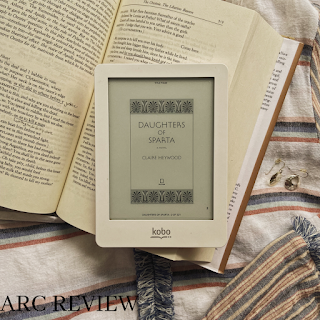
For millennia, men have told the tale of the woman whose face launched a thousand ships - but now it's time to hear her side of the story . . .
As princesses of Sparta, Helen and Klytemnestra have known nothing but luxury and plenty. With their high birth and unrivalled beauty, they are the envy of all of Greece.
Such privilege comes at a high price, though, and their destinies are not theirs to command. While still only girls they are separated and married off to foreign kings, never to meet again. Their duty is now to give birth to the heirs society demands and be the meek, submissive queens their men expect.
But when the weight of their husbands' neglect, cruelty and ambition becomes too heavy to bear, they must push against the constraints of their sex to carve new lives for themselves - and in doing so make waves that will ripple throughout the next three thousand years.
Perfect for readers of Circe and Ariadne, Daughters of Sparta is a vivid and illuminating retelling of the Siege of Troy that tells the story of mythology's most vilified women from their own mouths at long last.
Claire Heywood is a scholar of the ancient world, with a bachelor's degree in Classical Civilization and a master's degree in Ancient Visual and Material Culture from the University of Warwick. Her first novel, Daughters of Sparta, was a national bestseller.
Thank you to Edelweiss and the publishers for the digital ARC in exchange for an honest review.
I am first and foremost a huge lover of Greek mythology. I hoard my knowledge of it. I seek out retellings. Sometimes I write my own. So when I saw Daughters of Sparta, a retelling of the Trojan War specifically from the perspective of Helen of Sparta/Troy and her sister Clytemnestra, renowned husband-killer, I hit download immediately and was incredibly keen to read it.
Daughters of Sparta follows the two sisters through childhood, to their separate marriages, motherhood, the fateful moment Helen leaves with Paris for Troy, starting the Trojan War with all of Greece, Agamemnon sacrificing (murdering) Iphigenia, Clytemnestra swearing vengeance and biding her time, the Trojan War itself and the victory of Greece, all to the bitter end.
Unfortunately, this novel was a massive disappointment.
The writing itself was very easy and quick to read, but nothing about it stood out to me, good or bad, but the novel itself was plagued with issues of lack of characterization, missing details that should have been included as they are relevant to plot, passive voices and little to no personality.
It breaks my heart to even say that, because these woman deserved so much better.
The novel seemed to err on the side of caution and go more for a realistic portrayal of women in Ancient Greece at the cost of having concrete characterization and core personalities, making them incredibly passive and complacent within their own narrative.
Helen herself doesn’t have much about her perspective or actual desires from source material, but THIS is where liberties should be taken with mythology retellings. A solid personality, drive, and values should have been created for her, yet she seemed incredibly passive, wishy-washy, out of place, unanchored, and unremarkable.... and that is not what should have been written for the most beautiful woman in the world, the face that launched a thousand ships.
I had greater hope for Clytemnestra’s characterization, since we know, from the fateful sacrifice of her daughter, that her main drive was retribution towards Agamemnon, yet Clytemnestra’s personality was nearly the same! I wanted so badly to have a gorgeous, blazing, fierce portrayal of one of the most famous classical examples of female rage and was given basically nothing. She went back and forth herself, hardly any core personality to speak of, and I had excused it up until the sacrifice, yet it continued. Instead of Clytemnestra’s renowned rage, I was forced to read passages going on about “it was an old wound, it didn’t hurt so much anymore, the anger had died, maybe Agamemnon had changed, maybe I can be a dutiful wife again, I don’t have to kill him” and, frankly, I cannot even begin to put into words how much I disliked this portrayal of her. It seemed like all the life and fire I had associated with Clytemnestra was completely stripped away from her in this novel.
And here’s where I can begin to talk about the missing details from Greek mythology that were absent that SHOULD have been in the book to give it more depth and solidity.
-Leda’s rape/seduction by Zeus in the form of the swan (the parentage of Helen) was not explicitly stated in any way. There were offhand comments about Leda suffering, not being able to look at Helen, Helen possibly being a bastard, but not much else.... until the king tells Helen that her suitors think she’s the daughter of Zeus and to just “go along with it”. I honestly don’t even know what to make of that.
-Paris’ first wife (the nymph) was not acknowledged or mentioned (this point will be referenced again later in my review)
-Cassandra was Helen’s only friend in Troy, which I liked, and yet: there was no mention of Cassandra being a priestess of Apollo OR her curse of prophecy! We know that she was cursed by Apollo prior to the beginning of the Trojan War because she sees Paris taking Helen and it starting a war and no one believed her, as well as everyone thinking she was crazy, from the source material. Instead she’s a normal girl and she isn’t cursed as far as Helen and readers can tell. I was questioning this the whole book, for obvious reasons. After the sacking of Troy, she made a comment or two that seemed like she finally had the powers of prophecy, but she never did before, so that doesn’t add up.
Several major points of the Trojan War were completely left out, when I think even a sentence or two referencing said events could have really helped the timeline of events.
-We see Hector’s death and Achilles dragging his body behind the cart, but no mention of Hector killing Patroclus, which is very much what caused Achilles to target Hector. And there was never any mention of Paris/Apollo killing Achilles. Both of which were important deaths that really heralded the beginning of the end and would have added a lot of context to the book. I’m unsure if the author expects readers to know this. -Not a single mention about the Trojan Horse, either. The Greeks were just “suddenly invading the city” -Paris’ death scene was...... very sudden and kind of amusing in its unimportance but also not what happened in source material. Considering he was supposed to be badly wounded and crawl back to his first wife but she refused to help him and he dies. Frankly, I didn’t really care about this, but just one of the many things I noticed.
So I think one of my main problems is that the author should have taken liberties to define our narrators and make them strong instead of trying to stay “true” to the times by making them submissive women only resigned to their fate of being wives and mothers, and stayed true to other details of the mythology. As the main characters, both Helen and Klytemnestra should have shone and leaped from the pages, their desire and female rage ablaze, yet it was merely a whisper.
I wanted so badly to enjoy this, but this retelling did absolutely no justice for either Helen or Clytemnestra. At the end of the day, what point is there in retelling a myth at all if it doesn’t elevate and give a fresh voice to the characters humanity has loved for thousands of years?
I'm not sure what I think about Helen now. Yes, I have known this tale since childhood but ... Basically, she was the reason her niece, Iphigenia, died a horrible death, the reason Klytemnestra murdered Agamemnon, the reason Klytemnestra had to marry out of Sparta in the first place.... Klytemnestra would've been happiest, had she stayed at Sparta but no, NO, she had to go away, give away her birthright kingdom to Helen who just didn't appreciate it.
And it's not really a case of morbid ungratefullness on the part of Helen, she's just as much a victim of it all. Of her unfortunate birth, of her unhappy mother (who seems to have been a victim of rape in this one), of her aloof husband, Menelaus, of giving birth really early in life (like everyone contemporary but still), of her looks, even. The thing is... she seems to be one of those unlucky people who just can't not attract trouble to everyone around them.
The only person worse off in terms of luck, seems to be Paris. While Helen is a passive unluck attractor, he's an active one. I'm really sorry about his parents...
We can't blame Helen. She's just in a crossfire of other people's actions and considerations. Also, of the women's status then. Just like Klytemnestra. Still, the only action she did (go away with Paris), was the most destructive of all, she's basically the most murderous person of the Ancient Myths. All the while she doesn't actually do any active acctions, only passive ones and to what effect?! She could've invented and used a nuclear bomb wreaking less destruction.
An interesting thing is how Hector tells her that the war had a lot more underlying cause that just a woman and a treasury. Basically, Greece needed resources at the time and attacking a rich kingdom was a great way to get them (maybe, if one doesn't consider the expense of a drawn out war, people left dead or crippled, the whole Greece left idling for about a decade, etc). Also, consider the Orientalistic culture of Troy as it was shown here and we've got a clash of civilizations on our hands, not a hunt for a prodigal wife.
I loved Hector's portrayal: noble and admirable. Just love it. Too bad he was destined to die in that deadly war.
Andromache's character's bitterness made her not my fav. Even though all of it is all too understandable: losing her kid, her status, her loved husband, her fortune, having her destiny remade into other, very other situation by 2 uncaring persons right next to her... One could say she had admirable restraint, after all.
Gosh, I want to find a novel about Hector and Andromache now. Even though they are so very epically star-crossed.
Poor Troy. Poor everyone. This is why diplomacy is a very needed skillset. Any peace is better than any war.
This was an incredibly challenging read, which is precisely why I ultimately chose not to finish it. The author's writing style and her flawed portrayal of the sisters and the Iliad failed to resonate with me on any meaningful level.
Let’s start with the Iliad itself. It captivates readers due to its inherent magic, yet the author attempted to downplay that magic's significance, resulting in a lackluster experience. I came looking for the Iliad I know and love, not a diluted historical interpretation. It felt as though she wanted to focus on the costumes of ancient times while merely slapping the Iliad label onto her work.
Now, concerning the main characters, the blurb was misleading and did not reflect the reality presented. They came across as one-dimensional, passive figures who accepted their circumstances without question. Even after significant life changes, they remained utterly unchanged. I kept looking for Helen and Clytmestra in this story but they were nowhere to be found.
Helen's portrayal was particularly disappointing. Instead of being the complex character who launched a thousand ships, she is reduced to a passive woman simply following Paris after his seduction. The author crafted her character to be shallow and trivial. From the outset, she is despised in Troy, and her only companion, Cassandra, is presented as an ordinary girl stripped of her iconic prophetic qualities. Sure, she says a weird word here and there, and that's it. Nobody comments on it. The narrative absurdly depicts Helen as if she were just an ordinary woman. While it suggests she might be the daughter of Zeus, it undermines that very idea by making the reader believe it was just a lie told by her father. The gods have an unexpectedly limited presence in this narrative, which is a perplexing decision. Given their substantial influence in the original, it's odd that they serve only as figures for people to pray to rather than inspiring genuine belief. And that decision is what hurt the book the most in my opinion.
Clytemnestra's character is equally mishandled, doing a disservice to the original narrative in the Iliad. Where is the fierce, vengeful woman driven by the murder of her daughter? Where is the fierce mother seeking justice? Instead, this version portrays her as indecisive, wavering on whether to forgive Agamemnon. Meanwhile, Electra is depicted as a moody daughter harboring unreasonable hatred for her seemingly perfect mother. The portrayal of Penelope was undeniably amusing and frustratingly simplistic. Although she never appeared on the page, the author's mentions of her reduced her to a sweet, passive figure, completely overlooking her true complexity. There was no acknowledgment of her intelligence or the fact that Odysseus specifically sought her out, recognizing her strength as an equal partner.
Without a doubt, this has been one of the worst Greek retellings I've encountered in a long time. It fails to capture the essence of these legendary characters and their stories, diminishing their power and complexity. The author's choice to portray this as a typical historical event, avoiding the magical elements that define the Iliad and the Odyssey, was fundamentally a bad one.
Klytemnestra and Helen are daughters of Lord Tyndareos, King of Sparta. Klytemnestra as the oldest daughter is the heiress, and so is supposed to be the Queen of Sparta and stay with her family. But her father betroths her to Agamemnon, King of Mycenae, which means she needs to live in his kingdom. All this results in a feeling of betrayal, and fear she will likely never see her family again, since a married woman does not travel, and is the steward of her husbands’ household.
Helen, legendary for her beauty, gets betrothed to Menelaos, who is Agamemnon’s brother. As much as she appreciates her husband’s gentleness, she is frustrated with him not expressing his feelings. Without much conversation between them, she feels as she hardly knows her husband, but now that she is pregnant, he shows a lot of tenderness and she hopes it’s a new beginning for them.
When Menelaos welcomes friendship between two kingdoms, his and the one of Troy, it changes everything. Helen is enchanted by the handsome Prince Paris of Troy. His flattery makes her alive again, and she finds herself liking the attention. Meanwhile, Menelaos is forced to leave his kingdom and leave Helen to entertain the guests. Upon returning home from his grandfather’s funeral, he finds his palace ransacked and his wife gone. He just doesn’t know if she went willingly or forcefully. Now, all Greece unites in an effort to fight the rich and powerful Troy.
As the story alternates between two sisters, we get to know their thoughts and feelings well. This story is wonderful in exploring those aspects, giving voice to women who didn’t have any voice and any choice in decision making. Readers can certainly feel their frustration, disappointment, and joy. It touches you when Helen’s eyes are opened to the fate of the female slaves as she was too naïve to see what was going around her. Both women defy their husbands in their own way in secret. One dreams of more than just spinning wool, she dreams of weaving words, something meant for men only.
This is a straightforward and enjoyable read. This story is character-driven, and the plot is not filled with details of Greek mythology. The ending is touching; in a sense a war had to be fought in order for two people to open up to each other. It brings a human touch to this legendary mythology.
Source: ARC was provided by the publisher via NetGalley in exchange for an honest review.
Review originally posted at mysteryandsuspense.com
Underwhelming. The author took one of the greatest, most beloved stories ever told and turned it into a drab, boring novel. She mentions archaeology and authenticity in the foreword and I think she worked under the misapprehension that if she took the magic out of the story - the gods, the monsters, the miracles - it would somehow become more real. But myths are not meant to be real, they're meant to be true. Her heroines lack all mythical power and charm. Helen and Klytemnestra are turned into two regular, timid, weak women and their destinies become small and insignificant and decided by others.
A thought provoking, sorrowful retelling of the events of the Trojan War from the point of view of two daughters of Sparta - the famous Helen and her sister Klytemnestra.
This book had few heroes or villains. I appreciated the complexity of the moral choices each character made against the backdrop of confining gender roles - both men and women. I will definitely read anything published by this author in the future.
Where should I start? This book has so many good themes. We always knew what the Trojan War was like, but we never talked about the women. This book was very unexpected for me. I didn't think I would like it that much. The story begins with the childhood of two sisters, Helena and Klytemnestra. I really liked that it had a dual pov and I could read about our two protagonists. The book had some really sad scenes and I really felt sorry for the women of that time. although that was a retelling, i can very well imagine the women of those days how they were treated.
Characters:
Ok, let's start with Klytemnestra. She was such a smart woman as described in the book. I loved her character very much and she made very smart decisions most of the time.
Unlike Klytemnestra, I didn't like Helena that much. She annoyed me so much in a few scenes that I rolled my eyes. She was just so weird. I couldn't relate her character. She never acted rationally and mostly caused trouble.
Just random: At first I thought Menelaos was not interested in women... 💀💀
Thanks NetGalley and Droemer Knaur for the chance to read this book in exchange for an honest review.
It's been a minute since I read a book that fully captured my attention like this one. And that despite the fact that I already knew the story! The writing pulled me in and set the scene perfectly, and I enjoyed the dual POVs, which lent Helen, typically a rather bland character, a bit more depth. That being said, the Klytemnestra chapters were my favorite. The story was told at a good pace, spread over decades spanning their childhood, adolescence all the way through the Trojan War. The ending did feel a little rushed, hence the four stars, but overall, it was memorable and engaging read. I tend to gravitate towards mythological retellings and just got a copy of Jennifer Saint's Elektra, which should tell a sort of continuation of this story, so I am curious to see how the two compare. Daughters of Sparta was an impressive debut, and I look forward to reading whatever Claire Heywood comes up with next!
I really enjoyed this book. After recently graduating with a degree in Classical Studies, I've been missing having to read and think about ancient literature and was excited at the opportunity to read the ARC of this book. I was not disappointed, as I quickly found myself enthralled by this fantastic retelling. It has such a great understanding of everyday life in the ancient world, that it could only have been told by someone like Claire Heywood who has studied it.
If you are expecting the intense literary prose of author's like Margaret Atwood or Madeline Miller you may well be disappointed, but I found that the easy to read and simple writing style of this book made the story feel true, and raw. This is the story of two women who have to scratch and claw for any shred of agency that they can reach, and their desire to have some minutia of control over their own lives often gets them into situations that are hard for a modern reader to imagine having to experience. It may be a story about a grand mythical battle, but Heywood roots the story in the real world by only showing us what is happening through the eyes of Helen and Clytemnestra, and their experiences are not all that different from how the real women of in the 13th century BC would have experienced the world.
I would recommend this book to anyone who loves the ancient world and stories about the women who lived in it.
Thanks to the publisher and Netgalley for providing me with a copy of Daughters of Sparta in exchange for an honest review.
Daughters of Sparta left me wishing for more, but not in a good way. In the novel, author Claire Heywood imagines how Helen, the queen of Sparta who began the Trojan war, and her sister Klytemnestra, wife of Agamemnon, would have lived prior to and during the war. The story begins with their childhood, then diverges as each sister is led further and further apart in the ancient world.
For those who are unfamiliar with classical texts like The Iliad, Heywood begins the novel with an opening epigraph to contextualize the events of Daughters of Sparta. I really love this addition because it makes the novel more accessible without having to read through any poetry or tragedies.
Though I have read some classical texts, I think Daughters of Sparta stands on its own as a historical fiction novel rather than a retelling. Unfortunately, I do think this is the book’s detriment, as Heywood’s assertion that Daughters of Sparta aims to fill in the blanks of Helen and Klytemnestra’s stories is undermined by the book’s structure and characterization of well-known characters.
The story spans decades, relying heavily on time jumps. While this can be done well, Heywood prioritizes telling the reader what happened during these time jumps within the text rather than writing scenes that further develop the protagonists. For me, this caused more questions about the characters, and was only worsened by the fact neither character seemed to grow through each new experience.
Despite falling flat and lacking character growth, Helen and Klytemnesta do portray what life could have been like for Greek women. Heywood’s depiction of the sisters’ marriages offered insight into the lives of wealthy Greek women of the period. For example, Heywood imagines Helen struggling in her role as queen of Sparta and mother to her newborn daughter. Considering women were expected to become mothers, Helen’s conflict within the very role she has been destined to fill since birth questions the role of the idealized wife and mother of the period.
Thematically, I had an issue with the way most characters were put into the category of good or bad without any ambiguity. One of my favourite things about the original texts is the way they can’t necessarily be analyzed from a modern perspective with the concept of good or evil. So to paint some characters as people who can do no wrong while others do bad things for no reason seemed to me as a disservice not only to the Greek texts, but also humans in general. One (non-spoiler) example of this is Klytemnestra’s relationship with her daughter Elektra. In the tragedy Elektra, Klytemnestra and her daughter have a tumultuous relationship to say the least, each spewing hatred towards the other throughout the play. Yet in the third person Daughters of Sparta, Klytemnestra seems like the perfect mother with a moody teenage daughter, lacking any of the tension that comes from imperfect characters.
Rating 2.5/5: Though Daughters of Sparta answers some of the questions the original tragedies and epics fail to address, the novel raises more questions with its bland take on the classical world. Overall, Daughters of Sparta lacks the strength and power of its source material. I won’t go so far as to say it’s bad or completely unenjoyable as there are some interesting takes about women’s lives in the period, but Daughters of Sparta is dull in comparison to The Iliad, The Oresteia and The Eumenides.
Given that this is a book about classical period wars, a trigger warning must be given for sexual assault, war brutality, and slavery.
Стільки жорстокості в грецьких міфах, просто волосся дибки встає 🫣 Читати було цікаво, обох героїнь було шкода(( бути жінкою в ті часи - все одно що бути гарним предметом з функцією народження дітей. І якщо Клітемнестра ще видається мудрою жінкою зі своїми прагненнями, то Єлена весь час лишалась дурненькою довірливою дитиною. Думаю, це книгу класно брати на книжкові клуби, там стільки тем для обговорення! Ті ж причини, чому дві сестри виросли настільки різними (я ставлю на мамину любов і нелюбов до першої і другої відповідно)
Klytemnestra and Helena are princesses of Sparta. A wealthy nation, prized for its peace and prosperity, they sit in positions of envy throughout Greece. Close knit, they dream of spending their years raising children together, sisters side by side. However, the gods have other plans, and stories will be told of the woman who brought a glorious city to its knees and the woman who fought to stop history repeating itself. Women. Mothers. Daughters. Sisters.
I knew I would really enjoy this. As a lover of Ancient Greece and mythology, the story already spoke to me before I picked up a page. Helena and Klytemnestra are both famous, yet villified women in Greek mythology. Here, the story goes into great depth exploring and developing the sisters relationships and backstory so that the reader understands where fate will ultimately lead them. We see them grow up together, Nestra the protective older sister to the naive and headstrong Helena. We feel their emotions, their complicated relationship with each other and the jealousy that develops, as well as their difficult upbringing with a mother who clearly favours one daughter. We get to see behind the closed doors, moving away from the male dominated battles and the glory and into the more private and secluded world of the women. It's a great atmospheric story, steered subtly to show these women in a new and more positive light.
I also really liked seeing the juxtaposition between the two women's lives and how they separate and mature on their own. Both are mother's, yet take to the task of motherhood very differently. Both are married women, with completely different husbands. Mythology is non existent here beyond a subtle religious aspect, with the story taking a historical route to Troy. There is no interventions from God's and the mistakes and trials of war are firmly the result of the decisions of men. Although I missed this commonly used element to explore the story of Troy, it did help to centre the women's story and make this feel very much like a human examination of women in a historical, and therefore more grounded and realistic, setting.
At times I did find the pacing inconsistent, with writing that was not amazing (compared to Madeline Miller for example) but easy to read. Sometimes aspects of the story felt very dragged out and slow, and there are some character developments that I thought didn't really fit with the narrative direction (for example, Kassandra feels very lost as a character without her mythological origin story with Apollo and she becomes a bit surplus to requirements as the plot moves forward. A lot of the other secondary characters also feel very underdeveloped. Electra is a good example of this, knowing what I know of her original story, I thought the author really underused her character and didnt push this conflict between mother and daughter far enough for me.
A great examination of some of the women behind the most famous stories of Greek mythology. The story creates a strong emotional connection to these two women by building on the hidden and forgotten harsh realities of being born a woman in a man's world. Another great tale to add to my collection.
La historia de Helena de Troya y su hermana Clitemnestra, “Hijas de Esparta” , contada por ellas mismas, algo que de primeras llama un montón la atención. . No soy experta en mitología ni mucho menos, pero si es algo que me llama mucho la atención, con este libro tenia la idea de que sería un libro algo más histórico, pero creo que fui con la idea equivocada. . Durante los capítulos (que por cierto, entre unos y otros pasan años como si nada), iremos conociendo la vida de estas dos protagonistas, conociendo sus sentimientos, las desdichas de cada una, la forma de llevar una vida tan diferente, y si, digo le ha tocado porque ellas son simplemente marionetas, y hacen lo que los hombres digan.. . Es verdad que el libro es muy ágil y muy fácil de leer, pero creo que se centra demasiado en la vida personal de ellas, deja muy por encima lo que interesa, toda esa historia, esa parte mas política de como se llegó a esa guerra, si que se refleja lo difícil que era ser mujer en un mundo dominado por hombres, pero me mosquea que la autora sea una reputada académica en historia antigua y nos deje este libro como si fuera un libro de cotilleo. . Sobre las protagonistas tengo que decir que al principio me daban mucha pena por todo lo que les pasa desde muy jóvenes, pero según fui avanzando, me daban un poco igual, sobretodo con Helena y la forma que tenia de pensar y de hacer las cosas… . Si me pongo a resumir sus vidas : dos mujeres que se pasan la vida tejiendo, siendo sumisas, pensando en tener o no tener hijos para complacer a sus maridos, y ya… . Como conclusión, un libro que esta muy bien para introducirte en el tema de la antigua Grecia, en el tema de la mitología sin profundizar mucho mas, y un libro perfecto para hacerte una idea del parentesco entre todos los personajes. . Gracias a mis chicas de LC porque las risas y los comentarios durante horas fueron lo mejor. .
Estoy haciendo un calendario de adviento basado en la mitología griega por stories de Instagram, y eso me animado a darle la oportunidad a una novela que en un principio no me llamaba especialmente la atención, pero que me compré este verano porque estaba a muy buen precio. Para ser sincera, no esperaba que fuera una lectura del otro mundo, me conformaba con que fuera rápida, mínimamente adictiva y entretenida. Y la verdad es que todo esto lo he encontrado en el debut literario de la académica Claire Heywood. Así que sin ser el libro de mi vida “Hijas de Esparta” me ha dejado mínima satisfecha por como me ha entretenido y lo ligerita que me ha resultado para leer.
Como hermanas, las princesas Helena y Clitemnestra no pueden ser más diferentes una de otra. Pero como hijas del rey de Esparta las dos saben que comparten el mismo destino: casarse por el bien de su linaje y su patria, y ser para sus esposos, Agamenón y Menelao, reinas sumisas mientras les proporcionan herederos. Pero llegara un momento en que las injusticias y dificultades de sus condiciones de esposas y madres sean demasiado crueles y pesadas. Y cuando Helena tome una decisión que ponga a toda Grecia en pie de guerra, las hijas de Esparta deberán luchar por encontrar su lugar en el mundo y acabar con la opresión que como féminas es lo único que conocen.
Como experta en Civilización Clásica, Heywood nos propone un acercamiento a “La Ilíada” de Homero desde una perspectiva muy realista y plausible. Esto convierte al enésimo retelling sobre la famosa guerra de Troya en una novela netamente histórica, si bien se siguen los episodios marcados por Homero. A los dioses solo se mencionan, en ningún momento intervienen entre las páginas de esta novela, ni hay situaciones fantásticas o paranormales. Así Helena no fue concebida por Zeus tronante bajo la forma de un cisne; o el apuesto Principe Paris no tuvo que tragarse el marrón de elegir cual era la diosa más bella del Olimpo y entregarle una manzana de oro (spoiler: eso de desairar a dos diosas nunca sale bien. En la mitología griega se saldo con una guerrita de nada). Todo lo que sucede en esta novela tiene su explicación racional, se da por obra y gracia de unos personajes bastantes realistas y mínimamente humanizados; que están movidos por el amor, la ambición, el deber, el deseo de venganza, o la búsqueda de la felicidad. Temas estos que ya aparecían en las obras de Homero. Y como señala la escritora al final del tomo, ha tenido muy en cuenta el contexto histórico y arqueológico en el que seguramente tuvo lugar la famosa guerra de Troya, las raíces históricas que historiadores y arqueólogos están de acuerdo que se encuentran al fondo de la obra de Homero y que pudieron inspirar la historia que ha llegado hasta nosotros. Así pues, viajaremos hacia mediados-finales del siglo XIII a. de C.; hacia la edad del Bronce Tardía. Para mi el contexto histórico ha sido el punto fuerte de esta lectura. Se nota que detrás de la misma hay una ardua labor de investigación ya no solo histórica, también en lo concerniente a cómo era la sociedad en esa época, los sistemas de poder y la situación de la mujer en esa época.
Pero aparte de esto, no siento que esta obra aporte algo realmente novedoso respecto a otras muchas que hay en torno a este mito griego. Aparte de dar una explicación racional sobre el famoso episodio del sacrificio de Ifigenia y otorgarle al vidente Calcas un papel decisivo en la trama y que está muy bien explicado dentro de ella, no encuentro en “Hijas de Esparta” nada especialmente original o diferente a lo que haya leído en otras interpretaciones modernas de la Guerra de Troya. Mientras leía no dejaba de similitudes con otra obra, que leí hace muchísimos años (por lo menos 10 o más) enfocada también en la mítica figura de Helena de Troya, una biografía novelada del personaje a cargo de la autora Margaret George. En este libro ya se le daba un enfoque muy realista y humanizado al personaje de Helena, creándose una historia bastante plausible dentro de los límites que la ficción permite (si bien ahí sí que había cierta presencia de los dioses) y que a veces pecaba de simplista e, incluso, de un poco ñoña. No obstante, fue una lectura que en su momento disfrute y de la que guardo aún muy buen recuerdo. Quizás porque fue la primera que leí que era una reinterpretación de una historia mitológica, y lo hice unos años antes de que se diera el Boom que estamos viviendo ahora de retellings mitológicos, en los cuales se pone el foco en las mujeres y el sus dificultades, en la forma en que fueron despreciadas y ninguneadas por sus compañeros masculinos y por las normas sociales imperantes en la Grecia antigua. Ser mujer en la mitología y la historia griega, en la realidad o la ficción, no tenia nada de fácil. E “Hijas de Esparta” como muchas tantas obras modernas, les da a ellas el protagonismo que la falocentrica y misógina sociedad griega solo les daba en contadas ocasiones, muchas veces para convertirlas en las malas del relato de turno por ir, de alguna forma, en contra de las normas, por atreverse a saltarse el papel de madre y esposa obediente y sumisa.
Y dentro de esta corriente “Hijas de Esparta” En el centésimo intento de dar voz y protagonista a dos de las figuras femeninas más ninguneada por la historia y la mitología de las islas del mar Egeo. Por un lado tenemos a Helena, la hermosa mujer cuya huida con el Principe Paris que llevo a la gloriosa de Troya a la ruina y a los griegos a una guerra de diez años. Y su hermana mayor Clitemnestra no goza de una fama menos terrible y ha sido menos despreciada por la historia, al ser infiel a su marido Agamenón durante su ausencia de una década de su reino de Micenas, y luego preparar junto a su amante Egisto su asesinato una vez que el rey hubo vuelto a su patria victorioso después de comandar los ejércitos griego en la Troade. Como podéis ver, las hijas del rey Tindáreo de Esparta eran dos féminas de armas tomar, con unas historias oscuras y plagadas de sangre a raudales y que poco tenían de modositas y complacientes. Dos mujeres que en su época debieron de ser el ejemplo de malas esposas por antonomasia.
Claire Heywood Convierte a las dos hermanas en protagonistas por igual de esta novela de guerras, traiciones y búsqueda del amor frente a un mundo hostil con las mujeres. Es cierto que en su novela aparecen En mayor o menor grado alguno de los nombres más importantes de la contienda, como Agamenón, Aquiles, París, Menelao u Odiseo. Pero realmente lo que importa son las dos princesas de Esparta, sus vidas, todo por lo que tienen que pasar. Y sobre todo es un alegato hacia el papel de la mujer en épocas pretéritas, al hablar de temas que siempre han acompañado a la feminidad, aunque parezcan que se han descubierto recientemente, como las violaciones y el trauma, que general, las dificultades a la hora de dar a luz y la libertad reproductiva, la cosificación, el adulterio, la tradición y la misoginia.
La novela se articula en cuatro partes, las cuales están divididas en capítulos que van alternando la vida y circunstancias de dos hermanas se alejan totalmente de los roles que la tradición las ha impuesto, y ganan personalidades llenas de matices y más cercanas para el lector moderno, pero sin perder de vista el hecho de que son hijas de su propia época y son conscientes de los deberes para los cuales han sido preparadas y criadas durante toda su vida: Casarse, según quien decida su padre; acatar las órdenes de los hombres con los que conviven; vivir enclaustradas en un gineceo mientras llevan a casa, y dando a luz a sus hijos, siempre sumisas y en silencio. Así pues, con sus reticencias, ambas se casan y que forman familias. Pero son las circunstancias las que poco a poco se van con jurando para obligarla a sacar las garras y tomar decisiones imposibles y que contravienen todo para lo cual habían sido preparadas. Clitemnestra es una mujer preparada para ser una buena esposa y reina, decidida, hacer aquello que sea lo mejor para todos y cumplir con sus deberes. De ahí que la conozcamos primero como una hija y después, como una esposa, sumisa, capaz de aguantar carros y carretas por cumplir sus cometidos. Y es un personaje que a medida que les va cayendo simpático al lector, sobre todo, porque es el único carácter que tiene un arco evolutivo, mínimamente bien hilvanado y coherente. Así a lo largo de poco más de 300 páginas vemos el despertar de una mujer, inteligente y bondadosa a la que no se le ha permitido ser todo lo que podría haber sido simplemente por su condición de mujer. Una reina que es humillada, silenciada y ninguneada hasta que la hieren de la peor forma posible y atacan a lo que más quiere. Y es entonces cuando empieza el cambio y exige aquello que le corresponde como reina y madre (Y es que los autores griegos parecían olvidarse que Clitemnestra tenía sus buenas razones para querer vengarse de Agamenón, que es algo que aquí se reivindica). Y para ello no dudará en traicionar. Incluso en mancharse las manos de sangre. Por su parte, la bella Elena no es retratada con unos colores tan simpáticos. Despreciada por su madre y convertida en objeto de deseo por su simple belleza física, Helena es una mujer que ansia amor, libertad, comprensión y cariño; llena de dudas, deseos y contradicciones. Hay momentos en los que es muy fácil empatizar con ella y sentir entorno a su figura cierta ternura y comprensión. Pero otras, la verdad es que descoloca mucho por su ligereza, a la hora de actuar, su egocentrismo y egoísmo y la falta de consistencia tanto en sus actos como en su visión del mundo. Por ello, no acabas de tragarla del todo.
Sinceramente se nota que la autora ha puesto el foco especialmente en sus dos protagonistas, obviando al resto de personajes. Los únicos mínimamente bien esbozados aparte de ellas son sus dos maridos, los hermanos Agamenón y Menelao. Ambos la verdad es que son personajes bastante interesantes, pero leyendo no podía dejar de sentir que estaban bastante desaprovechados. Al final Agamenón queda encorsetado en su rol del rey, ambicioso y egoísta, dispuesto a escuchar a quien sea y hacer cualquier cosa por conseguir sus propósitos. Y Menelao siento que es un personaje que podría haber dado mucho más de si, pero al que no se le saca todo el jugo posible. El resto de personajes que pueblan estas páginas están mínimamente esbozados para hacer distinguibles al lector, pero poco más. La verdad es que estamos ante una novela con una prosa directa y ágil, la clase de obra que tiene un propósito claro (y enfocarse en las vivencias y sentimientos, y en el papel de la mujer, en la época del Bronce Tardía) y deja al margen a personajes y aspectos que de haberse manejado con más mimo podrían haber convertido la obra en algo más profundo y trascendental. A todo esto, siento que los últimos capítulos Heywood mete el turbo en la narrativa. Si en los primeros se andaba bastante en la trama, contexto y en los sentimientos de las dos hermanas, en los últimos todo va a trompicones, da la impresión de que la autora quiere acabar cuanto antes. Crei que todo esto se puede percibir en que el final queda cerrado en lo que es la guerra, pero abierto en lo que es el destino de mucho de los personajes. Creo que esa impresión me queda porque gracias a la mitología sabemos como fue el destino final de muchos de esos caracteres, y al drama de los descendientes de Atreo (la saga familiar más sangrienta y dramática que puedas encontrarte en la literatura griega) aún le quedan muchos capítulos que contar.
No ayuda especialmente que la novela esté escrita, como se acabo de decir, con una pluma excesivamente ágil y poco complicada. No sé si será cosa de la traducción, o si el o la encargada de la misma se ha limitado a cumplir su papel, pero me ha sorprendido encontrarme ciertos anacronismos demasiado modernos como “ señorita” (por decir alguno) y un lenguaje sorprendentemente coloquial que a más de algún griego antiguo (Homero incluido) le hubiera descolocado. No sé, como se dicho antes, si es cosa de la autora de la traducción, y si su intención era hacer más cercana la narrativa. Pero conmigo eso no se ha conseguido, de hecho encontrarme esas expresiones y palabras, solo conseguir sacarme de la lectura.
En definitiva, “Hijas de Esparta” es una lectura bastante entretenida, que se lee bien y que no aburre para nada. Claire Heywood Bucea en uno de los mitos más conocidos de la cultura occidental y le da una nueva vuelta de tuerca con una visión feminista y refrescante que, todo sea dicho, no le va mal a unas historias de corte tan misógino. La Helena y la Clitemnestra que nos presenta sin mujeres bastante realistas, con retos y vidas suficientemente difíciles sin que sea necesario que en la ecuación entren dioses y milagros varios. No creo que sea una lectura de esas que cambien la vida de nadie, pero es bastante entretenida y se agradece mucho el rigor histórico y el realismo con los cuales está escrita.
Your fave mythology nerd is back at it again but this time with a miss (in my opinion) instead of a hit
I went into this with expectations of loving it, especially having recently read another Troy/Iliad retelling from the female perspective (A Thousand Ships by Natalie Haynes) and loving it so much. My assumption was that it would be so cool to read this story from Helen (the woman who mythology claims to be the reason for the Battle of Troy and the subsequent siege and sack of the city, though, let’s be honest, the men and the gods are the true villains in that tale) and her sister, as I have never seen that done before. But wow did this disappoint.
The women are so two-dimensional in this that it makes me sad. The author seems to have put no real effort into breathing new life into Clytemnestra and Helen. In retellings, especially ones told from perspectives we don’t normally see, it is important for the author to get creative and to get inside the heads of these characters to flesh them out more, to make them real and endearing and to make their problems and successes whole. This author has chosen to stay within the stereotypes set in classical mythology, where women are intended to act one way and not have any individuality. It’s frustrating because, since this is billed as a retelling from Helen and Clytemnestra’s perspective, those characters were not given much of a chance to flourish which, I suppose stays true to how life must have been in Ancient Greece but STILL. There is little to no character development and that honestly bums me out because I was excited to see what the personalities of these women could be were they given more time in the original text. These characters deserve better than what they got in this
Aside from that, some of the lines were extremely questionable when it came to intent. They made me wonder if the author was projecting some of their own personal prejudice biases onto the pages of this book since some things were just simply unnecessary for this story. That was another major point of disappointment for me with this novel
The writing style was easy to follow and this truly had the potential to be a wonderful retelling it just……. wasn’t. 2/5 stars for this one and I’m back on the hunt for another retelling that’ll knock my nerdy little socks off
Daughters of Sparta—thank you to NetGalley for the review copy—purports to tell the stories of Helen and Klytemnestra, daughters of king Tyndareos and queen Leda of Sparta. Dual alternating third person narrators follow the sisters chronologically from childhood through the end of the Trojan war, including their marriages, experiences with childbirth and motherhood, and war years.
Heywood leaves the gods out of the story, other than as vague powers to whom characters refer, in this sense taking a quasi-historical/materialist/psychoanalytic rather than fantasy approach to the Trojan war myth. The choices she makes to achieve this approach toward the characters and their experiences are interesting to think about, and her prose is engaging. I believe this novel will find an enthusiastic audience among readers who enjoy modern women’s narratives dressed in ancient Greek costumes.
The book focuses exclusively on Helen and Klytemnestra’s points of view. Because this focus meant the majority of the story was internal monologue of the women’s thoughts and feelings about their experiences, the third person narrative felt jarring, as compared to the intimacy of first person. I wondered if the intention was to bestow a sense of universality on these two women’s experiences. If so, it didn’t quite work. Heywood’s tendency to project modern worldviews and resentments into the past amplified the disconnect between narrative style and characters. It also felt reductive, as it stripped the myths and the various ways they were told across antiquity of their complexities, paradoxes, and ambivalent meanings.
This novel and I got off on the wrong foot with the epigraph, before the story even had a chance to properly begin. Heywood includes a quote from the Odyssey: “For there is nothing in this world so cruel and so shameless as a woman when she has fallen into such guilt as hers was […]/[…] her abominable crime has brought disgrace on herself and all women who shall come after—even on the good ones.”
As it is the presented, the quote seems to express the view of “Homer” in “the Odyssey.” But the quote is so decontextualized and chopped up as to be denuded of its meaning. If you’ve read the Odyssey, you might recall that the above words appear in book eleven as part of a speech by Agamemnon delivered post-mortem, from Hades, as he explains to Odysseus how he died.
Here is Agamemnon’s full reply (Richmond Lattimore’s translation, underlines are mine to correspond with what Heywood extracts from, if I’m not mistaken, Emily Wilson’s translation):
“Son of Laertes and seed of Zeus, resourceful Odysseus,/not in the ships, nor did Poseidon, rousing a storm blast/of battering winds that none would wish for, prove my destruction,/nor on dry land did enemy men destroy me in battle;/Aigisthos, working out my death and destruction, invited me to his house, and feasted me, and killed me there,/with the help of my sluttish wife, as one cuts down an ox at his manger./So I died a most pitiful death, and my other companions/were killed around me without mercy, like pigs with shining/tusks, in the house of a man rich and very powerful,/for a wedding, or a festival, or a communal dinner./You have been present in your time at the slaughter of many men, killed singly, or in the strong encounters of battle;/but beyond all others you would have been sorry at heart/for this scene, how we lay sprawled by the mixing bowl and the loaded/tables, all over the palace, and the whole floor was steaming/with blood; and most pitiful was the voice I heard of Priam’s/daughter Kassandra, killed by treacherous Klytaimestra/over me; but I lifted my hands and with them beat on the ground as I died upon the sword, but the sluttish woman/turned away from me and was so hard that her hands would not/press shut my eyes and mouth though I was going to Hades’./So there is nothing more deadly or vile than a woman/who stores her mind with acts that are of such sort, as this this one/did when she thought of this act of dishonor, and plotted/the murder of her lawful husband. See, I had been thinking/that I would be welcome to my children and the thrills of my household/when I came home, but she with thoughts surpassingly grisly/splashed the shame on herself and the rest of her sex, on women/still to come, even on the one whose acts are virtuous.” Book 11.405-434
Odysseus replies, “Shame it is, how most terrible Zeus of the wide brows/from the beginning has been hateful to the seed of Atreus/through the schemes of women. Many of us died for the sake of Helen,/and when you were far, Klyaimestra plotted treason against you.” Lines 436-439
There is more going on in this (comparatively) brief quote than I can account for here, but a few noteworthy points as they relate to Daughters of Sparta are as follows. First, obviously, the translations themselves are quite different: Through both the translation and Heywood’s extraction of it from its context, much of the nuance has been stripped out of the source text that has come down to us from antiquity, as evident in “good ones” (meaning women) vs. women “whose acts are virtuous.” It may not seem important, but the latter differentiates between women sum total being bad and bad acts that some women may perform. One thing this may reflect is the recognition of coexisting dualities, especially in Homer but also evident across ancient Greek thought. A particular quality, cunning for example, could be deployed for good or bad ends. Cunning itself is not necessarily inherently either good or bad but can become so through its application. Alternately, rather than morally neutral qualities, the modern Western mind especially (though not exclusively) tends to bifurcate, creating discrete categories for good and bad and then assigning qualities accordingly (honesty and cunning respectively, for example).
Aside from translation, within the Homeric world, Agamemnon has a reputation for hoarding all the rewards and honors for himself and attributing all of his bad behavior to the gods’ will. Further, as those who know Trojan war myth (including, presumably, the earliest hearers of the Odyssey) are aware, Odysseus will himself slaughter a dining hall full of Penelope’s suitors. These complicate Agamemnon’s words. Unlike Agamemnon, Odysseus will not stride confidently home expecting honors but sneak back into the palace in humble disguise. Odysseus will not be the dead man sprawled on the floor of the banquet hall. He will be the killer not the killed. He will survive because he will not make the same mistakes as Agamemnon.
All this is to say, Agamemnon’s claims about women in the speech Heywood pulls from are not coming from a reliable narrator. Odysseus’ response to Agamemnon is revelatory. He notes that the “schemes of women” are vehicles through which Zeus’ will is accomplished. If Agamemnon is not to blame for his bad acts because they were willed by the gods (as he claims in the Iliad), then why should he blame Klytemnestra for her bad acts? Would not they, too, be the will of the gods? Again, those who know Trojan war myth will know that the Trojan and Theban wars were, according to Hesiod, how Zeus chose to bring the Age of Heroes to an end. In this context, could Agamemnon blaming not only Klytemnestra but all women be seen as somewhat impious, a denial of how the gods work their will through humans? Agamemnon has also been known to compare himself to Zeus (Iliad 19.95), and his ancestors’ impiety has caused the entire family line to be cursed (as alluded by Odysseus).
This brings up one of my main issues with Daughters of Sparta: By removing the gods from the story entirely as agents, Heywood removes a prime mover within the Homeric narrativer. This accords with some modern views, but it denies an important feature (among others) of the myths, which is that they existed to explain the human condition, and central to this condition was a dynamic between immortal power and mortal bodies. What differentiates gods from humans in the mythical world is that the gods are more powerful and eternal. Thus humans, being weaker and mortal, can become instruments through which gods achieve their ends. A powerful wind can change a navy’s plans, for example, putting it on a disastrous course. The cycles of nature dictate farming and harvesting. And so on. In the Iliad, Helen gets pushed around and threatened by Aphrodite, who wishes Paris to be rewarded for having chosen her as the “most beautiful” and engineers events accordingly. Klytemnestra becomes the instrument through which Agamemnon is punished by the gods, for various offenses. Heywood tells us these two women were blamed, but ancient sources are far more nuanced. In the Iliad, Helen blames herself, but the Trojans do not. Not so in Heywood. Her Trojans despise Helen for having brought destruction to their gates.
Without the gods, Heywood relies on modern psychoanalysis to explain characters’ behaviors and feelings in ways that can feel not only reductive but at times a bit silly. One cringe-worthy scene involves Helen spitting on and kicking a rock in the cave of the goddess of Eilithyia, where Menelaos has brought her in hopes of having another child. But Helen does not want more children because of her disastrous experiencing giving birth to her daughter Hermione. Does it make sense that Helen would spit at and kick the sacred rock of the goddess of childbirth if she were afraid of giving birth? The cringe continues with Helen feeling more and more powerful as her birth control trumps this absent god. While this kind of female empowerment through control of the fertility process may inspire delight in modern readers, it rings false in this setting, if for no other reason than control of the fertility process is not a modern invention. It already existed in the ancient world. Why would Helen not see it as a gift from Eilithyia in answer to her prayers?
Heywood’s Agamemnon obsesses about winning “glory,” which is accurate broadly speaking. But without the interplay between mortality and immortality that exists in epic, the concept of kleos—what Homeric heroes fight for—loses its meaning and the heroes their motivation. What these heroes were trying to win was not some vague, undifferentiated “glory” but immortality through song (the aforementioned kleos). They want to be remembered and, through memory, to achieve a kind of immortality. Heywood chooses not to engage with the desire to be remembered as a genuine concern of humans. Her Agamemnon gloats that he was able to rally “all of Greece” by giving them “a cause”: “let them tell themselves they’re fighting for Greece, or liberty, or…whatever, and they’ll jump at the chance for some action.” Men just want to run around killing and dying in violent conflicts, apparently. For what reason?
Similarly, the East/West divide that Heywood seems to take for granted appears to have been murkier than she seems to assume. The ancient Greek-speaking world was not just on the European landmass, meaning I don’t know that all Greek speakers would have seen themselves or been seen as “western” (as is still true today of some Greeks). The highly fractured and antagonistic city-states within the ancient Greek-speaking world did not always side with each other in conflicts with non-Greek-speaking empires. Rivalries and antagonism surely existed, among Greek speakers and between Greek and non-Greek speakers, but ancient people did not have the same beliefs and biases as do modern nations, though they would surely have had their own.
In the interest of keeping this review shorter than the book, I will mention one last disconnect of significance: the pervasiveness of individualistic thinking that feels out of step with the ancient Greek world. Helen, who Heywood seems to have chosen to represent women who do not want to have children, mopes that she wishes for a husband who “might want her for herself alone, and not for the children she could give him.” This statement reflects an “individual in/vs. society” kind of thinking that feels more Western European post-Enlightenment than ancient Greek. It’s hard to imagine ancient people thinking of themselves in such individualistic terms. Male heirs had a practical purpose that Heywood seems aware of via Klytemnestra’s narrative: to project strength to potential enemies pondering violence against a community. This is not to say that ancient women might not want something other than to be wives and mothers or that every woman would want to have children, but to think of themselves as distinct from the communities they belonged to and exempt from implicit threats…this feels very modern. Helen wanting a different role within her community or wanting more roles for women to exist within the community would have made more sense than for her to be thinking about her individual relationship with her husband separate from its consequences on her community.
Similarly, at one point, the third person narrator asks, “What did men ever sacrifice for the sake of a woman?” If Heywood feels this way about men and/or this has been her experience of them, I am genuinely saddened, but I cannot say this is my understanding of men, that they act always and only for their own sakes. Again, this feels like a very modern expression of gender-based competition and/or antagonism. My experience as a Greek woman and of Greek women is that men and women have, historically, seen themselves as belonging to and being responsible for each other and have fought for each other in whatever ways they could to preserve, when possible, their families and communities. I do not believe it is fair or helpful to claim otherwise, nor do I believe that acknowledging this means we cannot also acknowledge the existence of gender discrimination and violence.
The cover of Daughters of Sparta advertises: “Two sisters parted. Two women blamed. Two stories reclaimed.” It’s probably fairly obvious at this point how I feel about the trope of contemporary women declaring that they are “reclaiming” ancient Greek women’s stories. Obviously, fiction writers can retell myths any way they choose. Personally, I wish they would not promote these retellings as some sort of reclamation project. I wish we would stop erasing ancient women so that we can claim to have discovered them. The reason we know about their stories is because they were told in antiquity, sometimes in more sensitive and nuanced ways than they are told today.
I would love to hear your thoughts on this book or these issues with retellings in the comments. Respectful debate and/or suggested readings are also welcome!
Claire Heywood debuta en el mundo literario con Hijas de Esparta, con su profundo conocimiento del mundo antiguo y junto con su fascinación por las voces olvidadas de las mujeres, la inspiraron para contar su versión de la leyenda de la Guerra de Troya desde la perspectiva de dos personajes femeninos clave en la historia. La Ilíada y la Odisea nos relataron historias legendarias sobre hombres legendarios matándose los unos a los otros por la gloria y luchando contra los dioses. Pero en estas historias solo vemos los destellos de las mujeres que había detrás de esos hombres, Claire Heywood ha dado voz a dos de esas grandes mujeres: Clitemnestra y Helena. Las hijas de Tindaro y Leda son las protagonistas indiscutibles de Hijas de Esparta. Separadas muy jóvenes, ambas hermanas se verán casadas a una edad muy temprana. Clitemnestra será desposada con Agamenón rey de Micenas por lo que tendrá que abandonar el hogar familiar para trasladarse al reino de su ahora marido. para Helena la cosa no es tan fácil, ya que su belleza y el mito de ser la hija de Zeus hace que su padre convoque unas especie de olimpiadas para encontrar al digno sucesor de Esparta. El vencedor es el hermano de Agamenón, Menelao con lo que contrae matrimonio con Helena y se traslada a Esparta a vivir. La vida de estas dos mujeres a lo largo de los años es tortuosa, partos, abandono por parte de sus maridos que están de guerra, pero sobre todo está marcada por el dolor de la perdida y la traición. Todo cambia cuando Menelao ha de abandonar por unas semanas Esparta mientras que en el reino tiene de visita a Paris. Y este punto todos sabemos lo que pasa… Helena abandona a Menelao para caer en los brazos de Paris. La gestación de la guerra que tan famosa es ya que se ha recreado en mil películas y libros, pero lo que yo destaco no es la guerra que se produjo si no como ambas mujeres la vivieron y la sintieron. Clitemnestra urdiendo un plan de como acabar con su marido ayudada de Egisto, una mujer fuerte que mantiene un reino en pie ella sola durante mas de diez años, y Helena como ve que ese amor por Paris se ve desvaneciendo al ver que es un cobarde y que solo la deseaba como trofeo. Con una narración ágil, bien documentada, aunque no leamos esos pasajes que todos conocemos como el famoso Caballo de Troya, y unos personajes que le dan la fuerza a esta novela, Claire Heywood ha sabido elaborar esa historia que hemos escuchado en una historia contada desde la voz de dos grandes personajes que poco o en el caso de Clitemnestra poco conocíamos.
En conclusión, un libro que he disfrutado desde su mismo inicio donde he disfrutado de estas dos grandes mujeres, más de Clitemnestra que de Helena ya que empaticé mucho más con ella. Recomiendo el libro tanto a los amantes de la mitología como de la histórica en sí. Espero que Claire nos sorprenda con una segunda parte ya que estas dos mujeres aún tienen mucho que contar.
Honestly the whole story is heartbreaking. Personally I heard about the trojan war but never knew any specifics. The whole story from start to finish is heartbreaking and absolutely infuriating at points too. The fact that women had to live like that, it’s insane. Anyway, let’s talk about the writing here. I absolutly enjoyed the author’s writing style and how she tells the story. Obviously the dual POV is necessary to heat about Sparta and Mykene otherwise you would only hear one side of the story. This is a story that will stay with me for quite some time, it just makes you think about so much. I’m a little overwhelmed with the story itself, tbh.
"A veces debemos cumplir con nuestro deber, y otras hacer lo que creemos correcto. El truco está en saber cuándo esas cosas van de la mano y cuándo no".
No soy muy amante de la mitología griega, pero últimamente he estado leyendo algunos libros que cuentan estas historias un tanto diferente, y han comenzado a engancharme…
En “Hijas de Esparta” conoceremos a Clitemnestra y a su hermana menor Helena, las princesas de Esparta, quienes han vivido arropadas por la riqueza de la familia. Sin embargo, son separadas siendo prácticamente niñas y casadas con reyes extranjeros, para no volver a verse. Es un recorrido por sus vidas de niñas y adultez, con sus inseguridades, sus miedos y la soledad que las embarga lejos del hogar… hasta provocar una guerra de la que se hablará a través de los siglos.
Y así a lo largo de las páginas, conoceremos entre capítulos intercalados los sentimientos y las desdichas de Clintemnestra y Helena, y sobre todo la forma de abordar la vida un tanto distinta; aunque tengan en común la necesidad de demostrar que las mujeres pueden ser algo más que esposas, que poseen fuerza e inteligencia. Es inevitable conectar con ellas, aunque por razones bien distintas.
La autora logra una buena recreación del antiguo mundo y de los orígenes de la Guerra de Troya, contada a través de capítulos de corta extensión y con una prosa aunque sencilla, muy bien cuidada y fácil de leer; que te invita a pasar página tras páginas.
Solo me resta mencionar que Claire Heywood es una joven y reputada académica de historia antigua, graduada con honores en Civilización Clásica por la Universidad de Warwick< y que ha sido su profundo conocimiento del mundo antiguo, junto con su fascinación por las voces olvidadas de las mujeres, la que inspiró [esta, su primera novela… espero que venga con otras igual de fascinantes.
En definitiva, “Hijas de Esparta” es una novela que recrea la historia de la Guerra de Troya desde una óptica diferente, desde lo que la originó… hasta las consecuencias que tuvo en sus vidas. Busca reflejar lo difícil de ser mujer en un mundo dominado por los hombres.
tws for the book: discussion of rape (also some in the second half of this review), underage sex (there's only a few scenes, and while it makes sense historically, it's still not something i like to read, but the author doesn't dwell longer than those few scenes). also murder and war.
i was pleasantly surprised with this book, i frankly mostly enjoyed it. the short version of my review before i get to rambling (although i'm also going to do a short non spoiler section and then write with spoilers) is that this book potrays helen and klytemnestra as how they would have been had they been real. this is not a super exciting, earth shattering potrayal. helen and klytemnestra are shown as they would have been had they been historical people, and it was great actually. but i do clarify this because if you're searching for something with gods and a lot more excitement, this is not what this book shows. which worked quite fine for me, but it's a matter of what's expected, and i will admit i was expecting the other mythological stuff. i adapted quickly and i enjoy a portrayal based on reality. but it does make it, well, a lot more grounded.
non spoilers section
as i said, during the book we follow klytmnestra and helen from when they are very young (11 and 9 respectively) until after the trojan war is done. personally while i liked both potrayals, i enjoyed helen's more. klytmnestra is fine as well - we see her struggle with her place as a woman in society, but she was lacking something. maybe it's that i just read another book on her, where she was angrier, more cunning, more manipulative, and this klytmnestra is none of those things, even if we follow the classical story in what happens (i don't think that counts as spoilers, like these stories are hundreds of years old). again, she feels like a more likely person to have existed. which again, fine, and i like having read a potrayal of her like this as well, but it's not really how i imagine klytmnestra when i picture her in my head, and not only that but well, it's not quite as fun to read. still, she felt like a real person overall, which is always a plus, and i liked reading about her.
helen... god, i like helen's potrayal a lot here. i will probably ramble more in the spoiler section about helen, but helen is so painfully human in this one. this book grabs the pedestal over which helen has been put always and just throws it away. even when she's making bad decisions, i could always understand how she got to them. even when i wanted to shake her and tell her 'no, this is not the path, please helen', i could get why she was taking it. it's not that the book shows helen as perfect or anything of the sort - she makes plenty bad decision, but the book is never cruel with her. we do get a lot of, well, self hatred in her monologue which i wasn't that fond of, but i also get why she would think those things. the book also deals with some serious issues of trauma with helen which while i loved that, on the other hand i wish it had delved deeper in them.
all in all, the book is not long, considering it's around, what, 360 pages? somewhere around there. and it deals with both sisters from children going all through the trojan war and a little bit after it's done. while this meant i finished it in one day, it also means there's plenty timeskips, which are needed to cover such a huge amount of time. i was left wishing we had delved a little bit more with sisters. there was one specific timeskip in particular that i was left feeling a little bit like. oh, we couldn't have done anything else here? nothing from this time? but on the other hand, if the author thought she had nothing good to add there maybe it was for the best. still, i can't help but wishing we had had even more. maybe someone else finished the book and though 'hey this is the perfect amount'. i'm not even saying they didn't have any depth because i feel like they very much had, i just was left wishing for even more.
as far as other character we don't really see a lot of others here. we have, obviously, agamemnon and menelaus. they are fine how they are portrayed, really. i'm planning on talking about the second one more in the spoiler version. as far as agamemnon goes... what can i say. i hate that dude. what else can i say. i feel like his potrayal is pretty in line with what i imagine, he sucks as a person, what can i possibly add.
to conclude the non spoiler part, as far as the plot goes, it follows what you can imagine in terms of pre and then trojan war. it was fine, and the author fills in some of the gaps (i especially like the cover of helen's stay in troy for this, even if not all of it is perfect. i feel the need to reiterate that i haven't read the illiad yet though, so i don't know if homer covers it. trust me, i bet y'all will be able to tell when i finally read the illiad. i'm probably going to be insufferable for a full two weeks. i'm not a pretentious person, i don't think, but i am in fact annoying), but for the most part we follow what you would expect. overall, though, if heywood releases another book i plan on reading it. i'm interested in her potrayals, even when i don't end up completely liking them.
spoilers part
again! don't read if you don't want to be spoiled at all. especially because as far as plot goes there is barely anything new here, so the enjoyment really comes from being in the character's minds and seeing their thoughts.
i guess the first thing i wanted to talk more freely is the god's part in this book, and the more divinity related parts which just soak any greek myth - or the fact that those are completely missing in this book. now, as i said, that worked for me. i liked how the author reworked the material to make it fit in a purely historical setting. it's not that the characters don't acknowledge tha gods. it's their religion and the gods they follow. but they don't appear as they do in the myths. there is no golden apple, there is no discussion of hera, athena and aphrodite going to paris for judgment. i'm pretty sure we're meant to take it as if there is no divine intervention. biggest changes are of course how helen here is not zeus' daughter, although we know she's the product of rape, and she mentions her hair being different than all of her family's, and her family spreads her being a child of zeus to hide her not being the king's daughter. kassandra is simply seen as different, although there are a few scenes of her saying things and people not believing her. kalchas is, well, he fucking sucks. i hate that guy i need to rant about him for two sentences. obviously agamemnon sucks as well, he's the worst we've established that, but the fact that here what leads to iphegenia's death is him trying to humiliate him? and then gets a girl killed for it? oh he's so terrible, my blood boils thinking of him. anyway yeah the prophecy here is false, it's invented by him to humiliate him thinking he wouldn't follow through with it and then staying silent when it turns out that yeah, agamemnon is indeed ready to kill his daughter. the only thing that seemed weird to me if we're going with the idea that there is no divine intervention was kassandra's words after troy falls to be frank - if she is not apollo's priestesses (and i'm pretty sure she's not in this one) and she is not cursed to see the truth but not be believed, i don't get how she's supposed to know what would happen to agamemnon when arriving to greece. i get her comment of her seeing her death there, i think that's something she could have said and then oh coincidence, it happened. but i don't get her knowing agamemnon's homecoming would not be like he imagined. still, i can blame this to maybe this being how the author explains kassandra's myth being born. her saying this words and then them fitting what happened. then i guess we have the comment of zeus upsetting leda in regards to helen, but i think that can easily be explained as maybe helen having the hair of the man who raped her, and her being upset for the favorable comment on helen's hair.
the reason why i'm bringing all of this up is because when you remove those aspects it changes stuff. it makes things simpler, and less grand, to be frank. which again, i enjoy seeing how people transform the source material to fit this. (i've tried my best not to mention troy (2004) because like, bad movie, but it fascinates me. also i won't have enough characters left if i ramble about that)
other than that i wanted to talk about klytmnestra and helen. let's start with klytmnestra because i have less to say with her. you're not going to find a furious klytmnestra here. you're not going to find her manipulative and scheming for years. here, her husband's cousin literally falls in her lap. and yes, she's angry, but by the time he returns from war, she describes her anger as an old wound, which was just... not how i imagined klytmnestra. she only gets angry again because she realizes that he doesn't feel sorry for anything and he's the same. klytmnestra goes through the book trying to be the best woman she can be - as in, the best to fit in what society taught her she should be. she also spends much of it miserable and afraid. all of this makes sense. her trying to please agamemnon makes sense, as it does everything else. what disappointed me a little was her lack of agency during the last second part. she doesn't invite his cousin to arrive, he does, with the help of other men in the household. and yes this is all realistic - she needed the protection for herself and her children, and she was very limited (including not knowing how to write and read), but i just wish she had had some more like, scheming. the most disappointing was at the end when even then she doubts of killing him. again, maybe it's a more realistic interpretation, but i kinda want to see rage personified when i read about klytmnestra avenging her daughter. overall, it's the last part that fails for me. i'm okay with her being passive through most of the book, because there are a few instances of her trying to defy that and failing (even though they are very very few instances), i just wanted her to be angrier at the end and maybe more scheming in the in between.
also, the in between. this is a good moment for me to briefly talk about the time skips before i move to helen. they were fine for the most part, but at one time there was a nine year skip that was a little bit much. maybe there was not much to write about klytmnestra there, but also, i don't know, literally her and aegisthus getting closer, her learning to rule, her scheming. something. anything. nine years! i don't know, it was a bit much. as far as helen goes, again, i would have wanted to see more of her time at troy. show me the golden dream shattered, show me the disillusion with paris.
now, helen. ah, helen, one of my favourite figures because she's fascinating in how much she's the symbol and how much we just... don't know about her because it doesn't matter. originally i had a whole thing dedicated to helen but it doesn't matter. as i said earlier, this interpretation is actually one i really enjoy. helen marries at fifteen to menelaus, a man who doubles her in age. and when she has her child, she almost dies. helen deals with post partum depression, including the fact that she feels no connection with hermione. not just that, but she's pretty self-depricating in her internal monologue, as well as for the fact that she can't feed her baby. all of this on top of again, almost dying to give birth to hermione. menelaus tries to be there, but again, helen is dealing with trauma and it's frankly a little bit painful to see how it's all so very awkward and missed chances. because it's not that helen doesn't want his affection (even though, again, she's seventeen/eighteen here. i'm shutting down the age part in my mind so much because it makes me a bit sick to think about, so i'm really trying here), but it's just not the right time. and then there's the fact that she doesn't want to have another child because guess what, living sounds kinda fun, you know? and the first birth was really hard for her. which in turn pushes menelaus away.
(in the subject of menelaus i actually like how he's written here. he's just... awkward. but he also doesn't sleep with helen right after marriage because he recognizes she's too young. don't get me wrong, he's very much not perfect or even good. sleeping with agatha? yeah. no. at the same time, it's obvious he doesn't know what to do in terms of his marriage, and later he literally just wants helen back. he's ready to fight one on one with paris to death to be done with the war. but y'know, paris is paris so alas. he's kind of one of the best ones here. which the bar is not super high, but you know. something's something at least i guess)
and then paris appears. paris, who is her same age, who talks of love and talks of family and companionship. and i think this was probably my favourite part of the story. because it was so easy for me to see why helen would say yes. she's literally miserable in sparta, her, the greatest beauty of greece, barely twenty and confined to sparta, has not even left her country in her whole life, not even in a happy marriage. and here comes this foreign prince offering to sweep her away. and it's not like anyone would miss her, after all. hermione didn't need her, menelaus she had pushed away, her sister was far away and she hadn't seen her in years, her mother hated her. and paris is offering her a new family, a rebirth. why would she not say yes? it was just so well written because in the heat of it all, it makes sense why she would make this absolutely terrible decision.
after this as far as helen goes we get to follow her be miserable a bunch more as she does not, in fact get her family in troy as everyone blame her for the war and also, you know, paris appearing with the spartan queen is kind of not something normal to do. but also paris sucks so. the only thing i will say about helen is that obviously we don't see any healing happen. after her childhood ends, she gets to be miserable in sparta, be unhappy in troy, and then return home with menelaus because again, okay dude. i like to imagine her healing as she's older, following the version of her and menelaus reconciling now that she would be older and not, you know, a teenager.
i think i've said all i wanted to, frankly, but yeah, overall i like this helen's interpretation. it is a very sympathetic interpretation, to be honest, again not in that she does no wrong (she does, and she suffers for it), but in that everything was believable for me. at no point i couldn't understand how she had gotten to that point.
to conclude: while it had some issues, and it had some high and lows, and it was a little bit on the shorter side for my taste for the story it was dealing with, i enjoyed the book. i went into it with zero expectations which might have helped, but i just enjoyed it, i found it fun and if heywood writes anything else in the future similar to this sort of things i'm probably going to be interested in seeing her next work.
-
literally such a pleasant surprise. rtc and all that, and it had it's highs and lows, but i liked it a lot overall. mind you i went in with zero expectations (i have trust issues with helen's portrayals, despite my on going mission to read all helen books i can find), so this one for sure surpassed my expectations.
i should do that more. i should try to wrangle my expectations so i go into stuff with zero of them, then i'm pleasantly surprised. alas, i can't do it all the time. anyways! i'm rambling. i liked it a lot over all. i will do the review tomorrow probably so i can talk more about it.
Thank you, NetGalley, Claire Heywood, and Dutton Books for the opportunity to read this book. This book will be published on June 22nd, 2021!
The Iliad, The Odyssey, and The Aeneid gave us these legendary stories about legendary men killing each other for glory and battling the gods. We see glimpses of the women behind these men. Now we are gifted with retellings that strive to give these women a voice. The Daughters of Sparta by Claire Heywood gives the perspective of Klytemnestra and Helen. They are the daughters of Tyndareus and Leda of Sparta. At a young age, they are married off and separated. Helen is married to Menelaos. Klytemnestra is married to Agamemnon. They have to navigate the waters of being a wife to a King in a turbulent time. In this case, the women sacrifice their happiness for the success of their husbands, and stepping out of line can result in disastrous circumstances.
One thing that I absolutely loved about this book is how it navigates childhood, sisterhood, marriage, and motherhood in Ancient times. Helen clearly has some elements of postpartum depression with the birth of Hermione. But also, the author does go into the fact that these women weren’t “women” when they are married and get pregnant. They are still girls. Barely teenagers and they are forced into a world where they have to submit to the will of men. Menelaos is not a cruel man…not like Agamemnon. But they are still forced into situations that they would not choose for themselves.
One thing that I didn’t like, is their personalities. Helen is the face that launched a thousand ships! She is left by her husband for the handsome, yet cowardly, Paris. And she falls a little flat. Paris is a giant tool—but we ALL know this, even in The Iliad, we know this. Give Helen something. We don’t get her side of the story, so make her LEGENDARY. It’s the same thing with Klytemnestra. She knows that her daughter is about to be sacrificed by her husband and she just lets it happen. I know, she doesn’t have a lot of choice in the matter, but let’s have her do something rather than just stand by as her child’s throat gets slit to appease the gods.
But overall, I was completely immersed. The author writes with wonderful ease and I did feel like the description is on point. I could visualize the palaces and the danger that lurks there. I do hope Claire Heywood writes some more mythology or fairytale retellings! She does have a knack for creating the appropriate aesthetic in the stories. I rate this book 4 out of 5 stars!
“womanhood would be exciting and glamorous, and no one would treat her like a silly little girl anymore.”
this is what all of us have thought once during our moments of girlhood. to wish we would have that freedom and power that womanhood have shown us through the women of our lives. mothers, older sisters, grandmothers, aunts, and so on. the same is felt by the daughters of sparta themselves—helen and klytemnestra—as they grew up side-by-side, before being torn apart by one of the consequences that comes with womanhood; marriage.
having read elektra written by the author jennifer saint only a few months ago, the story and tragedy of the trojan war especially through the eyes of klytemnestra is still somewhat fresh within the depths of my very mind and i was excited at the thought of devouring daughters of sparta that i push it to my top reading priority as quickly as i can the moment that it arrived on my doorstep. though it was bittersweet revisiting klytemnestra's tragic story of motherhood and justice, i was also deeply intrigued by helen's point of view of all that has happened before and after the trojan war as the war was somewhat waged due to her alleged kidnapping by paris of troy.
reading through the story, i almost felt the same sense of conflict as these two women in terms of my sympathy towards both of the sisters and even some of the characters that i knew were horrendously ruthless and merciless and yet i nearly sympathised with them. sympathised with what they have to sacrifice, what they have lose in order to gain this epic greatness that not only will bring benefits to their people (at least that's what they thought with all the stealing of richness and all) and yet part of me deeply loathed them for the decisions to which they so clearly have another option to consider of instead of acting on what they had chosen to execute anyway. alas, fate is inevitable, especially when it comes to martyrs so innocent as our dear iphigenia.
i was thrilled to have been able to dive more into helen's thoughts in this one as we get to see her in her own tragic and loveless circumstances that led her into choosing to run away with paris to troy. as i said earlier, part me understood why she did what she did—the same goes to klytemnestra—but part of me was also frustratingly screaming at her for what she did as well. the roller coaster of feelings i went through with this book was excruciating, but it's an experience i would forever cherish and will not trade it for anything else.
claire heywood is a brilliant writer. this retelling is simply brilliant and well written that it quickly crawls up there with my favourite greek retelling author, madeline miller. as it should. as it deserved. though the chapters were meant to be the "point of view" of each sisters, i am somewhat grateful that the author still narrates the story in a third-person pov still as it made my reading pace somewhat smooth sailing and in a way, for early readers of greek retellings, this will help them understand the story much more better i feel. so props to the author for that!
all in all, a really beautiful and tragic book. i highly recommend this to all of you and especially readers who enjoy greek mythology and retellings as deeply as i am. you will definitely be content with this particular retelling i feel as that is what it delivered to me victoriously. i am content beyond my imagination at the moment. so please, pick it up!
thank you as always to definitely books by pansing for graciously sending me a copy of daughters of sparta for me to devour and spill my thoughts on. always grateful for this distributing house 🤍
Thanks to Netgalley for providing a copy of this book for review.
I've always been fascinated by Greek mythology and also by women's history. This book was a natural for me. This is pure historical fiction- gods and magic are not active in this book.
The book opens with Klytemnestra and Helen as children growing up in the Spartan palace. Quite a few historical fiction books seem to need to set the stage by having the reader first encounter the main characters as children and then have the reader watch them grow up. I don't especially enjoy this technique, and in this case I thought the author had some trouble maturing her characters. Helen, especially, seemed childish and naive for most of the book. Part of what the author was trying to show, I think, is how noble women were kept out of the public eye and were sheltered. However, as princesses, I would think that both girls would have some training in politics- knowing who the major players were in their neighboring lands, what is expected of a queen (for both girls go on to become queens), diplomacy, and how to handle the men that would become their husbands. Neither Klytemnestra nor Helen seem to have any ideas about any of this. When Helen's father allows her to choose her husband, Helen makes her pick because Menelaus is Agamemnon's brother and she hopes to be able to see her sister after they are married (Klytemnestra has married Agamemnon at her father's behest). No other reason. No one even tries to tell her that it's unlikely that her plan will work, because married women rarely travel- this comes as a surprise to Helen. Would she really not know this?
Neither girl has any friends or anyone to talk to when their husbands act in ways bewildering to these too-naive young women. Is Agamemnon having affairs? Klytemnestra isn't even sure most of the time. Helen has no idea how to have any relationship at all with Menelaus, who, to be fair, is equally stymied by the prospect of actually talking to his wife. Neither girl is at all prepared for sex with her husband. It felt more like the 1950's,when no one was allowed to talk about sex, than an era thousands of years ago when surely sex would have been seen differently (pre-Christian values and all that?).
Helen of Troy (and Sparta) is one of the most famous women in history. This author chooses to portray her as a silly young girl who thinks that because she's pretty, she deserves everything. She falls for a smoothtalking stranger because her own husband doesn't show her the appreciation she wants, and her relationship with Menelaus is dead on the vine. Helen's end of the book felt quite unlikely to me.
Klytemnestra is a "good girl" who tries to do all the right things, but is betrayed by her husband in a truly heinous way. In the end, she does rally to her revenge, but the mythic Klytemnestra, magnificent in her rage, and this book's Klytemnestra doggedly performing her queenly duties alone and hardly seeming to believe in her own plan for vengeance, seem far apart.
I guess I wanted more from both of these characters. Klytemnestra needed more fire, I thought, and Helen needed to be a bit more grown-up- she gave no thought whatsoever to what it meant to be leaving with Paris.
I did like the world itself- ancient Greece society was interesting and the background to Agamemnon and Menelaus's wives was more than I'd known. If this had been two ancient Greek women who didn't happen to be legendary, I might have liked the book more. In humanizing these women, the author diminished them even as she strove to understand what drove them.
Ein Buch, das einem eine vollkommen neue Perspektive eröffnet. Eine alte Sage, neu und scharfsinnig und dazu noch absolut modern erzählt. Ich bin dermaßen ins alte Griechenland abgetaucht, habe unglaublich mit diesen Frauen gelitten und geliebt. Dieses Buch hat mein Herz in einen Schraubstock gequetscht und sehr lange nicht mehr losgelassen. Ein bemerkenswertes Debüt. Diese Frau kann nicht nur pointiert und mitreißend schreiben, sie hat auch einen unheimlichen Wissensschatz, den man an den richtigen Stellen bewundern kann. Ich hoffe sehr, dass noch einiges von ihr kommt. Man muss sich nur im Klaren sein: Dieses Buch ist nichts für schwache Nerven. Selten passiert diesen Frauen etwas Gutes. Um Licht in ihr Leben zu bringen, müssen sie Grenzen überschreiten, was wiederum Leid verursacht. Und man muss mit viel Leid und Tragik rechnen. Manchmal hätte ich mir mehr Positives, mehr Freude in diesem Buch gewünscht. Was ich bekommen habe, ist jedoch (vermutlich) die bittere Realität dieser Frauen. Umso bemerkenswerter das doch ziemlich versöhnliche Ende.
Hm. Alors. Si vous cherchez un roman féministe : fuyez. Je peux comprendre qu'il y est une volonté de réalisme historique et correspondre aux moeurs de la société d'époque. Toutefois, écrire cette histoire de nos jours sans dénoncer les violences faites aux femmes, c'est non.
Dans cette histoire nous suivons deux sœurs depuis leurs naissances : Clytemnestre et Hélène, filles de Sparte dont les destins vont être séparés par des ambitions masculines. Chacune vont vivre des relations très tumultueuses sans avoir leur mot à dire. Ok, c'était sans doute vrai mais excusez-moi, je pense qu'elles n'acceptaient pas aussi facilement dans leurs pensées. Car on se retrouve parfois dans leurs têtes, avec leurs pensées, sans jamais qu'elles contestent certains actes qu'elles subissent. Certains scènes sont donc "acceptées" par l'autrice qui ne dénonce pas le v*ol par exemple. Ca me dérange très fortement.
En plus de cela, il manque tellement d'éléments de la mythologie grecque. J'ai surtout été frustrée de ne pas avoir tous les éléments clefs pour la guerre de Troie et de certains personnages dont on en sait que trop peu. Si on est pas calés en mythologie on connait pas certains détails : oui on apprend qu'Hélène n'est pas la fille du roi de Sparte mais ce n'est même pas expliqué qu'elle est issue de l'union de Zeus transformé en signe qui séduit Léda (pourtant un mythe assez connu!). Et enfin certains éléments ne correspondent même pas avec les origines mythologiques (ça a beau être une réécriture, je déteste ça surtout quand ça n'a si peu d'importance - je parle de la mort de Pâris qui est totalement expédiée ici).
Et pour conclure : je comprend même pas la finalité de l'histoire et du livre : pourquoi s'être arrêtée ici ? On a aucun retour sur Hélène et son retour en Grèce alors qu'on a une conclusion plus ou moins pour Clytemnestre. Pourquoi les avoir suivies de leur enfance pour voir leur évolution sans qu'on sache la fin de leurs vies ? Je ne vois pas l'objectif car leur évolution n'est pas terminée.
Deux points positifs : - J'ai toutefois apprécié qu'on aborde de deux façons la maternité : l'une adore ses enfants, l'autre n'arrive pas à avoir de lien maternel. - La plume est très simple et fluide : j'ai réussi à tout comprendre de ce livre (ce que j'ai aimé du coup).
Il y a pourtant du potentiel et des réécritures de mythes grecs bien plus plaisants que ça ! Ces femmes ne sont pas mises en lumière à leur juste valeur dans ce récit.