

What do you think?

Barcelona Dreaming
Set in Barcelona in the years leading up to the financial crash of 2008, these poignant interlinked stories follow ordinary people whose lives will be changed forever.
Like Robert Altman's film Short Cuts, Barcelona Dreaming is made up of three interconnected stories that are bound by time and place, and by the way characters weave in and out of them. A crime that remains unreported in one story has light shed on it in another.
Exploring addiction, celebrity, racism, immigration, pornography, and self-delusion, Barcelona Dreaming has the feeling of a modern fable, underpinned by a longing for the inaccessible and a nostalgia for what is about to be lost.
Like Robert Altman's film Short Cuts, Barcelona Dreaming is made up of three interconnected stories that are bound by time and place, and by the way characters weave in and out of them. A crime that remains unreported in one story has light shed on it in another.
Exploring addiction, celebrity, racism, immigration, pornography, and self-delusion, Barcelona Dreaming has the feeling of a modern fable, underpinned by a longing for the inaccessible and a nostalgia for what is about to be lost.
215 pages, Hardcover
First published June 1, 2021
About the author
Rupert Thomson
32 books335 followersRupert Thomson, (born November 5, 1955) is an English writer. He is the author of thirteen critically acclaimed novels and an award-winning memoir. He has lived in many cities around the world, including Athens, Berlin, New York, Sydney, Los Angeles, Amsterdam, and Rome. In 2010, after several years in Barcelona, he moved back to London. He has contributed to the Financial Times, the Guardian, the London Review of Books, Granta, and the Independent.
Ratings & Reviews
Friends & Following
Create a free account to discover what your friends think of this book!
Community Reviews
Displaying 1 - 30 of 167 reviews

September 27, 2021
A middle-aged woman begins a relationship with a young Moroccan immigrant but their love must contend with a nosy, racist neighbour. An alcoholic jazz pianist’s relationship with his younger Brazilian girlfriend and her son falls apart - could football star Ronaldinho save him? A translator meets a shady, wealthy neighbour who has a unique wardrobe - but who is the man who created it?
I quite liked Rupert Thomson’s latest novel, Barcelona Dreaming, which was well-written throughout and the stories were unpredictable with some intriguing elements in each, though I felt they were a bit uneven with as many dull passages as there were compelling parts.
The book is divided into three distinct sections - The Giant of Sarria, The King of Castelldefels, and The Carpenter of Montjuic - which only strengthens the impression that this is less a singular novel and more a trio of standalone novellas. Which they certainly could be, though there are elements that combine them together, like similar minor characters and events cropping up in each, as well as the setting of Barcelona and its surroundings, and the dreamlike aspects each possess; each story has surrealistic/supernatural elements that take place at night (the nocturnal giant, Nacho’s hallucinations, the moving wardrobe), ie. when most people are dreaming, hence the title.
I didn’t dislike any of the three stories but some were certainly more engaging than others. The Carpenter of Montjuic was definitely my favourite with its enigmatic cast of Vic Drago, a man who only becomes stranger the more we learn about him, and the mysterious carpenter who crafts seemingly-enchanted furniture, and the horror elements included were fun too. It also contains an intriguing story-within-a-story that is the novella Jordi’s translating (he’s also working on three works, like this book’s structure), about a married woman getting her inspired revenge on her husband and his mistress. The unrequited love angle though was a weak aspect to hang the story on and didn’t add much.
The Giant of Sarria had its moments but a lot of it is the protagonist Amy describing her rather mundane life and new love affair, which weren’t that entertaining to read. I also feel like Thomson was trying for a commentary on immigration but didn’t quite succeed. The story takes off though towards the end with a confrontation with the neighbour and the finale with the giant.
The King of Castelldefels wasn’t bad either but I feel like the changes to Nacho’s story were abrupt and arbitrary and stopped developing around the halfway mark, unlike the other stories, and flatlined the narrative before just ending unsatisfactorily. It is quite engaging to read the parts where Nacho’s life starts to fall apart and you realise he’s going coconuts.
An accessible, and by turns genuinely gripping and eye-closingly dull, read, Barcelona Dreaming is a pleasant mix of contemporary fiction and surprising (in a good way) elements from the horror and magical realist genres. It won’t knock your socks off but it’s not a bad read either.
I quite liked Rupert Thomson’s latest novel, Barcelona Dreaming, which was well-written throughout and the stories were unpredictable with some intriguing elements in each, though I felt they were a bit uneven with as many dull passages as there were compelling parts.
The book is divided into three distinct sections - The Giant of Sarria, The King of Castelldefels, and The Carpenter of Montjuic - which only strengthens the impression that this is less a singular novel and more a trio of standalone novellas. Which they certainly could be, though there are elements that combine them together, like similar minor characters and events cropping up in each, as well as the setting of Barcelona and its surroundings, and the dreamlike aspects each possess; each story has surrealistic/supernatural elements that take place at night (the nocturnal giant, Nacho’s hallucinations, the moving wardrobe), ie. when most people are dreaming, hence the title.
I didn’t dislike any of the three stories but some were certainly more engaging than others. The Carpenter of Montjuic was definitely my favourite with its enigmatic cast of Vic Drago, a man who only becomes stranger the more we learn about him, and the mysterious carpenter who crafts seemingly-enchanted furniture, and the horror elements included were fun too. It also contains an intriguing story-within-a-story that is the novella Jordi’s translating (he’s also working on three works, like this book’s structure), about a married woman getting her inspired revenge on her husband and his mistress. The unrequited love angle though was a weak aspect to hang the story on and didn’t add much.
The Giant of Sarria had its moments but a lot of it is the protagonist Amy describing her rather mundane life and new love affair, which weren’t that entertaining to read. I also feel like Thomson was trying for a commentary on immigration but didn’t quite succeed. The story takes off though towards the end with a confrontation with the neighbour and the finale with the giant.
The King of Castelldefels wasn’t bad either but I feel like the changes to Nacho’s story were abrupt and arbitrary and stopped developing around the halfway mark, unlike the other stories, and flatlined the narrative before just ending unsatisfactorily. It is quite engaging to read the parts where Nacho’s life starts to fall apart and you realise he’s going coconuts.
An accessible, and by turns genuinely gripping and eye-closingly dull, read, Barcelona Dreaming is a pleasant mix of contemporary fiction and surprising (in a good way) elements from the horror and magical realist genres. It won’t knock your socks off but it’s not a bad read either.

October 4, 2021
I’ve never been to Barcelona although I have traveled throughout the Andalusia area in Spain. To know the country is to love it – the alluring scents, the frosted-glass slats, the hidden passages and tapas bars that stay open until the crack of dawn, the lushness that gives rise to unmet yearnings.
Barcelona is the backdrop of three stories, each of which has tendrils into the other stories as long as you’re paying close attention.
In the first, The Giant of Sarria, Amy—a British middle-age woman—hazards across a young Moroccan immigrant who is half her age and pitifully crying. She takes him as her lover and their throes of passion begin to transform her, until racism bares its ugly head in the person of her prejudiced neighbor. What ensues threatens to unmoor Amy until a fantastical giant – someone who is no stranger to prejudice—creates yet another reversal in her life.
The next, The King of Castelidelfis, features Nacho, who turns out to be the alcoholic ex of Amy’s friend, also involved with a lover much younger than himself. She, and her young son, are the focus of Nacho’s life. Gradually Nacho becomes connected to the real-life famous Brazilian footballer, Ronaldinho, who plays for Spain; he hopes to leverage this connection into gaining the admiration of the son. But as Nacho falls down the rabbit hole, drink by drink, we are left to wonder what is real…and what is fantastical.
Lastly, the Carpenter of Montjuic, goes even further into fable, as Jordi, a translator who works with Nacho’s ex-wife, becomes party to his neighbor’s mystical tales about a very special chest. His unrequited yearning and his connection with his neighbor eventually awaken him to the reflection that, “They open up new worlds, they treated you to things you weren’t accustomed to and hadn’t asked for, things they insisted on, and then, when you were clearly in their debt, they began to exact a kind of payment.” The type of payment is identified in a story-within-a-story, a sort of French morality tale that Jordi is working on.
The merging of the real with the fantastical, the giant, the football legend, the craftsman of the wooded chest, give way to dreamlike imaginings and a very satisfying read.

June 21, 2021
I’ve been Barcelona dreaming for over a year now, since canceling a trip to Spain and Portugal last year due to the pandemic. Since the blurb promised that this is a love letter to Barcelona, from the days before the financial crash of 2008,(Thomson lived there in the early aughts), I especially was eager to immerse myself in the narrative. That, and I remember his delightful KATHERINE CARLYLE. Thomson has a wistful clarity of voice and haunting atmosphere, which hooked me in straight away. BD is more of a triptych of novellas more than it is a novel. The stories connect to each other via slender threads, generally by a major character being minor in the other stories. Thomson’s gentle storytelling is often elusive, creating space for the reader to interpret the unsaid.
In “The Giant of Sarriá,” a divorced English woman, Amy, meets a Moroccan immigrant half her age, a beautiful man named Abdel who she hears one night crying in the darkness. They embark on an affair, and he shares secrets with her about himself. His ethnicity instigates a snowball of tragedy. In “The King of Castelldefels,” an alcoholic has-been musician, “Nacho,” (Ignacio) continues to sabotage his relationships due to his unrelenting blackout drunk episodes. Finally, in The Carpenter of Montejuïc, a young Catalan literary translator, Jordi, continues to hope for the impossible--that his unrequited love interest, Mireia, changes her mind about him. In the midst of this is an enigmatic carpenter/artisan, who makes furniture that practically glows with its wood origin history.
I just gave the bare minimum of each novella. What appeals most to me is the author’s ability to empathize with vastly different characters throughout, although one racist gets more (deserved) judgment than empathy. What did slightly disappoint me is that I didn’t feel the texture, atmosphere, and setting of Barcelona beyond some details of specific places (and some areas were actually on Barcelona’s outskirts). I say this because I have been swooned by novels that describe a foreign city that I haven’t been to, and portray it so well that I feel installed there, and I can visualize it. But there is some magic at times, like the view from the Ronda Bridge, the miasma of “exhaust fumes mingled with frangipani.”
This is a quick read, and, at times, an almost hallucinogenic quality pervades the book, especially in the last story, with the mysterious and intimidating carpenter. And the author includes a Barcelona Soccer celebrity, Ronaldhino, which bridges fiction with reality, and adds to the narcotic effect, specifically to Nacho’s life, as others find him unreliable and a dreamer without much substance. The stories left me with more questions than answers, yet it also carried me away with its hypnotic events and alliances. Thomson also has a sly sense of wit. Recommended for literary readers.
In “The Giant of Sarriá,” a divorced English woman, Amy, meets a Moroccan immigrant half her age, a beautiful man named Abdel who she hears one night crying in the darkness. They embark on an affair, and he shares secrets with her about himself. His ethnicity instigates a snowball of tragedy. In “The King of Castelldefels,” an alcoholic has-been musician, “Nacho,” (Ignacio) continues to sabotage his relationships due to his unrelenting blackout drunk episodes. Finally, in The Carpenter of Montejuïc, a young Catalan literary translator, Jordi, continues to hope for the impossible--that his unrequited love interest, Mireia, changes her mind about him. In the midst of this is an enigmatic carpenter/artisan, who makes furniture that practically glows with its wood origin history.
I just gave the bare minimum of each novella. What appeals most to me is the author’s ability to empathize with vastly different characters throughout, although one racist gets more (deserved) judgment than empathy. What did slightly disappoint me is that I didn’t feel the texture, atmosphere, and setting of Barcelona beyond some details of specific places (and some areas were actually on Barcelona’s outskirts). I say this because I have been swooned by novels that describe a foreign city that I haven’t been to, and portray it so well that I feel installed there, and I can visualize it. But there is some magic at times, like the view from the Ronda Bridge, the miasma of “exhaust fumes mingled with frangipani.”
This is a quick read, and, at times, an almost hallucinogenic quality pervades the book, especially in the last story, with the mysterious and intimidating carpenter. And the author includes a Barcelona Soccer celebrity, Ronaldhino, which bridges fiction with reality, and adds to the narcotic effect, specifically to Nacho’s life, as others find him unreliable and a dreamer without much substance. The stories left me with more questions than answers, yet it also carried me away with its hypnotic events and alliances. Thomson also has a sly sense of wit. Recommended for literary readers.

July 28, 2021
I really enjoyed this book, as I’m a sucker for interconnected stories. Strong sense of place, great writing, and three distinct narrators.

December 21, 2022
I picked this book from the library shelves for no better reason than that Barcelona is a city I know well. And indeed, this is a book with a strong sense of place. Not Tourist Barcelona, with its must-see monuments, its busy cafes and its omni-present pick-pockets: but the varied city which all kinds of people from dyed in the wool Catalans to ex-pats and immigrants call home. Here are three interlinked novellas, featuring an Englishwoman who falls for a young Moroccan hardly older than her daughter; an alcoholic jazz pianist whose relationship with his younger partner collapses; and a translator, tormented by his unrequited love. They never meet, but are linked loosely through neighbours, colleagues and unconnected events. The book explores themes such as immigration, racism, nostalgia, lack of self-knowledge: old relationships linger on. Thomson conjures up people whose complicated lives are utterly plausible, and a city that lives and breathes without reference to the tourist haunts so many travellers see: its dust and dirt and exhaust fumes, as well as the clarity of the early morning light. An immersive book.
April 10, 2024
2 things. It's set in Barcelona. The opening quote is a Radiohead lyric. What else could you want? 😍That's what made me pick it up off the library shelf and I wasn't disappointed. The three interwoven yet distinct stories were all interesting in their own right, offering insights into the culture and society of Barcelona and the personal lives of a range of different people in the city. Themes of love, racism, alcoholism, and also the supernatural and suspicious kept me intrigued from start to end.

January 25, 2023
i saw the potential in this and can see why it’s much loved by so many. for me it didn’t do much. i found the first female character a little contrived (you could definitely tell it was written by a male). the second story lost me with the heavy focus on ronaldinho (sub?!) plot. the third story was too confused and abstract for me.

July 18, 2026
this might be the best short story collection i've ever read + i miss barcelona more than anything

August 20, 2021
This book demanded a closer reading that I was willing to give it. Not that I skimmed, exactly. It's just that the second two novellas left me scratching my head and wondering what, exactly, was supposed to have happened but why I should care.
The first novella features an older woman who is not quite believable--as are many created by male authors. Not that women can't be sexual aggressors or indulge in reckless affairs with younger men, only that they wouldn't be quite so confident and upfront about it. Perhaps this is a European- versus American-woman thing, or maybe I just didn't like her enough to empathize. I did appreciate the twist at the end and the character of the giant.
Novella 2 features an alcoholic, unreliable narrator, so the confusion was intentional, and I think I mostly "got it."
In Novella 3, the narrator is the most sympathetic, but pathetic as well. Not sure how the magical realism elements contributed or whether they were just part of Vic's web of lies. Once again, the reader isn't supposed to know. But they should care.
Didn't hate it--but also, didn't long to go to Barcelona. Didn't care enough to re-read it to appreciate more fully the writing or the loose connections between the stories. It's like a Persian carpet made by a skilled craftsman of the finest materials that nevertheless doesn't please you aesthetically.
The Barcelona depicted veers between that of the underprivileged/struggling and the privileged--not much in between and probably not the Barcelona I would see if I traveled there. Still, if there were half stars, I'd give it 3 1/2. Liked it enough to finish it, appreciated the craftsmanship. Just not the exhilarating experience that literary fiction can be for me.
The first novella features an older woman who is not quite believable--as are many created by male authors. Not that women can't be sexual aggressors or indulge in reckless affairs with younger men, only that they wouldn't be quite so confident and upfront about it. Perhaps this is a European- versus American-woman thing, or maybe I just didn't like her enough to empathize. I did appreciate the twist at the end and the character of the giant.
Novella 2 features an alcoholic, unreliable narrator, so the confusion was intentional, and I think I mostly "got it."
In Novella 3, the narrator is the most sympathetic, but pathetic as well. Not sure how the magical realism elements contributed or whether they were just part of Vic's web of lies. Once again, the reader isn't supposed to know. But they should care.
Didn't hate it--but also, didn't long to go to Barcelona. Didn't care enough to re-read it to appreciate more fully the writing or the loose connections between the stories. It's like a Persian carpet made by a skilled craftsman of the finest materials that nevertheless doesn't please you aesthetically.
The Barcelona depicted veers between that of the underprivileged/struggling and the privileged--not much in between and probably not the Barcelona I would see if I traveled there. Still, if there were half stars, I'd give it 3 1/2. Liked it enough to finish it, appreciated the craftsmanship. Just not the exhilarating experience that literary fiction can be for me.
December 24, 2024
Well written and very engaging, did call backs to other elements of the story well without seeming overly connected but I can't help but wonder that the point was if the three stories being presented together in this way.

July 11, 2021
4.5 stars rounded down - I appreciated the vivid descriptions, the loosely connected nature of the three stories, and the dream-like quality of some of the scenes (particularly in the middle story).
Recommended as a quick read for those with unfulfilled wanderlust.
Recommended as a quick read for those with unfulfilled wanderlust.

November 10, 2021
Three linked novellas set in Barcelona. Old emotions and relationships figure strongly, wounds that won't close, love affairs gone wrong, unrequited love, incipient violence, and more. Intriguing, sharp and unsettling. The opening novella features Amy, a British expat, who stayed on in Barcelona after her divorce. One evening, she hears crying from the parking lot near her apartment and goes to investigate. She finds a beautiful young Moroccan man named Abdel. In the second novella, a former jazz musician, Nacho, wakes in a garden he doesn't recognize with a hangover. The third novella features Jordi, a translator, whose neighbor is a shadowy Englishman. There are stories within the stories of the novellas, characters, including famous soccer/football player Ronaldinho, who reappear, in major or minor roles, demonstrating the smallness of the world, how chance and coincidence might shape a life. This is the first novel by Thomson that I've read - indeed, until I came across it, he was unknown to me despite his many published novels and books. The style is elegant, the stories compelling, and Barcelona, including its shadows, comes to life.

October 8, 2021
Another male author who has no clue about women, as illustrated by the way he writes flat female characters who are given little to no dialogue, no development of values or desires (should have stopped reading at the first story that so obviously failed any depth of perspective on desire) and only described by how attractive they are via lazy cliches.

March 14, 2022
3 short stories set in BARCELONA
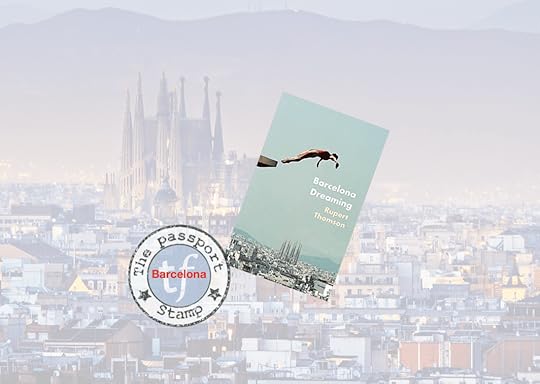
Shortlisted for the Edward Stanford Travel Writing Awards 2022, Fiction, With a Sense of Place.
Barcelona is the star at the heart of these three stories, from Sarrià to Castelldefels, around the city and beyond. If you know the city, it will feel very familiar through the colourful descriptions which act as a backdrop to these convincing and at times just slightly surreal, off-key stories. The author is a natural storyteller with an inventive and enquiring mind. He has a gift for fleshing out a story that moves along without the reader really been consciously aware that life is moving on. Within the novella format, the author deeply immerses the reader into three different worlds, bound by the city and by the occasional chosen character.
The first story is a cracker and sees Amy, now in her 50s and divorced, running a gift shop and embarking on a relationship with a man from Morocco, who is half her age. They meet in extraordinary and seemingly quite unsafe circumstances but she is someone who pushes on with determination and a good heart. The trajectory of the story bowls along with a few surprises along the way.
The second story involves Ronaldinho (he is a famous footballer) in a rather clever and tantalising way, seen through the eyes of a musician with a bit of an alcohol problem. Story three features a translator and a specific piece of furniture – yes, intriguing given the specific components.
The stories – fables, even – all have slightly uncanny premises which add a frisson of anticipation to each narrative. Throughout there are relationships that come and go, there are themes that pulse throughout, providing an entertaining and mesmerising read.
Shortlisted for the Edward Stanford Travel Writing Awards 2022, Fiction, With a Sense of Place.
Barcelona is the star at the heart of these three stories, from Sarrià to Castelldefels, around the city and beyond. If you know the city, it will feel very familiar through the colourful descriptions which act as a backdrop to these convincing and at times just slightly surreal, off-key stories. The author is a natural storyteller with an inventive and enquiring mind. He has a gift for fleshing out a story that moves along without the reader really been consciously aware that life is moving on. Within the novella format, the author deeply immerses the reader into three different worlds, bound by the city and by the occasional chosen character.
The first story is a cracker and sees Amy, now in her 50s and divorced, running a gift shop and embarking on a relationship with a man from Morocco, who is half her age. They meet in extraordinary and seemingly quite unsafe circumstances but she is someone who pushes on with determination and a good heart. The trajectory of the story bowls along with a few surprises along the way.
The second story involves Ronaldinho (he is a famous footballer) in a rather clever and tantalising way, seen through the eyes of a musician with a bit of an alcohol problem. Story three features a translator and a specific piece of furniture – yes, intriguing given the specific components.
The stories – fables, even – all have slightly uncanny premises which add a frisson of anticipation to each narrative. Throughout there are relationships that come and go, there are themes that pulse throughout, providing an entertaining and mesmerising read.

January 25, 2025
Rupert Thomson deftly threads together three novellas, through both the passing mention of minor characters and the 'dreamlike' experiences or scenes in each. And, of course, the city, which has its own role here. There's Amy, a middle-aged British expat who becomes involved with a Moroccan migrants half her age; a jazz pianist on a descent into alcoholism; and a translator caught between the fictions of his neighbour and a novel he is translating. 3.5 stars and a desire to read more by the this author.

May 24, 2026
I didn’t like any of the stories and as soon as I started to slightly enjoy them they ended. But too many loose ends that weren’t tied up by Reddit
August 5, 2021
The three loosely interconnected stories are increasingly surrealistic; the Giant in the first story saves the protagonist, the King in the second story may just be a drunk, but he knows a lot of people and is quite a musician, and has a difficult relationship with his step son, if a good one with the soccer player Ronnie.The third story whose main characters are Jordi, Vic Drager, Mireia and Federman is quite surrealistic between the wild boar, the chest of drawers of Siberian wood, and the translated Giving story involving Jeanne, Sophie and Marc.
November 26, 2022
Rupert Thomson is a writer of considerable skill whose short stories I have read and loved in various anthologies but whose novels, despite their brilliance, often, but not invariably, fail to engage me. This novel (and it is a novel rather than a collection of short stories - or maybe it is both) is one, for me, of those that failed to engage. But I don't want to discourage anyone from reading it - I have read and heard great things said about it.

October 12, 2022
Wow. Lang geleden dat ik een boek in één dag heb gelezen. Vanmiddag kreeg ik hem getipt door een medewerker in de Waterstones, nu is ‘ie uit. De drie narratieven, die allemaal zijdelings aan elkaar zijn gelinkt, vertellen allen een verhaal dat je grijpt. En je blijft met zo veel vraagtekens achter!
July 2, 2021
Barcelona dreaming
Nope. When it turned into an 'R' or maybe even 'X' rated book, I called it quits. Not my kind of thing.
Nope. When it turned into an 'R' or maybe even 'X' rated book, I called it quits. Not my kind of thing.

October 16, 2022
Fun reading that accompanied a work trip to Barcelona, the three interlinked narratives are suffused with the colors of Barcelona in the 2000’s. An entertaining read.

November 3, 2022
Er so what was the point of all of that …
September 6, 2023
Don’t really see the point of this book and stories. But Barcelona do be very pretty, so the stars are for how this book gave me a sense of being there again.

May 11, 2025
thomson did a great job creating a sense of setting, but i didn’t care about any of the characters. everything about them felt too shallow and not fleshed out well enough. i was expecting the stories to connect in a meaningful way and they never did. the 2008 financial crash was discussed once very briefly, despite it being talked about in the synopsis. i was disappointed by how shallow the explorations of womanhood, racism, immigration, unrequited love, paranoia, and untranslatability (etc.) were.
again, the writing was okay. i could definitely visualize the scenes. but in the end i was just left wondering: what was the point? what should i take away from this? so much time was spent meandering pointlessly through these three different lives and i still came out of it not caring about them.
again, the writing was okay. i could definitely visualize the scenes. but in the end i was just left wondering: what was the point? what should i take away from this? so much time was spent meandering pointlessly through these three different lives and i still came out of it not caring about them.

August 29, 2026
1,5 ⭐️ A parte de que no me ha gustado, me parece un libro mal escrito, con errores ortográficos básicos y en muchos momentos sin sentido.
El libro está dividido en tres partes, ma historia de cada uno de los protagonistas que suceden a la vez y hay una persona se unión entre ellas.
La narración de los hechos es confusa. El autor mezcla momentos y hechos, así como diálogos con narración. El primer relato, aunque no me gustó el personaje de la mujer y cómo se la describe, fue el más lógico y comprensible.
Este libro escrito con calma, podría haber sido una gran novela, pero por desgracia no la recomiendo.
El libro está dividido en tres partes, ma historia de cada uno de los protagonistas que suceden a la vez y hay una persona se unión entre ellas.
La narración de los hechos es confusa. El autor mezcla momentos y hechos, así como diálogos con narración. El primer relato, aunque no me gustó el personaje de la mujer y cómo se la describe, fue el más lógico y comprensible.
Este libro escrito con calma, podría haber sido una gran novela, pero por desgracia no la recomiendo.

August 1, 2021
Little gem reminiscent of Auster and Salazy’s “All that man is” - metaphysical fiction? Sleaze, lost outsiders, weak people struggling with being decent, drugs, heat and the shadows of Barcelona. Some terrific characters - real and imagined. I felt uneasy in parts but had to find out how it would fit together. A full point for the wonderful retro diver against the Gaudi skyline on the Australian edition.

August 6, 2021
This was a quick and somewhat interesting read, but not because of the characters or plot. The characters were strange and unlikeable. The plot was weak to non-existent. But the description of Barcelona and Catalan life was spot on and the writing is quite good. It was worth reading for those reasons. I'm married to a Catalan so I liked it, but I'm not sure that you would enjoy it as much if you aren't already familiar with the nooks and crannies of Barcelona or Catalan quirks.

July 26, 2022
bingeable, easy to read but a man in waterstones convinced me to buy this by saying it was the best piece of british fiction he had read in a long time which it most definitely wasn’t. 3 short stories first one was in my opinion the best.

October 6, 2025
Incredibly well written but just not my thing! sorry!

November 19, 2025
I still don’t understand what happened, but I think I liked it. Will need to give it more of a think.
Displaying 1 - 30 of 167 reviews