Jump to ratings and reviews
Rate this book

Manaschi

Rate this book
In his latest tragicomedy Hamid Ismailov interrogates the interaction between tradition and modernity, myth and reality.

A radio presenter interprets one of his dreams as an initiation by the world of spirits into the role of a Manaschi, a Kyrgyz bard and shaman who recites and performs the epic poem, Manas, and is revered as someone connected with supernatural forces. Travelling to his native mountainous village, populated by Tajiks and Kyrgyz, and unravelling his personal and national history, our hero Bekesh instead witnesses a full re-enactment of the epic’s wrath.

Following on from the award winning The Devils' Dance and Of Strangers and Bees, this is the third and final book in Ismailov's informal Central Asia trilogy.

257 pages, Paperback

First published January 1, 2021

4 people are currently reading
411 people want to read

About the author

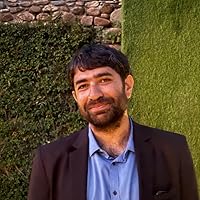
Hamid Ismailov

18 books121 followers

Ratings & Reviews

What do you think?
Rate this book

Friends & Following

Create a free account to discover what your friends think of this book!

Community Reviews

5 stars
16 (23%)
4 stars
24 (35%)
3 stars
24 (35%)
2 stars
4 (5%)
1 star
0 (0%)
Displaying 1 - 16 of 16 reviews
Profile Image for David.
301 reviews1,435 followers
September 6, 2021
Manaschi explores how storytelling shapes who we are, both individually and as a people. Set in the mountains of southern Kyrgyzstan along the Tajikistan border, where the modern world coexists uneasily with tradition, Manaschi follows a young man who returns to his remote village after the death of his uncle. The story navigates between various modalities: tradition and modernity, shamanism and Islam, Turkish and Farsi. Through parables and quixotic proverbs, Ismailov shows how narrative shapes our identity, how culture is created or destroyed, and how boundaries can be reinforced or transcended.
Profile Image for Paul Fulcher.
Author 2 books1,956 followers
April 17, 2022
Shortlisted for the EBRD Literature Prize 2022

Manaschi is the third translation of Hamid Ismailov’s novels written in Uzbek (he has also written in Russian), each published by Tilted Axis Press.

The first The Devils’ Dance (2018) and this Manaschi (2021), both translated by Donald Rayfield, are unpublished in the original, the original of Manaschi also written in 2021. The middle novel in English, Of Strangers and Bees, translated by Shelley Fairweather-Vega was from a 2001 original.

Together the three form a trilogy of sorts of Central Asian novels, all books very different to the usual fare for Anglophone readers and which truly do tilt the axis of world literature towards wider world cultures.

This novel opens with the focal character Belsen, a radio presenter, experiencing a dream:

On the last day of the third twelve-year cycle, Bekesh had a dream which might have been a hallucination. He dreamt that he had crossed many rocks and hills to see his Uncle Baisal's yurt on the highland pastures. In one gauntleted or gloved hand, his uncle was holding Tumor the hunting eagle, while in his other hand was a bowl full of fresh or sour milk. When the fierce Tumor saw Bekesh, who had not been very cautious in his approach, the creature grew alert, as if he were about to fly off to hunt; then he flapped his thickly feathered wings and crashed against the door through which Bekesh had just entered. Bekesh greeted his uncle and sat down across from him, his face pallid with anxiety. His uncle proffered the bowl he was holding and said, 'Drink!'

The drink in the bowl was white, but neither fresh nor sour milk. If it was salt, it didn't taste salty; if it was snow, it hadn't melted; if it was sand, it wasn't grainy. When he was a child, in pioneer camp, Bekesh had had to down a liquid slurry called gulvatal, and this was what he was reminded of in the dream. If he had to sip it, he couldn't have; if he'd been told to chew his teeth wouldn't have coped with it.


Baisal is his uncle but also his foster-father and a Manaschi, a Kyrgyz bard and shaman responsible for the recitation of the national epic poem, Manas.

Shortly afterwards Bekesh learns that Baisal has died and returns to his native village of Chekbel which straddles the Tajikistan and Kyrgyzstan border (with the added complication that the Tajik community in the village live inside Kyrgyzstan and vice-versa).

There he inherits Baisal’s horse and his hunting eagle but also, not entirely to his comfort, his destiny as a Manaschi.

The ancient stories and poems of the Manas are intertwined with the modern-day reality of Chekbel caught in border disputes between the two countries, but with the added complications of Islamic fundamentalism and the Chinese Belt and Road project, much of which seems to be repeating the history of Manas.

Fascinating and highly worthwhile. One for those wanting translated novels to stretch their cultural and literary horizons.

Other reviews:

https://dannyreviews.com/h/Manaschi.html

https://www.calvertjournal.com/articl...

https://www.the-tls.co.uk/articles/ma...

https://www.themodernnovelblog.com/20...

https://www.asymptotejournal.com/blog...
Profile Image for Emmeline.
441 reviews
April 17, 2023
3.5 stars

Another intriguing publication from Tilted Axis Press, who are finally getting some long-deserved recognition with International Booker winner Tomb of Sand

This novel is from Kyrgyzstan. Not only had I never read a book from Kyrgyzstan, I certainly couldn't have found it on a map prior to this. This is a story about Bekesh, a man caught between the traditional mountain culture of his childhood and a more urban reality as a radio host. Spurred by the death of his uncle, he returns to his home village, which is now two villages, with an international border running through the middle, and two nationalities, Tajik and Kyrzek straddling both sides. The Kyrzek population have a culture reflected and amplified by recitings of their traditional ballad, the Manas, and Bekesh, inspired by a dream, may just be next in line to be the traditional reciter of it. From his uncle he has inherited the traditional horse and eagle.

Meanwhile, there are all sorts of outside influences appearing in the village, from media covering a local festival, to Chinese labourers building a road, to Islamic militants in the mountains, to the memories of the Soviet years that defined the past life of much of the local populace.

So, this is a really interesting book about an interesting place, caught in the middle of all kinds of influences that are quite divorced from my daily reality, which makes the whole thing quite hard to judge. Luckily there's an introduction from the translator covering some history and culture, without which I would have been lost.

Truthfully, I think the book is a bit of a mess, rushing along then grinding to a halt, then rushing off on some tangent. The text is definitely messy. I don't necessarily blame the translator... it's hard, especially with minority languages (it was written in Uzbek), to really break through the translationese barrier. But does nobody edit this stuff? Example:

The jackal was making its way through the snow, it was obvious that it had no blood or juices running through it. Perhaps it was infected by some disease, there was no disputing that.

Leaving aside the oddness of "juices," if there was no disputing that, why does it say "perhaps?" Whatever the original said, that construction just doesn't work in English. Or:

At a glance, the eagle's two eyes had aimed at both foxes, his crop jerked up and down and he shook all over. Bekesh launched him into the air... It stretched out both wings...

Why has the eagle just changed from he to it? Or:

He knocked down one of the attackers where he stood. Another attacker shrugged and fled without looking back.

I'm really trying to imagine a fight scene where a guy shrugs and then flees. I feel kind of bad highlighting these editing slips, because I do really like this press, but it makes such a difference to the reading experience. It's possible I suppose, that the book is this awkwardly written as well, in which case you get into the disputed territory of, should a translator improve on the original? There's all schools of thought, but my belief is yes. If you're going to bring it to a new audience, bring it in a way that new audience can enjoy it.

It's especially annoying in this book because there were so many things I loved. I really wanted to get into the way the cultures intermingled, intermarried, their different faiths and the way these overlapped. The book had lots to say on this. There were interesting characters among the Chinese labourers, among them an Uighur, a second child who doesn't officially exist, and a Mongolian who grows to love the local culture and wants to assimilate (leading the protagonist to question whether he believes you need to be born to his traditions, or not).

And best of all are the scenes with the horse and the eagle. You can practically feel the crisp mountain air. It's like being in a Medieval fantasy novel, except then they go home and listen to a tape recording of the uncle reciting the Manas and the local town suffers from endemic unemployment and an encroaching drug problem. Honestly, one of the most interesting books I've read this year. But patchy.
Profile Image for g ✰.
90 reviews
February 22, 2023
wild! I loved reading this, I love anyone badass enough to centre their story around an epic like the Manas. I thoroughly enjoyed the experience of being stumped by confuddling phrases and idioms that were rightfully not translated. The first half of the novel was so spectacular, setting up this thrilling tension- with the Kyrgyz/Tajik conflict, the mullah and his influence on Dapan, the Chinese construction crew, and especially Bekesh (the lead protagonist), who is troubled by his own inadequacies and fearing fate and his own burden as a potential Manas reciter... all these fascinating interconnected characters and cultural relationships provided so much to work with but I feel the story fell flat in after the second act. Shame. Pacing was a bit odd as well...slowing down to digest strange details but speeding past important plot moments.

All that said, this book fucking rocked. I enjoyed the experience and the writing was amazing. 4 stars!
Profile Image for Nadirah.
810 reviews39 followers
December 15, 2022
Rating: 3.5

“Manasch” is one of those books that won't appeal to everyone. On the one hand, it gives a very insightful sneak peek into Kyrgyz & Tajik culture and lore and the struggles that can come from the clash between the two. It was interesting to read about manas and how it can shape an entire outlook on life, and in some ways it reminded me of Sufism practice in terms of how they both use poetry / literature in creating an essence for the self.

On the other hand, there's no coherent structure to the stories within the story and there's a sense of disconnect that doesn't allow me to fully immerse myself into the narrative. Sadly the disparate threads never managed to come together, so this feels a bit patchy overall.

Still glad I read this though as it's a rare insight into the nomadic culture of the people who are living along the borders of Kyrgyzstan & Tajikistan. This book also reminded me of The Last Quarter of the Moon, which is also worth a read if you're into that sort of thing (it’s comparatively simpler in terms of its narrative style).

On a separate note, I'm currently reading The Devils' Dance, and it's an easier read writing- and narrative-wise compared to this, so I guess that book will be a better starting point for readers who would like to read Ismailov's works.
Profile Image for jasmine.
304 reviews86 followers
August 17, 2023
It's rare to find a book on Uzbekistan. Thanks Tilted Press for bringing Hamid Ismailov's works into English!

Throughout the story, there are lots of references from the epic Manas poem of Kyrgyzstan and some scriptures from the Quran. It mainly revolves a rural community which consists of Kyrgyz and Tajiks. Even though their culture crashes, they live in harmony - until the Chinese and extremist Islamic group came.

The conversations and scenes are simply odd. I'm not sure whether it's a translation problem (it's translated from a minority language, and the language has transformed throughout the years) or the original story is simply weird. It reminds me of reading the Bible where I couldn't grasp most of the meaning behind the parables.

As there isn't much ready information about Uzbekistan, I couldn't find the mountainous areas mentioned in the story =( It also has an open ending. I'm even more confused at the end.
37 reviews1 follower
August 28, 2025
I think the translation is a little rough, as the translator admits in the prelude to having used soviet dictionaries for the Uzbek and Kyrgyz language utilised. Other than that it is an interesting book, and of the three Ismailov books I've read so far probably the most understandable. It's about a topic I've only ever heard of in passing before, the Manas and uses this as a jumping off point to explore various themes, such as mixed identity, the relationship between modern and traditional, rural and urban, Islam and other beliefs in Kyrgyzstan, the rise of Islamic fundamentalism and it's contrast with Sufism, the way borders became mangled after the fall of the Soviet Union. And, finally, the belt and road initiative and China's role in Central Asia.

It has touches of magical realism and I think my reading of the novel suffered from really not knowing a thing about the Manas. I think the novel is meant to be an almost modern retelling but it's impossible to saying having not read (nor I think being able to read) the epic it's based on.
Profile Image for Caroline.
684 reviews966 followers
January 23, 2023
Manaschi is a really solid book by Hamid Ismailov, translated from Uzbek by Donald Rayfield and released in 2021 by Tilted Axis Press.

Set in a mountain village between Kyrgyzstan and Tajikistan, it explores the impact of storytelling and gives some insight into the clash between cultures. We see the differences between Kyrgyz and Tajiks, the importance of religion and the epic Manas poem. We see traditional views clash with more traditional. A lot of this is conveyed through proverbs and excerpts from the Manas.

I enjoyed this book but felt it was a little slow until past the halfway point when things got juicy. I think at times, I was struggling because there is a lot of history between the nations that I was not fully getting. The writing could also be hard to understand at times though I am not sure if this was a translation issue (or a my brain issue) or just the way the original was written.
Profile Image for Dana.
5 reviews1 follower
April 4, 2024
Heel speciale vertelstijl. (Uzbekistan leesvoer)
Profile Image for Owen Knight.
Author 6 books21 followers
October 7, 2021
A radio presenter returns to his home village on the border between Kyrgyzstan and Tajikistan. He is inspired by a dream to become a Manaschi, a reciter of the epic poem, Manas. This brings about a violent re-enactment of the events of the epic, as long-held rivalries between the neighbouring communities flare up.
Despite the violence, there is a lot of humour in the story from two sources. Firstly, the interaction between the local population and the Chinese workers building a tunnel to link the two countries. The lack of a common language to communicate with their hosts bemuses the migrants, who cannot understand the rivalry. Secondly, much of the conversation between the villagers is enlivened by the inclusion of cryptic proverbs. The meaning of these sometimes puzzles the characters as much as the readers.
There are pleasures, too, in reading about the love of villagers for their hunting eagles and horses, regarded as family members by their owners.
A book to enjoy, both for the story and the unfamiliar culture of the setting.
Profile Image for pae (marginhermit).
380 reviews25 followers
February 15, 2023
Phew. took me a few times to re-read so here we are.

Googling Manas would bring you different meanings, but centred around the same theme: the mind, the thinking, intelligence…and in Manaschi, we’re took thru folklore tales, only to be infused with Shamanic power.

The story follows Bekesh, a radio presenter, dream on Baisal, his foster-father standing with his pet eagle on his hand, holding a milk. When he drank the milk, a hoard of horsemen charges in, and explosion ensues. and then, Bekesh woke up. few moments later, he received the news that Baisal passed away.

Baisal was a manaschi, the one with knowledge on Kyrgyz national epic, much like Hikayat Hang Tuah for Malaysian. Soon Bekesh forges the connection with the pet eagle and people used to be around him, like Da-pan, and telling Manas, with some influence on modern twist.

Took me a while to understand the concept of Manas because whew, it’s HEAVY. However once I get the hang of it, Manaschi was a smooth flow. A little folklore, full of twist on Kyrgyz and Tajiks culture, some sentiments of Chinese and a whole lots of..imagination. Not an easy read, but enjoyable much..so I guess it worth the ride.
Profile Image for Gautam Bhatia.
Author 16 books972 followers
June 20, 2023
I’ve long loved Ismailov’s writing (Days Gone By, Of Strangers and Bees). In many ways, Manaschi is reminiscent of the work of Ismail Kadare: at the heart of the story is the Kyrgyz epic of Manas, and in Kadare-esque style, Ismailov weaves in stories of nationalism and identity around oral poetry. Manaschi is particularly vivid - it is a story of a nation-state’s border being born before our eyes in a place where a “border” made no sense before, of a doctrinaire version of Islam rubbing up against a more instinctively accommodative culture, and (again, reminiscent of Kadare!) the impact of recording upon oral transmission of epics.

The amount of context-setting that is required for a novel like this means that it is not the easiest of texts to get into for the first forty pages, but that is a small penance to pay for the rewards that follow once you do get into it. This is now my third Ismailov, and he is becoming one of my go-to contemporary writers.
Profile Image for Dolf van der Haven.
Author 9 books26 followers
October 26, 2021
I have admired Hamid Ismailov ever since I read The Devil's Dance. This book is as confusing as that one, filled as it is with Central Asian poetry and expressions. The story gets clearer after the first part, but more and more merges with the epic poem Manas that is its leitmotiv. Culture clashes abound, all for the wrong reasons. In the end, this novel requires one or more re-reads to be fully understood.
Profile Image for Kate Walton.
402 reviews92 followers
September 22, 2022
Very interesting, although there was a lot I did not understand. Unfortunately, the editing (or the translation?) was not up to the usual Tilted Axis standard. Unclear as to whether the original was written this way and the translation was therefore literal, or whether the translation was poorly edited. A pity.
Profile Image for Dorota.
113 reviews1 follower
May 27, 2024
Vivid and imaginative. Superb storytelling. But it's a demanding book, with highs and lows in the narrative (I wonder if not purposeful, to mimic an oral epic's meandering).
Profile Image for fire_on_the_mountain.
293 reviews13 followers
December 27, 2025
Reading outside my comfort zone is usually rewarding, and this was proof positive that the approach works for me. Not merely a translation, but one from a post-Soviet state shifting between identities, caught in a border region between nations, traditions and ages. I had no footing here and I’m glad I didn’t.

Living as we were inside the narrator’s head, I couldn’t be too sure of his perception, other than the multitudinous consequences for his various missteps and overcorrections, but the sense of being battered about by forces greater than one’s self suffuse it all. This small man, one who strives to measure up to greatness, not knowing what it really means… all it leads is to an absolutely gut-punch of an ending but hey, art isn’t meant to merely entertain, you are meant to *feel.*
Displaying 1 - 16 of 16 reviews

Can't find what you're looking for?

Get help and learn more about the design.