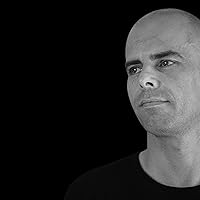
Stuart McGill, PhD, is a professor at the University of Waterloo in, Ontario, Canada and an internationally recognized lecturer and expert in spine function and injury prevention and rehabilitation. He has written more than 200 scientific publications that address lumbar function, low back injury mechanisms, investigation of tissue loading during rehabilitation programs, and the formulation of work-related injury avoidance strategies. He has received several awards for his work, including the Volvo Bioengineering Award for Low Back Pain Research from Sweden. Dr. McGill has been an invited lecturer at many universities and delivered more than 200 addresses to societies around the world. As a consultant, he has provided expertise on assessment and reduction of the risk of low back injury to government agencies, corporations, professional athletes and teams, and legal firms. He is one of the few scientists who consults and to whom patients are regularly referred.
What qualifies me: low back pain for a long time, scoliosis and a lot of sitting down for work.
Absolutely fantastic book. A few takeaways, if the reader of this review is looking for a shortcut. 1. There are no shortcuts. Read the book. 2. Stretching is not for everyone, at least for a while. 3. Walking is not for everyone, at least for a while. 4. Running is not for everyone, at least for a while. 5. Sleeping on your back is not for everyone, at least for a while.
You can see where this is going. Dr. McGill stresses this point often: the problem you have can only be addressed by adopting measures that fit your anatomy and back problems. That's why the book is 170-pages long and not just 5 steps. That being said, this is my understanding of what would benefit the vast majority of people:
1. Take a brisk walk 3 times a day, for 30 minutes. Walk like you mean it. 2. Do the Big 3 exercises (they can be found on YouTube, as the McGill Big 3). 3. When exercising, incorporate functional, whole-body exercises (pulling, pushing, carrying). 4. Maintain spine hygiene at all times (this is essentially saying: keep your back straight as much as possible) 5. Learn how to breathe and brace to support your spine during effort.
And more, of course.
I loved this book. I will read more of Dr. McGill in the future.
For anyone suffering from back pain and actively trying to resolve it, the world is filled with experts, from the well-meaning neighbour who advises taking a yoga class to skilled clinicians offering to fix the problem with some titanium rods and screws. Stumbling on Professor McGill’s work was hardly an accident since it is difficult to survey the literature and not see at least one reference to his research in biomechanics, occupational health and sports kinesiology. Reading, rereading and subsequently again rereading Back Mechanic gave me at least a rudimentary understanding of my own issues and how to possibly fix them or at least create the conditions for improvement. Absorbing the information in this book has allowed me to assist my own rehabilitation and gave me an appetite to read his more in depth studies contained in his books ‘Low Back Disorders’ and ‘Ultimate Back Fitness and Performance’.
My own story had a very happy ending and although I could not avoid surgery, McGill’s writing helped me make educated choices about my options as well as rehabilitation. My recovery after a lumbar decompression surgery was impressive and I can credit part of that success to the application of McGill’s recommendations both before and afterwards. My copy of the book is now dog-eared from lending it to friends. After reading McGill, I would not recommend a yoga and Pilates class to someone suffering from severe back pain....it may or may not help.
A bit disappointing that the spine specialist I saw recommended Dr. McGill's books, but diagnosed me with degenerative disc disease after reviewing an x-ray and performing a cursory examination. In Back Mechanic, Dr. McGill states that an accurate diagnosis cannot be made from images without a thorough physical exam. Furthermore, he said there is no such condition as degenerative disc disease. I wonder if the doctor I saw had read the book... At any rate, the crux of Back Mechanic is that you can self-diagnose and self-heal (or at least manage) most back conditions by following the self-diagnosis guide and performing the recommended exercises. I view this as a useful starting place, but time will tell whether or not adhering to the program alleviates my back pain. If I see some success, I would consider Dr. McGill's other books, which are presumably more comprehensive (and twice as costly).
After a year of terrible posture working at home with no proper desk, my back was hurting so much I’d wake up from pain at night. Massage, needling, yoga and stretching were no use. After reading this guide, I learned that some of my solutions to the pain were actually aggravating my back (aka any yoga pose where you’re flexing your spine!).
After reading this book and doing the amazing self-assessment I have been able to 1) identify the cause of my back pain, 2) been able to find supportive postures that relieve the pain 3) eliminate or reduce the causes of the pain 4) sleep well through the night and feel better.
I would give this 6 stars if I could. A must read for anyone with a back; look over your shoulder, you may have one too! If you like to run and jump and lift you are eventually going to tweak something…and probably keep tweaking until you learn some of the strategies here. They work so well that I periodically forget them and then have to read the book again and remind myself what an idiot I am for having forgotten. That’s on me but the good news is it’s super easy to get back on track (pun only slightly intended). I should just set a reminder on my calendar to read this book every year no matter what happens. I won’t. But I should!
Very informative textbook. Empowerd the patient to take charge of their back pain and outlines the "work" required to keep them paon free.
Dr. McGill is anti surgery and opiods for back pain (as am I) so I found this approach to be encouraging and am excited to apply what I have learned in my career.
I only gave it 3 stars, however, since visually the book is terribly designs. The text is small, faint, and the pictures aren't as clear as they ahould be for a book full of exercises. The book is black and white, unfortunately; some color would have been helpful and motivated (kind of a drag to read a book about pain that is bland visually). It is also an awkward size for a textbook. Overallyl the content is good but the layout / design is poor.
So good. Best advice on back pain management I've had in 10 years. More thorough and useful than any orthopedic / physiotherapist / osteopath / YouTube fitness guru I ever listened to. If you have back pain, do yourself a big favor and read this. I wish I had done it a looooong time ago. Not pain-free yet but at least now I have proper knowledge and a plan.
Heard this doc on a podcast and immediately ordered. I feel a bit foolish for having had multiple lifting-induced back injuries over the last decade and never reading a book about the topic.
I now know the training I need to do to avoid another injury and how to recover faster in the future.
While I've had hints of good care in the past, I've also had some of the absolutely clueless doctors and physios that McGill talks about, either immediately offering drugs or prescribing exercises that can do more harm than good (hugging knees to chest!).
Recommended for anyone unfortunate enough to have back pain, chronic or acute... Educate yourself!
This book was suggested to me by my physical therapist. I read it hoping it would go into more detail and offer further suggestions about the next steps on my road to recovery from back pain. As another reviewer pointed out much of the book is simple common sense and things I've discovered on my own. But that is not the primary reason for the low review.
The reason for the low review is his unsympathetic and unhelpful attitude to people who are overweight or who do not exercise as much as the program prescribes. His suggestion if you don't do the prescribed exercises is "stop getting in your own way. Stop complaining about pain if you're not prepared to act. Stop making excuses. Stop spending so much time sitting at work when you could walk around the office or take a walk on your lunch break." Then he goes further to say that people who don't do the prescribed exercises DESERVE their pain, and that they brought it on themselves. This attitude does nothing to address or help overcome possible obstacles to exercise. Not every job allows their employees the freedom to just get up and walk around whenever they want, no matter how beneficial to their health it might be.
In addition to "the big 3" exercises he prescribes 3 thirty minute walks a day. Most people simply don't have the time to work in two hours worth of exercising a day. That's not laziness, that's just life. It would have been much more helpful if he had listed a few of the obstacles to exercise along with possible work arounds. Or at the very least offered some words of encouragement, instead of just dismissing those who find exercising difficult saying they "deserve" their pain.
This is by far the best resource(not just in books also comparing with doctors, physiotherapist, gym trainers, yoga teachers, folk wisdom etc) to understand why back pain arises and how to heal it! Takeaways: 1. Maintaining Neutral Spine position is vital, in all the activities a person do during day and night!! 2. Building a Resilient Core takes away unnecessary load on spine. 3. Walking is the best exercise for back when done correctly.
I have suffered through bouts of back pain over the years. A recent flare up led me to McGill on the Peter Attia podcast. He is super impressive and I found him educational, inspiring and optimistic. His book was great as expected. If you have had back pain, I can’t recommend this book enough.
Dr. McGill is not an excellent writer, which is understandable. And some of the illustrations are crude and unhelpful. The worst part is the book's layout and typography. A grey type on off-white pages is really poor. Nevertheless, and most important, his instruction and pedagogy are top notch. I found great relief from following his directions precisely, which requires commitment and steadfast discipline. So the content and messages of the book truly excel while their delivery medium is poor.
Eye opening for someone dealing with a back injury and/or near constant pain, and learning that it's not actually something you have to deal with for forever.
This book was recommended by a friend who suffered from a herniated disc and managed to heal herself when her doctor told her that the surgery was the only option. I was going through the most severe back pain episode and learned by my doctor that I have a bulging disc.
The amount of knowledge Stuart McGill has managed to get across is irreplaceable. He arms you with everything you need to know in order to get started in your healing journey. For example, I realized that I did a lot things wrong like stretching just to relieve the pain.
While I'm already doing a lot better, I'm still on mend. I'm going to a physiotherapy soon and thanks to this book, I'm super confident it'll go better and easier because I am wiser and far more aware of myself.
Just a little warning, what he said about people who doesn't exercise or overweight people might be a little triggering and a little brutal, but he meant well. Just take what is useful and do your best!
I’ve had some form of back pain for nearly 30 years. I took a few weeks to complete this book, and started incorporating changes in my daily life and he saw difference. In addition, I started following the exercises that Dr. McGill suggested the time it’s taking me to read this book, my back pain is down about 80%. It is definitely a longer-term process, but I am optimistic that I will continue to improve with a few hiccups along the way. I think the key, is to continue to follow the regiment in this book even when I’m feeling fully recovered.
Whenever I run into friends who are experiencing back pain, which seems like just about everyone, I enthusiastically recommend “The Back Mechanic”.
Seems like a lot of wisdom in here. I’m getting desperate, and if it changes my life like I hope it can, I’ll come back and give it 6 stars and thank God and a friend profusely for the recommendation!
I learned so much! I have had chronic on-and-off mild back pain for the last 25 years, and Dr. McGill provides detailed explanations of how the back works, what might be happening to cause pain, and what to do to recover. The self-evaluation is really helpful, and the various exercises are clearly explained. I started doing some of the appropriate exercises for my situation, and my back pain is either reduced or gone each day. It’s remarkable understanding how the back works and why it might be feeling pain.
3.5 rounded up because I do like the big three ( exercises) and have added them to my weekly routine. Some helpful information and the author is very knowledgeable. However, the black and white illustrations were often confusing. Photographs or a video would be more helpful, especially to a newcomer to the exercises.
Have you ever experienced nagging back pain after a long ride? I have, especially after 3, 4, or 5-hour rides, and more so in races when I'm constantly pushing the limits. But recently, it got worse, peaking one day when I had to stop just 20 minutes into my ride. Red flags everywhere, right?
But what exactly is back pain? Stuart McGill's book offers a perfect definition: "Flawed movement patterns, repeated over and over, sensitize your back tissues and drive them to be painful even when under very low load."
Was it because of cycling? Probably. But not exclusively.
Was it due to too much seating? Likely, especially since my back acts up sooner during afternoon rides after a full workday. And let's be honest, my seating hygiene has never been pristine.
Was it Yin Yoga's fault? I switched to Yin Yoga from traditional yoga for deeper stretches and relaxation, but later discovered it was pretty bad for my back. Was it the main culprit? Maybe, but I suspect not entirely.
What about strength training? I recently ramped up my strength training routine, which is short, intense, and almost daily. But my very poor frontal dorsiflexion and hip flexion might be affecting my squat form and thus my back. Is strength training to blame? Perhaps, but I don't think it's the sole reason.
As you can see, back pain is a complex beast. Our bodies (and minds) are complex systems. I suspect my pain might come from a bulged disc, but without a good doctor, I can't be sure. More on this later…
Physio sessions did nothing for me either.
Out of desperation, I asked X.com for advice and out of the blue, someone recommended McGill’s Big 3. Thank You, Hallux.
I browsed the link, found it legit, and dove into the world of Squat University, Stuart McGill, the Big 3, and the complex world of back pain.
Next, I devoured Stuart McGill’s "Back Mechanics" book. I stopped my yoga, cycling, and strengthening routine and started my own back hygiene and stability program. I read through the book in a few days and began practicing the drills and walking daily.
Some days I feel better, other days worse. I can pinpoint that I truly started the program on December 22nd, and my last day cycling was December 17th. Now, on January 4th, I see light at the end of the tunnel. Yesterday, I spent the whole morning without pain and managed a 1-hour bike ride in the afternoon. It was uncomfortable, but pain-free.
I’ll summarize for you (and me) "Back Mechanics" by Dr. Stuart McGill, but to be fair, if you read and understand the Squat University blog post (and read one of the linked articles about screening your back), you pretty much get the full gist of Stuart McGill's work.
It would be not be an exaggeration to say that this book, Stuart McGill’s work is a service to the entire common repository of the species, beyond merely just personal anecdotal experience in the help it's given me, the principles of this book are very sound in a constantly worsening milieu where it is now debated, questioned if even posture is of any importance (in no small part thanks to gymbros).
The evolutionary road to an upright spine, posture it goes without saying has been the life force to the human species, without the vertically stacked vertebra (spine) on which the head sits, contemplation would really not be possible, unlike other mammals (four footed) whose head is connected horizontally and thus they must move in the direction of information itself without the capacity to engage in thinking. As reasoned by Theodore Dimon in The Body in Motion but also argued by Engels well in the 1800s, that it is the upright design that allowed the species to develop tools and thus become onto itself. “At least five critical and closely interdependent specialisations determine the status of the human race: the appearance (1) of the human brain, (2) of the human foot, (3) of the human hand (4) of the erect posture with bipedal locomotion, and (5) a terrestrial mode of life” (p. 928).
Given the importance, if not the most criticalness of the spine to any daily activity some assessment of the various schools, pseudo-science and not that persist on poise is in order.
Even though we don’t really have verifiable information on the nature of back-pain, postures and persistent spinal problems before the 1800s, I will go with the assumption that before human activity really took an industrial scale that spines had seen better days; in a small factor even the popularization of suspenders/bracers took off originally as “posture-correctors”. Orthopedics, mystics and states scrambled to find the causa prima of back-pain, Eugene M. Regen, Robin McKenzie etc and mystics on the other side. (Discussing USSR is beyond the scope of this, just to note that postural, exercise science is perhaps the only positive contribution of the USSR due to the unimaginable amounts of $ that spent on training athelets to prove "SOCIALIST MAN" SUPERIOR)
F.M Alexander very popular and practiced in dance, singing schools across the world whose work more spiritualist then scientific argued that poor posture unleashed incalculable number of changes damaging to the body, an assumption that reasonably can be accepted as correct. There however is nothing helpful both in practical terms (posture correction, spine rehab) and theoretical terms (understanding social change), it would be not be reaching to say that F.M alexander's heart desire to the problem of posture is not dissimilar to primitive anarchists fantasy of a jungle gorilla world. “Alexander technique” really a joke on the reader, because the technique is that “there is no technique”, while F.M practitioners will act like that they have access to some primordial secret knowledge achieved through séance, admittedly it is less infuriating then the gymbros, and the youtubes.
Mirroring F.M Alexander, there is Feldenkrais with the quackery of “Feldenkrais method”, on this I need not give more than one example of baloney disguised as a universal truth ‘All negative emotion is expressed as flexion’.
Ending with Pilates, a method which in affect is actually harmful to the spine (unlike the above two) with its exercises that go against human anatomy itself, Pilates taught (to the hundreds of thousands of indifferent girlbosses) that the spine should be “flattened”, i.e. the lumbar curve of the spine should be reduced by force when performing these exercises, still indifferent, the army of girlbosses(always with the weakest gluteal musculature) persist believing a BIG BUTT is just another disc herniation away.
(To say nothing of the Neo-Reichean body massage therapy cults)
Now turning to the methods that attempted some actual experimentation with research, exercise science has gone through phases, first was the Williams flexion exercises for people with lumbar lordosis (exaggerated curve of the lumbar spine) this included sit-ups, crunches, flexion exercises which are a ritual in all militaries in the world, and ofc everyday YouTube science, gymbros. In theory the premise of Williams exercise was not entirely bad, the assumption was that lumbar lordosis caused by over extension, anterior pelvic tilt could be fixed by causing a posterior pelvic tilt and flexing – basically shooting a gun to the problem.
Right after those decades Robert Mackenzie's exercises infatuated the milieu, extension of the spine was the new order of the day, flexion vs extension raged on. Some of Mackenzie’s exercises such as the “floppy pushup” are not entirely harmful and have been shown to reduce disc bulges, but as studied in McGill's lab Mackenzie’s exercises as demonstrated by Mackenzie were effective only in circumstances where the 70% of the disc where the bulge happened still remained, and that repeating this extension eventually will fuck your facet joints instead. Stuart’s team instead developed a gentle alternative involving slight extension (such as in a massage table) that has demonstrated to work just as well.
Without error, in any and all general theories of well being it is believed, inherent even that “flexibility” of the spine is a measure of health, that the spine should be as flexible, bent, extended, and compressed as possible. Rubbish which has cost the spines of billions now (including my own). And continuing on this trend we are now here, in the world of Jefferson curls, “spine days”, just “strength training”, “deadlifts” as the gymbro smirks telling you that he knew all there was to human anatomy and exercise, and in all the same indifference herniating his discs the next day, perhaps bound to a wheelchair forever.
Finally Opposite to both the degrading forced military discipline (sit-ups awful flexion exercises) and the mystics, invaluable tools are found in Stuart Mcgill’s work(despite what REDDIT science will persist to tell you that it is a MECHANICAL approach as opposed to PSYCHOSOCIAL - really just wallowing in ones self-made suffering), principles that are demonstrated and measured, Mcgill’s group amongst only 2 in the world that developed a biologically driven model of a virtual human spine through which hundreds of exercises were tested, documented to the stress they caused to the lumbar, thoracic and cervical spine. It is a rigorous, documented and very mathematical model that should be read by every child born into this world, to understand how to move, perform daily activity in an upright spine without generating both the pelvic crossed syndrome (Janda) or being a victim of back-pain. This wonderful book is packed full of illustrations, extremely painful stories of patients written in an extremely self-aware nature that this work is not a “fix back-pain in 7 days” and in-fact the uniqueness of each case is emphasized, the individual who can then by equipped by the tools in this beautiful work to find the cause of their own back-pain, postural problems etc.
And me? I've gone from crippling, debilitating back pain, spasms etc to everyday pain free more and more athletic. Changed my life.
This is one of those books I want to buy and give to everyone in my life that I care about, because it contains information that most people don't have, even if they think they do: how to take care of the human spine. Most doctors don't. Most trainers don't. Most coaches don't. Unless they're familiar with McGill's work, that is. I wish I had known the contents of this book before I ever "learned" to do a sit-up or touch my toes, or needed to pick up anything off the floor.
I wish it was positioned as a basic user manual for one's back instead of being targeted at people who already have pain. I suppose since Dr. McGill primarily helps athletes and non-athletes who are suffering from pain already, this could be viewed as the most authentic angle from which to present his evidence-based expertise.
This book, tragically, is not even listed in the databases of our brick-and-mortar bookstore chains. I found out that it was not out of print but offered on the author's website, BackFitPro. It was easy to order and the exchange rate from Canadian dollars works out favorably. If you do any kind of athletic/gym training and are already aware of McGill's excellent reputation in the fitness community, you might as well save shipping and bundle in Ultimate Back Fitness and Performance, which I read immediately after this one.
For anyone with ongoing back issues that have not been resolved by doctors, chiropractors or physical therapists, this book is a must read. I had been dealing with years of back pain and sciatica that could be nearly crippling at time. I had a back surgery that only brought temporary relief but the pain came back. I was close to having a spinal fusion performed. I then stumbled across a mention of this book on a Reddit forum. I read it cover to cover in one weekend and started implementing all the advice and within a few weeks I had a dramatic recovery from my sciatica and lower back pain.
All along I had no idea how I was damaging my back in tiny ways that was accumulating over the years and once I became cognizant of it and started changing behaviors that put stress on the lower back the pain went away. I still do have flareups here and there, but they are now manageable. If I had this book years ago I'd have never needed to go for surgery.