Last Days is a practice of radical imagination for our current political and environmental crises. It excavates the conditions that have brought us here—white supremacy, heteropatriarchy, corporate power, capitalism—and calls ancestors, birds, organizers, and lovers to conjure a new world. It explores how to transform our future to be more beautiful, more just, and more compassionate than we can imagine.
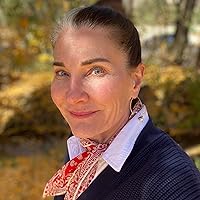
TAMIKO BEYER IS THE AUTHOR OF THE AWARD-WINNING POETRY COLLECTION WE COME ELEMENTAL (ALICE JAMES BOOKS), AND CHAPBOOK BOUGH BREAKS (MERITAGE PRESS).
Her poetry has appeared in journals including The Volta, Tupelo Quarterly, and The Progressive and several anthologies. She is a founding member of Agent 409: a queer, multi-racial writing collective in New York City that performed across the east coast and led workshops at conferences such as the U.S. Social Forum and Split this Rock Poetry Festival.
She has received several fellowships and grants, including a Kundiman fellowship, a grant from the Astraea Lesbian Writers Fund, and an Olin and Chancellor’s Fellowships from Washington University in St. Louis. She was a longtime workshop leader for the New York Writers Coalition.
With a background in communications writing and grassroots organizing, Tamiko has worked for a variety of nonprofit organizations, including the news program Democracy Now!, feminist film distributor Women Make Movies, and San Francisco Women Against Rape. Today, she is the Deputy Communications Director at Corporate Accountability International.
Raised in Tokyo, Japan, Tamiko has lived on both the East and West coasts. She received her B.A. from Fairhaven College at Western Washington University and her M.F.A. from Washington University in St. Louis. She lives in Boston in a former chocolate factory next to the Neponset River.
I think it's difficult to write well about activism, about hopefulness around activism, and I think Beyer does a fine job doing so. This is a book I deeply respect for its ambition and its vision for the future and the collective action it takes to get to a better places, of living on this earth with each other, with our nonhuman counterparts.
I don't know what a poem can do. Or how people might hear poems so that they feel called to political action. Or they hear a solid political argument in the poem, and that argument resonates with them. I personally wonder how that works, because a poem that feels explicitly argumentative to me doesn't feel as poetic. Or it doesn't satisfy what I'm looking for in a poem. I want a political poem that stings me, and I didn't even realize I'd been stung, and then the poet takes that stinging turn of phrase or image, and twists it into my understanding. To me, that's how politics feels when it's treated poetically. Of course, I'm not the only poetry reader.
For my reading of Beyer's book, however, I struggled. Many of the poems in the book's first half are explicitly political. I would say their main energy is an optimism that political arguments, when carried in a poem, could rally people. There are even moments when the poet presents herself as an activist, whose job is to write the poems. I wish I shared this optimism. Or I saw how these poems complicate a surging and explicit political rhetoric in interesting ways. And I know that what I find uninteresting in poems like this is their lack of surprise. Like I'm reading the poem, and I already know where the politics are taking me. Or the political speech is framed to voice the outrage and frustration of a chorus. And I understand the value of this. I think, though, the poems in the book's first half are more committed to sounding out statements people have heard before. They lack surprise for me. And, though not every poem of political outrage is going to be as electric as Amiri Baraka's "Black Art," I think surprise is a powerful poetic device that can amplify a political message.
Just look at the poems in the second half of Last Days. Starting from "21st Century Fable," I find poems that are framed by ambiguity. The politics hasn't been absented from the poems. Instead, it feels like the poet's politics surface, like a whale surfacing on the water, leaving me with the impression of a much larger argument operating in the poem. "Subterranean Haibun" is another poem connected so deeply to the poet's identity, her upbringing, her non-belief or belief in the efficacy of poetic language. I find myself disoriented and eager to reach for language that will help me understand what the poet might really mean.
For me, reading poems like this are a politically transforming experience. Because who someone is and how they've been treated in this world, and how language might or might not be sufficient to express the very personal statements that would entail, that is politics in poetry. Language is not a given, and these poems in the second half of Beyer's book attend to this fact in a style full of surprise, and resonant moments for me.
I'm no good at reviewing poetry, but if there's any book that will take the top off of your head, it's this one. I read the whole thing in one sitting, because I was completely spellbound by Beyer's amazing voice.
From her first "Tanka for What Comes Together," Beyer writes, "We emerge / from sleep singular— / and then find each other. And that / is the best way of waking." Read for the "experiments in revolution," the tender and fierce rendering of the world as it is and as it should be.