

What do you think?
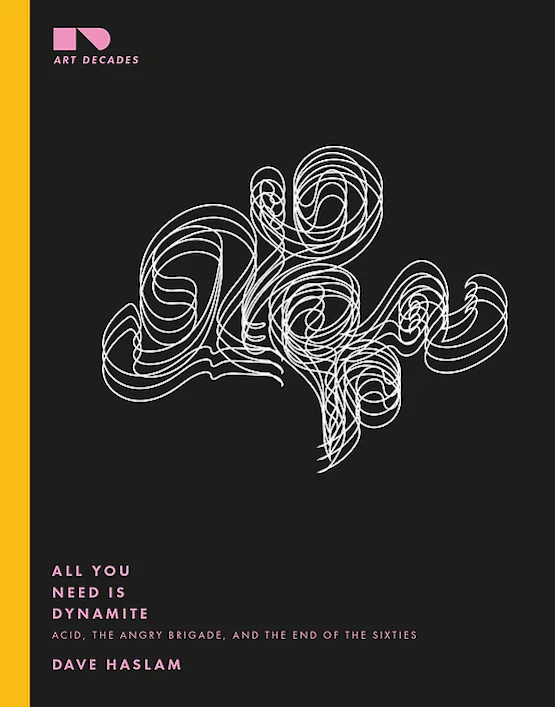
All You Need Is Dynamite: Acid, the Angry Brigade, and the End of the Sixties
72 pages, Paperback
Published August 26, 2021
About the author
Dave Haslam
22 books46 followersDave Haslam is an author and DJ. Originally from Moseley, Birmingham, he moved to Manchester in 1980, making his name as a DJ with 450 appearances at the Haçienda nightclub, including Thursday's Temperance club night in the late 1980s. In the 1990s he also hosted the weekly night Yellow at the Boardwalk nightclub in Manchester. His more recent DJ shows include clubs in Italy, USA, France, and Germany.
In the mid 1980s he founded the fanzine 'Debris' and went on to write for NME. His journalism has since appeared in The Times, The Guardian, The London Review of Books, The New Statesman and elsewhere. In 1999 he published Manchester, England, and, subsequently, Adventures on the Wheels of Steel, a book about the music and politics of the 1970s called Not Abba; the Real Story of the 1970s (reprinted as Young Hearts Run Free; the Real Story of the 1970s), a history of British nightclubs and music venues entitled 'Life After Dark', and his memoirs, 'Sonic Youth Slept On My Floor: Music, Manchester & More'.
His numerous other cultural interventions included creating an installation for the Berlin-based ‘Shrinking Cities’ exhibition; presenting a twenty minute talk on the North/South divide for BBC Radio 3; appearing on TV shows on BBC Two and on Channel 4, Granada TV, and Canal Plus (France). His 'Close Up' series of live interviews have attracted guest interviewees including Jonathan Franzen, Nile Rodgers and John Lydon.
In the mid 1980s he founded the fanzine 'Debris' and went on to write for NME. His journalism has since appeared in The Times, The Guardian, The London Review of Books, The New Statesman and elsewhere. In 1999 he published Manchester, England, and, subsequently, Adventures on the Wheels of Steel, a book about the music and politics of the 1970s called Not Abba; the Real Story of the 1970s (reprinted as Young Hearts Run Free; the Real Story of the 1970s), a history of British nightclubs and music venues entitled 'Life After Dark', and his memoirs, 'Sonic Youth Slept On My Floor: Music, Manchester & More'.
His numerous other cultural interventions included creating an installation for the Berlin-based ‘Shrinking Cities’ exhibition; presenting a twenty minute talk on the North/South divide for BBC Radio 3; appearing on TV shows on BBC Two and on Channel 4, Granada TV, and Canal Plus (France). His 'Close Up' series of live interviews have attracted guest interviewees including Jonathan Franzen, Nile Rodgers and John Lydon.
Ratings & Reviews
Friends & Following
Create a free account to discover what your friends think of this book!
Community Reviews
Displaying 1 - 3 of 3 reviews

October 30, 2022
So often when people write about the early 1970s, they conveniently airbrush out the remarkable political convulsions of the time, such as
* The miners’ strikes
* Opposition to the Industrial Relations Act which sought to curb trade union rights
* Opposition to the war in Vietnam
* Continued student unrest
* Boycotting and demonstrating against South African apartheid
* The new Women’s Liberation Movement
* Brutal repression of those demanding civil rights in the north of Ireland,
* The 1972 intimidation and jailing of unionised building workers such as Ricky Tomlinson
* Fleet Street print workers walking out in support of jailed dockers
* Police and political corruption.
Therefore, I found it refreshing to read Dave Haslam’s booklet where the focus is explicitly on remembering the exciting politics of those years. And how some young people were so desperately overwhelmed by the power of the State, they felt the need to express their anger in a more forceful way than demos, posters and leaflets. How the police terrorised many innocent campaigners and activists, making up the evidence when they didn’t have any, and even when they did.
Dave Haslam also reminds us of one revolutionary social development of the time, long forgotten, yet so influential back in the day: the Claimants’ Union. They existed all over the country, made up of those claiming benefit - unemployed, single parents, disabled, etc. Some even suggested that people had the right not to work! And that there should be a guaranteed minimum income for all.
I appreciated his emphasis on the importance of music. I think it was the general renaissance in the arts and music which was fundamental to framing the nature of the political movements of the late 60s and early 70s. As Emma Goldman said, “If there's no dancing at the revolution I’m not coming.”
Thanks Dave Haslam for helping to keep these memories alive. As you say right at the end of the book, we are responsible for what we choose to remember and what we choose to forget.
* The miners’ strikes
* Opposition to the Industrial Relations Act which sought to curb trade union rights
* Opposition to the war in Vietnam
* Continued student unrest
* Boycotting and demonstrating against South African apartheid
* The new Women’s Liberation Movement
* Brutal repression of those demanding civil rights in the north of Ireland,
* The 1972 intimidation and jailing of unionised building workers such as Ricky Tomlinson
* Fleet Street print workers walking out in support of jailed dockers
* Police and political corruption.
Therefore, I found it refreshing to read Dave Haslam’s booklet where the focus is explicitly on remembering the exciting politics of those years. And how some young people were so desperately overwhelmed by the power of the State, they felt the need to express their anger in a more forceful way than demos, posters and leaflets. How the police terrorised many innocent campaigners and activists, making up the evidence when they didn’t have any, and even when they did.
Dave Haslam also reminds us of one revolutionary social development of the time, long forgotten, yet so influential back in the day: the Claimants’ Union. They existed all over the country, made up of those claiming benefit - unemployed, single parents, disabled, etc. Some even suggested that people had the right not to work! And that there should be a guaranteed minimum income for all.
I appreciated his emphasis on the importance of music. I think it was the general renaissance in the arts and music which was fundamental to framing the nature of the political movements of the late 60s and early 70s. As Emma Goldman said, “If there's no dancing at the revolution I’m not coming.”
Thanks Dave Haslam for helping to keep these memories alive. As you say right at the end of the book, we are responsible for what we choose to remember and what we choose to forget.
June 18, 2023
Nice little read on the Angry Brigade and the court case which followed. Dave Haslam does a good job of getting the essentials in there, who the main players allegedly were, their fates after trial and the impact decades on. He has a nice flow to this one which pieces interviews and backdrops to those who are no longer with us and what the impact was on the underground scene. For how much there is to be picked apart, All You Need Is Dynamite does a decent job of piecing together the essential facts and figures from a deep and interesting pocket of history, which would certainly benefit from more time spent with it.
September 28, 2021
Was completely unaware of this period of Manchester's underground history. Haslam shines a worthy spotlight on a this period.
Displaying 1 - 3 of 3 reviews