With a crisp insouciance and gliding charm, Jack Cottrell’s fiery, fey, finely-tuned fictions leap from sci-fi to fantasy, comedy to horror, literary realism to romance, and to hybrids of all of these. Featuring sport, friendship, love, health, family, climate change, artificial intelligence, desire, magic, Greek gods, ghosts, peanut butter, cyber pranks, racial prejudice, and creepy medical advances, his stories play with the allure of the past, the disturbances of our own times, and the dangerous idealism of our future technologies—each one in fewer than 300 words. Jack is a writer and volunteer rugby referee who knows how to pack a lot into a small space, whether a story or an extremely organised sports bag. With Ten Acceptable Acts of Arson, has he worked out how to cram an entire universe into a pocket-sized capsule?
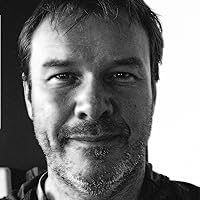
Jack Remiel Cottrell (Ngāti Rangi) is the author of one previous collection of short fiction, Ten Acceptable Acts of Arson (Canterbury University Press, 2021). His work has been published in anthologies such as Te Awa o Kupu (Penguin, 2023) and Year’s Best Aotearoa New Zealand Science Fiction and Fantasy (Paper Road Press, 2021). He was the Verb Wellington Writer in Residence in 2022 and was awarded a Creative Fellowship by Creative New Zealand in 2024. He lives in Te Whanganui-a-Tara Wellington.
An excellent collection of short stories, designed to provoke thoughts, they you may not have normally. At the end of it, you think you can see the justifications in all the stories. From the dark to the mysterious, though to the funny and hell bent romantic excitement. There is something here for nearly everyone, just come prepared to calm your thoughts later.
Wow. I’ll be thinking about Cottrell’s flash and micro fiction for a long time. These are quick, brilliant gems packed with so much depth—ranging from the mundane to the weird, from satire to heartbreak, from myth to lore and beyond. Some of these stories absolutely haunted me, and I had to take breaks just to sit with them. Truly brilliant work—dissertations could be written on these.
A few notable stories which I will personally need to recover from (and keep rereading):
‘The unfortunate limitations of magic’ ‘An abridged taxonomy of little-known ghosts: A to L’ ‘Telling the bees’ ‘The invisible hands’ ‘Agraphorum imago’ ‘Changeling’ ‘Old haunts’ ‘The predictable limitations of magic’ ‘What could be more banal than eternity?’ ‘Long has paled that summer sky’ ‘Bombay Polo Club’ ‘For the convenience of other sinners’ ‘An unfortunate legacy’ ‘Bertha Rochester would like a word’ ‘There are no right words’
It is super easy to jump in and jump out of this wee gem given that it's a collection of flash fiction. I've been wanting something like this for ages, so am glad I found it. It'll be handy to use for analysing and teaching writing. I particularly enjoyed 'The practical downsides of accidental necromancy' and 'Move fast and break things' but really there was very little I didn't like. It is arranged by days of the week and he often repeats a writing structure such as 'An abridged taxonomy of little-known ghosts: A-L'. But it’s even more clever since Sunday’s section deals with topics of God and sins and Saturday’s section deals with rugby and cricket. Later he records N-S. It's all very humorous.
This is the first published flash fiction collection I've come across, very cool! I think sitting down to read it in one evening was probably the worst way to read it, but it was due back at the library, so. There were a few in here that really stood out to me - the mihi whakatau, the one about the hackers/pranksters, the peanut butter pie - and I quite liked all the ones set close to home or that felt based in the author's personal experience. The sci-fi/fantasy ones were a lot more hit and miss for me. But cool on the whole, I'm curious to read more in this format.
my first try at flash fiction, I was amazed how much could be conveyed in stories a page or less long. Also how each one was so different to the next. Some of them were shorter than this review and still made you think.
This was delightfully weird. I've bookmarked about fifteen different pages and offered to lend it to two people because it's tricky to get in the States. Mostly, it makes me imagine things and want to write them down.
This is a collection of flash or micro fiction; the longest stories are a page and a half, most stories are less than a page, some are just a sentence or two. Perfect for dipping into while waiting for the bus, or on hold with the bank’s help line.
It is a bit of a mixed bag. Some of the stories don’t quite work, or aren’t fleshed out enough to be engaging—ideas I would have shoved in the plot-bunny drawer to expand on later. But the format lets the writer cover a lot of ground—fantasy, sci-fi, horror, politics, sports, religion, and more—in ways that are both fun and surprising. Some of the stories that did work were splendid, and pack a punch in a small space. I will be looking forward to seeing more from this writer.
Here are titles of a few of the stories that I found particularly amusing, or that kept me thinking long after I’d put the book down. Note that the descriptions are my synopses, not the stories themselves!
• But the graffiti is amazing: Fae wars in train station tunnels. • The flour dealer: Black market dealing during a supply chain crisis. • Changeling: As seen from an autistic kid’s point of view. • Phantoms: A twist on the phantom limb syndrome. • An unfortunate legacy: An unusual spin on the story of Doubting Thomas. • And there are so many to choose from: A compassionate view on conspiracy theorists.
You will probably have different favourites. Go find a few for yourself.
One way to describe Jack Cottrell's 'Ten Acceptable Acts of Arson' is satire, and another; sadness. An alliteration for an alliterative collection of stories that each share an underlying thematic correlation relating to the dystopic tones of our present society and the climate of humanity. Cottrell's mind and colloquial thoughts are craftily thrown into the pages of this book and each narrative grants the effects of poetry, in that in it's concision is able to induce emphatic feeling towards the reader; whether it be laughter, relation or hatred. Especially as a New Zealand reader, one is able to recognise his own neighbour in the strange, and perhaps twisted comfort written line by line in Canterbury ink from the hands of a Wellingtonian. A relevant and resonant piece.