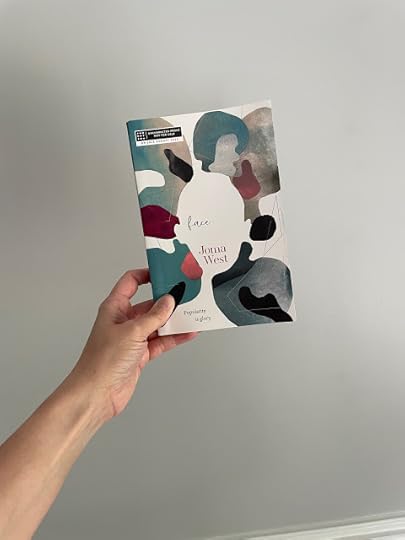
Life is competitive; all the best babies are designed now.
Schuyler and Madeline Burroughs have the perfect Face—rich and powerful enough to assure their dominance in society.
But in Schuyler and Maddie’s household, cracks are beginning to appear. Schuyler is bored and taking risks. Maddie is becoming brittle, her happiness ever more fleeting. And their menial is fighting the most bizarre compulsions.
In Face, skin color is an aesthetic choice designed by professionals, consent is a pre-checked box on the path to social acceptance, and your online profile isn’t just the most important thing—it’s the only thing.
Face is a novel about the lies we allow ourselves to believe in order to make us feel whole.
Face is a dystopian about a society where “saving face” is the only thing that matters. Everyone spends lots of time in essentially a virtual reality environment, and no one is ever genuine. Skin to skin contact is taboo, and many people have “menials” which are humans bred to be servants - who are seen as subhuman.
I love dystopian, and I was really excited about this. However, the author took some risky creative liberties with the organization of the story, and i’m not quite sure they paid off. For example, the same scenes were retold up to 3 times by each character involved. Instead of giving us a glimpse into each characters perception of the event, it just became overly repetitive. Not only was the dialogue the same, but sometimes the narration didn’t even change either. This also meant we were constantly going forward in time.. then we’d go backwards to replay the same scene from another characters POV. It was disorienting.
I think the author is a skilled writer, and I was SO interested in many of these characters. However, we would get to know one character, finally something interesting would happen with them, then we’d never hear about them again. I felt so frustrated. I think this would’ve been an easy 4 or 5 stars for me had the book focused on a longer timeline of the lives of only a few characters - rather than replaying the same events of many.
One of the things I love about dystopian is the social commentary. There were so many aspects of our world touched on in this book (race, class, sexuality, etc.), but they were a bit too heavy handed for my liking. I finished the book and wasn’t left with anything other than some obvious parallels having been pointed out - but not much meaningful commentary.
Overall I had fun reading this book (I will always love the genre!!) but it’s not a new favorite. The author displays great potential though and I’d love to read more of their work in the future!!
Thank you to the publisher and netgalley for an ARC in exchange for an honest review.
2.5 Stars I liked the premise of this one, but it didn't work for me in terms of execution. Some literary fiction works well for me, but this one just felt stilted. I struggled to connect to the characters. The narrative just felt too messy and I really struggled to connect to any part of the story. I wish this one had worked better for me because it had so much potential.
Disclaimer: I received a copy of this book from the publisher.
What a truly strange dystopian tale this book has weaved. What may have been a stellar performance just did not hit the mark for me, sadly. In the world of “Face” one is defined by their social presence and the “Face” they “Present” to the world. These faces are not their real faces of course, but the faces they have contrived. (The ala carte designer faces) these facades. There is no such thing as touch in the upper echelon, but a renowned sense of slavery rings true throughout the hierarchal tiers, with them owning menials. Menials give the hierarchy’s “Power” and “Esteem,” because the menials are simply born and bred to do nothing else but serve. They (for instance Jake) are seen as nothing more than “THINGS” Even their “designer children” which if you are on the higher ring of the ladder, can you use a stud farm. Medically you can choose whatever appearance you wish your baby to appear, in regard to their parents. So! It is all about the parents of course, they really do not care about the child per se. It is all about what the appearance of what will be portrayed on the internet. Because like today, that is what is most important. But if you are on the lower rungs of the echelon, you get what is known as a breaker baby. Hmmm! Sucks to be you, I guess! SO! Many of the scenes are exhaustively repetitive and retold and retold only with different narratives. True this a dystopian novel, however it felt way too robotic. West you can tell is an incredibly talented author, however I think this particular novel may have been a bit rushed. A partner on this book, or more people adding to the pot could have made this book soar. This book totally gave me Jordan Peele vibes and I can see a movie spin off from this with major development. Right now, this book fell flat for me. No offense at all to West. Major kudos for having McMillian-Tor/Forge publishing this book. That alone is worth all the 5 stars in the world, “The HELL with what I think” Remember, one person’s 1 star is another person’s 5 star. Thank you NetGalley for this digital ARC, to Joma West and McMillian-Tor/Forge. Reviews are of my own volition.
A book that takes on the topic of living in a superficial world. I enjoyed the conversations this book brought up, but I wish we would've dug deeper. I also wasn't a huge fan of the repetitive nature with the writing style and I also felt underwhelmed by the world building.
I have been super intrigued by the concept of Face since I first heard about it. It is set in (seemingly) the near future, where social media has taken center stage, and the rich can literally design their own babies, from top to bottom. It's a great concept, and I liked more than I didn't, so let's break it down!
What I Liked:
►People designing babies and living their entire lives for social media status? Yeah, sounds legit. The whole concept of this book is fairly plausible- perhaps not in the exact way it's executed, but certainly in the social constructs and ideas it presents. Nearly the entirety of society is concerned with what sort of image they project to the world, and very little about just living their own lives. As you can likely imagine, it takes a certain amount of privilege to even compete in this society- you can't exactly be born into poverty and become rich/famous, since it takes a vast amount of resources simply to play the game.
►I was quite interested in how the various characters coped with this world. There are several points of view during this book, from the Haves, the Have Nots, and even those in society who aren't deemed good enough to be given the label of person. Those in the positions of wealth and power are perfectly willing to preserve the status quo, even though they may even understand on a moral level how wrong it all is. But a few are seemingly more willing to at least consider whether their way of life is just (we the reader obviously know it is not), or whether there are better ways to live.
►It is certainly thought provoking. I mean, I don't think I'd do very well in this world, frankly? I am not wealthy or popular enough to manufacture my own baby, and I highly doubt anyone would be interested in my social profile, so... things are looking bad for me. But imagine you were born into this mess, how exactly would you ever have known anything different? Honestly, it is a very depressing world, and I for one am glad to not be in it!
What I Had Trouble With:
►The repeated conversations from multiple POVs is... A choice. So, as we're reading the POVs from various characters, often there was an overlap in conversations and events. For example, if Dad is talking to Daughter, we get the conversation repeated, from both of their points of view. This provides no real additional information, but does make things longer than necessary. I assumed that the purpose was to give the reader glimpses into how both characters were relating to a situation, but more often than not, it actually didn't, and just felt repetitive and unnecessary.
►I was a little confused about how the whole Face system worked, honestly. There were virtual reality type events and places, but then there were real places, but it all seemed to somehow come back to how much society liked you as a concept, no matter where you were. That part I could grasp of course, but the day-to-day basics were a little tougher for me to connect to, and I think as such, I had some trouble figuring out what the characters were up to at times.
►I didn't feel much connection with the characters. In fairness, I assume that was probably part of the point? I mean- how can you connect with someone when they're constantly revamping their persona for the most social media views? Still, it makes it a bit harder to care about what happens to them, since we've no real idea who most of them are beyond the Face.
Bottom Line:
Incredibly interesting and thought provoking concept, I just wished it had been fleshed out a bit more.
7/28: Oof. I tried so very hard to read this, from shortly after I received this ARC in the mail a week or two ago to today. I finally have to give in and DNF @ 58 pages.
The concept for this book is interesting: it takes place in a future where humans are genetically engineered and life is lived half on the internet, and there are "menials", humans who are basically servant slaves. The world building right out the gate was incredibly strong here, and very intriguing. However, it's presented in a way that is so, so dull. By page 58 we've met 6 important characters, 3 of whom have had POV chapters, and I just...don't care. I'm interested in the world itself, but the characters and everything else filling in the world didn't do a single thing for me.
6/22: Just won an ARC of this from Tor...my heart is theirs
3/5 stars. I struggled with summarizing this one, because I felt that the setting had a lot of promise for the themes to explore, but ultimately felt let down by the delivery. I looked around for other's analysis, certain that I'm missing the key piece that makes it more clear. It was like sitting at a restaurant counter, watching a meal being prepared for someone else. I recognized the ingredients going, could imagine what the meal would taste like, but based on where I was sitting, couldn't taste the final dish. I am hopeful that others' insight will come after this book is released and more can read it.
Overview: This world is a future where your social presence means everything - Everyone maintains their "Face" - their embodied image and personality, where every look or word can get you shunned or unlock doors to higher status.
We follow a cast of characters, mainly centered around the high elite family with head patriarch Schuyler Burroughs. Schuyler is the cream of the crop - genetically perfected and handsome from a prestigious background - he is fluent in cultivating his social image. The perfect celebrity, where the man and the symbol are intertwined.
I really enjoyed hearing from Jake, the menial. Despite society's classification, he was the most human as he explored his real emotions and tried to understand himself. The opening chapters bought a raw, realistic tone that I was hopeful portended the direction of the story. These sections punched through as fresh, fantastic writing, like horseradish on the nose. Ok, enough food analogies. However, even when in the story the role of menials is questioned, there is no resolution.
As we moved into the eyes of the Burrough's family and those higher on the social ladder flattened out. It felt as though everyone was on Xanax, struggling to be human in these isolating social expectations.
This was the point, I know. But these expectations were never questioned in the book. During some initial introductions, we meet a doctor who repeatedly cuts with "talk to me straight - don't play games". This is supposed to be a sharp contrast from everyone else stuck in their roles, but because this was an *introduction*, the pattern had not yet been made clear that this is wildly out of the norm. Additionally, every other character responded positively to this upturning, and there were zero repercussions from this change of tact. It immediately lessened the stakes when they were developed later - we already saw there wasn't a ramifications from abandoning your Face. Perhaps that's the meta-lesson we're to get - that even in the real world, people's presentation matter much less than our self-centered selves would think. But I don't think that was the intent.
Themes: This book certainly touches on the themes of classism (an overt caste system where "menials" are considered subhuman), racism, privilege, how social media impact your sense of self and the weight from family obligations. Unfortunately, while the story points at these systemic things, I don't know if any lessons or resonant commentary are imparted.
To the racism part - this story is an future where babies are all genetically designed, and are modeled as a reflection of their parents. Instead of the Punnett square of the parent's genes, babies are deliberately chosen to have skin color and personalities that differ, yet pair aesthetically to signify the parents' status. This is really the only commentary about race - in this world, it's a choice of aesthetics and that's it. Parents sit with a doctor, scrolling through a color swatches like paint shopping. Except for it being nice that this trait not bringing any baggage, I didn't feel that much was said about it.
Prose: Narratively, there is a lot of repetition. Each discussion is played out from the vantage of every participant, which is a bold choice that should payoff with a lot of additional insight on these characters. However, most inner thoughts are shown by their external behavior (they roll their eyes, slouch, etc.), so we already knew what they were thinking the first time around. This was also an important place to deepen these purposefully-shallowed people, to see that still waters run deep. Unfortunately, many of my first impressions matched their final characterizations.
Again, there were flashes of great writing that made me sit up straight. So often, these stories about numbed people living numb lives sounds... numb. But this one added the necessary viewpoint from Jake that made the contrast so sharp. While the broader message felt flat for me, the writing style and confidence shown in choosing the narrative structure gives me great hope for this authors' future.
Face is a story about a society where the only thing that matters is your face. This includes facial beauty but also the other aspects of you face like showing emotions. There is a class system and people try to “save face” or “trade up” by using babies that were created to look the most beautiful with them. The story concept was very interesting but I have two major problems with this novel. First, from page one the author jumps into the narrative of the story and nothing is really explained. You do get some aspects of the world shown throughout the story but the world never felt fully developed. Second, the story is told from multiple perspectives (which is fine) but each time you switch perspectives you get the same scene that was told the chapter before but just from the new perspective. If the story line was progressing with the new perspectives I could have tolerated it better. Unfortunately, very little was added with each repeating of the same scene. This made the book read incredibly slow because it took so long to keep re-reading already told scenes. Also, the conclusion felt just kinda meh.
Thank you to Macmillan-Tor/Forge and NetGalley for this arc in exchange for my honest feedback.
One of the most unique books I've read, that in my opinion did exactly what it set out to do.
Sure, it can be confusing at times and surely not for everyone. I think it was fascinating and reminded me of a modern form of theater (I really would like to see this performed on stage). There's isn't much going on in the story but it still stays entertaining by constantly changing you perspective on a situation, at times coming back to one and the same conversation but still being able to make you see it totally anew, thanks to the head you're currently in.
One thing I do have to say: this book is insanely clinical. Not only in the way people live and interact with each other (despising physical contact and open displays of emotion) but in the way it is written as well - making the novel feel rather cold. As a deeply emotional reader, I wasn't as thoroughly stimulated in this regard as I usually prefer.
Still, I was fascinated and my linguistics nerd really came to the surface here. That alone made this book worth reading.
This is an odd but intriguing domestic dystopia, where everything is manufactured, from designer babies to personalities. Humans known as menials are designed to serve rich folk and aren't seen as humans. People also no longer touch one another, ever. It's the biggest taboo, though it's never explained why that would be. The story revolves around one rich family, and the same scenes often replay throughout the novel from different character perspectives. However, the scenes are virtually identical, and the novel at times felt repetitive. Many character stories go unresolved, too, with characters having 1-2 pov chapters and then never returning. So this ended up feeling incomplete, though I appreciate the author's creativity. I'll definitely be picking up her next books.
In near-future society, everything comes down to maintaining Face, masterly control over one’s image, the light in which others perceive you. Domination of diverse social media, and selfishly calculated steps in the dances of social interactions to build influence and control, become rewarded by a climb up the ladder of class and power. Marriages are built only upon convenience, a mutual benefit of improved Face, increased attention. Children are carefully designed, with the best possibilities available to the highest class, using the most talented of genetic artists. In an existence where success and fulfillment comes only from the construction of a virtual profile and celebrity persona, traditional forms of community and physical interactions have vanished. The concept of physical touch is anathema, and no respectable person would have a child other than through a professional biological surrogate who can fare no better.
Schuyler and Madeline Burroughs (together forming SchAddie) exist at the very top rung of society, with Faces of perfection that can make no missteps and who can afford eccentricity. They live as models and envy for others to follow and emulate, and to court their favor. But underneath those Face masks of perfection, sits discontentment and strife within the SchAddie household. Their designer children maintain their own exceptional Face, yet also don’t seem to be living up to the potential for which they were made. Maddie lives on edge, finding it harder to feign happiness and control, particularly with the increasingly risky behavior of Schuyler against conventions and expectations.
Case in point: Schuyler has inexplicably befriended a young couple who are hoping to get a baby of their own. While not socially low, they are not high up along the ladder to be able to get the best doctor out there without Schuyler’s support. Which, he oddly seems eager to provide, without any seeming benefit for himself. He arranges to host a party with Maddie in their home to introduce the young couple to the most famous baby designer around.
Also at that party are all the Menials owned by SchAddie, genetically engineered and trained human servants who are designed to have no will or desires of their own, constructs with a fleetingly short life-span and no rights. But one of their Menials harbors secrets of his own buried beneath the emotionlessly servile mask. Despite the design and training, he is feeling urges to transcend the rules: sexual desire and an increasingly difficult yearning to reach out and touch the skin of his mistress.
In a certain way, Face could be considered as a collection of interconnected short stories as much as a novel. Each of the main chapters presents the point-of-view portrait of a unique character. In other words, Face is itself a compilation of distinct character faces into a whole. Between each of these chapters are interludes from the perspective of a Menial who has started going to a confessional online in an effort to fight his prohibited compulsions, taking the added bizarre initiative of giving himself a name en lieu of his official Menial registration number.
The fragmentary construction of Face is central to its themes, purpose, and success. This future society is fragmentary itself, built from competing individuals whose only sense of community comes from naked desire for personal gain, never risking to sacrifice and lose Face. On the smaller scale, each of the characters we meet are fragmentary identities. There is the public persona they present in the online world and at engagements. But there is also their actual desires and thoughts beneath the ersatz, a personality they never let stray from their own mind or private moments where they think they are alone, unsurveilled.
The construction of the novel also means that it lacks strict linearity or one distinct protagonist arc. One you have a chapter from a given point-of-view, you’re done. The character will appear again, but you won’t get any further closure to their unique perspective. This is what’s brilliant about Face, because it’s all about perspective and how one appears compared to what really lies beneath, known only to oneself.
The construction also means that events that occur in one chapter will reappear in another, usually with blocks of identical dialogue. I have noticed many reviews of Face that criticize such receptiveness, but I can’t help but feel these have failed to appreciate just how essential the element is to the novel. Not only is it essential, it is exactly the element that drew me in to keep reading with intense curiosity. Again, it’s all about perspective.
West gives us a scene from one point of view and then later revisits that same scene from another individual’s senses and interpretations. The spoken words may stay the same, but the inflection of them, their interpretation, and the reading of body movements and actions brought on by that dialogue all shift. For instance, we see a character speaking to Schuyler early in the novel from their point of view, noting their uncertainties over why Schuyler uses particular words or frowns. Later, we get that same scene from Schuyler’s point of view.
As the novel progresses the reader begins to learn just how all the characters are connecting and tie together with the SchAddie corse. We get to learn about the characters from multiple directions, intimately and distantly alike. And we also begin to get a deeper sense of the complexity of the society in Face: its various strata of social class, and the large amount of discontentment that sits universally across the class spectrum, despite the veneer.
An engaging social commentary, Face inventively takes a look at the ways in which preoccupations with self and recognition in an increasingly digital civilization can go awry, stripping away the basics of humanity and healthy relationships social and biological. I wish I could easily go more into the various characters and events of Face, but things are so juxtaposed and woven to make summary impossible. These are elements simply to be discovered by reading.
Face is a compelling near-future dystopia of competitive social pretense, formed from interlacing portraits of individuals who thirst for biological & psychological connection. With all their energies devoted to cultural success that ultimately leaves them empty and dysfunctional, they seek fulfillment through community that paradoxically compels and disgusts them. There’s a bleak horror to Face, not unlike an episode of Black Mirror, an apt comparison that others have drawn. For all its coldness and distance, it’s an emotionally resonant narrative that readers are forced to stitch together from disparate conflicting perspectives into a singular community of reality.
This is a dystopian future where people don't touch and maintain "faces" with a focus on social climbing. There are severe social classes with the lowest class being called menials, bred for service, and having a short life span.
This is a snapshot. It covers a relatively short period of time, but we return to the same scenes several times, always from a new perspective. I thought it worked really well and was fascinating.
I think the weakness or limitation of this book is that a snap shot is really all it is. We just get to see a bit of this bizarre future. But this small bite packs a punch and we get to see the way this world is straining at the seams. I found it really satisfying.
Thank you to NetGalley and Tordotcom for the e-arc.
Sexual violence? No Other content warnings? Classism, dysfunctional family, manipulation.
So we’ve all heard the terms “saving face“, “losing face“, “facing the world“, etc. And how about “climbing the ladder”? Well, this book has taken all of these idioms to the next level, and they are how these characters live their lives.
Everything in life is about your face, the face you present to the world, both literally and figuratively. On the literal side, those who are lower on the ladder are conceived as “beaker babies“, but those higher on the ladder have the means to use “stud farms“ for their babies. They can medically choose just about anything with regards to the babies’ appearance, and it is all done to enhance the standing of the parents (frankly the children don’t really matter all that much). On the figurative side, it’s about the faces you put forth on the In (internet); they might be even more important than the Out (real world).
This book is basically one set timeline, that is told repeatedly from each characters point of view. This was an interesting exercise, to see the different viewpoints, but with the exception of Jake the menial (servant, seen as a thing & not a real person) there wasn’t enough of a difference to warrant this style. Pretty much every character is at best anxious and unsure, and at worst a sociopath. I would’ve been curious to see this book told as one continuous timeline and follow it through after the ending, to see if that shakes anything up. But it is an interesting read.
Thank you to NetGalley & Macmillan-Tor/Forge for this advanced reader copy. All opinions expressed in this review are my own.
For fans of Nosedive (the Black Mirror episode), Face alternates between several points of view in the same social circle. Everyone has a Face, some multiple Faces, and it's important that you commit to the persona you show the world. Popularity is a currency, and you have to know how to play the game to climb up the ladder.
Centering on the Burroughs household, almost every chapter in this book is told from a different character's perspective. We get to see the same interactions from different perspectives, and I think it's a poignant commentary on today's social media landscape, and how we all just want to be liked in the end. While some of the overlapping interactions between chapters were interesting, it kind of became repetitive and I found myself skimming to get to the next plot point. I did enjoy the crumbs of information in each perspective that made me feel like a detective trying to both get my bearings in this world, but also trying to figure out where the story was going to go.
Thank you to the publisher for sending me an advanced copy!
I would give the first half of this book 5 stars for sure. I loved the idea, and I loved the execution. The problem is, it got extremely repetitive by the end. And I don't mean the idea - I mean literal pages of text repeated chapter after chapter. I don't mind that if something is added, but so little was added that it just felt like reading the same thing over and over again.
I really enjoyed this book and thought the writing was excellent, but I do wish there had been a little more world building so I had a better grasp on the society I was reading about.
The story kept me engaged and reading more, but I do think if it had been written without the repeated story line from other POVs but instead building on the plot itself I would have given this five stars
I received a copy of this book from NetGalley in exchange for a review.
Okay. So I really loved this book. When I started I didn't know that I would, but about halfway through I realized I was completely smitten.
In the world of Face people are defined by their social presence and the face they present to the world. These faces are facades and constructions, games played, and secrets kept. Society is hyper hierarchical. Touch is almost unheard of for the upper tiers.
The rigid hierarchy, and physical and emotional distance, create a culture where slavery has once again become the norm. Menials are bred and trained to do nothing but serve. Owning a menial is a sign of power, a set up the ladder.
The author explores the world through a story told via multiple points of view. Each chapter has a different narrator, and events are examined and re-examined throughout the novel, with each iteration giving more context and emotional depth.
Like the best timeless, classic science fiction, Joma West's dystopian near-future SF debut, FACE, digs deeply into a speculative thought experiment: in this case, "What if the flawless consistency of the curated, artificial personality you projected into the world was THE universal value around which all other social and personal values orbited?" But unlike many of the characters in classic SF (which are often just clumsy stand-ins for a philosophical position--I'm looking at you, Robet A. Heinlein and Authur C. Clarke), the characters in FACE are real and complex people, and every overly-calculated social interaction between them is bursting with interpersonal tension and high stakes.
FACE orbits the Burroughs family, a family of extreme wealth and privilege headed by Schuyler Burroughs, one of the undisputed masters of "face" or faceplay, an ability to flawlessly project a manufactured, perfect personality that is never vulnerable, needy, angry, afraid, flustered, or otherwise unpleasant or powerless in any way. He made a mistake long ago in choosing as a wife a woman (Madeleine) who is less skilled at face than he is, and his two teenage daughters (Reyna and Naomi) are finding that their own relationship to face is evolving. One daughter, Reyna, considers entering a relationship to boost her profile (but in this world, all "romantic" relationships are calculated moves designed to boost one's image). The other daughter, Naomi, does a project in her psychology class that involves running an anonymous online "confession" booth where people log in and confess to feeling desires that modern society considers perverted and sickening--the desire to physically birth one's children (instead of designing them from strangers' DNA at a "baby shop" and hiring other people to carry them, as is the standard), to masturbate, and, most sickening of all, to physically touch another person skin-to-skin. Meanwhile, in the background, the family's "menial", a live-in slave that is socially and legally not considered human, falls in love with Madeleine, but like all menials, he is forbidden to speak or acknowledge any wants of his own.
Brilliantly, West chooses multiple POV characters to tell what ultimately becomes a story of a family in crisis, and she uses her multiple POVs to tell pieces of some characters' stories multiple times, thus allowing the same scene with the same dialog to be interpreted, noticed, analyzed, and experienced in different ways, according to how skilled each character is at face and what each character is experiencing in their internal world. Only one POV is reoccurring, the POV of the menial, which has its own significance as both a framing device (the overlapping stories overlap in time in different places, and the menial's POV helps ground us in where the "now" of the story is) and a commentary (only those who don't engage in face and aren't on the social ladder at all are qualified to frame a story about those who are).
West is not only adept at illuminating what kind of secret worlds we might harbor under the weight of faceplay, but also what it might do to us if we truly internalized the value of needing to project a flawless personally at all times: the idea of seeing another human be vulnerable might fill us with discomfort or disgust; the idea of someone wanting to touch us with slimy, sweaty skin might make us nauseated; seeing someone make a minor social blunder might cause our opinion of them to instantly plummet beyond redemption; we might be so terrified of feeling emotions that we can't control, we medicate ourselves constantly. We might not like or even hate the idea of slavery, but owning a menial is part of faceplay. We might actually be physically attracted to our partners, but saying so is disgusting. We might not want children, but having a baby is the only way to "climb", so we'd better be good at pretending we're happy.
And of course, like the best sociological SF, FACE tells us something about ourselves in the here and now. While dystopian SF stories about breaking the bonds of love and family (cf. THE HANDMAID'S TALE or BRAVE NEW WORLD) or social capital being the end-all be-all (cf. DOWN AND OUT IN THE MAGIC KINGDOM) are nothing new, FACE comes at a time when "social media influencer" is now a legitimate career choice, and one in which the lines can be extremely blurred between the professional persona one puts out online and the actual human being running the account(s). By imaging the most extreme directions and the worst possible outcomes of such an environment, West warns us not to throw away the ugly, flawed, imperfect parts of us that, ironically, bring us the most joy and beauty in the end.
FACE is both a gripping, human story and a powerful reminder. I've been talking it up in-person to whoever will listen, and I hope you read it and feel (and do) the same.
I went into Face somewhat blindly after having requested an early copy months prior to reading it, and having forgotten a majority of the blurb. My thoughts were: this sounds interesting, let's see what happens. And overall, I had a good time reading this book, which felt reminiscent of Brave New World but yet quite different from it as well. As a piece of speculative fiction rooted in sci-fi, I think this is a good introduction into the genre for anyone who would be coming from the literary fiction side of things.
I particularly enjoyed how the writing flowed in this book. Some chapters felt very stream-of-consciousness-y, as we fly through a whole bunch of different perspectives surrounding the same few events. In particular, I liked the recurring perspective of Jake, the Burroughes' menial who works for them but is not even on the 'face ladder', a popularity ranking, due to his being a beaker baby raised to serve top tiers. In fact, my favourite parts of this book were the ones revolving around the menials, especially Naomi's and Vidya's perspectives, which I wish I could have read more of. Overall, I enjoyed reading from the perspectives of almost all of the family members of this household. I personally liked that the reader does not get a whole lot of world-building to work with, leaving a lot to the imagination, because what clearly mattered the most were the interactions between the characters.
However, I cannot give this book more than 3 stars because more often than not, the characters' chapters ended on a sort of cliffhanger, leaving me wanting more from most of them, but never actually reaching that point. While I liked the open-endedness of this story, and expected it from the start, as a character study I wish that I could have read more from Naomi specifically. The ending felt a bit abrupt, and I wish the author would have made this story longer, so that the reader could get more development from the characters that, in my opinion, mattered the most. Perhaps, some secondary characters' chapters could have been shortened, or removed entirely (I'm still not sure why we got Tonia's perspective, for instance, but I did see the reason behind Morton's). I also wished that we didn't see the same conversations reoccurring two to three times in the span of 270 pages, and I feel like there could have been something done there to improve the depth of this story.
I would recommend this book to new sci-fi readers who are trying their hand at the genre, as it is easy to follow along, does not use a whole bunch of invented words that are hard to wrap your head around, and generally feels like a work of literary/contemporary fiction. The themes in this book are also interesting, mainly revolving around class, popularity, being 'on trend', and how these different characters cope with the insane societal standards of their time.
Thank you to NetGalley and the publisher for providing me with an early copy in exchange for my honest opinion.
Joma West's Face is a fascinating lok at how social media affects our society on a greater, grander scale. It is not just a thought exercise, but a reflection on how drastic things could get (with some caveats, of course) if we continue this way. Wanting to touch another's skin, even to hold hands, is perverse, and it is hugely important to be available at all times on every social media platform. How we curate our online personas is important to how these characters, like Reyna and Maddie, interact with one another and make decisions. Less important, but equally dire, is how this cast interacts on the "Out". There, they must take care to monitor their facial expressions, their intonation, and their wording. Do you choose your third-best smile to convey slight disdain and haughtiness? Your choice of words will convey how much you truly mean your meaning.
Babies are born of test tubes, genetically pre-disposed to raise the social status of their parents. Through Eddie and Tonia, we're introduced to the building blocks of West's science fiction society. Babies are to serve the purpose of raising one's status--they must not be so beautiful so as to distract from the parents, and shouldn't look too much like one parent or another. They quickly learn how to veil their emotions and start to participate on the "In" as quickly as socially acceptable.
How you are perceived is the most important matter in this book. It doesn't matter if you are happy, or unhappy, or anything else so long as you are the best of the best.
To further create this world, West offers a view into servitude--a faction of people called Menials. They are built to be slower than others in better society, meant to serve and not emote. However, through a confession booth that Naomi runs to better understand Menials' place, she discovers that they are not entirely different from her and her family. They do have feelings, they do have desires, and they do go through puberty as well. Even though Naomi is truly curious and passionate about this topic--for once, something really interests her!--she cannot seem to extend a helping hand to her own family's Menial, who has, unbeknownst to each other, been chatting with her through confession (an almost religious ritual).
Beyond the world building, the structure of this novel is absolutely genius. Told through various perspectives of Menials, parents, children, and professors, we must piece the narrative of this story together from various perspectives. The effect of this is to deconstruct the ways in which we allow ourselves to be perceived and how we are actually perceived. Do we come across how we'd planned? Not to mention that we know the climax of the story before we actually get there--but we must first understand every character's perspectives to truly understand the impact just one simple action has.
A genius book. Creative, interesting, and horrifying all at the same time.
Book: Face Type: Standalone Genre: Dystopian, Speculative Fiction Themes: examination of class, status and the foundations of humanity Date Released: August 2, 2022 Author: Joma West My Rating: 2.5 ⭐⭐✨
Marketed as Margaret Atwood meets Kazuo Ishiguro, Face is a speculative fiction that reimagines race and class in a genetically engineered society fed by performative fame. The perfect-Face characters of the book named Schuyler and Madeline Burroughs assure their dominance in the society through their power and their most revered physical attributes. They are now bored at what they do and they are becoming brittle so they take risks by allowing their menial to fight the most bizarre compulsions.
Face reminded me of the scientific research called Human Genome Project which I read years back. The writer enumerated some facts about the said project as well as the long-term hope for it. One factual information about it is that all the components which make up the DNA are to be recorded and studied. The long-term hope of parents who will no longer worry about giving birth to defective offspring was one thing I also wished to come true but then again, until now it's hope. Meanwhile, some fears about Human Genome Project were the possibility of being 'human' to be defined solely in terms of describable physical data and people may be discriminated against in new ways.
While reading Face, I was reminded of those fears. I'm afraid that in the dystopian society, 'saving face' might be the only one that matters and other attributes of humans will be removed from the equation. I'm not implying that the author is glorifying and romantacizing such possibility but in virtual reality environment where Face is the only thing that matters, it's like saying that no one is ever going to be genuine when that time comes. It's horrible that Skin to Skin contact is taboo and many people have 'menials' (human breeds to be servants who are seen subhumans). Isn't it horrendous to think that?
While I was initially amazed by the idea of hyper-fixation of human Face, which means you can decide how your child will look like from infancy to adulthood, I realized that the world will be chaotic if that happens. Everything is going to be superficial.
Very interesting speculative novel about a not so distant world where "Face" - like social presentation both online (the "In") and in real life (the "Out) is the core of social engagement. There is a strict ladder of social hierarchy that people strive to climb. In addition, there are "menials", basically slaves who are bred to support the middle and upper classes who are trying to climb the ladder.
The story follows a number of people in this world, mostly revolving around the family of Schuyler Burroughs, a very high up guy, his wife Madeline, and their two daughters. But different stories and tangents are followed throughout - a pair of social climbers who Burroughs takes an interest in; the family's menial Jake; Morton, a teacher of one of the daughters, and so on. The stories are entwined, but also demonstrate different locations in the social structure of this world.
Another interesting angle to this world is that physical contact is considered vulgar, even disgusting. People on the ladder couple, but not in a romantic way, and babies are born by surrogates. People who take part in "skinship" - like touching each other - are outside social norms. So sexuality is present more in just "face" but not in any kind of touching. Interest in touching is seen as perversion, and the book ends with a scream as a result of skin to skin contact.
Its not a perfect book, at all. The choice to return to the same handful of scenes but perceived from different perspectives is somewhat puzzling, a lot of repeated dialogue for an uncertain result (could we not have multiple perspectives shared in a scene shared once?). A couple of storylines are notably incomplete - in particular, that of the baby doctor who is at the top of the ladder, Vidya who is mysteriously swept away by the "monitors", told what to make a certain decision, and then that's it; and the interest of one of Burroughs' kids, Naomi, to visit a menial factory. It also felt like the attempt to make Schulyer the sympathetic character was a real tightrope and didn't always work.
But overall - its a fascinating portrait of a world with enough threads harkening back to our reality. Easy, quick read, sort of dystopian and intriguing.
This book is a play on dystopian fiction with a bent towards the metaverse and it reminded me a lot of Kazuo Ishiguro’s Klara and the Sun and the Black Mirror episode Nosedive. There’s an unnatural vibe throughout, and very similarly to Klara and the Sun, I found myself wanting things explained more - that it’s up to the reader to decipher the rules of this world rather than them being clear. The story focuses on one Family - a Father who has nearly perfected his Face but seems to have some cracks around the edges, a Mother who climbed her way to the top and seems to be struggling with her current position, one daughter who seems perfect but quickly gets sucked in too far, and another daughter who feigns disinterest but is asking all the right (or, depending on who you ask the wrong) questions. More so than having an easily conveyed plot, it’s more of a character study and seeing the ways that various POVs experience the same things in very different ways. It’s a look at how an oppressive system weighs on various people.
I have a bunch of questions still: are faces LITERALLY interchangeable, or is it just a term used for certain strategies of interacting? Why climb the ladder if at every level it seems like there are no actual benefits? When you’re “in” I imagine that’s similar to the vision of the metaverse, or is it more just like an AR interface within your body, or is it all of the above? What happens with Naiomi?
And I still haven’t decided if the narrative structure is creative or lazy. Basically, each chapter after the first couple overlaps with the story already told, but from a different perspective. We get to see how various lives interact and intersect, and we get to see that vast divergence in responses, but the extent of repeated dialogue seemed redundant and lazy at times. But so much of this world is internal, so the only way we get any authenticity is through a character's POV. I’m still torn on how I feel about it…
But ultimately I’m glad I read this one, and I highly recommend it if you liked Klara and the Sun!
**I received a free e-galley copy of Face thanks to netgalley and tordotcom **
I received a copy of this book from the publisher in exchange for an honest review.
Based on the summary, I thought I would LOVE this futuristic look at a predominantly virtual society and its commentary on racism and classism, but it really fell flat. The primary goal of this caste-based society is image, aka the "face" you present to the world. High-class couples literally customize and order their babies to be delivered via surrogate because there is no touching here--not between husbands and wives and not between parents and children. The ultimate goal is to have children with contrasting features from the parents, thus presenting the ultimate desired aesthetic appearance. While these ideas may seem strange, a talented author would know how to present them in a way that readers could understand and piece together into the larger picture (World Building 101) but that is not the case here. There are no follow-up descriptions of processes or backstory as to why things are happening. Instead, the EXACT conversations are repeated over and over from each participant's point of view to the point that I just about screamed. Overall, great potential and a stellar concept but it falls extremely short of my expectations on delivery.
Thanks to NetGalley and Tordotcom for the digital galley of this book.
Face follows several people in a not-to-distant world obsessed with appearances. Whether you’re navigating the digital world of the “In” or trying to maintain that status in the real-world of the “Out,” everything is about status and climbing the ladder. The cracks in Schuyler and Maddie are starting to appear, and we’re thrust into their world to see certain events unravel not only from their points-of-view, but also from their two daughters and two friends of theirs. It gives us insight into this status-obsessed world, people’s motivations, and the dangers of one wrong social decision.
I’m always down to read anything published by Tor, and this book was interesting. The alternating points-of-view painted a rich picture of a short period of time, and the short interjections of the “Menial’s” (servant’s) confessions provided a completely different perspective of this world. I’ll admit, I’d like to delve deeper into this world, see what happens if it becomes a dystopian revolution type scenario rather than just the day-to-day life of these rich, high-society people. Like one of the daughters, I was fascinated by the class system of the Menials and would like to know more about them, see where they go, especially if Schuyler and Maddie’s cracks are indicative of a larger problem that may lead to a sot of revolution. But maybe I’ve gone to far, delved too deep, and said too much.
It’s a slow-moving, character-driven book that invites us to reflect on our own selves, how much time we spend on social media and how we let it affect our real-world lives as well as the facades we create and how those blend into our lives as well. Recommend for some deep contemplation. It’s out now wherever you get your books.
It was ok. The repeated conversations weren’t as annoying as i would normally find them, but i dont see the point of the teacher’s pov even though i would have liked to see where his story went. I feel like it was just getting to the heart of the story when it ended. I understand it was about seeing beneath the veneer of all the people, but why bother if we didn’t also get to see how they grew or handled their humanity? It seemed like just a boring snap shot of shallow people. There rarely was a hidden veneer aside from the fact that the perfect people didn’t feel perfect and therefore felt unseen, but also didn’t care to do anything about it except the teacher, and then the last couple of pages.
It felt like an easy way out to end the story just when the characters had something to say.
Actually, now that I’m thinking about it, the repeated conversations for that ending feels like a betrayal. Like why ask readers to pay attention to all that for that ending. We don’t even get the different povs for the interesting part. Ok leave what happens up to my imagination, but at lease give me the pov from all the other characters about the only important thing to happen. I had to read the pov about the boring things. It broke the social contract and trust between author and reader. You asked for my attention, make it worth it.
Near the end the dad thinks “Jesus” and it really took me out of the story because religion isn’t a thing in the book so i immediately started thinking whether or not that would actually be a term they would use when frustrated.
I did see the potential of unfolding the story with repeated dialogue and i think that’s the saving grace of the book and the only thing that gave it real interest
This entire review has been hidden because of spoilers.
The premise of this book was fantastic, and the trope of presenting the same scenarios from the perspectives of different individuals in a culture where the internal is so rarely reflected was a good approach. However, the climax really fell flat for me and it felt as if the characters were under-developed despite this being a novel which is manifestly a character study. I think that the narratives of some of the characters (e.g. Morton) we’re also cut off just when they really got interesting. I would have enjoyed particularly learning more about Outlier and Skinship cultures and how they mesh with the hegemonic Face culture. Also, more on the dark element Monitors would have been great, especially given the terrifying level of societal control which they seemingly represent.
I think that this book could have done with expansion into a few parts, and a deeper exploration of this interesting set of cultures by rounding out each of the narrative threads could have been truly fascinating. Regardless, I wish the author the best in her career progression.
This story described what I consider a nightmare world. Everyone had one goal, to get others to "like" them, which meant they could never be real. Add to that, no touching or emotional connection with others was allowed, even for babies! Yikes! Every time I started reading the story, I felt tense and trapped. The characters felt the same, but used drugs to combat their anxiety or depression, or became addicted to online life, always escaping to it and avoiding real life. The little action that did happen in the story was used as a way to describe the world, and was repeated over and over through a different character's eyes each time. Wasn't quite sure of the purpose of that repetition, because I didn't notice that much changed, except for a few inner thoughts. Although, during the last chapter where we follow the "dad" did I finally understand some of his earlier actions, and my opinion of him changed for the better. Overall, very interesting, and left me with an eerie warning not to spend too much time online.
Face is less of a story and more of an exploration. It tells its short tale through many perspectives, all of which revolve around the character Schuyler and his family. The dystopian world is a picture of our own world further down the road, and I appreciated some of the ways West investigated current issues as well as ones we may encounter. Unfortunately, any interest in the world West presents is squashed by repeating scenes and a dull writing style that overuses certain phrases and words to exhaustion. It's clear to me that this idea would have been better suited for a short story (or a series of short stories), as many of the chapters add very little to the overall theme and world building. Any truly intriguing story threads were tossed out in favor of repeating dialogue in every perspective. Face tries convey big ideas but only goes skin deep because of the lack of finesse and flaws in its story structure.