In 'Me Tomorrow', First Nations, Metis and Inuit artists, activists, educators and writers, youth and elders come together to envision Indigenous futures in Canada and around the world. Discussing everything from language renewal to sci-fi, this collection is a powerful and important expression of imagination rooted in social critique, cultural experience, traditional knowledge, activism and the multifaceted experiences of Indigenous people on Turtle Island.
Drew Hayden Taylor is Ojibway and from Curve Lake First Nations in Ontario. From the author of 'Chasing Painted Horses.
During the last thirty years of his life, Drew Hayden Taylor has done many things, most of which he is proud of. An Ojibway from the Curve Lake First Nations in Ontario, he has worn many hats in his literary career, from performing stand-up comedy at the Kennedy Center in Washington D.C., to being Artistic Director of Canada's premiere Native theatre company, Native Earth Performing Arts. He has been an award-winning playwright (with over 70 productions of his work), a journalist/columnist (appearing regularly in several Canadian newspapers and magazines), short-story writer, novelist, television scriptwriter, and has worked on over 17 documentaries exploring the Native experience. Most notably, he wrote and directed REDSKINS, TRICKSTERS AND PUPPY STEW, a documentary on Native humour for the National Film Board of Canada.
He has traveled to sixteen countries around the world, spreading the gospel of Native literature to the world. Through many of his books, most notably the four volume set of the FUNNY, YOU DON'T LOOK LIKE ONE series, he has tried to educate and inform the world about issues that reflect, celebrate, and interfere in the lives of Canada's First Nations.
Self described as a contemporary story teller in what ever form, last summer saw the production of the third season of MIXED BLESSINGS, a television comedy series he co-created and is the head writer for. This fall, a made-for-tv movie he wrote, based on his Governor General's nominated play was nominated for three Gemini Awards, including Best Movie. Originally it aired on APTN and opened the American Indian Film Festival in San Francisco, and the Dreamspeakers Film Festival in Edmonton.
The last few years has seen him proudly serve as the Writer-In-Residence at the University of Michigan and the University of Western Ontario. In 2007, Annick Press published his first Novel, THE NIGHT WANDERER: A Native Gothic Novel, a teen novel about an Ojibway vampire. Two years ago, his non-fiction book exploring the world of Native sexuality, called ME SEXY, was published by Douglas & McIntyre. It is a follow up to his highly successful book on Native humour, ME FUNNY.
The author of 20 books in total, he is eagerly awaiting the publication of his new novel in February by Random House as "One of the new faces of fiction for 2010", titled MOTORCYCLES AND SWEETGRASS. In January, his new play, DEAD WHITE WRITER ON THE FLOOR, opens at Magnus Theatre in Thunder Bay. Currently, he is working on a new play titled CREES IN THE CARRIBEAN, and a collection of essays called POSTCARDS FROM THE FOUR DIRECTIONS. More importantly, he is desperately trying to find the time to do his laundry.
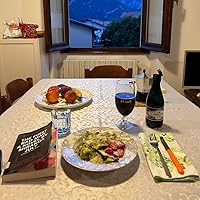
Oddly enough, the thing his mother is most proud of is his ability to make spaghetti from scratch.
An interesting - if uneven - collection of pieces that remind us that in order to get to ‘tomorrow’ we must first imagine what that c/should - must - look like… and then we take the steps necessary to get there.
The two pieces I enjoyed the most were the ones by Norma Dunning (if you’ve not read her short story collection from last year, Tainna: The Unseen Ones, well, you should) and Shelley Knott Fife. Both of these are especially passionate, clear and articulate, from the heart straight to the reader.
I do think it would make for a really interesting podcast series - listening to the various writers talking, and hopefully being questioned as well, and expanding even further on the ideas presented here in this collection. I hope that perhaps that might come to pass??
I did feel that this was a bit repetitive at points — I wish the editor played more with their selections, not only in theme, but style of essays selected. Nevertheless, there were some interesting pieces I think I can do something with for my essay! Also some very important ideas outside of essay-writing that I think everyone would benefit from picking this up at some point.
The Indigenous peoples of Turtle Island would like the rest of the world to know that they are not gone. In fact, they are parts of thriving communities that are here to stay. While in the middle of a global pandemic, climate change affecting the whole of the earth, racial injustices, and other hardships, our Indigenous neighbors have a message for us. Just as the first settlers needed the help of the native tribes to survive in the new world, the original inhabitants of Turtle Island are still here, looking to the future with ideas on how to move forward and help themselves and everyone else.
Me Tomorrow: Indigenous Views of the Future is fourth in the “Me” series, a collection of books exploring aspects of Indigenous life. Curated by Drew Hayden Taylor (Ojibwe), a Canadian playwright and author, this book looks into what the future might hold. This is not a dystopian view of tomorrow, on the contrary. Featured writers see a brighter future with Canada’s First Nations leading the way. Essayists include teachers, students, elders, leaders, storytellers, advocates, and activists. As a White American reviewer, I find this is a very important book for everyone to read. With all the crises happening in the world, we can look to ideas and solutions from the Indigenous peoples to see a way forward.
"Our future is now, not tomorrow. Our future is here. Our future lies within our next breath." ~pg.55 Dr. Norma Dunning • 🌿 Thoughts~ An fundamentall collection on visions for Indigenous futures from their own voices.
This is an absolutely stellar and groundbreaking collective of work! In these fourteen essays from writers, artists, educators and activists, youths to elders, come together to discuss different topics like the environment, education, politics and more surrounding Indigenous peoples futures in Canada.
I found this an engrossing read! I am not an own voices reviewer for this title but I have always had an appreciation and interest in Indigenous culture. It's facinating! Their traditions, beliefs, wisdoms and connection with the land. They have survived and adapted to so much! So I was excited to read ME TOMORROW and it was excellent! I loved every essay! It was educational and moving, highly reccomend checking this one out!
Thank you to @douglasmcintyre2013 for sending me this book, opinions are my own.
For someone who has read mostly about Indigenous history and what is present in the news cycle, the shift towards hearing Indigenous voices specifically on the future was a lively shift in perspective. This foray into the future only heightened how Indigenous Peoples have survived and adapted to centuries of colonization and industrialization. This connection is interlinked within these essays that imagine a future where languages are strengthened, the storyteller's medicine is ever-present, and time is deconstructed. The candid social critique on what may come from Reconciliation without truth and justice and the neglect of the environment was thought-provoking. Overall, the knowledge gathered in this book embodies a mindset that "tomorrow starts today," something that is very complementary to the intent to learn who we are today from the past.
This is an incredible collection of essays. There is so much in it that I know that I will be reading it again. What is really great is that it looks ahead and paints pictures of possible futures where Indigenous peoples are strong and vibrant in their communities and cultures throughout Canada and the world. The context of the historical and current issues is not overlooked, but the challenges as tough as they are in many cases do not limit the horizons that these authors are able to envisage - ones that I hope will come to pass!
I read this as a complementary reading to a Transformative Learning course that I'm enrolled in. I wanted to gain an understanding of Indigenous perspectives on the future, on their future, and then think about how they compared and contrasted with my own.
I really enjoyed this book, and found each narrative by each author to be thought provoking. It's an easy read, it's not ripe with anti colonial or anti white narratives, and so I think it's a very accessible read to the casual person who isn't interested in deeply political or divisive perspectives.
An excellent collection of essays from a variety of individuals, nations, and worldviews on what the future holds for Indigenous peoples. Some of them (Drew Hayden Taylor, Autumn Peltier, Romeo Saganash, and of course the incomparable Lee Maracle) were stronger than others (the "pull yourself up by your bootstraps" one was particularly cringe) but overall illuminating, hopeful, and challenging.
Really good book, I enjoyed it a lot and felt I learned so much. Some of the essays were bleak but the last half was very inspirational & feeling very hopeful about what an Indigenous future can look like.
Where will we be in 100 years is the premise of the book I really enjoyed Shelly Fife’s essay since she is an educator whose specialty is special education and she is from my reserve as is Drew Hayden Taylor.