

What do you think?

Presents
私たちはたくさんの愛を贈られて生きている。この世に生まれて初めてもらう「名前」。放課後の「初キス」。女友達からの「ウェディングヴェール」。子供が描いた「家族の絵」―。人生で巡りあうかけがえのないプレゼントシーンを、小説と絵で鮮やかに切りとった12編。贈られた記憶がせつなくよみがえり、大切な人とのつながりが胸に染みわたる。
- GenresShort Stories
220 pages, Paperback
First published December 1, 2005
About the author
Mitsuyo Kakuta
204 books175 followersMitsuyo Kakuta (角田光代, 1967–) set her sights on becoming a writer from an early age. Her debut novel—Kōfuku na yūgi (A Blissful Pastime), written while she was a university student—received the Kaien Prize for New Writers in 1990. She has been working continuously as an author ever since, never having had to support herself with a separate job. Three nominations for the Akutagawa Prize serve as a measure of the promise with which she was regarded from early in her career. Then, at the encouragement of an editor, she shifted toward the entertainment end of the literary spectrum, where she garnered a much broader readership with works depicting the lives of women in her generation, from their mid-thirties to forties. After publishing two brilliant novels in 2002, Ekonomikaru paresu (Economical Palace) and Kūchū teien (Hanging Garden), she went on to win the Naoki Prize for the second half of 2004 with Woman on the Other Shore (tr. 2007). Her successes continued with The Eighth Day (tr. 2010), which received the 2007 Chūō Kōron Literary Prize and was made into a televised drama series as well as a movie; the book sold more than a million copies, vaulting her into the ranks of Japan's best-selling authors. In 2012 she added to her list of honors by earning the Shibata Renzaburō Award for her novel Kami no tsuki (Paper Moon), and the Izumi Kyōka Prize for her volume of short stories Kanata no ko (The Children Beyond).
Mitsuyo Kakuta is currently working on translating the Tale of Genji into modern Japanese.
(source: BooksFromJapan.jp)
Mitsuyo Kakuta is currently working on translating the Tale of Genji into modern Japanese.
(source: BooksFromJapan.jp)
Ratings & Reviews
Friends & Following
Create a free account to discover what your friends think of this book!
Community Reviews
Displaying 1 - 2 of 2 reviews
January 14, 2023
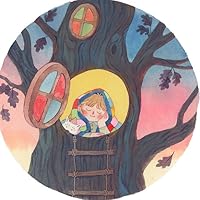
A series of heartwarming, heartbreaking stories told from very distinct, different female point of views. They truly felt like gifts from the author and the illustrator, whose colorful and soft images accompany each story. Kakuta’s writing is simple yet precise and fully conveys the feeling that she’s describing. She paints in her twelve short stories very specific landmarks in the life of the narrator (the name the narrator was given, a first kiss, a bag the narrator receives when she goes to school for the first time…).
To say that reading Kakuta and reading Murakami is similar (and that Japanese writers tell stories in the same fashion!), though, to me, is very strange. The two have such radically different authorial voices and narrative worlds. And Japanese writers as a whole cannot be summarized as ‘telling their stories in the same way’, that is simply showing your lack of knowledge on Japanese literature, which like any literature in any country is multifaceted.
To say that reading Kakuta and reading Murakami is similar (and that Japanese writers tell stories in the same fashion!), though, to me, is very strange. The two have such radically different authorial voices and narrative worlds. And Japanese writers as a whole cannot be summarized as ‘telling their stories in the same way’, that is simply showing your lack of knowledge on Japanese literature, which like any literature in any country is multifaceted.

May 4, 2014
To certain extent, it is like reading Haruki Murakami, in a female voice. The super short stories are quiet dramas. They flutter like the moth's wings, they flicker at the fading of the night. Sadness, remembrance, sentiment, hope, strength... I've always liked Japanese novelists though they tell stories in a similar fashion. Their plot and characters seem bare-bone at the first glance, then life sprouting out with dazzling new greens. I am glad I found Mitsuyo Katuta. It is a gift.
Displaying 1 - 2 of 2 reviews