“The crux of the problem is that, geopolitically and demographically speaking, for most of the last seventy-five years, we have been living in that perfect moment. At the end of World War II, the Americans created history’s greatest military alliance to arrest, contain, and beat back the Soviet Union…What is often forgotten, however, is that this alliance was only half the plan. In order to cement their new coalition, the Americans also fostered an environment of global security so that any partner could go anywhere, anytime, interface with anyone, in any economic manner, participate in any supply chain and access any material input – all without needing a military escort. This butter side of the Americans’ guns-and-butter deal created what we today recognize as free trade. Globalization. Globalization brought development and industrialization to a wide swath of the planet for the first time, generating the mass consumption societies and the blizzard of trade and the juggernaut of technological progress we all find so familiar. And that reshaped global demographics. Mass development and industrialization extended life spans, while simultaneously encouraging urbanization. For decades that meant more and more workers and consumers, the people who give economies some serious go. One outcome among many was the fastest economic growth humanity has ever seen. Decades of it…But all things must pass. We now face a new change in condition…”
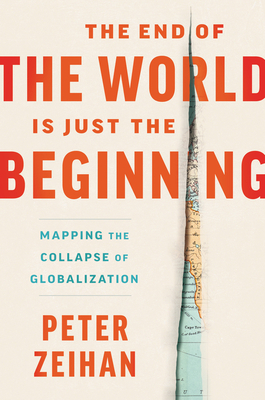
- Peter Zeihan, The End of the World Is Just the Beginning: Mapping the Collapse of Globalization
This book is: Something.
It is irresistible, but exhausting; it is stimulating, yet also irritating. It’s hard to put down, though it lasts far too long. Like an intellectual reflex hammer, Peter Zeihan’s The End of the World Is Just the Beginning is designed first and foremost to elicit strong responses.
That, after all, is how Zeihan makes his living.
Epically scoped, confidently argued, dizzyingly digressional, The End of The World Is Just the Beginning is an apocalyptic outline given by a smirking prophet who – it must be added – does not seem at all as worried as he wants the rest of us to be.
Still, given the shockingly high number of specific predictions that Zeihan throws out, a “success” rate of only 1% would still mean some pretty grim news.
***
It’s hard to summarize The End of the World Is Just the Beginning because it is about a lot of things. One chapter is a deep inquiry into finance, from the earliest days of bartering to the age of peak fiat currency in which we now live, while another chapter is an oft-numbing trip along the periodic table, discussing the earth’s most valuable elements, what they’re used for, and where they can be found.
Simplifying dramatically, The End of the World Is Just the Beginning starts from the premise that the post-World War II, post-Bretton Woods economic system has proved to be a net benefit to most of humanity. This global system – or “the Order,” as Zeihan calls it – has increased life expectancies and raised standards of living in ways unmatched by the rest of recorded history.
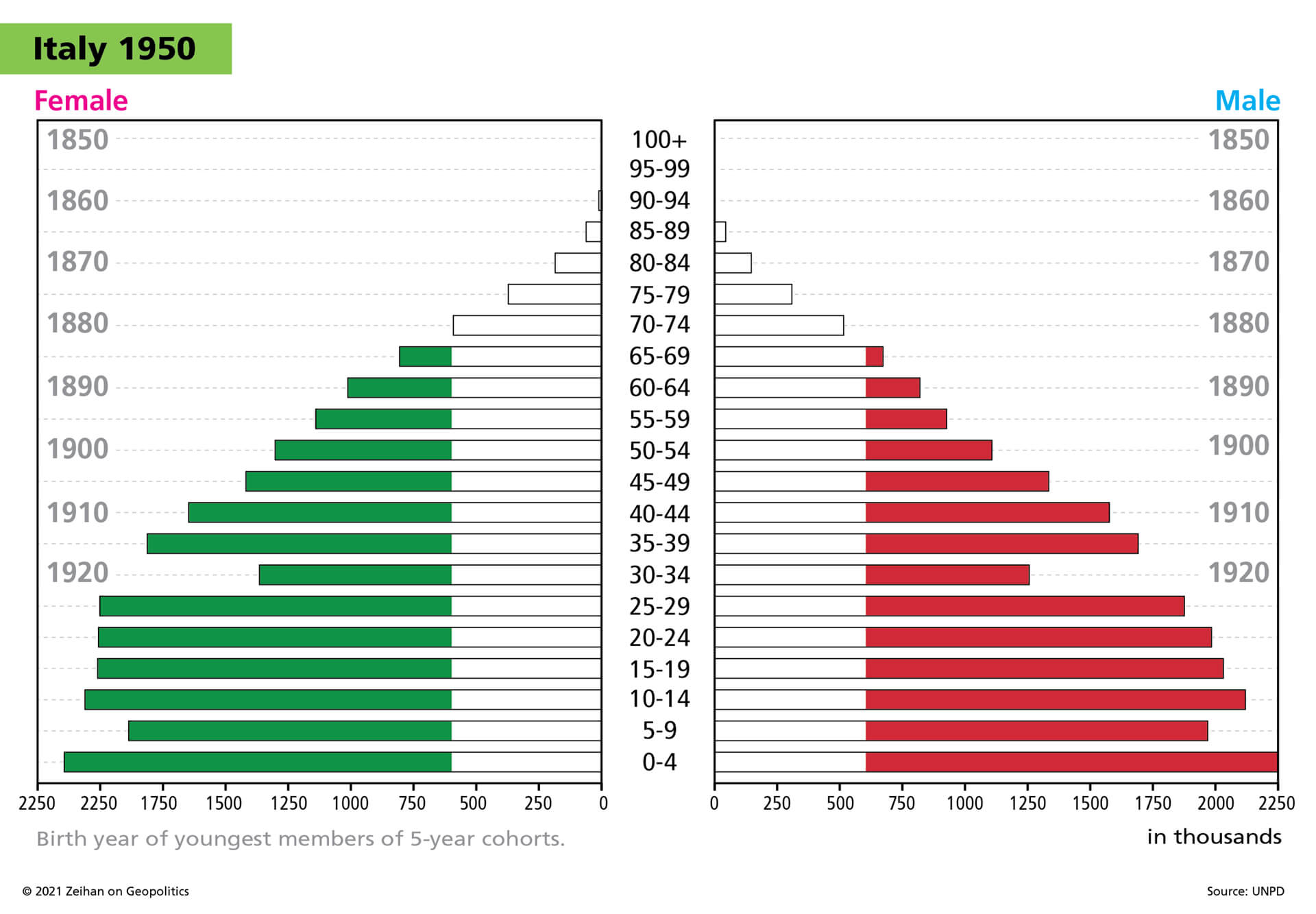
According to Zeihan, those good times are over, and globalization is in retreat. Once it withdraws, there will be a whole lot of pain. Zeihan contends that both the unfortunate consequences and the potential silver linings can be foreseen by exploring the intersection of geography and demography.
***
What does this all mean, in layman’s terms? Well, in The End of the World Is Just the Beginning’s 476 pages of text, Zeihan gives you thousands of answers.
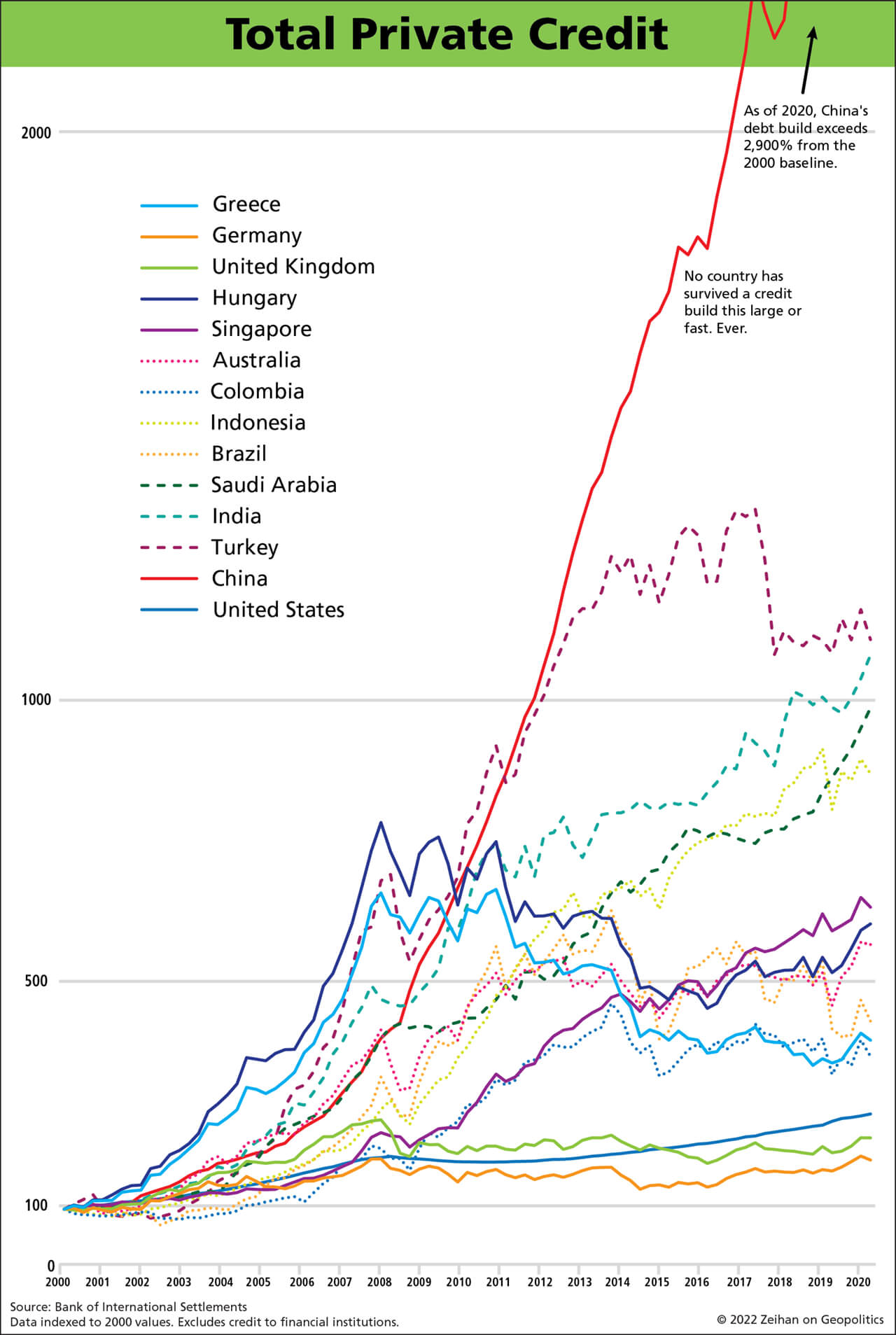
Much of this book’s buzz – or notoriety – comes from Zeihan’s stridently bearish views on China. While many see China – for better or worse – as perhaps the preeminent superpower of the 21st century, Zeihan thinks they’re going to flame out spectacularly. To support his position, he points to a coming population implosion (caused by the one-child policy, as well as intense urbanization), hyper-financing, and the fact that it is a net importer of just about everything, which will make things difficult if overseas transportation breaks down.
This claim is certainly a showstopper, and has succeeded in getting Zeihan on numerous podcasts. However, it is just one of several dozen assertions, some better articulated than others.
***
Structurally, The End of the World Is Just the Beginning is broken down into seven sections. The largest is the first, which literally begins by discussing the use of human excrement in agriculture, and eventually gets around to framing the issues that Zeihan will spend the balance of this volume discussing.
Sections two through seven cover transport, finance, energy, industrial materials, manufacturing, and agriculture. Rather than going through each, I’ll just give one example to illustrate Zeihan’s approach.
In the transportation chapter, Zeihan starts with a fun hook, asking the reader to imagine a modern grocery store with its 40,000 separate items. In particular, he focuses on fusion food, such as a sushi corndog, listing all the different ingredients that are needed, with the inference being that they come from all over the place.
Having given a concrete, graspable illustration, Zeihan moves forward by looking back, recapping the history of moving things from Point A to Point B. As he does so, he highlights innovations such as changes in ship design, and the all-important shipping container. His grand conclusion is that we have infinite things in our life because it’s now possible to move infinite bits and pieces across vast oceans. The pair of jeans you’re wearing, for instance, might have required the inputs from fifteen different countries.
Zeihan argues that this overseas shipping network has been made possible by the U.S. Navy, which protects shipping lanes, fends off pirates, and – unlike imperial navies in the past – doesn’t stop-and-board vessels to collect tariffs or impress seamen.
When – and for Zeihan, this is an unexamined given – this protection is no longer available, there will be massive repercussions that will wreak havoc on just-in-time inventory systems, raise prices, and make certain goods hard-to-impossible to get.
In closing this chapter – as he does with the others – Zeihan gives us the winners and losers, the countries best able to sustain their living standards, and the countries that face the biggest challenges. To the apparent annoyance of many, he believes that the United States – imbued with navigable rivers, and situated on an economically-integrated continent – will come out just fine.
***
The topics that Zeihan covers can be pretty heavy. You’ll learn a lot more about rare earth elements than you ever expected. Despite this, The End of the World Is Just the Beginning is incredibly readable.
Drawing on his experience as a consultant, Zeihan has an engaging, informal style. He tries very hard to be funny, and sometimes even succeeds. The humor is admittedly dark, and Zeihan can be quite glib when writing off vast sections of humanity as doomed. If you live in one of those nations that are on Zeihan’s uh-oh list, you will probably be offended. You’ll also be insulted if you believe in electric cars, free range chickens, and organic agriculture, which are all things that he takes a certain mendacious glee in savaging.
Zeihan doesn’t seem like a bad guy. In the videos I’ve watched for extra credit, he comes across as likeable. Even so, he is borderline smug, and has an overweening certainty that he wears like armor. It’s tough to formulate a response to him, because every statement is accompanied with a blizzard of statistics.
Unfortunately, none of those facts can be checked, as The End of the World Is Just the Beginning has no footnotes, endnotes, or bibliography. The only insight into Zeihan’s methodology is in the acknowledgements, in which he refers to numerous governmental databases, and thanks the members of his “team,” who apparently do a lot of the digging – and first drafts – for him.
***
The End of the World Is Just the Beginning definitely wears out its welcome. The frantic, breathless pace becomes tiring, while the repetitions start to grate.
Beyond that, Zeihan is often so convinced by his own logic that he fails to explore some of the implications of his conclusions, which can be contradictory. He also leaves lingering-yet-obvious questions unexplored. He believes, for example, that falling populations are a national death-knell, but does not integrate robotics or AI into his analysis. The national headlines blaring about the potential loss of millions of jobs clash with Zeihan’s judgment that there won’t be enough workers.
Hanging over everything is climate change.
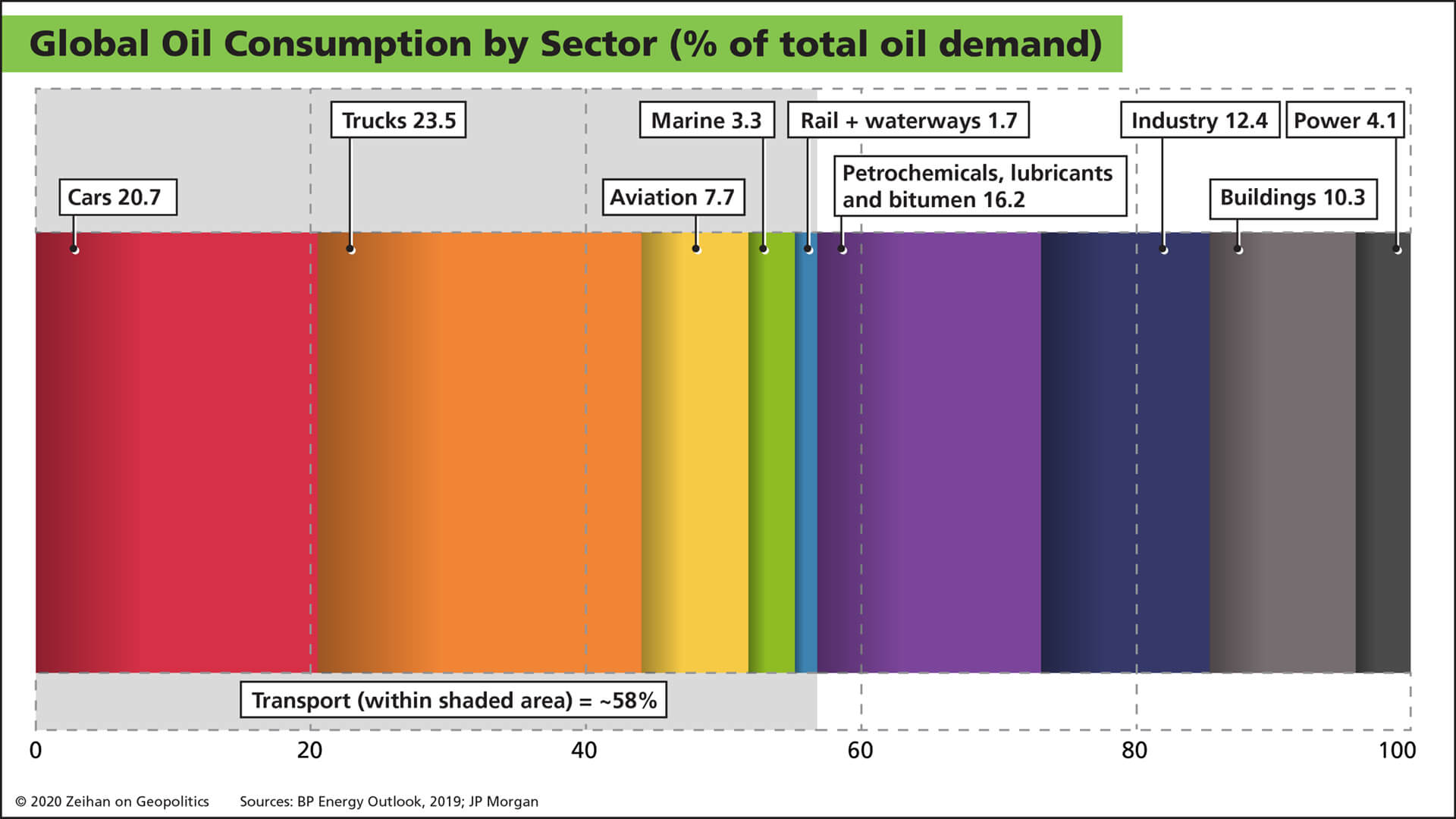
Zeihan believes in it, though he seems to feel that there isn’t much to be done. He spends a lot of space shredding green tech and mocking carbon net zero and bemoaning the difficulty of storing wind and solar power. He may be right about the carbon footprint of EVs, or the unintended consequences of forcing countries off oil, thereby incentivizing even dirtier fossil fuels such as coal. Nevertheless, throwing up his hands on climate change sort of makes his own book superfluous.
In other words, the direst climate predictions are set to occur before Zeihan’s direst globalization predictions.
***
Things aren’t going all that great right now, as you’ve probably noticed. So, when I reached the last page, my anxiety level remained where it had been at the start: Extremely high.
For all Zeihan’s forecasts, The End of the World Is Just the Beginning somehow didn’t make me feel all that much worse than I already do. This is due to the knowledge that there’s no way everything is going to unfold as Zeihan says. He’s just one guy with one worldview. The value, here, is in finding things to look for, to concentrate on, in the years to come. The downside, obviously, is that it’s just depressing as hell.