Jump to ratings and reviews
Rate this book

The Accidental Ecosystem: People and Wildlife in American Cities

Rate this book
One of Smithsonian Magazine 's Favorite Books of 2022

With wildlife thriving in cities, we have the opportunity to create vibrant urban ecosystems that serve both people and animals.

The Accidental Ecosystem tells the story of how cities across the United States went from having little wildlife to filling, dramatically and unexpectedly, with wild creatures. Today, many of these cities have more large and charismatic wild animals living in them than at any time in at least the past 150 years. Why have so many cities—the most artificial and human-dominated of all Earth’s ecosystems—grown rich with wildlife, even as wildlife has declined in most of the rest of the world? And what does this paradox mean for people, wildlife, and nature on our increasingly urban planet?
 
The Accidental Ecosystem is the first book to explain this phenomenon from a deep historical perspective, and its focus includes a broad range of species and cities. Cities covered include New York City, Los Angeles, San Francisco, Pittsburgh, Austin, Miami, Chicago, Seattle, San Diego, Atlanta, Philadelphia, and Baltimore. Digging into the natural history of cities and unpacking our conception of what it means to be wild, this book provides fascinating context for why animals are thriving more in cities than outside of them. Author Peter S. Alagona argues that the proliferation of animals in cities is largely the unintended result of human decisions that were made for reasons having little to do with the wild creatures themselves. Considering what it means to live in diverse, multispecies communities and exploring how human and nonhuman members of communities might thrive together, Alagona goes beyond the tension between those who embrace the surge in urban wildlife and those who think of animals as invasive or as public safety hazards.  The Accidental Ecosystem calls on readers to reimagine interspecies coexistence in shared habitats, as well as policies that are based on just, humane, and sustainable approaches.

296 pages, Hardcover

Published April 19, 2022

53 people are currently reading
1316 people want to read

About the author

Peter S. Alagona

16 books11 followers
I’M AN ENVIRONMENTAL HISTORIAN, historian of science, conservation scientist, and nature-culture geographer. My work explores what happens when humans share space and resources (their habitats) with other species: how we interact with non-human creatures, how we make sense of these interactions, why we fight so much about them, what we can learn from them, and how we might use these lessons to foster a more just, peaceful, humane, and sustainable society. Most of my research has focused on human interactions with wildlife in North America. A second area of interest involves developing creative interdisciplinary, collaborative, and mixed methods for studying ecological change over multiple time periods and scales.

DURING THE FIRST PHASE OF MY CAREER, in the 2000s, I focused on the history, science, law, and politics of endangered species conservation. After completing my first book in 2013, I shifted to focusing on human interactions with more common species, as well as the challenges of living with large carnivores and reintroducing lost species.

IN EARLY 2022, the University of California Press will publish my next book, The Accidental Ecosystem: People and Wildlife in American Cities. For more on this project, click on the link in the menu above. For the past 5 years, I have served as the founder and facilitator of the California Grizzly Research Network, which is conducting a series of research and outreach projects designed to promote a more informed scholarly and public conversation about the past and potential future of grizzly bears in California. Over the past many years, I have been involved in several other interdisciplinary environmental research groups, including the Mellon-Sawyer Seminar on Marine Environmental History, Environmental History Graduate Workshop, UC Natural Reserve System History & Archive Project, a National Endowment for the Humanities Summer School on City/Nature, the Convivial Conservation (CONVIVA) Network, a National Socio-Environmental Synthesis Center (SESYNC) working group on Historical Ecology, the Institute for the Study of Ecological and Evolutionary Climate Impacts (ISEECI), the Paleoecology in Novel Ecosystems group based at the La Brea Tar Pits and Museum, and more.

I TEACH SEVERAL CLASSES at UCSB, including the Introduction to Environmental Studies course (ES 1), a course on human-wildlife interactions called Wildlife in America (108W), and seminars on topics from Storytelling and the Environment to Lions, Tigers, and Bears: Coexisting with Large Carnivores in the 21st Century. I am currently serving as the director of the Interdepartmental Ph.D. Emphasis in Environment & Society.

IN ADDITION TO MY RESEARCH AND TEACHING, I am active in public service and other professional activities. I have served on the faculty editorial committee of the University of California Press, I am an associate editor of the MIT Press book series History for a Sustainable Future, I am the Secretary of the American Society for Environmental History, I serve on several committees for the University of California’s Natural Reserve System, and I am the Faculty Advisor for the wonderful Valentine Eastern Sierra Reserves. I serve on several other boards and steering committees, I give frequent public lectures, and I do occasional interviews with newspapers, public radio stations, and other media outlets.

THROUGHOUT MY CAREER, I have been fortunate to work with wonderful mentors, colleagues, and students at institutions that value interdisciplinary and humanistic environmental scholarship. The first stage of this journey ended when I completed my undergraduate degree in history at Northwestern University in 1995. I later received a master's degree in geography from UC Santa Barbara, and master's and doctoral degrees in history from UCLA. Before joining the UCSB faculty in 2008, I was a Beagle Environmental Fellow in the Center for the Environment and Kennedy School of Government at Harvard and a p

Ratings & Reviews

What do you think?
Rate this book

Friends & Following

Create a free account to discover what your friends think of this book!

Community Reviews

5 stars
109 (31%)
4 stars
164 (46%)
3 stars
71 (20%)
2 stars
6 (1%)
1 star
1 (<1%)
Displaying 1 - 30 of 52 reviews
Profile Image for The Wildlife Center of Virginia.
37 reviews38 followers
June 14, 2023
Our book clubbers generally enjoyed this book -- it offered a nice overview of our historical land use and urbanization, and how wildlife presence and behavior changed (or didn't) with those human activities. There were a variety of chapters that focused on specific species, and ultimately, the emphasis on co-existing and managing "people problems" was appreciated.

As a wildlife hospital, we didn't feel like the half-chapter on wildlife rehabilitation was fully explored; wildlife rehabilitation is much more than just patients released, as the data that we record on our patients helps us educate others, informs public policy, aids in researching diseases and other wildlife issues, and ultimately, helps conservation.
231 reviews
December 27, 2024
Very well researched account of wildlife in urban areas, how numbers have fluctuated, and different policies for management. What could be a dry account is fleshed out with specific stories of animals and particular cities.
18 reviews1 follower
April 25, 2022
The Accidental Ecosystem: People and Wildlife in American Cities by Peter Alagona is a popular science book that describes the arrival of several animal species to our urban environment, from coyotes to pumas.

The first few chapters set the framework, discussing how the habitat potential of cities have changed significantly between the 1700's and today, and also how the field of ecology has changed to recognize and incorporate the study of urban nature. The main set of chapters provide case studies of specific animals such as coyotes, pumas, and black bears. The final chapter offers suggestions on how we ought to think about the questions of supporting and living with urban wildlife.

This is an upbeat book. Alagona unabashedly features animals most people now find appealing or charming. The case studies are of success, or at least hint at long-term success. A section of notes and a bibliography provide opportunities for interested readers to dive deeper into the subject's complexities.
Profile Image for Frank.
41 reviews1 follower
September 5, 2023
Comprehensive book, grounded in science but told through engaging examples, about wildlife and urban ecology. Great for folks interested in land use change or who are just curious about the coyotes living in the city. A real twenty-first century wildlife book.
Profile Image for Ananya Raghavan.
18 reviews
June 27, 2022
Phenomenal book! I’ve personally encountered wildlife in many different American cities, from deer in Philadelphia to coyotes in LA to raccoons all over, and heard many more instances of people running into wildlife, large and small. The book discusses different wildlife that thrive in cities, still other species harmed by people, how the role of wildlife is vastly different than what people portray and perceive it to be, the consequences of actions people take against them without understanding the species or their needs, and so much more. It beautifully demonstrates the need for cities and urban life to welcome and discover ways to coexist and support wildlife, and well as reduce the overall impact of the human species to address threats to biodiversity, such as climate change and habitat destruction. As the author says, “coexistence is about care, not control.”
Profile Image for Ben Simon.
19 reviews
February 26, 2023
Tough read for me, finally jumping back into the world of non-fiction, but I ultimately enjoyed it overall. Admittedly it was a slow start: passages that bored, onslaughts of statistics and historical event dates that overwhelmed, and extremely unserious figures sprinkled in each chapter. In my opinion, a caricature of a whale breaching in front of the statue of library or a coyote backed by the hollywood sign offer nothing to the reader and seem just plain silly. I still can’t get over these figures, nor can I get over the Caddyshack synopsis that filled a good deal of one chapter. However, many sections, like the one detailing the contradicting wonders of bat metabolisms, drew me in just as much as my usual fictional reads. In this way Alagona kept me interested long enough to internalize his philosophy and start reflecting on my own misconceptions about urban ecology.
Profile Image for Katelyn.
41 reviews3 followers
January 3, 2023
I really enjoyed reading this book, especially because my background is with wildlife management and conservation biology. The chapters that really spoke to me was Chapter 6: Out of the Shadows, Chapter 4: Damage Control, and Chapter 14: Embracing the Urban Wild, as well as the Coda: Lost and Found.

The book does a great job of detailing the past, present, and embracing the direction of the future. This really highlights the adaptability of some animals to use humans to their advantage while other animals suffer to the point of endangerment (and extinction). I also really liked the author explained how Covid-19 shaped not only us, but the wildlife as well. A great read for sure and a chance to view wildlife with an understanding lens.
Profile Image for honey.
349 reviews46 followers
May 28, 2025
"We will never achieve anything like coexistence between people and wildlife, in cities or anywhere else, if we cling to the old approaches of attempting to dominate, manufacture, and micromanage nature, or if we continue trying to solve systemic problems with piecemeal solutions. Coexistence is about care, not control. It is about reciprocity, not retribution. It is about creating a context for mutual thriving while having the humility to understand that things will not always go as planned.

We must start by asking what we actually want from urban ecosystems and the creatures with which we share them. Despite the long history recounted in this book, this most important of questions has rarely been asked. Yet only by answering it can we move from an accidental to a more intentional era in the history of urban wildlife.

This story is not over. Just because wildlife has returned to American cities doesn't mean it's here to stay. We've come a long way, but we still have a long way to go.”
Profile Image for Deb.
254 reviews6 followers
March 17, 2024
My humble inner ring, nothing special suburban yard has played host at one time or another to raccoons, opossums, white-tailed deer, chipmunks, groundhogs, skunks, squirrels, flying squirrels, bats, coyotes, hawks, turkeys, owls and almost 40 other species of birds. Mice and rats too, of course. Humans need to learn to share and co-exist. Animals that can adapt to living in close proximity to humans are the species that are thriving.
The author points out the biological diversity of cities vis a vis areas that we think of as wilderness and the many ways that human activity impact animal life, some obvious, some not.
Profile Image for Grace Niemiec.
7 reviews
April 23, 2025
Lincoln Park Zoo mentions!!!!! Read for my capstone slowly over the semester, so it ended up informing a lot of my other classes. Definitely a bit preachy at times and really only talked about birds and mammals, but a fascinating read nonetheless. Someone PLEASE write a book on city bugs.
Profile Image for Andrew Fung.
122 reviews2 followers
February 16, 2025
This was a very enjoyable and informative read. Would’ve liked if it had a little bit more of a central thesis, but I appreciated the organization of it and how wide ranging it was. I learned a lot from this.
17 reviews1 follower
April 16, 2024
The book frames land use change from a historical perspective, rather than biological. This is my only complaint.
Profile Image for Melissa.
53 reviews
June 27, 2025
The chapter on limited data regarding the survival rate of rehabilitated animals hit me personally, ultimately impacting my rating on this book. Perhaps additional examples regarding the success of animal rehabilitation with specific species would be beneficial too. Good use and mentions of scientific studies. Although this is a wonderful resource, my fear is the people who need to read this book, will not. Overall, a great summary of the man made ecosystem.
Profile Image for Megan.
7 reviews
January 1, 2025
For how well researched and neutral the rest of the book was, the one chapter on wildlife rehabilitation clinics felt austere and lazy. The framing for the chapter was more a philosophical debate on whether these clinics are worthy of existing or not (is their resource allocation “the most altruistic option” given not every animal will be released back to the wild?) but he failed to name anything these clinics do outside of just release (data collection and research, public education, informing legislature and conservation laws, disease prevention and management, post-release tracking outcomes... must I go on?). There are many ways to keep wild animals wild outside of just rehabbing them and rehab clinics can play a large role in this.
Profile Image for Darlene Laguna.
224 reviews2 followers
April 1, 2023
A fascinating, well-researched, and informative read about how people and wildlife are learning to coexist in rural and urban communities.
Profile Image for Grrlscientist.
163 reviews26 followers
December 31, 2022
You may not know this, but historically, cities were home to an abundance of wildlife. This is because most big cities were built on biodiversity hotspots. For example, Seattle and San Francisco are located next to estuaries; Washington DC, Chicago, and New Orleans were built on top of wetlands; New York City and Boston are situated on the mouths of rivers. All of these areas once were homes to rich and thriving multi-species communities of wild animals and many were major resting and refueling stopovers for migrating birds.

Of course, this was before humans moved in and destroyed these places, and either killed or drove out the native wildlife. But surprisingly, despite the dramatic decline in wildlife across the country, many cities in the United States are now home to more wild animals than they have been during the past 150 years. Why? And what does this mean for human city dwellers as well as for our wild neighbors? The recently published book, The Accidental Ecosystem: People and Wildlife in American Cities (University of California Press, 2022) provides some insights. This is the second book by Peter Alagona, an Associate Professor of History, Geography and Environmental Studies at the University of California, Santa Barbara, and it shares the overlooked story of how modern American cities are unexpectedly providing homes to wildlife.

In his accessible book, Professor Alagona starts by discussing the history of how cities have changed since the 1700s up through today. In the early days of urban growth, which were in the 18th or 19th centuries for many American cities, native species were still common in many of these increasingly populated areas, Professor Alagona notes. But these wild creatures subsequently disappeared due to a variety of causes, ranging from hunting to pollution and habitat clearing. It didn’t take long before almost all of the animals that remained in a given urban area were conglomeration of domesticated and invasive exotic species: either a collection of non-native rodent species, mangy abandoned dogs, or semi-feral housecats — which were hard at work murdering any native songbirds that dared to remain behind.

But even as cities had been transformed into concrete jungles filled with despair and desperation, urban planners were rethinking and changing their ideas about cities and began to make them more welcoming for their human residents. Parks were built. Trees planted. Urban pea-patches and gardening spaces became more common, and waiting lists of a decade or longer for one of these highly coveted spots sprung up. Local wildlife also benefitted: beginning in the 1970s, wildlife began to reappear in cities throughout the world. Deer, alligators, bears, seals, rabbits, hawks and eagles suddenly could be regularly spotted as they went about their daily business. This wildlife-as-neighbors scenario is happening in most cities across the country, and indeed, around the world.

Modern cities are a new ecosystem that brings together wild creatures in novel arrangements and associations. “These spaces are so new that no species that lives in them is truly adapted to them in any deep, evolutionary sense,” Professor Alagona explained. “Cities bring together diverse creatures in new ways.”

In his book, Professor Alagona then discusses how the field of ecology is changing to incorporate this new, emerging discipline of urban ecology. He provides case studies focused on specific urban wildlife, such as pumas, coyotes, and — his favorite — black bears. He explores why some species thrive in urban areas and discovers that these reasons are much like traits and behaviors that we see in city dwelling humans.

Throughout the book, Professor Alagona argues that wilding our urban centers is a good thing, that our lives are more intertwined with those of animals than we think, and that decisions that benefit urban wildlife will, in most cases, be good for people, too. Further, he argues that living peaceably and sustainably alongside wildlife is our responsibility.

“Diverse philosophies, religions, and wisdom traditions — from utilitarianism to Buddhism — agree that, all else being equal, we should seek to reduce the amount of pain and increase the amount of happiness in the world among all sentient beings. We all have an obligation to treat individual animals humanely, even in cases when there is no reasonable choice other than to kill them”, Professor Alagona said. “I believe we also have an obligation to our communities. Most of us now live not only among groups of people, but also within diverse multispecies communities. It is our duty to do what we can to foster health, wellbeing, and even joy in the ecosystems we inhabit, because doing so increases the happiness of individuals and because communities are more than just the sums of their parts. We’re all interconnected.”

But how should we live alongside urban wildlife? Aren’t wild predators, like coyotes, for example, dangerous? Won’t they eat our babies?

“Wild animals that are acting normal, avoiding people, and minding their own business are usually best viewed at a distance and left alone”, Professor Alagona said. “It is also important to remember that animals like coyotes help people by preying on rodent pests, and that most animal-related human injuries are inflicted by insects, arachnids, and other smaller, less charismatic creatures.”

Overall, this highly readable and relevant book presents an important topic that is, in my opinion, mostly overlooked by the ecology community. It provides a perspective that, while cities can damage the environment, they also represent their own unique ecosystem that can and should be managed humanely, sustainably and fairly for the good of people and of wildlife. Highly recommended.


NOTE: Originally published at Forbes.com on 24 October 2022.
Profile Image for Jan.
247 reviews2 followers
November 14, 2023
This is a fun and informative look at wild animals in cities, from the commotion caused by an unusual sighting of a grey squirrel in Manhattan in 1856, to the deer, bear, coyote and other animals seen in urban areas today. I didn't know that when Disney released the movie "Bambi" in the 40's, white-tail deer were so hard to find, they had to be imported from Maine to California to serve as models. The author describes city greenspace and suburban sprawl as an ecosystem encouraging wildlife's return to urban areas, and urges us to find better ways to coexist with animals, whether we see them as pests, magical signs, or dangerous predators. The bald eagle nests of Pittsburgh make an appearance, as well as the Hollywood puma and the West Coast sea lions. Fascinating, although the occasional typos and even missing words interrupted the flow of the prose.
Profile Image for Taylor M.
422 reviews29 followers
January 21, 2025
Amazing book! I absolutely loved every part of it. As someone who is interested in both ecology and urban planning, I still learned so many new things and it gave me new perspectives on cities and wildlife. I never thought of cities as their own ecosystems or knew the histories of wildlife in cities. For anyone who lives in cities or suburbs, I think this book would give you an amazing new perspective on the life around us. (I now notice all the house sparrows!)

I listen to this as an audiobook, which I really enjoyed, but it did reduce the amount of notes I usually take.

Notes:
* Cities are entirely new ecosystems, so the terms “native” and “exotic” species don’t really mean much to them.
* Opinion: I would never call the beautiful ginko trees that line the streets of San Francisco as “exotic” though they typically are. Ginko trees are completely extinct in the “wild” world. We can’t only plant native trees in SF or these trees would never have a home.
* 14 of of the 15 largest cities are built on top of Very Diverse Areas even though it only makes up 2% of the total U.S. land!
* Opinion: Cities are areas with a rich history in nature. Is it so odd that the animals decided to come back?
* Over 50% of the U.S. lives within 50 miles of the ocean coast.
* Yellowstone has really extreme conditions and is not the nicest place to live. But since humans put that area aside for nature, wildlife that had ranges in milder climates stayed in that area because they would not be pushed out.
* Eastern gray squirrels are native to the eastern US but their population greatly diminished as cities were built. In 1850, when an “exotic pet” squirrel broke free of its New York City apartment, a squirrel was unheard of in urban areas. But a program to repopulate squirrels in eastern cities became popular around that time, favored because of their intelligence, tameness, and cuteness.
* The formation of suburbs after WWII caused the creation of urban habitats that were suitable for wildlife to return. Animals, like deer, rabbits, and raccoons, would come to feed at night then hide in the forest during the day.
* Hunting as a hobby has plummeted tremendously. Hunting in urban areas is almost impossible, so it has now become a hobby that requires a lot of planning and equipment. Hunting was how wild places used to rise their money for conservation. With the rise of suburbs, this hobby along with its revenue are mostly gone.
* Golden Gate Recreation area has 32 sites and is the most visited national park area!
* Coyotes originated in the Great Plains and southwest of North America, but can be found in every part of the continent.
* Black bears live in 40 of the 50 states. New Jersey is the densest state in the US and has the most people per square mile. It also has the most black bears per square mile. Alaska has a black bed population much greater than New Jersey, but you were more likely to see a black bear in Trenton than in Fairfield.
* People tend to worry about diseases that they can get from wild animals like bats and deer, but it’s actually domesticated animals that pose the highest risk. Cats are especially dangerous because we already share several diseases with them. Industrial livestock workers carry more diseases than people who do not work with livestock.
* National parks have admission fees, hunting permits, and fishing permits to get revenue for conservation. Parks in cities do not usually have an admission fee or issue permits. It is difficult for a cities to raise money to use on encouraging wildlife in cities since there is no existing revenue. Even wildlife inspired companies like REI are hesitant to issue “backpack taxes” to support these initiatives.
* Ecological gentrification: poorer neighborhoods not wanting greener spaces because it tends to make the areas more expensive to live and they get pushed out of their neighborhoods
* We need more urban wildlife management without making those who have the least pay for it!
Profile Image for Hayden Jenkins.
12 reviews1 follower
Read
February 14, 2025
In recent years, I’ve become fascinated with American urbanism. (or the relative lack thereof) I think the post World War 2 suburbanization of the United States can tell us a lot about the crises we find ourselves in today, and so I’ve spent a lot of time reading what I can find about the great American cities. Their failures, successes, and the way they’ve changed our nation for the better.

This book is a very educational and compelling look into the history and present of coexistence in those cities. There’s so much we can learn from animals. The way the harshness of cities accelerates their evolution, the way they interact with humans in different eras/environments, etc. as the author stresses over and over, though, interactions between humans and animals almost always reveal more about humans than they do the animals. I found the exploration of birds in particular to be fascinating. So many different phenomena colliding: the advent of ubiquitous high speed internet and the subsequent birth of internet virality, changing public approaches to wildlife management, and humanity’s decreasing sense of animal instinct.

It’s great to see how we have progressed in living amongst animals, but we have a long, long way to go. It does become clear at a certain point that we are bumping up against the limitations of capitalist society. What’s next? Here’s to a better future.
Profile Image for Amanda.
432 reviews7 followers
June 18, 2023
A nice historical overview of how land use has changed, and what that's meant for wildlife. The first few chapters of the book were a nice history refresher and helped lay some foundational understanding of city landscapes and how they came to be. There were species-specific chapters that highlighted how people and wildlife interact, and some other interesting tidbits that made me go elsewhere to read more (e.g. House Sparrows are declining -- which I didn't realize, and some other research out there suggests multiple causes).

My big issue -- and it's a big one for me -- was his half-chapter on his wishy-washy discussion of if wildlife rehabilitation is really the best use of time/money. It didn't take up a large chunk of the book by any means, but he set up this thought exercise poorly; while he referenced that this wasn't a black-and-white issue, he set up the argument in a pretty black-and-white way and kept coming back to release numbers and non-profit budgets. It would've been far better if he had done a little more research rather than just having a long e-interview with Peter Singer, who seemed to ultimately think that to judge rehabilitation, you should look at the numbers. I disagree with them both and think that they really missed out on the point.
Profile Image for Jon Zellweger.
134 reviews2 followers
May 11, 2024
This started with the flavor of an apology for human impact on the environment, but ended some place much more measured, cautionary even. In short, other forms of life in the US were in pretty bad shape by the 1950s, and then it got better, but then in places it got worse again, revealing that the work is not done. And that work arguably privileges certain animals over many others. I don’t consider myself the most subtle reader, so if there was an aspirational edict that Alagona was striving to impart, it was not obvious. In fact, in its desire to remain a high-level, incomplete survey, focusing on a limited set of mammalian examples, it doesn’t really take any passionate stances that offers the reader an ethical clarity that might transform into their action. Sure, one’s own confirmation bias will read between the lines and choose whether to be a champion for all god’s creatures or…well, or just…”meh”. To be fair, the author acknowledges that there is little data collection and study on wildlife in urban contexts. So, perhaps the conclusion should be high praise for it being short and non-technical and if you’re looking for the shallow end to get acclimated to some waters on this topic, this is a decent place to start.
Profile Image for Tyler Gianni.
5 reviews
April 3, 2025
I thoroughly enjoyed this book. Other authors I have read have been overly optimistic about the urban ecosystem, overstating its potential for harboring biodiversity and understating the harm that urban development causes to native ecosystems. I appreciate Alagona’s take on things. His perspective is reasonable and lucid. He presents a compelling narrative of the urban wild, with its ups and downs from the early days of North America’s colonization to now. Alagona takes the reader on a journey through urban ecology’s inception and development, while taking into account the nuance that makes the field so compelling, including individual animal welfare, social inequality, and human wildlife conflict. He successfully assesses the value of urban wildlife and recounts fascinating stories and lessons learned over the years, without overstating the role of urban ecosystems in maintaining global biodiversity. His ultimate desire for us to develop urban wildlife management into a practice more concerned with reciprocity than control reflects the best of a new wave of conservation thought, one bent on reckoning with (and one day reconciling with) our imperial past in the face of climate catastrophe.

TLDR - Put your cats indoors and don’t call pest control.
144 reviews10 followers
June 12, 2025
this was a book I wanted to like. I did like it, but I suspect mainly because I wanted to. Alagona pointed out many interesting things: how the timeless existence of livestock in cities excluded wildlife; how the slow eviction of wildlife from cities had classist undertones; how the reintroduction of wildlife is still unsettling people; and how most cities have little beyond "pest control" for coping with this new relationship.
at many points this book was interesting, but never riveting.
I suppose I could give this book a four star and move on, but to my abiding frustration, the one thing he never talked about was in the title: Ecosystems. what I wanted from this book was ecological insights about how species (humans too) are living in symbiosis, in cities. what I got was not that. forgivable perhaps, but I deem it a perennial insult to market a book on the premise of there being ecosystems, where there are in fact no ecosystems. call your book what it is. an exploration of the complexity of human/wildlife interactions in cities. don't namedrop ecosystems.
sigh.
141 reviews1 follower
November 13, 2024
(3.5, or 7 on a 1-10 scale)

A history of wildlife living in cities and our relationship with it. Definitely worth reading, with a lot of interesting and surprising facts and stories. Some of the author's conclusions don't seem to add to our understanding, and he does occasionally go off track (a section on zoos seemed to belong in a different book) but the topic is fascinating and important and the author's research is thorough.

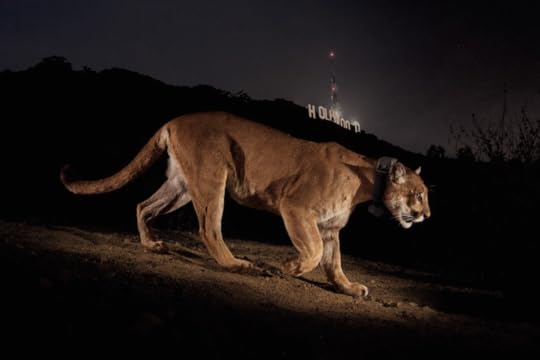
The Accidental Ecosystem occasionally finds itself in territory also covered in Ben Goldfarb's Crossings, about the effect of roads on wildlife, but from a different viewpoint. The story of P-22, a Puma who famously found its way into the Santa Monica mountains, appears in both. It was fascinating to see the same topics covered from different angles, which to my mind makes the two books perfect companion pieces.
379 reviews14 followers
July 16, 2025
Amazingly comprehensive modern history/ecological science book. I love the new generation of urban ecology books which no longer embrace a rigid dichotomy between the "city" and "nature."

I had literally just been showing my father pictures of P22 in the Hollywood Hills before starting this book with him:
description

This is particularly great to read after Pests: How Humans Create Animal Villains and Darwin Comes to Town: How the Urban Jungle Drives Evolution.
Profile Image for Minjeong Kim.
13 reviews
December 19, 2024
Phew, it took me so long to finish!

First off, thank you Anita and Audrey for lending me this book. This book is dense; at least it felt heavy bc the topics they integrate—urban planning, public policy, ecosystem, sociology, and politics—are not something I’m familiar with. Very broad. I was bored until this chapter called Damage Control. How they describe pests stood out to me: a pest doesn’t exist, a pest is an idea, relationship, and a feeling. I also liked reading the chapter Embracing the Urban Wild.

Some guy hit on me while I was reading this book at the meche building.. He thought I was some biology major just bc I was reading this book and that wasn’t fun.
Profile Image for Zach Church.
261 reviews4 followers
December 30, 2022
Lots of great information here, but it's more of a survey than a clearly argued point. I learned a lot but didn't retain any big takeaways beyond being more aware of the various issues and challenges presented when wildlife or cities meet. Some of the chapters had anecdotal introductions that were tenuous or only lightly connected to the subject matter. I'd be interested in reading a version of this book that has a few clear central arguments and clearly articulated points for what should happen next.
Profile Image for Luísa Andrade.
135 reviews4 followers
October 22, 2025
“The Accidental Ecosystem” é um ensaio sobre a natureza que insiste em permanecer — mesmo entre o asfalto e o ruído das cidades. Alagona mostra como, ao tentar separar o humano do selvagem, criamos sem querer refúgios para veados, coiotes e outros predadores e várias aves. Combinando história ambiental, ecologia e filosofia, o autor revela que as cidades não são o oposto da natureza, mas um novo capítulo dela — improvisado, conflituoso, vital. O livro é lúcido e sensível, uma reflexão sobre coexistência, adaptação e a beleza inesperada de viver lado a lado com o indomado.
Profile Image for Laura O'shields.
12 reviews
May 3, 2025
A very readable account of American cities and the return (for now) of wildlife. I came to this knowing about the foxes that live in our suburban neighborhood and wondering how they could survive under seemingly adverse circumstances. Regrettably, one person in our neighbrhood called animal control who killed the fox family.
Displaying 1 - 30 of 52 reviews

Can't find what you're looking for?

Get help and learn more about the design.