Jump to ratings and reviews
Rate this book

The Power of the Dog

Rate this book
Set in the wide-open spaces of the American West, The Power of the Dog is a stunning story of domestic tyranny, brutal masculinity, and thrilling defiance from one of the most powerful and distinctive voices in American literature. The novel tells the story of two brothers — one magnetic but cruel, the other gentle and quiet — and of the mother and son whose arrival on the brothers’ ranch shatters an already tenuous peace. From the novel’s startling first paragraph to its very last word, Thomas Savage’s voice — and the intense passion of his characters — holds readers in thrall.

304 pages, Paperback

First published January 1, 1967

1523 people are currently reading
20764 people want to read

About the author

Thomas Savage

47 books239 followers
Thomas Savage was an American author of novels published between 1944 and 1988. He is best known for his Western novels, which drew on early experiences in the American West.

Ratings & Reviews

What do you think?
Rate this book

Friends & Following

Create a free account to discover what your friends think of this book!

Community Reviews

5 stars
6,711 (42%)
4 stars
6,029 (38%)
3 stars
2,267 (14%)
2 stars
571 (3%)
1 star
196 (1%)
Displaying 1 - 30 of 2,248 reviews
Profile Image for Robin.
575 reviews3,653 followers
April 9, 2019
I wonder how extraordinary writers fade into obscurity. I pondered this the whole time I was reading this 1967 novel, and asked myself a few pertinent questions such as: Why isn't Thomas Savage a name that easily rolls off the tongue of many a book lover? Why isn't his name the answer to a Jeopardy question? Why isn't "Thomas-Savage-ian" an adjective?

Maybe it's because we decided that it was no longer fashionable to read slow burning, ruthless stories.

Nah, we said, forget about it. We're not into writers who are ahead of their time.

We don't need no western settings. Nor do we need to read the father of Brokeback Mountain. No sirree.

Psychological tension that just about strangles you with its looming dread and doom just doesn't do it for us anymore.

Satisfying endings are just so last-mid-century.

I'm disappointed in "us", in a people who could let Thomas Savage's works collect dust and dwindle from the collective consciousness. He carries with him the dream shattered soul of John Steinbeck, the quiet foreboding reminiscent of Wharton's Ethan Frome, and the elegance and simplicity of John Williams’ Stoner. This, his fifth novel, is a modern reworking of the biblical story of Cain and Abel, with darkness to spare. Life is mean and tough for his poor players, and each character is drawn with such understanding and depth, you can't help but feel compassion, even for the one who deserves it the least.

As you can tell, I loved this book. I probably haven't done it justice. Please read it. It's a Thomas-Savage-ian masterpiece.
Profile Image for Julie G.
1,010 reviews3,924 followers
January 12, 2019
How silly I was, adding this, ever so casually, to my year of the dog shelf.

I thought it was a story about a dog.

I ordered a copy from the library, in an attempt to get one last “dog related” read in before the lunar year shifts our focus to the pig.

You know. . . Goodbye Lassie, Hello Wilbur. . .

Oh, dear.

My first clue was seeing this on the cover: Afterword by Annie Proulx.

Annie Proulx? Uh-oh. Other than my beloved The Shipping News, everything else I've read by Annie has reminded me of the famous wood chipper scene in Fargo.

My second clue was the first line of the book: Phil always did the castrating. . .

SURPRISE!

Wow, I just spent the past week of my life in a sort of literary torture chamber with the Burbanks family of Montana.

I feel like the author, Thomas Savage, took a glue gun from an arts and crafts store and poked it into my abdomen, to use on my intestines.

I don't want you to get the wrong impression here; there's no actual, physical violence on humans in this book.

Nope. Instead it's just one. . . sick. . . head. . . fuck.

Ack! Phil Burbank. . . I never even knew you existed! But, oh, how Phil knew how to touch the sore place. Lord, how he knew how to lift a scab.

And, seriously, Thomas Savage. . . who in the hell were you??

(And, did you mean to have that last name??)

Your writing is SAVAGE, Thomas.

(If you love Wallace Stegner, John Williams and/or Kent Haruf, your reading fate is probably sealed here).

She couldn't be anything unless someone believed in her, nothing at all. She could be nothing but what someone believed she was.
Profile Image for Orsodimondo.
2,457 reviews2,429 followers
December 18, 2022
NON È UN PAESE PER MAMMOLE


I due fratelli nel film di Jane Campion, film che secondo me porta a casa ottime performance, resa magistrale dello spazio e dell'ambiente, esaltazione di trucchi e costumi, ma minimizza la storia, relega a margine George, che invece di fratello minore appare il maggiore, e tutto sommato m'è parso una bella occasione mancata.


John Singer Sargent: Camp at Lake O’Hara. 1916

Per quanto Savage rimanga lontano dall’enfasi e cerchi invece un registro che mi viene quasi da definire sottotraccia, senza esibizione, si percepisce sin dall’inizio che il finale sarà tragico, che la vicenda che si va costruendo ha eco elisabettiana.
Ciò nonostante, Savage ha saputo spiazzarmi con un finale inaspettato (evviva e alleluja!), e ha scelto una soluzione dal sapore sì shakespeariano, ma senza abbandonare il tono che predilige il piccolo rispetto al grande, ricorrendo per certi versi all’ironia ben più che alle tinte fosche.

description
Frederic S. Remington: The Stampede. 1908.

Siamo nel primo quarto del secolo scorso, 1924-25, in una parte degli Stati Uniti che ho imparato a conoscere meglio attraverso il bel libro di Jonathan Raban Bad Land: una favola americana: il Montana. Qui, in particolare, il sud ovest di quello stato.
Che all’epoca fu popolato richiamando tramite pubblicità ingannevole masse di gente soprattutto dall’Europa del nord con la promessa di terra e benessere, ferrovia e progresso.
Invece, quella terra si rivelò incoltivabile e si trasformò in rovina e tomba di intere famiglie.

description
Frederic S. Remington [1861 – 1909]: The Hunters' Supper.

La famiglia protagonista di questo romanzo, tuttavia, non correva questo rischio: solida e prospera, una delle due o tre più ricche della zona, in grado di invitare a una cena intima il governatore dello stato.
L’immenso ranch con le sterminate mandrie è stato avviato dai genitori, il Vecchio Signore e la Vecchia Signora, come affettuosamente e ironicamente li chiamano tra loro i due figli maschi protagonisti di questo bel romanzo, Phil e George.
La coppia giovane non potrebbe essere più diversa da quella anziana: i signori Burbank sono arrivati all’ovest da Boston, ma hanno mantenuto le loro abitudini cittadine anche in mezzo alla prateria, coppetta lavadita inclusa, e appena hanno potuto, stanchi del freddo della scomodità e della sporcizia, si sono trasferiti in una suite del grand hotel di Salt Lake City.
I due figli, quarantenne Phil, due anni più giovane George, sono invece nati a cavallo e cresciuti col lazo in mano, fasciati in camicie a scacchi.

description
Charles Marion Russell [1864 – 1926]: When The Land Belonged To God.

Ma la differenza è notevole anche tra loro: Phil sembra tutto estroversione, un po’ bullo, bello, forte, affilato, penetranti occhi azzurri, battuta sempre pronta, rude, detesta e irride indiani, ebrei, mammole, femminucce e quant’altri.
Il fratello minore George appare più taciturno e goffo, meno sveglio e attraente, quasi più lento e tonto.
Ma anche più profondo, perspicace, sensibile: è proprio lui che conquista il cuore femminile del romanzo, quello della vedova Rose (il marito dottore, generoso e alcolista, si è impiccato incapace di superare un’umiliazione che non ha mai confessato a nessuno aver ricevuto proprio da Phil Burbank), madre di un adolescente, Peter, taciturno e solitario che viene facilmente irriso e bullizzato (da Phil Burbank incluso).

description
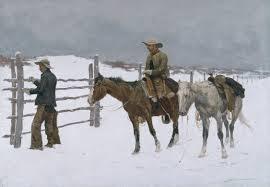
Frederic S. Remington: His First Lesson. 1903.

Rose si trasferisce a vivere al ranch, con gran disappunto iroso di Phil, che non è neppure stato invitato al matrimonio, celebrato in riservatezza e quasi segreto.
E, quindi, tra moglie e marito non mettere un fratello. Anzi, più esattamente, tra fratelli non mettere una moglie.
Phil non accetta l’arrivo della donna, che disprezza per la sua origine, il suo passato, il suo essere vedova, e madre di una mammola. Le riserva un trattamento così scostante e crudele che la fragile Rose non trova di meglio che attaccarsi al collo della bottiglia (whiskey, ma anche gin presumo), quasi volesse seguire le alcoliche orme del marito morto suicida per impiccagione.

description
Frederic S. Remington: The Fall of the Cowboy. 1895.

È un mondo dove tocca indossare una maschera, e chi ne è sprovvisto come Rose finisce stritolata.
Lo stesso Peter, isolato taciturno bizzarro, col tempo impara a cucirsi un vestito su misura che possa essere accettato anche da Phil.

Magnifica la resa del paesaggio di frontiera, del far west in trasformazione, della natura selvaggia e imponente, della vegetazione, le montagne, la neve, la pioggia, la terra, i cespugli, l’artemisia, gli alberi, fiumi e ruscelli, cavalli selle cappelli e zoccoli, guanti e pelli conciate…
Magistrale come subito sotto la superficie scorra perenne il tema dell’omofobia e dell’omosessualità repressa che nel 1967, anno della prima pubblicazione, non poteva certo essere accolto con consenso e sostegno.

description
Grant Wood: Breaking The Prairie. 1935-7. Murale alla Parks Library della Iowa State University.

PS
Unico neo, per me: l’occhio del narratore che si sposta a raccontare la storia del primo marito di Rose o dell’indiano in gita pellegrinaggio verso la terra dei padri. Avrei preferito che anche questi personaggi fossero filtrati attraverso i protagonisti, invece che renderli soggetti principali di brevi excursus un po’ fuori rotta.

description
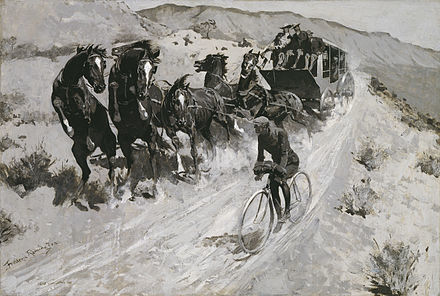
Frederic S. Remington: The Right of the Road. 1900.

PPSS
Dovrebbe esserci un minimo di discernimento nell’uso dei blurb. E probabilmente ancor maggior discernimento nel pronunciare certe asserzioni: sulla quarta di copertina è riportata una frase di Nicholas Shakespeare del Daily Telegraph
Una storia migliore persino di Stoner.
No, cose così sono bestialità, non si possono dire, non si dovrebbero diffondere.
Profile Image for William2.
859 reviews4,045 followers
July 2, 2022
An exceptional novel. A story whose setting in the American west reminds me a little of Cormac McCarthy’s work. Now a film by Jane Campion — The Piano, An Angel At My Table, etc. It’s interesting to see how much content she did not use, almost 2/3 of the book.

The happiness brother George has found with the widow Rose is something Phil can never have. As a teenager Phil was the lover of Bronco Henry, his rustic cow punching mentor.

Phil has no future unless it is the perpetuation of himself and his brother as a team of wealthy ranchers. Rose comes along and annihilates all that. He calls her “a cheap little schemer.” She’s no such thing. She is a loving wife and mother.

But Phil, who is no longer his brother’s cynosure, torments her. Rose starts getting headaches; for relief she takes to drink.

Enter Peter, Rose’s son, shrewd beyond his years. Phil is a homosexual posing as a homophobe so he tries to humiliate Peter as a “sissy.” It does not work. In fact, Phil is smitten. He tells himself by befriending the boy he’s undermining Rose, but that’s self delusion.

Lately Peter has been away studying medicine. But during breaks he’s back at the ranch. Rose hates Phil for mocking her piano playing. Now stupidly, George, too in love, invites the governor to hear her play. It’s a debacle. Meanwhile Phil and Peter are taking wilderness trips together.

In the portion of the storyline omitted by Campion there’s a tale of Rose’s first husband, Johnny, a doctor and a drunkard who is humiliated by Phil and later hangs himself. It’s not clear if Rose or her son know just what Phil has done to their original nuclear unit.

Phil despises those who “humiliate themselves for money.” He has worked, yes, but his father’s money was there for him from the cradle. He props up his own ego by humiliating others like “sissies,” Jews, Indians and the poor.

For one who prizes his own cleverness so much, his end is fitting; for the reader it’s also surprising and deeply satisfying.
Profile Image for Beverly.
950 reviews467 followers
October 21, 2022
I wish I could give this 10 stars. The Power of the Dog is a masterpiece of characterization. Not only the characters are brilliantly realized, the cold, implacable, and indifferent landscape of 1920s Wyoming is too.

This is a western with a twist. Men forged in a hard, unforgiving, barren place are supposed to be made tough, but wholesome, strong, but fair. Or at least, that's the ethos of the West. Phil Bender is tough, alright, but he's cruel and sadistic. He's rich, but has no sympathy for the poor. He is racist and sexist. Phil is a master at manipulation. He sees your weakness and takes advantage of it, by probing and twisting the knife in. He does this to strangers and his family.

Used to the way things have always been, Phil becomes enraged when his docile brother takes a wife and brings her home. Phil is determined to wreck the marriage and send her and her "sissy" son packing.
Profile Image for Perry.
634 reviews617 followers
May 15, 2025
No Hot Dogs, Nanners or Mayo
Oh, Good Grief!

A recent reissue of a 1967 ground-breaking Western novel, a high-pressurized psychological study of two brothers, George and Phil, as well as of the former's new wife Rose, who before the marriage was a widow, and her 17-year-old son, "Miss Nancy," which is brother Phil's nickname for Peter, the sensitive, "sissy" son. The novel was set in the 1920s.

I don't want to say too much to give away the plot, which is in fact telegraphed from early on. I will say though that the novel reminds me of a merciless, blustering bully I knew growing up who expressed an absolute disgust with gay men, so much so, he said, that he refused to eat hot dogs, bananas or mayo. I was no Freudian scholar but I knew enough about human nature to figure out this dude had some major "issues" with his sexuality. This was in the early 80s, in the South and AIDS/HIV was just coming on the radar as a public scare.

This novel particularly resonated with me because I was bullied between 13 and 15 years old, as a very, very late bloomer. My voice did not start to change until I was 17, I didnt have to shave until I was 19, I was skinny as a rail until 19, and I grew 6 inches between graduating high school and turning 21. So, I was bullied without mercy and called "faggot," "sissy," and other names. Thing is, I have always been heterosexual and never questioned my sexuality. I've never had a problem with the sexuality of others. In my family--that I know of--I have a gay first cousin and 2 gay first cousins-once removed.

Looking back, I have little doubt that my torturers acted against me, as smaller and weaker, out of fear and hatred and self-repression. Though I still carry light scars from those few years, I have always been secure in my sexuality and I am probably considerably bigger than those guys are now.

Back to this brilliant 1967 book, it is a real steel-toed boot to the butt of many bullies. A compelling examination of self-hatred's hoodoo and the hold over a household that a rabid dog can have.
Profile Image for Alexis Hall.
Author 59 books15k followers
Read
March 31, 2022
Source of book: Bought by me
Relevant disclaimers: None
Please note: This review may not be reproduced or quoted, in whole or in part, without explicit consent from the author.

And remember: I am not here to judge your drag, I mean your book. Books are art and art is subjective. These are just my personal thoughts. They are not meant to be taken as broader commentary on the general quality of the work. Believe me, I have not enjoyed many an excellent book, and my individual lack of enjoyment has not made any of those books less excellent or (more relevantly) less successful.

Further disclaimer: Readers, please stop accusing me of trying to take down “my competition” because I wrote a review you didn’t like. This is complete nonsense. Firstly, writing isn’t a competitive sport. Secondly, I only publish reviews of books in the subgenre where I’m best known (queer romcom) if they’re glowing. And finally: taking time out of my life to read an entire book, then write a detailed review about it that a handful of people on GR will look at would be a profoundly inefficient and ineffective way to damage the careers of other authors. If you can’t credit me with simply being a person who loves books and likes talking about them, at least credit me with enough common sense to be a better villain.

***

I … I do not quite know how to talk about this. But this book absolutely blew my mind.

I picked it up because I was curious about the movie but couldn’t watch it (we’re still not subscribed to Netflix because of its treatment of its trans employees) and, actually, I’m really glad I read the book first. Because while I’m sure the movie is great, The Power of the Dog might just be one of the best things I’ve read?

Or at least, listened the audiobook of. Which, by the way, I heartily recommend as a way to interact with this text. I’m not actually a big audiobook listener because I read, I think, reasonably quickly and obviously an audiobook can take upwards of 20 hours to listen to, unless you make everyone sound like chipmunks which sort of defeats the point of having a book read to you by a (hopefully) skilled narrator. So I tend to stick to books I already know—classics, usually—read by people whose voices I independently enjoy or else books whose particular style benefits from hearing them related by a particular voice. In this case, Chad Michael Collins has the perfect gravelly cowboy drawl—sounds like he’s stepped right out Red Dead Redemption 2, in fact—alongside sufficient to range to make every character voice feel unique, and the unexpected moments of beauty, hope and tenderness hit all the harder.

The audiobook is 8 hours long, suggesting the book itself is a taut little thing. But I literally spent an entire day finding excuses to listen instead of doing anything else. Let me tell you, the grouting in our bathroom is positively sparkly right now.

In any case The Power of the Dog is, I guess, a psychological thriller, almost a domestic one since it's set within the insularity of a life on a ranch. But it's also a complicated exploration of power, masculinity, love, cruelty and … well … queerness. Set in the early 20th century, the deal here is that Phil and George Burbank own the largest ranch in the local area—some corner of rural of America that is slowly slipping into irrelevance as time marches on. The two brothers could not be more different: George is sturdy, unassuming, quiet, and kind whereas Phil is slender, brilliant, confident, and intolerant to the point of “whoa there.” I mean, this guy is racist, misogynistic and—I’m sure it goes without saying—exceptionally down on “sissies.” Then George marries Rose, the gentle-hearted widow of an alcoholic doctor, and Phil takes immediately against her, deciding to drive her from the ranch through a campaign of subtle, yet sustained, emotional abuse. This situation is only complicated by the arrival of Rose’s sixteen-year-old son, Peter, who is a chilly, effeminate boy, the absolute manifestation of everything Phil despises about sissies. What follows is part powerplay, part love story (in the most twisted sense), saturated by an uncomfortable but undeniable sensuality (despite the fact the characters only touch once) and the crushing weight of inevitable, impeding doom.

I hope, from this description, is that’s fairly obvious Phil is gay, and so deeply repressed that he has essentially fashioned himself into the most damaging manifestation of masculine identity conceivable: a man who “loathed the world, should it loathe him.” In general, I’m not mad keen on the whole “homophobic homosexual” trope, since makes it the problem of homophobia kind a problem for queer people which is messed up, but The Power of the Dog was written in 1967—when writing about queer people at all, especially in the masculinity-saturated world of the western, was pretty much unthinkable.

I don’t want to say too much about the book because the unfolding of its psychodrama is so satisfying that I don’t want to spoil it. But the characterwork is so deep and deft that I’ve sort of been haunted by all of them since I finished, even the side characters, like Rose’s uselessly kind previous husband or Edward Nappo (the son of a Native American chief who wants to take his son to visit the mountains on the land where they used to live before the whole tribe was moved to a reservation two hundred miles away), whose stories are braided through the narrative giving breadth and context to a story that could otherwise have been unbearably insular. The relationship between the instinctively loving Rose and quiet, solid George (as much a victim of his brother’s abuse as anyone) is so tentative, tender, and shyly hope-touched that it’s genuinely devastating to see it (and Rose) buckle beneath Phil’s unremitting scorn.

As for Phil. Dear God. Such a perfectly balanced portrait of a monster and a tragedy, I couldn’t help thinking what a terrible waste of a person. Not to excuse his abuses, of course. The man is an abuser through and through, whose impact on those who might have cared of him, is nothing short of unremittingly toxic. But, at the same time, it is hard not to read him an indictment on a world where cruelty creates villains from those who could have been different. Although probably the saddest line in the whole book for me was this one: “[Phil] had a hunch George hated sissies as much as he did”. It is, of course, a reflection of Phil’s inability to accept himself cast onto others, but the truth is George is nothing but kind to Peter (despite his overtly “sissyish” ways). In fact, if George even notices, or knows what it means, or cares, the text offers no evidence. All we get is this when he’s speaking to Rose:

‘I don’t forget I’m a stepfather. I imagine a stepfather’s got to try a little harder than a father. I’d imagine there’s no reason for a boy to like a stepfather unless a fellow tries. I know how I’d feel.’


Long story short: incredible book, worth it, I suspect, even if you’ve watched the movie, because the scope is so much greater, and the interior life of the characters so much richer. I do wish the ending had been slightly less abrupt, not so much because I wanted to dwell on what happened, but part of me had grown to care so much for the characters that I was hoping for a bit more closure. Hoping but not expecting. Probably it ended exactly as it needed to.

Also, as far as symbols for queer desire go, I will never think of willow trees the same way again.
Profile Image for Gabriel.
901 reviews1,136 followers
January 31, 2022
Un drama cruel e implacable que se cuece a fuego lento. Con personajes cuestionables y psicológicamente complejos. Sencillamente fascinante, certero y con un final escalofriante.

Lo primero que noté al iniciar el libro es que tenía una ambientación muy lograda. Los personajes se desenvuelven en un entorno casi áspero y hostil del oeste y aunque no sea del todo parecido al western tiene características de este. Se puede sentir fácilmente que estás metido en el paisaje, entre los ranchos, establos, tabernas, corrales; rodeado de colinas, caballos, novillos y vaqueros que andan de aquí para allá. Ahora, vamos con la trama del libro que en su conjunto es sobre dos hermanos que vendrían siendo los ricos hacendados del entorno. Por un lado está George quien se encarga de las negociaciones. Es corpulento, pero aunque tiene una proporción que puede dar miedo es amable, cabeza dura y de pocas palabras; un hombre que se deja llevar más por el corazón. Phil en cambio se encarga del trabajo duro, es delgado pero muy tosco, cortante e hiriente, un completo desgraciado (muy desgraciado) inteligente y astuto que sabe dar dónde más le duele a la gente, mete el dedo en la llaga y hace sangrar por donde va pasando. Tiene la empatía muy poco desarrollada y vive en un bucle dónde todo es él y nadie más, haciendo gala de un ego único; donde su necesidad de hacer sentir mal a los demás es cuestión de su nula felicidad ante algo que lleva reprimiendo años, en un lugar violento y salvaje con todos.

Por el otro lado, la historia de los hermanos Burbank se conecta con la vida de Rose, una mujer viuda y su hijo Peter cuando George decide casarse con ella. A partir de allí, se empieza a desarrollar un ambiente tensionante entre los personajes, sobre todo entre Phil que no dudará a la hora de joderle la existencia a la mujer, por creer que ella solo está interesada en el dinero de su familia y también porque odia a su hijo mariquita y afeminado. Sí, tenía que ser homofóbico y en el paquete también viene incluido el machismo y la misoginia interiorizada.

Lo excelente de la historia es cómo un pueblo chico puede volverse un infierno para los personajes al estar regido bajo unas reglas antiguas y normalizadas que oprimen a varios de estos. Empezando por el papel de la mujer que en este libro queda representado como mujeres floreros, no hay más, todas y cada una de ellas dependen de los hombres y casi no tienen voz ni voto. Incluso Rose vive constantemente buscando la aceptación de los hombres y siendo manejada por estos inconscientemente. Otra cosa que queda sobradamente explicada es la homofobia con los continuos ataques de los habitantes a su hijo Peter, el cual es educado, estudioso y dedicado a leer. Le gusta realizar cosas artísticas en vez de jugar a la pelota o romperse el lomo haciendo trabajos de campo como buen hombre de rancho. Porque por si fuera poco el libro también te maneja la masculinidad tóxica donde solo hay ciertas maneras en el comportamiento del hombre y eso es haciendo el trabajo duro, teniendo las manos llena de callos, con un aspecto sucio, sudado y descuidado, así, justo como Phil. Pero el chico es peculiar, atento y demasiado observador; definitivamente uno de los personajes más interesantes.

No le doy todas las estrellas (aunque he estado a punto) porque es un libro muy contemplativo; se toma su tiempo, con mucha calma y detenimiento para construir todo. Lo que hace que en los dos primeros tercios de la historia pareciera que no pasara absolutamente nada, lo cual es falso, lo que pasa es que el drama está muy metido entre líneas y solo cuando llegas al final, descubres porqué ha pasado todo y se ha llegado a ese punto sin retorno. De hecho, es en la última parte cuando más detalles sutiles y ocultos hay, y en los dos últimos capítulos se respira el ambiente incómodo y enrarecido, esa sensación de que algo está a punto de pasar. Y así es, efectivamente, pero no sé está lo suficientemente preparado para el golpe que supone el plot twist que se avecina.

Sin embargo, es bastante nutritivo en temas como el papel de la mujer, la homosexualidad reprimida y expuesta, la masculinidad tóxica y unos personajes lo mar de interesantes y psicológicamente complejos. Muy bien ejecutados. Lo bueno es que todos estos temas se tocan de manera sencilla, apetecible y con una maestría que nunca aburre. Y aunque a veces se va por otros lares como el tema de los indios (que bien puede parecer innecesario) sirve para dar un contexto sociocultural y para caracterizar a los personajes. Además, el libro no se estira más de la cuenta y su extensión se siente satisfactoria, ni para quitar ni para meter algo más.

El título del libro me fascina porque es una fiel representación de los juegos de poder que se dan entre los distintos personajes, donde uno intenta desestabilizar a la otra llevándola al borde de la desesperación. Y otro más también está metido en el juego solo que nadie lo sabe y está a punto de dar el jaque mate. Y es que en el último tercio la historia cobra un cariz tremendamente siniestro e interesante con la extraña actitud que va teniendo cierto personaje sobre lo que pretende. Y Phil, que como siempre y desde el comienzo sigue maquinando en su mente nuevos métodos para poder romper la relación de su hermano con Rose sin importar destrozarlos por dentro hasta que toquen fondo.

El final es espeluznante y magnífico. Es de esos que demuestra que no hay que fiarse de las apariencias, que el que parece que no mata una mosca es porque sabe hacer las cosas. Es un final donde el que está encima de la cadena alimenticia pasa a ser un ratoncillo indefenso, la presa de otro que estaba a la sombra, oculto esperando su gran momento. Es un acabar con todos los males de raíz para que haya un final feliz en medio de la tragedia. Sencillamente espectacular. El ejemplo de alguien que se cree superior pero no sabe que en realidad está en el abismo, a punto de caer en la boca del lobo. No sé qué más decir, a lo mejor y estoy diciendo mucho a lo mejor y no, pero al menos no hago spoilers significativos. Al final, lo único que puedo decir es que le dediquen tiempo y lean este libro, y de paso, luego la película se disfruta mucho más sabiendo los detalles y guiños que te llevan a ese desenlace.
Profile Image for Carol.
410 reviews457 followers
January 18, 2016
***This review probably contains some spoilers***

I just reread this novel, after losing track of it for a few years. It was just as emotionally powerful for me this time around. Beautiful, lean writing style with few wasted words...yet it still feels like an epic Western story of Montana ranch life in the 1920’s.

The story depicts family dynamics in the life of two brothers from a wealthy ranching household in 1924. Phil, the oldest is a brilliant but repressed homosexual. His younger brother, George is slow-witted yet basically a decent, caring man. Tensions surface when George marries a widow and brings her, along with her sissy son to the ranch to live. Phil’s reptilian and cunning persona emerges as he ridicules the widow, Rose and taunts her effeminate son, Peter. It’s not for the faint of heart. Parts of the novel are as brutal as the harsh, isolating and unforgiving elements of the western landscape, also a character in this story.

This is a brilliant and compelling psychological drama…an astonishing piece of work, when one considers the world’s intolerant attitudes toward homosexuality, especially in the masculine West during the 1920’s – or even in 1967 (for that matter) when Thomas Savage originally published this novel.

Annie Proulx wrote the Afterword to this particular edition (2001). And, in that Afterword she says, “…a psychological study freighted with drama and tension, unusual in dealing with a topic rarely discussed in that period – repressed homosexuality displayed as homophobia in masculine ranch world." I’ve no doubt that this novel influenced her short story, “Brokeback Mountain”, which was adapted as a critically acclaimed movie in 2005.

I was mesmerized by this tragic and complex character study as it builds heightening tension from beginning to its karmic conclusion. HIGHLY RECOMMENDED
Profile Image for Zoeytron.
1,036 reviews896 followers
April 10, 2022
This is the story of two brothers, Phil and George Burbank.  The setting is Montana, circa 1920's.  Phil and George run a successful cattle ranch.  These two are bachelors, nearing 40 years of age.  They are close, even to continuing to share the room in which they were raised.  Other than that, they are as different as night and day.  Phil, the older brother, is a talker, good looking, book smart, tough, and mean-spirited.  George is plain, stodgy, quiet, and has a kind heart.  As different as they are, they are family and it has worked well for them.  When a widow with a son comes into their lives, life as they have known it goes flying out of the window.  

Think of years gone by, and the shadows that they cast upon our lives.  This is a story that I will be long in forgetting.  It's a Western, but set without gun play.  There is a modicum of grit, but it isn't predominant.  Family, loyalty, love, and life.  If this appeals at all, glom onto a copy and get to reading.  There was something about it that asserts its star-worthiness, it gets five of them from me.
Profile Image for James.
109 reviews130 followers
December 13, 2021
Some writers dwell on the darker side of humanity, and their work can often feel brutal and bleak to the point of being unbearable. Other writers choose to emphasize the brighter side of humanity, at the risk of sometimes seeming too naively cheerful or cloyingly sweet.

But the best writers (or at least my personal favorites) have an uncanny ability to find the perfect balance between these extremes, exploring with unflinching candor and astonishing compassion the messy mixture of beauty and ugliness, strength and frailty, kindness and cruelty that exists within each and every one of us. Thomas Savage, it turns out, is exactly that kind of writer.

This is one of those books where the less you know going into it, the better. So I'll skip over the usual plot summary except to say it's set on a Montana ranch in the 1920's, a unique blend of revisionist Western and Gothic domestic drama, with some pitch-black comedy tossed into the mix for good measure. And it's easily the best book I've read all year.

Few authors are able to write with the almost divine omniscience and keen understanding of human nature that Savage displays so effortlessly here. He captures the hopes, fears, insecurities, joys, disappointments, and cruelties of his characters with an expansive empathy and unbridled honesty that is both breathtaking and at times deeply unsettling. And he's created in Phil Burbank one of the most compelling, charismatic, despicable, and unforgettable literary characters I've met in a very long time.

Some readers may find this slow-moving, but for me it read more like a breathlessly suspenseful psychological thriller. I'm a notoriously slow reader and I devoured this book in three nights. Every action and decision, no matter how seemingly trivial, and every conversation, both said and unsaid, is infused with such a profound sense of significance and dread, spurring the story ever closer toward its inevitable and devastating conclusion.

I loathed every minute I had to tear myself away from these wonderful characters and their tormented lives, aching to see them achieve the peace and happiness that always seems just within reach. And now that I'm finished, I desperately miss them already, almost to the point of resenting Savage for doing his job so damn well. If that's not deserving of an enthusiastic 5 stars, then I don't know what is!

I'm not usually one to offer content/trigger warnings, but I know I have several GR friends who are sensitive to depictions of cruelty and violence against children and animals, and there's A LOT of the latter in this book. It's consistent with the book's setting, symbolism, and overall themes, but some may find it too disturbing to tolerate.
Profile Image for LA.
487 reviews587 followers
June 18, 2017
What a sly and creepy old cowboy story! Utterly outstanding and, considering that this was written in 1967, it is timeless as well. Don't let the western setting nudge you into thinking that this is a shoot-em-up or something that Louis Lamour would have written. This is dark and juicy.

Two middle-aged bachelor brothers are very prosperous ranchers in 1920s Montana, both loyal to their land and tending to the wealth that came from their parents. But it is at that point that their similarities stop.

Handsome Phil is known for his brilliance and artistry, roping, photographic memory, charm, witty repartee - you name it. George, on the other hand, is a bit of a duff. Kind, but still a duff. Remember that song from Donny and Marie - I'm a little bit country...I'm a lil bit rrrock and rollll? Slick Phil prides himself on being a man's man - bathing in the creek once every few weeks, never wearing gloves no matter the weather - but he is absolutely the rock and roll side of the brotherly duo. Quick-witted, I took a shine to him in the early pages of this fantastic psychological tale. Poor George is definitely in his brother's shadow but seems very content to be there.

When their lives intersect with a beautiful town woman, mother to an incredibly bright and sensitive boy, the balance between the brothers is irrevocably upset. No - they do not both fall in love with her. Nothing that shallow plot-wise happens, but when this woman and her boy enter the brothers' world, frightening things begin to happen. This book is rich in texture and nuance, and I am afraid to write anymore for fear of giving things away! There were two resolutions at the end of the book that I thought I saw coming, but I believe the author intended that so we could savor the anticipation.

It is fitting that Annie Proulx wrote the afterword for this re-release. The book reminds me of her "That Old Ace in the Hole" in a way, but this old beauty is encased in psychological tension that thrilled me. 5 stars and on my Favorites shelf!

Profile Image for Michael.
1,094 reviews1,969 followers
September 25, 2014
An intriguing character study that explores the hollowness of manly virtues. I liked how it surprised me by showing how the true Western wilderness of the American Dream may be gone by the early 20th century, but it is still lodged in the human heart. Annie Proulx, in her afterword provided this summation of the strengths of this book:

Savage, though rarely included in the western literary lists, was one of the first Montana writers … His novels are rich in character development, written in clear and well-balanced sentences wit striking and important landscape description, imbued with a natural sense of drama and literary tension. …Something aching and terrible of the west is caught forever on his pages, and the most compelling and painful of these books is The Power of the Dog, a work of literary art.

The main characters are two middle-aged brothers, Phil and George, who are running a large family ranch, and a widow and her son, Rose and Peter, who move in after she marries the more kindly brother. Phil is the bright and articulate one of the pair, college educated with a razor wit, a sort of Renaissance man with skills in artistic ironwork, taxidermy, chess playing to complement his ability to fix equipment of all sorts and manage the crew. In contrast, George is slow and laconic, stolid and reliable in his job of managing the books and communicating with buyers. Where Phil is mercurial and just plain mean, George is good humored and kind. Rose moved from the East with her doctor husband and is cast adrift when he dies , leaving her to struggle with how to raise her son in the dog-eat-dog world of this small railroad town on the plains of southwestern Montana. Peter turns out an odd secretive boy, who does poorly in sports and so avoids other kids and spends his time reading his father’s medical books, studying nature, and pursuing artistic endeavors like making paper flowers. No wonder he gets tagged a sissy and is subject to bullying by the other kids.

Phil is such a fascinating character. At first you can almost appreciate his devotion to proving himself superior in his toughness and competency and worthy of his heroes from the old days. Instead of playing the part of wealthy owner he is, he dresses like a farm hand, bathes at a pond once a month, abjures gloves when doing rough work, and loves to hang out joking around with the “boys” in the bunkhouse at the end of the day. But something is frozen and twisted in his development. He gets the same pleasure in bullying people he perceives as fools as you would expect in children. He and George still sleep in the same beds in the same room they did as boys, and neither pursue continuing the dynasty for the next generation after their parents retire to a hotel room in Salt Lake City.

There the Old Gent dabbled in the stock market and the Old Lady played mah-jongg and dressed for dinner as they always had. Closed off the Old Folks’ bedroom gathered dust kicked up by the automobiles—more and more of them every day—that putt-putted up the road out front. In that room the air grew stale, the Old Lady’s geraniums died, the black marble clock stopped.

But the situation changes dramatically when kindly George falls for the widow and brings her back to the ranch as his new bride. Phil makes it clear to all how he sees Rose as a mercenary gold-digger with pretentions to culture he is ready to undermine at every step. And he can’t resist branding Peter as a sissy every chance he gets. In a critical turning point, Rose undermines Phil’s power in an emblematic way. An old Indian chief escapes with is son from the reservation 200 miles away and travels by cart to share the sacred spots of his tribe’s traditional lands, now part of the huge ranch. Phil viciously turns them away at gunpoint, but Rose later encounters them and invites them to camp on the land. Life soon becomes a living hell for all four of the main characters as each seeks some kind of solution. Finally, things seem to get better when Peter shows interest in learning Phil’s skills at braiding rawhide ropes, and they start spending a lot of time together. The ending and resolution to this tale has a dark, karmic twist that left me reeling.

Much is left to the reader to figure out what this book says about the role of the West in the American character. It was a time and place for discovery and escape from stultifying aspects of civilization, a chance to prove yourself against the hazards of the wilderness and tough peoples and dangerous Indians who resided there. Teddy Roosevelt, who was a sickly boy tagged a sissy, proved himself in just such a ranch. But many who banked on such an outlook were misfits not worthy of the term civilized, and the greed that steamrolled the Indians is a heritage hard for us descendants to live by. Much food for thought her. The story will make you wonder about the title and its place in the opening quote from the Old Testament:

Deliver my soul from the sword, /My darling from the power of the dog..
Profile Image for Betsy Robinson.
Author 11 books1,228 followers
July 15, 2017
I didn't want this to end. I read slowly. But I also had to find out what happened. So I read fast. How did I get this old and not know about this primal work of art first published in 1967?

Thank you to Goodreader Mel for her unrevealing yet irresistible review; she is right—it is best to go into this book blind.

If I owned a copy—and I'll probably end up buying it to read it again—I would put it on my shelf beside a book I've read three times and own two copies of, John Williams's Stoner. And if I owned them (and again, I may end up buying these treasures), I would accompany The Power of the Dog and Stoner with John Williams's Butcher's Crossing and all of Kent Haruf's books and all of Mary Lawson's. Also, maybe John Steinbeck's The Grapes of Wrath (there is an almost invisible reference homage to that book on page 212 of Dog). If you love any of these writers and their books as much as I do, that is all the recommendation you'll need to read Mr. Savage's exquisitely written novel.

The republished 2001 edition has an enlightening afterword by Annie Proulx. I suspect this book gets even better on a second reading—to see how it is made.

*A day after finishing I reread parts of the beginning and the complete last four chapters. It's even more delicious to read, knowing what the whole story is. I saw so much more. This is a book that can be read multiple times!
Profile Image for Mª Carmen.
854 reviews
May 19, 2024
4,5 ⭐
Un drama muy duro, que me ha gustado mucho.

Montana, 1924. Phil y George son hermanos y socios, copropietarios del rancho más grande del valle. Cabalgan juntos, transportando miles de cabezas de ganado, y siguen durmiendo en la habitación que habían tenido de niños, en las mismas camas de bronce. Phil es alto y anguloso, George rechoncho e imperturbable. Phil es una lumbrera y podía haber sido cualquier cosa que se propusiera, George es tranquilo y no tiene aficiones. A Phil le gusta provocar, George carece de sentido del humor, pero tiene ganas de amar y de ser amado. Cuando George se casa con Rose, una joven viuda de porte orgulloso y sonrisa rápida, y la trae a vivir a la hacienda, Phil comienza una campaña implacable para destruirla. Pero los más débiles no siempre son quienes uno cree. Hasta aquí lo que nos cuenta la sinopsis.

¿Qué destaco en este libro?

Lo primero que destaca es la ambientación tan visual. Montana 1924 en una zona rural. Una tierra áspera, polvorienta e inclemente, con hombres que tratan de sobrevivir de lo que la tierra les depara. El rancho de los Burbank es el más grande de la región. Ambos hermanos lo dirigen a la antigua usanza, desayunan con sus vaqueros en una mesa comunal y trabajan codo a codo con ellos. Todos son hombres rudos, el estereotipo de la "masculinidad del cawboy", mucha testosterona, mucho trabajo físico al aire libre, taberna cuando toca y ninguna inquietud intelectual (y pobre del que las tenga).

En la trama se aprecian dos partes (aunque el autor no la divide en tales), un antes y un después de la boda de Rose y George.
Un antes en el que Savage nos presenta el contexto y a los personajes. Conoceremos el trabajo del rancho, las personalidades de los dos hermanos, Phil y George, tan distintos entre sí y el tipo de existencia que llevan. Igualmente nos describe el pueblo de Beech y la vida de Rose y su hijo Peter, antes y después de enviudar de su primer marido, Johnny Gordon.
El después, comienza cuando George y Rose se casan y esta se traslada a vivir al rancho. Es aquí cuando la tensión va subiendo de tono hasta mascarse. Hay lectores que comentan que la primera parte se les hizo más lenta y en cambio se engancharon mucho con la segunda. Tengo que decir que no fue mi caso. Yo me enganché desde el principio, creo que cada una tiene el ritmo apropiado y no concibo que sea posible la una sin la otra.

Ante todo esta es una novela de personajes.
Para empezar tenemos a los hermanos Burbank. George es amable y empático. Aspira a llevar una vida convencional con la mujer que ama, relacionándose con otras personas, sin renunciar a que su hermano forme parte de ella. No quiere ver el trato que Phil dispensa a Rose y por ende a su matrimonio. Es aquello de si no se verbaliza no existe. De esta forma, al no afrontar las cosas, deja a Rose librada a su suerte.
Phil es la oscuridad personificada, inteligente, con deseos reprimidos, implacable y cruel. De hecho creo que la palabra cruel es la que mejor lo define.
Por otro lado tenemos a Rose, una mujer trabajadora, que ha salido adelante tras la muerte de su primer esposo. No es de carácter fuerte. Es amable y sencilla. Esa amabilidad es la cualidad que busca y valora en los hombres. La encontrará en George, pero no estará preparada para implacabilidad con que quiere destruirla Phil. No será capaz de enfrentarse a la situación por sí misma ni de pedir ayuda a su marido.
Por último tenemos a Peter, el hijo adolescente de Rose y un personaje crucial en esta historia. Peter representa todo lo contrario de lo que se espera de los hombres de esta tierra. No es de constitución fuerte. Es tranquilo, le gusta leer y estudiar. Prefiere estar solo a jugar a la pelota con los chicos del pueblo. Acosado en el colegio, soporta las burlas de sus compañeros, sin responder a las provocaciones, con una excepción, cuando en lugar de insultarle a él lo hacen con su padre. Tras la boda de su madre, soportará igualmente las burlas de los vaqueros del rancho, incitados por Phil. Sin embargo a Peter no le importa lo que piense la gente. Tiene "agallas", está dotado de una gran fortaleza interior.

La sexualidad está presente durante toda la novela. En primer lugar destacan los estereotipos sexuales en torno a la mujer. Existen dos tipos de mujeres, las buenas y las malas. Las buenas son las esposas, las madres, las hermanas y las hijas, seres angelicales y asexuados per se. Las otras no hace falta especificar. Igualmente, Savage aborda el tema de la homosexualidad, difícil ya por época y mucho más aún en una zona rural o en un rancho. Como dije antes el estereotipo masculino está muy definido y todo el que se salga de él es "sospechoso". La homosexualidad se reprime, se niega o se disimula.

El final es bueno. Me pilló por sorpresa. Desde que Rose llega al rancho esperas el desenlace. Se me ocurrieron varias posibilidades, esta no y sin embargo es muy muy coherente.

Añadir, que me rompió el corazón la situación de los indios despojados de sus tierras y enviados a la reserva. Ese padre y ese hijo que intentan volver.

En conclusión. Una novela que me ha gustado, que tiene mucho calado y que recomiendo sin dudar.
Profile Image for Andy Marr.
Author 4 books1,167 followers
February 6, 2023
Absolutely brilliant, though undoubtedly a contender for the crappiest synopsis in history. Crap not only because it betrays the fate of one of the book's main characters long before Fate finally arrives to greet him around the 33% mark, but also because - even more annoyingly - it allows us to guess the ending before the book's even half way through. I've no doubt that the 'unlikely protector' and the 'devastating twist of an ending' would have been entirely unexpected if I hadn't been told from the first moment to expect them. As it was, I managed to guess the 'unlikely protector' almost as soon as they made their first appearance, and I was so fully prepared for the 'devastating twist' that, when it came, I simply shrugged my shoulders and sighed.
Profile Image for Lisa.
624 reviews229 followers
May 13, 2022
Thomas Savage's novel The Power of the Dog is a psychological drama set in a 1920's Montana ranching community. Savage's deep insight into human nature and the light and dark in all of us is obvious throughout this tale.

Phil - "One reason he hated booze, he was afraid of it, afraid of what he might tell."

"How does one man get the power to make the rest see in themselves what he sees them? Where does he get the authority? But from somewhere he does get it."

"But oh, how Phil knew how to touch the sore place. Lord, how he knew how to lift a scab."


George - "I used to think that's all I had, was money, until we sat here and laughed and talked. Isn't it funny that even when I'm alone now, I feel so good."

Rose - "She felt suffocated in the void between her intention and her ability, and shattered by loneliness."

"She couldn't be anything unless someone believed in her, nothing at all. She could be nothing but what someone believed she was."


I can see a bit of myself in each of these characters. I can be charismatic when called for, I like to get my way, I enjoy being with those who love me, I doubt myself on occasion and in the past have at times looked to others to help define me. We humans are complex, disorderly creatures.

I appreciate how Savage slowly and subtly reveals Phil's character and motivations through the course of the novel. He uses this technique to build and sustain tension throughout.

Savage also deftly conveys the sense of place and time, showcasing the ranch and the character of a small town. His foreshadowing is delicate and precise. And his prose is pitch perfect--in places short and succinct, in places quite sinuous.

". . .there always followed on the heels of the vanished sun a stunning silence, an unearthly hush, and how into it crept little sounds--as night-things creep into the dark--the whispers of willow leaves and branches kissing, touching, water caressing and fondling the smooth stones in the creek . . ."

This brilliant character study is an absorbing and compelling read with a satisfying conclusion.

Thank you to my GR friend James for bringing this novel to my attention.
Profile Image for Faith.
2,229 reviews678 followers
November 30, 2021
I learned about this book when I saw that a new Benedict Cumberbatch movie based on it had been made. The trailer for the movie looks like they have followed the book pretty closely. The book was first published in 1967 and there have been previous attempts to film this tension-filled story of 2 Montana ranchers.

This is a dark, suspenseful, character-driven book about 2 unmarried brothers who run their cattle ranch after their parents have retired. Tall and graceful Phil is exceptionally quick-witted and has excelled at everything he has attempted, including cruelty. His discomfort with his repressed homosexuality has spilled over into hatred of Jews, blacks, Indians and women. Short, stocky and socially awkward George runs the business end of the ranch. When George shockingly marries a widow with a teenaged son, considered to be a “sissy boy”, things do not go well.

This book is really wonderful. The first chapter begins with a castration scene that is pretty unpleasant, but it is not repeated, so don’t be turned off by that. Phil is the giant, looming center of the book but each of the other characters seems equally real as they try to cope with their insecurities and with Phil. The ending of the book is so surprising, and rendered with such subtlety, that I thought that I had somehow missed a big event, so I reread the last chapter. I hadn’t missed anything, the author just wasn’t afraid of making the reader fill in some gaps. That is true of the entire book.
Profile Image for Ana Cristina Lee.
765 reviews401 followers
November 21, 2021
No es una novela del oeste, pero tiene todos los elementos que las caracterizan: vaqueros, rancho, pequeño pueblo, ricos hacendados, montañas, nieve... Pero estamos en Montana en 1924 y hay cosas que están cambiando:

Varios automóviles se abrían camino lentamente entre la manada, que se separaba y fluía en torno a aquellas máquinas como el agua cuando se topa con una roca; los vaqueros jóvenes se lucían un poco para los chóferes y pasajeros de los coches, espoleaban los costados de sus caballos, para que dieran saltos y cabriolas como si fueran verdaderos animales salvajes.

Los jóvenes vaqueros han visto las películas del oeste y son conscientes de que forman parte de un relato épico del agrado del público, han perdido la inocencia pero se aferran a su modo de vida impregnado de una masculinidad sin fisuras.

No hay inocencia en la mirada del autor, quizá porque él mismo vivió su infancia en un rancho parecido y lo que le interesa contarnos es la violencia y el dominio que late bajo tanta épica, la pesadilla que pueden llegar a ser las relaciones humanas en el microcosmos de un rancho regido por los viejos valores y dominado por una personalidad sicopática. En este contexto, hechos como la homosexualidad pueden generar conflictos con un final imprevisible.

Todos los personajes están muy bien dibujados, empezando por los dos hermanos, tan diferentes: Phil es el líder natural que domina a George, más inseguro y poco hábil, que siempre ha vivido a la sombra de su hermano. Todo cambia cuando George se enamora de Rose, una viuda que tiene un hijo de un matrimonio anterior, Peter.

Por un momento, una costumbre de ella, que notaba ahora por primera vez, lo dejó sin palabras: el hecho de que, cada vez que ella levantaba la mirada de lo que fuera que estuviera haciendo, aunque sólo fuera desenvolver un bocadillo en el asiento delantero de un coche, siempre sonreía. Se preguntó si alguien lo habría notado antes.

Cuando George se casa con Rose y ella se instala en el rancho, Phil echa mano de todos sus recursos malignos para hacerla sentir incómoda y conducirla a la desesperación. Especialmente el silencio. Nunca le dirige la palabra. El autor describe magníficamente el ambiente opresivo que se va instalando en el rancho y que va minando el alma de Rose:

No sólo el habla humana era repugnante en esa casa, sino cualquier sonido abrupto; el agudo estrépito del triángulo junto a la puerta del comedor trasero hacía que a Rose se le acelerara el pulso.

La situación se complica aún más cuando Peter, el hijo de Rose, se instala en el rancho para pasar el verano y su personalidad especial, junto con su manifiesta homosexualidad lo convierten en el blanco de las burlas de Phil y los vaqueros. Pero el chico resulta ser mucho más fuerte de lo que aparenta y en su interior tiene muy claro lo que es y lo que quiere conseguir:

Peter tuvo el impulso de susurrar la frase de los Salmos que tanto lo había conmovido horas antes. Libra mi alma de la espada, del poder del perro mi vida.

Escrita en 1967, con una narrativa que es a la vez intensa y sutil, nos refleja perfectamente una realidad que es mucho más complicada que la que aparecía en las películas del oeste. Y, al estar basada en hechos reales que el autor conoció en su infancia, tiene una calidad emocional que pocas veces se encuentra.

La película de Jane Campion - ojo, con Benedict Cumberbatch en el papel de Phil - ha devuelto a la vida este clásico injustamente olvidado.

La traducción se tendría que pulir aquí y allá.
4,5*
Profile Image for Doug.
2,544 reviews911 followers
October 4, 2021
4.5, rounded up.

Like I suspect most people coming to this in 2021, I was impelled to read it due to the upcoming film adaptation by Jane Campion, which has already received rave reviews and numerous awards on the festival circuit. Prior to that, I had never heard of the book or author, although have learned that my mother - who grew up in Lemhi, Idaho, as did the young Savage for a few years - knew some of his relatives (on his mother's Yearian side).

The book itself is a slow burning ember, filled with palpable dread and psychological nuances that culminate in one of the most unexpected, shocking, and yet perfect climaxes ever. The characterizations and language are particularly well done, and my only minor quibble is that several times the author will unexpectedly jump ahead or change topics, and then backtrack ... often I thought maybe the book was missing pages, or that I had inexplicably jumped pages. Regardless, it is a fine novel, one that I hope/trust will find more admirers once the film becomes more widely available.

PS _ the afterward by Annie Proulx in this edition is especially fine and provides much needed explication for some of the more esoteric nuances.
Profile Image for NILTON TEIXEIRA.
1,275 reviews642 followers
April 4, 2022
I have to thank Netflix and Jane Campion for bringing this book to my attention.
The movie adaptation was simply brilliant, thanks to a superb screenplay written by Jane Campion, who also directed the movie and who won an Oscar for best direction (she was nominated for best screenplay for this movie. She also won an Oscar for best screenplay for “The Piano”, a superb movie).
This book was originally published in 1967.
The setting is Montana, I think between 1900 and 1925.
It’s a terrific western novel and I would have missed if it wasn’t for the latest hype.
The author, Thomas Savage, was incredibly talented.
The writing is terrific and very engaging.
The storyline, although slow, is very interesting and got me hooked from the start.
I won’t say more about this book, but I do recommend watching the movie adaptation first, mostly because of the visual effects that will enhance the storyline and the pleasure of reading this book. The cinematography (filmed in New Zealand) is simply stunning!
Although the movie is extremely slow, I was fascinated by the storyline and the performances.
Profile Image for Flo.
487 reviews527 followers
June 5, 2023
It's hard to believe that this needed a movie to receive the attention it deserves. Probably the best book about repressed homosexuality that I've read.
Profile Image for Ned.
363 reviews166 followers
June 18, 2016
I thought I'd put my thoughts down before reading the Afterward by Annie Proulx. What a story. It’s been awhile since the first and last paragraphs so neatly capture a tortured saga. I saw the ending coming, doubted it, but yet it came in unexpected iteration. I’m so delighted to have found this author, he’s on my A list. The people are drawn true, most eccentric, therefore all-the-more true characters as they play out a drama on the high plains of a cattle ranch Utah right after the war. This book worked on all levels, resonating with me since the macho farm vs the town pretenders are brought into stark relief. Two bachelor brothers have stayed on the ranch that their sophisticated, eastern parents had migrated to, then left to the sons as they returned to civilization. The older Phil cottoned to the rough lifestyle, yet educated and keenly intelligent, his personality dominates the land, his workers and even the town. He is stubborn, principled, irrational, and plain old mean-spirited. The conflict arises when his brother marries, late in life. The point of view shifts between the new wife, Rose, her son, and the two brothers. Savage uses their points of view most cleverly, revealing their thoughts by the action and the dialogue. Ultimately this is a revenge story, and it takes the reader into strange and satisfying places, such as Phil’s loneliness in the world that just can’t live up to his standards. He’s rude, crude and (purposely) un-civilized. In fact he rebels against civilization, seeking a purity of living that he tries to bend to his authority. The battles are psychological, very real to my personal life experiences, and very deeply satisfying in the best that novels can do for us. I love novels that teach me of a time a place, and the western planes of Utah, after the great war, was beautifully and clearly drawn. I found the animal care and ranch hand personalities most satisfying.

p. 7: “Phil never used the tub, for he did not like it known he bathed. Instead, he bathed once a month in a deep hole in the creek…” Much, much more will be told of this strange habit.

p. 230: Peter, the boy, away from home at school observes “…they knew of the men moving up and down the back stairway to the Red-White-and-Blue Rooms, of the prowl car of the chief of police turning a corner on some unspeakable errand.” There’s a lot in that one sentence.

p. 238: The un-repentant prejudice and un-restrained racism of Phil runs throughout: “…rather than sell to these shysters, Phil let the junk collect and the hides dry and shrink on the fence until he go around to the burning. Phil had nothing against the right kind of Jews, Jews of intellect and talent, so long as he didn’t have to mix with them.”

p.253: “Some boys- bored, disappointed in what they had hoped to be a more exciting sport- tortured or clubbed the creatures, and even that was sometimes strangely unsatisfying. Just so one learns how hollow is the pursuit of pleasure”. This has been my experience as boy growing up in the country.

p. 265: “…there were two kinds of women, good women and bad women. Bad women had not more right to respect than animals, and as animals they were used and discussed.”

p. 261: Here’s an insight into Phil, a metaphor of how his soul and body collide. “…the sleeve of his blue chambray shirt to slip far up on his wrist revealing skin that was shockingly white, such skin as might be found under a stone. How red and chapped his hands were, his worldly, scratched and damaged hands.”

p. 262: A young man’s ego explained. “…his only achievement, so far, was that he had grown up, he was jealous of his dignity. When he found out who had done the thing, he had some plans of his own, and don’t you forget it.”
Profile Image for Carmel Hanes.
Author 1 book176 followers
July 30, 2019
If you value an interesting story, a beautiful and unusual writing style, and descriptions that make you pause to completely absorb their depth, this novel is for you. They say a good book is timeless, and this one fits the bill, even though it was written back in the sixties. Some may dismiss it as a cowboy story, but it is so much more.

The story follows two brothers who have carved out a partnership running a ranch, each contributing according to their particular interests and gifts; their lives set by predictable routines, their interactions etched into accepted patterns, even if not fully enjoyed by the other. There is a status quo that each has accepted, despite being polar opposites on most measured dimensions, and they live as though that status quo will last forever.

Enter a wife (with a teenage son) and watch the apples roll from the toppled cart. Gone is the order from their world as adjustments are made to this new consideration and these presences. The remainder of the novel provides glimpses into the inner thoughts, feelings, and responses of each as they try to co-exist in a world where little is said out loud.

It is the lack of actual dialogue, and the nature of what does get said, that is so striking about this novel. We are in the heads of the characters, or being given background through narration, which is very different from books of today where action and dialogue fill most of the pages. It's as though the characters are talking to us in their heads, which creates a very different experience....but one that I enjoyed immensely. It created a world representing all the things that don't get done and said, but are there lurking in the background. Some will say there was too much "telling" and not enough "showing", but this was a masterful tell. We feel Phil's callousness, George's empathy and patience, Rose's anxiety, and Peter's aloofness as they stealthily move towards the ultimate intersection that changes everything.

I've never seen a gradual reveal done quite so splendidly. It produces the simultaneous reactions of shock and "of course". You have hints, you think you maybe know where it's going, but still, the arrival makes you catch your breath.

And the language...stunning at times.

"George never blamed anybody, a virtue so remote and inhuman it probably accounted for the discomfort people felt in his presence; his silence they took for disapproval and it allowed them no chink to get at him and quarrel with him. His silence left people guilty and they had no chance to dilute their guilt with anger."

"She felt suffocated in the void between her intention and her ability, and shattered by loneliness."

"Phil pondered how one man passes a gift on to another, how like the very chains and lengths of rawhide rope a man makes, human character is woven on a strand of this and a strand of that--sometimes beautifully and sometimes poorly. "

"But Phil knew...what it was to be a pariah, and he had loathed the world, should it loath him first."

I especially enjoyed how the complex Phil character was portrayed and revealed over the course of the story. Great read. Thank you to those of you who had reviewed it, letting us know it was out there.
Profile Image for Krodì80.
94 reviews45 followers
March 23, 2019
Di una bellezza spietata e implacabile. L'epilogo mi ha devastato. È già un mio libro del cuore; un libro che vorrò poi regalare alle persone a cui voglio bene. Magnifico. Indimenticabile.
Profile Image for Dagio_maya .
1,106 reviews350 followers
June 11, 2021
-Montana, 1924-

I Burbank sono gli allevatori di bovini più importanti della zona.
Nel grande ranch vivono due fratelli che, sia fisicamente sia caratterialmente, sono esattamente agli antipodi .
Phil, il maggiore, ha un corpo atletico e temprato dal lavoro all’aria aperta.
Esibisce con orgoglio maschie abilità nel saper fare le cose come si facevano una volta.
Non a caso il romanzo si apre con una dura scena di castrazione, competenza che ce lo presenta in una veste rozza e che stride con altre opposte passioni come, ad esempio, quella della lettura.
George, invece, è fisicamente tozzo ed ha movimenti più lenti.
Non è né abile con le mani né con la parola come il fratello a cui cede spesso e volentieri il passo.
Il primo è tanto rude quanto il primo è gentile.

Insomma, l’elenco degli opposti è abbastanza lungo ma, a differenza di quel che si potrebbe pensare, i due, convivono in una sorta di equilibrio con reciproco rispetto delle proprie diversità.
All’orizzonte, tuttavia, ci sono in vista cambiamenti che muteranno i rapporti.
George fa, infatti, conoscenza con la vedova Rose e il figlio adolescente Peter disprezzato da tutti (e soprattutto da Phil) per il suo atteggiamento effeminato….

Predomina il paesaggio selvaggio sul cui sfondo svetta una roccia con la forma di un cane in corsa. Un’immagine che solo pochi possono vedere, solo chi ha il potere del cane.

Profondo per le tematiche sociali.
Avvincente per una trama che dosa con arte la tensione.
Magistrale per il fine lavoro sui caratteri psicologici.


”Era sera, l’ora delle congetture. Phil meditava sul fatto che nella vita ciascuno trasmette un dono a qualcun altro; e, come avviene con le corde di cuoio intrecciato, il carattere umano si forma dalla combinazione di tanti fili, a volte con risultati positivi, altre deludenti.”
Profile Image for piperitapitta.
1,050 reviews464 followers
November 29, 2017
Homo homini lupus

Mi vengono in mente altre coppie letterarie di fratelli, ripensando a Phil e George, i due fratelli protagonisti di questo romanzo.
Penso a Charlie e Adam e a Cal e Aaron de La Valle dell'Eden, ma anche ai fratelli McPheron di Kent Haruf: il Montana come la California, la California come il Colorado; valli, campi, raccolti, mandrie, natura, invadente e avvolgente, ma è soprattutto natura umana, diversa, messa a confronto, in antitesi, in opposizione a volte violenta: è questo il West, afferma quasi fra le prime pagine uno dei personaggi di Savage, ed è un western moderno.
E penso anche a Caino e Abele, sì, al Montana, alla California e al Colorado, come terre capaci di rivelarsi Eden, Terra, terra promessa, persino luogo di dolore e violenza, inferno, per alcuni.
Se non fosse che questo non è solo il West, ma è l'Ovest di Thomas Savage, autore praticamente sconosciuto (ma autore di almeno tredici romanzi e di un'autobiografia che attendo golosamente) che ci regala un gioiello letterario tenuto nascosto per oltre cinquant'anni; e a me in particolare, che lo leggo quasi per caso avendolo dapprima deliberatamente ignorato, il romanzo più bello che abbia letto quest'anno.

Non c'è solo l'Ovest delle praterie, dunque, non ci sono solo i territori che un tempo furono dei nativi oggi confinati nelle riserve, o i due fratelli quarantenni cresciuti fino allora (il racconto inizia nel 1924) quasi in simbiosi e complementari l'uno all'altro; c'è anche il solco che la natura, quella umana, però, traccia quando un cambiamento, un elemento esterno - di rottura - arriva a dividere e a disallineare equilibri che sembravano inalterabili.
C'è una bizzarra coppia di genitori - "il Vecchio Signore" e "la Vecchia Signora" - (che sembra uscita da un romanzo di Henry James) che decide di lasciare il ranch per trasferirsi in città, dove trascorrere la vecchiaia, che si lascia sedurre dall'agiatezza degli alberghi e del jet-set, che di tanto in tanto si riaffaccia fra le montagne per portare un soffio di novità.
Ma c'è soprattutto un modo differente di guardare al futuro e di pensare alla propria vita: il modo di Phil - altero, sicuro di sé, sprezzante, prepotente, collerico, colto - e il modo di George - sensibile, impacciato, lento, taciturno, rozzo, però capace, dopo quarant'anni di vita a due, di innamorarsi, e di tradire, dunque, agli occhi del fratello, il loro patto di sangue.
C'è anche, scrive nella pregevole postfazione Annie Proulx, un senso di nostalgia profonda e di simpatia per il paesaggio del West [che] tinge questo romanzo, ed è difficile liberarsi dell'idea che Savage, nei confini più ristretti della costa orientale [dove ha vissuto per gran parte della sua vita adulta fino alla pubblicazione del romanzo, fra il Maine e la città di Chicago], abbia ricreato il suo paese di origine per motivi personali oltre che letterari.
Credo che la differenza in chi abita nel West - dichiarò Savage in un'intervista - stia nel fatto che trovi impossibile guardare le Montagne Rocciose - o l'orizzonte, che è ugualmente vasto - e pensare che l'Europa, o i vicini, o qualunque altra cosa esistano davvero.

È una storia d'amore, quindi, ma anche di odio, di frontiera, di virilità, di onore, di pregiudizio. E di orgoglio, viene quasi naturale aggiungere, un orgoglio che impedisce a Phil di guardare dentro a se stesso con onestà, a George a comprendere da dove arriverà il pericolo.
Ma oltre alla storia, che si rivela man mano che ci si inoltra fra le pagine, e la vicenda, più complessa di quello che potrebbe apparire (pertanto molto poco facilmente etichettabile, tanto è bene architettata e congegnata), a colpire è lo stile di Savage: asciutto, duro, capace al tempo stesso di uno scavo psicologico profondo, di affrontare temi già allora scabrosi e di comprendere che per liberare il cuore dalla spada è necessario guardarsi dalle unghie del cane, dai quei pericoli che ogni giorno la vita ci mette davanti: anche quando i pericoli sembrano inesistenti, anche quando il pericolo siamo noi stessi.

E a scuotere il lettore, se non dovesse bastare l’inattesa conclusione del romanzo, si aggiunge anche quella che ancora Annie Proulx definisce il materiale grezzo che fuoriesce dall’autobiografia di Savage e che viene usato per i personaggi del Potere del Cane in maniera sorprendente.
Come aggiunge in conclusione, tuttavia, una cosa è avere in dotazione questo straordinario materiale grezzo, un'altra riuscire a cucirne insieme i pezzi e ricavarne una storia avvincente, classica, capace di fissare per sempre un luogo è un evento nell'immaginazione del lettore.
A questo punto, però, di più non è proprio possibile aggiungere.

«Lui aveva odiato il mondo prima che il mondo odiasse lui.»
Profile Image for Libby.
622 reviews153 followers
May 31, 2020
The title and a GR friend’s review are what attracted me to this novel by Thomas Savage. It opens up with a bang, a detailed sequence of castrating calves on the Burbank ranch in Montana. Don’t let the brutality of this opening put you off. Published first in 1967 and part of what Annie Proulx labels along with Savage’s first two novels as “late novels from the golden age of American landscape fiction,” this is an incredible and worthy read. Savage writes expertly and with insight into human behavior.

Thirty-eight-year-old George and his forty-year-old brother, Phil run the Burbank ranch. Mom and Dad, better known as The Old Gent and The Old Lady, have retired to hotel rooms in Salt Lake City. A novel of contrasts set against a beautiful and harsh landscape, Savage sinks the reader into a particular place, a particular time. In the 1920s, the horse is still more important than the automobile and the ranch hand is that era’s measure of manliness. How well can he ride or break horses? How tough is he? How long can he work and how hard? Phil resides in the upper echelons of manliness measuring. He’s the only one that doesn’t wear gloves to do the arduous labor required on a ranch. Because of that, his hands are a mess. Whereas Phil is tall and intelligent, George is stout and plodding. Everything that Phil is, George is not.

For all that Phil seems to be a bright and shining star, I quickly learned that Phil has a glitch in the personality department. Phil likes to get a person’s goat, makes jokes that leave another person humiliated, and sometimes, out of a perverse streak of meanness, he cuts cruelly with words, driving a stake into the heart. He’s a perceptive bully, knowing just when to strike, knowing what is the most likely thing to say that will embarrass a person, will bring them low. And yet Phil is popular and well liked among the ranch hands. Over the years, he and George have settled into a pattern that seems to suit both of them; they still sleep in their boyhood room. George is nothing, if not tolerant. However, it is the willing, never naysaying George who will ‘upset the applecart’ by marrying a widow woman from town. Rose Gordon has a young son, Peter, who speaks with a lisp and loves books, especially the medical books his father left to him. When Rose enters his boyhood home, inflexible Phil becomes a somber cloud, a thundercloud that simmers along the horizon stocking up on lightning bolts.

What I like most about this book is the psychological depth with which Phil and Peter are drawn. Peter is a strange boy who has been bullied a lot and has thereby earned skills at distancing and being cold when it is necessary. Phil’s aversion to sissies (and he is convinced Peter is a sissy) reveals his repressed homosexuality, another element that seems to be a major driver of Phil’s personality. It’s a kettle with some colorful fish in it and one of them is venomous. I didn’t understand the book title at first. Not even with the epigraph from Psalms 22:20 “Deliver my soul from the sword, My darling from the power of the dog.” By the end of the book, I understood it well. Savage renders it powerfully!
Profile Image for Doug H.
286 reviews
April 9, 2016

My Favorite Book of The Year So Far!


(Pile of rotting fence posts on a Montana ranch)

“Under there gophers were safe from badgers who wished to eat them whole. There cottontails were safe from coyotes who worried the poles with their paws and teeth. … It was a sport of ranch boys to rout out the gophers, the cottontails, the mice - to exhaust themselves lifting pole after pole to expose the hiding place of some terrified creature grown too confident. How moving it was to see it cowering, the eyes mad with fear, limbs trembling, hoping by stillness it might yet again escape.”

And so it goes in this strangely little-known literary masterpiece of psychological tension set in 1920's Montana where a sexually-repressed ranch owner quietly claws at and bullies his brother's newlywed wife and socially outcast son.

I haven't been this excited about stumbling across a truly great writer who has fallen into relative obscurity in a long time. Some reviewers place him with Wallace Stegner, but I haven't read any Stegner yet so I can't say whether I agree with that. For me, John Steinbeck comes to mind (but with Big Sky Country in place of The Dust Bowl and The Salinas Valley). I say that because of the great landscape descriptions, the deep loneliness of the characters, and the many crushed and broken dreams. While ranch hands anticipate the delivery of dream goods alongside their orders of gloves from the Sears, Roebuck and Montgomery Ward "Wish Book", the outcast son pastes scrap magazine images of a happier life in his secret "book of dreams", and the new wife's own hope for happiness slowly fades.

The characters are all complex and deeply developed. All of them. Even the minor characters have interior lives. I even pitied Phil, the bitch. Imagine that.

Sounds depressing? Well, maybe. But it's also awesome.

"I'm only interested in stories that are about the crushing of the human heart." ― Richard Yates

5 stars and a direct jump onto my All Time Favorites list.


Profile Image for Pedro.
237 reviews663 followers
January 15, 2020
After an opening scene involving a castration I could swear I was in for my first five star rating of 2020. I was immediately drawn into the story. I found the writing mesmerising, and the idea of two brothers as opposites, although not new (not even in the 1960s), seemed fascinating. I couldn’t wait to know where Savage was taking me.

Characters were (well) introduced.
Tension started building up.
On top of that tension there was a constant eerie sense of doom and I realised I was literally holding my breath.

Then, all of a sudden, out of nowhere Savage decided to do something I tend to find really distracting; a background story. At this point, at least, not feeling any tension at all, I was finally able to breathe again. I really didn’t need any memories of their childhood, younger years and one dimensional parents. I wanted forward motion.

Throughout the whole book I experienced the tension building up, then being released. In and out, on and off, yin and yang, just like Phil and George.

And I was not even surprised when Phil felt so annoyed about Rose and her son’s presence. Even I felt they were a nuisance in the brothers lives which is a paradoxical feeling of mine because nothing would have even happened if Phil and George had stayed sleeping in the same room and fixing fences and machinery as a daytime job forever.

None of the characters were ready for one another and the tension created around their conflicted relationships were the highlight of this story for me. The more I think about it the more I’m sure this story didn’t need dinner parties, governors, tortured animals and housekeepers’ magazines. Sometimes I needed less. Sometimes I wanted more. The castration scene was really really good though. Even necessary.

Another thing that kept on bugging me was how nuanced everything was (especially about one of the brothers). I know this was published in the sixties but just a little bit more clarity would have been good. Of course Annie Proulx had to mention homosexuality in her afterword but I didn’t really buy this marketing strategy.

At times while reading this book I was reminded of my feelings about Kent Haruf’s exceptional Plainsong because, once again, I didn’t want anything bad to happen to the characters. Crazy how we can fall in love for a character, isn’t it?

So much to think about… So much to discuss…

By the end we get to know the meaning of The Power of the Dog, the strength of the winds of change and the compulsive force of fate.

This is a small world indeed.

A world where (some) people get what they deserve.
Displaying 1 - 30 of 2,248 reviews

Can't find what you're looking for?

Get help and learn more about the design.