Last in a long line of long-suffering women, once-divorced, once-widowed Soveida Dosamantes reflects on her 30 years as a waitress at the El Farol Mexican restaurant. Looking back, she hears a rich chorus of Latino voices whose touching, funny and sage advice shows her how to celebrate her true love and her true self.
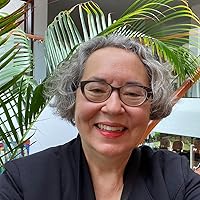
Denise Elia Chavez (born August 15, 1948) is an American author, playwright, and stage director. She was born to an Hispano family in Las Cruces, New Mexico, United States, and graduated from Madonna High School in Mesilla. She received her Bachelor's from New Mexico State University and Master's degrees in Dramatic Arts from Trinity University. While in college, she began writing dramatic works. Upon graduation, she worked at the Dallas Theater Center while continuing her studies in drama and writing. She then entered the MFA program at the University of New Mexico (UNM) and earned a degree in writing. In 1986, she published her first collection of short stories, called The Last of the Menu Girls. She received several awards, including the American Book Award, the Premio Aztlán Literary Prize, the Mesilla Valley Author of the Year Award, and the 2003 Hispanic Heritage Award for Literature. Chavez was offered a professorship in creative writing at UNM, during which time she wrote the novel Loving Pedro Infante, which earned her critical acclaim. She left the University, however, to work at a rape crisis center. She is the founder of the Border Book Festival that is held every year in Las Cruces, New Mexico. She also serves as Executive Director of the Cultural Center de Mesilla, and manages its book, music and arts store.
Women oriented perspective; great read with lots of color and character. Quotes from one of my favorite chapters: "Life is a great big face, with all the markings of our history on it. These wrinkles are my hardness and my silly worries, my lies and my unspoken words. They are the work I do and the things I left undone." "M'ija, we've all been taught to hide what we truly feel behind our faces. Some of us eventually wake up to see the masks our faces have become." "Today, m'ija, you rarely meet a woman with an open face. We're taught to shape our bodies into the molds of clothes. Your poor mama' has bra straps that cut into her shoulders. When men see her, they only think breasts. Soveida, we are more than our bodies or our breasts. Loss changes us. And pain. And the death of those we love. Eyes cloud over and are covered by soft cataracts. Lips are swallowed and vanish. Eyebrows and eyelashes disappear in childbirth. Age spots begin to flourish. Small moles become significant. Pores enlarge. Teeth darken, crumble, and become silver or gold twinklings in the unwelcome sea of mouths we don't care to know. But we are more than this change, more than this face, Soveida. We become our mothers, our grandmothers. And when we see people who wear their antepasados in their face, it is a relief, and a blessing to know the ancestors are near."
When I read this book I sink all the way in and never want to come out. Denise Chavez creates the most beautiful women- Soveida, her mother Dolores, her grandmother Lupe, her cousin Mara, their servant and friend Oralia. Soveida narrates all of their stories braided together. They are stories of service, of angels, of milagros- miracles.
Those who know me understand that I love to read almost as much as I love to eat. This book combines both of my loves - great writing and Mexican food. I love the descriptions in this book - Chavez makes me feel as if I were part of the main character Soveida's extended family.
Rereading a novel can bring different expectations from when you first read it over twenty-five years ago. This is the case with Face of An Angel by Denise Chavez.
Face of an Angel tells the story of Soveida Dosamantes, a waitress at El Farol Restaurant in the fictional New Mexican town of Agua Oscura. Soveida shares her life growing up in Agua Oscura, revealing family history and secrets, struggling with her Catholic beliefs, and finding purpose as a waitress.
She traces her family history from Mexico and how they arrived in Agua Oscura. Soveida reveals an unflattering but honest portrayal of the family from grandparents, parents (she never calls them mom or dad but by their names, Luardo and Dolores), her brother Hector, and other extended family members. Also, she tells the story of her restaurant co-workers and they were just as colorful as her family.
As much as Soveida shares about the people in her life, she reveals much more about herself. The failed marriages, the casual relationships, the missed opportunities to become something more than a waitress, and the connection to this little New Mexican town that she could never leave.
Face of an Angel reads more like a fictional memoir than a novel. However, Soveida is a fictional character that I will never forget and rereading this novel brought her back to life in a way I did not expect. I thought there would be much more laughter than sadness upon re-reading it. This comment from the family’s housekeeper, Oralia brings home an important point. “Most stories are sad when you get to telling them, but anyway, what is life but stories?” There is some hilarious moments, but Chavez shows how messy life can get through people’s choices. This is a wise and humane novel.
Also, Chavez intertwined English and Spanish throughout the novel. My Spanish is limited, but I recognized phrases like testudo como un chivo (Stubborn as an old goat), el prieto grenudo (the dark one), & ni lo mande dios (God forbid). These kinds of phrases added to the narrative flow and gave the story authenticity.
I enjoyed rereading Face of An Angel and the story of Soveida Dosamantes was as American as Holden Caulfield from The Catcher in the Rye, Scout Finch from To Kill a Mockingbird, or Bigger Thomas from Native Son. This will be one of my favorite reads of 2020. Bravo Denise Chavez!
A wild ride of a read about a woman's life in New Mexico from birth until she's somewhere in her thirties. It reminded me of The Brief Wondrous Life of Oscar Wao in its free-wheeling, wide-ranging style and its blend of English and Spanish and I wondered if Junor Diaz was influenced by it as Angel was published first. Angel reads like a memoir with its incredible level of detail and deeply developed characters. It's written almost as discrete essays with titles although it does have an overarching plot line. I found it easy to read just one or two chapters a day and re-emmerse myself in her life.
Soveida Dosamantes' childhood, youth, and middle age are presented as a series of recollections, conversations, stories, prayers, even school and college papers and a series of instructions The Book of Service" to the new woman who will replace her as the head waitress at El Farol Mexican restaurant. Synchronizing all this (within a structure based on the orders of angels!) is a stunning achievement. Most of the 'chapters' could be read independently, as short stories or essays, but work together as a novel; Soveida's activities never reach beyond caring for family members and her work at the restaurant, but her story wonderfully defines American social and historical changes of the 60's and 70's; there is little descriptive writing, but the sense of a small New Mexican place is perfectly captured. Chavez quickly and apparently effortlessly changes tone: "You keep asking me about the work. Now ask me about the laughter, the tears, the joy. Ask me about when your great-grandparents died, four years apart, or when you came into the world, in the room at the back of the house, or when Hector was born, or when the roof collapsed, or when the chickens got in the washer." (p. 309) She can be allegorical: "Two years ago I cried so much I became a different person. Now what I have are distinct signs of under-eye pouching, that crepe-like skin disease...Sometimes the FAce is a man. Sometimes the Face is a woman. Sometimes it's nobody. Has no body. It's as ethereal and as real as a dream....What I saw in the mirror this morning chilled and frightened me. Behind my face were so many other faces, all of them changing before my eyes. Which one was my real face? The face that I knew I could accept and love?" (p. 297) and answering her own question in The Book of Service": "What is the face you greet the world with then, woman? A face that pacifies the children when they cry, soothes old men when they are sad, and appeases hungry people who want more than food. An all-giving, all-loving face that never lies." (p. 437) She can just be funny. Here Soveida corrects the son of the owner of El Farol: "Larry, it's not empinada. In New Mexico empinarse means to squat. It's an empanada, an empanada!" "Dammit, Soveida! Here Preddie Pacheco the dishwasher, that little prick, had me calling them empinadas for so long! Some Spanish tutor! Never trust a dishwasher, that's what I say. No wonder all the old ladies looked the other way. What do you expect from a Mexican who washes dishes for a living? Mom is right about that. Preddie Pacheco. Shit! The food slush is part of his brain already. But it isn't only the food slush, it's more than that. It's the years of food slush, years of soapy, watery congested dreams. In fact, whatever dreams the guy must have had, probably still has, are floating in front of him suspended in that filmy greasy, reddish-colored water that clogs and traps him. The problem is that Preddie Pacheco is definitely what my mother would call a Mexican Mexican." "Jesus, Larry! I said to him. "What's your problem." What was Larry's problem? He was a Spanish white man. (p. 150)
Page 139 “There was a little gray mouse who saw a pot boiling on the stove,” Oralia had said as we sat in her kitchen. “Twice its mother told her not to look into the pot, to be careful. The third time the curious mouse peered into the pot, fell in, and became Mouse stew. The moral of the story is: Little girls or little mice can sometimes be too curious for their own good.”
“It’s such a sad story, Oralia! Don’t you feel sorry for the little mouse?” I asked.
"No, and you know why, Soveida?” Oralia said. “The mouse was ...so naughty she didn’t listen to [advice]. You and Mara, on the other hand, you listen to me and I'll help you when I can. When you begin to get into things that you shouldn’t most often they will hurt you. But enough about mice" ...
Page 214 “...Never work for someone who won’t feed you. What they want is a dumb animal, not a person to help. If a person is stingy in their own home, imagine how they are out in the world? If they screw you in the kitchen, what will happen in the street? Just because you see their filth on the inside doesn’t mean you are filth if our wipe it away. Just because I clean your toilet doesn’t mean I’m not a woman and don’t love to dance.”
Page 256 After my illness I realized I’d never been ill around Veryl. Every marriage should include a trial week of a long, unpleasant and debilitating illness, a trip to a foreign country, as well as a week sequestered with an unpleasant relative from your spouse’s side of the family.
Page 264 ...Stop going to el panteon (the cemetery), Soveida. It isn’t good. The spirits of the dead have a way of capturing you after a while. They want company, Soveida. They want living flesh to hold and warm hands to grasp. Pull yourself out of there, or your soul may fly away. It’s restless with flight now. You need to stop those visits, because darkness calls with such a lovely voice.
Page 373 “Nobody can love us the way we need to love ourselves.”
This isn’t a novel with a plot line per se. It’s more of a monologue, dialogue, and an intimate view of the Chicano/Chicana life in a rural New Mexico town. The machismo of the culture left the women in Solveida Dosamantes’ family with so much heartache, and this relationship between men and women drives the book. But the foundation of the book lies in the relationships between women, because that was what sustained them and kept them grounded.
My own dynamic with the book was odd. Whenever I put the book down I found myself disinclined to pick it up again; this was due to the lack of a plot line. But when I reminded myself that I needed to finish the book I found myself enjoying the the very readable prose. I finally got it that the story line (not plot line) was the point of the book. Chavez writes so naturally and so beautifully. I fell in love with the narrator, the grandmother and Oralia (grandmother’s faithful servant). I loved the sense of family among the staff of the restaurant where Solveida worked, including the owners - first the mother, later the son. Not surprisingly, I could relate to the dynamics of an intergenerational immigrant family, even if our cultures are different. I also found it interesting to contemplate the artificiality of the border between Mexico and the U.S. The region of the border states has long been an ebb and flow of peoples and cultures.
I’m glad that I finally got around to reading this book. There was a gentleness to it that appealed.
This book is powerful and so unforgettable. Passages, scenes, moments from this book still come wafting into my consciousness from time to time, and they always make me smile. It happened today and made me realize I loaned/gave my copy to someone many years ago, most likely in my travels (where good books are a useful currency). I need to get hold of another copy to reread it. This is just a beautifully crafted & eloquent book that rings authentic. I must have been close to the same age as Soveida, the narrator when I read it, and was waiting tables like she was, because I recall it all being so very relatable (even though I was only a wanna-be Latina, I did dig the cultural & language elements). Read it. Let me know what you think.
I know I'm in trouble when a book begins with a family tree page. I couldn't, or wouldn't, work hard enough to get to know every aunt and grandparent and half-sibling, but I don't think it cost me much enjoyment--it's a lively read, and a revealing glimpse at the hispanic/catholic culture in the U.S., ala Rain of Gold. The story jumps ahead quickly and sideways often, and though that style keeps me from caring much for any one character, the continuous energy and author's wisdom carried me through it.
I loved this book! After knowing Denise and then reading this wonderfully written book shows that women, no matter their ethnicity or culture are strong and go through many situations in life but must try to keep the family together. I appreciate the values this book holds. Thank you Denise for writing and sharing this with the world!
Gosh I just love this book. If you’re a woman you will love this book. It’s at points heartbreaking, shocking, relateable and gut bustingly hilarious. Just like being a woman in New Mexico.
This book is the complex saga of a group of working-class Latina women in small-town New Mexico, the extended family of the narrator’s great-grandfather, who emigrated from Mexico. Intricately told by Soveida Dosamantes, the stories of these women are painful, beautiful and sometimes humorous. They are about women trying to find their own voices and place in the world amidst a family legacy of incest, physical abuse and cheating and unreliable men and fathers; pressures of the Catholic church; and traditional cultural norms. But primarily the book is Soveida’s story, one where she seeks her own path in the world as a respected waitress, wife, lover and emerging Chicana, but at the same time is pulled with equally strong gravity to the arms of the women of her family, who are the roots from which she’s grown. In a world of unreliable men, women are the linchpins in families and the keepers of wisdom. “Promise me, Soveida, that you’ll listen to the stories women tell you,” urged one of these female voices. “They are the ones you should remember. Otherwise, how will you ever expect to understand the human heart?”
In Soveida’s world, men have primarily failed the women in their lives, but at the same time the women protected those men, by tradition and religious faith. Her grandmother, wanted something different for Soveida and urged her to become a nun in order to escape having to be dependent on the love, pain and inconvenience of a man. “Priests in the family are a dime a dozen, Soveida. Everybody knows they’re jotos and maricones or lusty goats in search of skirts. What the family needs is a nun. Women’s prayers, everyone knows, are more powerful. … Every woman wishes she could become a nun. You don’t know what I mean yet, m’ija…”
Soveida gradually finds her way in the world, with many missteps, and becomes a well-respected waitress in a Mexican restaurant, where she finds a more stable “family” of people who care about each other over the years—a place where she becomes a beloved daughter and eventually a mother figure, gains a sense of self-esteem from being good at what she does, and begins writing a book about being a servant to pass along to the young new waitress coming up through the ranks.
I loved Chavez’s writing style – familiar, poetic and funny. Her largest strength, I think, is character development. I finished the book felling like I knew each of these women so intimately – I could see them so clearly in my head. She has patience and detail in storytelling and experiments in each chapter with different ways of telling parts of each story – including, for example, bits and pieces from the book she is writing, essays from her Chicano Studies class, and brief conversations with her grandmother and other women. This variety was effective in a novel that is complex with so many characters the reader needs to keep straight, revealing insights in small pieces, small chapters, each one almost a small story in itself.
My complaint lies with the book’s lack of a story arc, which kept it a little flat. I also found myself impatient with this long book, I think, because I didn’t fall in love with any of the characters, even Soveida. While I felt like I knew them so well, they frustrated me, which maybe was the author’s intention. I wanted them to want more for themselves. But their lives instead are a quiet existence, with small gains in female empowerment and self-esteem. Nevertheless, their lives matter and represent the lives of many women around this country and around the world, and that’s why this book is important.
I read this book back in 1995 when it was first published. I never forgot about it, and so I was delighted to receive a hardback copy for Christmas this past year. Re-reading it was like reconnecting with old friends. Denise Chavez creates rich, strong, unforgettable characters, and that is what makes this book 5 stars. I swear I know Soveida, the main character. Surely she’s that student in my 11th grade English class. Or that friend living in Texas. Or that waitress at my favorite restaurant. Her story will make you laugh, cause your blood to boil, challenge your beliefs, whet your appetite, and break your heart. And you will never forget her.
An interesting read after having lived in the general region of which she writes. I was able to map out my own village-life experience and follow her characters quite well. Curiosity made it easy to slip into the story. I heard Ms. Chavez read excerpts from this book many years ago while living in Colorado. From that experience, I bought and read the book. Though I come from a different side of the US, there is a shared experience that transcends cultural backgrounds, the small town experience with all its intrigues.
I would have given it five stars except the ending wasn't as compelling as the rest of the book. I was also confused by the fact that Soveida called her parents by their first names. Overall, I loved this hilarious, insightful, touching book. Chavez is a master at capturing the way people speak along the border. She gave her characters names that fit perfectly. The atmosphere she creates is totally believable. I was instantly drawn into Soveida's world. She feels like a long lost comadre instead of a fictional character in a book.
Enjoyed the story, all of the characters are people I have met and appreciated (or, hated) during my years in NM. Especially good to read this as an exhibit about Chicano civil rights action has been on display where I work, so those aspects of the story resonated for me. This book continued my education.