Jump to ratings and reviews
Rate this book

The World As We Knew It: Dispatches From a Changing Climate

Rate this book
Nineteen leading literary writers from around the globe offer timely, haunting first-person reflections on how climate change has altered their lives. With essays by: Lydia Millet, Alexandra Kleeman, Kim Stanley Robinson, Omar El Akkad, Lidia Yuknavitch, Melissa Febos, and more.

In this riveting anthology, leading literary writers reflect on how climate change has altered their lives, revealing the personal and haunting consequences of this global threat. In the opening essay, National Book Award finalist Lydia Millet mourns the end of the Saguaro cacti in her Arizona backyard due to drought. Later, Omar El Akkad contemplates how the rise of temperatures in the Middle East is destroying his home and the wellspring of his art. Gabrielle Bellot reflects on how a bizarre lionfish invasion devastated the coral reef near her home in the Caribbean—a precursor to even stranger events to come. Traveling through Nebraska, Terese Svoboda witnesses cougars running across highways and showing up in kindergartens.

As the stories unfold—from Antarctica to Australia, New Hampshire to New York—an intimate portrait of a climate-changed world emerges, captured by writers whose lives jostle against incongruous memories of familiar places that have been transformed in startling ways.

288 pages, Paperback

First published June 14, 2022

39 people are currently reading
2978 people want to read

About the author

Amy Brady

2 books1 follower

Ratings & Reviews

What do you think?
Rate this book

Friends & Following

Create a free account to discover what your friends think of this book!

Community Reviews

5 stars
81 (35%)
4 stars
97 (42%)
3 stars
39 (17%)
2 stars
7 (3%)
1 star
3 (1%)
Displaying 1 - 30 of 42 reviews
Profile Image for Will Byrnes.
1,372 reviews121k followers
July 14, 2022
“At a time when our planet is experiencing terrifying and unprecedented levels of change, what corresponding transformations have you witnessed in your lives, yards, neighborhoods, jobs, relationships, or mental health?” That’s the question that Tajjia Isen and I asked the contributors to this anthology. We wanted to hear their personal stories, allow then to serve as witnesses of this incredibly complex moment in history. - from the Introduction
--------------------------------------
This is what climate change is. It’s what it does to the psyche, along with the body and the places we love. It’s nearly invisible until the moment something startles you into attention. A creeping catastrophe waiting with arms outstretched to deliver a suffocating embrace. And once the knowledge is gained, there is no unknowing it. You are no longer climate blind. You see and cannot unsee.
Things change. Often it happens too slowly for us to notice. Sometimes processes have been evolving for a while and take a sudden, tipping point jump into the observable. But often it takes being away for a while to get a visceral sense of change.
description
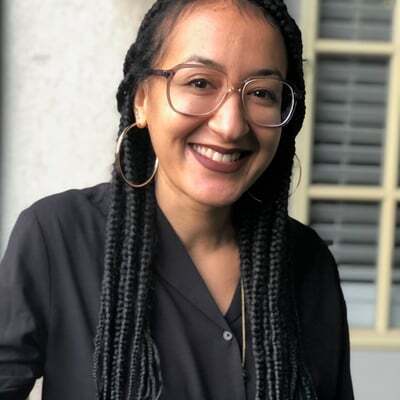
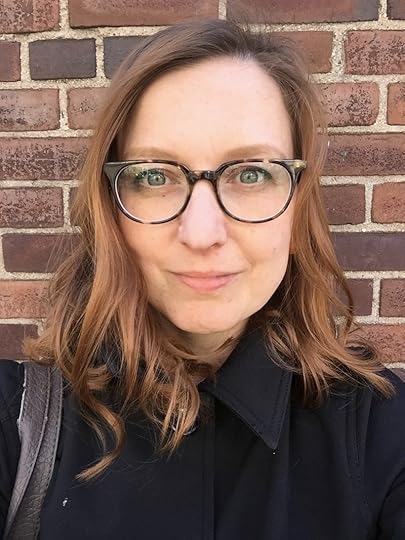
Tajja Isen - image from Catapult, where she is Editor in Chief

What do you notice, and what slips by as just the normal range of expected experience? I have been around long enough to have personal elements that fit in with the editors’ approach. I was not keeping track of the frequency or height of the snowfalls that marked winter growing up in the Bronx. Does it snow more now? Less? Maybe, but not that I could say from personal observation, particularly. Although there was a stretch of years when it began to seem that snow was a thing of the past. Then it returned. I would have to look through tables of data to really know. Summers were hot growing up, days in the 90s, maybe a few in triple digits. Fire hydrants, including the one in front of the apartment building where I was raised, were opened, sometimes by friendly firefighters, sometimes by unauthorized people, so kids like me could get some relief from the heat. Are NYC summers hotter now? I don’t really know off the top of my head. Again, I would have to check tables of historical data. But I do know that Summer nights in New York were increasingly uncomfortable over my many years there, with overnight lows far too often in the 80s. Yes, the city holds the heat well, but it held it well during the entirety of my life. Something had changed. Then there was Superstorm Sandy.

description
Amy Brady - image from LitHub

In a way, the editors asked their contributors to respond to a lawyerly question: What did you notice and when did you notice it? With the extra of asking how the noticed change(s) impacted them. Editors Amy Brady and Tajja Isen have put together essays from nineteen writers from around the world, each exploring what they have noticed.
In 2022, we are witnesses to one of the most transformative moments in human history: a time when climate change is altering life on Earth at an unprecedented rate, but also a time when the majority of us can still remember when things were more stable. We are among the first—and perhaps one of the last—human populations to have memories of what life was like before. To us, the “new normal” is not how it’s always been. Our lives jostle against incongruous memories of familiar places. We are forced to confront, in strange and sometimes painful ways, how much those places have changed.
Being swamped with relentless tales of big scale environmental horror can have a numbing effect. Numbers, estimates, projections, possible outcomes, blah, blah, blah. We can stop hearing after a while, tune it out. Outrage is appropriate and we experience that, but it is not something we can endure continuously. At our core, humans are creatures of story, not statistics. For as long as we have existed people have concocted origin stories, not origin reports. So, maybe story is a better way to communicate, to connect, to inform people, some people anyway, about the real on-the-ground reality of global warming. And that is what we have here.

These nineteen stories are memoirish, covering the far reaches of the planet and a range of personal experiences. Landscapes that have been transformed by warming, devastating long-term drought, massive reduction in wildlife, invasive species wreaking havoc on formerly stable ecosystems, growing public consciousness of particles per million in the air, and on.

Some are a bit tangential. In Unearthing, Lydia Yuknovich focuses on the harm done by the Hanover, Washington facilities that produced much of the fissile materials used in America’s nuclear bombs. Her witness to the very personal impact of radioactive pollution on a peer growing up is not really a global warming tale, however heart-breaking. Some focus less on personal global warming miseries to look more at human interactions, class, racial and gender politics coming in for some attention

Some tales are wonderful in their strangeness. Walking on Water looks at how those charged with relocating both people and native deities to make way for a huge dam in Africa interact with local people and customs. Signs and Wonders notes, and celebrates, the increasing weirdness in the world, as long-hidden things begin to reappear when landscapes change and glaciers recede.

Some offer strong imagery. In Cougar, Terese Svoboda builds on an experience she had while driving, in which she narrowly avoided hitting a cougar that was making a dash across a Nebraska highway. She looks at ways the creature is making a comeback, among other elements in her story, and sees cause for hope that humanity can find a way as well.

In The Development, one of my favorite stories in the collection, Alexandra Kleeman notes a slice of green near her Staten Island apartment and pays attention as this (at least temporarily) abandoned piece of NYC is taken over by nature, plants left alone to grow, to spread, wildlife moving in. The optimism of regeneration lives side by side with the dread that it is only a matter of time before developers carve a pristine, straight-line urban walkway out of it.

Lacy M. Johnson tells of her religious father, in Leap. He was a white collar at a coal plant, justifying the environmental carnage being caused as God giving people the Earth to use however we want.

Some focus on illness. Warming has expanded the range of ticks that carry Lyme disease to the chagrin of well, everyone. Having had the pleasure some years back, I can very much relate to this concern. Lyme disease gets a mention in two of the stories. Porochista Khakpour’s Season of Sickness tells of his travails with Lyme and the joys of black mold in his apartment, and on. Is warming only generating more risks, or is it also impacting our resistance?

The collection is rich in beautiful writing and insight. The sense of place is particularly strong throughout. It certainly offers a prompt most of us can work from. What have you noticed? And how has it impacted your life?

One change that stands out from personal experience is a product of the others, expectations. Growing up, most of us, I believe, expected that the physical world would continue on pretty much as it had. That is no longer the case for anyone who pays any attention to environmental events in the world. While the fear of imminent and instantaneous destruction in the 1950s and 1960s, helped along by duck-and-cover drills during the Cold War, may have dissipated, (although it has certainly not been eliminated) the existential threats of today have more to do with our less flash-bang demise. The ticking up of temperatures worldwide makes us all frogs in the proverbial pot of warming water. And it seems an insuperable task trying to get those in charge of the range to turn off the flame, or at least turn it down enough. Will my children and grandchildren be able to see the places in the world I have been able to see? Will all those places even exist? What does warming mean for their longevity? Human lifespans increased significantly in the USA over the 20th century. I have already outlived my father. Will my children outlive me? We know that change is possible. When I was a kid it seemed that everyone smoked. After decades of effort, smoking was much reduced. Hope is a reason to go on, to keep trying, but one change I see is a whittling back of hope itself. Sure, there are positive developments. Electric cars have arrived and renewable energy production is growing as a percentage of overall supply. General awareness has surely grown. Our understanding of the complicated parts that make up global warming is expanding, increasing the possibility that fixes, or at the least ameliorations, can be identified, whether or not they are implemented. But is that enough to stave off the worst? Is anything, at this point, enough? Are we in the world of Don’t Look Up, where the only sane response is resignation? I sure hope not.
We must learn to become conservationists of memory. Otherwise, this damage we have done to our planet will cost us our past, as it may already have cost us our future. And without a past or a future, what are we? Nothing. A flickering violence of a species, here such a short time, insatiable, then gone. - Omar El Akkad

Review posted – July 8, 2022

Publication date – June 14, 2022


I received a copy of The World As We Knew It from Catapult in return for a fair review. Thanks, folks.


This review has been cross-posted on my site, Coot’s Reviews. Stop by and say Hi!


=============================EXTRA STUFF

Links to Amy Brady’s personal, FB, Instagram, and Twitter pages

Links to Tajja Isen’s’s personal, Instagram, and Twitter pages

Interviews
-----Publishers Weekly - 'The Raw Data of Someone Else's Life': PW Talks with Amy Brady and Tajja Isen by Liza Monroy
-----Writer Unboxed - Seeking the Existential, the Intimate, and the Urgent: Essays That Model Masterful Storytelling by Julie Carrick Dalton

Items of Interest from the author(s)
-----LitHub - A list of pieces Brady wrote for LitHub
-----Orion Magazine - excerpt - Faster Than We Thought by Omar El Akkad

Profile Image for David Wineberg.
Author 2 books875 followers
June 5, 2022
Most of climate change and environmentalism is about a grim future. The World As We Knew It is different; it’s mostly about the past. Specifically, it is a collection of 19 stories by 19 different writers, all of whom reminisce about what has been compared to what is now. It’s a different take and a blessed relief from the usual doomsayers. Don’t get them wrong; the message is still bleak. This appreciation of the planet is nostalgic not just for the past but for the receding present. Things are already quite bad in many ways. But this approach makes it a different read.

Amy Brady and Tajja Isen have pulled together a bunch of women and men, all of them writers with loads of education, grants, awards and credits, to tell readers what they remember, how things have changed, and sometimes, what the implications are. There were more insects and birds. The air was more alive; the sounds were unforgettable. Fewer invasive species. And things seemed to be more predictable: seasons, temperature, days. Then rains become floods. Droughts became death. Fields got fenced in. Valleys got paved. And especially hurricanes: a lot of hurricane stories, burnt into memories. Nothing stays the same for long.

It surprised me that nearly all the writers either live in New York, or have lived there. They almost all refer to it in their stories. Some escape to the woods and farms. Some seek the intensity of the city. But I think the New York connection is more of a commonality among writers connected to this publishing house called Catapult rather than a comment on the necessity of living in New York to succeed as a writer or appreciate the environment. At least I hope that’s what it means.

There are stories about life in the desert and lots with reference to Hurricane Sandy, which flooded basements and subways and cut off the electricity in New York. Also Hurricane Katrina hitting the South and Hurricane Irene demolishing Dominica. There’s one about sighting a cougar, and the importance of cougars/pumas/panthers/mountain lions. The erratic weather and noticeable changes in climate – and their effects - are as varied as the imagination in these stories and how it impressed these individuals just living their lives. The variety can make it an adventure to read.

They come at it from all kinds of angles. One story, by Elizabeth Rush, looks at how different Antarctica is when written about by women rather than men. She needed to understand what she was getting into when she signed on for an expedition – of women.

Some stories refer to the authors’ children, and how parents must deal with new pestering questions like is the world ending now. How does one show children there is another way?

In How Do You Live With Displacement, Emily Raboteau cites her diary entries from three months of pandemic. It takes the most work to decode, which makes it different from the other offerings that are generally straightforward.

Lydia Yuknavitch has written about Hanford in the American northwest. It is so polluted with nuclear waste that every successive government since the 1940s has basically given up on ever cleaning it up. The price to do so is now approaching a trillion dollars, and would likely just move the gigantic problem from one place to another. Meanwhile, locals continue to sicken with an encyclopedic variety of conditions. Hanford has long been the poster child for Man not knowing what the hell he is doing fooling around with nuclear anything. This is a refresher course from a former local who has seen the deterioration of the ecology as well as of the human inhabitants.

In A Brief History of Breathing, Pitchaya Sudbanthad takes readers to his native Bangkok, where mask-wearing is old news. Not because of COVID-19, but because of the intensely polluted air. Normal conversation always seems to include talk about the air today or yesterday. The new normal, if you will. The pandemic seems to have altered very little there, as behavior had already adapted, though not in anticipation of a virus. Yet another way the world is changing. Sudbanthad notices it because he splits his time between Bangkok and New York.

Possibly the most distressing is Porochista Khakpour’s Season of Sickness. This Iranian New Yorker suffers horrifically from air quality. She is hypersensitive to mold for example, and mold is endemic to New York. It is literally crippling to her. She has to use a cane, and is rarely pain free. The air in Los Angeles, where her parents live, is different horrendous. As more and more children show similar infirmities, this is an education for all, but especially for parents.

Several stories note the dilemma young people have of bringing new children into this miasma. Some avoid it, some take their children away, literally to greener pastures. Iowa, Wisconsin and New England feature in these alternative environment stories. Even Arizona, usually dry desert, but also flood prone. And sometimes, it just doesn’t work out.

What I did not see in these stories was much difference in style. They are all pretty much straightforward narratives, with little or no development of character, even of the author. There is little in the way of dialogue. There is no development of attitude, posture, reaction or stylistic use of language. The stories are all largely interchangeable. None of them jumps off the page as the signature story of the book. If the stories weren’t bylined, readers would not guess there were 19 different voices, except for those who explain their own origins around the world. For all the variety in it, it is surprisingly flat. I think the editors should have sent some of the stories back for more creative development, if only to distinguish them from each other.

Still, it’s a great idea. It makes the changes real, even if it fails to provide anything new. Despite the variety of experiences the authors express, the message is still bleak. There are no answers here, either.

David Wineberg


If you liked this review, I invite you to read more in my book The Straight Dope. It’s an essay collection based on my first thousand reviews and what I learned. Right now it’s FREE for Prime members, otherwise — cheap! Reputed to be fascinating and a superfast read. And you already know it is well-written. https://www.amazon.com/Straight-Dope-...

Profile Image for Luke.
126 reviews3 followers
August 21, 2023
4.5 rounded down. This was a really good collection by a bunch of really talented writers talking about the every day of climate change. Each one offered an interesting perspective about their own lives and how this really is something personal, not some vague hypothetical, this is our every day reality. Most of these essays were written 2020/2021 so it is pretty pandemic heavy at times and it errs on the side of doomerism a bit for me but otherwise I would highly recommend!
Profile Image for B..
2,576 reviews13 followers
June 13, 2022
I won a copy of this one in a Goodreads giveaway. It's a beautiful essay collection that really allows you to think back over how things used to be versus how they are now. It brought back a lot of memories even though my experiences were different from most of those described within the book.
Profile Image for Nick.
288 reviews16 followers
June 9, 2024
"At a time when our planet is experiencing terrifying and unprecedented levels of change, what corresponding transformations have you witnessed in your own lives, yards, neighborhoods, jobs, relationships, or mental health?"

That single loaded question is the focal point of The World as We Knew It, an anthology of essays from more than a dozen literary artists, reflecting on how climate change has influenced their lives.

The essays, some more personal than others, offer varied perspective on the world as it once was and the ecological uncertainty we face in our collective future. What follows is a snapshot from a few of the standout works.

From this Valley, They Say, You Are Leaving
The American southwest may seem a vast and unyielding landscape, but it is in fact a fragile ecosystem where life must be frugal with its water. With its mega drought conditions and less predictable monsoon seasons, plant and animal life are being pushed to the brink. Hibernation and bloom cycles are becoming less in sync. While drought and monsoon conditions might seem contradictory, consider how more frequent, more intense storms might result in lesser absorption and more runoff, while average daily rainfall in the region is concurrently in decline. In From this Valley, They Say, You Are Leaving, the striking centerpiece is the iconic saguaro cactus, which is struggling to survive in current environmental conditions, with not enough young plant life to one day replace those coming to their end.

Starshift
Follows the emergence of the Red Lionfish in Dominica waters. The invasive tropical species, with its bronze and white stripes, barbed top and sides, and venomous spines, has begun to overwhelm local reefs and disrupt existing ecosystems, something that increases in likelihood as cooler waters warm.

"I want to believe that, even if there is no grand meaning for our lives and our planet has a finite lifespan - as do our art and dreams - that art is worth making and love is worth finding. That it's worth fighting to preserve a world where dreams are still possible."

A Brief History of Breathing
Offers a striking side-by-side of Bangkok and New York City. In Bangkok, rapid development has led to unprecedented air pollution. City residents have begun tracking hour-by-hour air quality and question whether the numbers might be softened as not to alarm the population or, conversely, whether quality forecasts are exaggerated as to sell more tracking products, supplied by private enterprises.

In Bangkok, bandana masks are commonplace. In New York, post-9/11, it's M95 masks. Entire sections of the city are cordoned off, being dangerous for prolonged human exposure. Ground zero responders report difficulty breathing, with glass fibers, dioxins, and other pollutants lingering in the air. The author describes returning to an apartment with a window cracked open half an inch, finding it coated in grey dust.

Iowa Bestiary
Details how some species flourish in light of climate change. With warmer climates, mosquitoes and ticks thrive; consequently so does Malaria, Zika, West Nile and Lyme disease.

The author acknowledges how we often joke about climate change, and then hits us with the hard reality that "humor is one way to cope with powerlessness."

How Do You Live with Displacement?
The author, a climate activist, annotates the first three months of 2020 and the unfortunate parallels between climate change and the coronavirus pandemic.

"Climate grief and coronavirus grief feel strikingly parallel. The solutions to both problems rely on collective action and political will. In both cases, and for the same insidious reasons, the poor suffer more. In the United States, our efforts on both fronts are disabled by a reigning power that denies science and values individual liberty over the common good."

Unearthing
Basically never travel to Hanford, Washington. Hanford is the single most contaminated nuclear site in the United States. Hanford, having ties to the Manhattan Project, was where uranium was irradiated towards production of plutonium. The location is rife with radioactive contamination and has suffered from decades of misinformation campaigns by those responsibile for its cleanup.

After the Storm
In New Orleans, even today, everything "is dated as either 'before the storm' or 'after the storm' - and no one questions which storm."

Katrina may have lost strength from a Category 5 hurricane when it made landfall as a Category 3, but what it sacrificed in strength it made up for in size, going on to impact over 90,000 square miles of the American southeast.

In After the Storm, the author observes how storms like Katrina, which made landfall the day after the 50th anniversary of Emmitt Till's murder, collide with structural inequality, exacerbating the disaster.

Walking on Water
"[R]ivers are the ultimate metaphors of existence, and dams destroy rivers."

Dams are hailed as a way to generate clean, renewable energy, but their construction results in the alteration of natural waterways and their ecosystems, as well as the communities that have long relied on them both. Walking on Water addresses the engineering of the Bujagali Dam in Uganda, which consequently displaced the indigenous Basoga community. When it comes to development of this magnitude and impact, the author questions "Which communitues have to bear the costs, and who gets to decide?" The Bagosa, a highly spiritual community with long-established ties to the Nile, were seen by developers as "a hurdle on the road to modernization," with one hydropower executive referring to their spiritual claims as "a fairy tale."

"It embodies an idea that's truly sinister - that the worldview you don't understand must be nonsense. That if something's worth is established according to a calculus you don't understand, it must have no value at all. This is how cultural misunderstanding gets spun into exploitation, erasure, theft."

Mobbing Call
Discusses how some grapple with whether or when to have children while some studies have found that "the most environmentally destructive action an individual can do is bear offspring."

Until this Snow Reached the Ocean
Arguably the most straightforward essay in the anthology best summed up by the author when he says, "But the reality is that there isn't a playbook for parenting in the apocalypse."

2023 was the warmest year on record since global records first began 174 years earlier. Scientists predict that this year, 2024, will be even warmer. You don't have to be science-savvy to read The World as We Knew It, but brace for impact.

4 out of 5
Profile Image for Rae.
31 reviews
April 7, 2023
I was a bit disappointed in this book. Several of the stories kept me engaged, like the backpackers, cougar, girl with allergies. However, the ones who kept jumping all around, using big words, and constantly referencing movies, poets, and writers was hard to read. I didn’t even read the last four pages of the book, because I couldn’t follow what they were saying. On a positive note, I did learn some things, and feel strongly that climate change is real and that we are slowly seeing the repercussions.
Profile Image for Jacqueline Nyathi.
903 reviews
June 26, 2022
3.5 generally, but Delia Falconer's Signs and Wonders —final essay—made the collection for me. Wonderful.
Profile Image for Kaitlyn Hermansen.
233 reviews5 followers
February 17, 2023
It’s not frequently someone like me (a hater) sits down and enjoys every piece of work in an anthology. This may be the first. Not one of these did I skip or dislike. Each essay was beautifully written, poignant, and important. This was so well curated and I have written each of these essay writers down to find more of their work.
Profile Image for Bianca Rogers.
295 reviews22 followers
March 24, 2025
The World As We Knew It brings climate change into sharp relief through a striking collection of essays from renowned environmental writers. Rather than framing climate change as a distant or future crisis, these contributors explore its present realities and personal consequences, painting an intimate portrait of a world in flux. The essays range from reflective personal narratives to sharp analytical pieces, each adding depth to a larger, urgent conversation.

This anthology stands out for its balanced perspective—it avoids apocalyptic despair and unwarranted optimism. Instead, it encourages readers to engage deeply with the complexities of our ecological reality. Essays like Elizabeth Rush’s exploration of Antarctica highlight both pressing environmental threats and broader questions about humanity’s relationship with nature, consumption, and shared responsibility. By anchoring climate discourse in lived experience, the collection cultivates awareness and a sense of connection—one that can inspire readers to move beyond concern and toward meaningful action.
Profile Image for Laurie.
1,012 reviews1 follower
April 30, 2023
I found this both scary and compelling. Most of the stories we hear about climate change are from a more macro perspective: the oceans have warmed X degrees in X number of years, the hottest summer in history was 20xx, the sea levels may rise X feet by 2050, etc. But this group of essays is individual contributors telling how their immediate environment or the one they grew up in has changed. They describe the lack of familiar birds nesting locally or the increase in ticks and the diseases they carry. They tell about saguaro cacti dying from drought or unprecedented hurricane flooding where they live. This is up close and personal and not coming from a government entity or climatologist is more impactful and relatable.

These essays bring home readily how widespread climate change is already affecting the world, and our local environment is different now from the one we grew up in. It is extremely scary that the changes are not many years down the road like we were led to believe in the early 21st century. It is happening right now and it is most likely affecting your own neighborhood if you pay attention. I can see fewer birds in my own backyard than I did a few years ago and our long-standing drought has no relief in sight. I was already a believer and this book won't change the mind of climate change deniers, but I recommend it for everyone but especially those who are on the fence and who find more scientific information boring.
130 reviews2 followers
June 14, 2023
Finished THE WORLD AS WE KNEW IT a collection of essay about the visible effects of Climate Change on our world. As with any collection, the quality varies from essay to essay. Some filled with navel gazing dread, some with sadness for what we have lost, others with the right mix of a frank realization of the world as it is today.

My career has been in energy efficiency and every important project I've worked on has been centered on reducing the impact of climate change. I think about this topic a lot, especially as I've gotten a deeper understanding of our biological world. At the end of the day, I'm just sad that we aren't doing more to mitigate it.

The irony of me reading this on an airplane is not lost on me.
Profile Image for Kim Sutherland.
2 reviews2 followers
January 16, 2023
Beautiful but heartbreaking. Bearing witness to the loss all around us, that humankind has brought about. Beautiful writing. Some of the phrases that resonated for me:

“What is the era of the human, the Anthropocene, if not an era when our telescopes are sharper than ever, but we choose not to see?”

“Live your life as much as you can, even as you fight with your choices, votes, speech, and action, because it is easy to forget you cam be deserving of love when the world is a slowly cracking vase.”

“I am looking for a way to say ‘I love you’ that matters. Before there is nothing left to say but ‘I miss you’, into the wind.”

Profile Image for Linden.
136 reviews10 followers
January 16, 2023
Like all anthologies, the quality of the essays here is a bit uneven, with a few duds, but overall very much worth reading and thinking about. I'd only challenge the book's apparent conclusion that the appropriate and necessary response is rage and fear--rage and fear are important steps in the grieving process, but let's not lose sight of the end of that process. It may only be when we've moved on to acceptance of our situation that we can see it clearly enough to respond.
Profile Image for Vivian Henoch.
240 reviews1 follower
July 18, 2022
Intimate portraits of a changing landscape, from the giant Saguaro cacti in Arizona to the coral reefs in the Caribbean, to the mounting temperatures and intensity of storms and glacier melts over the Sierra Nevada, to the displacement of the giant cougar, once a rare sight in the mountains now seen streaking across a Nevada highway . . . nineteen essays – each more immediate and compelling than the next - about the startling and subtle ways our changing climate is changing our lives.

Excerpts:

Faster Than We Thought: Omar El Akkad

"Within the next century, possibly my lifetime, Qatar’s landscape will become uninhabitable. There exists a scientific definition based on heat and humidity, of what constitutes a survivable climate. If carbon emissions continue at their current pace, it will eventually become impossible to life in much of the Middle East without constant air-conditioning. It will become impossible to exist, for more than a few minutes, outside. Sometime within the next century, stories of life in this place – the stories that constitute almost the entirety of my childhood – will sound to new generation like fiction. The tether between what is and what used to be, constantly stretching under the weight of history and progress, will not stretch anymore. It will snap.

The axis along which almost all the climate-changing anxiety orients us, by necessity, pointed toward the future. It is a space that will never arrive, and because of this we are prone to afford it endless possibility. Never mind that even if we were to impose a total prohibition on fossil fuels tomorrow the atmosphere would continue to warm for another century at least, never mind the glaciers already disappeared, the coral already dead, never mind all the damage we’ve done – the future is and always will be salvageable. We have framed climate change as a crisis of the future because its worst ramifications are still to come, and because the future is something we feel we can still control."

Leap Meera Subramanian

"Now I can’t stop the calculus in my head as I interact with the places that once offered solace. This is what climate change is. It’s what it does to the psyche, along with the body and the places we love. It’s nearly invisible until the moment something startles you into attention. A creeping catastrophe, waiting with arms outstretched to deliver a suffocating embrace. And once the knowledge is gained, there is no unknowing it. You are no longer climate blind. You see and cannot unsee.

We used to be a story in nature. Now we are the story. There was a tie when Homo sapiens and narrative to explain the inexplicable. Gods of the sea and goddesses of the earth. Then some of us forget the stories. Some of cut paths through the territory of the unknown with increasingly bigger machines thinking we’d gained control of our world. This was a lie, too. We are back in a time when the land again acts in disorienting incomprehensible ways. Ten thousand years of living in a steady climate is over. We have return to the times of mythology and we need new stories to survive."

Walking on Water, Rachel Reiderer
“I was not yet a student of dams, or the movement against them, but it was clear even in my naivete that the Bujagali project embodied especially weighty tensions. The nation needed energy and building a new hydropower dam was one way to get it. But the dam would also displace the Indigenous Basoga community that lived along the river, and further throw off the water balance of the lake that millions of people depended on. So often, the questions of environmental justice are subtle, played out in particulate-matter level as invisible to the naked eye or across time scales too slow to register as emergencies until it’s too late. But with this dam, central questions of environment and development – How much is enough? Which communities have to bear the costs? And, crucially, who gets to decide?"

759 reviews45 followers
January 30, 2024
mt rainier natl park is my favorite place in the entire world [in the ENTIRE WORLD]. my family has visited most summers of my life, and watching it get slowly get closer and larger during the two-hour drive there is one of the memories that i hold talismanically close to me at night when i'm missing home so dearly it hurts.
when i was a kid, we would reach snowpack with barely half an hour of halfhearted little-kid "hiking," and we'd romp around in the snow, always [always!] off-our-minds excited by the novelty of sleddable snowdrifts on a clear blue july or august day. last year it took me and my mom over three hours of hard, strenuous uphill hiking to reach even the barest patches of snow. i hope that my kids will be able to hike to the august snow on the peak of my mountain, the mountain of my heart, but what is more likely is that the ancient gas-burner-blue glaciers will die away in my lifetime.
when i think of climate change, i think of wildfires and hurricanes and ecosystem-level extinction events, but i also think of my mountain. always my mountain, the mountain of my heart.
Profile Image for The Atlantic.
338 reviews1,651 followers
Read
July 6, 2022
"The World as We Knew It is an attempt to write these stories, to hold a mirror up to our lives at a crucial moment in our collective history, and reflect the slew of compounding, often conflicting fears that characterize it. In many ways, storytelling while on the precipice of global devastation is no different from storytelling at any moment in our history. Delve into ancient myths and you’ll quickly realize that the human condition has always been marked by an uneasy awareness that even the most rigid systems are subject to the whims of fate." - Lily Houston Smith

https://www.theatlantic.com/books/arc...
Profile Image for Kaitlin.
339 reviews
September 19, 2022
This book, expectantly, is a tough read! There is no leaving on an uplifting note because everything is urgent and real. However, while it did put fear into me, the collection also made me think about my connection with nature, capitalism and community and stoke action rather than just fear. I found Elizabeth Rush's way on Antarctica particularly moving.

It's nuts that climate change and the pandemic continue to displace and harm tons of people and we're like "okay this is fine." And just go about our day. This book made me scream what's it gonna take until I realize how complicit I am. So what's it gonna take?
Profile Image for Andy.
849 reviews5 followers
March 8, 2024
Emotional essays looking at the personal impacts of climate change from an experiential perspective. Rather than the normal approach of showing the desperate and physically harmful impacts to society or individuals, these essays really impress with how even the normal aspects of everyday life that we take for granted are unstable. We will all face loss. Some of that loss will be dramatic and immediate, but much of the loss will be discovered in minor changes that eventually lead us to the understanding that we have left a worse world behind us. Knowing that I can't share the joys of my own childhood with my children because the world has already changed so much is a new kind of depressing.
Profile Image for Carol.
44 reviews5 followers
December 30, 2022
A must read for those who want to know how climate change is affecting our lives around the world, as well as climate change deniers. Anyone over 30, with eyes open to the world around them have already seen changes. Those of us who are older have seen many more. I worry about the changes our children and grandchildren will learn to live with as the Earth becomes less hospitable to humans because of our misuse of it.
Profile Image for Linda Hartlaub.
615 reviews10 followers
July 4, 2023
Disclosure: I won this book through a Goodreads giveaway.

This is a wonderful collection of essays from a group of very talented writers. These are thought provoking, sometimes uplifting and hopeful and other times frightening beyond belief. Scientific writings mixed with memoirs, the book is a compendium of current environmental thought. Highly recommended.
Profile Image for Jennifer.
15 reviews
January 5, 2024
I was hesitant to read this anthology about the state of the world due to climate. It sat on my shelf for a few months before I cracked it open. I am thrilled by the writing and various perspectives revealed by contributors from around the world. These essays are brilliant. I will hold this book close and refer to it often. It is one I will read more than once for sure.
Profile Image for Billy.
273 reviews27 followers
October 11, 2022
An anthology featuring stories from writers around the world that looks at the effects and future of climate change by focusing on the past that preceded it. Essential reading for anyone trying to better understand the topic on both macro and micro scales, and very accessible.
Profile Image for Stephanie Drake.
113 reviews1 follower
November 22, 2023
I like the diversity in perspectives and identities represented in the essays. However, some weren’t that compelling. I do agree that a personal approach is an effective and persuasive way to engage anyone not convinced about climate change’s extreme degradation.
Profile Image for Eunhae Han.
65 reviews9 followers
December 28, 2023
“widespread use of the toxic pesticide DDT caused the shells of hawk’s eggs to grow so thin that they were frequently crushed by the weight of incubating mothers”

richest countries (US) are the most responsible and so are humans
Profile Image for selen.
79 reviews
March 5, 2024
Idk how to adequately rate a collection of essays but I thought it was cohesive and most of them were good !

except for the butler one. and the svoboda one— why are you saying your son has “metrosexual swagger” !!
Profile Image for Samantha.
312 reviews28 followers
December 18, 2024
this was overall a really strong collection, but some of the essays were more for me personally than others. I would still highly recommend it to anyone.

content warnings: the climate crisis, the covid-19 pandemic
60 reviews
Read
June 29, 2022
Well this was some depressing shit let me tell you
Displaying 1 - 30 of 42 reviews

Can't find what you're looking for?

Get help and learn more about the design.