

What do you think?
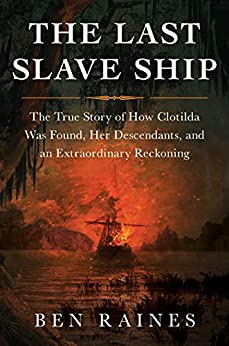
The Last Slave Ship: The True Story of How Clotilda Was Found, Her Descendants, and an Extraordinary Reckoning
The incredible true story of the last ship to carry enslaved people to America, the remarkable town its survivors founded after emancipation, and the complicated legacy their descendants carry with them to this day—by the journalist who discovered the ship’s remains.
Fifty years after the Atlantic slave trade was outlawed, the Clotilda became the last ship in history to bring enslaved Africans to the United States. The ship was scuttled and burned on arrival to hide evidence of the crime, allowing the wealthy perpetrators to escape prosecution. Despite numerous efforts to find the sunken wreck, Clotilda remained hidden for the next 160 years. But in 2019, journalist Ben Raines made international news when he successfully concluded his obsessive quest through the swamps of Alabama to uncover one of our nation’s most important historical artifacts.
Traveling from Alabama to the ancient African kingdom of Dahomey in modern-day Benin, Raines recounts the ship’s perilous journey, the story of its rediscovery, and its complex legacy. Against all odds, Africatown, the Alabama community founded by the captives of the Clotilda, prospered in the Jim Crow South. Zora Neale Hurston visited in 1927 to interview Cudjo Lewis, telling the story of his enslavement in the New York Times bestseller Barracoon. And yet the haunting memory of bondage has been passed on through generations. Clotilda is a ghost haunting three communities—the descendants of those transported into slavery, the descendants of their fellow Africans who sold them, and the descendants of their American enslavers. This connection binds these groups together to this day. The descendants of the captain who financed the Clotilda’s journey still live nearby—where, as significant players in the local real estate market, they’ve continued to disenfranchise and impoverish the present-day residents of Africatown.
From these parallel stories emerges a profound depiction of America as it struggles to grapple with the traumatic past of slavery and the ways in which racial oppression continue to this day. And yet, at its heart, The Last Slave Ship remains optimistic—an epic tale of one community’s triumphs over great adversity and a celebration of the power of human curiosity to uncover the truth about our past and heal its wounds.
Fifty years after the Atlantic slave trade was outlawed, the Clotilda became the last ship in history to bring enslaved Africans to the United States. The ship was scuttled and burned on arrival to hide evidence of the crime, allowing the wealthy perpetrators to escape prosecution. Despite numerous efforts to find the sunken wreck, Clotilda remained hidden for the next 160 years. But in 2019, journalist Ben Raines made international news when he successfully concluded his obsessive quest through the swamps of Alabama to uncover one of our nation’s most important historical artifacts.
Traveling from Alabama to the ancient African kingdom of Dahomey in modern-day Benin, Raines recounts the ship’s perilous journey, the story of its rediscovery, and its complex legacy. Against all odds, Africatown, the Alabama community founded by the captives of the Clotilda, prospered in the Jim Crow South. Zora Neale Hurston visited in 1927 to interview Cudjo Lewis, telling the story of his enslavement in the New York Times bestseller Barracoon. And yet the haunting memory of bondage has been passed on through generations. Clotilda is a ghost haunting three communities—the descendants of those transported into slavery, the descendants of their fellow Africans who sold them, and the descendants of their American enslavers. This connection binds these groups together to this day. The descendants of the captain who financed the Clotilda’s journey still live nearby—where, as significant players in the local real estate market, they’ve continued to disenfranchise and impoverish the present-day residents of Africatown.
From these parallel stories emerges a profound depiction of America as it struggles to grapple with the traumatic past of slavery and the ways in which racial oppression continue to this day. And yet, at its heart, The Last Slave Ship remains optimistic—an epic tale of one community’s triumphs over great adversity and a celebration of the power of human curiosity to uncover the truth about our past and heal its wounds.
304 pages, Kindle Edition
First published January 25, 2022
Ratings & Reviews
Friends & Following
Create a free account to discover what your friends think of this book!
Community Reviews
Displaying 1 - 30 of 432 reviews

March 24, 2022

Cross section of a slave ship from a book by Robert Walsh, 1830. Over 550 people were crammed into the 3ft by 3ft cargo space.
I first heard of the Clotilda when I read Zora Neale Hurston's Barracoon: The Story of the Last "Black Cargo", in which she interviewed Cudjo (Kossula) Lewis. Cudjo was smuggled into America years after it became illegal to do so.
Slavery was still legal and as the cost of enslaved people rose, heinous and avaricious individuals would purchase people from Africa, throw them in the bowels of a ship, and covertly bring them onto American shores.
Like some other reviewers of Barracoon, I felt there was so much missing and I wanted to know more about Kossula/Cudjo and the other stolen people.
When I saw this book was being published, it immediately went onto Mt. TBR.
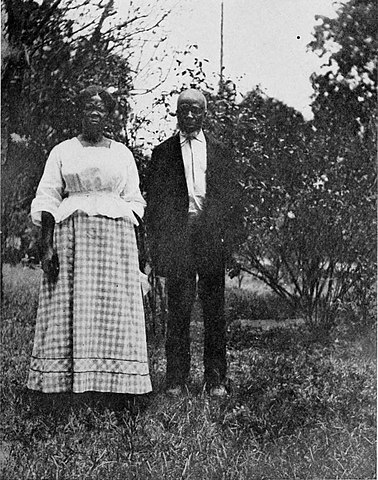
Cudjo and Abache, two of the last known survivors of the African slave trade. Photo by Emma Roche, 1914
Though disturbing and difficult to read due to the subject matter, this is very well written and researched, filling in the details of Cudjo's life before his capture and throughout the rest of his life.
Author Ben Raines traveled to present-day Benin where Cudjo was from. He learned about the Dahomeans, a brutal and war-faring tribe who sold people they captured to Europeans and Americans.
Cudjo and others from his tribe were seized and the rest were slaughtered. His family and friends, people he'd known all his life. Gone. It is a harrowing story, but Cudjo's problems had only just begun. He endured the Middle Passage and then was enslaved upon reaching American soil.
He and his fellow prisoners remained enslaved for the next five years, until the Civil War and the end of chattel slavery (though as anyone who doesn't subscribe to white-washed history knows, slavery did not end there).
After the war they founded Africatown, where they governed themselves and made a life as best they could, half a world away from their homelands.
The Last Slave Ship spans the time from Cudjo's capture in 1860 to 2018 when the sunken Clotilda was found. Mr Raines explores the legacy of slavery and the descendants of people who were brutally stolen and thrown into captivity. With clarity and compassion, he discusses the hardships they faced over the years and how Africatown Like many Black neighborhoods throughout the country, Africatown was used as a dumping ground for industrial waste, poisoning the people who live there.
Ben Raines goes on to write about his search for and eventual discovery of the Clotilda. I found it interesting to read about the techniques they used and how he figured out where the area where it was sunk in a river in an Alabama swamp.
There is a photography section at the end which brought it all even more to life.
American history buffs, at least those who prefer non-white-washed history, will find much to appreciate in this book. 5 stars all the way.
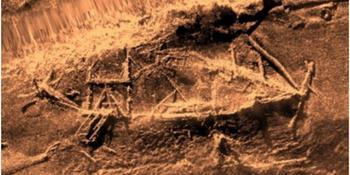
Sonar image of the Clotilda, resting on the bottom of the Mobile River

February 22, 2022
This was a very interesting book, comprehensively researched and well written. The first part deals with the slave trade in Dahomey (Benin) and the voyage of the Clotilda. The foreign slave trade had already been prohibited, but this final voyage successfully evaded the law. It was financed by Timothy Meaher and captained by William Foster. After the ship reached Alabama and the Africans were sold, the Clotilda was burned and hidden in a swamp. The Meaher and Foster families refused to reveal the location of the wreckage or to share any of its artifacts. Their descendants remain creeps to this day.
The next two parts of the book were the most interesting to me. After the Civil War ended, some of the surviving Africans bought land from Meaher and formed a town in Alabama called Africatown. They developed their own government and found work in Meaher enterprises. The story of one of the residents, Cudjo Lewis, was told by Zora Neale Hurston in her book “Barracoon”. Eventually, the town sort of fell apart, like many small towns do, due to gentrification, migration and polluting industries. The final section of the book describes the successful efforts of the author to find the Clotilda. Many people had tried to find it before, but Meaher had intentionally spread misinformation to keep the ship hidden. The descendants of the passengers of the Clotilda finally got some closure after its discovery in 2019.
The next two parts of the book were the most interesting to me. After the Civil War ended, some of the surviving Africans bought land from Meaher and formed a town in Alabama called Africatown. They developed their own government and found work in Meaher enterprises. The story of one of the residents, Cudjo Lewis, was told by Zora Neale Hurston in her book “Barracoon”. Eventually, the town sort of fell apart, like many small towns do, due to gentrification, migration and polluting industries. The final section of the book describes the successful efforts of the author to find the Clotilda. Many people had tried to find it before, but Meaher had intentionally spread misinformation to keep the ship hidden. The descendants of the passengers of the Clotilda finally got some closure after its discovery in 2019.

October 8, 2022
As a native Mobilian, I think this book should be required reading for those of us who grew up there. I’m ashamed to say I knew nothing about Africatown in my growing up years, definitely nothing of the survivors and descendants. Unimaginable horror coupled with dogged determination.

March 11, 2022
FULL DISCLOSURE
I have significant personal and professional interest and involvement in Africatown, having done work with M.O.V.E. Gulf Coast Community Development Corporation after the community was selected to be part of the prestigious Architectural League of New York American Roundtable Project; in promoting The Africatown International Design Idea Competition; and, more recently, when Africatown was named to the World Monuments Fund World Monuments Watch 2022 at the beginning of this month (links at end of this "book report"). I began my career in corporate communications and human resources management with International Paper and spent a great deal of time in Mobile, Alabama, for work in the early 1990s. One of my friends and colleagues is cited in The Last Slave Ship; another friend/neighbor--who wrote a very important book about the domestic slave trade, The Ledger & The Chain--actually provided a blurb for it. I say all this to say that there is no way I could be anything other than in hyper-edit mode when I read Ben Raines' book. And that there was no way I would write this review without taking the opportunity to share about the important work my friends are doing, in the process hopefully drawing even more attention to--and thus garnering more support for--both Africatown and the opportunities we have to address and correct the gross inequality inherent in my beloved country.
BOOK REPORT
Excellent, excellent and easy to read primer on the last slave ship to bring kidnapped Africans to the United States; the community some of those people founded outside Mobile, Alabama; the environmental and economic racism perpetrated on said community; the discovery of said slaver (the Clotilda); and the potential for Africatown's future.
That said, I have a bone or two to pick with Ben Raines and his editors.....namely, basic spelling and grammatical errors that should've been caught, unnecessary repetition (and, no, that's not redundant--sometimes repetition is critical to driving home a point), continuity glitches, and getting a key player's name wrong.
Also, I thought it did the book a disservice to have all of the photos in one section in the middle; My Better Half wondered aloud if that was a cost-saving move? Dunno. What I _do_ know is that the book would have been strengthened by strategic use of not only the photos included, but about three times as many, all appropriately placed within the narrative, vs stand-alone.
Finally, ummm, navel-gazing there a bit toward the end, Ben? I mean, I guess you have the right, given that you found the ship and not only have written this book but Saving America's Amazon (there's a companion documentary film). I think I just expected a little better of you? That said, even I knew you could not go the entire book without mentioning your daddy, because, well, hey. We're Southern. We have to.
LINKS:
https://movegulfcoastcdc.org/
https://archleague.org/project/africa...
https://africatowndesign.com/
https://www.wmf.org/2022watch
https://slate.com/culture/2021/04/rot...
https://www.goodreads.com/book/show/3...
https://www.pbs.org/video/alabama-pub...
I have significant personal and professional interest and involvement in Africatown, having done work with M.O.V.E. Gulf Coast Community Development Corporation after the community was selected to be part of the prestigious Architectural League of New York American Roundtable Project; in promoting The Africatown International Design Idea Competition; and, more recently, when Africatown was named to the World Monuments Fund World Monuments Watch 2022 at the beginning of this month (links at end of this "book report"). I began my career in corporate communications and human resources management with International Paper and spent a great deal of time in Mobile, Alabama, for work in the early 1990s. One of my friends and colleagues is cited in The Last Slave Ship; another friend/neighbor--who wrote a very important book about the domestic slave trade, The Ledger & The Chain--actually provided a blurb for it. I say all this to say that there is no way I could be anything other than in hyper-edit mode when I read Ben Raines' book. And that there was no way I would write this review without taking the opportunity to share about the important work my friends are doing, in the process hopefully drawing even more attention to--and thus garnering more support for--both Africatown and the opportunities we have to address and correct the gross inequality inherent in my beloved country.
BOOK REPORT
Excellent, excellent and easy to read primer on the last slave ship to bring kidnapped Africans to the United States; the community some of those people founded outside Mobile, Alabama; the environmental and economic racism perpetrated on said community; the discovery of said slaver (the Clotilda); and the potential for Africatown's future.
That said, I have a bone or two to pick with Ben Raines and his editors.....namely, basic spelling and grammatical errors that should've been caught, unnecessary repetition (and, no, that's not redundant--sometimes repetition is critical to driving home a point), continuity glitches, and getting a key player's name wrong.
Also, I thought it did the book a disservice to have all of the photos in one section in the middle; My Better Half wondered aloud if that was a cost-saving move? Dunno. What I _do_ know is that the book would have been strengthened by strategic use of not only the photos included, but about three times as many, all appropriately placed within the narrative, vs stand-alone.
Finally, ummm, navel-gazing there a bit toward the end, Ben? I mean, I guess you have the right, given that you found the ship and not only have written this book but Saving America's Amazon (there's a companion documentary film). I think I just expected a little better of you? That said, even I knew you could not go the entire book without mentioning your daddy, because, well, hey. We're Southern. We have to.
LINKS:
https://movegulfcoastcdc.org/
https://archleague.org/project/africa...
https://africatowndesign.com/
https://www.wmf.org/2022watch
https://slate.com/culture/2021/04/rot...
https://www.goodreads.com/book/show/3...
https://www.pbs.org/video/alabama-pub...
April 18, 2022
The Last Slave Ship should, in my opinion, become required reading at the secondary level in American schools. Ben Raines' use of well-researched history and biography as foundations for the story of the Clotilda humanizes the search for the missing vessel. He asks us to look again at the horrors of our past through the eyes of those who lived it.
Experiencing the slave trade through Cudjoe Lewis' firsthand accounts will remain with me for the rest of my life. I felt profound empathy for the residents of Africatown. I grieved not only for the displacement of those brought to America on the Clotilda but also for the struggles of the community against discrimination, industrialization, and economic decline in the 20th and 21st centuries.
Though The Last Slave Ship tackles profound and disturbing subject matter, Raines' discovery leaves us with a sense of hope. For now, The Clotilda remains underwater, a relic of a bygone time. Might we consider raising her from her hiding place and in so doing bringing our own ingrained prejudices and preconceived notions to light? Raines suggests a world-class museum in Africatown as a fitting final resting place. Her descendants deserve no less.
Experiencing the slave trade through Cudjoe Lewis' firsthand accounts will remain with me for the rest of my life. I felt profound empathy for the residents of Africatown. I grieved not only for the displacement of those brought to America on the Clotilda but also for the struggles of the community against discrimination, industrialization, and economic decline in the 20th and 21st centuries.
Though The Last Slave Ship tackles profound and disturbing subject matter, Raines' discovery leaves us with a sense of hope. For now, The Clotilda remains underwater, a relic of a bygone time. Might we consider raising her from her hiding place and in so doing bringing our own ingrained prejudices and preconceived notions to light? Raines suggests a world-class museum in Africatown as a fitting final resting place. Her descendants deserve no less.

January 30, 2023
Excellent! Learned a lot from this one, another example of our "inconvenient" history, it will probably land on a list of banned books if it's not there already.😠
January 18, 2022
I sincerely loved this book - experienced so many emotions reading it - true education of slavery and especially in the Mobile, Alabama area.

March 12, 2022
I knew nothing at all about The Clotilda, the last slave ship to bring slaves from Benin to the coast of Alabama, even after slave importation was illegal. The effects on the slaves themselves was horrible, but the effects on their ancestors, as well as those who sold them, is disheartening.
The story about Africatown in Mobile is enthralling, and I'd love to visit one day.
Especially interesting to me is the fact that the slaves who came from Benin stood up to their masters, lobbied for better living conditions, schools, land, houses, voting, etc., much more than those born in the US - their lives in Benin had taught them skills and ways of thinking totally different from those here, who didn't have those advantages. Those lobbies didn't always work, of course, but sometimes they did, and even after the Civil War, when those slaves had only been in America 5 years, there were advantages and skills that led to their betterment, such as the founding of Africatown, and better employment.
The search for The Clotilda by Ben Raines was such an important read in itself...I learned a great deal from reading this book, and I'll not soon forget it!
The story about Africatown in Mobile is enthralling, and I'd love to visit one day.
Especially interesting to me is the fact that the slaves who came from Benin stood up to their masters, lobbied for better living conditions, schools, land, houses, voting, etc., much more than those born in the US - their lives in Benin had taught them skills and ways of thinking totally different from those here, who didn't have those advantages. Those lobbies didn't always work, of course, but sometimes they did, and even after the Civil War, when those slaves had only been in America 5 years, there were advantages and skills that led to their betterment, such as the founding of Africatown, and better employment.
The search for The Clotilda by Ben Raines was such an important read in itself...I learned a great deal from reading this book, and I'll not soon forget it!

February 22, 2023
The Last Slave Ship is written by Ben Raines, the man who searched tirelessly for the last ship known to transport 110 enslaved Africans to America illegally. The Clotilda has a long legacy as a Civil War-era schooner captained by William Foster that made a voyage on a bet and a dare by millionaire Tim Meaher of Mobile, Alabama, to the slave coast of Africa to bring back enslaved Africans long after the end of the transatlantic slave trade. Foster faced bad weather, ship repairs, mutinies, and near capture during his long journey. Still, he brought back 110 enslaved humans that were smuggled into Mobile Bay and hidden in the canebreaks on the coast until they were parceled out to Foster, Meaher, and Meaher's brothers. The Clotilda was rumored to have been taken up the coast, where it was set on fire and submerged to avoid being found, removing all evidence of the agreement between Meaher and Foster. Five years later, the Africans were emancipated and found themselves stuck in the Mobile area, unable to return to their African homes. After some negotiations, the Clotilda survivors purchased some land from Tim Meaher, where they established their own Africa on American soil and named their town Africatown.
The stories of the Clotilda were recounted by both the slavers and the enslaved and repeated generation after generation. Some 150+ years later, Raines, a newspaper journalist and diving enthusiast, picked up on the story and began investigating. Africatown today still stands in a limited fashion. Descendants of the Clotilda survivors still live in the area and suffer from extreme racism and health issues due to the horrible conditions the town has endured from industrialization brought in by the Meaher family. Still, the ship remained a rumor, unsubstantiated by unfounded evidence of its existence, until May 22, 2019, when Ben Raines and a host of researchers found the ship off Twelve Mile Island in the Mobile Bay.
In this book, Raines tells the story of the Meaher and Foster families, the bet between Tim and Captain Foster, and that famous voyage. The author introduces the reader to the survivors of the Clotilda and the establishment of Africatown, detailing the long history and abuse suffered by the residents at the hands of generations of Meaher descendants. This story intertwines with the search for the Clotilda and the reconciliation that has begun to heal the community.
This is a fascinating read, and I'm interested in continuing to follow this story and the community of Africatown. There is a Netflix documentary titled "Descendants" about this story and the search for the ship, along with documenting the activism of the Africatown residents to bring awareness to their history. It's a great follow-up to reading this book.
The stories of the Clotilda were recounted by both the slavers and the enslaved and repeated generation after generation. Some 150+ years later, Raines, a newspaper journalist and diving enthusiast, picked up on the story and began investigating. Africatown today still stands in a limited fashion. Descendants of the Clotilda survivors still live in the area and suffer from extreme racism and health issues due to the horrible conditions the town has endured from industrialization brought in by the Meaher family. Still, the ship remained a rumor, unsubstantiated by unfounded evidence of its existence, until May 22, 2019, when Ben Raines and a host of researchers found the ship off Twelve Mile Island in the Mobile Bay.
In this book, Raines tells the story of the Meaher and Foster families, the bet between Tim and Captain Foster, and that famous voyage. The author introduces the reader to the survivors of the Clotilda and the establishment of Africatown, detailing the long history and abuse suffered by the residents at the hands of generations of Meaher descendants. This story intertwines with the search for the Clotilda and the reconciliation that has begun to heal the community.
This is a fascinating read, and I'm interested in continuing to follow this story and the community of Africatown. There is a Netflix documentary titled "Descendants" about this story and the search for the ship, along with documenting the activism of the Africatown residents to bring awareness to their history. It's a great follow-up to reading this book.

February 8, 2022
Unbelievably good story about the last ship to bring captured Africans to America, the Clotilda! The author is the journalist and tour boat captain who found the Clotilda after the boat was burned and sunk in 1859, hidden for 160 years. The author however focuses the story on the characters: the man who financed the trip and whose descendants exploited the people, the sea captain who traveled to Benin to buy people, the Dahomey nation in Benin that captured and sold their neighbors, and most importantly, the Africans who arrived in America against their will and how they fought back and built a home for themselves. It is also a call to action to preserve the ship and the town created by its "cargo," Africatown.
This story can add to our national conversation just as Ashley's sack or the 1619 project does. And it is written in thrilling prose, a page-turner as an 160 year old mystery is solved.
This story can add to our national conversation just as Ashley's sack or the 1619 project does. And it is written in thrilling prose, a page-turner as an 160 year old mystery is solved.

January 26, 2023
Very interesting book that is well written and researched. We are told about every aspect of the history of the ship, its cargo of slaves, the slavers, and the nation that kidnapped them and sold them, along with the struggle to come to an agreement about the ships future.

June 14, 2022
Featuring the main character Cudjo from Zora Neale Hurston's book, Barracoon, author Ben Raines tells a broader story of how a daring son of the South (Timothy Meaher) built a schooner to bring slaves from the African kingdom of Dahomey in blatant violation of U.S. laws, in the late 1850s. He brought about 100 Africans to Mobile, Alabama where cotton and slave labor was the backbone of the economy, and then burned the ship to hide the evidence. The first half of the book was about the trip while the second follows the history of how these Africans banded together to form a self-governed community (Africatown) that thrived until toxic pollution (from paper mills and chemical plants) and highways through the center of their town drove off (or killed) the younger generations. A truth is stranger than fiction story, but I found it slow, especially the tenuous connections back to Africa. Credit to Raines though for finding the wreck after so many failed before him.

January 28, 2024
Loved (and loathed) this book this much! Firstly, highly readable nonfiction. I really appreciated the subsections of this book with it firstly being about the Clotilda and illegal slave trade up (until the Civil War) in general, then Africatown's rise, and lastly Raines' journey into how he came about discovering the Ship. It also highlights sources within that I am eager to seek out, like Zora Neale Hurston's Barracoon and it ignited a general desire to know more about her life as an early Black culture sociologist and preservationist. I'm so glad for the Clotilda's discovery and that its story is literally being uncovered. Perhaps, hopefully it can be a metaphor of the continuing progress of social justice in America. The preceding text is why I loved this book, now a bit onto why I loathed it, but in a "good" way. This book is an example that there is so much history to unlearn and relearn, but this book expertly works to do so. The idea of a large scale glorified unenforced, illegal slave trade that continued long after 1800, stupidly surprised me (a history teacher!). Also, as you read about the love, pride, and effort that goes into the establishment of Africatown, you would think it must certainly be one of the top US National Park sites, except the inhabitants are continuing to fight so that it is not longer toxic waste dump. I'm so glad that NPR again did not disappoint with a book recommendation, but there are still so few reading numbers for this book as I write this review. Good news is, based on their website, there is a developing Clotilda and Africatown exhibition. Stories like this must be read and taught in schools, so that people no longer have to "unlearn" history before learning it. Please read and then share this book with others. An essential read for any American.

February 20, 2022
This is a non-fiction account of the last ship that would carry enslaved African people to America. Are you as surprised, as I was, to find out that: Although importing humans was outlawed in 1807, 50 years later 110 enslaved people arrived in the port of Mobile AL? How? That's the most disgusting part-a rich man's bet-that he could get away with it-is what led to this kidnaping and enslavement of humans. Another disgusting point: Those enslaved were sold by other Africans. It was a lot for me to digest.
The first part of the story focuses on the man that bet he could do it, tribes in Africa involved and the shallow investigation of what happened to the enslaved after they landed. In the later part of the book we learn about how the enslaved were freed after the Civil War, how they wanted to go home, but couldn't. Instead they formed their own town, their own seat of government, in a place they called Africatown. I never knew about any of this and it was very interesting.
However...The author is new to non-fiction history writing and I never got caught up in the flow of the story. His research was done well, so points for that. Huge accolades are due to him for his work and the fact that he actually found the ship in the causeways of the swamps Alabama.
The first part of the story focuses on the man that bet he could do it, tribes in Africa involved and the shallow investigation of what happened to the enslaved after they landed. In the later part of the book we learn about how the enslaved were freed after the Civil War, how they wanted to go home, but couldn't. Instead they formed their own town, their own seat of government, in a place they called Africatown. I never knew about any of this and it was very interesting.
However...The author is new to non-fiction history writing and I never got caught up in the flow of the story. His research was done well, so points for that. Huge accolades are due to him for his work and the fact that he actually found the ship in the causeways of the swamps Alabama.
February 20, 2022
(Audiobook) (4.5 stars) This work is a concise but informative work about the last known American slave ship. Yet, it is a bit more than a voyage. It also covers the lives of those involved, from the men who did this on a financial gamble to those souls whose lives were forever upended by their capture and enslavement in America. It is almost a compendium to the classic Barracoon, but with information not in that tale. This work also shows how oppression and racism haunted the descendants of the Clotilda. Yet history did not know for sure what really happened to the ship until very recently, when some local water knowledge and modern archeological technology found the ship that was supposedly lost to history.
It is engaging, but also infuriating to read. That it was considered “daring” to engage in the capture and enslavement of other people for financial gain and ego is the worst of America. That the former slaves had some moments of success was tempered by the fact that their children faced a difficult world where their was much pain and sorrow. Still, it is a tale that should be told. Worth the time to read.
It is engaging, but also infuriating to read. That it was considered “daring” to engage in the capture and enslavement of other people for financial gain and ego is the worst of America. That the former slaves had some moments of success was tempered by the fact that their children faced a difficult world where their was much pain and sorrow. Still, it is a tale that should be told. Worth the time to read.

January 2, 2022
The journey of the enslaved people who were captured and brought to the United States on the Clotilda, the last known slave ship to arrive in the United States. 'The Last Slave Ship' is a story about trauma and resilience in the face of systemic racism. The conclusion of this book is so gripping yet touching. You're not going to want to put it down but when you do (you only will because there is no more book left to read), you'll want to just sit with your emotions for a while because there is a lot to feel.
Thank you to NetGalley and Simon & Schuster for an ARC in exchange for an honest review!
Thank you to NetGalley and Simon & Schuster for an ARC in exchange for an honest review!

July 4, 2022
This is history, but it's so much closer than I always assume. Survivors of the Clotilda who were enslaved in America and founded Africatown survived into the 1930s. There are existing *videos* of them. This book was engagingly written and brings all that nearness home to me again.
Also, we owe so much to Zora Neale Hurston. So, so much. This book has me wanting to re-read Barracoon in a new light, and I have *so* many questions about that letter she wrote re: the other Clotilda survivor whose oral history she took but never shared! So many threads to pull.
Also, we owe so much to Zora Neale Hurston. So, so much. This book has me wanting to re-read Barracoon in a new light, and I have *so* many questions about that letter she wrote re: the other Clotilda survivor whose oral history she took but never shared! So many threads to pull.

July 27, 2022
Amazing story. Yet another example of how African Americans have been decimated by institutional racism. The demise of Africa Town was heartbreaking. The story of the slaves and the men who were never brought to justice is equally sad. I highly suggest reading it if you want to expand your knowledge of slavery in the USA and the last slave ship.
March 18, 2024
When I first started this book, I couldn’t believe the statistic that only 13 slave ships have been recovered after 10s of thousands sailed across the Atlantic. However, by the end of the book, the destruction of the remarkable Africatown, Alabama, gives insight into exactly what happens when Black individuals thrive and show their resilience while also uncovering the egregious acts against them. They’re systemically destroyed.
The Meaher family, to this day, ought to be ashamed of themselves - it breaks me that the remnants of Africatown are nearly gone from physical history. The nearly complete destruction by the Meahers of Africatown to hide their own wrongdoing and guilt culminated in a great loss of historical sites which should have been preserved for generations. Instead, the cancer-causing pollution is what’s left of their legacy.
The US really needs to re-evaluate what is taught in schools and what we hold in high esteem. Though Cudjo and his kin painfully dreamed of going back to Africa his whole life, I think it’s safe to say he and the founders of Africatown are the best US history has to offer.
The Meaher family, to this day, ought to be ashamed of themselves - it breaks me that the remnants of Africatown are nearly gone from physical history. The nearly complete destruction by the Meahers of Africatown to hide their own wrongdoing and guilt culminated in a great loss of historical sites which should have been preserved for generations. Instead, the cancer-causing pollution is what’s left of their legacy.
The US really needs to re-evaluate what is taught in schools and what we hold in high esteem. Though Cudjo and his kin painfully dreamed of going back to Africa his whole life, I think it’s safe to say he and the founders of Africatown are the best US history has to offer.

October 3, 2024
I’ll be honest I’ve never heard of this so I’m very interested to read about if. The beginning was great but the last third of it wasn’t nearly as interesting since it was about the descendants. Oh but it picks up with finding the ship again. Wait but that wasn’t it! Oh goodness what a rollercoaster of emotions. 3.4 stars

March 7, 2025
I would love nothing more than to go see this with my own eyes.
May 12, 2022
Really interesting narrative of the history of the last slave ship, the events in Africa and the United States that led to the trip, the aftermath of the Civil War, and the status today.

March 31, 2022
"The Last Slave Ship" is pretty much what it says on the tin, a history of the Clotilda and the people who traveled the Middle Passage in her bowels. It is impressively comprehensive given that records of enslaved people are difficult to find and that there was so much effort put into covering up the truth.
Let me just say I was not expecting this book to be as good as it was. It is well researched and draws from interviews, newspaper reports, and court records. Not only does the author cover the history of the ship; it covers the relevant aspects of the slave trade in West Africa, the exploitation of the Meyer family, the recorded words of the enslaved people, the need for reparations, and how all of these aspects still affect Mobile Alabama and Africatown almost two centuries after the Clotilda landed. Raines states the thesis of this history in the prologue: that the wrongs done to the Africans on the Clotilda are still very much with us in present day.
This history is incredibly self aware and in many ways the history of Africatown is a microcosm of the history of race relati0ns in the USA. This book is a crash course in the Middle Passage, Slavery, and Environmental racism. It also discusses the complicity of certain African communities in the slave trade in a thoughtful and compassionate manner; in much the same way Saidiya Hartman's "Lose Your Mother handled these topics.
I absolutely recommend this book. It is fantastic and surpassed every one of my expectations.
Let me just say I was not expecting this book to be as good as it was. It is well researched and draws from interviews, newspaper reports, and court records. Not only does the author cover the history of the ship; it covers the relevant aspects of the slave trade in West Africa, the exploitation of the Meyer family, the recorded words of the enslaved people, the need for reparations, and how all of these aspects still affect Mobile Alabama and Africatown almost two centuries after the Clotilda landed. Raines states the thesis of this history in the prologue: that the wrongs done to the Africans on the Clotilda are still very much with us in present day.
This history is incredibly self aware and in many ways the history of Africatown is a microcosm of the history of race relati0ns in the USA. This book is a crash course in the Middle Passage, Slavery, and Environmental racism. It also discusses the complicity of certain African communities in the slave trade in a thoughtful and compassionate manner; in much the same way Saidiya Hartman's "Lose Your Mother handled these topics.
I absolutely recommend this book. It is fantastic and surpassed every one of my expectations.

April 13, 2025
This was an excellent read about the legacy of American slavery thru the story of the Clotilda, the last slave ship to bring enslaved Africans to America. Scuttled after her voyage, the author rediscovered the wreck in Alabama's Mobile River in 2019.
But The Last Slave Ship is also about the Benin slave trade, the divide between American-born and African-born slaves, and the story of Africatown (the home of many Clotilda survivors post-emancipation) and its environmental destruction over time both by the state and industry. The dark legacy of slavery is also explored thru modern descendants (not only of those captured on Clotilda, but also the Benin slave traders and American slave owners), and their collective struggles/hopes for reconciliation and truth.
I found the book super well researched and the storytelling excellent. If you're looking for American history reads you can't go wrong picking this up!! A good pairing with this might be Barracoon: The Story of the Last "Black Cargo", which is cited heavily in The Last Slave Ship and consists of interviews with the last living survivor of Clotilda.
But The Last Slave Ship is also about the Benin slave trade, the divide between American-born and African-born slaves, and the story of Africatown (the home of many Clotilda survivors post-emancipation) and its environmental destruction over time both by the state and industry. The dark legacy of slavery is also explored thru modern descendants (not only of those captured on Clotilda, but also the Benin slave traders and American slave owners), and their collective struggles/hopes for reconciliation and truth.
I found the book super well researched and the storytelling excellent. If you're looking for American history reads you can't go wrong picking this up!! A good pairing with this might be Barracoon: The Story of the Last "Black Cargo", which is cited heavily in The Last Slave Ship and consists of interviews with the last living survivor of Clotilda.
Read
October 2, 2022This is a pretty incredible book. It's so compelling a read I was mostly willing to forgive the repetitive bits and poor editing, though I can never quite forgive poor editing. It made me a bit uncomfortable that the author wasn't all that upfront about his positionality and racial identity, because it made the power dynamics and the self-congratulations about finding the ship (legit a thing to be proud of! but it was so "me me me EYE did this hooray me" without ever sitting with the fact that a white man crowing about this is...slightly icky) so...yikes. But still, such an important story to tell and to read.

April 20, 2022
The last known shipment of human cargo for sleeve trade occurred just five years before emancipation.Their case, Raines argues, is unique for including a large number of captives from the same village (and therefore the same families with the same languages) all of whom were enslaved not long enough to forget what it was to be free. When returned their freedom, these hundred-odd enslaved people quickly deduced the infeasibility of returning to their homeland and instead of assimilating into the surrounding Alabaman towns, they instead constructed a town of their own, agreed upon their own self-governance and many resumed their former trades. We also have more first-hand accounts of the capture itself and subsequent trials because of the recent first-generation (unwilling) immigrants involved.
I enjoyed the brief conclusion of actually finding the sunken ship where it had been destroyed to hide evidence and the modern-day consequences of its revival, including the revelation that the slave ship's owner's family knew where the ship was this whole time though they have always refused to say and even attempted to blow up the remains with dynamite in the 1950s. But more importantly, Raines speaks honestly to the impact of slavery in the community a mere handful of generations later and the healing power of, on the one side, apologizing for what cannot be changed, and on the other, forgiving what the one apologizing did not perpetrate.
I enjoyed the brief conclusion of actually finding the sunken ship where it had been destroyed to hide evidence and the modern-day consequences of its revival, including the revelation that the slave ship's owner's family knew where the ship was this whole time though they have always refused to say and even attempted to blow up the remains with dynamite in the 1950s. But more importantly, Raines speaks honestly to the impact of slavery in the community a mere handful of generations later and the healing power of, on the one side, apologizing for what cannot be changed, and on the other, forgiving what the one apologizing did not perpetrate.
March 16, 2023
Grateful to have learned about this history and about Africatown, but not impressed with the book as a piece of non-fiction writing. The “true story of how Clotilda was found” was not that dramatic but also not really what the book was about. The content was far-reaching but not excellently curated, and the author’s combination of history with centering his own role didn’t sit quite right. Certainly an important and worthwhile read, but not a particularly skilled work in the genre.

November 3, 2024
"The Last Slave Ship" is a well-written true story about the last slave ship that brought in a load of slaves to the Mobile, Alabama area shortly before the Civil War. These people were hidden and then enslaved for about 5 years before they were emancipated. The book then follows the history of the enslaved people and their town "Africatown", the enslavers, the boat and how it was discovered, etc. It's a very moving story. Language warning for one direct quote toward the end of the book. This is one of the best books I've read so far this year as the author really brings it full circle and ties up all sorts of loose ends. Five stars. ⭐️⭐️⭐️⭐️⭐️ (This counts for Alabama in my state reading project.)

May 1, 2025
Compulsive, immersive! Like the best wiki spiral.
October 18, 2024
Very well written and researched. Interesting.
Displaying 1 - 30 of 432 reviews