

What do you think?

Astounding/Analog
Analog Science Fiction & Fact, September/October 2021
Volume CXXXXI, No. 9. & 10.
Contents:
4 • The "New Normal" Trap • [Editorial (Analog)] • essay by Stanley Schmidt
10 • Kepler's Laws (Part 1 of 2) • [Kepler's Law] • serial by Jay Werkheiser (book publication as Kepler's Law 2017)
82 • Orbital Nuclear Power System (ONPS): The Foundation of an Interplanetary Civilization • [Science Fact (Analog)] • essay by Donald Wilkins
89 • The Maestro's Final Work • poem by Alan Ira Gordon
90 • The Book Keepers • novelette by J. T. Sharrah
108 • Extrasolar Redundancy in the Nova Tortuga Model of Preservation for Dermochelys Coriacea • short story by Bianca Sayan
117 • Quieter Songs Inland • short story by Marissa Lingen
120 • Last Dance at the Gunrunners' Ball • [Imago/Militant, Calderon, & DiNardo] • short story by Joel Richards
126 • When Ada Is • short story by Holly Schofield
128 • Where's All the Antimatter? • [The Alternate View] • essay by John G. Cramer
131 • Quantum Entanglement • poem by Ken Poyner
132 • Timing • short story by Robert Scherrer
134 • Room to Live • short story by Marie Vibbert
139 • In Times to Come (Analog, September-October) • [In Times to Come (Analog)] • essay by uncredited
140 • The Soul Is Ten Thousand Parts • short story by Chelsea Obodoechina
144 • To Feed the Animals • short story by John Vester [as by John J. Vester]
151 • The Hunger • novelette by Marco Frassetto
168 • The Silence Before I Sleep • novella by Adam-Troy Castro
205 • Don Sakers: (1958-2021) • essay by uncredited
206 • Brass Tacks (Analog, September-October) • [Brass Tacks] • essay by various
206 • Letter (Analog, September-October) • essay by Cy Chauvin
208 • Upcoming Events (Analog, September-October) • [Upcoming Events] • essay by Anthony R. Lewis.
【 PREVIOUS ISSUE ← September/October 2021 → NEXT ISSUE 】
Contents:
4 • The "New Normal" Trap • [Editorial (Analog)] • essay by Stanley Schmidt
10 • Kepler's Laws (Part 1 of 2) • [Kepler's Law] • serial by Jay Werkheiser (book publication as Kepler's Law 2017)
82 • Orbital Nuclear Power System (ONPS): The Foundation of an Interplanetary Civilization • [Science Fact (Analog)] • essay by Donald Wilkins
89 • The Maestro's Final Work • poem by Alan Ira Gordon
90 • The Book Keepers • novelette by J. T. Sharrah
108 • Extrasolar Redundancy in the Nova Tortuga Model of Preservation for Dermochelys Coriacea • short story by Bianca Sayan
117 • Quieter Songs Inland • short story by Marissa Lingen
120 • Last Dance at the Gunrunners' Ball • [Imago/Militant, Calderon, & DiNardo] • short story by Joel Richards
126 • When Ada Is • short story by Holly Schofield
128 • Where's All the Antimatter? • [The Alternate View] • essay by John G. Cramer
131 • Quantum Entanglement • poem by Ken Poyner
132 • Timing • short story by Robert Scherrer
134 • Room to Live • short story by Marie Vibbert
139 • In Times to Come (Analog, September-October) • [In Times to Come (Analog)] • essay by uncredited
140 • The Soul Is Ten Thousand Parts • short story by Chelsea Obodoechina
144 • To Feed the Animals • short story by John Vester [as by John J. Vester]
151 • The Hunger • novelette by Marco Frassetto
168 • The Silence Before I Sleep • novella by Adam-Troy Castro
205 • Don Sakers: (1958-2021) • essay by uncredited
206 • Brass Tacks (Analog, September-October) • [Brass Tacks] • essay by various
206 • Letter (Analog, September-October) • essay by Cy Chauvin
208 • Upcoming Events (Analog, September-October) • [Upcoming Events] • essay by Anthony R. Lewis.
【 PREVIOUS ISSUE ← September/October 2021 → NEXT ISSUE 】
208 pages, digest magazine
First published August 1, 2021
About the author
Trevor Quachri
107 books28 followersTrevor Quachri (b. 1976) has been the sixth editor of
Analog Science Fiction & Fact
magazine since September 2012.
Previously, he was “a Broadway stagehand, collected data for museums, and executive produced a science fiction pilot for a basic cable channel.”
Quachri started as an editorial assistant in 1999 at Asimov's Science Fiction and Analog. Former editor of Analog, Ben Bova, was an early influence.
Previously, he was “a Broadway stagehand, collected data for museums, and executive produced a science fiction pilot for a basic cable channel.”
Quachri started as an editorial assistant in 1999 at Asimov's Science Fiction and Analog. Former editor of Analog, Ben Bova, was an early influence.
Ratings & Reviews
Friends & Following
Create a free account to discover what your friends think of this book!
Community Reviews
Displaying 1 - 13 of 13 reviews

January 24, 2022
This is the September-October 2021 issue of Analog Science Fiction and Fact, as usual, packed with hard SF works and scientific facts. The contents:
The "New Normal" Trap [Editorial (Analog)] essay by Stanley Schmidt an essay that takes author’s novel Lifeboat Earth to see whether he was right about changing attitudes. 2.5*
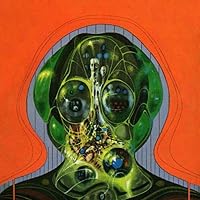
Kepler's Laws (Part 1 of 2) [Kepler's Law] serial by Jay Werkheiser the first part of the novel. The plot is than Japanese-Indian-US alliance sends 30 women on exoplanet Kepler, because it seems that the Earth will soon turn uninhabited will all environmental breakdowns. They are all-women because there are also embryos with them to restart a human civilization. The story starts with the first group landing and almost immediately dropping out of contact. The remaining colonists land elsewhere (except for the captain left in orbit), but soon also are victims of a strange rain. The story is good hard SF with clever ideas about a possible life quite different from our own – the planet has low oxygen (5%) methane (15%) atmosphere, perennial cloud cover and what is initially described as walking trees (see the cover). What I disliked was a social part that reminded me of soap opera’s intrigue – part of the women are in a struggle, who should be a leader (up to disobeying orders and endangering the whole enterprise), others assume that US representatives will insist on “western” culture, destroying Japanese and Indian ones. Moreover, there were two more launches planned – by China and Russia-EU alliance and the colonists should get pregnant ASAP to have more able bodies if others arrive (to bitch about this new planet). 3*
Orbital Nuclear Power System (ONPS): The Foundation of an Interplanetary Civilization [Science Fact (Analog)] essay by Donald Wilkins solar power plants that beam energy to Earth have a lot of drawback, so the author suggest nuclear, like in Robert A. Heinlein’s Blowouts Happen. They can be in a lower orbit, fission-based, stable. 3*
The Maestro's Final Work poem by Alan Ira Gordon how our solar system is made, final touches. 3*
The Book Keepers novelette by J. T. Sharrah a team of time travellers is sent to Alexandria at the moment just before arriving of Caesar. Their goal is to scan all scrolls at the Great Library before they are burned in a fire. A lot of historical info on the topic. 3*
Extrasolar Redundancy in the Nova Tortuga Model of Preservation for Dermochelys Coriacea short story by Bianca Sayan a weird story of Dessy (hir), a student who wants to create an extrasolar biome for the sea turtle as an undergraduate thesis. The story is full of unusual pronouns and weird complications, solved with help of AI, but it’s more strangeness for strangeness sake. 2*
Quieter Songs Inland short story by Marissa Lingen Corinne is an archivist in New Orleans. The archives are evacuated for there can be another weather calamity sooner or later. She has a jazz-loving father, who has lost his toes to diabetes and can't move quickly and she wants him to go just like the archives. Not exactly SF, more like cli-fi. 2.5*
Last Dance at the Gunrunners' Ball [Imago/Militant, Calderon, & DiNardo] short story by Joel Richards this is about a self-aware space ship Imago. He goes after slavers of intelligent ships (slavers assume ships as property and erase their personality). Here he (as a hologram) visits a local gathering place to assassinate some slavers and contract help for his fight. A nice action story, nothing really novel, but reads well. 3*
When Ada Is short story by Holly Schofield Ada is an autistic woman with a chip that helps her social interactions teamed up with a brute jerk Ryan to scout/mine asteroids. She is better than him, but her chip urges her to downplay it. Ends in tragedy. 4*
Where's All the Antimatter? [The Alternate View] essay by John G. Cramer another one why muons don’t divide equally likely to matter and antimatter as the current theory suggests. A lot of physics details, way over my head, but the summary – we need a new theory. 2.5*
Quantum Entanglement poem by Ken Poyner in many universes even at their end we are in the middle. 3*
Timing short story by Robert Scherrer Og-Soth is the smartest caveman on Earth, inventing both writing and the wheel, but doesn’t help. 3.5*
Room to Live short story by Marie Vibbert the narrator works at a call service job, for consumers want to talk to real people, not AIs. AI chat-bots are actually giving her prompts, so she is below them, even despite her having a degree in AI. Additionally, her roommate is a spoiled untidy slob, leaving their apartment in a perpetual mess and whining, when the narrator tries to clean up. However, chat-bots give her good advice. 4*
In Times to Come (Analog, September-October) [In Times to Come (Analog)] essay by uncredited no famous names
The Soul Is Ten Thousand Parts short story by Chelsea Obodoechina a self-aware experimental android bought by a rich man as a show-off. 3*
To Feed the Animals short story by John Vester colonists on a sandy planet gather for an annual festival, where the main attraction is a skimming stone contest, thrown over an ocean. The narrator finds it important but his teenage son is moody and doesn’t understand these festivities, when life here is hard monotonous and dreary. 3*
The Hunger novelette by Marco Frassetto a near future, the space station is damaged and an octogenarian engineer, who designed the station together with a young biologist are called in to analyze it. They find out a strange small drone of extraterrestrial origin, which eats metal. They maybe a life form or constructed, but what is important is that a huge swarm of them (10^20 units) are approaching and Earth space-faring capability is in danger, and maybe even life on Earth. 4*
The Silence Before I Sleep novella by Adam-Troy Castro the same universe as Andrea Cort stories, where potent god-like AIsource and many species live. Here the protagonist is Rage Larkin, who is a consultant-assassin, a person for hire to settle problems by any means. With her assistant they travel to the planet Vireczin, a planet constructed by two extremely rich people with links to AIsource, Arla and Bastian, who had been lovers but now hated each other. These two have a grandiose palaces and they are the only employers on the planet, and there is no one except them and their servants. Arla, who leads of life of misery, hires Rage to make sure Bastian’s life also has no joy. 4*
Don Sakers: (1958-2021) essay by uncredited a sad obituary for old-time writer of Reference Library – Analog’s review of SF books.
The "New Normal" Trap [Editorial (Analog)] essay by Stanley Schmidt an essay that takes author’s novel Lifeboat Earth to see whether he was right about changing attitudes. 2.5*
Kepler's Laws (Part 1 of 2) [Kepler's Law] serial by Jay Werkheiser the first part of the novel. The plot is than Japanese-Indian-US alliance sends 30 women on exoplanet Kepler, because it seems that the Earth will soon turn uninhabited will all environmental breakdowns. They are all-women because there are also embryos with them to restart a human civilization. The story starts with the first group landing and almost immediately dropping out of contact. The remaining colonists land elsewhere (except for the captain left in orbit), but soon also are victims of a strange rain. The story is good hard SF with clever ideas about a possible life quite different from our own – the planet has low oxygen (5%) methane (15%) atmosphere, perennial cloud cover and what is initially described as walking trees (see the cover). What I disliked was a social part that reminded me of soap opera’s intrigue – part of the women are in a struggle, who should be a leader (up to disobeying orders and endangering the whole enterprise), others assume that US representatives will insist on “western” culture, destroying Japanese and Indian ones. Moreover, there were two more launches planned – by China and Russia-EU alliance and the colonists should get pregnant ASAP to have more able bodies if others arrive (to bitch about this new planet). 3*
Orbital Nuclear Power System (ONPS): The Foundation of an Interplanetary Civilization [Science Fact (Analog)] essay by Donald Wilkins solar power plants that beam energy to Earth have a lot of drawback, so the author suggest nuclear, like in Robert A. Heinlein’s Blowouts Happen. They can be in a lower orbit, fission-based, stable. 3*
The Maestro's Final Work poem by Alan Ira Gordon how our solar system is made, final touches. 3*
The Book Keepers novelette by J. T. Sharrah a team of time travellers is sent to Alexandria at the moment just before arriving of Caesar. Their goal is to scan all scrolls at the Great Library before they are burned in a fire. A lot of historical info on the topic. 3*
Extrasolar Redundancy in the Nova Tortuga Model of Preservation for Dermochelys Coriacea short story by Bianca Sayan a weird story of Dessy (hir), a student who wants to create an extrasolar biome for the sea turtle as an undergraduate thesis. The story is full of unusual pronouns and weird complications, solved with help of AI, but it’s more strangeness for strangeness sake. 2*
Quieter Songs Inland short story by Marissa Lingen Corinne is an archivist in New Orleans. The archives are evacuated for there can be another weather calamity sooner or later. She has a jazz-loving father, who has lost his toes to diabetes and can't move quickly and she wants him to go just like the archives. Not exactly SF, more like cli-fi. 2.5*
Last Dance at the Gunrunners' Ball [Imago/Militant, Calderon, & DiNardo] short story by Joel Richards this is about a self-aware space ship Imago. He goes after slavers of intelligent ships (slavers assume ships as property and erase their personality). Here he (as a hologram) visits a local gathering place to assassinate some slavers and contract help for his fight. A nice action story, nothing really novel, but reads well. 3*
When Ada Is short story by Holly Schofield Ada is an autistic woman with a chip that helps her social interactions teamed up with a brute jerk Ryan to scout/mine asteroids. She is better than him, but her chip urges her to downplay it. Ends in tragedy. 4*
Where's All the Antimatter? [The Alternate View] essay by John G. Cramer another one why muons don’t divide equally likely to matter and antimatter as the current theory suggests. A lot of physics details, way over my head, but the summary – we need a new theory. 2.5*
Quantum Entanglement poem by Ken Poyner in many universes even at their end we are in the middle. 3*
Timing short story by Robert Scherrer Og-Soth is the smartest caveman on Earth, inventing both writing and the wheel, but doesn’t help. 3.5*
Room to Live short story by Marie Vibbert the narrator works at a call service job, for consumers want to talk to real people, not AIs. AI chat-bots are actually giving her prompts, so she is below them, even despite her having a degree in AI. Additionally, her roommate is a spoiled untidy slob, leaving their apartment in a perpetual mess and whining, when the narrator tries to clean up. However, chat-bots give her good advice. 4*
In Times to Come (Analog, September-October) [In Times to Come (Analog)] essay by uncredited no famous names
The Soul Is Ten Thousand Parts short story by Chelsea Obodoechina a self-aware experimental android bought by a rich man as a show-off. 3*
To Feed the Animals short story by John Vester colonists on a sandy planet gather for an annual festival, where the main attraction is a skimming stone contest, thrown over an ocean. The narrator finds it important but his teenage son is moody and doesn’t understand these festivities, when life here is hard monotonous and dreary. 3*
The Hunger novelette by Marco Frassetto a near future, the space station is damaged and an octogenarian engineer, who designed the station together with a young biologist are called in to analyze it. They find out a strange small drone of extraterrestrial origin, which eats metal. They maybe a life form or constructed, but what is important is that a huge swarm of them (10^20 units) are approaching and Earth space-faring capability is in danger, and maybe even life on Earth. 4*
The Silence Before I Sleep novella by Adam-Troy Castro the same universe as Andrea Cort stories, where potent god-like AIsource and many species live. Here the protagonist is Rage Larkin, who is a consultant-assassin, a person for hire to settle problems by any means. With her assistant they travel to the planet Vireczin, a planet constructed by two extremely rich people with links to AIsource, Arla and Bastian, who had been lovers but now hated each other. These two have a grandiose palaces and they are the only employers on the planet, and there is no one except them and their servants. Arla, who leads of life of misery, hires Rage to make sure Bastian’s life also has no joy. 4*
Don Sakers: (1958-2021) essay by uncredited a sad obituary for old-time writer of Reference Library – Analog’s review of SF books.
October 28, 2021
Some good stuff this issue. Three lifeboat colonies have launched from a devastated Earth to Kepler, an exoplanet, and the US, India, Japan consortium have reached there first. After a botched landing, the first group to descend succumb to some sort of burning rash after a rain shower and only two survive. Meanwhile the remaining shuttles have settled and formed a loose township of habs. Shortly thereafter they too are struck down by the burning rain and half the settlers are now dead. In orbit, the commander is secretly constructing nuclear weapons in case the Russian or Chinese missions prove to be belligerent, and down on the planet some poor choices of leaders has fomented an urge for a change of bosses. First part of “Kepler’s Laws” by Jay Werkheiser is a cracking read! On a scholarly time jaunt to copy lost scrolls in Alexandria three travellers discover a plot to return Cleopatra to the throne. However, they are observed, and suspected of treason, sentenced to hard labour in the desert in “The Book Keepers” by J. T. Sharrah. On a newly settled planet a father tries to explain to his son the reasons for their seemingly frivolous games of skipping stones on the ocean in John J. Vester’s “Feeding The Animals”, and Marco Frassetto gives us a tense battle against countless machine-like metal harvesters intent on breaking down all metal in the Solar System in “The Hunger”. Rage is a fixer-for-hire (which occasionally involves assassination) who is engaged by Arla, a superwealthy and bitter woman, to make her ex-lover and now most hated enemy Bastian, feel nothing but perpetual misery. With her assistant Justin, Rage discovers the source of the bitterness between the two and a tragedy of Shakespearean proportions. Evoking the lushness and grandeur of Cordwainer Smith’s Instrumentality, look for “The Silence Before I Sleep” by Adam-Troy Castro come awards time. Recommended issue.

October 4, 2021
Some interesting stories in this issue. As usual, I found the longer stories to be the best. The very short stories rarely work well.
We start with a classic time travel story with "The Book Keepers" by J.T. Sharrah. A group of researches travel back to ancient Alexandria to make a digital scan of the library before it burned. As expected things go wrong and we get the usual time travel paradox shenanigans. There is nothing new here for readers that know time travel stories, but Sharrah has written a well told and entertaining story none the less.
"Room to Live" by Marie Vibbert is one the shorter stories that worked for me. The story follows a woman working in a call center and her main job function seems to be the human whenever a customer insists on talking to a human, even though most of her responses are suggested by an AI. Even with pretty clever AI, the absurdity of customer call centers remains the same. Light in tone, but still a story with some weight.
"The Hunger" by Marco Frassetto is an interesting approach on an alien invasion. Very small drones are detected by a mining ship in space. They appear small and harmless, but the researches are unsure whether they are a lifeform or machinery. However, the worry increases as it appears several billions of these are heading for Earth - and will likely destroy everything when they arrive a decade later. And old engineer is pulled out from retirement so she can help find a solution with the pooled resources of every country on the planet. It is an interesting concept fighting a swarm of relatively harmless drones, but their sheer number makes it a world ending event. I have a couple of problems with the story. It is a novelette length but reads more like a synopsis to a longer novel. Long time periods is frequently summarised to get the plot going. And while I like the main character, this clever old engineer; it is also a bit annoying that she more or less seems to be the only intelligent human on this project that supposedly has all scientists in the world working on it.
The issue ends with a novella. "The Silence Before I Sleep" by Adam-Troy Castro. Tells the story of a "problem solver consultant", though her clients often refer to her as an assassin. She is called to a planet where two absurdly rich planet has settled on separate sides of the planet. Apparently they were a couple once but now hate each other. The consultant is hired by the woman in this scenario and her task is basically to make the guy on the other side of the planet life a living hell, but not kill him. The consultant doesn't immediately accept the task but wants to do her own research first. Castro provides us with a well written and well paced story, that seems like an action story on the surface - and there is plenty of action (and violence), but it is really about the depravity of insanely rich people and how miserable they can become.
We start with a classic time travel story with "The Book Keepers" by J.T. Sharrah. A group of researches travel back to ancient Alexandria to make a digital scan of the library before it burned. As expected things go wrong and we get the usual time travel paradox shenanigans. There is nothing new here for readers that know time travel stories, but Sharrah has written a well told and entertaining story none the less.
"Room to Live" by Marie Vibbert is one the shorter stories that worked for me. The story follows a woman working in a call center and her main job function seems to be the human whenever a customer insists on talking to a human, even though most of her responses are suggested by an AI. Even with pretty clever AI, the absurdity of customer call centers remains the same. Light in tone, but still a story with some weight.
"The Hunger" by Marco Frassetto is an interesting approach on an alien invasion. Very small drones are detected by a mining ship in space. They appear small and harmless, but the researches are unsure whether they are a lifeform or machinery. However, the worry increases as it appears several billions of these are heading for Earth - and will likely destroy everything when they arrive a decade later. And old engineer is pulled out from retirement so she can help find a solution with the pooled resources of every country on the planet. It is an interesting concept fighting a swarm of relatively harmless drones, but their sheer number makes it a world ending event. I have a couple of problems with the story. It is a novelette length but reads more like a synopsis to a longer novel. Long time periods is frequently summarised to get the plot going. And while I like the main character, this clever old engineer; it is also a bit annoying that she more or less seems to be the only intelligent human on this project that supposedly has all scientists in the world working on it.
The issue ends with a novella. "The Silence Before I Sleep" by Adam-Troy Castro. Tells the story of a "problem solver consultant", though her clients often refer to her as an assassin. She is called to a planet where two absurdly rich planet has settled on separate sides of the planet. Apparently they were a couple once but now hate each other. The consultant is hired by the woman in this scenario and her task is basically to make the guy on the other side of the planet life a living hell, but not kill him. The consultant doesn't immediately accept the task but wants to do her own research first. Castro provides us with a well written and well paced story, that seems like an action story on the surface - and there is plenty of action (and violence), but it is really about the depravity of insanely rich people and how miserable they can become.

September 10, 2021
My first time reading Analog, and I really enjoyed it!

March 26, 2024
Rated just for Room to Live by Marie Vibbert, heard on the Analog podcast.

August 29, 2021
I liked "The Book Keepers" by J. T. Sharrah.

September 11, 2021
A (excellent):
The Book Keepers by J T Sharrah
B (very good):
The Hunger by Marco Frassetto
Quieter Songs Inland by Marissa Lingen
Last Dance at the Gunrunner's Ball by Joel Richards
To Feed the Animals by John J Vester
Timing by Robert Scherrer
C (average):
Kepler's Laws, part 1 by Jay Werkheiser
The Silence Before I Sleep by Adam Troy-Castro
When Ada Is by Holly Schofield
Room to Live by Marie Vibbert
The Soul is Ten Thousand Parts by Chelsea Obodoechina
F (awful):
Extrasolar Redundancy in the Nova Tortuga Model of Preservation for Dermochelys Coriacea by Biana Sayan
The Book Keepers by J T Sharrah
B (very good):
The Hunger by Marco Frassetto
Quieter Songs Inland by Marissa Lingen
Last Dance at the Gunrunner's Ball by Joel Richards
To Feed the Animals by John J Vester
Timing by Robert Scherrer
C (average):
Kepler's Laws, part 1 by Jay Werkheiser
The Silence Before I Sleep by Adam Troy-Castro
When Ada Is by Holly Schofield
Room to Live by Marie Vibbert
The Soul is Ten Thousand Parts by Chelsea Obodoechina
F (awful):
Extrasolar Redundancy in the Nova Tortuga Model of Preservation for Dermochelys Coriacea by Biana Sayan

November 28, 2021
Some pretty good stories in this month's issue. The serial, Jay Werkheiser's "Kepler's Laws" represents the whole reason why people subscribe to Analog - decently written hard SF.
I liked Adam-Troy Castro's "The Silence Before I Sleep." He's got a real knack for this sort of thing. I look forward to more stories with the same characters in the years to come.
Marie Vibbert's "Room to Live" is one heckuva anti-capitalist short story. I give it one million stars out of five.
"The Book Keepers" by J.T. Sharrah is a pretty good time travel story.
I liked Adam-Troy Castro's "The Silence Before I Sleep." He's got a real knack for this sort of thing. I look forward to more stories with the same characters in the years to come.
Marie Vibbert's "Room to Live" is one heckuva anti-capitalist short story. I give it one million stars out of five.
"The Book Keepers" by J.T. Sharrah is a pretty good time travel story.

December 3, 2021
I’ve read odd issues of Analog over the years, beginning with the November 1969 issue when I was a kid, but it wasn’t until this spring that I took the plunge and subscribed. I’m happy with the decision. The magazine currently offers a unique flavour of science fiction that appeals to me.
I’m enjoying “Kepler’s Laws” (now reading the second part in the November/December issue.) The flawed characters and their dysfunctional politics-ridden relations seem credible enough and I find the planet they are committed to pretty interesting. Of the short stories, I liked the Marie Vibbert piece best. I’ve enjoyed several of her stories recently; she seems to be reliably good. I also liked “The Hunger”, by Marco Frassetto. Didn’t much care for the Adam-Troy Castro story, in the end.
I’m enjoying “Kepler’s Laws” (now reading the second part in the November/December issue.) The flawed characters and their dysfunctional politics-ridden relations seem credible enough and I find the planet they are committed to pretty interesting. Of the short stories, I liked the Marie Vibbert piece best. I’ve enjoyed several of her stories recently; she seems to be reliably good. I also liked “The Hunger”, by Marco Frassetto. Didn’t much care for the Adam-Troy Castro story, in the end.
June 5, 2025
Overall: 2.83 / 5
1 Star:
- Quieter Songs Inland
2 Stars:
- Extrasolar Redundancy…
- Last Dance at the Gunrunners’ Ball
- When Ada Is
- To Feed the Animals
- Timing
3 Stars:
- Room to Live
- The Soul is Ten Thousand Parts
4 Stars:
- Kepler’s Laws, Part 1
- The Silence Before I Sleep
- The Book Keepers
5 Stars:
- The Hunger
1 Star:
- Quieter Songs Inland
2 Stars:
- Extrasolar Redundancy…
- Last Dance at the Gunrunners’ Ball
- When Ada Is
- To Feed the Animals
- Timing
3 Stars:
- Room to Live
- The Soul is Ten Thousand Parts
4 Stars:
- Kepler’s Laws, Part 1
- The Silence Before I Sleep
- The Book Keepers
5 Stars:
- The Hunger
Currently Reading
September 14, 2026Still working through this edition, but that said
Part 1 of Jay Werkheiser's Kepler's Law which opens this edition - which I'm still reading - is one of my favorite entries in Analog in quite some time - really love the depiction of a brutal survival scenario made ten times harder by people just being people in all their selfish, egotistical, can't see the bigger picture ways.
Part 1 of Jay Werkheiser's Kepler's Law which opens this edition - which I'm still reading - is one of my favorite entries in Analog in quite some time - really love the depiction of a brutal survival scenario made ten times harder by people just being people in all their selfish, egotistical, can't see the bigger picture ways.
September 25, 2021
I find it a bit challenging to rate this magazine, especially this issue. So, I decided to rate it for its best story, The Silence Before I Sleep by Adam-Troy Castro, which I really liked. The rest I thought were mostly around 4 stars.
November 6, 2021
I haven't read a new issue of Analog in a few years, but I was trying to work through a small backlog of copies from 2017 recently and noticed that they filled a need for some clankier science-oriented stories than what is typically published in Asimovs, so I picked this one up.
The 80-page first half of Jay Werkheiser's "Kepler's Laws" told a compelling enough story with an all women cast (including a captain named Madison), with enough subplots that I wondered if it had originally been pitched as a tv series, but well worth the effort and I've already acquired the conclusion in the next issue.
"The Hunger" by Marco Frassetto set up a pretty good plot of the cranky old scientist trying to foil the alien technology coming to devour the Earth, it ended a bit abruptly and the title is pretty forgettable, but I enjoyed it well enough. "The Book Keepers" by J. T. Sharrah sported an equally boring title on a decent time travel story right out of Poul Anderson's Time Patrol series.
I wasn't that sold on this issue's novella even though I've liked some of the author's other work, it was ok but nothing special, and the short stories were generally forgettable.
The 80-page first half of Jay Werkheiser's "Kepler's Laws" told a compelling enough story with an all women cast (including a captain named Madison), with enough subplots that I wondered if it had originally been pitched as a tv series, but well worth the effort and I've already acquired the conclusion in the next issue.
"The Hunger" by Marco Frassetto set up a pretty good plot of the cranky old scientist trying to foil the alien technology coming to devour the Earth, it ended a bit abruptly and the title is pretty forgettable, but I enjoyed it well enough. "The Book Keepers" by J. T. Sharrah sported an equally boring title on a decent time travel story right out of Poul Anderson's Time Patrol series.
I wasn't that sold on this issue's novella even though I've liked some of the author's other work, it was ok but nothing special, and the short stories were generally forgettable.
Displaying 1 - 13 of 13 reviews