

What do you think?
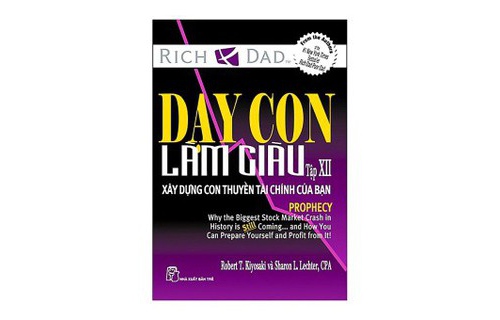
Rich Dad #12
Dạy con làm giàu. T.12, Lời tiên tri của người cha giàu : xây dựng con thuyền tài chính của bạn
“Será que algum dia você conseguirá se aposentar?” berra a capa da revista Time, de 29 de julho de 2002. Com os acontecimentos dramáticos então recentes — a forte queda do mercado de ações e a desordem reinante nas empresas — o bote salva-vidas de milhões de trabalhadores de uma hora para a outra começou a afundar, por causa dos furos em seus planos de previdência privada.
Unknown Binding
First published January 1, 2004
About the author
Robert T. Kiyosaki
622 books9,763 followersRobert Toru Kiyosaki is an American businessman and author, known for the Rich Dad Poor Dad series of personal finance books. He is the founder of the Rich Dad Company, a private financial education company that provides personal finance and business education to people through books and videos, and Rich Global LLC, which filed for bankruptcy in 2012.
Since 2010, Kiyosaki was the subject of a class action suit filed by people who attended his seminars, and the subject of investigative documentaries by the CBC, WTAE-TV and CBS News. In January 2024, Kiyosaki revealed that he was more than $1 billion dollars in debt.
Since 2010, Kiyosaki was the subject of a class action suit filed by people who attended his seminars, and the subject of investigative documentaries by the CBC, WTAE-TV and CBS News. In January 2024, Kiyosaki revealed that he was more than $1 billion dollars in debt.
Ratings & Reviews
Friends & Following
Create a free account to discover what your friends think of this book!
Community Reviews
Displaying 1 - 30 of 105 reviews

November 24, 2012
This book provides some good investing pointers. I actually took some notes. He predicts that the baby boomers retirement will cause the biggest stock market crash in history. His reasoning is mainly summed up in the changes that came with the enactment of ERISA in 1974 and the followed rise of mutual funds for uneducated investors. Overall, I see his point of view--especially the need to educate yourself financially. Gain experience investing, read, study, attend classes...however your learn best. This book made me think more seriously about my financial intelligence. I'm going to read all the books he recommends in this one. I'll let you know how that goes. I just put them all on hold at the library. :)

October 31, 2012
An okay book. Predicts that the crash will happen sometime in 2016-17 when baby boomers start retiring and start withdrawing money from stock market to support themselves. Too much focus on this aspect alone.
Too many words have been wasted to explain things. Book should have been concise.
Too many words have been wasted to explain things. Book should have been concise.

November 11, 2025
คะแนน 4/5⭐
หนังสือก็ดีเหมือน ๆ กับพ่อรวยเล่มอื่น ๆ
แต่พออ่านพ่อรวยหลาย ๆ เล่มก็จะพบว่ามีเนื้อหาส่วนหนึ่งที่ซ้ำกันในทุกเล่ม
ซึ่งผมมองว่าส่วนที่ซ้ำ ๆ กันนั้นก็คือ core concept ของหนังสือพ่อรวย
แล้วแต่ละเล่มก็เพิ่มในส่วนของ สถานการณ์ ตัวอย่าง และมิติต่าง ๆ ทางการเงิน เพื่อช่วยให้ผู้อ่านเข้าใจมากขึ้น และสามารถนำ core concept นั้นไปประยุกต์ใช้ได้จริง
หนังสือก็ดีเหมือน ๆ กับพ่อรวยเล่มอื่น ๆ
แต่พออ่านพ่อรวยหลาย ๆ เล่มก็จะพบว่ามีเนื้อหาส่วนหนึ่งที่ซ้ำกันในทุกเล่ม
ซึ่งผมมองว่าส่วนที่ซ้ำ ๆ กันนั้นก็คือ core concept ของหนังสือพ่อรวย
แล้วแต่ละเล่มก็เพิ่มในส่วนของ สถานการณ์ ตัวอย่าง และมิติต่าง ๆ ทางการเงิน เพื่อช่วยให้ผู้อ่านเข้าใจมากขึ้น และสามารถนำ core concept นั้นไปประยุกต์ใช้ได้จริง

May 31, 2019
There was good advice in this book. I really don't want to spend the rest of my life as an investor, but his advice on investing is good. I was surprised to see the author graduated from the Merchant Marine Academy, because my son did also. And the author was a Marine and so was I. I like his emphasize on being truthful and having integrity in every aspect of your life.
February 24, 2011
One of the greatest books from Mr. Kiyosaki. It contains a lot of useful information related to the investment and financial independence.
June 24, 2019
are You ready to face the real world? 33
I believe most people fall into one of those two categories . . . and that will determine who will take the risk for the best of life or settle for the same life today . . . and the same life tomorrow I risked everything because I wanted a much better tomorrow . . . that is the best answer I have for explaining how I stood up again, after I lost everything. I risked, lost, and stood up because I still wanted the same thing ... a better tomorrow. Most people stay where they are, like my beach boy friends, because today is safe and they want tomorrow to be safe. Unfortunately, most of us know that today will eventually come to an end and tomorrow will begin. Even my beach boy friends know that.
Rich dad knew how big a financial hole I had blown in my financial statement and in my personal life. As he said when he looked at my business's financial statement a few months earlier, "Your company has financial cancer." Although he knew I was out of money, had no place to live, and no job to go to, he never offered me a job or any financial support. . . and I did not want or expect any such support. I had been studying with him for over twenty years and I knew what was now expected of me.
My poor dad was very understanding. He offered several times to give me money, but I was aware of his financial position, and he was in very bad financial shape. He was not much better off than me. He had his house but now in his late fifties, he was almost totally dependent upon a small early retirement pension from the teachers union. What little savings he did have, he lost on an ice cream franchise that failed. That was my dad's first foray into the real world of business and the world of business pounded him not for his academic brilliance but his lack of real-world experience. He was also having trouble finding a job because of his age and because of his ego. Having once been the boss—the superintendent of education—I believe he found it tough asking for a job from people much younger than him.
He also got very angry when told that his experience in state government did not transfer over to the business world. He was often told, "You have great work experience, you are definitely successful, but your skills are not what we need. We cannot use what you have spent your lifetime learning." He then did what many men at his age and in his predicament do, he became a consultant. I do not know if anyone hired him, but the title seemed to quell a pain inside of him.
One of the things that really kept me going was a vow I made at that time
34
and the vow was: "I would never let my own ignorance, arrogance, or fear get in the way of the life I know I can have." I saw what age, arrogance, lack of practical real-world skills, lack of financial intelligence, lack of up-to-date information, dependence upon a government handout, was doing to my dad and I vowed I would use his example as a lesson, an example of what I would not become. At that moment, I vowed to become a student again and my education began with first cleaning up my personal financial statement ... a statement that reflected the mess my financial ignorance and arrogance had gotten me in. I then vowed to listen to rich dad and begin to study what most people do not study.
Since the age of nine, rich dad had been an important mentor to me. Now at the age of thirty-two, I vowed to learn more from him as an adult. . . relearn the same lessons as a child but now as an adult. I knew that my surfing and rugby days were coming to an end, and as sad as that thought was, I was also looking forward to the future ... a new and different future ... a future that gave me more control over the subject of money and the rest of my life. I say this because I did not want to grow up to be like my poor dad, a man who was now a consultant still looking for work as he neared his sixties because he realized his pension was inadequate. I did not want to wait till I was sixty to make the changes I was making in my thirties. I did not want to wait till I was sixty to find out that there was not enough money in my retirement plan for me to live on for the rest of my life. My vow at thirty-two was to clean up my financial life, get educated, and take care of my future today—not tomorrow.
As I was preparing to move out of my apartment, which I could no longer afford, and wondering where I was going to live next, a friend called. He was moving to California for four months on a job assignment and asked me if I would care for his house, water his plants, and feed his dog. So that solved my housing problem—at least temporarily. Money seemed to come in different forms. Checks would appear in the mail, just in the nick of time, from overpayments, refunds, and money from the bill collectors who had finally collected some of the money owed the business. But even though the checks came in, they were infrequent and there were days when I could not eat simply because there was not any money. As tough as things were at times, the reason I say this period of time was a good one is because it gave me time to find out who 1 was and what I was made of.
Chapter 11
Taking Control of the Ark
"If you are going to build a rich ark," rich clad said, "you need to be in control of its construction, what is loaded in the cargo holds, and who is steering it." After the market crash of March 2000, millions of people came to feel less secure about their financial future. Why? Because they were not in control of their ark or its cargo, and many did not know who their skipper was.
Rich dad stated that security and freedom were not the same words, in fact they were almost opposite from each other. Rich dad said, "The more security you gain, the more freedom you lose." He also said, 'A person who seeks security often gives up control over parts of their lives. The more control you give up, the less freedom you have." Many people feel insecure about their financial future and retirement because they have given up most of the control over their financial future.
In Rich Dad Poor Dad, I stated that rich dad said the most important word in business was cashflow. In Retire Young Retire Rich (book number five in the Rich Dad series), I wrote that the second most important word was leverage, the ability to do more and more with less and less. Although rich dad never directly said it, if there was a third most important word in his vocabulary, I believe it would be the word control. Here are a few observations about the word control as it relates to cash flow:
68 rich dad's prophecy
we need to know the difference between an asset and a liability. Rich dad's point was that many people struggled financially simply because they purchased liabilities they thought were assets.
"So how can a book on accounting be so popular?" asked the banker.
Smiling, I said, "Well, it's more than a book on accounting. It's also a book on personal accountability."
"Personal accountability?" replied the banker. "Why personal accountability?"
"First of all, understanding accounting gives me control over my finances and my future. I can run my own businesses and I don't need someone else to do my investing for me," I said. "Secondly, personal accountability means I do not let people lie to me."
"Lie to you?" said the banker. "What do you mean by lie?"
"Well look at this Enron case."
"Oh," smiled the banker. "I understand."
How Do You Tell Gold from Fool's Gold?
Warren Buffett, America's richest investor, believes that understanding accounting is a form of self-defense. On this subject he said:
"When managers want to get across the facts of a business to you, it can be
done within the rules of accounting. Unfortunately, when they want to play
games, at least in some industries, it can also be done within the rules of
accounting. If you can't recognize the differences, you shouldn't be in the
equity-picking business."
When the Enron affair broke, one of the questions asked was, "What is pro-forma accounting?" which was one of the methods of accounting Enron was using when the roof caved in. Rich dad would say, "Proforma accounting is an accounting report that should begin with the words, "Once upon a time . . ." Or, "In a perfect world ..." Or, "If everything goes as planned ..."
In 1999, at the height of the stock market boom, I was invited to a school to talk about the importance of teaching young people financial literacy. A teacher raised his hand and proudly said, "We do teach financial literacy in our school. We're teaching kids how to pick stocks."
"Do you first teach them to read the annual reports and financial statements?" I asked.
control #1: control over yourself 169
"No. I just have them read the reports from the market analysts. If the analyst gives the stock a buy recommendation, we buy, and when they recommend a sell, we sell."
Not wanting to be obnoxious, I simply smiled and nodded my head saying, "How are they doing?"
He beamed and said, "The average portfolio is up over 20 percent." I smiled and thanked him for teaching. I did not say anything after the word teaching. I did not want to say what I feared he was teaching those kids to be. Just before the Enron scandal broke, sixteen out of seventeen market analysts were giving Enron a buy recommendation.
When Warren Buffett says, "If you can't recognize the differences, you shouldn't be in the equity-picking business," he means if you are not financially literate, you shouldn't be picking stocks. Rich dad would say, "Picking stocks without first knowing how to read a company's financial statements is gambling... not stock picking." In rich dad's mind, ERISA forced millions of people to become gamblers . . . not investors. . . gambling with their future financial security. Instead of filling their retirement arks up with gold, they spent a lifetime being fooled and filled their arks with fool's gold. So the problem of a worldwide lack of financial literacy is a problem far beyond just the ENRON and the Arthur Andersen scandal.
Rich Dad Poor Dad is a book about accounting, but it is also a book about accountability. As accounting questions continue to surface with companies such as with Enron, WorldCom, and Xerox, it is obvious that the basics of financial accountability, not just accounting, are being overlooked.
Enron used "off balance sheet" accounting to account for liabilities. In other words, its financial statement did not correctly show all liabilities. This would be similar to a person who doesn't want to list all of his credit card debt on his own financial statement. It's not only bad accounting, it's a lack of accountability.
With the financial collapse of WorldCom, we have to consider Rich Dad's definition of assets versus that of the conventional "banker's" definition. Rich dad told us that an asset puts money in your pocket. When an expense is "capitalized" (moved to an asset) and then amortized or depreciated over time (gradually expensed), it increases assets and decreases expenses. But, remember that Rich Dad told us that an asset has to put money in your pocket. Changing an expense into an asset doesn't put more money in your pocket.
Assets will put money in your pocket and liabilities will take money out of your pocket." More graphically he said, "If you stop working, assets feed you and liabilities eat you." After March of 2000, millions of people, not just Enron workers, found out that their arks, their retirement plans, were eating them alive, simply because they had no control over which way the cash was flowing.
A liability is anything that takes money from your pocket. That means a personal residence, the dream of the middle class, is more often a liability, rather than an asset. If a person rented out that home and the rental income was greater than all the expenses, then that same home would shift from the liability column to the asset column.
Personal Residence Turned into Rental Property
As a young boy, I learned that a house could be either an asset or a liability. That simple little lesson changed the direction of my life because I was less apt to be fooled . . . fooled into blindly believing my house is an asset. If not for that simple little lesson early in life, I am certain I would have wound up like my parents, buying a house, car, furniture, television sets, jewelry, believing in my mind and in my heart that I was buying assets. My mom and dad truly believed in their hearts they were buying assets ... instead they were fooled by popular cultural myths, the financial myths of the middle class and poor.
Now I can hear some of you saying, "What if I do not have a mortgage on my house? What if it is free and clear?" Or "What about all the appreciation my house has gained?" Or "What about my car? Isn't that an asset?"
Those questions are answered in Rich Dad Poor Dad and in other books and tapes. But in short, the answer is the same—it is cash now that determines if something is an asset or a liability. In other words, a house without debt can still be a liability . . . because it is not debt that determines if something is an asset or liability ... it is the direction of cash flowing between the income statement and balance sheet.
Resources
If you are interested in learning how to take more control of your own ark and its cargo the following educational products are designed to assist your in that learning process:
1. The Retirement Myth: A book written by author Craig S. Karpel and
published by HarperCollins, first published in 1995.
This book shares the same concerns my rich dad had about DC pension plans. If you would like more detail on how severe the problem is and what you can do to protect yourself, read this book. The book explains why the near future holds great risk to job security, pension plans, Social Security, the stock market, housing prices, and more.
2.
How I Built My Ark
CASHFLOW 101 not only teaches the basics of financial literacy, but the educational game also points out the four different levels of investing found in the real world. In building our ark, Kim and I followed the real-life investment plan found in the game itself.
The Four Investment Levels
LEVEL #1: SMALL DEALS
On the CASHFLOW game board small deal investment cards and big deal investment cards are found. When most investors start out, they start out with small deals. Of course there is always the egotist, just as in real life, who wants to start with a big deal, even though they do not have any money.
In real life, in the early 1970s, I purchased my first piece of investment real estate. It was an $18,000 condominium on the island of Maui. Even though I did not have much money, I was able to buy three of those $18,000 condominiums, raising investor money for the down payment. I then sold them for $48,000 each in less than a year, netting me $90,000, which was split between myself and my investors. I made more that year from my investments than I did at my job at Xerox and, from then on, I was hooked on learning to become a better investor.
In real life, Kim purchased her first investment property in 1989. It was a two-bedroom, one-bath rental home that sold for $45,000. It took a $5,000 down payment and she made approximately $25 a month positive cash flow.
198
Although Kim was very nervous, she gained a tremendous amount of experience, experience that serves her well today.
Today, we continue to do a few small deals. I wrote earlier about investing in municipal mortgage REITs, which pay a 7.75 percent tax free return on our money. While most people are only receiving 2 percent taxable interest from their hanks, we receive nearly a 12 percent effective return on our money. In order to play this investment, you must watch stock market trends and the short-term interest rates dictated by the Federal Reserve Bank. That means every time someone like Alan Greenspan talks, you had best listen.
LEVEL #2: BIG DEALS
Once a CASHFLOW player has made some money from investing in small deals, they are now ready to take on bigger deals.
Kim and I did this in real life. After we had purchased nearly twelve small properties, we were ready to sell them through a tax-deferred 1031 exchange, which means we did not have to pay the capital gains tax that stock investors often have to pay. After we sold our twelve small deals we were ready to move on to bigger deals. With the proceeds from those small deals we purchased two larger apartment houses and we were able to retire in 1994. In other words, it took Kim and me less than five years to move from small deals to big deals and retire.
After we retired we began looking for other big deals, capitalizing on our experience. Following are examples of other types of big deals:
PREPs. Kim and I like to invest in private real estate partnerships, or what we call PREPs. No one else calls them that. It is simply a code name we gave to this form of real estate investing. A PREP is more often called a real estate syndication and is simply a private partnership that is formed to buy a large real estate investment.
The following is an example of a PREP. In an earlier book I wrote about wanting to buy a new Porsche for $50,000. Instead of wasting my money on the Porsche, which is a liability, Kim and I pooled our money with nine other investors, raising $500,000 equity, and purchased a mini-storage warehouse with the mortgage financing coming from a bank.
That warehouse paid each partner approximately $1,000 to $1,400 a
199
month in cash flow. I do not know what the other partners did with their monthly cash flow check but Kim and I used our checks to make the monthly payments for the Porsche. After three years, the mini—storage warehouse was refinanced. We then got our initial $50,000 back, which we reinvested in another PREP. And we continue to receive our monthly cash flow, which has grown to approximately $2,000 a month, since the rents went up. If the property were sold today, we stand to make an additional $100,000 to $200,000 from capital gains . . . and I still have the Porsche. This is an example of an asset buying our liability and helping us with our early retirement. Since we no longer have any money in the investment, and we still receive our $2,000 a month, what is our new ROI (return on investment)? Infinite.
Kim and I invest in one or two of these types of PREPs a year. Our average returns are 15 percent to 25 percent cash-on-cash returns, plus the offsetting depreciation deductions, which are not really losses but phantom cash flow. This can easily put our returns in the 50 percent or more range. Try doing that with most mutual funds.
We like these investments because the risk is shared, we use our banker's money, the investment is secured to real estate, we receive monthly cash flow, there is a strong potential for capital gains if the property goes up in value, the income is tax-advantaged,
I believe most people fall into one of those two categories . . . and that will determine who will take the risk for the best of life or settle for the same life today . . . and the same life tomorrow I risked everything because I wanted a much better tomorrow . . . that is the best answer I have for explaining how I stood up again, after I lost everything. I risked, lost, and stood up because I still wanted the same thing ... a better tomorrow. Most people stay where they are, like my beach boy friends, because today is safe and they want tomorrow to be safe. Unfortunately, most of us know that today will eventually come to an end and tomorrow will begin. Even my beach boy friends know that.
Rich dad knew how big a financial hole I had blown in my financial statement and in my personal life. As he said when he looked at my business's financial statement a few months earlier, "Your company has financial cancer." Although he knew I was out of money, had no place to live, and no job to go to, he never offered me a job or any financial support. . . and I did not want or expect any such support. I had been studying with him for over twenty years and I knew what was now expected of me.
My poor dad was very understanding. He offered several times to give me money, but I was aware of his financial position, and he was in very bad financial shape. He was not much better off than me. He had his house but now in his late fifties, he was almost totally dependent upon a small early retirement pension from the teachers union. What little savings he did have, he lost on an ice cream franchise that failed. That was my dad's first foray into the real world of business and the world of business pounded him not for his academic brilliance but his lack of real-world experience. He was also having trouble finding a job because of his age and because of his ego. Having once been the boss—the superintendent of education—I believe he found it tough asking for a job from people much younger than him.
He also got very angry when told that his experience in state government did not transfer over to the business world. He was often told, "You have great work experience, you are definitely successful, but your skills are not what we need. We cannot use what you have spent your lifetime learning." He then did what many men at his age and in his predicament do, he became a consultant. I do not know if anyone hired him, but the title seemed to quell a pain inside of him.
One of the things that really kept me going was a vow I made at that time
34
and the vow was: "I would never let my own ignorance, arrogance, or fear get in the way of the life I know I can have." I saw what age, arrogance, lack of practical real-world skills, lack of financial intelligence, lack of up-to-date information, dependence upon a government handout, was doing to my dad and I vowed I would use his example as a lesson, an example of what I would not become. At that moment, I vowed to become a student again and my education began with first cleaning up my personal financial statement ... a statement that reflected the mess my financial ignorance and arrogance had gotten me in. I then vowed to listen to rich dad and begin to study what most people do not study.
Since the age of nine, rich dad had been an important mentor to me. Now at the age of thirty-two, I vowed to learn more from him as an adult. . . relearn the same lessons as a child but now as an adult. I knew that my surfing and rugby days were coming to an end, and as sad as that thought was, I was also looking forward to the future ... a new and different future ... a future that gave me more control over the subject of money and the rest of my life. I say this because I did not want to grow up to be like my poor dad, a man who was now a consultant still looking for work as he neared his sixties because he realized his pension was inadequate. I did not want to wait till I was sixty to make the changes I was making in my thirties. I did not want to wait till I was sixty to find out that there was not enough money in my retirement plan for me to live on for the rest of my life. My vow at thirty-two was to clean up my financial life, get educated, and take care of my future today—not tomorrow.
As I was preparing to move out of my apartment, which I could no longer afford, and wondering where I was going to live next, a friend called. He was moving to California for four months on a job assignment and asked me if I would care for his house, water his plants, and feed his dog. So that solved my housing problem—at least temporarily. Money seemed to come in different forms. Checks would appear in the mail, just in the nick of time, from overpayments, refunds, and money from the bill collectors who had finally collected some of the money owed the business. But even though the checks came in, they were infrequent and there were days when I could not eat simply because there was not any money. As tough as things were at times, the reason I say this period of time was a good one is because it gave me time to find out who 1 was and what I was made of.
Chapter 11
Taking Control of the Ark
"If you are going to build a rich ark," rich clad said, "you need to be in control of its construction, what is loaded in the cargo holds, and who is steering it." After the market crash of March 2000, millions of people came to feel less secure about their financial future. Why? Because they were not in control of their ark or its cargo, and many did not know who their skipper was.
Rich dad stated that security and freedom were not the same words, in fact they were almost opposite from each other. Rich dad said, "The more security you gain, the more freedom you lose." He also said, 'A person who seeks security often gives up control over parts of their lives. The more control you give up, the less freedom you have." Many people feel insecure about their financial future and retirement because they have given up most of the control over their financial future.
In Rich Dad Poor Dad, I stated that rich dad said the most important word in business was cashflow. In Retire Young Retire Rich (book number five in the Rich Dad series), I wrote that the second most important word was leverage, the ability to do more and more with less and less. Although rich dad never directly said it, if there was a third most important word in his vocabulary, I believe it would be the word control. Here are a few observations about the word control as it relates to cash flow:
68 rich dad's prophecy
we need to know the difference between an asset and a liability. Rich dad's point was that many people struggled financially simply because they purchased liabilities they thought were assets.
"So how can a book on accounting be so popular?" asked the banker.
Smiling, I said, "Well, it's more than a book on accounting. It's also a book on personal accountability."
"Personal accountability?" replied the banker. "Why personal accountability?"
"First of all, understanding accounting gives me control over my finances and my future. I can run my own businesses and I don't need someone else to do my investing for me," I said. "Secondly, personal accountability means I do not let people lie to me."
"Lie to you?" said the banker. "What do you mean by lie?"
"Well look at this Enron case."
"Oh," smiled the banker. "I understand."
How Do You Tell Gold from Fool's Gold?
Warren Buffett, America's richest investor, believes that understanding accounting is a form of self-defense. On this subject he said:
"When managers want to get across the facts of a business to you, it can be
done within the rules of accounting. Unfortunately, when they want to play
games, at least in some industries, it can also be done within the rules of
accounting. If you can't recognize the differences, you shouldn't be in the
equity-picking business."
When the Enron affair broke, one of the questions asked was, "What is pro-forma accounting?" which was one of the methods of accounting Enron was using when the roof caved in. Rich dad would say, "Proforma accounting is an accounting report that should begin with the words, "Once upon a time . . ." Or, "In a perfect world ..." Or, "If everything goes as planned ..."
In 1999, at the height of the stock market boom, I was invited to a school to talk about the importance of teaching young people financial literacy. A teacher raised his hand and proudly said, "We do teach financial literacy in our school. We're teaching kids how to pick stocks."
"Do you first teach them to read the annual reports and financial statements?" I asked.
control #1: control over yourself 169
"No. I just have them read the reports from the market analysts. If the analyst gives the stock a buy recommendation, we buy, and when they recommend a sell, we sell."
Not wanting to be obnoxious, I simply smiled and nodded my head saying, "How are they doing?"
He beamed and said, "The average portfolio is up over 20 percent." I smiled and thanked him for teaching. I did not say anything after the word teaching. I did not want to say what I feared he was teaching those kids to be. Just before the Enron scandal broke, sixteen out of seventeen market analysts were giving Enron a buy recommendation.
When Warren Buffett says, "If you can't recognize the differences, you shouldn't be in the equity-picking business," he means if you are not financially literate, you shouldn't be picking stocks. Rich dad would say, "Picking stocks without first knowing how to read a company's financial statements is gambling... not stock picking." In rich dad's mind, ERISA forced millions of people to become gamblers . . . not investors. . . gambling with their future financial security. Instead of filling their retirement arks up with gold, they spent a lifetime being fooled and filled their arks with fool's gold. So the problem of a worldwide lack of financial literacy is a problem far beyond just the ENRON and the Arthur Andersen scandal.
Rich Dad Poor Dad is a book about accounting, but it is also a book about accountability. As accounting questions continue to surface with companies such as with Enron, WorldCom, and Xerox, it is obvious that the basics of financial accountability, not just accounting, are being overlooked.
Enron used "off balance sheet" accounting to account for liabilities. In other words, its financial statement did not correctly show all liabilities. This would be similar to a person who doesn't want to list all of his credit card debt on his own financial statement. It's not only bad accounting, it's a lack of accountability.
With the financial collapse of WorldCom, we have to consider Rich Dad's definition of assets versus that of the conventional "banker's" definition. Rich dad told us that an asset puts money in your pocket. When an expense is "capitalized" (moved to an asset) and then amortized or depreciated over time (gradually expensed), it increases assets and decreases expenses. But, remember that Rich Dad told us that an asset has to put money in your pocket. Changing an expense into an asset doesn't put more money in your pocket.
Assets will put money in your pocket and liabilities will take money out of your pocket." More graphically he said, "If you stop working, assets feed you and liabilities eat you." After March of 2000, millions of people, not just Enron workers, found out that their arks, their retirement plans, were eating them alive, simply because they had no control over which way the cash was flowing.
A liability is anything that takes money from your pocket. That means a personal residence, the dream of the middle class, is more often a liability, rather than an asset. If a person rented out that home and the rental income was greater than all the expenses, then that same home would shift from the liability column to the asset column.
Personal Residence Turned into Rental Property
As a young boy, I learned that a house could be either an asset or a liability. That simple little lesson changed the direction of my life because I was less apt to be fooled . . . fooled into blindly believing my house is an asset. If not for that simple little lesson early in life, I am certain I would have wound up like my parents, buying a house, car, furniture, television sets, jewelry, believing in my mind and in my heart that I was buying assets. My mom and dad truly believed in their hearts they were buying assets ... instead they were fooled by popular cultural myths, the financial myths of the middle class and poor.
Now I can hear some of you saying, "What if I do not have a mortgage on my house? What if it is free and clear?" Or "What about all the appreciation my house has gained?" Or "What about my car? Isn't that an asset?"
Those questions are answered in Rich Dad Poor Dad and in other books and tapes. But in short, the answer is the same—it is cash now that determines if something is an asset or a liability. In other words, a house without debt can still be a liability . . . because it is not debt that determines if something is an asset or liability ... it is the direction of cash flowing between the income statement and balance sheet.
Resources
If you are interested in learning how to take more control of your own ark and its cargo the following educational products are designed to assist your in that learning process:
1. The Retirement Myth: A book written by author Craig S. Karpel and
published by HarperCollins, first published in 1995.
This book shares the same concerns my rich dad had about DC pension plans. If you would like more detail on how severe the problem is and what you can do to protect yourself, read this book. The book explains why the near future holds great risk to job security, pension plans, Social Security, the stock market, housing prices, and more.
2.
How I Built My Ark
CASHFLOW 101 not only teaches the basics of financial literacy, but the educational game also points out the four different levels of investing found in the real world. In building our ark, Kim and I followed the real-life investment plan found in the game itself.
The Four Investment Levels
LEVEL #1: SMALL DEALS
On the CASHFLOW game board small deal investment cards and big deal investment cards are found. When most investors start out, they start out with small deals. Of course there is always the egotist, just as in real life, who wants to start with a big deal, even though they do not have any money.
In real life, in the early 1970s, I purchased my first piece of investment real estate. It was an $18,000 condominium on the island of Maui. Even though I did not have much money, I was able to buy three of those $18,000 condominiums, raising investor money for the down payment. I then sold them for $48,000 each in less than a year, netting me $90,000, which was split between myself and my investors. I made more that year from my investments than I did at my job at Xerox and, from then on, I was hooked on learning to become a better investor.
In real life, Kim purchased her first investment property in 1989. It was a two-bedroom, one-bath rental home that sold for $45,000. It took a $5,000 down payment and she made approximately $25 a month positive cash flow.
198
Although Kim was very nervous, she gained a tremendous amount of experience, experience that serves her well today.
Today, we continue to do a few small deals. I wrote earlier about investing in municipal mortgage REITs, which pay a 7.75 percent tax free return on our money. While most people are only receiving 2 percent taxable interest from their hanks, we receive nearly a 12 percent effective return on our money. In order to play this investment, you must watch stock market trends and the short-term interest rates dictated by the Federal Reserve Bank. That means every time someone like Alan Greenspan talks, you had best listen.
LEVEL #2: BIG DEALS
Once a CASHFLOW player has made some money from investing in small deals, they are now ready to take on bigger deals.
Kim and I did this in real life. After we had purchased nearly twelve small properties, we were ready to sell them through a tax-deferred 1031 exchange, which means we did not have to pay the capital gains tax that stock investors often have to pay. After we sold our twelve small deals we were ready to move on to bigger deals. With the proceeds from those small deals we purchased two larger apartment houses and we were able to retire in 1994. In other words, it took Kim and me less than five years to move from small deals to big deals and retire.
After we retired we began looking for other big deals, capitalizing on our experience. Following are examples of other types of big deals:
PREPs. Kim and I like to invest in private real estate partnerships, or what we call PREPs. No one else calls them that. It is simply a code name we gave to this form of real estate investing. A PREP is more often called a real estate syndication and is simply a private partnership that is formed to buy a large real estate investment.
The following is an example of a PREP. In an earlier book I wrote about wanting to buy a new Porsche for $50,000. Instead of wasting my money on the Porsche, which is a liability, Kim and I pooled our money with nine other investors, raising $500,000 equity, and purchased a mini-storage warehouse with the mortgage financing coming from a bank.
That warehouse paid each partner approximately $1,000 to $1,400 a
199
month in cash flow. I do not know what the other partners did with their monthly cash flow check but Kim and I used our checks to make the monthly payments for the Porsche. After three years, the mini—storage warehouse was refinanced. We then got our initial $50,000 back, which we reinvested in another PREP. And we continue to receive our monthly cash flow, which has grown to approximately $2,000 a month, since the rents went up. If the property were sold today, we stand to make an additional $100,000 to $200,000 from capital gains . . . and I still have the Porsche. This is an example of an asset buying our liability and helping us with our early retirement. Since we no longer have any money in the investment, and we still receive our $2,000 a month, what is our new ROI (return on investment)? Infinite.
Kim and I invest in one or two of these types of PREPs a year. Our average returns are 15 percent to 25 percent cash-on-cash returns, plus the offsetting depreciation deductions, which are not really losses but phantom cash flow. This can easily put our returns in the 50 percent or more range. Try doing that with most mutual funds.
We like these investments because the risk is shared, we use our banker's money, the investment is secured to real estate, we receive monthly cash flow, there is a strong potential for capital gains if the property goes up in value, the income is tax-advantaged,

March 18, 2019
It's a great reminder on how to invest on/control yourself instead of relying on others.
I really like his opinions about the educations that a person today needs: academic, professional and financial. An interesting point about the professions as well: one is how we make money and the other one is how we invest our money.
Some of my favorite quote are:
1. 'Excuses are the words coming from the loser in you"
2. 'The only silly question is the one you don't ask'
I really like his opinions about the educations that a person today needs: academic, professional and financial. An interesting point about the professions as well: one is how we make money and the other one is how we invest our money.
Some of my favorite quote are:
1. 'Excuses are the words coming from the loser in you"
2. 'The only silly question is the one you don't ask'

April 3, 2012
So a purported expert on real estate investing is now predicting a massive stock market collapse? Are you kidding us?!?! At the time this book was published in 2002, the S&P 500 had already fallen 49%, which means the crash had already happened. Piling into real estate didn't save people. Fast forward to 2012: U.S. homeowners are still trying to recover from the meltdown in residential real estate prices the same author didn't foresee. Or did he accurately predict that too? Be skeptical of self-absorbed authors who make fantastic predictions. Are they doing it to help readers or to sell books?

September 1, 2009
I don't think the author ever completed one thought or finished one point they were trying to make. That was frustrating. Since the book was written in 2002, it was interesting to read the perspective on the stock market crash. There were a few decent financial points, but overall just lots of the author patting himself on the back and encouraging people to take the same risks he's taken to make his fortunes, regardless of their personal financial situation.
December 16, 2008
insightful, but a lot of the same advise, or lack of it
December 12, 2016
Libro muy interesante
May 3, 2022
by hindadhobale20 on April 29, 2022
Reading Rich Dad, Poor Dad is an amazing investment of time. You get more returns than your investment the moment you start devouring page after page of this book. For the beginners who desire to achieve economic prosperity, Kiyosaki offers workable insights based on real life experiences. It teaches us ideas about applied economics that should have been taught to us in schools or at home. The principles of financial literacy- Accounting, Investing, Understanding markets and relevant laws are explained in a way that even a layman can fully relate to them. The author emphasizes the importance of sound finances for a better meaningful life. He argues that while one may be academic genius, a topper, a gold medalist, there is every possibility of ending up as a failure without financial know-how. The book teaches the difference between assets and liabilities in a way we never imagined. The author says that while the rich invest in assets and let money work for them, the middle class invests in liabilities naively considering them as assets and work for money. For example, expensive house/car is a liability for rich and an asset for the poor. The rich take risk, but the poor always play safe when it comes to investment and returns. The rich create assets to pay their expenses, the poor balance income and expenses without ever pondering about it. The difference, the author says lies in thinking. “If you have to invest in something, invest in financial literacy”, the author asserts. It is lack of financial literacy that middle class salaried people think Mutual funds as a safe option for investment, reposing more faith in the fund manager than their own understanding of finances. All this, the author mentions, was taught to him by his rich dad, a man whom he met in childhood. The Poor Dad tells him “I can’t afford it”, while as Rich Dad teaches him “How I can afford it.” This difference of mindset between the two Dads emerges from an understanding of finances. He expects his experiences will help others in arriving at better financial decisions.
Reading Rich Dad, Poor Dad is an amazing investment of time. You get more returns than your investment the moment you start devouring page after page of this book. For the beginners who desire to achieve economic prosperity, Kiyosaki offers workable insights based on real life experiences. It teaches us ideas about applied economics that should have been taught to us in schools or at home. The principles of financial literacy- Accounting, Investing, Understanding markets and relevant laws are explained in a way that even a layman can fully relate to them. The author emphasizes the importance of sound finances for a better meaningful life. He argues that while one may be academic genius, a topper, a gold medalist, there is every possibility of ending up as a failure without financial know-how. The book teaches the difference between assets and liabilities in a way we never imagined. The author says that while the rich invest in assets and let money work for them, the middle class invests in liabilities naively considering them as assets and work for money. For example, expensive house/car is a liability for rich and an asset for the poor. The rich take risk, but the poor always play safe when it comes to investment and returns. The rich create assets to pay their expenses, the poor balance income and expenses without ever pondering about it. The difference, the author says lies in thinking. “If you have to invest in something, invest in financial literacy”, the author asserts. It is lack of financial literacy that middle class salaried people think Mutual funds as a safe option for investment, reposing more faith in the fund manager than their own understanding of finances. All this, the author mentions, was taught to him by his rich dad, a man whom he met in childhood. The Poor Dad tells him “I can’t afford it”, while as Rich Dad teaches him “How I can afford it.” This difference of mindset between the two Dads emerges from an understanding of finances. He expects his experiences will help others in arriving at better financial decisions.

November 16, 2018
Sau nửa năm, nhiều lần tưởng chừng như bỏ dở vì quá dài. Do bộ sách này dài lên không phải phần nào cũng hấp dẫn. Nhưng mình vẫn kiên trì đọc, về tổng thể thì mình thấy nội dung cuốn sách rất rất hay. Như mở một chân trời mới đối với mình, giúp mình hiểu thêm một chút về thế giới của người giàu, về suy nghĩ và tư duy của họ. Nếu như không đọc thì mình có lẽ cũng không bao giờ biết được đến những điều đó.
Mỗi phần là một bài học sâu sắc và ý nghĩa về tài chính, về quy luật của đồng tiền, về bản chất của xã hội. Những nguy cơ mà người làm thuê có thể gặp phải. Giúp mình nhận thức được làm công ăn lương, hưởng bảo hiểm của chính phủ thực ra lại không an toàn chút nào. Ngẫm thì thấy đúng, qũy bảo hiểm, qũy lương hưu của nước mình thấy cũng mong manh, yếu ớt lắm. Một năm dọa vỡ không biết bao nhiêu lần. Đọc rồi mới biết đây là tình trạng chung của mọi chính quyền trên thế giới, không có cách giải quyết dứt điểm, càng ngày càng nghiêm trọng. Chỉ có 1 con đường duy nhất là tự giải cứu lấy chính mình thôi. Còn giải cứu thế nào thì mỗi người đọc sách sẽ có 1 ý tưởng, hay động lực riêng. Mình tin chắc là như vậy.
Điểm thú vị là cuốn sách về kinh tế nhưng được viết dựa trên kinh nghiệm và những bài học của cha nuôi tác giả, một triệu phú nổi tiếng và những bài học từ cha đẻ của tác giả, một cán bộ giáo dục nổi tiếng tại Hawai, nhưng lại là 1 người nghèo khó và thất bại cho đến cuối cuộc đời. 2 người cha, 2 thế giới, 2 bài học khác nhau cho cùng một vấn đề, nhưng đều có 1 ý nghĩa nào đó. Từ những bài học này, chúng ta có thể thấy được sự khác biệt trong tư duy của người giàu và người nghèo. Bản thân chính tôi sau khi đọc xong thì thấy mình đang có tư nghèo, rất nghèo. Nhưng cũng đã học được rất nhiều điều từ người cha giàu và đang dần thay đổi. Mình cũng đầu tư mua bộ trò chơi cashflow, chơi cũng rất thú vị, càng có lương cao thì càng khó thoát.
Điểm trừ ở bộ này là dài và lan man quá, nhiều bài học được tác giả lặp đi lặp lại. Thứ 2 là nghe giọng kể của tác giả thì những người có thắc mắc với tác giả về tư duy của người giàu, thì tác giả chỉ trả lời chung chung, và mặc định người nghe phải tư duy như người giàu rồi.
Review chi tiết bộ sách tại: https://bestchoicesvn.com/sach-hay-ne...
Mỗi phần là một bài học sâu sắc và ý nghĩa về tài chính, về quy luật của đồng tiền, về bản chất của xã hội. Những nguy cơ mà người làm thuê có thể gặp phải. Giúp mình nhận thức được làm công ăn lương, hưởng bảo hiểm của chính phủ thực ra lại không an toàn chút nào. Ngẫm thì thấy đúng, qũy bảo hiểm, qũy lương hưu của nước mình thấy cũng mong manh, yếu ớt lắm. Một năm dọa vỡ không biết bao nhiêu lần. Đọc rồi mới biết đây là tình trạng chung của mọi chính quyền trên thế giới, không có cách giải quyết dứt điểm, càng ngày càng nghiêm trọng. Chỉ có 1 con đường duy nhất là tự giải cứu lấy chính mình thôi. Còn giải cứu thế nào thì mỗi người đọc sách sẽ có 1 ý tưởng, hay động lực riêng. Mình tin chắc là như vậy.
Điểm thú vị là cuốn sách về kinh tế nhưng được viết dựa trên kinh nghiệm và những bài học của cha nuôi tác giả, một triệu phú nổi tiếng và những bài học từ cha đẻ của tác giả, một cán bộ giáo dục nổi tiếng tại Hawai, nhưng lại là 1 người nghèo khó và thất bại cho đến cuối cuộc đời. 2 người cha, 2 thế giới, 2 bài học khác nhau cho cùng một vấn đề, nhưng đều có 1 ý nghĩa nào đó. Từ những bài học này, chúng ta có thể thấy được sự khác biệt trong tư duy của người giàu và người nghèo. Bản thân chính tôi sau khi đọc xong thì thấy mình đang có tư nghèo, rất nghèo. Nhưng cũng đã học được rất nhiều điều từ người cha giàu và đang dần thay đổi. Mình cũng đầu tư mua bộ trò chơi cashflow, chơi cũng rất thú vị, càng có lương cao thì càng khó thoát.
Điểm trừ ở bộ này là dài và lan man quá, nhiều bài học được tác giả lặp đi lặp lại. Thứ 2 là nghe giọng kể của tác giả thì những người có thắc mắc với tác giả về tư duy của người giàu, thì tác giả chỉ trả lời chung chung, và mặc định người nghe phải tư duy như người giàu rồi.
Review chi tiết bộ sách tại: https://bestchoicesvn.com/sach-hay-ne...

October 28, 2022
This book provides different perspective on saving, investing and even a little about character as a person. This isn’t a get rich quick book.. simply because wealth obtained overnight is never lasting.. wealth obtained gradually is everlasting. Robert gives many personal life experiences and why his tips are useful in the real world. I suggest this book to anyone who realizes wealth and financial freedom take time, discipline, hard work, a lot of education and more time…
I also want to point out the fact that Robert is very respectful with lower, middle and upper class.. he states many times there’s nothing wrong with wanting to be lower or middle class, but if you’d like to be in the upper class and be financially free, that’s when you should follow his advice on how to be financially free. With that being said, he goes above and beyond for many different classes of people.. not only those who would like to be wealthy!
I also want to point out the fact that Robert is very respectful with lower, middle and upper class.. he states many times there’s nothing wrong with wanting to be lower or middle class, but if you’d like to be in the upper class and be financially free, that’s when you should follow his advice on how to be financially free. With that being said, he goes above and beyond for many different classes of people.. not only those who would like to be wealthy!

November 15, 2019
The whole Rich Dad series is basically a guide for the Cash Flow games, but the Cash Flow games are a microcosm of real life so all information is relevant to how we all make a living/money/fortune, etc. It can be the sort of book that puts some people off just because financial literacy isn't encouraged in our society.
This book's particular message is the Erisa Act caused governments and corporations to push 401ks on an unsuspecting public. 401ks are backed by nothing and I actually think it's criminal how much they are pushed to the mainstream. Anyways it's a good reminder to continually educate myself on the many secret ways that our society actually functions.
Bottom line: Don't invest in 401ks.
This book's particular message is the Erisa Act caused governments and corporations to push 401ks on an unsuspecting public. 401ks are backed by nothing and I actually think it's criminal how much they are pushed to the mainstream. Anyways it's a good reminder to continually educate myself on the many secret ways that our society actually functions.
Bottom line: Don't invest in 401ks.

January 15, 2026
Alright, so this book was supposed to be about preparing for and profiting off of the next big stock market crash. It doesn't do that.
It is own words, in the last few paragraphs, "This book is written to inspire you to gain the skills you need to see the bigger and brighter picture of life..."
I went into this already inspired to gain skills for a coming crash, I didn't need a 280 page pep talk.
This book focuses on ERISA, if you're not familiar with that change in law. It also advertises continuing financial education and real estate investment. That's about it.
I did enjoy chapter 15, Control over your Excuses. This was a solid reminder that the worst person to lie to is yourself and excuses do just that.
I would recommend spending your time on a different read.
It is own words, in the last few paragraphs, "This book is written to inspire you to gain the skills you need to see the bigger and brighter picture of life..."
I went into this already inspired to gain skills for a coming crash, I didn't need a 280 page pep talk.
This book focuses on ERISA, if you're not familiar with that change in law. It also advertises continuing financial education and real estate investment. That's about it.
I did enjoy chapter 15, Control over your Excuses. This was a solid reminder that the worst person to lie to is yourself and excuses do just that.
I would recommend spending your time on a different read.

May 6, 2018
I read this in 2018 and this book predicts that the crash will happen beginning in 2016. So on that front it's a total failure. However, we all know that markets have been artificially inflated by the fed so making a prediction like that is pointless in the NWO. Despite this, it's still a light and easy read with good practical advice for the average investor.
December 31, 2019
Interesting take on how we need to do be knowledgeable in our professions as well as financially. Too many people invest without being investors. E.g. making 401k contributions without knowing what they are being invested in. You need to protect your financial future by taking more control and becoming financially educated. You can build your own business and/or know what you are investing in.

June 14, 2021
Từ "education" bắt nguồn từ tiếng Latin "educo" hay "educe" có nghĩa là "phát hiện", "khơi dậy" hoặc "dẫn tới".
Đọc comment và có nhiều ý kiến trái chiều vì có lẽ tác phẩm đã được xuất bản từ khá lâu so với nền kinh tế hiện nay
Nhưng những chia sẻ, lời dạy của người cha giàu vẫn rất tốt. Những điều này tạo cảm hứng để tôi có làm ra con thuyền tài chính riêng cho mình.
Let's start.
Đọc comment và có nhiều ý kiến trái chiều vì có lẽ tác phẩm đã được xuất bản từ khá lâu so với nền kinh tế hiện nay
Nhưng những chia sẻ, lời dạy của người cha giàu vẫn rất tốt. Những điều này tạo cảm hứng để tôi có làm ra con thuyền tài chính riêng cho mình.
Let's start.
February 10, 2024
Great book if you’re already on the path to financial independence and understand the core concepts.
Offers a few predictions from 2002 that are scarily accurate.
Not a lot of new content or advice but a solid entry in the rich dad compendium nonetheless.
My advice: don’t start here for financial education but definitely put it in your library.
Offers a few predictions from 2002 that are scarily accurate.
Not a lot of new content or advice but a solid entry in the rich dad compendium nonetheless.
My advice: don’t start here for financial education but definitely put it in your library.
May 31, 2017
La idea del porqué de la crisis es buena y lícita. La mezcla rara con cómo hacerse rico no hay por dónde cogerla.

August 24, 2017
It was fine in the sense that I learned more about what I want to learn more about. It is not very detailed, not as detailed as I would like.

November 22, 2017
The best book of all the time :)

December 6, 2018
good book learned alot

December 9, 2018
Basic investing concepts well covered for the beginner

September 1, 2019
This book would have been terrifying had I read it prior to the crash of 07 , In retrospect it is definitely something we can all learn some

April 7, 2020
Good book but too much repetitive stuff.

May 21, 2022
Solid straightforward book suggesting why/how you should take control of your financial future.

July 24, 2023
Kinda repetitive

February 26, 2024
Cuốn sách thứ 3 của Kiyosaki mà mình đọc, từng chương đều rất hữu ích, rất đáng đọc…
Displaying 1 - 30 of 105 reviews