

What do you think?

Vorsten van Albion
The first Plantagenet king inherited a blood-soaked kingdom from the Normans and transformed it into an empire stretched at its peak from Scotland to Jerusalem. In this epic history, Dan Jones vividly resurrects this fierce and seductive royal dynasty and its mythic world.
We meet the captivating Eleanor of Aquitaine, twice queen and the most famous woman in Christendom; her son, Richard the Lionheart, who fought Saladin in the Third Crusade; and King John, a tyrant who was forced to sign Magna Carta, which formed the basis of our own Bill of Rights.
This is the era of chivalry, of Robin Hood and the Knights Templar, the Black Death, the founding of Parliament, the Black Prince, and the Hundred Year’s War. It will appeal as much to readers of Tudor history as to fans of 'Game of Thrones.
We meet the captivating Eleanor of Aquitaine, twice queen and the most famous woman in Christendom; her son, Richard the Lionheart, who fought Saladin in the Third Crusade; and King John, a tyrant who was forced to sign Magna Carta, which formed the basis of our own Bill of Rights.
This is the era of chivalry, of Robin Hood and the Knights Templar, the Black Death, the founding of Parliament, the Black Prince, and the Hundred Year’s War. It will appeal as much to readers of Tudor history as to fans of 'Game of Thrones.
672 pages, Hardcover
First published May 10, 2012
About the author
Dan Jones
82 books6,098 followersDan Jones is a NYT bestselling author and broadcaster. His books, which include The Templars, Henry V, The Plantagenets and Powers & Thrones, have sold more than 2 million copies and are published in 23 languages. He is the author of the Essex Dogs novel trilogy. Dan writes and hosts the popular weekly Sony Music Entertainment podcast This Is History. He has presented dozens of television documentaries, including the popular Netflix series Secrets of Great British Castles, and has executive produced and consulted on a number of films and television shows including Anne Boleyn (Channel 5/Sony Pictures Television) and Knightfall (A+E/History). His journalism has appeared in the New York Times, Wall Street Journal and Washington Post; for a decade he was a columnist for the London Evening Standard. He is a Fellow of the Royal Historical Society and in 2025 was appointed to the Board of Trustees of Historic Royal Palaces.
Ratings & Reviews
Friends & Following
Create a free account to discover what your friends think of this book!
Community Reviews
Displaying 1 - 30 of 2,337 reviews

April 1, 2017
”A king who fights to defend his right has a better claim on his inheritance. Struggle and largesse allow a king to gain glory and territory.” --Bertran de Born

Empress Matilda
It all begins with a shipwreck.
200 of the most beautiful and powerful men and women of England and Normandy board The White Ship to travel from Normandy to England. They are exuberantly drunk, and the crew of the ship is also three sheets to the wind. Out of all of these important people, there is one who is head and shoulders more important than the rest...William the Aetheling, named for his grandfather William the Conqueror. He is the heir apparent to the throne of England.
The 17 year old drowns along with everyone else.
Henry I is not only devastated by the loss of his son, but also knows that the death of William has put his kingdom in jeopardy, for he has no other legitimate sons.
Call it fate or luck or insight, but Stephen of Blois, cousin of William, is also a member of that party, but he elects not to join the others on that ship. He books passage on a different boat with a crew maybe not completely sober, but less intoxicated. He survives the passage to England.
When Henry dies, he tries to leave his kingdom to his daughter Matilda. He brings all the important, most powerful men of England to his death bed and makes them swear allegiance to his daughter. They do, but they must have had the fingers of their left hand, as they held the hand of the King with their right hand, crossed behind their backs.
The crown has barely settled on the head of Matilda before it is violently knocked off. Stephen of Blois, who is also a grandchild of William the Conqueror, becomes King. England descends into a costly, bloody civil war. Matilda is supported by her half brother Robert, 1st Earl of Gloucester, who is by all accounts an honorable and capable leader and probably, if he had been legitimate, would have made a very good king.
Matilda married Geoffrey Plantagenet, Count of Anjou, and starts having babies, almost in a mercenary sense because her goal is to see a son of hers on the throne of England. Plantagenet is from the latin planta genista, meaning sprig of broom. Geoffrey adorns himself with the yellow flower of this shrub, and the nickname sticks. He is a warm, expansive man whom people adore. Now by all accounts I’ve read, Matilda is condescending, cold, and a manipulating woman, not well liked by those of high breeding or low breeding. Geoffrey, luckily, is a man among men because he braves the frigid landscape of her bed and produces three healthy sons, though I have visions of Empress Matilda being one of the first dominatrixes in history with a whip and a commanding voice instructing Geoffrey to mount up or bear the consequences.
I have a particular interest in the Plantagenets due to a marriage between James Ives and Anna Ashley in 1799, which happens to also be the year that George Washington dies. Now, James and Anna are my 4th great grandparents. My mother was an Ives, and I am directly descended from James. Anna was of a bluestocking family of Vermont. Her father, Elisha Ashley, served with the Green Mountain Boys in the Revolutionary War and also is the patriot who allowed me to join the Sons of the American Revolution. I’m not really sure how James landed such a catch because little is known about him. I like to think that he was a charmer. Anna is not only of a good American family, but she is also descended from the Kings and Queens of England.
Previously, I had believed that my connection with the throne of England ended with Henry III, who ascended the throne as a 9 year old after the death of his odious father, King John. When Henry’s son Edward took the throne, I was the victim of primogeniture as I am descended from the second son, Edmund Crouchback.
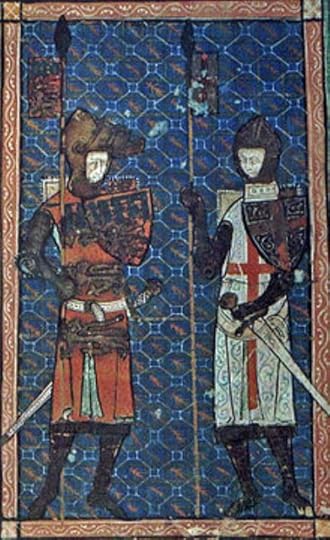
Edmund Crouchback depicted with St. George.
Great name, eh? The Crouchback refers to the crossed back and his service in the 9th Crusade. Well as it turns out, Edmund might be off the throne but, when his great granddaughter Blanche of Lancaster marries her cousin Henry IV, his descendents do reach the throne once again.
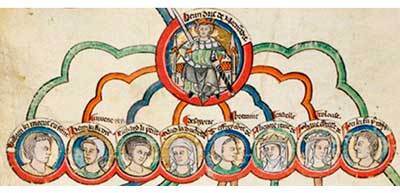
One needs a scorecard and vast wall spaces for family trees to keep track of the genealogy of the Plantagenet family. Dan Jones does provide some very nice maps and family trees that are a constant source of references to me.
Henry II, the first son conceived in that frigid marriage bed of Matilda and Geoffrey, now King of England after some more bloody fighting with King Stephen, marries the amazing Eleanor of Aquitaine. I believe she is the only woman to marry the King of France and the King of England in history. She is intelligent, educated, and powerful in her own right. She is a catch for any man, even a king. ”Eleanor had been a magnificent queen whose influence had straddled three important reigns and who had loved and guided her sons even when they behaved unwisely.”
Their third son, Richard Ist the Lionheart, becomes King of England. He spends so much time out of England that his brother John, the fifth son and baby of the family, tries to take over England. Doesn’t really work because, once Richard returns, John’s support folds up like tent in a gale force wind. John does reach the throne when Richard dies from a crossbow arrow after exposing himself needlessly to danger.
Now there is an interesting fly in the ointment of absolute power for John. His brother Geoffrey, who is the brother between Richard and John, has a son named Arthur of Brittany, who by the rules of primogeniture should have been King of England after Richard. Richard, in fact, had named Arthur as his heir whenever he left England.
The problem for John goes away when Arthur mysteriously disappears. Dan Jones offers an explanation, but I will let you read the book and see what you think. John is half the man that his brother Richard is, illustrated best by his contemporaries who refer to him as John Softsword.
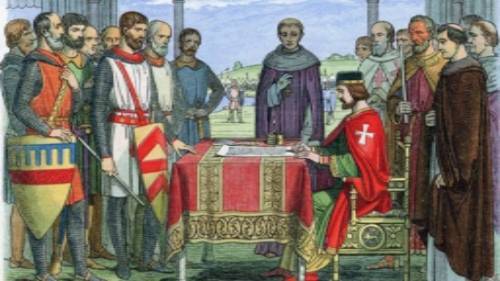
King John signing the Magna Carta
John mismanages the affairs of the kingdom and alienates almost everyone. He raises money by kidnapping the mistresses and children of priests and extorting the priests for money for their safe return. He makes widows pay huge fines to remarry. He tries to seduce wives and daughters of his supporters. The affairs of the kingdom are in disarray, and he keeps ceding more and more of the kingdom that his father and brother built to the French. All of these weaknesses of John’s eventually lead to one of the most famous documents in English and world history. The Magna Carta is signed on the 15th of June 1215. Basically, the lords of the land are tired of his shit and want to share more of the power. For the first time in history, controls and rules are imposed on a king.
John’s son Henry III becomes king of England at age 9. His main contribution to history is that he renounces his claims to empire and becomes a peer of the King of France. Henry II is rolling around in his crypt.
Fortunately for England, his son Edward I is made of sterner stuff and is a strikingly tall and virile man. The nickname the Scots give him is Longshanks. He is a good tactician and builds the English army into a fearsome fighting force that conquers the Scots and the Welsh at every turn.
His son Edward II is a weak, ineffectual ruler who surrounds himself with his young peers who prove to be unsuccessful in guiding Edward or the affairs of England. He prefers the company of his friends, such as Piers Gaveston, rather than his Queen Isabella, daughter of the King of France. She is not amused with his behavior nor in the way he treats her. She feels more like a maidservant who is getting bent over a chaise lounge from time to time rather than a daughter of a king. When the time is ripe, with the help of her husband’s numerous enemies, she overthrows him and installs her son as king. Rumor has it that she had her husband killed by having a hot poker inserted up his rectum as a commentary on his preference for his male friends, but Dan Jones believes this is just a story to further discredit her husband and strengthen her son’s hold on power.

Edward III
Edward III has a problem. He is underage, and it takes him years to wrest power from his mother and her lover. He does grow into a very good king, more like his grandfather, and wins numerous battles against the French, reclaiming much of the territory that was once held by Henry II and Richard I. The famous English longbow becomes the deadliest weapon on the field of battle under his reign. Everything is going well, but then his very capable son Edward the Black Prince, weakened by diseases acquired on his numerous journeys to fight in the Middle East, dies before he can become king. This is a devastating loss for Edward and for England. When Edward dies, Richard II comes to power at the age of 14.
Rewind the era of Edward II. Richard II puts his friends into positions of power they are hardly qualified for. He annoys the royal families. Numerous heads are lopped off when the lords have power, and then when Richard reasserts himself, more heads are parted from bodies.
There are so many points in the Plantagenet era when they should have lost power. John, Henry III, Edward II, and Richard II are all legitimately bad kings who could have ended the reign of the Plantagenet family. Fortunately, there are strong kings, such as Henry II, Richard I, Edward I, and Edward III, who prove to be powerful, capable rulers who, especially in the case of the two Edwards, overcome the incompetencies of their immediate predecessors.
Citizens of a realm will put up with a lot as long as their king is strong. They don’t mind dying for an effective king who shows leadership and ability, but they do mind dying for a weak king who is much more worried about his pleasures than the safety and concerns of his kingdom. Fortunately, there are men and women willing to stand up to those Plantagenet kings who prove unworthy, and thankfully, there are more capable members of the family available when they need them the most.
I know the Tudors have received more attention in recent years than their predecessors, the Plantagenets, mainly due to a strange fascination with Henry VIII and his numerous wives, but I think that most people will find this overview of the Plantagenets equally fascinating and might even discover themselves believing, as I do, that the Tudors are merely a ragtag band of usurpers to the true kings and queens who built England. Wonderful overview. Highly Recommended!
If you wish to see more of my most recent book and movie reviews, visit http://www.jeffreykeeten.com
I also have a Facebook blogger page at:https://www.facebook.com/JeffreyKeeten

Empress Matilda
It all begins with a shipwreck.
200 of the most beautiful and powerful men and women of England and Normandy board The White Ship to travel from Normandy to England. They are exuberantly drunk, and the crew of the ship is also three sheets to the wind. Out of all of these important people, there is one who is head and shoulders more important than the rest...William the Aetheling, named for his grandfather William the Conqueror. He is the heir apparent to the throne of England.
The 17 year old drowns along with everyone else.
Henry I is not only devastated by the loss of his son, but also knows that the death of William has put his kingdom in jeopardy, for he has no other legitimate sons.
Call it fate or luck or insight, but Stephen of Blois, cousin of William, is also a member of that party, but he elects not to join the others on that ship. He books passage on a different boat with a crew maybe not completely sober, but less intoxicated. He survives the passage to England.
When Henry dies, he tries to leave his kingdom to his daughter Matilda. He brings all the important, most powerful men of England to his death bed and makes them swear allegiance to his daughter. They do, but they must have had the fingers of their left hand, as they held the hand of the King with their right hand, crossed behind their backs.
The crown has barely settled on the head of Matilda before it is violently knocked off. Stephen of Blois, who is also a grandchild of William the Conqueror, becomes King. England descends into a costly, bloody civil war. Matilda is supported by her half brother Robert, 1st Earl of Gloucester, who is by all accounts an honorable and capable leader and probably, if he had been legitimate, would have made a very good king.

Geoffrey of Anjou, the donor of sperm.

Matilda married Geoffrey Plantagenet, Count of Anjou, and starts having babies, almost in a mercenary sense because her goal is to see a son of hers on the throne of England. Plantagenet is from the latin planta genista, meaning sprig of broom. Geoffrey adorns himself with the yellow flower of this shrub, and the nickname sticks. He is a warm, expansive man whom people adore. Now by all accounts I’ve read, Matilda is condescending, cold, and a manipulating woman, not well liked by those of high breeding or low breeding. Geoffrey, luckily, is a man among men because he braves the frigid landscape of her bed and produces three healthy sons, though I have visions of Empress Matilda being one of the first dominatrixes in history with a whip and a commanding voice instructing Geoffrey to mount up or bear the consequences.
I have a particular interest in the Plantagenets due to a marriage between James Ives and Anna Ashley in 1799, which happens to also be the year that George Washington dies. Now, James and Anna are my 4th great grandparents. My mother was an Ives, and I am directly descended from James. Anna was of a bluestocking family of Vermont. Her father, Elisha Ashley, served with the Green Mountain Boys in the Revolutionary War and also is the patriot who allowed me to join the Sons of the American Revolution. I’m not really sure how James landed such a catch because little is known about him. I like to think that he was a charmer. Anna is not only of a good American family, but she is also descended from the Kings and Queens of England.
Previously, I had believed that my connection with the throne of England ended with Henry III, who ascended the throne as a 9 year old after the death of his odious father, King John. When Henry’s son Edward took the throne, I was the victim of primogeniture as I am descended from the second son, Edmund Crouchback.

Edmund Crouchback depicted with St. George.
Great name, eh? The Crouchback refers to the crossed back and his service in the 9th Crusade. Well as it turns out, Edmund might be off the throne but, when his great granddaughter Blanche of Lancaster marries her cousin Henry IV, his descendents do reach the throne once again.
One needs a scorecard and vast wall spaces for family trees to keep track of the genealogy of the Plantagenet family. Dan Jones does provide some very nice maps and family trees that are a constant source of references to me.
Henry II, the first son conceived in that frigid marriage bed of Matilda and Geoffrey, now King of England after some more bloody fighting with King Stephen, marries the amazing Eleanor of Aquitaine. I believe she is the only woman to marry the King of France and the King of England in history. She is intelligent, educated, and powerful in her own right. She is a catch for any man, even a king. ”Eleanor had been a magnificent queen whose influence had straddled three important reigns and who had loved and guided her sons even when they behaved unwisely.”
Their third son, Richard Ist the Lionheart, becomes King of England. He spends so much time out of England that his brother John, the fifth son and baby of the family, tries to take over England. Doesn’t really work because, once Richard returns, John’s support folds up like tent in a gale force wind. John does reach the throne when Richard dies from a crossbow arrow after exposing himself needlessly to danger.
Now there is an interesting fly in the ointment of absolute power for John. His brother Geoffrey, who is the brother between Richard and John, has a son named Arthur of Brittany, who by the rules of primogeniture should have been King of England after Richard. Richard, in fact, had named Arthur as his heir whenever he left England.
The problem for John goes away when Arthur mysteriously disappears. Dan Jones offers an explanation, but I will let you read the book and see what you think. John is half the man that his brother Richard is, illustrated best by his contemporaries who refer to him as John Softsword.

King John signing the Magna Carta
John mismanages the affairs of the kingdom and alienates almost everyone. He raises money by kidnapping the mistresses and children of priests and extorting the priests for money for their safe return. He makes widows pay huge fines to remarry. He tries to seduce wives and daughters of his supporters. The affairs of the kingdom are in disarray, and he keeps ceding more and more of the kingdom that his father and brother built to the French. All of these weaknesses of John’s eventually lead to one of the most famous documents in English and world history. The Magna Carta is signed on the 15th of June 1215. Basically, the lords of the land are tired of his shit and want to share more of the power. For the first time in history, controls and rules are imposed on a king.
John’s son Henry III becomes king of England at age 9. His main contribution to history is that he renounces his claims to empire and becomes a peer of the King of France. Henry II is rolling around in his crypt.
Fortunately for England, his son Edward I is made of sterner stuff and is a strikingly tall and virile man. The nickname the Scots give him is Longshanks. He is a good tactician and builds the English army into a fearsome fighting force that conquers the Scots and the Welsh at every turn.
His son Edward II is a weak, ineffectual ruler who surrounds himself with his young peers who prove to be unsuccessful in guiding Edward or the affairs of England. He prefers the company of his friends, such as Piers Gaveston, rather than his Queen Isabella, daughter of the King of France. She is not amused with his behavior nor in the way he treats her. She feels more like a maidservant who is getting bent over a chaise lounge from time to time rather than a daughter of a king. When the time is ripe, with the help of her husband’s numerous enemies, she overthrows him and installs her son as king. Rumor has it that she had her husband killed by having a hot poker inserted up his rectum as a commentary on his preference for his male friends, but Dan Jones believes this is just a story to further discredit her husband and strengthen her son’s hold on power.

Edward III
Edward III has a problem. He is underage, and it takes him years to wrest power from his mother and her lover. He does grow into a very good king, more like his grandfather, and wins numerous battles against the French, reclaiming much of the territory that was once held by Henry II and Richard I. The famous English longbow becomes the deadliest weapon on the field of battle under his reign. Everything is going well, but then his very capable son Edward the Black Prince, weakened by diseases acquired on his numerous journeys to fight in the Middle East, dies before he can become king. This is a devastating loss for Edward and for England. When Edward dies, Richard II comes to power at the age of 14.
Rewind the era of Edward II. Richard II puts his friends into positions of power they are hardly qualified for. He annoys the royal families. Numerous heads are lopped off when the lords have power, and then when Richard reasserts himself, more heads are parted from bodies.
There are so many points in the Plantagenet era when they should have lost power. John, Henry III, Edward II, and Richard II are all legitimately bad kings who could have ended the reign of the Plantagenet family. Fortunately, there are strong kings, such as Henry II, Richard I, Edward I, and Edward III, who prove to be powerful, capable rulers who, especially in the case of the two Edwards, overcome the incompetencies of their immediate predecessors.
Citizens of a realm will put up with a lot as long as their king is strong. They don’t mind dying for an effective king who shows leadership and ability, but they do mind dying for a weak king who is much more worried about his pleasures than the safety and concerns of his kingdom. Fortunately, there are men and women willing to stand up to those Plantagenet kings who prove unworthy, and thankfully, there are more capable members of the family available when they need them the most.
I know the Tudors have received more attention in recent years than their predecessors, the Plantagenets, mainly due to a strange fascination with Henry VIII and his numerous wives, but I think that most people will find this overview of the Plantagenets equally fascinating and might even discover themselves believing, as I do, that the Tudors are merely a ragtag band of usurpers to the true kings and queens who built England. Wonderful overview. Highly Recommended!
If you wish to see more of my most recent book and movie reviews, visit http://www.jeffreykeeten.com
I also have a Facebook blogger page at:https://www.facebook.com/JeffreyKeeten

February 7, 2015
Full disclosure—I undoubtedly read this book too soon after finishing
The Tudors.
While the overlapping content is minimal, and the authors differ somewhat stylistically, both books are broad sweeping histories featuring lots of kings and queens (many of whom shared the same names). Given that this was my first time encountering much of this material since high school, characters and events inevitably began to blur together. So, my take on
Dan Jones
and
The Plantagenets: The Warrior Kings and Queens Who Made England
is likely suffering a bit from sequential bias. Onward ho!
What a hot mess life could be in the Plantagenet empire! The best one can hope for is that we learn from the mistakes of the past. So, should anyone find themselves in any of the following situations, here are some bits of wisdom, courtesy of these “warrior kings and queen” of yore.
1. Never put all of your heirs in one boat.
Poor King Henry I —though his reign was long and prosperous, and his government among the most successful since Rome, high hopes for his legacy were dashed with the sinking of the White Ship. Not only was his legitimate son and next in line for the throne, William the Aethling , on board, but a couple of Henry's illegitimate children as well (Richard of Lincoln, and Matilda FitzRoy). The alternate lesson (this one from William) might be “if you're in a skiff after a shipwreck and see your half-sister in the water, just let her drown.”
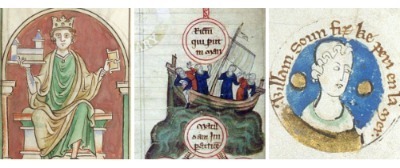
2. Stop naming everyone Matilda!
I guess the time for my proposed naming injunction has kind of come and gone, but, seriously, there are just too many Matildas to deal with. We've dealt with one Matilda FitzRoy (the one who drowned), so that's taken care of. However, Henry I had another illegitimate daughter named Matilda who also was a Matilda FitzRoy because “FitzRoy” just means “son of the king” (and I guess they didn't bother dealing with the gender thing for these two daughters).
Maybe Henry just didn't know there were other names for girls because Matilda was also the name of: his mother/one-time Queen of England, Matilda of Flanders ; his first wife, Matilda of Scotland ; and the daughter they had, who became Empress Matilda. After William's death (FYI, his wife was also named Matilda), Henry appointed his only other legitimate child (the aforementioned Empress Matilda) as his heir. However, her cousin and his wife, Matilda of Boulogne , took over leaving us with King Stephen (not to be confused with Stephen King).
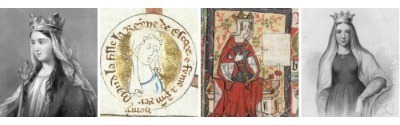
3. Not everyone's cracked up for the crusades.
During the twelfth century “taking the cross” (the term for becoming an official crusader) was all the rage. Richard I (aka Richard the Lionheart; below, L) came from good crusading stock—his mother, after all, was the super badass Eleanor of Aquitaine. For Richard, crusading was “both a spiritual business and a family matter.”
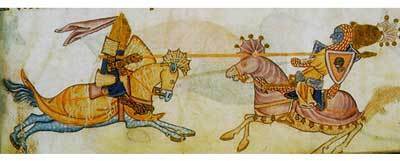
Richard had his own style about it. At one point, he sent a message to Saladin (the leader of the opposition Muslim crusaders; above, R) “requesting secret negotiations – and asking for peaches and ice to cool his raging fever.” Saladin declined the meeting, but still sent the fruit (classy move). Sickness didn't keep Richard on the sidelines: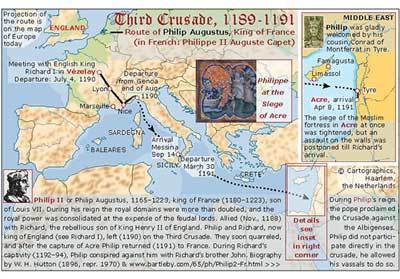
4. Do not cross King John.
It was the reign of King John (the youngest son of Henry II and Eleanor; below, L) that is thought to have given birth to the legend of Robin Hood. I guess people just needed something to believe in because John was “a cruel master” to say the least! In addition to the typical methods of extracting money from the people (e.g. persecuting the Jews is always popular), he killed his nephew; pissed off his richest citizens; took the wives, mistresses, concubines, and children of clergymen hostage; and, upon learning of the papal Interdict against him, vowed to “pluck out priests’ eyes and clip their false tongues.”
5. Everyone loves Arthur and Guinevere.
From the commoners to King Edward I himself, thirteenth-century Europe was crazy for King Arthur. There was even Arthur swag!
6. Don't bro down on your wedding night.
Our next Edward, Edward of Caernarfon , had a BFF by the name of Piers Gaveston. It's not clear whether Gaveston was a “brother figure,” as Edward claimed, or if there was something more to their relationship, but everyone thought the Edward-Gaveston bromance was just too much.
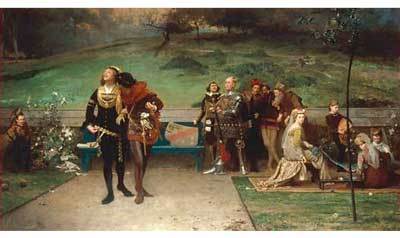
Edward became known for acts of impolitic favoritism, but the Gaveston-centric wedding takes the cake. Not only did Gaveston basically walk down the aisle with Edward and his bride, Isabella, he also (in his bizarre role as wedding planner) decorated the banquet hall with tapestries of his and Edward's arms and not Isabella's. The in-laws, of course, were not impressed.
Fin
Of course, there are more takeaway tales, but I suppose you'll just have to learn them for yourselves. The book progresses quickly, and Jones does a great job of injecting personalities while moving through the larger history.
What a hot mess life could be in the Plantagenet empire! The best one can hope for is that we learn from the mistakes of the past. So, should anyone find themselves in any of the following situations, here are some bits of wisdom, courtesy of these “warrior kings and queen” of yore.
1. Never put all of your heirs in one boat.
Poor King Henry I —though his reign was long and prosperous, and his government among the most successful since Rome, high hopes for his legacy were dashed with the sinking of the White Ship. Not only was his legitimate son and next in line for the throne, William the Aethling , on board, but a couple of Henry's illegitimate children as well (Richard of Lincoln, and Matilda FitzRoy). The alternate lesson (this one from William) might be “if you're in a skiff after a shipwreck and see your half-sister in the water, just let her drown.”
2. Stop naming everyone Matilda!
I guess the time for my proposed naming injunction has kind of come and gone, but, seriously, there are just too many Matildas to deal with. We've dealt with one Matilda FitzRoy (the one who drowned), so that's taken care of. However, Henry I had another illegitimate daughter named Matilda who also was a Matilda FitzRoy because “FitzRoy” just means “son of the king” (and I guess they didn't bother dealing with the gender thing for these two daughters).
Maybe Henry just didn't know there were other names for girls because Matilda was also the name of: his mother/one-time Queen of England, Matilda of Flanders ; his first wife, Matilda of Scotland ; and the daughter they had, who became Empress Matilda. After William's death (FYI, his wife was also named Matilda), Henry appointed his only other legitimate child (the aforementioned Empress Matilda) as his heir. However, her cousin and his wife, Matilda of Boulogne , took over leaving us with King Stephen (not to be confused with Stephen King).
3. Not everyone's cracked up for the crusades.
During the twelfth century “taking the cross” (the term for becoming an official crusader) was all the rage. Richard I (aka Richard the Lionheart; below, L) came from good crusading stock—his mother, after all, was the super badass Eleanor of Aquitaine. For Richard, crusading was “both a spiritual business and a family matter.”
Richard had his own style about it. At one point, he sent a message to Saladin (the leader of the opposition Muslim crusaders; above, R) “requesting secret negotiations – and asking for peaches and ice to cool his raging fever.” Saladin declined the meeting, but still sent the fruit (classy move). Sickness didn't keep Richard on the sidelines:
“he was carried onto the battlefield on a litter, covered in a gloriously regal silken quilt and carrying a crossbow, which he fired at Muslim defenders from behind a screen.”Philip II was a different story—Jones refers to his crusading career as a “catalogue of humiliation.” Finally (shoutout to Eric Cartman) he basically said, screw you guys, I'm going home.
“Philip II, driven by a cocktail of emotions that included jealousy, homesickness and exasperation, announced that he considered his crusading oath to have been served by the conquest of Acre. He was going home.”

4. Do not cross King John.
It was the reign of King John (the youngest son of Henry II and Eleanor; below, L) that is thought to have given birth to the legend of Robin Hood. I guess people just needed something to believe in because John was “a cruel master” to say the least! In addition to the typical methods of extracting money from the people (e.g. persecuting the Jews is always popular), he killed his nephew; pissed off his richest citizens; took the wives, mistresses, concubines, and children of clergymen hostage; and, upon learning of the papal Interdict against him, vowed to “pluck out priests’ eyes and clip their false tongues.”
5. Everyone loves Arthur and Guinevere.
From the commoners to King Edward I himself, thirteenth-century Europe was crazy for King Arthur. There was even Arthur swag!
“By the time Edward was born, there was a booming trade in Arthuriana, and a healthy industry had grown up around his imagined memory.”So, a great way to make a quick buck: pretend to find Arthur's skeleton and sell tickets for people to come check out the bones! Best business plan ever!
6. Don't bro down on your wedding night.
Our next Edward, Edward of Caernarfon , had a BFF by the name of Piers Gaveston. It's not clear whether Gaveston was a “brother figure,” as Edward claimed, or if there was something more to their relationship, but everyone thought the Edward-Gaveston bromance was just too much.
Edward became known for acts of impolitic favoritism, but the Gaveston-centric wedding takes the cake. Not only did Gaveston basically walk down the aisle with Edward and his bride, Isabella, he also (in his bizarre role as wedding planner) decorated the banquet hall with tapestries of his and Edward's arms and not Isabella's. The in-laws, of course, were not impressed.
Fin
Of course, there are more takeaway tales, but I suppose you'll just have to learn them for yourselves. The book progresses quickly, and Jones does a great job of injecting personalities while moving through the larger history.

November 2, 2020
“Richard [the Lionheart] was used to being in the line of fire. From Jaffa to Gaillon, he had stood before hostile forces, trusting in his training, his instinctive feel for the battlefield, and the professionalism of the men around him. He had led men from the front many times before and dodged countless arrows and bolts. He lived for the thrill of battle and took deep pleasure in the noble pursuit of combat. Pathetic as his enemy was here, Richard was filled with admiration for the makeshift courage he saw above him. Characteristically confident under attack, he took time to applaud the indomitable defender [shooting at him] before ducking out of the way of his bolt. But the delay was fatal. Whether Richard’s reactions were slowing fractionally or pride finally conspired against him, he failed to move in time. The bolt struck him in his left shoulder and sank to a depth of around six inches…Richard did not cry out. He was a king and a leader. He could not afford to offer succor to the castle’s defenders or to worry the men around him. With a wooden shaft sticking out from his shoulder, he simply returned to the royal tent…”
- Dan Jones, The Plantagenets: The Warrior Kings and Queens Who Made England
Dan Jones’s The Plantagenets is an excellent example of historical writing that strives in equal measure to entertain as well as teach. Written with an eye for character, an appreciation of tangled palace intrigue, and an abiding respect for the occasionally gruesome battle or execution, this is closer to the script of a premium cable show than a doctoral dissertation. For that, I am most appreciative.
While I am open to studying any period of history, I fully acknowledge that my ignorance increases the farther back in time we go. If I’m being honest, I’m pretty much in the dark before the eighteenth century. Part of this has to do with my skepticism that we can ever really know what happened so, so, so long ago, since there is a dearth of primary sources and forensic evidence. By way of contrast, if I want to learn about the American Civil War, I can marinate in thousands of letters written by first-person witnesses, as well as official reports and orders, muster rolls, and well-preserved battlefields. On the other hand, if I want to learn about King Richard the Lionheart, I have to rely on a handful of chroniclers who were not always clear about their sources – and who probably incorporated hearsay, legend, and apocrypha into their accounts.
Beyond the uncertain evidence, it is simply hard for me to imagine far distant events. When we talk about the world of say, eight-hundred years ago – when The Plantagenets begins – it feels like we are on an entirely different planet. The basic geography of the earth is the same, but everything else is foreign. Even contemporary paintings from those times turn individuals into stylized, semi-cartoonish versions of human beings. The chasm of centuries makes it hard to relate and difficult to connect to those who lived in such remote days. When we glimpse these people, we do so only in fragments, like the darkness briefly lit by lightning.
Dan Jones’s great accomplishment is in taking ye olde tale and making it feel modern. He does this by using an unabashed narrative style that seldom pauses to quibble about documentation, and by focusing on personalities and climatic moments while maintaining a headlong pace.
As Jones explains early on, the Plantagenets were a line of kings that began with Geoffrey, Count of Anjou, who married the Empress Matilda (daughter of England’s King Henry I) in 1128. Geoffrey wore a sprig of yellow broom blossom in his hat, from which the Plantagenet name derived. The Plantagenets follows this family drama from 1154, and the rule of King Henry II, to 1400, when things took a sharp downward turn under Richard II. Thus, we have approximately two-hundred-and-fifty years of history packed into five-hundred pages of text. That Jones is able to pull off this feat is a testament to both his scholarly abilities, and his ability to put his foot on the accelerator and never let up.
The Plantagenets is an extremely user-friendly book. It is strictly chronological, and the Table of Contents doubles as an outline, breaking down the material into discrete sections complete with datelines. At the end of each section, Jones tends to devote a page or two to summing things up, to reinforce where you’ve been, and to foreshadow where things are going. Also helpful are the maps and family trees, which I found an invaluable aid, especially since – as I mentioned above – I knew very little (or next to nothing) about this period before cracking the front cover.
Unsurprisingly, since The Plantagenets tackles two-and-a-half centuries of English (and French) history, there is a lot going on here. Certainly, it was a violent span, and Jones touches on Richard the Lionheart’s role in the Third Crusade, the battles of Bannockburn and Crécy, and the beginning of the Hundred Years War. Politically, you have the saga of bad King John and the Magna Carta, as well as the founding of Parliament. And if you are – for some reason – hankering for more pandemic-related reading, there is the arrival of the Black Death.
Jones hews close to the particular kings and queens of each era, noting both the good – Henry II, Eleanor of Aquitaine, and Edward III – as well as the bad, including the aforementioned John, Edward II, and Richard II. Along the way, you get a view of some of the supporting cast, such as the martyred Thomas Beckett, and the conniving Piers Gaveston. Many of the people Jones introduces meet terrible ends, and he seldom passes an opportunity to give you a flavor of medieval justice. For instance, there is an ew-inducing vignette regarding the punishment of Hugh Despenser, who made himself a crony of an extremely unpopular king:
As Jones shows, the men and women in The Plantagenets were playing a very high stakes game, and the consequences of failure could be quite steep. Meanwhile, the ordinary people of the realm, the unnamed and faceless masses who served as mere pawns in this life-sized chess match, remain unfortunately hidden from our view.
The Plantagenets reads like fiction. To that end, I can’t really speak about its accuracy. In lieu of endnotes, Jones provides a “Further Reading” section at the end of this volume, directing readers to various secondary sources. Being a novice in this area of history, I doubt more detailed notes would have helped me. I am thus relegated to trusting in Jones, one of those species of “cool” historians who wear leather jackets in their author photos, but who has written extensively on medieval matters (as well making extensive television appearances).
For my purposes, The Plantagenets really hit the spot. Some months ago, I tried to get into the Middle Ages by reading a more academically-inclined tract by noted medievalist Norman Cantor. It is nothing against Cantor to say that after a hundred or so pages, it wasn’t working out for me. Life being short, I set it aside. Jones’s style, at least as it pertains to this particular epoch, suited me much better. It is history as a highlight reel, accentuating the heart-racing moments, while gliding over the rest.
- Dan Jones, The Plantagenets: The Warrior Kings and Queens Who Made England
Dan Jones’s The Plantagenets is an excellent example of historical writing that strives in equal measure to entertain as well as teach. Written with an eye for character, an appreciation of tangled palace intrigue, and an abiding respect for the occasionally gruesome battle or execution, this is closer to the script of a premium cable show than a doctoral dissertation. For that, I am most appreciative.
While I am open to studying any period of history, I fully acknowledge that my ignorance increases the farther back in time we go. If I’m being honest, I’m pretty much in the dark before the eighteenth century. Part of this has to do with my skepticism that we can ever really know what happened so, so, so long ago, since there is a dearth of primary sources and forensic evidence. By way of contrast, if I want to learn about the American Civil War, I can marinate in thousands of letters written by first-person witnesses, as well as official reports and orders, muster rolls, and well-preserved battlefields. On the other hand, if I want to learn about King Richard the Lionheart, I have to rely on a handful of chroniclers who were not always clear about their sources – and who probably incorporated hearsay, legend, and apocrypha into their accounts.
Beyond the uncertain evidence, it is simply hard for me to imagine far distant events. When we talk about the world of say, eight-hundred years ago – when The Plantagenets begins – it feels like we are on an entirely different planet. The basic geography of the earth is the same, but everything else is foreign. Even contemporary paintings from those times turn individuals into stylized, semi-cartoonish versions of human beings. The chasm of centuries makes it hard to relate and difficult to connect to those who lived in such remote days. When we glimpse these people, we do so only in fragments, like the darkness briefly lit by lightning.
Dan Jones’s great accomplishment is in taking ye olde tale and making it feel modern. He does this by using an unabashed narrative style that seldom pauses to quibble about documentation, and by focusing on personalities and climatic moments while maintaining a headlong pace.
As Jones explains early on, the Plantagenets were a line of kings that began with Geoffrey, Count of Anjou, who married the Empress Matilda (daughter of England’s King Henry I) in 1128. Geoffrey wore a sprig of yellow broom blossom in his hat, from which the Plantagenet name derived. The Plantagenets follows this family drama from 1154, and the rule of King Henry II, to 1400, when things took a sharp downward turn under Richard II. Thus, we have approximately two-hundred-and-fifty years of history packed into five-hundred pages of text. That Jones is able to pull off this feat is a testament to both his scholarly abilities, and his ability to put his foot on the accelerator and never let up.
The Plantagenets is an extremely user-friendly book. It is strictly chronological, and the Table of Contents doubles as an outline, breaking down the material into discrete sections complete with datelines. At the end of each section, Jones tends to devote a page or two to summing things up, to reinforce where you’ve been, and to foreshadow where things are going. Also helpful are the maps and family trees, which I found an invaluable aid, especially since – as I mentioned above – I knew very little (or next to nothing) about this period before cracking the front cover.
Unsurprisingly, since The Plantagenets tackles two-and-a-half centuries of English (and French) history, there is a lot going on here. Certainly, it was a violent span, and Jones touches on Richard the Lionheart’s role in the Third Crusade, the battles of Bannockburn and Crécy, and the beginning of the Hundred Years War. Politically, you have the saga of bad King John and the Magna Carta, as well as the founding of Parliament. And if you are – for some reason – hankering for more pandemic-related reading, there is the arrival of the Black Death.
Jones hews close to the particular kings and queens of each era, noting both the good – Henry II, Eleanor of Aquitaine, and Edward III – as well as the bad, including the aforementioned John, Edward II, and Richard II. Along the way, you get a view of some of the supporting cast, such as the martyred Thomas Beckett, and the conniving Piers Gaveston. Many of the people Jones introduces meet terrible ends, and he seldom passes an opportunity to give you a flavor of medieval justice. For instance, there is an ew-inducing vignette regarding the punishment of Hugh Despenser, who made himself a crony of an extremely unpopular king:
Along with his associate Simon de Reading, who had been tried alongside him, Despenser was roped to four horses and dragged through the streets of Hereford to the castle walls. There both men had nooses placed around their necks, and Despenser was hoisted onto a specially made fifty-foot gallows, designed to make punishment visible to everyone in the town. A fire burned beneath the scaffold, and it was here that Despenser’s genitals were thrown after the executioner scaled a ladder and hacked them off with a knife. He was then drawn: his intestines and heart were cut out and also hurled down into the flames. Finally, his body was lowered back to the ground and butchered. The crowd whooped with joy as his head was cut off, to be sent to London, while his body was quartered for distribution about the country.
As Jones shows, the men and women in The Plantagenets were playing a very high stakes game, and the consequences of failure could be quite steep. Meanwhile, the ordinary people of the realm, the unnamed and faceless masses who served as mere pawns in this life-sized chess match, remain unfortunately hidden from our view.
The Plantagenets reads like fiction. To that end, I can’t really speak about its accuracy. In lieu of endnotes, Jones provides a “Further Reading” section at the end of this volume, directing readers to various secondary sources. Being a novice in this area of history, I doubt more detailed notes would have helped me. I am thus relegated to trusting in Jones, one of those species of “cool” historians who wear leather jackets in their author photos, but who has written extensively on medieval matters (as well making extensive television appearances).
For my purposes, The Plantagenets really hit the spot. Some months ago, I tried to get into the Middle Ages by reading a more academically-inclined tract by noted medievalist Norman Cantor. It is nothing against Cantor to say that after a hundred or so pages, it wasn’t working out for me. Life being short, I set it aside. Jones’s style, at least as it pertains to this particular epoch, suited me much better. It is history as a highlight reel, accentuating the heart-racing moments, while gliding over the rest.

July 30, 2018
A drunken outing, a ship sinks and a future kiing is dead leaving the country without a clear successor. The result? Twenty years of Civil War. This is how this well written well researched book begins. It then takes us through 250 years of Plntagenet rule. The good, not too much of that, the bad, alot of that, and the ugly. So glad I did not live in the Middle ages. I knew quite a bit of this history going in, but I have always had a fascination with Eleanor of Aquitaine, queen twice, the mother of two Kings, and the women that led her sons in a revolt against her husband. Of course she was imprisoned in various castles for many years, but eventually she once again became a politcal force. She lives into her seventies.
Many names, man battles, countries won, countries lost. Powerful people, imprisoned people, people tortured, drawn and quartered. Not good to be near the top or a threat. Does show the politics of the time, the beginnings of the legal system and the Magna Carta, which few Kings adhered to, or only when they were forced too. The Crusades, the expense of these and the constant wars and battles. Family power struggles, the Black Death, and the sad death of a princess.
A very comprehensive, but readable tone of a family that retained power for 250 years. One thing, among many, things I did not know, and found shocking, concerned the country under the rule of Edward II. His treatment of the Jews, and the fact that he made them wear yellow cloth badges on their clothes so they could be identifiable. They were later dispelled from the country. So do we infer that Hitler read history, or was it a fluke that Hitler picked the same color and same means of identification. Chilling!
Many names, man battles, countries won, countries lost. Powerful people, imprisoned people, people tortured, drawn and quartered. Not good to be near the top or a threat. Does show the politics of the time, the beginnings of the legal system and the Magna Carta, which few Kings adhered to, or only when they were forced too. The Crusades, the expense of these and the constant wars and battles. Family power struggles, the Black Death, and the sad death of a princess.
A very comprehensive, but readable tone of a family that retained power for 250 years. One thing, among many, things I did not know, and found shocking, concerned the country under the rule of Edward II. His treatment of the Jews, and the fact that he made them wear yellow cloth badges on their clothes so they could be identifiable. They were later dispelled from the country. So do we infer that Hitler read history, or was it a fluke that Hitler picked the same color and same means of identification. Chilling!

May 21, 2012
It began with a ship wreck. The year is 1120. The vessel in question is the White Ship, leaving France for England, setting sail in the dark on a late November night. All on board were in a party mood, including, according to some accounts, the crew. The wine and ale has been flowing with liberality. No sooner had the vessel left harbour than it hit a submerged rock. All but one of the passengers and crew died.
Norman England might be said to have died that night also; for the drowned included William Adelin. The grandson of William the Conqueror, he was the only surviving legitimate son and heir of Henry I. Henry, who was to rule for another fifteen years after the tragedy, had no choice but to leave the throne to his daughter, Matilda, a kind of forlorn hope in a militant male-dominated world. And so it proved. No sooner had the king died than the throne was seized by Stephen of Blois, Matilda's cousin, ushering in a long period of civil war, known subsequently as the Anarchy.
It ushered in much more; it ushered in the devil’s brood. It ushered in the best of kings and the worst of kings. It ushered in the Plantagenets. Reputedly descended from a daughter of Satan, they were set to become England’s longest reigning dynasty. There is a story worth telling. It’s a story told with enthusiasm, insight and panache by Dan Jones in the recently published The Plantagenets: the Kings Who Made England.
The sinking of the White Ship is one important marker; the other is Matilda’s marriage in 1128 to one Geoffrey of Anjou. It was a marriage made in hell, or at least Matilda might have thought so. A widow of twenty six, previously married to the Holy Roman Emperor Henry V, she now found herself bound to a red-headed teenager of fourteen, a marriage arranged by her father for the sake of the peace. Geoffrey, son of the count of Anjou, had taken to sporting a sprig of yellow broom as his personal emblem- the planta genista in Latin, hence the name of the ensuing dynasty.
Matilda and Geoffrey were never to rule England, an honour that fell to their son, who succeeded Stephen in 1154 as Henry II. Red in hair and red in passion, Henry set the pattern to come. There was war, bloodshed, brutality and massacre aplenty; but there was also innovation, consolidation and development. It was under Henry and his successors that England began to take shape as a nation, not a mere appendage of a French-speaking continental power.
Jones is a story-teller of considerable skill. In six hundred or so pages he simply carries one along in a strong narrative and chronological vessel, the sort of thing that was once dismissed as, well, just a tad passé by the high priests of the historical profession.
The focus is very much on the politics and the personalities of power. When his kings are good they are very, very good and when they are bad they…have red hot pokers thrust into their bowels. Actually, the supposed gruesome death of Edward II is one of the myths that the author hits on the head with a hammer that might very well have been borrowed from Edward I, hitherto busy hammering the Scots.
The measure of ‘good’ here really needs to be refined. Good means effective. It does not mean as in good as in good; anything but, if you take my meaning. For Jones the effective include Henry II, Richard I, Edward I and Edward III. The bad, or rather the ineffectual, are King John (isn’t he on every list of great historical baddies?), Henry III, Edward II and Richard II.
The former – the good -were to stamp their mark on England, through war, law making and administration. The latter – the bad - also stamped their mark, possibly in some even more lasting ways. John, by being bad, brought about some good, albeit unwillingly, some lasting innovations in the common law of the land, including the provisions of Magna Carta, the most important of all.
Indeed it might also be said that it was his incompetence as a soldier that began the process of making England England, rather than greater Normandy or the jewel in the crown of the Angevin Empire. It was thanks to John that the Channel began to serve in the office of a wall, or as a moat defensive to a house, against the envy of less happier lands.
King John was not a good man, and no good friends had he. He stayed in every afternoon…but one came to tea. Dan Jones certainly did not. He serves him up as he has been traditionally served up - an all round rotter. This personally is where I take my leave, seeing John more as the victim of monkish chroniclers. He was a man who could certainly sin with the best of the Plantagenets, but whose reign saw some important innovations in administration and government. In this regard I’m a revisionist, not a traditionalist like Jones, who draws up a heavy charge sheet spread over some sixty pages, a catalogue of crime and personal failure that Matthew Paris, the medieval chronicler and character assassin, would doubtless applaud.
As for the effective ones, John’s grandson Edward I, in his restless imperial ambitions, was to poison relations between England and Scotland for centuries. Before that we have the example of Richard I, who cared little for England, other than as a mortgageable asset, to be used in financing the pursuit of a crusading chimera.
The author and I can at least agree on one thing: we both admire Edward III, whom I described in a recent English Standard article as the real father of the English nation. Although his ambitions in France were fruitless his time saw great innovations in both military and parliamentary affairs. It was a time that saw the beginning of the end of the old England of humble peasants and hungry barons, never the twain to meet.
It’s in his account of the ‘black’ fourteenth century that Jones is at his best, in his treatment of the highs of Edward III and the lows of Richard II, his grandson. His handling of the reign of the latter, the first gentleman of England, is particularly good, hardly surprising in that he previously published a commendable account of the 1381 Peasants’ Revolt.
Some might think – I did think – that his tale ends rather abruptly in 1399 with the deposition of Richard II. After all, in the Lancaster and York phases, the story of the Plantagenets continues down to the death of Richard III at Bosworth in 1485. But I suppose this, a period that covers the final dramatic stages of the Hundred Years War and the ensuing Wars of the Roses, would be a mighty postscript in an already lengthy book. It’s aimed at the popular market and the popular market might baulk at a work heading fast towards a thousand pages or more!
The publishers have managed to stamp the book with the imprimatur of some impressive heavyweights, including David Starkey and Simon Sebag-Montefiore. These things always seem slightly over the top to me - clearly solicited in advance rather than drawn from a published review - , almost hysterical in their approbation. The latter, for example, describes The Plantagenets as ‘outstanding’, a judgement echoed by Helen Castor, the best-selling author of She Wolves. (It must be so: it says so on the cover!)
It’s good, yes; it’s thrilling, yes; it’s a bit of a royal roller-coaster, yes. But, really, is it ‘outstanding’? Well, possibly, in some regards, but are we not suffering from a tendency to exaggeration and hyperbole here? When every other new publication is described as ‘outstanding’ it tends to jade things somewhat. Besides, does the book really need this kind of scaffolding? I don’t think so, not when it serves its purpose, a sprightly filly galloping along nicely in a rattling good yarn.
Norman England might be said to have died that night also; for the drowned included William Adelin. The grandson of William the Conqueror, he was the only surviving legitimate son and heir of Henry I. Henry, who was to rule for another fifteen years after the tragedy, had no choice but to leave the throne to his daughter, Matilda, a kind of forlorn hope in a militant male-dominated world. And so it proved. No sooner had the king died than the throne was seized by Stephen of Blois, Matilda's cousin, ushering in a long period of civil war, known subsequently as the Anarchy.
It ushered in much more; it ushered in the devil’s brood. It ushered in the best of kings and the worst of kings. It ushered in the Plantagenets. Reputedly descended from a daughter of Satan, they were set to become England’s longest reigning dynasty. There is a story worth telling. It’s a story told with enthusiasm, insight and panache by Dan Jones in the recently published The Plantagenets: the Kings Who Made England.
The sinking of the White Ship is one important marker; the other is Matilda’s marriage in 1128 to one Geoffrey of Anjou. It was a marriage made in hell, or at least Matilda might have thought so. A widow of twenty six, previously married to the Holy Roman Emperor Henry V, she now found herself bound to a red-headed teenager of fourteen, a marriage arranged by her father for the sake of the peace. Geoffrey, son of the count of Anjou, had taken to sporting a sprig of yellow broom as his personal emblem- the planta genista in Latin, hence the name of the ensuing dynasty.
Matilda and Geoffrey were never to rule England, an honour that fell to their son, who succeeded Stephen in 1154 as Henry II. Red in hair and red in passion, Henry set the pattern to come. There was war, bloodshed, brutality and massacre aplenty; but there was also innovation, consolidation and development. It was under Henry and his successors that England began to take shape as a nation, not a mere appendage of a French-speaking continental power.
Jones is a story-teller of considerable skill. In six hundred or so pages he simply carries one along in a strong narrative and chronological vessel, the sort of thing that was once dismissed as, well, just a tad passé by the high priests of the historical profession.
The focus is very much on the politics and the personalities of power. When his kings are good they are very, very good and when they are bad they…have red hot pokers thrust into their bowels. Actually, the supposed gruesome death of Edward II is one of the myths that the author hits on the head with a hammer that might very well have been borrowed from Edward I, hitherto busy hammering the Scots.
The measure of ‘good’ here really needs to be refined. Good means effective. It does not mean as in good as in good; anything but, if you take my meaning. For Jones the effective include Henry II, Richard I, Edward I and Edward III. The bad, or rather the ineffectual, are King John (isn’t he on every list of great historical baddies?), Henry III, Edward II and Richard II.
The former – the good -were to stamp their mark on England, through war, law making and administration. The latter – the bad - also stamped their mark, possibly in some even more lasting ways. John, by being bad, brought about some good, albeit unwillingly, some lasting innovations in the common law of the land, including the provisions of Magna Carta, the most important of all.
Indeed it might also be said that it was his incompetence as a soldier that began the process of making England England, rather than greater Normandy or the jewel in the crown of the Angevin Empire. It was thanks to John that the Channel began to serve in the office of a wall, or as a moat defensive to a house, against the envy of less happier lands.
King John was not a good man, and no good friends had he. He stayed in every afternoon…but one came to tea. Dan Jones certainly did not. He serves him up as he has been traditionally served up - an all round rotter. This personally is where I take my leave, seeing John more as the victim of monkish chroniclers. He was a man who could certainly sin with the best of the Plantagenets, but whose reign saw some important innovations in administration and government. In this regard I’m a revisionist, not a traditionalist like Jones, who draws up a heavy charge sheet spread over some sixty pages, a catalogue of crime and personal failure that Matthew Paris, the medieval chronicler and character assassin, would doubtless applaud.
As for the effective ones, John’s grandson Edward I, in his restless imperial ambitions, was to poison relations between England and Scotland for centuries. Before that we have the example of Richard I, who cared little for England, other than as a mortgageable asset, to be used in financing the pursuit of a crusading chimera.
The author and I can at least agree on one thing: we both admire Edward III, whom I described in a recent English Standard article as the real father of the English nation. Although his ambitions in France were fruitless his time saw great innovations in both military and parliamentary affairs. It was a time that saw the beginning of the end of the old England of humble peasants and hungry barons, never the twain to meet.
It’s in his account of the ‘black’ fourteenth century that Jones is at his best, in his treatment of the highs of Edward III and the lows of Richard II, his grandson. His handling of the reign of the latter, the first gentleman of England, is particularly good, hardly surprising in that he previously published a commendable account of the 1381 Peasants’ Revolt.
Some might think – I did think – that his tale ends rather abruptly in 1399 with the deposition of Richard II. After all, in the Lancaster and York phases, the story of the Plantagenets continues down to the death of Richard III at Bosworth in 1485. But I suppose this, a period that covers the final dramatic stages of the Hundred Years War and the ensuing Wars of the Roses, would be a mighty postscript in an already lengthy book. It’s aimed at the popular market and the popular market might baulk at a work heading fast towards a thousand pages or more!
The publishers have managed to stamp the book with the imprimatur of some impressive heavyweights, including David Starkey and Simon Sebag-Montefiore. These things always seem slightly over the top to me - clearly solicited in advance rather than drawn from a published review - , almost hysterical in their approbation. The latter, for example, describes The Plantagenets as ‘outstanding’, a judgement echoed by Helen Castor, the best-selling author of She Wolves. (It must be so: it says so on the cover!)
It’s good, yes; it’s thrilling, yes; it’s a bit of a royal roller-coaster, yes. But, really, is it ‘outstanding’? Well, possibly, in some regards, but are we not suffering from a tendency to exaggeration and hyperbole here? When every other new publication is described as ‘outstanding’ it tends to jade things somewhat. Besides, does the book really need this kind of scaffolding? I don’t think so, not when it serves its purpose, a sprightly filly galloping along nicely in a rattling good yarn.

September 22, 2017
I really enjoyed this book and learned a lot from it, which is surprising since my eyes usually glaze over at any hint of English history. There were dry parts but mostly the author's writing style is more casual and he really seems to be enjoying his topic and that made me more interested. I listened to the audiobook so I didn't get to see any bibliography or footnotes. That was unfortunate since there were lots of people and subjects on which I would like to have more information. I will just have to seek it out on my own. The narrator of the audiobook Clive Chafer did a very good job.

March 1, 2025
It's hard to call a 500 page book breezy, but everything I have read from Dan Jones can be described that way. In The Plantagenets, Jones tells the story of the royal house of England which spans the years from the tail end of the 1100s to nearly 1500. This is a lot and Jones admits as much in his prologue. Reading it doesn't feel that way, though.
Jones is basically doing a speed run to try and capture the essence of these rulers and the various antagonists and protagonists all around them. Jones makes this all readable by doing two things exceptionally well. First, he makes sure to tell self-contained stories in each chapter so that the reader knows who the main players are and what their relationships to each other are. Many books which try to cover long time periods will often try to write about ideas and themes. I find those books often feel muddled and that time jumps back and forth as your are reading which causes further confusion. Jones keeps a tight focus on the people and uses them to tell the story. A discerning eye will still see themes emerge, they just aren't harped on.
Secondly, and more importantly, Jones tells the interesting stories and cuts extraneous material. I know a few fantastic books on specific rulers in the book and there is plenty which was left on the cutting room floor. However, this book would have been 5,000 pages instead. Even I wouldn't read that! (I mean, maybe I would. I might have a problem.) In the end, I still felt like I knew who these characters were generally and what their motives were.
It's another great book from Jones who doesn't have a single weak entry in his catalogue.
Jones is basically doing a speed run to try and capture the essence of these rulers and the various antagonists and protagonists all around them. Jones makes this all readable by doing two things exceptionally well. First, he makes sure to tell self-contained stories in each chapter so that the reader knows who the main players are and what their relationships to each other are. Many books which try to cover long time periods will often try to write about ideas and themes. I find those books often feel muddled and that time jumps back and forth as your are reading which causes further confusion. Jones keeps a tight focus on the people and uses them to tell the story. A discerning eye will still see themes emerge, they just aren't harped on.
Secondly, and more importantly, Jones tells the interesting stories and cuts extraneous material. I know a few fantastic books on specific rulers in the book and there is plenty which was left on the cutting room floor. However, this book would have been 5,000 pages instead. Even I wouldn't read that! (I mean, maybe I would. I might have a problem.) In the end, I still felt like I knew who these characters were generally and what their motives were.
It's another great book from Jones who doesn't have a single weak entry in his catalogue.

May 31, 2012
In writing this volume, Mr. Jones has done an excellent job of recounting the events that both led to the House of Plantagenet and the events that occurred in the approximately 250 years that they ruled England. He has a very reader friendly writing style and this book is written for a general audience. He does not footnote, but has a fairly extensive bibliography/recommended reading list following the text.
Mr. Jones starts out with the sinking of the White Ship and the resulting death of Henry I’s sole legitimate son and heir and the resulting succession crisis that led to a twenty year civil war and Henry II, the first of the Plantagenet Kings, coming to the throne. From there he takes each of the Plantagenet Kings in succession and tells their stories. Some are familiar thru Hollywood movies, such as Henry II’s relationship with his Archbishop – Becket, Edward I’s wars with Scotland - Braveheart, and other’s not so familiar. The fate of Richard II, Edward II and the reign of Henry III are examples of the not so familiar.
In assessing the 8 Plantagenet kings, the author pretty much accepts the standard judgment of who was a good king and who was not. The good kings include Henry II, Richard I, Edward I and Edward III while John, Edward II and Richard II are listed as bad kings. The primary determiner of who was a good or bad king seems to be whether they were good generals or not.
While the author does recount the various wars the Kings fought, he also looks at how they ruled. The Good Kings while for the most part winning their wars also kept good relations with the nobility, while the bad kings did not. The story of the Magna Charta is a good example of this. From the time it was signed, John was trying to figure a way out of it. It really only became important later as his successors republished it and vowed to follow its strictures.
In telling the story, the author makes good use of sources from the time of the various Kings, from which he quotes liberally. I found that these quotes made the narrative more interesting for me. When quoting from the sources, Mr. Jones is careful to say if they supported or were against the King.
He also challenges some of the myths that have grown up around the kings. One such myth is Henry II ordering the murder of Becket and another is the manor of Edward II’s death. He also takes on the sexuality of Richard I and Edward II.
Unlike most historians, Mr. Jones ends the story of the Plantagenets with the disposition of Richard II, another king who irritated his nobles and lost his wars, by his cousin Henry Bolingbroke ( Henry IV ). He justifies this with the fact the Richard II was the last king of the senior male Plantagenet line. Henry was the son of one of Edward III’s younger sons, John of Gaunt – Duke of Lancaster
All in all I found this to be an excellent overview of probably the greatest dynasty to sit on the throne of England. 4+ stars
Mr. Jones starts out with the sinking of the White Ship and the resulting death of Henry I’s sole legitimate son and heir and the resulting succession crisis that led to a twenty year civil war and Henry II, the first of the Plantagenet Kings, coming to the throne. From there he takes each of the Plantagenet Kings in succession and tells their stories. Some are familiar thru Hollywood movies, such as Henry II’s relationship with his Archbishop – Becket, Edward I’s wars with Scotland - Braveheart, and other’s not so familiar. The fate of Richard II, Edward II and the reign of Henry III are examples of the not so familiar.
In assessing the 8 Plantagenet kings, the author pretty much accepts the standard judgment of who was a good king and who was not. The good kings include Henry II, Richard I, Edward I and Edward III while John, Edward II and Richard II are listed as bad kings. The primary determiner of who was a good or bad king seems to be whether they were good generals or not.
While the author does recount the various wars the Kings fought, he also looks at how they ruled. The Good Kings while for the most part winning their wars also kept good relations with the nobility, while the bad kings did not. The story of the Magna Charta is a good example of this. From the time it was signed, John was trying to figure a way out of it. It really only became important later as his successors republished it and vowed to follow its strictures.
In telling the story, the author makes good use of sources from the time of the various Kings, from which he quotes liberally. I found that these quotes made the narrative more interesting for me. When quoting from the sources, Mr. Jones is careful to say if they supported or were against the King.
He also challenges some of the myths that have grown up around the kings. One such myth is Henry II ordering the murder of Becket and another is the manor of Edward II’s death. He also takes on the sexuality of Richard I and Edward II.
Unlike most historians, Mr. Jones ends the story of the Plantagenets with the disposition of Richard II, another king who irritated his nobles and lost his wars, by his cousin Henry Bolingbroke ( Henry IV ). He justifies this with the fact the Richard II was the last king of the senior male Plantagenet line. Henry was the son of one of Edward III’s younger sons, John of Gaunt – Duke of Lancaster
All in all I found this to be an excellent overview of probably the greatest dynasty to sit on the throne of England. 4+ stars

May 16, 2017
I have been reading this book for over three years. It covers a huge amount of English history, far too much to fairly condense into a review. I read it in conjunction with Shakespeare’s history plays, and I found those particular monarchs more interesting as a result. The knowledge of the actual events surrounding these characters really helped me when approaching the plays. It’s really interesting to see how Shakespeare presented these events, changing people and merging figures together according to his own will and the purpose of effective drama.
For that reason I stuck with the book. Dan Jones is an excellent historian, but my interests reside more with literary history rather than actual history; thus, the snail pace I developed whist reading. For the right reader it'll be worth the slog.
For that reason I stuck with the book. Dan Jones is an excellent historian, but my interests reside more with literary history rather than actual history; thus, the snail pace I developed whist reading. For the right reader it'll be worth the slog.

September 18, 2021
“The office of kingship was utterly transformed.”
THE PLANTAGENETS, THE WARRIOR KINGS AND QUEENS WHO MADE ENGLAND is a marvelous read. Full of intrigue, drama, and human emotion it is a pretty darn good overview of the 245 years of the Plantagenet dynasty and the politics of medieval Europe.
Author Dan Jones writes in an accessible, yet still scholarly, manner and his love and obvious affectionate interaction with the historical period comes across in the writing. The text is chronological in its overview, moving from ruler to ruler and I am a more well rounded student of history for having read it. The fact that it is a darn good read is just icing on the cake.
There are many highlights, but I especially enjoyed the sections that covered the reigns of Edward II and Richard II, two disastrous rulers. Fans of Shakespeare’s play RICHARD II will want to revisit that text after reading this book, and the revisit will be richer for it.
Also interesting is how Jones points out that the bloody violence we associate with the Tudors began with a few pivotal executions during this time period that forever changed the way the monarchy interacted with the peers of the realm. This book also makes obviously clear that the Plantagenet rulers as a collective were key players (not always willingly) in the idea that “the king should govern within his own laws and with the advice of the worthiest men of his kingdom.”
Jones writes, “During 245 years of turbulent rule, the Plantagenets had forged England in their own image.” Yep, and once again history proves to be more interesting that any fantasy we could muster. This is wild stuff, and it is true! The text’s Epilogue is a great summation of Mr. Jones’ premise, mainly that the Plantagenet dynasty made and shaped what we know as England. After reading this, it’s hard to argue the point.
Jones has written books about other topics concerning medieval Europe, as well as a book about the War of the Roses. I will be reading them!
THE PLANTAGENETS, THE WARRIOR KINGS AND QUEENS WHO MADE ENGLAND is a marvelous read. Full of intrigue, drama, and human emotion it is a pretty darn good overview of the 245 years of the Plantagenet dynasty and the politics of medieval Europe.
Author Dan Jones writes in an accessible, yet still scholarly, manner and his love and obvious affectionate interaction with the historical period comes across in the writing. The text is chronological in its overview, moving from ruler to ruler and I am a more well rounded student of history for having read it. The fact that it is a darn good read is just icing on the cake.
There are many highlights, but I especially enjoyed the sections that covered the reigns of Edward II and Richard II, two disastrous rulers. Fans of Shakespeare’s play RICHARD II will want to revisit that text after reading this book, and the revisit will be richer for it.
Also interesting is how Jones points out that the bloody violence we associate with the Tudors began with a few pivotal executions during this time period that forever changed the way the monarchy interacted with the peers of the realm. This book also makes obviously clear that the Plantagenet rulers as a collective were key players (not always willingly) in the idea that “the king should govern within his own laws and with the advice of the worthiest men of his kingdom.”
Jones writes, “During 245 years of turbulent rule, the Plantagenets had forged England in their own image.” Yep, and once again history proves to be more interesting that any fantasy we could muster. This is wild stuff, and it is true! The text’s Epilogue is a great summation of Mr. Jones’ premise, mainly that the Plantagenet dynasty made and shaped what we know as England. After reading this, it’s hard to argue the point.
Jones has written books about other topics concerning medieval Europe, as well as a book about the War of the Roses. I will be reading them!

September 8, 2013
It has been a week of competitive reading in the de Lisle household. Bed time, back to back: he reading George RR Martin’s hugely popular Game of Thrones fantasy series; me reading Dan Jones’s The Plantagenets. We both read into the night. But I was the one unable to stop myself reading passages out loud.
Jones covers an enormous amount of ground: eight generations of Kings and Queens from 1120 to 1399. The risk with a long dynastic history is that it becomes just one damn thing after another, and the reader gets lost in a snowstorm of names and events. Jones avoids this with a combination of gripping story telling and pin sharp clarity. As I sometimes stop mid-paragraph to daydream around a subject, I was grateful to be kept on track by a text that is simple and direct, without leaving me feeling patronised.
The narrative opens with a drunken party aboard a white ship – the white ship. Amongst the Beautiful People revelling on deck is William Aetherling, grandson of William the Conquerer and only legitimate son of Henry 1st. Unfortunately those who are actually sailing the ship are also drunk and intend to race across the channel from France to England. They hit a rock before they have even left the harbour. The subsequent catastrophe reads like the sinking of the Titanic, but with royalty, and far more serious consequences.
Following the death of William Aetherling, Henry I leaves his throne to his daughter, Matilda. Her husband, the handsome Geoffrey of Anjou, is the man who in legend inspired the Plantagent name: he wore a spring of yellow broom blossom (planta genista) in his hair. Four centuries before the advent of Mary Tudor, the question of whether or not England will accept a Queen regnant, has arisen. Matilda’s cousin Stephan of Blois, one of the few survivors of the white ship, seizes the crown, and so begins a long and grim civil war.
After a few years Malmesbury in Wiltshire was no more than ‘a wretched little town..Its walls and motte castle had been besieged at least three times..its people brutualized and plundered for many years. Now [Matilda’s son], Henry was at the walls…Torrential rain and winds lashed besiegers and defenders alike, soaking mud clung to them all’. The future Henry II eventually breaks through and even the priests in the town church are butchered. Jones does excellent pen portraits, backed by vivid quotations. Here is Henry II, as rendered by Gerald of Wales,
‘.. a man of reddish, freckled complexion, with a large round head, grey eyes that glowed fiercely and grew bloodshot in anger, a fiery countenance and a harsh cracked voice. His neck was thrust forward slightly from his shoulders..His body was stocky, with a pronounced tendency towards fatness..which he tempered with exercise. For in eating and drinking he was moderate and sparing’. The history of the Middle Ages supposedly suffers in relation to the Tudors because there are fewer portraits of the principle figures. But with this level of physical detail who needs a painted image?
Henry’s temper was monstrous. Apparently mentioning the name of the Kings of Scots in a pleasant manner was enough to make him eat the straw from his mattress. I can imagine a time when many of us may come to feel like that about Alex Salmon. But Henry’s rages would eventually provoke the murder of his Archbishop of Canterbury, Thomas Beckett – a story chronicled anew in John Guy’s new blockbuster. Vicious tantrums that ended in murder ran in the Plantagenet family, however, and they weren’t all prepared to appear apologetic, as Henry II was obliged to do after Beckett’s brains were smeared over paving stones in his own cathedral.
Maunday Thursday is one of the holiest days in the Christian calendar: the night of the Last Supper. On the Thursday before Easter in 1203 Henry II’s son, King John should have been at Mass, or perhaps reflecting on Christ’s coming sacrifice. Instead he was drunk at dinner and brooding on the wrongs done against him. One of his servants had, earlier that year, refused orders to castrate and blind his sixteen-year old nephew and heir, Arthur of Britanny. His meal finished he staggered to the boy’s cell and murdered him with his own hands. I was strangely pleased to be reassured that Bad King John really was Bad - even badder than I had remembered. The wife of one of his enemies ended up eating her own son as she starved in a dungeon. But my favourite incident took place after the Pope responded to John’s seizure of the proprieties of the See of Canterbury and placed England under Interdict. Instead of pretending to be sorry, and fretting that his subjects were no longer able to hear Mass, John devised new means of extracting money from the clergy: the most inventive being kidnapping their illicit wives and mistresses and then ransoming them back.
Plantagents is divided into seven sections, from the ‘Age of Shipwreck’, which covers the period of sinking of the white ship to the eventual accession of Henry II, to the Age of Revolution, which sees the death of the Black Prince and the reign of Richard II. There are plenty of passages in each I would read out again: Edward II, who decorated the walls of his wedding banquet with tapestries depicting his arms and those of his close friend, Piers Gaveston: apparently he didn’t die with a poker up his bottom. Edward III, the ancestor of the English Upper Middle Class, aged seventeen, sending a hit squad into Nottingham castle to overthrow his mother and her lover; the whispy boy king, Richard II and his descent into folie de grandeur. Yet Plantagents is not just a collection of great stories.
Woven into the drama of the narrative we see the transformation of the office of kingship, the growth of a refined political philosophy that defined the king’s duties to the realm and vice versa, as well as the development of a body of common law and statue that underpinned how England was governed. The evolving symbolism of kingship, the changing architectural landscape, and the emerging use of the English language in government and in poetry, are also addressed. This ensures Plantagents is a satisfying as well as an enjoyable read.
Jones is a journalist whose love of Medieval history was fostered at Cambridge. It is a passion he is keen to share, and if he is hoping to tempt readers away from Nazis, Tudors, or historical fantasy fiction, he succeeds brilliantly in this exhilarating real-life game of thrones.
A version of this review first appeared in the Literary Review
Jones covers an enormous amount of ground: eight generations of Kings and Queens from 1120 to 1399. The risk with a long dynastic history is that it becomes just one damn thing after another, and the reader gets lost in a snowstorm of names and events. Jones avoids this with a combination of gripping story telling and pin sharp clarity. As I sometimes stop mid-paragraph to daydream around a subject, I was grateful to be kept on track by a text that is simple and direct, without leaving me feeling patronised.
The narrative opens with a drunken party aboard a white ship – the white ship. Amongst the Beautiful People revelling on deck is William Aetherling, grandson of William the Conquerer and only legitimate son of Henry 1st. Unfortunately those who are actually sailing the ship are also drunk and intend to race across the channel from France to England. They hit a rock before they have even left the harbour. The subsequent catastrophe reads like the sinking of the Titanic, but with royalty, and far more serious consequences.
Following the death of William Aetherling, Henry I leaves his throne to his daughter, Matilda. Her husband, the handsome Geoffrey of Anjou, is the man who in legend inspired the Plantagent name: he wore a spring of yellow broom blossom (planta genista) in his hair. Four centuries before the advent of Mary Tudor, the question of whether or not England will accept a Queen regnant, has arisen. Matilda’s cousin Stephan of Blois, one of the few survivors of the white ship, seizes the crown, and so begins a long and grim civil war.
After a few years Malmesbury in Wiltshire was no more than ‘a wretched little town..Its walls and motte castle had been besieged at least three times..its people brutualized and plundered for many years. Now [Matilda’s son], Henry was at the walls…Torrential rain and winds lashed besiegers and defenders alike, soaking mud clung to them all’. The future Henry II eventually breaks through and even the priests in the town church are butchered. Jones does excellent pen portraits, backed by vivid quotations. Here is Henry II, as rendered by Gerald of Wales,
‘.. a man of reddish, freckled complexion, with a large round head, grey eyes that glowed fiercely and grew bloodshot in anger, a fiery countenance and a harsh cracked voice. His neck was thrust forward slightly from his shoulders..His body was stocky, with a pronounced tendency towards fatness..which he tempered with exercise. For in eating and drinking he was moderate and sparing’. The history of the Middle Ages supposedly suffers in relation to the Tudors because there are fewer portraits of the principle figures. But with this level of physical detail who needs a painted image?
Henry’s temper was monstrous. Apparently mentioning the name of the Kings of Scots in a pleasant manner was enough to make him eat the straw from his mattress. I can imagine a time when many of us may come to feel like that about Alex Salmon. But Henry’s rages would eventually provoke the murder of his Archbishop of Canterbury, Thomas Beckett – a story chronicled anew in John Guy’s new blockbuster. Vicious tantrums that ended in murder ran in the Plantagenet family, however, and they weren’t all prepared to appear apologetic, as Henry II was obliged to do after Beckett’s brains were smeared over paving stones in his own cathedral.
Maunday Thursday is one of the holiest days in the Christian calendar: the night of the Last Supper. On the Thursday before Easter in 1203 Henry II’s son, King John should have been at Mass, or perhaps reflecting on Christ’s coming sacrifice. Instead he was drunk at dinner and brooding on the wrongs done against him. One of his servants had, earlier that year, refused orders to castrate and blind his sixteen-year old nephew and heir, Arthur of Britanny. His meal finished he staggered to the boy’s cell and murdered him with his own hands. I was strangely pleased to be reassured that Bad King John really was Bad - even badder than I had remembered. The wife of one of his enemies ended up eating her own son as she starved in a dungeon. But my favourite incident took place after the Pope responded to John’s seizure of the proprieties of the See of Canterbury and placed England under Interdict. Instead of pretending to be sorry, and fretting that his subjects were no longer able to hear Mass, John devised new means of extracting money from the clergy: the most inventive being kidnapping their illicit wives and mistresses and then ransoming them back.
Plantagents is divided into seven sections, from the ‘Age of Shipwreck’, which covers the period of sinking of the white ship to the eventual accession of Henry II, to the Age of Revolution, which sees the death of the Black Prince and the reign of Richard II. There are plenty of passages in each I would read out again: Edward II, who decorated the walls of his wedding banquet with tapestries depicting his arms and those of his close friend, Piers Gaveston: apparently he didn’t die with a poker up his bottom. Edward III, the ancestor of the English Upper Middle Class, aged seventeen, sending a hit squad into Nottingham castle to overthrow his mother and her lover; the whispy boy king, Richard II and his descent into folie de grandeur. Yet Plantagents is not just a collection of great stories.
Woven into the drama of the narrative we see the transformation of the office of kingship, the growth of a refined political philosophy that defined the king’s duties to the realm and vice versa, as well as the development of a body of common law and statue that underpinned how England was governed. The evolving symbolism of kingship, the changing architectural landscape, and the emerging use of the English language in government and in poetry, are also addressed. This ensures Plantagents is a satisfying as well as an enjoyable read.
Jones is a journalist whose love of Medieval history was fostered at Cambridge. It is a passion he is keen to share, and if he is hoping to tempt readers away from Nazis, Tudors, or historical fantasy fiction, he succeeds brilliantly in this exhilarating real-life game of thrones.
A version of this review first appeared in the Literary Review

October 23, 2025
As a general rule, Dan Jones knows his way around a narrative, and The Plantagenets is no exception. While I really wish English people would name important/royal/lordly people something other than Henry on occasion so that I can be less confused (like, can't one of them be a Hank or something?), this is a stylistically appealing account of an incredibly formative period in English history, one whose major milestones still reverberate today. Worth a read if you’ve got as much medieval dorkery in you as I do.
August 4, 2025
An excellent history of the Plantagenet dynasty of Norman conquerors who shaped England. This is nonfiction, but read as if it could have been historical fiction. It's rich in detail, while also remaining laser focused on its thesis demonstrating how the power of the crown and kingship were shaped through individuals from Henry II to Richard II The book ends where Henry IV, house of Lancaster usurps the throne. Henry IV still has Plantagenet blood, but begins a new era of royal line, as well as new rules which are always changing and shifting. I'm finding a lot of historical fiction from this era I enjoy. The complex stories behind political decisions, marriages, and murders are a bottomless supply of intriguing content. I hope to follow this up soon with The Eagle and the Hart: The Tragedy of Richard II and Henry IV.
The brutality of this age was unbelievable. There were so many "creative" murders. From what I gleaned this was a dynasty obsessed with amassing power, often of a personal nature. While some good kings stand out, none are without blame or fault, as all engaged in pretty shameful behavior.
Now I also really want to travel to Wales and Northern France to tour the medieval castles :)
The brutality of this age was unbelievable. There were so many "creative" murders. From what I gleaned this was a dynasty obsessed with amassing power, often of a personal nature. While some good kings stand out, none are without blame or fault, as all engaged in pretty shameful behavior.
Now I also really want to travel to Wales and Northern France to tour the medieval castles :)

May 2, 2013
Dan Jones has done something with this book that is not usually achieved. He has taken almost three centuries of history and made them accessible and understandable to the non-historian. His style of narrative nonfiction was at times as captivating as any novel with brilliant analysis of what drove people to the roles that they played.
Beginning with the loss of the White Ship in 1120, Jones details the rise of the Plantagenets to power through Matilda, daughter of Henry I. Covering the war for supremacy between Matilda and Stephen would have seemed enough for some authors, but Jones takes on the charismatic kings all the way to the usurpation of Henry IV.
It is no small task to give adequate coverage to prolific characters such as Henry II, Richard I, Edward III, and all who came in between in one installment. Jones does so with just enough detail of each king to understand their reign without including so much as to overwhelm the reader who is looking for an overview of the dynasty.
This book ends with Henry IV taking power and initiating the divide in the monarchy that would become the Wars of the Roses, the subject of Jones' next book. That Richard II was a poor king is undoubted, but Henry of Bolingbroke could not have envisioned the course that he had set his family upon when he determined that right to kingship came from ability rather than solely bloodline.
This was very easy reading for such comprehensive nonfiction material. It is a book that I would not hesitate to recommend to someone who does not already have a foundation in Plantagenet history. I am eagerly moving on to the next installment: The Wars of the Roses: The Fall of the Plantagenets and the Rise of the Tudors (also sold as The Hollow Crown: The Wars of the Roses and the Rise of the Tudors).
Beginning with the loss of the White Ship in 1120, Jones details the rise of the Plantagenets to power through Matilda, daughter of Henry I. Covering the war for supremacy between Matilda and Stephen would have seemed enough for some authors, but Jones takes on the charismatic kings all the way to the usurpation of Henry IV.
It is no small task to give adequate coverage to prolific characters such as Henry II, Richard I, Edward III, and all who came in between in one installment. Jones does so with just enough detail of each king to understand their reign without including so much as to overwhelm the reader who is looking for an overview of the dynasty.
This book ends with Henry IV taking power and initiating the divide in the monarchy that would become the Wars of the Roses, the subject of Jones' next book. That Richard II was a poor king is undoubted, but Henry of Bolingbroke could not have envisioned the course that he had set his family upon when he determined that right to kingship came from ability rather than solely bloodline.
This was very easy reading for such comprehensive nonfiction material. It is a book that I would not hesitate to recommend to someone who does not already have a foundation in Plantagenet history. I am eagerly moving on to the next installment: The Wars of the Roses: The Fall of the Plantagenets and the Rise of the Tudors (also sold as The Hollow Crown: The Wars of the Roses and the Rise of the Tudors).

September 5, 2015
...he was susceptible to taking the wrong advice from the wrong people at the wrong time.
Spot-on description of Henry III. These occasional sentences from author Dan Jones made this book a lively read, although given the subject matter, any re-telling of the illustrious Plantagenet family would probably not be on the boring side.
And let me plant my flag right now: I am a Plantagenet-ista. Loved this dynasty, from Henry II to Richard III. Not the selfish Tudors or the Teutonic Hanovers or the wilty Windsors for me. No Sir, I stand firmly behind the family of Edward Longshanks, Richard The Lionheart, and John Lackland. Damn you, Henry VII!
The book begins with the infamous White Ship disaster, which sent Henry I's heir and the next-in-line heir to the bottom of the sea. Since Henry had very likely been the murderer of his older brother William II, this was the old sins of the father revisited on the sons. In any case, the "Age of Shipwreck" had begun, as chaos ruled the land when Henry I passed away. At this point, we speed through the whole Stephen-or-Matilda as ruler to get to Henry II, the first Plantagenet King.
And yes, I always think of Mr. O'Toole when I read about Henry II.
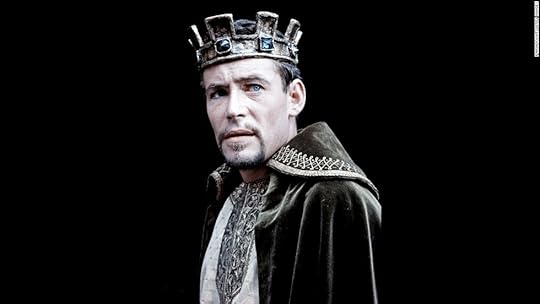
This is where the wild ride starts, as Henry and his wife, Eleanor of Aquitaine created the devil's brood, out of which arose Richard I and John (who doesn't need a numeral after his name because there will never be another King John). Here the book does try a bit to give John some credit for something, but boooo-hisss-snarl, he really was the Darth Vader of his time.
Henry III came next, followed by the majestic Edward I, the Steve Jobs of his day. You want to rescue a country from its incompetent overseers? Produce kick-ass Edward. Exciting stuff.
I enjoyed the book, but I deeply disagree with the author's contention that Richard II was the end of the Plantagenets. Not! The Lancasters and Yorks were Plantas also, but I get the idea that the book should end with the downfall of another wonky family member (and so Jones can write separate books on that Roses thing). In fact, I found my knowledge of Richard II was not that good, so the last chapter was rather enlightening.
And yes, I think of Mr. Whishaw when I read about Richard II.
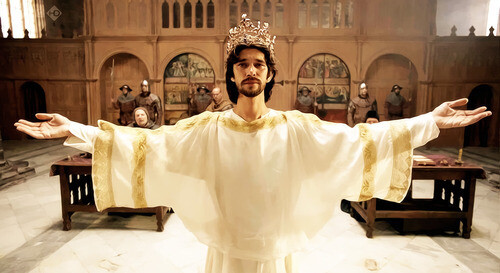
All in all, a very good book on an extraordinary family. The writing involved me and made history more accessible.
Book Season = Winter (furs and rubies)
Spot-on description of Henry III. These occasional sentences from author Dan Jones made this book a lively read, although given the subject matter, any re-telling of the illustrious Plantagenet family would probably not be on the boring side.
And let me plant my flag right now: I am a Plantagenet-ista. Loved this dynasty, from Henry II to Richard III. Not the selfish Tudors or the Teutonic Hanovers or the wilty Windsors for me. No Sir, I stand firmly behind the family of Edward Longshanks, Richard The Lionheart, and John Lackland. Damn you, Henry VII!
The book begins with the infamous White Ship disaster, which sent Henry I's heir and the next-in-line heir to the bottom of the sea. Since Henry had very likely been the murderer of his older brother William II, this was the old sins of the father revisited on the sons. In any case, the "Age of Shipwreck" had begun, as chaos ruled the land when Henry I passed away. At this point, we speed through the whole Stephen-or-Matilda as ruler to get to Henry II, the first Plantagenet King.
And yes, I always think of Mr. O'Toole when I read about Henry II.
This is where the wild ride starts, as Henry and his wife, Eleanor of Aquitaine created the devil's brood, out of which arose Richard I and John (who doesn't need a numeral after his name because there will never be another King John). Here the book does try a bit to give John some credit for something, but boooo-hisss-snarl, he really was the Darth Vader of his time.
Henry III came next, followed by the majestic Edward I, the Steve Jobs of his day. You want to rescue a country from its incompetent overseers? Produce kick-ass Edward. Exciting stuff.
I enjoyed the book, but I deeply disagree with the author's contention that Richard II was the end of the Plantagenets. Not! The Lancasters and Yorks were Plantas also, but I get the idea that the book should end with the downfall of another wonky family member (and so Jones can write separate books on that Roses thing). In fact, I found my knowledge of Richard II was not that good, so the last chapter was rather enlightening.
And yes, I think of Mr. Whishaw when I read about Richard II.
All in all, a very good book on an extraordinary family. The writing involved me and made history more accessible.
Book Season = Winter (furs and rubies)

November 15, 2014
"Fair cousin, since it pleases you, it pleases us well," said Richard. Then he formally surrendered himself to his cousin. He and Salisbury were given two very poor horses to ride, and they set out with Bolingbroke, under armed guard, for Chester. The castle was no longer the military stronghold of a paranoid king but his prison.
The Plantagenets is a wonderful narrative history, one which paints vividly the longest dynasty in English annals 1154-1399. The book opens with the maritime disaster which befell Henry I's heir and it ends 250 years later in 1399 with Richard II being removed from office. All the requisite crowns are honored: Henry II (my favorite) Richard I, John, Henry III, Edward I, Edward II, Edward III, Richard II. There are countless overseas wars, Barons' revolts, the Magna Carta, Excommunications, Crusades, ransoms, child brides, taxes, defaults, plagues, peasants going apeshit, Arthurian cults, and bedroom revolutions: how many times can spouses and children lift the sword to depose a faltering Crown?
My chief complaint remains the lack of footnotes. There is also a vaccuum concerning the historical perspective and the rising and falling tides of such.
There are a handful of films indispensable to this period, this list sadly doesn't include Becket which is marvelous cinema but rubbish history.
1) Lion In Winter
2) Edward II - Tilda Swinton and a legion of penises.
3) History Boys - well, because.
The Plantagenets is a wonderful narrative history, one which paints vividly the longest dynasty in English annals 1154-1399. The book opens with the maritime disaster which befell Henry I's heir and it ends 250 years later in 1399 with Richard II being removed from office. All the requisite crowns are honored: Henry II (my favorite) Richard I, John, Henry III, Edward I, Edward II, Edward III, Richard II. There are countless overseas wars, Barons' revolts, the Magna Carta, Excommunications, Crusades, ransoms, child brides, taxes, defaults, plagues, peasants going apeshit, Arthurian cults, and bedroom revolutions: how many times can spouses and children lift the sword to depose a faltering Crown?
My chief complaint remains the lack of footnotes. There is also a vaccuum concerning the historical perspective and the rising and falling tides of such.
There are a handful of films indispensable to this period, this list sadly doesn't include Becket which is marvelous cinema but rubbish history.
1) Lion In Winter
2) Edward II - Tilda Swinton and a legion of penises.
3) History Boys - well, because.

February 20, 2016
It's often been observed that Americans have a fascination with royalty and many are prone to fawning over the royals from the mother country more than their own subjects do. Probably modern British citizens have become jaded and cynical about their living relics in Buckingham, while we Yanks still find the idea of an "absolute ruler" by birthright foreign and exotic. (And let's be honest, lots of Americans would probably be happy to live under a monarchy if they thought the monarch shared their values.)
Most of us, however, not having grown up with English kings and queens as part of our national history, can only name a few of them. There's good old King George, of course. And Henry VIII. And the king from Robin Hood. And the guy in Shakespeare's play... And, umm.... no, King Arthur doesn't count. Look, English kings are a long string of Henrys and Edwards and Richards and Johns. Who can differentiate between them?
The Plantagenets will help you out (though honestly, I still have trouble keeping all the various Edwards straight). And it's a really interesting read for anyone interested in history or the foundations of the British empire.
The Plantagenet line ruled from 1154 (Henry II) to 1399 (Richard II) - the High Middle Ages, more or less. They were the immediate descendants of William the Conqueror. The line ended (or really, split) into the two branches of Lancaster and York, which led the War of the Roses a few generations later. While George R.R. Martin is known to have loosely based his epic on that conflict, you'll learn in this book that the Plantagenets and their rivals were playing a game of thrones long before then.
Uneasy Lies the Head
The king (or queen) of England has never rested easy. Even before the Magna Carta was signed by the unpopular King John, the king could never take his power for granted. Reading The Plantagenets, you have to feel sorry for the kings, even the really terrible ones. They had troubles like any modern ruler - peers and parliaments that wouldn't give them the money they wanted to go crusading or waging war in France, relatives scheming to take their throne (half the time it was the king's own brothers or even sons rebelling against him!), and while some kings enjoyed periods of popularity and absolute rule, a downfall was never far away. More than one king was basically reduced to a puppet, sometimes in danger of being imprisoned or beheaded by his own people. The king couldn't just do what he wanted, and those who did inevitably discovered that payback is a bitch.
This is probably more relevant to American history than you might think. England, it is clear, had a long, long history of curbing its more excessive rulers. A king could get away with an awful lot, but London would turn on you, the people would rise against you, your own family would depose you, if you went too far. So when the American colonists rebelled against King George (by which time the power of the monarchy was already a shadow of the days when a king or queen could simply say "Off with his head!"), they were following a tradition that went back to even before the Magna Carta.
Who were the Plantagenets? Here's a quick line-up, but of course the book goes into far more detail, making each of these characters living, breathing, flawed historical figures. The author, Dan Jones, passes a verdict on each of them, generally the one popularized by historical consensus, but whether a king is now regarded as "good" or "bad," all of them had moments of glory (or at least fortitude), and moments of ignominy.
Henry II

Generally reckoned as the first Plantagenet. A grandson of William the Conqueror, and married to Eleanor of Aquitaine (who continued to be an influential figure even after his death). Started the long, multigenerational conflict with France, and raised England from a little island kingdom to a major European power. Whether or not he actually had Thomas Becket killed is still debatable, but he never actually said "Will no one rid me of this troublesome priest?"
Richard I
"Richard the Lionhearted," who rebelled against his old man, then took his crown upon Henry's death, then went off crusading in the Holy Lands, leading England to be ruined by his younger brother, King John, who was openly treasonous and by all accounts a coward and a weasel pretty much his entire life. And yet, when Richard returned, he forgave his brother, and John assumed the throne after his death. This wasn't great for England. Richard is the Robin Hood guy. He also exchanged correspondence with his arch-rival in Jerusalem, Saladin, but the two never actually met, counter to various historical fantasies.

John

While historians today debate whether he really deserved his reputation as the villain of Robin Hood legends, he was by all accounts not one of England's nicer kings, and certainly not its most competent. He fought (another) losing war against France, was mockingly called "John Softsword" by his contemporaries, and is the king famously forced to sign the Magna Carta.
The remaining Plantagenet kings - Henry III, Edward I, Edward II, Edward III, and Richard II, whose tyranny and ineptitude led to a coup in which he was deposed and died in a dungeon, each have their own interesting stories. Besides their rulership, in which the economy of England rose and fell, and sometimes it was peace and prosperity and other times it was nothing but famine, civil wars, and the Black Death, they all had marital or family problems, periodic invasions of or by France, Scotland, Ireland, and Wales (the long grinding conflict with those countries also began with the Plantagenets), and then of course there was the Church, which long before Henry VIII was vexing and occasionally excommunicating British monarchs who didn't want to do what the Pope said.
This was a really fascinating read, and while I still have trouble sorting out the various Henrys and Edwards, I have a better understanding of the pivotal events in British history and what its rulers did to shape the history that followed.
Most of us, however, not having grown up with English kings and queens as part of our national history, can only name a few of them. There's good old King George, of course. And Henry VIII. And the king from Robin Hood. And the guy in Shakespeare's play... And, umm.... no, King Arthur doesn't count. Look, English kings are a long string of Henrys and Edwards and Richards and Johns. Who can differentiate between them?
The Plantagenets will help you out (though honestly, I still have trouble keeping all the various Edwards straight). And it's a really interesting read for anyone interested in history or the foundations of the British empire.
The Plantagenet line ruled from 1154 (Henry II) to 1399 (Richard II) - the High Middle Ages, more or less. They were the immediate descendants of William the Conqueror. The line ended (or really, split) into the two branches of Lancaster and York, which led the War of the Roses a few generations later. While George R.R. Martin is known to have loosely based his epic on that conflict, you'll learn in this book that the Plantagenets and their rivals were playing a game of thrones long before then.
Uneasy Lies the Head
The king (or queen) of England has never rested easy. Even before the Magna Carta was signed by the unpopular King John, the king could never take his power for granted. Reading The Plantagenets, you have to feel sorry for the kings, even the really terrible ones. They had troubles like any modern ruler - peers and parliaments that wouldn't give them the money they wanted to go crusading or waging war in France, relatives scheming to take their throne (half the time it was the king's own brothers or even sons rebelling against him!), and while some kings enjoyed periods of popularity and absolute rule, a downfall was never far away. More than one king was basically reduced to a puppet, sometimes in danger of being imprisoned or beheaded by his own people. The king couldn't just do what he wanted, and those who did inevitably discovered that payback is a bitch.
This is probably more relevant to American history than you might think. England, it is clear, had a long, long history of curbing its more excessive rulers. A king could get away with an awful lot, but London would turn on you, the people would rise against you, your own family would depose you, if you went too far. So when the American colonists rebelled against King George (by which time the power of the monarchy was already a shadow of the days when a king or queen could simply say "Off with his head!"), they were following a tradition that went back to even before the Magna Carta.
Who were the Plantagenets? Here's a quick line-up, but of course the book goes into far more detail, making each of these characters living, breathing, flawed historical figures. The author, Dan Jones, passes a verdict on each of them, generally the one popularized by historical consensus, but whether a king is now regarded as "good" or "bad," all of them had moments of glory (or at least fortitude), and moments of ignominy.
Henry II
Generally reckoned as the first Plantagenet. A grandson of William the Conqueror, and married to Eleanor of Aquitaine (who continued to be an influential figure even after his death). Started the long, multigenerational conflict with France, and raised England from a little island kingdom to a major European power. Whether or not he actually had Thomas Becket killed is still debatable, but he never actually said "Will no one rid me of this troublesome priest?"
Richard I
"Richard the Lionhearted," who rebelled against his old man, then took his crown upon Henry's death, then went off crusading in the Holy Lands, leading England to be ruined by his younger brother, King John, who was openly treasonous and by all accounts a coward and a weasel pretty much his entire life. And yet, when Richard returned, he forgave his brother, and John assumed the throne after his death. This wasn't great for England. Richard is the Robin Hood guy. He also exchanged correspondence with his arch-rival in Jerusalem, Saladin, but the two never actually met, counter to various historical fantasies.
John
While historians today debate whether he really deserved his reputation as the villain of Robin Hood legends, he was by all accounts not one of England's nicer kings, and certainly not its most competent. He fought (another) losing war against France, was mockingly called "John Softsword" by his contemporaries, and is the king famously forced to sign the Magna Carta.
The remaining Plantagenet kings - Henry III, Edward I, Edward II, Edward III, and Richard II, whose tyranny and ineptitude led to a coup in which he was deposed and died in a dungeon, each have their own interesting stories. Besides their rulership, in which the economy of England rose and fell, and sometimes it was peace and prosperity and other times it was nothing but famine, civil wars, and the Black Death, they all had marital or family problems, periodic invasions of or by France, Scotland, Ireland, and Wales (the long grinding conflict with those countries also began with the Plantagenets), and then of course there was the Church, which long before Henry VIII was vexing and occasionally excommunicating British monarchs who didn't want to do what the Pope said.
This was a really fascinating read, and while I still have trouble sorting out the various Henrys and Edwards, I have a better understanding of the pivotal events in British history and what its rulers did to shape the history that followed.

December 3, 2025
What a fun read! The Plantagenets: The Warrior Kings and Queens Who Made England is an informative and accessible history of one of England’s most impactful royal houses and the historic figures that shaped this period.
This is my third book by Dan Jones that I’ve read, and it might be my favorite. Jones takes the reader through dynastic succession crises and Civil Wars, foreign wars in France and the Holy Land, and court intrigue at home. He shares the stories of beloved kings and queens such as Elenor of Aquitaine, Richard the Lionheart and Edward III. We also see some not as successful individuals such as the real King John that some readers might recognize from different Robin Hood stories in movies or other media. This is narrative history too, told in chronological order so it’s not just one biography after the next and very accessible for non-academic historians. The Plantagenets is a must read for anyone interested in medieval history.
This is my third book by Dan Jones that I’ve read, and it might be my favorite. Jones takes the reader through dynastic succession crises and Civil Wars, foreign wars in France and the Holy Land, and court intrigue at home. He shares the stories of beloved kings and queens such as Elenor of Aquitaine, Richard the Lionheart and Edward III. We also see some not as successful individuals such as the real King John that some readers might recognize from different Robin Hood stories in movies or other media. This is narrative history too, told in chronological order so it’s not just one biography after the next and very accessible for non-academic historians. The Plantagenets is a must read for anyone interested in medieval history.

March 8, 2017
It is a narrative history and it tells some of the great stories of England. They include the civil war between Stephen and Matilda, the murder of Thomas Becket by Henry II’s knights, the great war of 1173 to 1174, Richard the First’s wars against Saladin on the Third Crusade, the Baron’s War against King John and the ratification of the Magna Carta, Edward the First’s campaigns in Wales and Scotland, Edward the Third’s provocation of the Hundred Years War in which he fought alongside his son the Black Prince and captured the King of France, Richard the Second’s heroism against Watt Tyler’s rebels during the Peasants Revolt of 1381.
~From the Preface
With this sweeping history of England’s great medieval dynasty Dan Jones covers nearly three centuries of time and eight generations of the Plantagenet line. Yet, despite all the ground he had to cover, all the monarchs, wars, intrigues, triumphs, treaties, tyrannies, and rebellions, Jones kept a lively pace while delivering clear, concise, easily followed information, and never lost sight of spinning this plethora of information into truly gripping stories.
Jones begins with the disastrous loss of Henry the First’s only legitimate male heir in the sinking of the White Ship in 1120, which led directly to the civil war known as The Anarchy. This brutal war of succession between Stephen Blois, (Henry I’s nephew and the last Norman king) and Matilda, the daughter of Henry I, raged for two decades before ending in a treaty that guaranteed that Matilda’s son Henry would succeed Stephen. He took the throne as Henry II, the first of the Plantagenet kings in 1154. Jones ends with the death of Richard II (Henry’s five-great grandson) in prison in 1400, almost certainly murdered at the order of his cousin, Henry IV, who usurped his throne. (Though there were a few Plantagenets left to cover beyond that, Jones saved their stories for another book, The War of the Roses: The Fall of the Plantagenets and the Rise of the Tudors.)
Between those posts Jones brilliantly spins out fascinating tales of these medieval kings. There are powerful, martial monarchs, like Henry II, whose Angevin Empire covered roughly all of England, half of France, and parts of Ireland and Wales, Edward I, the Hammer of the Scots, who crushed Wales and dominated Scotland, and Edward III, who launched the Hundred Years War and nearly succeeded in recreating Henry the Second’s empire. And there are the weak and terrible kings, like John, who lost most of his father’s continental empire while alienating his barons so badly they were willing to back a French invasion, Edward II, so inept a ruler that he was deposed by his own queen and teenage son, and Richard II whose tyranny led to his throne being usurped by his cousin. And, of course, there is the enigma of Richard I, who, while remembered as a hero king because of his crusading, left behind nothing of value other than his personal legend, not even an heir, so that his throne passed to his monumentally inept brother John.
The Plantagenets: The Warrior Kings and Queens Who Made England is fascinating, informative, and extremely well told history. If you have even a passing interest in medieval history consider this book a necessity.
~From the Preface
With this sweeping history of England’s great medieval dynasty Dan Jones covers nearly three centuries of time and eight generations of the Plantagenet line. Yet, despite all the ground he had to cover, all the monarchs, wars, intrigues, triumphs, treaties, tyrannies, and rebellions, Jones kept a lively pace while delivering clear, concise, easily followed information, and never lost sight of spinning this plethora of information into truly gripping stories.
Jones begins with the disastrous loss of Henry the First’s only legitimate male heir in the sinking of the White Ship in 1120, which led directly to the civil war known as The Anarchy. This brutal war of succession between Stephen Blois, (Henry I’s nephew and the last Norman king) and Matilda, the daughter of Henry I, raged for two decades before ending in a treaty that guaranteed that Matilda’s son Henry would succeed Stephen. He took the throne as Henry II, the first of the Plantagenet kings in 1154. Jones ends with the death of Richard II (Henry’s five-great grandson) in prison in 1400, almost certainly murdered at the order of his cousin, Henry IV, who usurped his throne. (Though there were a few Plantagenets left to cover beyond that, Jones saved their stories for another book, The War of the Roses: The Fall of the Plantagenets and the Rise of the Tudors.)
Between those posts Jones brilliantly spins out fascinating tales of these medieval kings. There are powerful, martial monarchs, like Henry II, whose Angevin Empire covered roughly all of England, half of France, and parts of Ireland and Wales, Edward I, the Hammer of the Scots, who crushed Wales and dominated Scotland, and Edward III, who launched the Hundred Years War and nearly succeeded in recreating Henry the Second’s empire. And there are the weak and terrible kings, like John, who lost most of his father’s continental empire while alienating his barons so badly they were willing to back a French invasion, Edward II, so inept a ruler that he was deposed by his own queen and teenage son, and Richard II whose tyranny led to his throne being usurped by his cousin. And, of course, there is the enigma of Richard I, who, while remembered as a hero king because of his crusading, left behind nothing of value other than his personal legend, not even an heir, so that his throne passed to his monumentally inept brother John.
The Plantagenets: The Warrior Kings and Queens Who Made England is fascinating, informative, and extremely well told history. If you have even a passing interest in medieval history consider this book a necessity.

December 10, 2014
It's no secret that George R. R. Martin based much of his world's politicking on the Plantagenet period.
What I learned from this book: the Plantagenets were so batshit crazy that they make the situations in Game of Thrones (ASoIaF) look comparatively mundane.
To start with, I had no idea that Robin Hood painted such an accurate portrait of John "Lack-land" "Soft-sword". He really did start penalizing poaching on forest lands to procure additional money, and actually did try to usurp Richard's throne whilst he was on the Crusades. He even tried to bribe Richard's jailers to hold him for longer. He also managed to get excommunicated, and to make matters worse, his reaction was to triumphantly seize church land and hold family members of the church for ransom. He also managed to lose practically all of the Norman territories to France. He even murdered his nephew on Easter, apparently because it seemed like a good idea at the time. (It wasn't, as Philip of France started every parley with asking him to give over his nephew.) Basically, John was a scheming slimeball who was not even remotely as crafty or clever as he believed himself to be. I was unavoidably reminded of one Edmund Blackadder.
In case you had any reverence for the Magna Carta, it originated as a failed treaty between John and his lords.
And then there's Edward II, who gave so many honours and jewels and important jobs to his "dear friend" Piers Gaveston that everyone else in the kingdom, including his wife, started to feel left out. Jones takes the conservative view that Edward and Gaveston might just have been Really (Really) Good Friends, but I have my doubts. If only the lords had taken the sensible course advised by Mitchell and Webb, yet another civil war might have been avoided.
And don't forget Richard II, whose early life and revenge schemes are so dramatic and bizarre that they make Joffrey and Littlefinger look like conservative amateurs.
As far as I could tell, every Plantagenet story has a fitting twist to the tale. For example, take the story of Stephen and Matilda (well, Empress Matilda. Confusingly, there are at least four important Matildas in the full story). When Henry I realized he had no male heir, he chose his daughter Matilda as his successor. After all, she was already an empress and an experienced administrator, even if she did have the undeniable character flaw of being female. Henry I, sensing storms ahead, made all his barons swear fealty to his daughter Matilda--twice. Even so, as soon as he died, Cousin Stephen stepped in, and, being male, promptly swayed the lords to his banner. After a decades-long civil war, Matilda retreated to France--and sent over her son, Henry II, who had the sterling qualifications of not only being the rightful heir, but also of being male. After a few brief and decisive victories, Stephen was forced to take the humiliating course of naming Henry II as heir over his own children. He died knowing his attempt at dynasty had failed, and that Matilda's long game had paid out.
I don't think a single Plantagenet died without a certain amount of dramatic irony, or some variety of contention over the succession.
Combined with some of the other histories I've read, I've come to one firm conclusion: never, ever name a prospective British monarch "Arthur." He won't make it to his twenties. It's actually impressive how many Arthurs have failed to make it to the throne.
Dan Jones packs a heck of a lot of history into his book, and he sacrifices neither entertainment, humour, nor accuracy. I've recently read a spate of what I consider truly awful pop history, where it was impossible to determine what was from the author's imagination and what was from some dubious and hyperbolic source. While not a pleasant experience, it certainly increased my admiration for Jones' Plantagenets. I don't know how he manages it, but Jones manages to conversationally attribute his information to their sources and even discuss conflicting accounts without breaking the flow, the suspense, or even the story. When the truth is in doubt (which is often, given the time period), Jones admits the uncertainty and lays out all the facts, then, with a wry humour, plumps for the most conservative of the possibilities--all while providing the reader with the ammunition for more sensational conclusions.
My only major complaint is that he stopped at Bolingbroke.
Dear Mr. Jones:
In your forward, you promise us another volume.
Please, can you publish it soon? I'll be waiting.
What I learned from this book: the Plantagenets were so batshit crazy that they make the situations in Game of Thrones (ASoIaF) look comparatively mundane.
To start with, I had no idea that Robin Hood painted such an accurate portrait of John "Lack-land" "Soft-sword". He really did start penalizing poaching on forest lands to procure additional money, and actually did try to usurp Richard's throne whilst he was on the Crusades. He even tried to bribe Richard's jailers to hold him for longer. He also managed to get excommunicated, and to make matters worse, his reaction was to triumphantly seize church land and hold family members of the church for ransom. He also managed to lose practically all of the Norman territories to France. He even murdered his nephew on Easter, apparently because it seemed like a good idea at the time. (It wasn't, as Philip of France started every parley with asking him to give over his nephew.) Basically, John was a scheming slimeball who was not even remotely as crafty or clever as he believed himself to be. I was unavoidably reminded of one Edmund Blackadder.
In case you had any reverence for the Magna Carta, it originated as a failed treaty between John and his lords.
And then there's Edward II, who gave so many honours and jewels and important jobs to his "dear friend" Piers Gaveston that everyone else in the kingdom, including his wife, started to feel left out. Jones takes the conservative view that Edward and Gaveston might just have been Really (Really) Good Friends, but I have my doubts. If only the lords had taken the sensible course advised by Mitchell and Webb, yet another civil war might have been avoided.
And don't forget Richard II, whose early life and revenge schemes are so dramatic and bizarre that they make Joffrey and Littlefinger look like conservative amateurs.
As far as I could tell, every Plantagenet story has a fitting twist to the tale. For example, take the story of Stephen and Matilda (well, Empress Matilda. Confusingly, there are at least four important Matildas in the full story). When Henry I realized he had no male heir, he chose his daughter Matilda as his successor. After all, she was already an empress and an experienced administrator, even if she did have the undeniable character flaw of being female. Henry I, sensing storms ahead, made all his barons swear fealty to his daughter Matilda--twice. Even so, as soon as he died, Cousin Stephen stepped in, and, being male, promptly swayed the lords to his banner. After a decades-long civil war, Matilda retreated to France--and sent over her son, Henry II, who had the sterling qualifications of not only being the rightful heir, but also of being male. After a few brief and decisive victories, Stephen was forced to take the humiliating course of naming Henry II as heir over his own children. He died knowing his attempt at dynasty had failed, and that Matilda's long game had paid out.
I don't think a single Plantagenet died without a certain amount of dramatic irony, or some variety of contention over the succession.
Combined with some of the other histories I've read, I've come to one firm conclusion: never, ever name a prospective British monarch "Arthur." He won't make it to his twenties. It's actually impressive how many Arthurs have failed to make it to the throne.
Dan Jones packs a heck of a lot of history into his book, and he sacrifices neither entertainment, humour, nor accuracy. I've recently read a spate of what I consider truly awful pop history, where it was impossible to determine what was from the author's imagination and what was from some dubious and hyperbolic source. While not a pleasant experience, it certainly increased my admiration for Jones' Plantagenets. I don't know how he manages it, but Jones manages to conversationally attribute his information to their sources and even discuss conflicting accounts without breaking the flow, the suspense, or even the story. When the truth is in doubt (which is often, given the time period), Jones admits the uncertainty and lays out all the facts, then, with a wry humour, plumps for the most conservative of the possibilities--all while providing the reader with the ammunition for more sensational conclusions.
My only major complaint is that he stopped at Bolingbroke.
Dear Mr. Jones:
In your forward, you promise us another volume.
Please, can you publish it soon? I'll be waiting.

July 28, 2023
Perfectly paced. Lots and lots of historical figures, but the narrative never gets bogged down with names and unnecessary details. I also appreciated his balanced judgement of the Plantagenet kings and his analysis of the effects of their 250 year reign. Jones has become somewhat of a celebrity in the historical field, and this is a strong illustration of why that is. I think he's even producing history tv shows now, and recently published a historical novel of his own. That had me a little concerned, but after reading this I think he has the writing chops to pull it off. I'll be diving right into his follow up work which covers the War of the Roses. Strong four stars. Flirted with five star territory.

April 11, 2013
Even though the Tudors are known for their drama-filled (albeit, somewhat short) dynasty; there was already a family making waves before them: the Plantagenets. Dan Jones explains those historical figures who paved the road for England in, “The Plantagenets: The Warrior Kings and Queens Who Made England”.
Jones states in his introduction to “The Plantagenets” that his work follows that of a narrative history. This means that although less scholarly and academic; one can at least hope for an exciting (almost fiction-like) sweep of events. This, however, would be a false expectation for “The Plantagenets”. Not only is Jones’s writing shallow in the academic realm, but it isn’t heart-thumping either.
Jones has a poorly-written, flat style which follows a “Person A did this and then that”-style. The flow is unnatural, the reader is not engaged, and the historical figures are not revealed. “The Plantagenets” doesn’t feature any new information while also being deadpan about the information it does give. Furthermore, the chapters in “The Plantagenets” are short and abrupt. Don’t expect an overall history of the Plantagenets as the format is one which instead focuses on one key figure or event per chapter. Although chronological, Jones doesn’t dive deep enough, cuts off the chapters too quickly, and has a choppy presentation. This leaves the reader with many unanswered questions.
Jones is also guilty of filling his text with speculation and phrases divulging what figures “thought”. Unless he has access to top-secret diaries, he does NOT know what anyone thought. Not to mention, information which does sound solid is not properly sourced with facts mentioned similar to, “A contemporary stated…” but the contemporary is never detailed. To say the least, much of “The Plantagenets” is an overview and one which doesn’t even feel credible.
As “The Plantagenets” progresses, Jones finds a more confident path in his storytelling. However, the text is merely that: a retelling of events which reads like a high school student’s history report. Plus, the work is inconsistent with some chapters being exponentially more interesting than others (which also demonstrates Jones’s own biases).
The second half of “The Plantagenets” is markedly better with its focus on Edward II and Edward III. The text flows much more smoothly and is more compelling than earlier chapters. Even despite this minor momentum kick, however; Jones’s work contains blatant errors (which the seasoned history reader will catch), plus some repetition in storytelling. Jones also insists on quoting secondary sources, again making the work feel like a “recap”.
These negative points roll into an overly-rushed conclusion which instead of detailing the drama between Richard II and Henry Bolingbroke in a memorable way; instead focuses more on Jones’s clear dislike for Richard. The epilogue of “The Plantagenets” also fails to sum-up the work in a resonating way.
For staunch history lovers, “The Plantagenets” lacks proper citation notes and sources with only a brief (and somewhat unclear) list of suggested “further reading”. A section of color plates exists but in black and white and again: lacking detail.
Sadly, “The Plantagenets” was a huge let down and is only suggested for those new to the topic seeking a lighter fair versus historical depth. The storytelling is weak and inaccuracies exist which should be kept in mind when reading “The Plantagenets”. I might consider the author again but only as a book I would skim and wouldn’t be jumping over hurdles for it.
Jones states in his introduction to “The Plantagenets” that his work follows that of a narrative history. This means that although less scholarly and academic; one can at least hope for an exciting (almost fiction-like) sweep of events. This, however, would be a false expectation for “The Plantagenets”. Not only is Jones’s writing shallow in the academic realm, but it isn’t heart-thumping either.
Jones has a poorly-written, flat style which follows a “Person A did this and then that”-style. The flow is unnatural, the reader is not engaged, and the historical figures are not revealed. “The Plantagenets” doesn’t feature any new information while also being deadpan about the information it does give. Furthermore, the chapters in “The Plantagenets” are short and abrupt. Don’t expect an overall history of the Plantagenets as the format is one which instead focuses on one key figure or event per chapter. Although chronological, Jones doesn’t dive deep enough, cuts off the chapters too quickly, and has a choppy presentation. This leaves the reader with many unanswered questions.
Jones is also guilty of filling his text with speculation and phrases divulging what figures “thought”. Unless he has access to top-secret diaries, he does NOT know what anyone thought. Not to mention, information which does sound solid is not properly sourced with facts mentioned similar to, “A contemporary stated…” but the contemporary is never detailed. To say the least, much of “The Plantagenets” is an overview and one which doesn’t even feel credible.
As “The Plantagenets” progresses, Jones finds a more confident path in his storytelling. However, the text is merely that: a retelling of events which reads like a high school student’s history report. Plus, the work is inconsistent with some chapters being exponentially more interesting than others (which also demonstrates Jones’s own biases).
The second half of “The Plantagenets” is markedly better with its focus on Edward II and Edward III. The text flows much more smoothly and is more compelling than earlier chapters. Even despite this minor momentum kick, however; Jones’s work contains blatant errors (which the seasoned history reader will catch), plus some repetition in storytelling. Jones also insists on quoting secondary sources, again making the work feel like a “recap”.
These negative points roll into an overly-rushed conclusion which instead of detailing the drama between Richard II and Henry Bolingbroke in a memorable way; instead focuses more on Jones’s clear dislike for Richard. The epilogue of “The Plantagenets” also fails to sum-up the work in a resonating way.
For staunch history lovers, “The Plantagenets” lacks proper citation notes and sources with only a brief (and somewhat unclear) list of suggested “further reading”. A section of color plates exists but in black and white and again: lacking detail.
Sadly, “The Plantagenets” was a huge let down and is only suggested for those new to the topic seeking a lighter fair versus historical depth. The storytelling is weak and inaccuracies exist which should be kept in mind when reading “The Plantagenets”. I might consider the author again but only as a book I would skim and wouldn’t be jumping over hurdles for it.

September 20, 2014
I grabbed this book from the library because I wanted a crash course in Plantagenet history. The Plantagenets ruled England for over 300 years, beginning with Henry II in 1154, and this book covers most of that time. Henry II's mother was Empress Matilda, the granddaughter of William the Conqueror. I thought it was interesting that the family name came from Henry II's father Geoffrey, who liked to wear the yellow Planta Genista blossoms in his hair, leading to the nickname Geoffrey Plantagenet.
This book was well-researched and went into great detail on the major players of the Plantagenet dynasty. Some parts I skimmed over, while others sections I spent a lot of time on. I enjoyed Empress Matilda's story of how she battled her cousin Stephen of Blois for control of England. While she was never officially crowned queen, she succeeded in getting her son on the throne as the first Plantagenet king. Eleanor of Aquitaine was another fascinating woman who made a huge impact on Europe during her long life. And I can't forget the Edward II/Isabella of France/Piers Gaveston/Hugh Despenser drama! It was drama to rival the Tudors.
This book paints a vivid portrait of English royals between the Norman invasion and the Tudor takeover. (Though, it did not go as far as Richard III; he needs his own book!) Recommended for anyone interested in an easy to read history of this time period.
This book was well-researched and went into great detail on the major players of the Plantagenet dynasty. Some parts I skimmed over, while others sections I spent a lot of time on. I enjoyed Empress Matilda's story of how she battled her cousin Stephen of Blois for control of England. While she was never officially crowned queen, she succeeded in getting her son on the throne as the first Plantagenet king. Eleanor of Aquitaine was another fascinating woman who made a huge impact on Europe during her long life. And I can't forget the Edward II/Isabella of France/Piers Gaveston/Hugh Despenser drama! It was drama to rival the Tudors.
This book paints a vivid portrait of English royals between the Norman invasion and the Tudor takeover. (Though, it did not go as far as Richard III; he needs his own book!) Recommended for anyone interested in an easy to read history of this time period.

August 10, 2019
3.5 COMFY & ENGAGED
Dan Jones tells the story of the first 8 Plantagenet monarchs that ruled England between 1154 and 1399, beginning with Henry I and ending at the fall of Richard II. Each monarch in turn has his story told; which wars he fought in, the land he gained and lost, who he married and who his children were. Throughout the book it became apparent in the tone of the author’s writing that there were monarchs he disliked and liked. In fighting, jealousy, resentment and hunger for more were uneasy bed fellows within the royal household, more than once, for example, Dan Jones highlights that in Henry II reign as 3 of his oldest sons gained maturity and his wife began to resent the erosion of her power led to betrayal and heartache for a father and king. We all know families can be sites of joy and potent loyalty, but they can also be the site of friction and the most severe betrayals, and when that family rules over land and people the ripples of that friction/betrayal are felt far and wide.
I would have loved to learn more about the powerful spouses and confidants behind each reign, but this book has done well in whetting my appetite for more.
This book is not academically referenced, although the author does utilise historical records and extracts from letters/diaries. I have to say I would have liked it if the author had provided references simply because it would have made it easier for me to look up what books I may like to read.
I also would have liked the layout of the chapters and paragraphs to be a little different, as a personal preference when it comes to eBooks, I’m not overly keen on a stream of writing on a page and prefer clearly visible and reasonably sized paragraphs, now this doesn’t happen throughout but earlier in the book it does - that being said this doesn’t take away from the fact that the writing is overall engaging.
99p on Amazon 10th August 2019
Dan Jones tells the story of the first 8 Plantagenet monarchs that ruled England between 1154 and 1399, beginning with Henry I and ending at the fall of Richard II. Each monarch in turn has his story told; which wars he fought in, the land he gained and lost, who he married and who his children were. Throughout the book it became apparent in the tone of the author’s writing that there were monarchs he disliked and liked. In fighting, jealousy, resentment and hunger for more were uneasy bed fellows within the royal household, more than once, for example, Dan Jones highlights that in Henry II reign as 3 of his oldest sons gained maturity and his wife began to resent the erosion of her power led to betrayal and heartache for a father and king. We all know families can be sites of joy and potent loyalty, but they can also be the site of friction and the most severe betrayals, and when that family rules over land and people the ripples of that friction/betrayal are felt far and wide.
I would have loved to learn more about the powerful spouses and confidants behind each reign, but this book has done well in whetting my appetite for more.
This book is not academically referenced, although the author does utilise historical records and extracts from letters/diaries. I have to say I would have liked it if the author had provided references simply because it would have made it easier for me to look up what books I may like to read.
I also would have liked the layout of the chapters and paragraphs to be a little different, as a personal preference when it comes to eBooks, I’m not overly keen on a stream of writing on a page and prefer clearly visible and reasonably sized paragraphs, now this doesn’t happen throughout but earlier in the book it does - that being said this doesn’t take away from the fact that the writing is overall engaging.
99p on Amazon 10th August 2019

February 28, 2017
I'm really glad I read this book. It opened up an era of history I knew nothing about. My favorite parts:
- Henry II vs Thomas Beckett, which is worth the price of the book by itself. Fascinating story.
- The real story behind the legend of Richard the Lionheart and his evil brother John.
- For the first time I feel like I have a grasp on the Crusades. Before this my understanding of them was pretty vague.
- I love how the English kings, like our presidents, try to wrap their own reigns into the myth and history of their predecessors.
Lots of great stories. 300 years of history told pretty well in 500 pages.
- Henry II vs Thomas Beckett, which is worth the price of the book by itself. Fascinating story.
- The real story behind the legend of Richard the Lionheart and his evil brother John.
- For the first time I feel like I have a grasp on the Crusades. Before this my understanding of them was pretty vague.
- I love how the English kings, like our presidents, try to wrap their own reigns into the myth and history of their predecessors.
Lots of great stories. 300 years of history told pretty well in 500 pages.

March 8, 2013
I am a self proclaimed history geek. Although my first love was, and always will be, Historical Fiction, over the years I have developed an intense love affair with many well written History books of the non-fiction variety. I have said many time, on here no less, that a good Historical Fiction book should peak my interest and make me seek out factual books on the given subject to fill in the gaps and give me the "true" picture. As a result, I am always excited when I found one of the said History books that I can not only enjoy, but recommend. The Plantagenets: The Warrior Kings and Queens who made England by British historian Dan Jones is just such a book.
When it comes to history, nothing is more fascinating to me than the history of the families designated as Royalty and their nobles. If you look throughout history, there are not many families or dynasties that you can find who would be more fascinating than the Plantagenets. From the beginning of their rule in England in the 1100s, to the splintering of their family into the Lancasters and Yorks, and on to the takeover of England by the Tudors, the Plantagenets have had a huge affect on the history of England and Great Britain. To me, they are the dynasty that all other Royalty, English and other, are measured by.
Dan Jones' book begins with the death of Henry I's son William and the demise of Norman rule in England. From there he deftly covers the history of the Plantagenet Dynasty, ending with Henry Bollingbrooke's takeover as Henry IV and the end of the reign of Richard II. Here is a family full of heroes and heroines, crusaders, thieves, murderers. Their lives had tragedies and triumphs. At times they were both brilliant in their rule and careless in their mistakes, but through it all, they made England into a force to be reckoned with. Dan Jones captures all of these events and their consequences and impacts, and he does it with a writing style that reads more like a good story than just the listing of facts and dates. That is perhaps the best thing about this book.....it reads like a good story, not like a textbook. I became so engrossed in the lives of the various members of this ruling family, that I would find that I had been reading for an hour or more without realizing it.
In the end, I enjoyed this one so much that, although I was given a free copy to read for review, I actually spent the $25.00 to buy myself a hardback copy to read and re-read at my leisure. I can say, that almost never happens when I am given a book to read for review. Dan Jones' book, though, is the kind of book that I can see myself enjoying more than one, while also using it as a reference on the Plantagenet Dynasty. My only complaint was that the book ended too soon, leaving out some of the more familiar members of the family. Although I understand the reason to stop at the point that this books ends, I am holding Dan Jones to his "promise" of a second book to finish the tale. I am highly anticipating this second book, and only hope that he meant what he said about writing it and that it comes out soon. This book is highly recommended by me to anyone who is interested in the history of the ruling families of England, but of England and Great Britain itself.
A Huge thanks to Viking Adult and Netgalley for allowing me the privilege of reading this book in exchange for my review.
When it comes to history, nothing is more fascinating to me than the history of the families designated as Royalty and their nobles. If you look throughout history, there are not many families or dynasties that you can find who would be more fascinating than the Plantagenets. From the beginning of their rule in England in the 1100s, to the splintering of their family into the Lancasters and Yorks, and on to the takeover of England by the Tudors, the Plantagenets have had a huge affect on the history of England and Great Britain. To me, they are the dynasty that all other Royalty, English and other, are measured by.
Dan Jones' book begins with the death of Henry I's son William and the demise of Norman rule in England. From there he deftly covers the history of the Plantagenet Dynasty, ending with Henry Bollingbrooke's takeover as Henry IV and the end of the reign of Richard II. Here is a family full of heroes and heroines, crusaders, thieves, murderers. Their lives had tragedies and triumphs. At times they were both brilliant in their rule and careless in their mistakes, but through it all, they made England into a force to be reckoned with. Dan Jones captures all of these events and their consequences and impacts, and he does it with a writing style that reads more like a good story than just the listing of facts and dates. That is perhaps the best thing about this book.....it reads like a good story, not like a textbook. I became so engrossed in the lives of the various members of this ruling family, that I would find that I had been reading for an hour or more without realizing it.
In the end, I enjoyed this one so much that, although I was given a free copy to read for review, I actually spent the $25.00 to buy myself a hardback copy to read and re-read at my leisure. I can say, that almost never happens when I am given a book to read for review. Dan Jones' book, though, is the kind of book that I can see myself enjoying more than one, while also using it as a reference on the Plantagenet Dynasty. My only complaint was that the book ended too soon, leaving out some of the more familiar members of the family. Although I understand the reason to stop at the point that this books ends, I am holding Dan Jones to his "promise" of a second book to finish the tale. I am highly anticipating this second book, and only hope that he meant what he said about writing it and that it comes out soon. This book is highly recommended by me to anyone who is interested in the history of the ruling families of England, but of England and Great Britain itself.
A Huge thanks to Viking Adult and Netgalley for allowing me the privilege of reading this book in exchange for my review.

August 3, 2016
Two-hundred and fifty years of Plantagenet monarchy distilled into a single volume
The Plantagenets: The Warrior Kings and Queens Who Made England, by Dan Jones, is a fascinating gestation on the history of Plantagenet England during the High Middle Ages, and the far-flung places and key world events which were influenced by Plantagenet monarchs from their broad domain, the Angevin empire, which at its height encompassed not only all of England but nearly half of France as well. These exploits include Richard the Lionheart's adventures in Jerusalem during the Second Crusade, when the princes of Europe fought against the brilliant Muslim warrior-king Saladin; the epic existential struggles between the kings of France and England, which Jones explores and explains in vivid detail—especially the early campaigns of the Hundred Years' War and England's incredible early victories at Crecy and Poitiers under Edward III and his son the Black Prince, which helps illuminate some of the causes for the fraught and often hostile relationship between the two nations that would endure all the way up to and through the Napoleonic Wars; England's final subjugation of Wales under the Welsh Prince Llewellyn the Last; the bloody and terrible wars with Scotland, which featured such legendary (or infamous, depending on who you ask) figures as King Edward I, the Hammer of the Scots, also known as Edward the Longshanks, and Scottish national heroes such as Robert the Bruce and William Wallace (this part will be appreciated by fans of the movie Braveheart, which bends the historical record to imply that the future King Edward III was actually the illegitimate son of Wallace and Edward II’s wife Isabella of France, played in the film by the beautiful Sophie Marceau). All of this action takes place against the dramatic backdrop of the constantly shifting and incredibly tumultuous geopolitical scene of Medieval Europe and the Middle East.
From the Western Schism of the Catholic Church, when the Holy See was forcibly moved from Rome to Avignon through the Machiavellian machinations of the French king; to the diplomatic battles between Plantagenet kings and the Vatican (which prefigure Henry VIII's final split with Rome a few centuries later), of which the most notorious was the controversy which exploded after Thomas Beckett, Archbishop of Canterbury and erstwhile friend of Henry II, was murdered in Canterbury Cathedral by Henry’s knights; to the ever waxing and waning powers of the Holy Roman Empire, the emperorship of which was offered to Henry II at one point, but shrewdly turned down; to the early banking houses of Florence, most notably the financial ruin of the Bardi family by Edward III's defaulted loans, which laid the way for the rise of the House of Medici in later years; this book covers an absolutely astonishing amount of material, but Jones always manages to hold the narrative together, writing with a light touch and drawing upon vast reserves of historical scholarship. To pack so much into a single volume, and to do it with both the detailed granularity and compulsive readability that Jones pulls off here is truly an amazing feat, and a tribute to his literary prowess as well as his deep understanding of the period.
The Plantagenets: The Warrior Kings and Queens Who Made England, by Dan Jones, is a fascinating gestation on the history of Plantagenet England during the High Middle Ages, and the far-flung places and key world events which were influenced by Plantagenet monarchs from their broad domain, the Angevin empire, which at its height encompassed not only all of England but nearly half of France as well. These exploits include Richard the Lionheart's adventures in Jerusalem during the Second Crusade, when the princes of Europe fought against the brilliant Muslim warrior-king Saladin; the epic existential struggles between the kings of France and England, which Jones explores and explains in vivid detail—especially the early campaigns of the Hundred Years' War and England's incredible early victories at Crecy and Poitiers under Edward III and his son the Black Prince, which helps illuminate some of the causes for the fraught and often hostile relationship between the two nations that would endure all the way up to and through the Napoleonic Wars; England's final subjugation of Wales under the Welsh Prince Llewellyn the Last; the bloody and terrible wars with Scotland, which featured such legendary (or infamous, depending on who you ask) figures as King Edward I, the Hammer of the Scots, also known as Edward the Longshanks, and Scottish national heroes such as Robert the Bruce and William Wallace (this part will be appreciated by fans of the movie Braveheart, which bends the historical record to imply that the future King Edward III was actually the illegitimate son of Wallace and Edward II’s wife Isabella of France, played in the film by the beautiful Sophie Marceau). All of this action takes place against the dramatic backdrop of the constantly shifting and incredibly tumultuous geopolitical scene of Medieval Europe and the Middle East.
From the Western Schism of the Catholic Church, when the Holy See was forcibly moved from Rome to Avignon through the Machiavellian machinations of the French king; to the diplomatic battles between Plantagenet kings and the Vatican (which prefigure Henry VIII's final split with Rome a few centuries later), of which the most notorious was the controversy which exploded after Thomas Beckett, Archbishop of Canterbury and erstwhile friend of Henry II, was murdered in Canterbury Cathedral by Henry’s knights; to the ever waxing and waning powers of the Holy Roman Empire, the emperorship of which was offered to Henry II at one point, but shrewdly turned down; to the early banking houses of Florence, most notably the financial ruin of the Bardi family by Edward III's defaulted loans, which laid the way for the rise of the House of Medici in later years; this book covers an absolutely astonishing amount of material, but Jones always manages to hold the narrative together, writing with a light touch and drawing upon vast reserves of historical scholarship. To pack so much into a single volume, and to do it with both the detailed granularity and compulsive readability that Jones pulls off here is truly an amazing feat, and a tribute to his literary prowess as well as his deep understanding of the period.

January 30, 2021
I love reading about medieval history, especially English, so the Plantagenets was right up my alley. The long line of kings and queens that made England ruled for nearly 300 years and included a variety of characters - some strong, some weak, all stubborn, and none lacking in drama. Wars, rebellions, knights, ladies, the black death, and the rise of parlamentarian rule and the kingship as not only a rule but also a duty to the people has shaped these centuries.
Some of the greatest include Henry II, the one who established Plantagenet rule, and his queen, Eleanor of Acquitane, wife of two kings and a ruler in her own right, who supported her sons in their uprising against their father. Edward I and III were both warrior kings who won great victories and made England one of the powerful in the world. Edward III had 13 children and established the great magnate class that ruled England for centuries to come.
Some of the worst were also Plantagenets. King John so badly misruled that his barons rose up and forced the Magna Charta on him, which became the founding document of the rights of the people, from which grew the parliament and its right to award taxation, a bargaining chip for better government. The importance of parliament and the will of the people grew, leading to codification of laws, and the right to censure, even depose, the king. Two kings have been deposed, both for mismanagement of the realm, stealing, extortion and incompetence: Edward II, whose wife Isabella led a popular uprising against and deposed him in favor of his son; and Richard II, who was deposed by his cousin, Henry IV, on another wave of popular uprising. He was the last of the direct line of Plantagenet kings.
The subject is fascinating, to me, and well, to history nerds; but Dan Jones have bitten off a little too much in order to really immerse into he topic. He rattles of event after event - the king did this, then that, than he died, new king did these other things. There is not much sense of the characters, and almost nothing about contemporary life - it is all about political events, battles, treaties, coronations. He also does not reveal his sources or why he arrived to conclusions on certain subjects. I have not known too much about this era, except Edward II’s reign and the empress Matilda - and he sounded all too sure about things I know to be controversial. He also barely mentions the women, even when we had such queens as Isabella and Eleanor. Seems to me very traditional, war-oriented, male-centric, lacking in interest towards the life and culture of the people in this history.
Overall, great subject, but little depth and personality.
Some of the greatest include Henry II, the one who established Plantagenet rule, and his queen, Eleanor of Acquitane, wife of two kings and a ruler in her own right, who supported her sons in their uprising against their father. Edward I and III were both warrior kings who won great victories and made England one of the powerful in the world. Edward III had 13 children and established the great magnate class that ruled England for centuries to come.
Some of the worst were also Plantagenets. King John so badly misruled that his barons rose up and forced the Magna Charta on him, which became the founding document of the rights of the people, from which grew the parliament and its right to award taxation, a bargaining chip for better government. The importance of parliament and the will of the people grew, leading to codification of laws, and the right to censure, even depose, the king. Two kings have been deposed, both for mismanagement of the realm, stealing, extortion and incompetence: Edward II, whose wife Isabella led a popular uprising against and deposed him in favor of his son; and Richard II, who was deposed by his cousin, Henry IV, on another wave of popular uprising. He was the last of the direct line of Plantagenet kings.
The subject is fascinating, to me, and well, to history nerds; but Dan Jones have bitten off a little too much in order to really immerse into he topic. He rattles of event after event - the king did this, then that, than he died, new king did these other things. There is not much sense of the characters, and almost nothing about contemporary life - it is all about political events, battles, treaties, coronations. He also does not reveal his sources or why he arrived to conclusions on certain subjects. I have not known too much about this era, except Edward II’s reign and the empress Matilda - and he sounded all too sure about things I know to be controversial. He also barely mentions the women, even when we had such queens as Isabella and Eleanor. Seems to me very traditional, war-oriented, male-centric, lacking in interest towards the life and culture of the people in this history.
Overall, great subject, but little depth and personality.

February 17, 2019
Excellent
Medieval history brutally brought to life. Royal families are full of strange characters and the Plantagenets were no different. All kinds and queens believe they have the divine right to rule; given to th by God. Unfortunately some of those abuse this power. Some are born to rule. This is a pivotal period in English history. Well written and divided into sections for ease of reference. It would be useful for any student who is studying this period of history.
Medieval history brutally brought to life. Royal families are full of strange characters and the Plantagenets were no different. All kinds and queens believe they have the divine right to rule; given to th by God. Unfortunately some of those abuse this power. Some are born to rule. This is a pivotal period in English history. Well written and divided into sections for ease of reference. It would be useful for any student who is studying this period of history.

July 15, 2018
The short version: If you already thought the Plantagenets were murderous, disloyal, loyal to a fault, power hungry crazies, this will at minimum augment your feelings. It's like witnessing a centuries long pileup on the Jersey turnpike. Course, I'm at a bit of an advantage having known some of their history before heading in, so I saw the bloody writing on the castle walls here and there.
In depth: I picked this up because, yeah, Plantagenets, but also because the last few years of working on my family tree has revealed many of the players during their reign to be ancestors of mine. What a lark to do a deep dive into all of this, knowing that, and making notes along the way.
26th great grandparents Matilda of Scotland and Henry I, 25th great grandfathers Geoffrey count of Anjou and King David I of Scotland, 24th great grandfather Henry II, 2nd cousin Edward I, 1st cousin Louis the Fat, and many more are colored in full context by way of Jones' informed storytelling. Their circumstances and living conditions might've been quite different compared to contemporary times, but their human natures are all too recognizable.
Jones uses original sources as his foundation on which he builds a layered, accessible recounting of how it was often father against son against wife against brother, motivated by friendship and love and fed by treachery and betrayal as they tried to obtain, steal, maintain, protect, and cling to power. He does this with short, focused chapters and deftly utilized references to future events that help reveal the impact of decisions made without giving anything away.
As much as I love history and learning about it, I don't think I've ever had that "I don't want this to end" feeling while reading a book about it. Welp, there's a first time and this is it. The detailed sense of place in so many locations - a number of which I've visited -, unflinching descriptions of the consequences of those turning point types of decisions, and best guesses on the state-of-mind of all of these personalities make for an engaging interaction with the past.
A number of those decisions, and their consequences, have parallels here in our time and place. More than one took me to current events in an instant.
A few times, it felt like we're made privy to Jones' personal positive feelings about Britain and it's history. I'm not sure it's his intention but it comes across that way.
Some pages and paragraphs contain quite repetitious use of the names of those being explored. I'm not likely to forget a name I just read three sentences ago.
Jones gives us an adrenalized crescendo in the ending chapters, which is quite the talent when presenting 600 year-old history. Leaving us at the point when Henry IV takes the throne plants several seeds of understanding how the next few generations of king Henry's went on their own bent paths into history.
Recommended, without hesitation.
In depth: I picked this up because, yeah, Plantagenets, but also because the last few years of working on my family tree has revealed many of the players during their reign to be ancestors of mine. What a lark to do a deep dive into all of this, knowing that, and making notes along the way.
26th great grandparents Matilda of Scotland and Henry I, 25th great grandfathers Geoffrey count of Anjou and King David I of Scotland, 24th great grandfather Henry II, 2nd cousin Edward I, 1st cousin Louis the Fat, and many more are colored in full context by way of Jones' informed storytelling. Their circumstances and living conditions might've been quite different compared to contemporary times, but their human natures are all too recognizable.
Jones uses original sources as his foundation on which he builds a layered, accessible recounting of how it was often father against son against wife against brother, motivated by friendship and love and fed by treachery and betrayal as they tried to obtain, steal, maintain, protect, and cling to power. He does this with short, focused chapters and deftly utilized references to future events that help reveal the impact of decisions made without giving anything away.
As much as I love history and learning about it, I don't think I've ever had that "I don't want this to end" feeling while reading a book about it. Welp, there's a first time and this is it. The detailed sense of place in so many locations - a number of which I've visited -, unflinching descriptions of the consequences of those turning point types of decisions, and best guesses on the state-of-mind of all of these personalities make for an engaging interaction with the past.
A number of those decisions, and their consequences, have parallels here in our time and place. More than one took me to current events in an instant.
A few times, it felt like we're made privy to Jones' personal positive feelings about Britain and it's history. I'm not sure it's his intention but it comes across that way.
Some pages and paragraphs contain quite repetitious use of the names of those being explored. I'm not likely to forget a name I just read three sentences ago.
Jones gives us an adrenalized crescendo in the ending chapters, which is quite the talent when presenting 600 year-old history. Leaving us at the point when Henry IV takes the throne plants several seeds of understanding how the next few generations of king Henry's went on their own bent paths into history.
Recommended, without hesitation.
Displaying 1 - 30 of 2,337 reviews