Jump to ratings and reviews
Rate this book

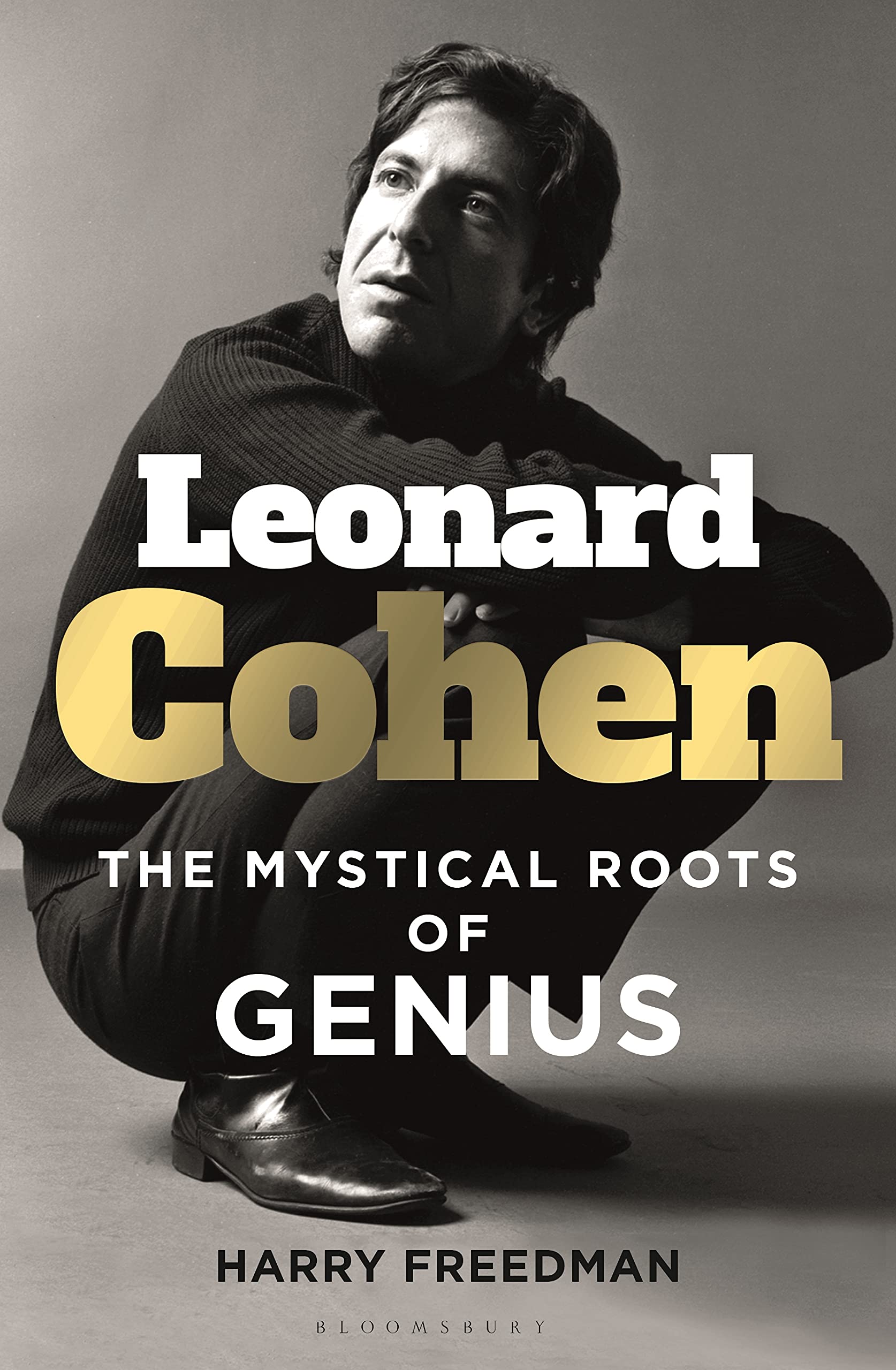
Leonard Cohen: The Mystical Roots of Genius

Rate this book
Harry Freedman uncovers the spiritual traditions that lie behind Leonard Cohen's profound and unmistakable lyrics

The singer and poet Leonard Cohen was deeply learned in Judaism and Christianity, the spiritual traditions that underpinned his self-identity and the way he made sense of the world. In this book Harry Freedman, a leading author of cultural and religious history, explores the mystical and spiritual sources Cohen drew upon, discusses their original context and the stories and ideas behind them.

Cohen's music is studded with allusions to Jewish and Christian tradition, to stories and ideas drawn from the Bible, Talmud and Kabbalah. From his 1967 classic 'Suzanne', through masterpieces like 'Hallelujah' and 'Who by Fire', to his final challenge to the divinity, 'You Want It Darker' he drew on spirituality for inspiration and as a tool to create understanding, clarity and beauty.

Born into a prominent and scholarly Jewish family in Montreal, Canada, Cohen originally aspired to become a poet, before turning to song writing and eventually recording his own compositions. Later, he became immersed in Zen Buddhism, moving in 1990 to a Zen monastery on Mount Baldy, California where he remained for some years. He died, with immaculate timing, on the day before Donald Trump was elected in 2016, leaving behind him a legacy that will be felt for generations to come.

Leonard Cohen: The Mystical Roots of Genius looks deeply into the imagination of one of the greatest singers and lyricists of our time, providing a window on the landscape of his soul. Departing from traditional biographical approaches, Freedman explores song by song how Cohen reworked myths and prayers, legends and allegories. By the end the reader will be left with a powerful understanding of Cohen's story, together with a far broader insight into the mystical origins of his inimitable work.

258 pages, Kindle Edition

First published January 1, 2021

92 people are currently reading
389 people want to read

About the author

Harry Freedman

20 books41 followers
My publishers describe me as Britain's best known writer on Jewish topics. I couldn't possibly comment! You can find out about all my books here on Goodreads. My website is harryfreedmanbooks.com and if you like what I write please subscribe to
my newsletter.


My most recent book is Leonard Cohen: The Mystical Roots of Genius. It explores the religious folklore, spiritual ideas and mystical concepts that run all the way through Leonard Cohen’s music.

Anyone who has listened carefully to Leonard Cohen’s music will know that songs like Hallelujah, Story of Isaac and By the Rivers Dark are based on biblical narratives. But Leonard Cohen’s music contains many more songs based on ancient lore. The Window is packed with kabbalistic insights, Who by Fire is based on both an ancient mystical text and a synagogue prayer, and You Want it Darker is one of the most powerful challenges ever written to the God whose presence Leonard Cohen was always aware of, whose purpose baffled him and whose world he struggled to come to terms with.

Cohen was deeply learned in both Judaism and Christianity; they helped shape his self-identity and the way he made sense of the world. In the book I explore twenty of his songs that are rooted in ancient biblical or kabbalistic sources. I explain the sources he drew upon, discuss their original context and the stories and ideas behind them, and show how Leonard Cohen has harnessed them for his own purposes. The book is not a biography, though it contains biographical information. I hope that it will offer an insight into the soul and imagination of one of the greatest singers and lyricists of our time.

My previous book was Reason to Believe: The Controversial Life of Rabbi Louis Jacobs. Louis Jacobs was Britain’s most gifted Jewish scholar. A Talmudic genius, outstanding teacher and accomplished author, cultured and easy-going, he was widely expected to become Britain’s next Chief Rabbi.

Then controversy struck. The Chief Rabbi refused to appoint him as Principal of Jews’ College, the country’s premier rabbinic college. He further forbade him from returning as rabbi to his former synagogue. All because of a book Jacobs had written some years earlier, challenging from a rational perspective the traditional belief in the origins of the Torah.

The British Jewish community was torn apart. It was a scandal unlike anything they had ever previously endured. The national media loved it. Jacobs became a cause celebre, a beacon of reason, a humble man who wouldn’t be compromised. His congregation resigned en masse and created a new synagogue for him in Abbey Road, the heart of fashionable 1970s London. It became the go-to venue for Jews seeking reasonable answers to questions of faith.

A prolific author of over 50 books and hundreds of articles on every aspect of Judaism, from the basics of religious belief to the complexities of mysticism and law, Louis Jacobs won the heart and affection of the mainstream British Jewish community. When the Jewish Chronicle ran a poll to discover the Greatest British Jew, Jacobs won hands down. He said it made him feel daft.

Reason To Believe tells the dramatic and touching story of Louis Jacobs’s life, and of the human drama lived out by his family, deeply wounded by his rejection.

Ratings & Reviews

What do you think?
Rate this book

Friends & Following

Create a free account to discover what your friends think of this book!

Community Reviews

5 stars
80 (34%)
4 stars
94 (40%)
3 stars
48 (20%)
2 stars
9 (3%)
1 star
1 (<1%)
Displaying 1 - 30 of 45 reviews
Profile Image for BlackOxford.
1,095 reviews70.3k followers
December 15, 2021
The Ghost of Spinoza

That Leonard Cohen wrote profound poetry and music is widely recognised. That he had a deeply religious upbringing in one of Montreal’s most prominent Jewish families is probably less well-known. And his explicit biblical and other scriptural references can easily be missed because the very artistic talent by which he subtly blended them into a distinctive voice in popular culture.

Harry Freedman, a Jewish scholar and literary historian, has accomplished something remarkable in this book about the intersection of Cohen’s public/professional and private/spiritual life. Essentially it is a kind of reverse exegesis which traces much of Cohen’s work back to its original scriptural and other cultural inspirations. Freedman interprets Cohen in light of both Cohen’s biography, and Freedman’s knowledge of Judaic culture. The result is informative, interesting, and provocative in the best sense.

To use only one example, Freedman shows how Cohen takes the somewhat problematic biblical story of The Binding of Isaac, the Akedah, and transforms it into a contemporary moral tale in his song The Story of Isaac. In the spirit of the Talmud, the Midrash, and Kabbalah, Cohen digs at what is unsaid in the Bible, creatively interprets what’s there in terms of current conditions, and ultimately represents it in Story of Isaac.

Through this, the Akedah undergoes a profound transformation from, “… a test of Abraham’s religious fanaticism, into a protest about the way people are willing to sacrifice others for absurd ideals.” Cohen’s specific issue was the American War in VietNam, but like so much of his work it also has universal significance. Other less obvious references to the Hebrew Bible are to King David in The Tower of Song, to the tale of Bathsheba in Hallelujah, and to YHWH as the butcher himself in The Butcher, and the very Jewish confrontational theodicy of Amen, among many others.

Cohen also had (thanks to his Irish nanny) an intimate understanding of the Christian Gospels (but notably less of the writings of St. Paul whom I doubt he had much time for either philosophically or aesthetically). So the song Democracy draws a comparison between the protestors in Tiananmen Square and the crowds surrounding Jesus at the Sermon on the Mount. But many of his allusions - to the Gospel of Matthew in Suzanne, the subtle poetic puns on Hebrew and Christian scripture, Christ’s temptation in the desert in Closing Time, and the Crucifixion in Ain’t No Cure for Love - are far more subtle and refined. Cohen was learned in other traditions as well. He had a commitment to Buddhism throughout his adult life. Buddhism permeates his work in equally subtle ways

Cohen was, of course, an artist not a theologian. He did not aim to develop any kind of systematic view of the divine. He nonetheless did have a sort of religious ambition beyond his own spiritual development. Freedman quotes him from an interview:
“Everybody has a sense that they are in their own capsule and the one that I have always been in, for want of a better word, is that of cantor – a priest of a catacomb religion that is underground, just beginning, and I am one of the many singers, one of the many priests, not by any means a high priest, but one of the creators of the liturgy that will create the church.”


This citation suggests to me Cohen as more than a popular singer/songwriter who also happens to be Jewish. He is also a continuation of a tradition adopted and pursued by another notable Jewish artist/philosopher, the 17th century Baruch Spinoza. I say artist with reference to Spinoza because he too was intent upon understanding the world by constructing a new aesthetic. Spinoza did with the logic of geometry what Cohen did with popular music.

I associate Spinoza and Cohen not only because I think they may have had compatable intentions but also because their patterns of spiritual life were so similar. Both men were steeped in the religious traditions of Judaism, Christianity and Buddhism.* It should be no surprise, therefore that they developed a similar syncretistic spiritually appropriate to their times.

Like Spinoza, Cohen broke his formal relationship with Judaism without abjuring his respect for Judaic culture or his acceptance of a divine presence in the world. Freedman quotes the speech in which Cohen essentially banished himself from Judaism:
“I believe that the God worshipped in our synagogues is a hideous distortion of a supreme idea – and deserves to be attacked and destroyed. I consider it one of my duties to expose the platitude which we have created.”


Although Spinoza was a bit more circumspect and diplomatic than Cohen, the two shared just about the same sentiments and came to similar religious views. Spinoza considered the entire cosmos as a manifestation of God, in particular each human being as an instance of God to be treated as such. Cohen, although adopting the language of Buddhism which has no concept of God, nevertheless expressed a functionally equivalent ethic. According to Cohen, “the ethical question is, what is the proper behaviour, what is the appropriate behaviour in the midst of a catastrophe?” This comes directly from the Śīla, one of the three sections of the Noble Eightfold Path. But it is entirely consistent with not only Spinoza but also the fundamental principle of Judaic and Christian ethics as a whole.**

Cohen, like Spinoza, was consciously involved in a cultural conflict. Cohen describes it this way:
“This is the old war, Athens against Sparta, Socrates against Athens, Isaiah against the priests, the war that deeply involves ‘our western civilization’, the one to which I am committed.”
Like Spinoza, Cohen’s war was, as Freedman notes, “a spiritual and cultural confrontation, a battle for the human soul.” Precisely this phrase could attach easily to Spinoza. Each in their own way was attempting to influence the world, to make everyone more aware of how and why they were acting from moment to moment - Cohen through his music, Spinoza through his formal logic.

My point in making note of the similarities between Cohen and Spinoza is not to diminish Freedman’s analysis. Rather I would like to enhance it by suggesting that Cohen is not just a carrier of a literary and ethical tradition of Judaism. There is a Judaic political tradition which is equally profound in his work and life, that of being “ a light to the Gentiles.” Like the prophets Isaac and Micah (and even Jesus) as well as Spinoza, Cohen calls insistently for the priests, rabbis and political leaders of the time to shed their smug conventional wisdom, the rituals that have become merely ritualistic, and the sanctimonious cant that replaces spiritual experience. He is sorely missed - for himself and as the ghost of Spinoza..

*See: https://www.goodreads.com/book/show/1...

** As summarised by the 1st century CE rabbi Akiva: “Thou shalt love thy neighbor as thyself (Leviticus 19:18) - This is the all-embracing principle of the divine law.” Jesus said the same as did Marcus Aurelius, and St. Augustine after him.
Profile Image for Kat (Katlovesbooks) Dietrich.
1,534 reviews203 followers
November 2, 2021
Leonard Cohen, The Mystical Roots of Genius by Harry Freedman is a biographical narrative, looking at the spiritual life of this man through his songs.

First, let me thank NetGalley, the publisher Bloomsbury Publishing and of course the author, for providing me with a copy of this book in exchange for an honest review. All opinions are my own.


My Synopsis :
Leonard Cohen was born in Montreal Quebec in 1934 and died in 2016.

Leonard Cohen's grandfather was a Rabbi, so he grew up in a fairly religious Jewish family, and he studied the bible at his grandfather's side.  He eventually condemned the community by saying that they were too "mechanized" and lacked spirituality.  Leonard's father, Nathan, died when he was only nine years old.  His mother, Masha, suffered from depression, as he himself did.  His nanny was an Irish catholic, who took Leonard to church with her,  so he became as well-versed in Christianity as he was in Judaism.  In 1990 he moved into a Zen monastery, and apparently became a Buddhist monk.

This book explores the spirituality behind Cohen's works.  It looks into the sources, where his ideas came from and how, for example, he took a story or phrase from the bible, and expanded on it.    As well, it looks into Cohen's private life, his use of LSD and marijuana which he found helped his creative juices flow, gave him courage to go on-stage, and helped with his depression.  It also looks at Cohen's fascination with war and death,  from Hitler to Che Guevera and the Bay of Pigs, to the Kent University killings, to the Yom Kippur war.  He tried to get involved in all the uprisings.

For all the seemingly religious stories behind his music, Cohen was reluctant to describe his work as having a religious or spiritual theme.

As the author stated in his forward, "Few contemporary songwriters have had their work dissected as minutely as Leonard Cohen. His lyrics have been picked apart innumerable times, in books and articles, on film and TV, in pubs, books and on Internet forums.  PhD theses have been submitted exploring his philosophy, his impact on culture, his image as prophet and priest and much more. His work has been analyzed from many different perspectives: psychologically, mystically, philosophically, spiritually, religiously and, not infrequently, incomprehensibly.

The author clearly states that he picked pieces that had a spiritual basis only, and only musical pieces for this book.  He also states that these are his opinions only, and that will be many differing opinions, as Cohen's music is open to interpretation.


My Opinions:   
Well, in one way I was impressed, and in another disappointed.

I learned more about this amazing singer/songwriter, and admire him more than ever.  However, I was disappointed that his songs were "ONLY" looked at from a spiritualist angle, even though that was intended, and apparently I didn't read the blurb well enough.....so this is my own fault.  I also found that although the writing was very good,  I was skimming the book, which usually means that it is dragging, not holding my interest as well as it should.

I did disagree with some of the opinions the author shared, but that is what makes Leonard Cohen one of the best song-writers....everyone has their own take on his words, their own interpretation.    As both a songwriter and a singer, his music crossed barriers.

If you are a true fan, take a chance on this book.   I am probably going to look into a more autobiographical book on his life.


For a more complete review of this book and others (including the reason I chose to read/review this book, as well as author information), please visit my blog: http://katlovesbooksblog.wordpress.com/

Profile Image for Grace Burns.
87 reviews2,525 followers
May 31, 2025
Love for Cohen was sacred, the physical counterpart of the human quest for the divine.

It is the war between those who conceive of existence as a dynamic rainbow, and those who conceive of it as a grey monotone, between those who are willing to acknowledge the endless possibilities, agonies, delights, mysteries and destinies of the human predicament, and those who meet every human question with a rigid set of answers ...

we're always going to set up people to die for some absurd situation that we definc as important

Words are both sacred and mundane.

Names may be nothing more than words. Yet words are the most powerful force in existence. The world came into existence through words.

Sometimes I feel that my life is a sell-out and that I am the greatest comedian of my generation.

If you leave God out of sex, it becomes, pornographic; if you leave sex out of God, it becomes self-righteous.
Profile Image for mia.
23 reviews6 followers
Read
March 6, 2025
Really great analysis of Cohen’s influences and of the evolution of his spiritual life. Really enjoyed this
Profile Image for Mark.
537 reviews21 followers
April 4, 2022
Upon first seeing the cover of the book, you could be forgiven (but only with the usual admonition of judging a book by its cover) for thinking, “Yippee, a biography of Leonard Cohen!” But Harry Freedman, “Britain’s leading author of popular works of Jewish culture and history,” has created something more uniquely engaging with Leonard Cohen: The Mystical Roots of Genius, for Cohen fans in particular and for music buffs in general. Using a selection of Cohen’s well-known songs, Freedman reveals how the lyrics are steeped in “Jewish and Christian allusions drawn from the Bible, Talmud, and Kabbalah.”

I confess that when talk of “Leonard Cohen and religion” surfaced in my presence, I fell into the trap of immediately thinking of his immersion in Buddhism, which resulted in him spending several years in a Zen monastery on Mount Baldy in California. But there are many more dimensions to Cohen’s relationship with religion.

Though born into, and raised in, a deeply religious Jewish family, Freedman tells us that, “Unlike many religious people, particularly those who actively practice their faith, Cohen did not feel threatened by other systems of thought, nor did he exclude them from his frame of reference.” Freedman highlights Cohen’s “unique ability” to distill the best of all belief systems for his song lyrics. Without any sense of conflict, Cohen’s “commitment to Judaism” still permitted a “spiritual attraction” for Christianity. “The songs and poems that he bases on Jewish ideas tend to be philosophical, mystical or defiant,” Freedman says, “whereas his works inspired by Christianity preach a simpler message, of love and purity of spirit.”

Now, Cohen was no angel. His drug usage sometimes left him too stoned to appear on stage to perform a concert, and though he had relationships with numerous women and sired two children, he never married. Freedman intersperses “Interludes” throughout the book, which address other facets of Cohen. For example, though Cohen is known for his poetry, music, and novels, he was also an inveterate artist and produced line drawings for several album covers. Freedman says “Cohen drew nearly every day. It was a private activity, unstructured and not connected with his work.”

But the core of The Mystical Roots of Genius is the influence behind the song lyrics. Freedman’s meticulous research and analysis enables him to perform a surgical job in terms of exactly matching Cohen’s lyrics with religious sources. Cohen was a perfectionist, sometimes working for years to “get it right,” discarding many precious, hard-won words along the way. U2’s Bono said of Cohen that he threw away more great lyrics than many other songwriters had ever written.

Finally, in the Epilogue, Freedman speculates whether Leonard Cohen is a modern-day paytan, a unique composer of poetry that is “packed with allusions to biblical stories and folklore.” It required knowing the Bible inside out and the ability to write to a high literary standard. “Like Leonard Cohen,” says Freedman, “the paytan took ancient fables and legends and made them relevant to the world they lived in, to the congregation listening to his composition.”

In his Foreword, Freedman tells us that, since Cohen’s work is open to multiple interpretations, this is his personal, though not persuasive view. “You probably won’t agree with everything I write,” he says. “In fact I hope you don’t; his work always holds out the likelihood of new insights.” Nevertheless, this is a thoroughly absorbing book, and though readers might wonder about the genesis of other songs—perhaps their personal favorites—they can hardly object to Freedman’s selections. His hope that his book will “strike a chord, encouraging you to think about Leonard Cohen’s music in a novel fashion” succeeds unequivocally in doing just that.
Profile Image for Jenn.
Author 3 books26 followers
October 26, 2021
An eloquent and fascinating look at the religious and spiritual influences that shaped Cohen’s work. Freedman provides probing and insightful literary analysis that elucidates the many ways in which Cohen’s songs spoke not only to an array of religious texts and ideas (Jewish, Christian, Buddhist), but also to each other. A must-read for any die-hard Cohen fan, but would also appeal to readers interested in Judaism’s impact on popular music and culture.
Profile Image for Lynn.
3,390 reviews71 followers
February 27, 2023
Ok Book on Leonard Cohen

I think I was looking for a biography of Leonard Cohen rather than a book on his inspiration. I’m also not religious so while it’s interesting that Judaism and Christianity inspired his work, long dialog on religion isn’t interesting.
Profile Image for Susan.
410 reviews
May 11, 2023
In this academic narrative, Harry Freedman, an author of religious history, takes an in depth look at the lyrics of Leonard Cohen's songs. He discusses the influences, inspirations and stories that helped create these lyrics. Cohen was deeply spiritual, a practicing Jew, and drew from the Bible, the Talmud and Kabbalah, and Zen Buddhism in his writing. The lyrics from songs such as Hallelujah, Anthem, Who by Fire and You Want it Darker, among others, are discussed and dissected.

If you are looking for a traditional biography of Cohen then this is probably not for you.

By far the most touching for me was the discussion of You Want it Darker recorded shortly before Cohen's death. Cohen was ill and actively dying when this was produced. "Hineni, hineni, I'm ready my Lord" (which is Abrahams response to God when he is called to sacrifice his son Isaac.) One of the verses echoes the language and rhythm of the Kaddish, the prayer for mourners.
"Magnified, sanctified, be thy holy name. Vilified, crucified in the human frame."
Profile Image for Maj.
407 reviews21 followers
May 16, 2025
Well, this book sure was interesting. It put LC's lyrics into the religious context (mostly Jewish but not just), and explained it all in a pretty accessible way.
There were a few small inaccuracies when it came to LC's life (as I remember them...could be wrong), but minutiae biography facts aren't the point of this book.
Profile Image for Michelle McGrane.
365 reviews21 followers
December 26, 2021
Few contemporary songwriters have had their work dissected as minutely as Leonard Cohen. His lyrics have been picked apart innumerable times, in books and articles, on film and TV, in pubs, books and on Internet forums. PhD theses have been submitted exploring his philosophy, his impact on culture, his image as prophet and priest and much more. His work has been analyzed from many different perspectives: psychologically, mystically, philosophically, spiritually, religiously and, not infrequently, incomprehensibly.

Harry Freedman has tried to do something different in this book. He has not attempted to guess what was going on in Cohen’s head when he wrote a particular song. Cohen was said to be reluctant to encourage that. Nor has Freedman dwelt in any greater depth on what motivated him. Rather he has focused on Cohen’s extensive use of biblical and religious traditions - ideas drawn from the Judaism and Christianity that helped shape his identity and the way he made sense of the world. The author has tried to demonstrate what Cohen’s sources were, what their original context was, what the stories and ideas that lay behind them were and how Cohen harnessed them for his own purposes. The book is as much an exploration of his sources as of his work itself.

𝑴𝒚 𝒕𝒉𝒐𝒖𝒈𝒉𝒕𝒔:

Harry Freedman is a Jewish and Aramaic scholar who has a passion for music and lyrics. He is the author of 𝑻𝒉𝒆 𝑻𝒂𝒍𝒎𝒖𝒅: 𝑨 𝑩𝒊𝒐𝒈𝒓𝒂𝒑𝒉𝒚 and 𝑲𝒂𝒃𝒃𝒂𝒍𝒂𝒉: 𝑺𝒆𝒄𝒓𝒆𝒄𝒚, 𝑺𝒄𝒂𝒏𝒅𝒂𝒍 𝒂𝒏𝒅 𝒕𝒉𝒆 𝑺𝒐𝒖𝒍. 𝑳𝒆𝒐𝒏𝒂𝒓𝒅 𝑪𝒐𝒉𝒆𝒏: 𝑻𝒉𝒆 𝑴𝒚𝒔𝒕𝒊𝒄𝒂𝒍 𝑹𝒐𝒐𝒕𝒔 𝒐𝒇 𝑮𝒆𝒏𝒊𝒖𝒔 is a sophisticated work crammed full of allusions to biblical and rabbinic mythology. As a fan of Cohen’s work, I was a little disappointed that Freedman’s book wasn’t more expansive and didn’t touch on some of Cohen’s more earthly inspirations and muses. Love, sex, drugs and war also add to the complexity of Cohen’s oeuvre. I’d recommend this book to scholars focusing on the Biblical aspects of Leonard Cohen’s work who will find it a page turner.

A huge thank you to @NetGalley and @BloomsburyPublishing for an ARC in exchange for an honest review.
Profile Image for Peter.
46 reviews1 follower
September 16, 2022
The text gives a great insight into the lyrics of several of Leonard Cohen's songs in light of his involvement in the teachings of Judaism, Christianity and to a lesser extent Buddhism. It opened my eyes to the depth in Leonard Cohen's lyrics which I knew were already profound. The book analyses in depth the songs and interweaves with "interludes" that add some additional dimension to Leonard's oeuvre.
Profile Image for Hmoore163.
16 reviews1 follower
May 5, 2025
Hallelujah🤪

I’m only giving this 3 stars because a lot of it went over my head. It focuses almost exclusively on Cohens religious influences and symbology in his work, but talks about things as if the reader is already familiar with specific stories from the Bible or Jewish texts. Which I am not.

Interesting though and I still learned some cool stuff.
47 reviews
February 3, 2022
Harry Freedman does an excellent job a shining a light the the religious influences on Leonard Cohen's art , not just the Hebrew and Christian scriptures, but also the folklore, the mystic influences, and experiences that contributed to the genius of his work. Their influences on the way he led his life is also explored, but to a lesser extent.
The main focus in on the deeper spiritual meanings of the lyrics of Cohen. Any fan of Cohen, any student of songwriting and poetry would be well served by reading this book.
I enjoyed Freedman's style and plan to check out more of his work.
Profile Image for Donna Herrick.
579 reviews8 followers
February 23, 2022
Freedman dissects the lyrics of various Cohen songs to tell the story of Cohen's life and 70 year career. I really enjoyed the insights into Kabbalah the Freedman was able to bring to analyzing Cohen's songs.
Profile Image for Kai.
42 reviews1 follower
July 2, 2025
Definitely read like the ramblings of a mad man sometimes... the ramblings of a well-read mad man!
Profile Image for Jonathan Hart.
111 reviews4 followers
November 23, 2023
As a huge Leonard Cohen fan this was a treat to read. Freedman does a great job analysing and explaining the Jewish elements to Cohen’s songs. It has enabled me a gentile to have an even greater appreciation of just how incredible Cohen’s work is. It left me with a pit in my stomach knowing that I will never be able to see Cohen perform his masterpieces live. My only complaint is that the book wasn’t long enough. I would love to know what Freedman was able to pull out of some of Cohen’s other songs. Give us a second volume of this book and I’ll give it 5 stars!
Profile Image for J Earl.
2,341 reviews112 followers
August 20, 2021
Leonard Cohen: The Mystical Roots of Genius by Harry Friedman is a captivating biography, though in some ways less about the physical life of Cohen and more about his spiritual life as expressed through his songs.

Although a fan for many years, I didn't know a lot of the details of his life, so I learned a great deal here. Yet that is not what I will take away from this first reading, and this book will, I believe, reward many more readings. Cohen's songs move me, as they move a great number of people. There has never been any question about his religious and spiritual elements in the songs but for me that has always been a hazy kind of acknowledgement. In other words, I caught some of the more explicit references and could feel in my heart (soul?) some of the implicit, but I had no idea what specific stories and legends each song used and/or referred to. Now I have some idea how he used those stories and beliefs to speak to his audience, even if we didn't know what foundational texts were involved.

I love thinking about songs in much the same way I do books and movies. What went into the writing? What might be an intended feeling or idea for the listener to take away? Regardless of the writer's intent, what did I take away? What other ways, beside the one I initially took, are there to think about or understand the song? By getting the background, or likely background, to many of these songs I can better understand the answers to all of those questions. I even better understand how some of those songs touched me. And I definitely have more ways into and through these songs.

So yes, I do better understand Cohen's life, but I now mainly understand it from the inside out rather than the outside in. I would recommend this to fans of his but I would also recommend it to those who might like to learn how another person used his religious and spiritual knowledge to grapple with the world around him then apply that insight to your own life and beliefs. I realize I probably rambled a bit in this review, I apologize, I am still coming to terms with what I am taking away.

Reviewed from a copy made available by the publisher via NetGalley.
Profile Image for Jane Hanser.
Author 3 books17 followers
October 3, 2022
I had great expectations for this read and was profoundly disappointed. Freedman actually does a disservice to Leonard Cohen. Let’s start with the book's back jacket.

The first blurb is a quote from the Late Rabbi Lord Jonathan Sacks, "Leonard Cohen taught us that even in the midst of darkness, there is light, in the midst of hatred there is love, with our dying breath we can still sing Hallelujah." The blurb is not a comment on the book Freedman wrote, but on Leonard Cohen himself. This is the first example of this author, and publisher, being unscholarly and disingenuous.

Next, this book is supposed to be about what mystical beliefs influenced Cohen. But Freedman I think too often interjects his own opinions with what Cohen might have been thinking of feeling. Freedman labels Abraham a “religious fanatic.” This clearly is not reflective of Leonard Cohen's views or state of mind when he was composing. In reference to Abraham, the father of monotheism, Freedman then writes, "Zealots, whether in biblical times or today, do not need to hesitate.” But Leonard Cohen, in Song of Isaac, is not inferring that Abraham is either a zealot or a religious fanatic. Cohen is writing about Abraham, the father and founder of all the Abrahamic religions, Abraham who was renown for kindness (chesed), feeding strangers, who bargains with and challenges God to not wipe out Sodom, but to save the people within, the unrighteous along with the righteous. This same Abraham, Freedman calls a fanatic, a zealot. In Song of Isaac, Leonard Cohen writes kindly about Abraham, how Abraham suffered with God’s command. In contrast, it is to contemporary generations who send their sons off to war, often to die, for specious reasons, Cohen sings: “You were not there before When I lay upon a mountain And my father’s hand was trembling,” a reference to his (Isaac’s) father's pained soul at what he was being asked to do. Cohen’s problem is with one generation sending the youth off to war to be killed, for selfish ends, with no care for the price paid or the victim. This song was written during the Vietnam War era. And it may also have been a product of WWII and the Nazi regime, which we know also pained Leonard Cohen from a young age. For a deeper understanding, see Rabbi Lord Jonathan Sacks on Leonard Cohen's "Song of Isaac, at https://www.rabbisacks.org/videos/you...

Although Freedman has some knowledge of Judaism, his knowledge seems to be both academic, and too limited to posit what Cohen means or intends. Freedman certainly seems to have not experienced it as a living breathing document, one that is a blueprint for how to live, as Cohen did growing up with it. When Leonard Cohen writes, "I'm the little Jew who wrote the Bible' it's quite likely that it was a humble reference to the commandment for every Jew to write a Sefer Torah, a Torah Scroll. Freedman doesn't seem to understand or appreciate the empowering background of that statement at all.

Another example, among many: When Freedman writes, "None of these (i.e. Jacob's petition after his dream on the ladder to heaven, Abraham's attempt to save Sodom from destruction, or Moses' entreaties to reason with God instead of begging him) prayers made it into later Christian or Jewish liturgy," first, here Freedman goes off again with his primary focus on Christianity (and secondary focus on Judaism), in a book whose purpose is to examine the mystical roots of Cohen's writing, which were clearly more Jewish and from an early age. And really nowhere in this book does Freedman indicate where Cohen would have learned about or studied Christianity; rather, Cohen's major influences were Judaism and Zen. (Ironically it was Jewish mysticism that later influenced Christian mysticism.)

But secondly, the very interactions between Abraham and God, Jacob and God, and Moses and God are fundamental aspects to every Jew's relationship with God and whether it's verbatim in a prayer or not, Jews are taught to model those interactions in their own lives. It is common for a Jew to pray to save a community (or group) from destruction where there are righteous individuals within, as did Abraham (re: Lot)or to argue with and challenge God, as did Moses on numerous occasions (Reb Levi of Berditchev is famous for this), all the while making reference to, if not quoting from, Biblical verse. Judaism is a faith that requires action.

Which brings me to my next frustration with this book. Again and again Freedman uses the same term “Bible” to refer both to the Torah (which includes the Chumash (the Five Books of Moses), the Prophets and the Writings) and the Christian “New Testament.” This sloppiness shows his lack of scholarship and possibly Freedman's bias. He uses the term “Bible” when telling the story of Moses, Isaac and Abraham. He then writes “Several people in the Bible are charged with committing blasphemy. Among them are Jesus… " as if they were in the same "book." Freedman writes “…a legend in the Talmud describes how, when (David) was king, (he) would wake up at midnight to play his harp. There is no mention of this in the Bible…” But the story of King David is prominently told in (Shmuel 1 and Shmuel 2) which, to Jews such as Leonard Cohen, is indeed part of the Torah - the Jewish "Bible" - and Psalms (“tehillim” are full of psalms that begin “A prayer of David.” Writes Freedman, “It gives both an insight into (Cohen's) attitude on religion and the role of Judaism and Christianity in his life. Despite his emotional connection to his native faith…. Much of the appeal of both Judaism and Christianity for Cohen lay in the literature of the Bible." For sure these two were not on an equal footing in Cohen's life and Freedman has yet to make his case.

Despite the wording of (and the woman herself was Christian) Suzanne, a song which makes reference to a Montreal church, “the Sailors’ Church” overlooking this body of water, Freedman never substantiates where or how Christianity might have had an influence on Cohen.

I really don't get why Freedman feels a need to interpret everything Cohen writes through Christian concepts. Even with Leonard Cohen's line in his song “Democracy,” "Of the Sermon on the Mount" Cohen follows with "Which I don't pretend to understand at all."

The story of the akeida (the binding of Isaac) goes into a long explanation comparing Abraham and Jesus, then equates Isaac asking, "where is the lamb… " as in "Isaac is equated with a sacrificial lamb, Jesus of course is the lamb of God." There is nothing in Leonard Cohen's song that hints at the story of Isaac being an extended metaphor for Christianity. This is pure Freedman conjecture. “We reach the crucifixion in the next verse," Freedman claims. "It is Cohen's reference to the wine that leads us to the crucifixion" That's quite a jump. Abraham drinking wine becomes Jesus drinking wine, which symbolizes the "new covenant." All this is unscholarly conjecture on Freedman's part with nothing in Cohen's background, or interviews, to back it up. … "so when Cohen has Isaac and his nameless father pause for wine, in their ascent up the mountain, he must be thinking not of Genesis but of the Gospels. They are drinking the wine of the last supper… ” This is absurd, the last supper in fact being the Passover meal, and goes way past anything close to scholarly interpretation.

I’m not sure at what point I decided to just discontinue reading this book. I felt it absurd, for example, that Freedman writes, in reference to Cohen's the use of the word ghost, "the Holy Ghost in Christianity and the holy spirit in Judaism are one and the same thing."

I could go on and on, but I won't. I will just caution the reader.
Profile Image for Carole Yeaman.
131 reviews16 followers
July 9, 2023
Somewhat hard to follow (for a goy) but very interesting. The first photo took me right back to Montreal, where I lived for 21 years. Haven't followed Leonard very closely all this time, but he was around during my university days. A worthwhile book to compile, and to read. Thanks Mr. Freedman
Profile Image for Tony.
216 reviews
January 5, 2022
I've loved Leonard Cohen's music and his seriousness about God and faith. His work has been enormously influential in my own life. Freedman's book is a fascinating account of some of LC's songs which most fully express that lifelong spiritual search, exploring their sources in the Bible, in Jewish, Christian and Zen teaching. Reading it has also given me the incentive to listen to many of the tracks that are less well known to me.
136 reviews4 followers
February 22, 2025
Freedman covers the Jewish and Biblical roots of Cohen's music very well. I was a smidge disappointed that his Buddhist/Zen philosophies did not get more coverage, especially when discussing Cohen's view that Jewish truths could co-exist with Christ-based truths and it all might be the same in the end. I would have loved to read more exposition around his Buddhist/Zen influences. As relates to the Jewish influences on Cohen's music especially, I found Freedman's work engaging and wide-ranging, which I appreciated.
The more I read Cohen's work and works about Cohen, the more I feel he saw himself as anointed, and obligated, to speak certain truths. Though he might be loath to call himself one, the mantle of prophet fits Cohen snugly.

Here are some quotes from the book that stuck out for me:

"We'll get some idea - some magnificent idea - that we're willing to sacrifice each other for; it doesn't necessarily have to involve an opponent or an ideology, but human beings, being what they are, we're always going to set up people to die for some absurd situation that we define as important" - Cohen

"Cohen didn't approve of name-changing....'I like to see the marks on people' Cohen said in 1980. 'I never liked the idea of people changing their names. It's just nice to know where you come from.'"

"As [Cohen] once said: 'If you leave God out of sex, it becomes pornographic; if you leave sex out of God, it becomes self-righteous.'"

"Cohen spoke about Hallelujah...: 'I know that there is a an eye that watches all of us. There is a judgement that weighs everything we do. And before this great force, which is greater than any government, I stand in awe and I kneel in respect.'"

"For Cohen the Word becoming flesh is not a unique process, as it is in conventional Christian theology, accomplished through the incarnation of Christ. Rather, he sees it as an ongoing dynamic: initiated by the desire of our soul to ascend, causing a corresponding descent from above. The two parts of the soul, the human and the divine, reaching out in a state of creatie tension towards each other, joining together, interweaving, communing as one. The transformation of the earthly soul into a diving being. 'Oh tangle of matter and ghost ... Gentle this soul.'"
Profile Image for Anne.
806 reviews
December 29, 2021
This is a fascinating book about a fascinating subject. It will be devoured by Cohen fans but should be appreciated by anyone who enjoys the depth of his lyrics. Harry Freedman has used the lyrics of some of Cohen’s songs as a way into the man, his background and his religious education and beliefs. It is beautifully written and nicely balances the creativity and wisdom of Cohen with his religious knowledge.

There are explorations of Kabbalah, mysticism, theology, and Cohen’s philosophy of life. I particularly enjoyed the close reading of Anthem and the famous lines "There is a crack in everything. That’s how the light gets in" as a look at despair and optimism. It is a fundamental position, close to a credo. And sums up Cohen’s depth of knowledge, touching as it does, on many beliefs.

This book cost me, as I downloaded a "Best of" album to replace my CD’s, I bought several of Cohen’s poetry books, but I also bought the poetry of Lorca having learned how important he was to Leonard Cohen. He named his child Lorca, so that was the incentive I needed to read a poet I was unfamiliar with.

This book will appeal to a wide variety of readers and is definitely worth picking up.

I was given a copy of the book by Netgalley.
Profile Image for Ann.
421 reviews6 followers
July 4, 2022
Harry Freedman's book on Leonard Cohen is an intense look at mostly the biblical imagery in Cohen's songs. Freedman fleshes out the connections between the figures, images, and wording connecting these with Jewish and Christian lierature, especially the Hebrew and Christian scriputres and Jewish mystical tradition, but also with Cohen's roots in Buddhism, especially drawing from the poet Rumi. Freedman presents enough of the story background to show where Cohen is both drawing from the source but also putting it on its head, turning the meaing to a new use for his experience and today's world. This book is rich and insightful contributing to a deeper understanding of how Cohen's songs draw us in and deeper, playing a role in helping the reader/listener to consider, contemplate anew both the sources and faith in today's experience.

The book contains a List of Illustrations; a Foreword; an Introduction; 5 meaty chapters with general, opening comments, followed by detailed comments on some of Cohen's songs, in some cases there is an interlude presenting further backround; an Epilogue; and concluding with Acknowledgements, Permissions, Notes, an Index of Song Titles, and an Index. There's a collection of photographs in the center of the book as well.

Well worth reading.
Profile Image for kglibrarian  (Karin Greenberg).
882 reviews33 followers
August 22, 2024
It took me a while but I finally appreciate the genius of Leonard Cohen. My brother has been praising his music for years, making me mixed tapes of his songs back in the 90s. A few decades later and I’m ready to dive deep.
This fascinating biography covers the musician’s early life as part of the Jewish community in Canada, his time spent in Hydra, Greece, his experiences in a Buddhist monastery in California, and so much more. Cohen was influenced by his intimate knowledge of his faith, drawing upon the Hebrew bible for many of his lyrics. But he also was well versed in Christian and Buddhist tradition and wove stories from both into his music.
Freedman strikes the perfect balance between the artist’s personal and professional lives. He spends chapters analyzing specific songs and others sharing insights into his family and spiritual backgrounds. I loved the interactive experience of listening to the songs after reading about them.
There’s a lot to unpack in this book and as I explore more of Cohen’s art I have a feeling I’ll come back to it many times. For now, I’m happy to have read this informative and inspiring work about his life and mind.
Profile Image for Suze.
435 reviews
July 4, 2022
A very insightful examination of the many references in Leonard Cohen’s lyrics/poetry which sprung from his Jewish roots, Bible reading and Buddhist influences. This book helped me understand how Cohen’s spiritual life shaped his songs. I’ve always loved his lyrics – pure poetry! Freedman’s zealous analysis is full of detail as he speculates on Cohen’s source material and looks at his many lovers, drug use, Bible study and involvement with Zen Buddhism. I particularly liked the explanation of Cohen’s lyric from Anthem “There’s a crack in everything, That’s how the light gets in” – Cohen’s view that humanity has broken this world in many ways, and when we come to recognize that, there will be opportunity for spiritual connection. Of his most famous song Hallelujah Cohen said, “I wanted to indicate that hallelujah can come out of things that have nothing to do with religion.” A very worthwhile read for Leonard Cohen fans.
Profile Image for Judy Croome.
Author 13 books185 followers
August 6, 2022
Fascinating exploration of how Leonard Cohen’s creative genius intersected with his deep spirituality.

Freedman’s meticulous unpacking of the numerous religious references underpinning Cohen’s songs was, at times, repetitive.

However, each apparent repetition took one subtly deeper into an understanding of just how much Cohen’s personal search for G-d drove his deep desire to find a way to heal the broken souls of individuals struggling to cope with the ever-widening fractures in the collective soul of the modern world.

I very rarely read biographies - I’d read more if they were like Freedman’s powerful and uplifting ‘Leonard Cohen: The Mystical Roots of Genius’
Profile Image for Don Meredith.
Author 4 books1 follower
January 21, 2022
As a long-time Leonard Cohen fan, I have read several books about his life, etc. But never one that delved into the background about what influenced him to write individual songs/poems. Each Cohen piece is subject to many interpretations, and it seems every time I hear or read a particular piece, I find a different way of seeing or feeling it. Freedman investigates Cohen's complicated religious and mystical experiences to illustrate what inspired the writing. You don't read this book quickly. Be prepared to go to the particular song being discussed to listen to it again and see if Freedman's description fits what you're feeling. This is a book I will return to, again and again.
29 reviews
February 1, 2022
I didn’t know much about Leonard Cohen until I came upon the fiddle version of Hallelujah. He was quite a fascinating person and more spiritual than I imagined. The book goes through a number of his songs and points out the religious underpinnings of each from Cohen’s Jewish and Christian roots. I think that anyone interested in music would find the book interesting.
326 reviews
January 28, 2025
Anyone who is a fan of Leonard Cohen knows that he was a deeply spiritual man. This book dives into the influence that faith (in many forms) had on his writing. If you are interested in seeing where artists find inspiration, as well as exploring the religious side of Cohens work then you should check this book out!
Profile Image for Hugh.
61 reviews1 follower
February 10, 2025
Not exactly compellingly written or anything (esp compared to Sylvie Simmons excellent biography) but nice to have someone with solid knowledge of Biblical/Talmudic/midrashic tradition provide context for a bunch of Cohen's songs. Would have been nice to have more analysis of the Zen influence but can understand that this might have been outside the author's wheelhouse.
Displaying 1 - 30 of 45 reviews

Can't find what you're looking for?

Get help and learn more about the design.