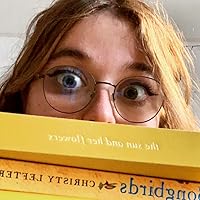
Poetry is meant to trigger emotions and feelings. From that aspect, this poetry collection is extremely successful. I definitely felt something, but if I had to label it, I would call it disdain. Disdain towards myself, who thought that the specific collection would “widen my horizons” or “alter my brain chemistry”— epithets people often use, or rather abuse in an attempt to sound profound.
I first started reading this book at 15, when my anger towards everything and everyone was so pent up, I would most probably have had related to physics textbooks and convinced myself my “original experience” of being angry was perfectly illustrated within its pages about Newton’s Laws. Had I finished reading this within two months of starting it, judging from my endless annotations on its margins, I would have loved it. Provided, of course, that I was provoked by a poem like the following: “am I scared?/ absolutely terrified./ but not as scared as living/ and never feeling alone.” So, yes, back then I was the perfect target audience, along with (I imagine) 50-year-old men going through a divorce and a midlife crisis, housewives in the 1950s who couldn’t care less about self-improvement but wanted to seem cultured, and frat-bros/ gym-rats who like to think of themselves as “woke” but are inherently shallow. Having finished this collection at 17 going on 18 years old, I can confidently say that a mathematician could write similar, if not better, poetry about equations.
To be fair, I understand that the YouTuber, who composed the poems at hand, has a large following and is considered one of the first content creators who openly addressed mental health. I am in no way dismissing the importance of mental wellbeing and her work. However, do I think that this is probably one of the first poetry collections that belong in the “Notes App” genre? Most definitely. Do I also think that it should have stayed in the poet’s Notes app? Most fervently. In my opinion, it is repetitive throughout the sections, has little literary substance, and could have been a self-help book in prose form. Apart from a few rhymes, epistrophes, and anaphors, the only detail that distinguishes the poems from paragraphs is the poet’s recurring urge to hit the “enter” key and simulate what could have been otherwise described as enjambment.
All in all, 255 pages of superficial and repetitive poems seem redundant to me. Frankly, this wasn’t as “life-changing” as the publishers probably thought it would be. Their target audience was probably millennials. The ones who peaked in high school and are struggling to find their place in the modern world.