Jump to ratings and reviews
Rate this book

Jack Laidlaw #3

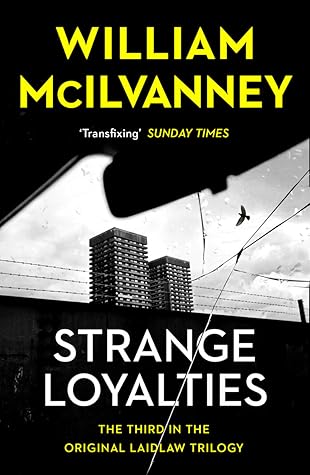
Strange Loyalties

Rate this book
The third and final book in the original Laidlaw Trilogy.

When his brother dies stepping out in front of a car, Jack Laidlaw is determined to find out what really happened. Laidlaw begins an emotional quest through Glasgow's underworld, and into the past. He discovers as much about himself as about the brother he has lost, in a search that leads to a shattering climax.

Acclaimed for its corrosive wit, dark themes and original maverick detective, the Laidlaw trilogy has earned the status of classic crime fiction.

384 pages, Paperback

First published August 15, 1991

220 people are currently reading
759 people want to read

About the author

William McIlvanney

39 books226 followers
William McIlvanney was a Scottish writer of novels, short stories, and poetry. He was a champion of gritty yet poetic literature; his works Laidlaw, The Papers of Tony Veitch, and Walking Wounded are all known for their portrayal of Glasgow in the 1970s. He is regarded as "the father of 'Tartan Noir’" and has been described as "Scotland's Camus".

His first book, Remedy is None, was published in 1966 and won the Geoffrey Faber Memorial Prize in 1967. Docherty (1975), a moving portrait of a miner whose courage and endurance is tested during the depression, won the Whitbread Novel Award.

Laidlaw (1977), The Papers of Tony Veitch (1983) and Strange Loyalties (1991) are crime novels featuring Inspector Jack Laidlaw. Laidlaw is considered to be the first book of Tartan Noir.

William McIlvanney was also an acclaimed poet, the author of The Longships in Harbour: Poems (1970) and Surviving the Shipwreck (1991), which also contains pieces of journalism, including an essay about T. S. Eliot. McIlvanney wrote a screenplay based on his short story Dreaming (published in Walking Wounded in 1989) which was filmed by BBC Scotland in 1990 and won a BAFTA.

Since April 2013, McIlvanney's own website has featured personal, reflective and topical writing, as well as examples of his journalism.

Adapted from: https://en.wikipedia.org/wiki/William...

Ratings & Reviews

What do you think?
Rate this book

Friends & Following

Create a free account to discover what your friends think of this book!

Community Reviews

5 stars
810 (44%)
4 stars
629 (34%)
3 stars
301 (16%)
2 stars
72 (3%)
1 star
23 (1%)
Displaying 1 - 30 of 167 reviews
Profile Image for Nigeyb.
1,474 reviews405 followers
June 11, 2022
The Laidlaw series really hit my literary sweet spot. Strange Loyalties (1991) is the final outing for the maverick philosophical Glaswegian detective.

I couldn’t stop thinking about the character and so read all three novels within a few weeks.

I loved Strange Loyalties. It’s the best of the Laidlaw trilogy. The first two are excellent however Strange Loyalties is a whole other level of brilliant.

The death of Jack Laidlaw's brother prompts him to investigate the circumstances around Scott Laidlaw’s untimely end. This is just a precursor into larger questions about pain, injustice and the meaning of his own existence. It sounds pretentious yet is anything but. Jack’s personal problems are also reaching a crescendo, most especially his relationship with Jan, the woman he loves. This is a journey into moral murkiness. Jack’s investigation eventually ties in with a case being pursued by his partner. Resolving that crime is a satisfying conclusion but is not the real secret at the heart of this novel. Strange Loyalties is unforgettable with William McIlvanney at the top of his game.

I’m sad to finish the trilogy but do still have the belated prequel to read. The Dark Remains was written by Ian Rankin and based on William McIlvanney’s notes.

If you haven’t read the Laidlaw trilogy then you’re in for a treat.

5/5


The third and final book in the original Laidlaw Trilogy.

When his brother dies stepping out in front of a car, Jack Laidlaw is determined to find out what really happened. Laidlaw begins an emotional quest through Glasgow's underworld, and into the past. He discovers as much about himself as about the brother he has lost, in a search that leads to a shattering climax.

Acclaimed for its corrosive wit, dark themes and original maverick detective, the Laidlaw trilogy has earned the status of classic crime fiction.
Profile Image for Khrustalyov.
87 reviews10 followers
June 5, 2025
The final outing for Laidlaw, this time solving a mystery that is much closer to home: the apparent suicide of his own brother. This is a very moving story filled with the wit and intelligence that McIlvanney displayed so abundantly in the first two novels of the trilogy. Here, however, he shifts from the third person narrative of the predecessor novels to first person. The result is that there is less of a propulsive plot but a much more engaging sense of psyche - I'll take that trade off any day with such a likeable antihero. Laidlaw's philosophical musings take full flight with McIlvanney able to display his detective's intellect and dark interior monologues with less narrative mediation. We can sometimes end up with a few too many similes on the page, but, unlike a similar perpetrator of too much imagery Raymond Carver, McIlvanney has a keen mind for surprising connections and granting a reader a new way of seeing a problem in a very efficient manner.
Profile Image for Leah.
1,732 reviews289 followers
August 18, 2014
Moving the stars to pity…

In the third and, to date, last outing for Jack Laidlaw, he is grieving for the death of his brother, Scott. Although Scott’s death was accidental – he was knocked down by a car – Laidlaw believes that his brother’s state of mind played a major part in his death. And so as the story begins, he has taken some time off work to try to find out what had led Scott into the depression and heavy drinking that marred his final months. As he talks to the people who knew Scott best, Laidlaw finds there were things he never knew about his brother and begins to realise that the answers he is seeking may lie far back in Scott’s past…
Nobody had said ‘crime’. But that dying seemed to me as unjust, as indicative of meaninglessness as any I had known. And I had known many. For he had been so rich in potential, so much alive, so undeserving – aren’t we all? – of a meaningless death. I knew.
I should know. He was my brother.

The first book in the trilogy, Laidlaw, would certainly be in contention on any list I might draw up of best crime novels, possibly even best novels overall. The second, The Papers of Tony Veitch, came very close to matching it in quality. So for me, this one had a couple of hard acts to follow, and it was with some trepidation that I began to read. And, although this is undoubtedly an excellent novel in its own right, in truth it didn’t reach quite the same heights for me, though only by a small margin.

There are a couple of reasons for this, one of which is very much a matter of personal preference. The Laidlaw brothers grew up in Ayrshire so, unlike the previous books which were very firmly set in the Glasgow of my youth, this one takes place mainly away from the city. McIlvanney himself was an Ayrshire lad so for him the emotional connections are just as strong, perhaps stronger, but for me, there wasn’t the same resonance as in the other two. It also meant there was very little of McIlvanney’s wonderful use of Glasgow dialect which so enhanced the earlier books for me. The other reason is that this one is written in the first person from Laidlaw’s perspective, whilst the first two were third person. I found Laidlaw a more believable character seeing him from the outside, as it were. Being told his philosophical thoughts in his own voice meant I found that, just occasionally, he came over as a little pretentious.

However, slightly less good from McIlvanney is still about a zillion times better than excellent from most authors, so I certainly wouldn’t want either of these quibbles to put anyone off reading this one. McIlvanney’s prose is wonderful – there is a poetic edge to it that makes the reading of it an intensely pleasurable and often emotional experience. I don’t usually use such longs quotes as this but I feel this gives a true flavour of the deep understanding and love of – pity for – humanity that pervades these books:
But, imagining Scott’s nights here, I populated the emptiness. This had been one of his places and some small part of his spirit had been left here. Holding my own brief séance for my brother, I conjured vivid faces and loud nights. I saw that smile of his, sudden as a sunray, when he loved what you were saying. I saw the strained expression when he felt you must agree with him and couldn’t get you to see that. I caught the way the laughter would light up his eyes when he was trying to suppress it. I heard the laughing when it broke. He must have had some nights here. He had lived with such intensity. The thought was my funeral for him. Who needed possessions and career and official achievements? Life was only in the living of it. How you act and what you are and what you do and how you be were the only substance. They didn’t last either. But while you were here, they made what light there was – the wick that threads the candle-grease of time. His light was out but here I felt I could almost smell the smoke still drifting from its snuffing.

His characterisation is superb – each person flawed but believably so, and he writes them with a sympathy that makes it hard for the reader to condemn. He is very much of the school that believes criminals are made, not born, and for his characters there is always the possibility of redemption. Some of the most moving scenes in this book are of a petty criminal back in Ayrshire to look after his dying mother in her last weeks. No McIlvanney character is black or white – they are all multi-shaded and multi-layered, and Laidlaw has the empathy to see them in the round. And it is Laidlaw’s empathy and understanding that makes these books special, because through him the reader is also brought to feel a sorrow and a pity for the way the world is.

One of my favourite quotes is Flaubert’s “Human language is a cracked kettle on which we beat out tunes for bears to dance to, while all the time we long to move the stars to pity." In this trilogy, McIlvanney’s writing surely moves the stars.

www.fictionfanblog.wordpress.com
Profile Image for Effie Saxioni.
724 reviews137 followers
August 15, 2022
Excellent quality of writing, as in the previous two parts of the trilogy, but really poor in terms of police tactics and investigation.
It was a Laidlaw's mission against everything and everyone,a struggle to discover the truth about his brother's death. Way too many philosophical and insight moments that left police procedures far behind.
That was what deprived this story of 2 more stars.
Apart from that, the whole trilogy is a masterpiece of scottish noir.
Profile Image for Sid Nuncius.
1,127 reviews127 followers
March 8, 2021
Strange Loyalties is very good, but somewhat different in tone and style from the first two Laidlaw books and for me it wasn’t quite as effective.

Laidlaw is taking a week off to privately investigate the death of his brother, who was killed in a road accident. He doesn’t so much want to prove that it wasn’t an accident as to understand who his brother was and why he behaved so strangely in the months leading up to his death. His enquiries become entangled with a police investigation into gangland crime and rather an involved story gradually unfurls.

McIlvanney was a brilliant writer, which is well in evidence here. However, rather than a crime novel with a moral and philosophical bent as the first two are, this is more of a moral and philosophical novel with some crime as a driver. This means that we get a great deal of Laidlaw’s (i.e. McIlvanney’s) philosophical musings which, without the dilution of a crime plot, can get a bit much at times. Here’s a typical paragraph:
“To pretend that subjective conviction is objective truth, without testing it against the constant daily witness of experience, is to abdicate from living seriously. The mind becomes self-governing and the world is left to chaos. That way, you don’t discover truth, you invent it. The invention of truth, no matter how desperately you wish it to be or how sincerely you believe in the benefits it will bring, is the denial of our nature, the first rule of which is the inevitability of doubt. We must doubt not only others but also ourselves.”

Now, that’s really good, not to mention very timely at the moment, but there’s so much of this kind of thing that I could have done with just a bit more novel and a bit less philosophy to make it a more balanced read. This could just be me and it’s still a very good book, but for me it’s not quite in the same league as its predecessors.
Profile Image for Sandra.
Author 12 books33 followers
December 24, 2017
I had to break my own rule about leaving a decent gap between books by the same author. Laidlaw is a man who gets into your head and lodges there, making you want more and more. And more this one was. I shall need soon to start at the beginning and re-read the whole trilogy again.

A personal quest this one, steeped in sadness and retrospection, pondering on relationships, moralities and the way one lives ones life. But with a search for truth. A multitude of characters being drawn together to form a fractured whole. Unguessable ending (though in a way it should not have been).
3 reviews
September 29, 2022
The first 2 laidlaw books were top class Glasgow noir .
This one unfortunately is a different beast ,written in the first person it deals with laidlaws existential angst and allows him to expound his philosophy on life rather than giving us a fast paced crime thriller similar to the first 2 books .I was very disappointed with it .
Profile Image for Claire  Admiral.
209 reviews42 followers
August 9, 2019
Audiobook rating (narrated by Mirko Marchetti):

Story-⭐⭐⭐
Narrative voice style-⭐⭐⭐⭐
Vocal characterisations-⭐⭐⭐
Inflection intonation-⭐⭐⭐
Voice quality-⭐⭐⭐⭐½
Overall-⭐⭐⭐
Profile Image for Roberto Rho.
381 reviews4 followers
April 17, 2024
La scrittura é bellissima: veloce, tagliente, irriverente, il classico detective maledetto con una vita rovinata dall'alcool e dalle donne.
Purtroppo una stella in meno per il caos che ne genera durante la stesura della storia, fino al finale assolutamente inaspettato.
400 reviews1 follower
June 17, 2019
There are times I just fancy some Tartan Noir, and thought I should reacquaint myself with McIlvanney's Laidlaw. I had forgotten how good this is, how exceptionally well written (if very occasionally overwritten) and provocatively thoughtful. Almost every page I wanted to mark a phrase or sentence for its insight on everything from Scottish identity to broken lives. Neither police procedural nor murder story in any obvious sense, the real mystery at the centre is that of the unknowability of those closest to us, and of the factors that make individuals, marriages and families, communities adhere or fracture.
Profile Image for Anne Fenn.
953 reviews21 followers
June 2, 2023
Well this was such an intense book. I had ideas of reading connected books by the same author but think I need a break. It’s got whispers of Rebus In Edinburgh but it makes him seem restrained and outgoing. Our Jack Laidlaw is none of that, he’s a man hellbent on a mission related to his brother’s death. The novel focuses on the inner anguish of a man, rather than police procedures. More pubs and houses, little police interiors. Beautifully controlled writing. I’ll be back for more.
474 reviews25 followers
January 4, 2016
Strange Loyalties is straight forward bad. Move along, no redeeming values here. Jack Laidlaw is a disaffected Scottish cop who dropped out of university but still reads philosophy. I am reminded of Sherwood Anderson’s “I Want To Know.” That should have been the end of this type of writing.

That is, I want to know why this happened. Here Laidlaw is trying to find out why his brother was killed in a hit and run accident. Along the way he brings in far too many characters and muddies the ploy with much philosophical dibbles. And there’s drinking.

And an awkward sex scene that would give Morrisey a run for his money.

True, the local color is fairly good, but nowhere near as keen as Benjamin Black does with Dublin.

In the end we double down on the cliché with, “I have a letter!” Actually it’s a note and it explains everything. The end.

Works like this make me angry. Criitics who cannot see through such tripe as poor plotting, excessive characterization, and no action infuriate me even more. Strange Loyalties makes Girl on A Train look like War and Peace.
86 reviews4 followers
June 29, 2013
First laidlaw book ,excellent,the second one , even better , this one I struggled with at times , I like it best when he's chasing baddies with harkness and alienating other cops. there was too much messing about with his brother. I see how that mattered but al, the soul searching stuff got in the way of the story . Jan is a cow. Still beautifully written and the language he uses is addictive to read. Without sounding too arsey, his descriptions are perfect and evoke all sorts of feelings. Hope he writes another one .
Profile Image for Tuck.
2,264 reviews252 followers
June 7, 2015
police detective takes some time off from work to see why his little brother suddenly dies. what he finds is the stinkingest human nature we come to expect. here is a nice quote illustrating 'laidlaw's' outlooks
From pg 132 “Those who love life take risks, those who don’t take insurance. But that was all right, I decided. Life repays its lovers by letting them spend themselves on it. Those who fail to love it, it cunningly allows very carefully to accrue their own hoarded emptiness. In living, you won by losing big, you lost by winning small.”
Profile Image for Nick Davies.
1,738 reviews59 followers
December 11, 2019
Stylish, important, classic. Enjoyable and amusing. This, number three of the Laidlaw series, I perchance appreciated even more than the preceding two - if that's possible. It just felt less over-done (not quite so Philip Marlowe, not cartoonish as a consequence) and less confusing, and I also found the human element - unravelling a death personal to Jack Laidlaw as opposed to just some random Glasgow hoodlum - worked well. Impressive, and very key in the field of Tartan Noir.
5 reviews2 followers
February 3, 2014
My favourite Laidlaw, a more fully realised character and the transition to first person narrative helped this. Beautifully rendered prose as always from McIlvanney, a writer deserving of much greater recognition.
Profile Image for Alan Taylor.
224 reviews10 followers
March 5, 2023
"Mr Bumble got it wrong. The law isn’t an ass. It’s a lot more sinister than that. The law is a devious, conniving bastard."

I read William McIlvanney's THE BIG MAN years ago, when it came out, but didn't get round to reading his Laidlaw novels for many years afterwards, only reading the second novel, THE PAPERS OF TONY VEITCH, when I discovered Alan Parks' 1970s Glasgow set series starting with Bloody January. Even then, it took Ian Rankin's completion of McIlvanney's unfinished final Laidlaw story, THE DARK REMAINS, to remind me that I had never completed the original trilogy, an error I have now corrected. Why did it take so long?

‘When a finger points at the moon,’ a Paris graffito had once said, ‘the fool looks at the finger.’

Written, unlike the preceding two novels, in the first person, STRANGE LOYALTIES is the distillation of Jack Laidlaw. We get right into his head and it is a fascinating, sometimes frightening, place to be. Where we previously witnessed Laidlaw's sometimes contradictory actions we now hear the thinking behind them, Jack's acknowledgment of the flaws in his personality and his musings on the reasons and causes of them. Ostensibly the story of Laidlaw's investigation into his brother's sudden death, the detective is simultaneously intimately involved yet somehow detached from events; Laidlaw commentates on and analyses his own, and other characters actions and motivations even as they occur.

As easy as it is to understand how the Laidlaw books laid the foundations for 'Tartan Noir', influencing Rankin, Parks, McDermid and others, it is perplexing how some critics could have derided such literate, articulate writing as mere 'crime fiction' when these books say more about the human condition than many 'literary' novels could ever hope to. It took me far longer than it should have to get here but I am so thankful I did, and as STRANGE LOYALTIES links directly back to THE BIG MAN, I will be re-reading McIlvanney's story about Dan Scoular at the earliest opportunity.
576 reviews24 followers
June 18, 2022
Another tremendously enticing entry in the detective Jack Laidlaw series from the master of Scottish noir. A not-to-be-missed read.
Profile Image for Julian Worker.
Author 44 books452 followers
February 2, 2023
This is the third novel in the original Laidlaw trilogy.

The death of his brother Scott in an apparent accident - Scott was drunk and hit by a car driven by a newsagent - has upset and angered Jack Laidlaw. His intuition says it was no accident and so he determines to find out who knew what and when. His colleagues are investigating the murder of a drug dealer and slowly but surely the two narrative strands are brought together.

Laidlaw immerses himself in the Glaswegian underworld once again to find out the truth and also has field trips to the Ayrshire coast, the Scottish Borders, and even to Edinburgh.

The reckoning is quite shocking and none of Scott's friends come out of it with much credit. The murderers of the drug dealer are caught as is their underworld controller so at least that investigation had a successful conclusion. Jack Laidlaw didn't receive the same satisfaction.

William McIlvanney was an amazing writer and there's a revealing question and answer section at the end of this book where he says people told him in the 1970s and 1980s he could make a lot of money if he wrote a Laidlaw book every year. However, he wasn't interested in doing that as there were other ideas he wanted to try. You have to admire a writer for being honest with themselves.
Profile Image for Ian Mapp.
1,340 reviews50 followers
March 26, 2018
A series of diminishing returns, I'm afraid. Laidlaw (#1) got 4 stars, Tony Vetch Papers (#2) got 3 stars and this will get 2 stars.

Just found it too tricky to keep on top of as a crime thriller and despite the great philosophical musings of a more intelligent than average detective, I was once again hopelessly lost in the story.

Jack Laidlaw's brother is dead. He investigates. Whether in his own time or on the job, it's not really clear, but he gets no pressure from any seniors and is free to discover the world his brother inhabited.

And that world, is of course, Glasgow.

Worked my way through, with the sentences just going past in a blur with the occasional deeply profound paragraph. No idea who killed his brother or why. I know the book has a fine ending.

Jack wishes he had more whisky. Don't we all.
Profile Image for Bianca Marconero.
Author 31 books549 followers
Read
June 6, 2019
Stavolta, senza voto, ma il capitolo 31 è sublime.
Profile Image for Kirsten.
3,109 reviews8 followers
March 24, 2024
Scott war immer der gute Bruder. Im Gegensatz zu seinem großen Bruder Jack machte er sein Talent zu seinem Beruf und führte eine glückliche Ehe und ein zufriedenes Leben. Warum ist er dann nachts betrunken auf die Straße getreten, direkt vor ein Auto? Jack Laidlaw weiß, dass der Tod seines Bruders Selbstmord war. Trotzdem untersucht er ihn genau so gründlich, als ob ein Verbrechen vorliegen würde. Er weiß schon, was passiert ist, aber er weiß noch nicht, warum.

Wie sehr er über Scott trauert, überrascht Laidlaw fast noch mehr als sein Tod selbst. Seine Gedanken drehen sich um die letzten Stunden und Tage. Hätte er etwas sehen können? Auf seiner Reise in Scotts Vergangenheit fragt er Freunde, Bekannte und Kollegen und muss erkennen, dass er den Mann, den Scott in den letzten Monaten seines Lebens war, nicht mehr kannte. Er hatte ihn als einen Mann, der mit jedem in seiner Umgebung zurechtkam, aber jetzt wird er als launisch beschrieben. Seine Ehe, von der er ein glückliches Bild hatte, ist gescheitert.

Von gemeinsamen Freunden bekommt er erzählt, dass Scott in den letzten Wochen seines Lebens unglücklich wirkte und einer erzählt von einem Mann in einem dunklen Mantel. Aber der ist unauffindbar. Es wird immer klarer, dass der Grund für den Selbstmord in der Vergangenheit liegt. Irgendwann muss er erkennen, dass der Grund für Jacks Selbstmord sein Bild von seinem Bruder grundlegend ändern wird. Trotzdem ermittelt er weiter, denn seine Gefühle werden sich nie ändern.

Auch wenn sich die Ermittlungen um den toten Bruder drehen, lerne ich auch den lebendigen viel besser kennen. Das hat mir in den vorangegangenen Teilen der Reihe gefehlt und macht das Bild von ihm endlich rund.
Profile Image for Michelle.
1,112 reviews2 followers
April 27, 2023
As I enjoyed the three Laidlaw books I think I will read more of the godfather of tartan noir's books.
I adore Scottish fiction whether it be crime fiction or not [Scots seem to like writing crime fiction]
When Jack's brother dies, he doesn't believe it was an accident and he delves into things which perhaps would have been better left alone.
Profile Image for David Highton.
3,737 reviews31 followers
May 20, 2022
Very good story as the abrasive and tenacious Jack Laidlaw takes a week off to seek why his brother walked out in front off a car and was killed.
Profile Image for GaP.
109 reviews2 followers
May 21, 2022
Laidlaw is a philosopher polis(Glasgow cop) who has a generally dim view toward the human condition. The truth matters most to him, regardless... especially this time...and also EXCEPT this time. Ends on a bleak but memorable note. Needless to say, the case is solved...but at what cost. I believe the word is "pyrrhic".
Profile Image for Mark.
Author 10 books88 followers
November 17, 2024
How to write a great crime novel. McIlvanney shows you the way.
Profile Image for Jamie Bowen.
1,122 reviews30 followers
June 10, 2023
Laidlaw’s brother has died, his grief takes him on a journey to understand why, a journey which might take Laidlaw to places he doesn’t want to go.

A very dark but stunning conclusion to the Laidlaw trilogy. Laidlaw is laid bare here with his grief, it requires him to look into himself and it’s quite an emotional conclusion.
384 reviews2 followers
September 7, 2023
I love this author. Didnt realise until this book, that he was the first of the now (in)famous "Tartan Noir'. In this book, I was respecially struck by his writing about women....the bathrooms inhabited by women, how women know what you are before you do. Very respectful and thoughtful. Great for a good yarn when concentration is not tight. Read more.
Profile Image for Harry Allagree.
858 reviews12 followers
July 4, 2016
"...For although I admired loyalty, I reflected, it could have some strange side-effects...In our haste to get to the places to which our personal and pragmatic loyalties lead us, we often trample to death the deeper loyalties that define us all--loyalty to truth and loyalty to the ideals our nature professes...Each of the people I was dealing with had presumably more than one loyalty. Let's strike one against the other and see if a spark of truth came out of that. Let's force them to a choice of loyalties....When the world decides to take away from you, without explanation, a part of what matters to you most, you'd better challenge its indifference, some way or other..."

I'd have to describe this wonderfully written third novel of McIlvanney's which I've read a sort of "sad intellectual noir". Jack Laidlaw, the principal character/narrator, has lots of issues which don't make him very attractive (as do many of the novel's other characters). Nevertheless, he has strong principles & the capacity to work out in his mind solutions to real & messy situations.

McIlvanney's command of language & turn of phrase is superb. I've truly enjoyed his Laidlaw trilogy.
Profile Image for Karen.
446 reviews27 followers
July 7, 2017
The opening of this is like meeting someone you've known for a long time and you notice something different about them. They look great... What's changed?... Ah, it's the glasses!.. No, wait... Did they always wear glasses and I never even noticed?... WHAT IS IT?!!
It's the first person narrative, that's what it is. And it suits Jack Laidlaw right down to the ground. Completes him. I loved this, and felt it was even better-plotted than the previous two, but with the same profundity about the human condition: its fragility and futility. And it was heartbreaking reading the interview at the end, to see that McIlvanney wasn't quite finished with Laidlaw, but was also contemplating his own mortality. The latter, tragically, prevailed.
Displaying 1 - 30 of 167 reviews

Can't find what you're looking for?

Get help and learn more about the design.