

What do you think?
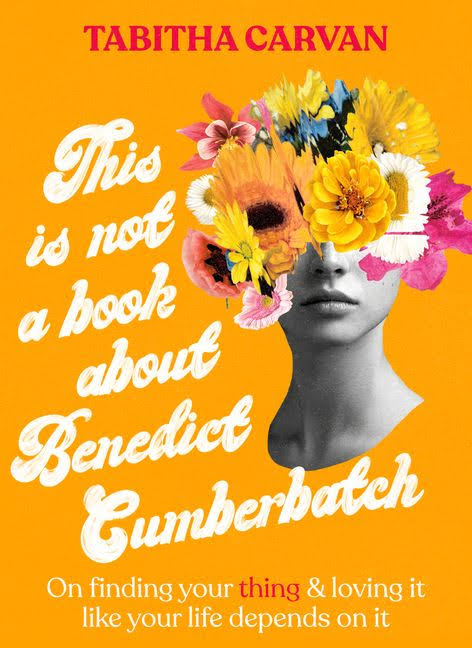
This Is Not A Book About Benedict Cumberbatch
If you feel that sense that there is something missing from your life, some gap between who you are on the inside and who you are on the outside - then this is the book for you.
This is, as the title says, not actually a book about Benedict Cumberbatch.
In fact, it's a book about women and what we love, about what happens to women's passions after we leave adolescence and how the space for joy in our lives is squeezed ever smaller as we age, and why. More importantly, it's about what happens if you subvert that narrative and simply love something like you used to.
Drawing upon her personal experience of unexpectedly falling for the British actor Benedict Cumberbatch while stuck at home with two young children, Carvan challenges the reader to stop instinctively resisting the possibility of experiencing pleasure. Hers is clarion rallying cry: find your thing, whatever it may be, and love it like your life depends on it.
Funny, intelligent, transporting and liberating, this book is a total joy.
'Witty, erudite and fierce in its message - that women should seek joy and find fun. Happily, this book provides both in abundance. I loved it.' Jacqueline Maley
'You know when you bite into a chocolate, and unexpectedly discover it's filled with delectable cherry kirsch that explodes into your mouth and oozes everywhere? That's this book. Original, highly entertaining, fast-paced, personal read that contains unexpected revelations at every corner. It's funny, it's smart, it's compelling. But most of all, it's a battle cry: sit up, pay attention and follow your heart and find joy. After all, our time on this earth is short. C'mon. The clock is ticking.' Ginger Gorman
'Intimate, self-deprecating ... like an Australian Caitlin Moran or Dolly Alderton ... an easy, lighthearted read about serious subject matter: feminism, passion, relationships and creativity, and owning the strength of the passions felt in childhood and adolescence.' Books+Publishing
This is, as the title says, not actually a book about Benedict Cumberbatch.
In fact, it's a book about women and what we love, about what happens to women's passions after we leave adolescence and how the space for joy in our lives is squeezed ever smaller as we age, and why. More importantly, it's about what happens if you subvert that narrative and simply love something like you used to.
Drawing upon her personal experience of unexpectedly falling for the British actor Benedict Cumberbatch while stuck at home with two young children, Carvan challenges the reader to stop instinctively resisting the possibility of experiencing pleasure. Hers is clarion rallying cry: find your thing, whatever it may be, and love it like your life depends on it.
Funny, intelligent, transporting and liberating, this book is a total joy.
'Witty, erudite and fierce in its message - that women should seek joy and find fun. Happily, this book provides both in abundance. I loved it.' Jacqueline Maley
'You know when you bite into a chocolate, and unexpectedly discover it's filled with delectable cherry kirsch that explodes into your mouth and oozes everywhere? That's this book. Original, highly entertaining, fast-paced, personal read that contains unexpected revelations at every corner. It's funny, it's smart, it's compelling. But most of all, it's a battle cry: sit up, pay attention and follow your heart and find joy. After all, our time on this earth is short. C'mon. The clock is ticking.' Ginger Gorman
'Intimate, self-deprecating ... like an Australian Caitlin Moran or Dolly Alderton ... an easy, lighthearted read about serious subject matter: feminism, passion, relationships and creativity, and owning the strength of the passions felt in childhood and adolescence.' Books+Publishing
280 pages, Paperback
First published January 1, 2022
Ratings & Reviews
Friends & Following
Create a free account to discover what your friends think of this book!
Community Reviews
Displaying 1 - 30 of 998 reviews

January 23, 2022
I mean, what a premise: A mother of two young children finds herself completely obsessed with Benedict Cumberbatch and writes about the how and why.
I was helpless to resist such a strange book. Once I got an ARC I immediately dove in - if only for the outlandishness of it all and for a story to tell my friends: “can you believe someone spent their time writing this!?! And it got published!?!?”
Well, I feel like a jerk now because I am so glad Carvan spent her time writing this, and I’m so glad I read this book.
While I did find the cringey moments I was expecting, I did not expect to be as moved as I was. Or how much feminist rage I would experience, because this book is very much about women and girls enjoying things and how societally it becomes unacceptable when women and girls express their love for something. Which is insane!!! Men do it all the time without harsh judgment! Ahhh!!!
It’s a memoir, feminist essay, and pop culture analysis all rolled into one amazing book.
Come for the cringe, stay for the hope, my friends.
I was helpless to resist such a strange book. Once I got an ARC I immediately dove in - if only for the outlandishness of it all and for a story to tell my friends: “can you believe someone spent their time writing this!?! And it got published!?!?”
Well, I feel like a jerk now because I am so glad Carvan spent her time writing this, and I’m so glad I read this book.
While I did find the cringey moments I was expecting, I did not expect to be as moved as I was. Or how much feminist rage I would experience, because this book is very much about women and girls enjoying things and how societally it becomes unacceptable when women and girls express their love for something. Which is insane!!! Men do it all the time without harsh judgment! Ahhh!!!
It’s a memoir, feminist essay, and pop culture analysis all rolled into one amazing book.
Come for the cringe, stay for the hope, my friends.

April 19, 2022
A completely random purchase leading to a highly enjoyable, even profound reading experience.
The premise of This is Not a Book About Benedict Cumberbatch is the author, Tabitha Carvan, exploring the intense 'fixation' she suddenly has with the actor, and the deep sense of guilt, shame and embarrassment that comes from being a 40yo mother of 2 who doesn't want to be lumped in with "Cumberbitches".
Basically, this is a book about joy: about following a spark wherever and whenever it occurs, and letting yourself go where it takes you. Whether that's becoming a fangirl of Benedict Cumberbatch or something else.
Ultimately, it's about the gender differences in what's permissible for men and women when it comes to "play", and the 'appropriate' (ie masculine-approved) ways we are allowed to show passion (or not).
As I was reading this engaging, funny and eye-opening book I kept thinking, Oh I don't have that problem, I have loads of interests, I just don't have any time to enjoy them.
But towards the end, in Part III "Unencumbered", I realised how much I'm just like other women of my generation: I never allow myself to get passionate, to get "carried away" or "obsessed" - always worried about how it will *seem* to others. Do I even know how to? Carvan says yes, I just need to recognise the spark when it happens and go with it, because it will lead to fulfilment, joy and new opportunities.
I'm actually feeling super keen have something to obsess over: no longer scared but buzzed. Do you have something that you love that other people don't really get?
The premise of This is Not a Book About Benedict Cumberbatch is the author, Tabitha Carvan, exploring the intense 'fixation' she suddenly has with the actor, and the deep sense of guilt, shame and embarrassment that comes from being a 40yo mother of 2 who doesn't want to be lumped in with "Cumberbitches".
Basically, this is a book about joy: about following a spark wherever and whenever it occurs, and letting yourself go where it takes you. Whether that's becoming a fangirl of Benedict Cumberbatch or something else.
Ultimately, it's about the gender differences in what's permissible for men and women when it comes to "play", and the 'appropriate' (ie masculine-approved) ways we are allowed to show passion (or not).
As I was reading this engaging, funny and eye-opening book I kept thinking, Oh I don't have that problem, I have loads of interests, I just don't have any time to enjoy them.
But towards the end, in Part III "Unencumbered", I realised how much I'm just like other women of my generation: I never allow myself to get passionate, to get "carried away" or "obsessed" - always worried about how it will *seem* to others. Do I even know how to? Carvan says yes, I just need to recognise the spark when it happens and go with it, because it will lead to fulfilment, joy and new opportunities.
I'm actually feeling super keen have something to obsess over: no longer scared but buzzed. Do you have something that you love that other people don't really get?
January 26, 2022
This book did to me what Hannah Gadsby’s “Nanette” did. I snorted with laughter, but also got chills down my spine in recognition that something profound was happening to me.
I’m not even that fussed by Benedict Cumberbatch, but this book really spoke to me. It is a funny and precise articulation of my lived experience (motherhood, identity, uncool hobbies). Why are the interests of women, and those activities gendered as feminine, given less status than those of men? Why shouldn’t I carve time out for myself to pursue a hobby in the same way men watch football? Really lean into it? Carvan is self-effacing and delightful, and puts this proposal to us in such a fun way that she diffuses the shame – however uncool your interests. She talks to other women about what happened when they opened themselves up to experiencing this joyful obsession they share. Reading about people allowing themselves to be happy turns out to be quite a transformative experience. Imagine that.
I’m not even that fussed by Benedict Cumberbatch, but this book really spoke to me. It is a funny and precise articulation of my lived experience (motherhood, identity, uncool hobbies). Why are the interests of women, and those activities gendered as feminine, given less status than those of men? Why shouldn’t I carve time out for myself to pursue a hobby in the same way men watch football? Really lean into it? Carvan is self-effacing and delightful, and puts this proposal to us in such a fun way that she diffuses the shame – however uncool your interests. She talks to other women about what happened when they opened themselves up to experiencing this joyful obsession they share. Reading about people allowing themselves to be happy turns out to be quite a transformative experience. Imagine that.

January 5, 2022
**I received an advance copy from the publisher because I am a librarian and librarians are awesome**
Okay, who could resist a book with this title? NOT this girl, who has been Sherlock fandom adjacent (though not in the Sherlock fandom) and who knows a thing or two about women who like Cumberbatch.
What I wasn't expecting was the reflective, reassuring nature of this book, which leaned just as heavily on academic sources as it did on stories about people who really, really liked Benedict Cumberbatch. (Though there are those, too. If you are into Cumberbatch, please read the appendix for all sorts of trivia that you probably already know.)
I related to Carvan, who talked about how motherhood stripped away so much of her sense of self and joy that it took a long time to come back to herself. Her story, though, is one of first discovering fandom (through BC, natch), while my personal story is more about reconnecting with fandom - so she had to struggle through some of her own personal biases about women in fandom IN GENERAL, as an adult, unlike those of us who just came to grips with THIS IS HOW WE LIVE NOW, BUFFY, when we were 17.
Because of that, I think it's an important read for anyone who has been in fandom (at any age) and thought they were being juvenile, or silly, or that it was something that they should just GROW OUT OF at some point, while retaining extra poignancy for those of us who have had several soul-sucking years of Parenting Small Children (WHOM WE LOVE. WE LOVE THEM DEARLY) to cope with.
Most striking, for me, is the discussion of how the socially acceptable things that bring women joy are supposed to be productive - "quilting bees, canning parties, knitting circles and book groups, which are "the only kind of acceptable and industrious leisure time most women have ever known." - and how women are often dismissed for doing things just for the JOY of it.
Women need play! How radical! But also - how challenging! This is what I loved about this book, intellectually. Someone will pick up this book, and perhaps they will feel permitted to love something that they love. And that can only be a good thing.
Now who's coming to my basement for a very loud Taylor Swift Karaoke party?
Okay, who could resist a book with this title? NOT this girl, who has been Sherlock fandom adjacent (though not in the Sherlock fandom) and who knows a thing or two about women who like Cumberbatch.
What I wasn't expecting was the reflective, reassuring nature of this book, which leaned just as heavily on academic sources as it did on stories about people who really, really liked Benedict Cumberbatch. (Though there are those, too. If you are into Cumberbatch, please read the appendix for all sorts of trivia that you probably already know.)
I related to Carvan, who talked about how motherhood stripped away so much of her sense of self and joy that it took a long time to come back to herself. Her story, though, is one of first discovering fandom (through BC, natch), while my personal story is more about reconnecting with fandom - so she had to struggle through some of her own personal biases about women in fandom IN GENERAL, as an adult, unlike those of us who just came to grips with THIS IS HOW WE LIVE NOW, BUFFY, when we were 17.
Because of that, I think it's an important read for anyone who has been in fandom (at any age) and thought they were being juvenile, or silly, or that it was something that they should just GROW OUT OF at some point, while retaining extra poignancy for those of us who have had several soul-sucking years of Parenting Small Children (WHOM WE LOVE. WE LOVE THEM DEARLY) to cope with.
Most striking, for me, is the discussion of how the socially acceptable things that bring women joy are supposed to be productive - "quilting bees, canning parties, knitting circles and book groups, which are "the only kind of acceptable and industrious leisure time most women have ever known." - and how women are often dismissed for doing things just for the JOY of it.
Women need play! How radical! But also - how challenging! This is what I loved about this book, intellectually. Someone will pick up this book, and perhaps they will feel permitted to love something that they love. And that can only be a good thing.
Now who's coming to my basement for a very loud Taylor Swift Karaoke party?
January 17, 2022
This book has changed my life. Reading it has made me see the intrinsic value of seeking out joy in my everyday life. It sounds so simple, but by leaning into that joy I can be uniquely and unashamedly myself. It also made me realise with a jolt how we have been taught to dismiss women and girl's interests and passions, and the terrible price we all pay for that.
BC isn't my cup of tea, but as the title says - the book's not about him. It's given me clues about what makes me tick and how to find my bliss.
Tabitha's writing is gaffaw-out-loud funny, insightful and assured. Reading it felt like being on a mesmerising ride that I never wanted to end.
BC isn't my cup of tea, but as the title says - the book's not about him. It's given me clues about what makes me tick and how to find my bliss.
Tabitha's writing is gaffaw-out-loud funny, insightful and assured. Reading it felt like being on a mesmerising ride that I never wanted to end.

June 19, 2022
The title of this book caught my eye, I’m not an obsessive Cumberbatch fan myself although I do think he’s a great actor. The author became obsessed with him when she was a new mother and this book is her attempt to analyse why and if there’s anything wrong with that anyway. It’s an entertaining read, lots of laughs and smiles along with interesting anecdotes from lots of people who have the same obsession (including an academic or two).

September 7, 2022
2.5*
I have mixed feelings. I do like the idea of discussing the double standards in hobbies and interests. Male presenting people's hobbies are important, taken seriously, not made fun of. Female presenting people's hobbies are seen as being frivolous, silly, not to be taken seriously. Despite the fact that female presenting people feed the profit of many different multi-million dollar industries based on their interests: like boy bands, celebrity crushes and fashion (and many more). These are all things that they then invest a lot of time, commitment and money into.
But because society views female presenting people's interests this way, there can often be a feeling of shame around it. Think of the wording like "guilty pleasure", "trashy movies/TV" - there is always a negative connotation to it, forcing a lot of people having to put energy into hiding that part of them instead of letting the geek flag fly.
Another interesting point that is brought up is that people lose themselves after motherhood. They go from having a clear and distinct identity to becoming "wife", "mother". There isn't usually much freedom to explore themselves and their interests during the period of raising children. If they do, then it often comes with a wave of shame of taking time away from their family.
While all these points were really great to be brought up and discussed, I just did not love the way it was delivered. I know, the irony of tone policing a book about tone policing female presenting people and their interests. I found it a little exhausting sitting in Tabitha Carvan's shame. Considering the premise and the points being made, I thought the discussions were going to feel a lot more liberating and freeing, but the reader would always be brought back down by her shame. Again, that is fine, it's just not what I wanted out of this book.
Another note: The title of the book is quite misleading! Sure, it's not about him directly and more about her passion for him, I thought it was going to be more of an anecdote to jump off into the discussion, but instead it is very much weaved into every single discussion. Maybe it wouldn't have mattered as much if I were in that particular fan group, but I just got a little bored hearing all about him, his movies, and his body parts. I guess I hope it would be a bit more generalised.
I have mixed feelings. I do like the idea of discussing the double standards in hobbies and interests. Male presenting people's hobbies are important, taken seriously, not made fun of. Female presenting people's hobbies are seen as being frivolous, silly, not to be taken seriously. Despite the fact that female presenting people feed the profit of many different multi-million dollar industries based on their interests: like boy bands, celebrity crushes and fashion (and many more). These are all things that they then invest a lot of time, commitment and money into.
But because society views female presenting people's interests this way, there can often be a feeling of shame around it. Think of the wording like "guilty pleasure", "trashy movies/TV" - there is always a negative connotation to it, forcing a lot of people having to put energy into hiding that part of them instead of letting the geek flag fly.
Another interesting point that is brought up is that people lose themselves after motherhood. They go from having a clear and distinct identity to becoming "wife", "mother". There isn't usually much freedom to explore themselves and their interests during the period of raising children. If they do, then it often comes with a wave of shame of taking time away from their family.
While all these points were really great to be brought up and discussed, I just did not love the way it was delivered. I know, the irony of tone policing a book about tone policing female presenting people and their interests. I found it a little exhausting sitting in Tabitha Carvan's shame. Considering the premise and the points being made, I thought the discussions were going to feel a lot more liberating and freeing, but the reader would always be brought back down by her shame. Again, that is fine, it's just not what I wanted out of this book.
Another note: The title of the book is quite misleading! Sure, it's not about him directly and more about her passion for him, I thought it was going to be more of an anecdote to jump off into the discussion, but instead it is very much weaved into every single discussion. Maybe it wouldn't have mattered as much if I were in that particular fan group, but I just got a little bored hearing all about him, his movies, and his body parts. I guess I hope it would be a bit more generalised.

March 29, 2022
I suspect readers of this book will fall into two categories: those who get it and feel it deep in their bones and those who don’t. Sadly for me as I can see what I’m missing out on I fall into the don’t fully get it category. But I don’t want to rain on anyone’s obsession or fandom. Find joy where you can I say and spend your time cultivating that joy. And that is what this book is ultimately about. The second half felt so much stronger than the first and the concept was expanded in some really interesting ways. Women and girls really do get shortchanged when it comes to play, fun and joy.

April 18, 2022
I have always loved things too much. Whether it be The Sound of Music when I was a toddler, Harry Potter when I was eleven, emo music when I was thirteen, or books... always... I've been obsessing since I was young. BBC's Sherlock was no exception to my unadulterated obsession when I discovered it. I had Sherlock t-shirts, a Sherlock phone case, a Sherlock tumblr blog, Sherlock mugs, Sherlock totebags, and even a Sherlock charm bracelet at one point. Everyone at school knew me as the Sherlock/Benedict Cumberbatch/weird walking-tumblr girl. When I was fourteen, for my birthday, I met Benedict Cumberbatch and I stopped breathing for longer than is healthy when I saw his hair.
All this to say, when I saw this book and read the synopsis, I knew I needed to read it, despite not being a big fan of nonfiction. And I was not disappointed.
Carvan details the experience, the particularly feminine experience, of losing ourselves as we grow older. Of shedding the things we love so as to not be looked down upon by society - "you're an adult now, no need for the boyband posters" - "aren't you too old for children's books?" - "you must have a lot of free time if that's your hobby". And her dissection of this, paired with her own hilarious and witty anecdotes about her love of Benedict Cumberbatch, made for a book I devoured almost in one sitting.
This book tackles all the things you're afraid of, or at least, I was - being out and proud about something "embarrassing" that you love, a "guilty pleasure", is hard. Carvan explores this with painstaking accuracy, the fear and self-loathing of loving something but not wanting to be the "crazy fangirl", or the "weird woman" who likes something peculiar. The sheer joy of finding your "thing", but then realising the world has far too many opinions. As Carvan says, "when you're a girl who really loves a thing, it's never just about you and your thing. Everyone else makes it their problem".
I think there's something for everyone in this book because everyone knows what it's like to really love something. Like, how you felt when you were thirteen and saw One Direction live, or the way waiting outside the bookstore for the next Shadowhunters instalment to release was the most exciting thing in the world. And Carvan is right - we, especially women, have this habit of being convinced to grow out of our passions because they're not something that fits with society's idea of a grown-up woman. The exploration of how gender affects our interaction with things we love hit incredibly close to home, and I felt I understood myself and the world better as a consequence after reading this book.
I felt this especially when I started university (yes welcome to an anecdote hi nice to have you). I studied creative writing, hoping to find a home where I could safely geek out about my favourite books and my true passion, young adult fiction. I loved reading it, I loved writing it, and I couldn't wait to express that. But slowly I realised that I was in academia now - that genres like YA and romance and fantasy were lowbrow, and instead I should be reading - strangely - a lot of Gabriel García Márquez. A lot of this judgement came from male classmates (who are always, funnily enough, the loudest), as well as male lecturers - but it also came from other women around me, who so effortlessly tore down the - female-dominated - genres and industries I loved. And so I too scorned my own favourite books, laughed and said "hahah isn't it so funny I used to read so much YA fiction lol now I'm reading Truman Capote LOVE ME PLEASE". I read just eight books in my first year of uni, as opposed to the 100 I read when I was 15.
Since, I actually managed to follow a similar journey to that which Carvan follows in her book - I slowly reintegrated YA fiction back into my life (but of course on the downlow - Virginia Woolf in my tote bag at uni, but Cassandra Clare in my bedside table draw). When the pandemic hit, and everything was stripped away, I started reading. A lot. And suddenly, I wanted to talk about it, and I found people wanting to listen, and lo and behold, I started my bookstagram page, which is now one of the great joys of my life.
And Carvan is entirely right - loving something is the best thing in the world. Being passionate, being invested, gives your life a whole new light. Now, when people ask what I read, I'm not ashamed or embarrassed to admit what I love. I'm not alone, and even more importantly, I'm happier. I carry my historical romances with raunchy covers to the office, I read my YA fantasies on the bus without a care. I like to think that someone will see, and will realise that it's okay for them to do the same.
I think this book is akin to a big hug that tells you it's okay to be you and be you out loud, but also explains WHY that's the case. In fact, it's more than okay - it's actually the best way to be. It reminded me, in a way I sorely needed, that I don't need to laugh off my interests when I feel embarrassed by them (which, unfortunately, I still sometimes do). I'm allowed to love them! And you are too! I think back to the fourteen-year-old girl who wore an "Obsessive Cumberbatch Disorder" t-shirt and hugged Benedict Cumberbatch and then splashed the picture all over every social media page I had, and now, I'm in awe of her bravery.
If there are two things I learned from this book, the first one is that it is beautiful and necessary to follow the things that bring you joy and pursue them out loud. The second is that Benedict Cumberbatch can truly transform lives (which I already knew - ask fourteen-year-old Lily).
All this to say, when I saw this book and read the synopsis, I knew I needed to read it, despite not being a big fan of nonfiction. And I was not disappointed.
Carvan details the experience, the particularly feminine experience, of losing ourselves as we grow older. Of shedding the things we love so as to not be looked down upon by society - "you're an adult now, no need for the boyband posters" - "aren't you too old for children's books?" - "you must have a lot of free time if that's your hobby". And her dissection of this, paired with her own hilarious and witty anecdotes about her love of Benedict Cumberbatch, made for a book I devoured almost in one sitting.
This book tackles all the things you're afraid of, or at least, I was - being out and proud about something "embarrassing" that you love, a "guilty pleasure", is hard. Carvan explores this with painstaking accuracy, the fear and self-loathing of loving something but not wanting to be the "crazy fangirl", or the "weird woman" who likes something peculiar. The sheer joy of finding your "thing", but then realising the world has far too many opinions. As Carvan says, "when you're a girl who really loves a thing, it's never just about you and your thing. Everyone else makes it their problem".
I think there's something for everyone in this book because everyone knows what it's like to really love something. Like, how you felt when you were thirteen and saw One Direction live, or the way waiting outside the bookstore for the next Shadowhunters instalment to release was the most exciting thing in the world. And Carvan is right - we, especially women, have this habit of being convinced to grow out of our passions because they're not something that fits with society's idea of a grown-up woman. The exploration of how gender affects our interaction with things we love hit incredibly close to home, and I felt I understood myself and the world better as a consequence after reading this book.
I felt this especially when I started university (yes welcome to an anecdote hi nice to have you). I studied creative writing, hoping to find a home where I could safely geek out about my favourite books and my true passion, young adult fiction. I loved reading it, I loved writing it, and I couldn't wait to express that. But slowly I realised that I was in academia now - that genres like YA and romance and fantasy were lowbrow, and instead I should be reading - strangely - a lot of Gabriel García Márquez. A lot of this judgement came from male classmates (who are always, funnily enough, the loudest), as well as male lecturers - but it also came from other women around me, who so effortlessly tore down the - female-dominated - genres and industries I loved. And so I too scorned my own favourite books, laughed and said "hahah isn't it so funny I used to read so much YA fiction lol now I'm reading Truman Capote LOVE ME PLEASE". I read just eight books in my first year of uni, as opposed to the 100 I read when I was 15.
Since, I actually managed to follow a similar journey to that which Carvan follows in her book - I slowly reintegrated YA fiction back into my life (but of course on the downlow - Virginia Woolf in my tote bag at uni, but Cassandra Clare in my bedside table draw). When the pandemic hit, and everything was stripped away, I started reading. A lot. And suddenly, I wanted to talk about it, and I found people wanting to listen, and lo and behold, I started my bookstagram page, which is now one of the great joys of my life.
And Carvan is entirely right - loving something is the best thing in the world. Being passionate, being invested, gives your life a whole new light. Now, when people ask what I read, I'm not ashamed or embarrassed to admit what I love. I'm not alone, and even more importantly, I'm happier. I carry my historical romances with raunchy covers to the office, I read my YA fantasies on the bus without a care. I like to think that someone will see, and will realise that it's okay for them to do the same.
I think this book is akin to a big hug that tells you it's okay to be you and be you out loud, but also explains WHY that's the case. In fact, it's more than okay - it's actually the best way to be. It reminded me, in a way I sorely needed, that I don't need to laugh off my interests when I feel embarrassed by them (which, unfortunately, I still sometimes do). I'm allowed to love them! And you are too! I think back to the fourteen-year-old girl who wore an "Obsessive Cumberbatch Disorder" t-shirt and hugged Benedict Cumberbatch and then splashed the picture all over every social media page I had, and now, I'm in awe of her bravery.
If there are two things I learned from this book, the first one is that it is beautiful and necessary to follow the things that bring you joy and pursue them out loud. The second is that Benedict Cumberbatch can truly transform lives (which I already knew - ask fourteen-year-old Lily).

December 5, 2023
I promise you: if you live the way this book instructs you to, you will end up miserable. I promise you. You are not the shit you like. Liking things cannot amount to a personality. It cannot fill the void in you. No matter how passionately you invest yourself in these abstractions, they can never constitute the self that you feel is missing. Do you want to be in your 80s, obsessing over Benedict Cumberbatch instead of your grandchildren? Do you think the author will be lying on her deathbed, saying to herself, "At least I spent all that time thinking about Benedict Cumberbatch"?
It is so, so bizarre to release this book, with this premise, in the age of total pop hegemony and absolute shamelessness over frenzied standom. This book is a manual fighting for the right to do what our media industrial complex already wants you to do!
It is so, so bizarre to release this book, with this premise, in the age of total pop hegemony and absolute shamelessness over frenzied standom. This book is a manual fighting for the right to do what our media industrial complex already wants you to do!

August 14, 2022
This should have been an essay rather than a book. It felt very padded.

September 20, 2022
I’ll start by saying the narrator of the audio was not working for me. Like, she drove me insane. And, for a book “not” about Benedict Cumberbatch, I sure did hear his name 50,000 times. The point of this book is that going through phases and fandoms and passions in life is normal and brings us joy. And joy is good. And sometimes the things we like are weird, but that’s ok. That’s it. So, you probably don’t need to read this book.

March 2, 2022
‘The thing about fantasy is it can’t be observed.’
Okay. The title intrigued me. I may not share this particular obsession, but I know what it is like to become lost in the juggling of life responsibilities that becomes reality when marriage, full-time work and parenting takes every waking hour. When almost every decision must be made through the prism of responsibilities to (and for) others.
So, what did I learn? Heaps. As Ms Carvan analyses her preoccupation with Benedict Cumberbatch, she realises that it is less about the man and more about the fact that she can feel passionate about something at a time when her life was full of responsibility. Many parents (not only mothers) can relate to being defined by our relationships to others (partners, parents, children etc) or responsibilities (jobs, volunteer work etc). Not a lot of time is left to pursue other interests, and by the time you have the time back (if you live long enough) it can be hard to rekindle old (or discover new) interests.
‘It’s funny how we decide what’s normal and what’s weird.’
Ms Carvan uses her obsession with Benedict Cumberbatch (yes, I know who he is, and I liked him in Sherlock) to examine what happens, specifically to women, after adolescence. I read this book, reminded of furious exhortations to ‘behave appropriately’, of the many pleasures denied after puberty as being ‘unladylike’. Sigh.
This is a wise and witty examination of the need for interests we can find joy in. Ms Carvan draws on academic sources as well as those who share her obsession. We need to play! And some of us will need to relearn how to do so.
Highly recommended.
Note: My thanks to NetGalley and HarperCollins Publishers Australia for providing me with a free
electronic copy of this book for review purposes.
Jennifer Cameron-Smith
Okay. The title intrigued me. I may not share this particular obsession, but I know what it is like to become lost in the juggling of life responsibilities that becomes reality when marriage, full-time work and parenting takes every waking hour. When almost every decision must be made through the prism of responsibilities to (and for) others.
So, what did I learn? Heaps. As Ms Carvan analyses her preoccupation with Benedict Cumberbatch, she realises that it is less about the man and more about the fact that she can feel passionate about something at a time when her life was full of responsibility. Many parents (not only mothers) can relate to being defined by our relationships to others (partners, parents, children etc) or responsibilities (jobs, volunteer work etc). Not a lot of time is left to pursue other interests, and by the time you have the time back (if you live long enough) it can be hard to rekindle old (or discover new) interests.
‘It’s funny how we decide what’s normal and what’s weird.’
Ms Carvan uses her obsession with Benedict Cumberbatch (yes, I know who he is, and I liked him in Sherlock) to examine what happens, specifically to women, after adolescence. I read this book, reminded of furious exhortations to ‘behave appropriately’, of the many pleasures denied after puberty as being ‘unladylike’. Sigh.
This is a wise and witty examination of the need for interests we can find joy in. Ms Carvan draws on academic sources as well as those who share her obsession. We need to play! And some of us will need to relearn how to do so.
Highly recommended.
Note: My thanks to NetGalley and HarperCollins Publishers Australia for providing me with a free
electronic copy of this book for review purposes.
Jennifer Cameron-Smith

March 4, 2022
When I first saw This is Not a Book About Benedict Cumberbatch on NetGalley, I skimmed over it, the cover making me instantly label it as chick-lit, which is not a genre I actively read, so I didn't bother looking at the blurb, even though Benedict Cumberbatch's name on the cover caught my eye. Then, a couple of days ago, I received an email from the publisher listing new releases, and this book was there, with the blurb below it. Instantly, I realised this was indeed a book for me, so I rushed back to NetGalley, thinking that if it was still available for request I was definitely meant to read it. It was, and I was pre-approved, so I took that as a sign and started reading that very night.
This book was perfect for me, because it is highly connected to my personal experiences. I am in my late 30s (I prefer that to 'nearly 40'!), but I get very passionate about things that interest me, be it a new musical, or an actor I've fallen in love with and whose backlist I am now tearing through, while Googling pictures and GIFs etc. I own my interests and generally don't try to hide them, although I might tone down my enthusiasm a little at work, just to be professional. However, it does still upset me when, in return, I get comments like "How old are you? You're not a teenager anymore", as if the moment I turned twenty I was no longer supposed to get excited about anything. I don't have kids like the author of this book, but I do have work, a household to run, chores to do etc. and I don't have as much time for myself as I used to. So, when I can 'play', why shouldn't I enjoy myself with something I love?
This is Not a Book About Benedict Cumberbatch showed me I am not the only one who feels this way, and I think it is a wonderful book for those who still perhaps feel ashamed or worried about their passions and interests. It is full of insightful comments and some wonderful moments of humour, and whether you are out about your loves or still keep them in the closet, I think you would get something out of reading this work, even if it's just to see that you are not alone. This book gets five stars from me. It was both fun and uplifting, and it was exactly what I needed after a busy period at work lately which had left me feeling flat and a bit down.
I received this book as a free eBook ARC via NetGalley in exchange for an honest review.
This book was perfect for me, because it is highly connected to my personal experiences. I am in my late 30s (I prefer that to 'nearly 40'!), but I get very passionate about things that interest me, be it a new musical, or an actor I've fallen in love with and whose backlist I am now tearing through, while Googling pictures and GIFs etc. I own my interests and generally don't try to hide them, although I might tone down my enthusiasm a little at work, just to be professional. However, it does still upset me when, in return, I get comments like "How old are you? You're not a teenager anymore", as if the moment I turned twenty I was no longer supposed to get excited about anything. I don't have kids like the author of this book, but I do have work, a household to run, chores to do etc. and I don't have as much time for myself as I used to. So, when I can 'play', why shouldn't I enjoy myself with something I love?
This is Not a Book About Benedict Cumberbatch showed me I am not the only one who feels this way, and I think it is a wonderful book for those who still perhaps feel ashamed or worried about their passions and interests. It is full of insightful comments and some wonderful moments of humour, and whether you are out about your loves or still keep them in the closet, I think you would get something out of reading this work, even if it's just to see that you are not alone. This book gets five stars from me. It was both fun and uplifting, and it was exactly what I needed after a busy period at work lately which had left me feeling flat and a bit down.
I received this book as a free eBook ARC via NetGalley in exchange for an honest review.

August 3, 2022
More than what you might think this book is going to be about. Ultimately it's about having, reclaiming, OWNING interests that are purely for ourselves, that don't necessarily have to fulfill anyone else's definitions, expectations, etc. The sheer JOY of loving something that to anyone/everyone else might make no sense, or else seem trivial, superficial, silly, whatever. And the author delves into the judgments people make from the outside, ESPECIALLY when it involves women, which I especially appreciated. Worth reading.
July 4, 2022
I get that the author is really into Benedict Cumberbatch (The book really Is about Benedict Cumberbatch)and that she felt unsure about her obsession but did it really have to be written as a book? Nah. Maybe a short article, sure. Anyway, glad I borrowed a copy from a library and didn't spend money buying it.

February 25, 2022
Wonderful premise and thoughtful discussion on fandom and why it is seen as an immature hobby, particularly when AFAB people engage in it. It made me feel better about engaging in fandom, which is something I've felt unreasonably ashamed of once I got into my twenties—like now that I'm a full adult it's not productive enough? As the author shows so well in this book, there's no reason to be ashamed of something harmless that makes you happy and fulfills you in some way. Also enjoyed all the interviews from people of all ages who are involved in the BBC Sherlock fandom.

March 5, 2022
Tabitha has written a book with probably the most intriguing title ever! This book is a little nugget of pure joy- it’s funny, it makes you think- like you put it down and a few hours later you find yourself pondering- has that happened to me? I have felt that!! I get that!! That is a thing!! It’s a thing!! Other people have this, feel this!! It’s the best book I have read about becoming a mum and the grief and loss women experience at a time when we also feel intense joy and love… because women uniquely loose part of themselves and it’s almost like we have to claw our way back to find the new part of us that is a mother and ….? And sometimes we do that by reimagining parts of ourselves or finding love and joy in other things- but so much happens along the way- give this to every new mum- read it and share it! HIGHLY RECOMMEND!!

November 6, 2022
Waste of time. The interesting bits of the conversation around fandom was dwarfed by a more troubling reckoning with female sexual fantasy. More about justifying the wonky things that an unhealthy obsession with a single thing can bring out in a person. Try as she might, the author could not convince me that the level of passion/obsession/fantasy/feeling that these millions of women experience via Benedict Cumberbatch is healthy or merely a hobby. The poor man has no power or control over what people do with his face/image. One more reason never to explore either fame or the depths of the dark internet.

February 15, 2022
This book intrigued me and I found myself appreciating it more the further I got into it. At first I was expecting it to be more a general memoir but was surprised that it really is about someone truly obsessed with Benedict Cumberbatch (who knew that Cumberbitches are a real thing). This book goes much deeper though and makes you really reflect on what hobbies you have in your life and what is acceptable for both males and females, from childhood into adulthood.

January 19, 2022
A laugh out loud, thought-provoking memoir that inspires me to remember the things I used to be passionate about, and be whole-hearted in embracing new passions.

October 16, 2022
When I picked up “This Is Not a Book About Benedict Cumberbatch: The Joy of Loving Something--Anything--Like Your Life Depends on It” I figured it would be a book for me. I am an unashamed nerd who has seen everything in the MCU more than once, and I inherited a love of Star Wars that was passed down from my older brother. Surely this would be a fun book where we just talk about loving things, right?
By the second chapter I was starting to distance myself from the author. I love things, but not like… that. The author’s love was a little too intense for me. But it was a little too intense for her too. And that’s why this is not a book about Benedict Cumberbatch, it’s a book feeling empty and the wonderful feeling when something fills that space. It’s about motherhood and womanhood and how women are conditioned to not consider it okay to be passionate about things. Carvan talked about when girls get passionate about something (music, actors, etc.) they are often critiqued by other fans for ruining the fandom. Other fans will look at them and say I love this thing, but I’m not like them. That’s how Carvan felt about the Benedict Cumberbatch fandom until she started seeing the passionate women and creators as people. As she came to terms with her own love of Benedict Cumberbatch, she also convinced me that maybe she--and the hundreds of other women like her--weren't so weird after all.
There is a caveat to this 5 star review. I have been on the internet. I am not a reader who needs fanfiction explained to me. Unlike the author, I do not think every expression of love for a thing is okay. She did address the issue of “othering” another human being, but it was a weak point. She used a quote from Aiden Turner (you are probably familiar with the Poldark scene where he’s shirtless in a field scything grass) where he says that as a man being looked at is not the same as it is for a woman. After that the discussion is dropped. It’s a fine explanation, but I don’t think it is enough.
Despite this difference between the author’s values and my own, I appreciate this book for what it is. It is not a book about Benedict Cumberbatch, it is a look at the psychology and sociology of a woman loving something–anything–and how that love can change her life for the better.
By the second chapter I was starting to distance myself from the author. I love things, but not like… that. The author’s love was a little too intense for me. But it was a little too intense for her too. And that’s why this is not a book about Benedict Cumberbatch, it’s a book feeling empty and the wonderful feeling when something fills that space. It’s about motherhood and womanhood and how women are conditioned to not consider it okay to be passionate about things. Carvan talked about when girls get passionate about something (music, actors, etc.) they are often critiqued by other fans for ruining the fandom. Other fans will look at them and say I love this thing, but I’m not like them. That’s how Carvan felt about the Benedict Cumberbatch fandom until she started seeing the passionate women and creators as people. As she came to terms with her own love of Benedict Cumberbatch, she also convinced me that maybe she--and the hundreds of other women like her--weren't so weird after all.
There is a caveat to this 5 star review. I have been on the internet. I am not a reader who needs fanfiction explained to me. Unlike the author, I do not think every expression of love for a thing is okay. She did address the issue of “othering” another human being, but it was a weak point. She used a quote from Aiden Turner (you are probably familiar with the Poldark scene where he’s shirtless in a field scything grass) where he says that as a man being looked at is not the same as it is for a woman. After that the discussion is dropped. It’s a fine explanation, but I don’t think it is enough.
Despite this difference between the author’s values and my own, I appreciate this book for what it is. It is not a book about Benedict Cumberbatch, it is a look at the psychology and sociology of a woman loving something–anything–and how that love can change her life for the better.

January 4, 2023
Gosh this was good. Funny, moving and challenging in all the best ways. Emphasis on the funny - I laughed out loud so many times reading it.
This is not a book about Benedict Cumberbatch, it’s about passion and joy and breaking yourself open just a little bit to let the light in and allow yourself to breathe.
It is both such a wonderful memoir of Carvan’s experience reckoning with Benedict Cumberbatch becoming a focal point of her life, and also a smart and well-researched discussion about why we (humans generally, but also women in particular) love things so hugely, and why we sometimes don’t allow ourselves to do that. Funny AND smart? My absolute favourite.
I really loved this and will be purchasing the physical copy to keep on my shelf as a reminder to love things more freely and lean into playfulness purely for the sake of pleasure and happiness.
This is not a book about Benedict Cumberbatch, it’s about passion and joy and breaking yourself open just a little bit to let the light in and allow yourself to breathe.
It is both such a wonderful memoir of Carvan’s experience reckoning with Benedict Cumberbatch becoming a focal point of her life, and also a smart and well-researched discussion about why we (humans generally, but also women in particular) love things so hugely, and why we sometimes don’t allow ourselves to do that. Funny AND smart? My absolute favourite.
I really loved this and will be purchasing the physical copy to keep on my shelf as a reminder to love things more freely and lean into playfulness purely for the sake of pleasure and happiness.

May 4, 2022
I picked this up for the title, but you should really read it for its contents. After watching the Sherlock Christmas special, the author finds herself inexplicably obsessed. But this book is not about why you should love Cumberbatch, but why you should find, and follow, whatever it is that gives you unadulterated joy and pleasure. There are great sidelines on finding community and creativity through your passions, how women's interests are often dismissed as frivolous or that they like the right things but they do so in the wrong way, and that things we enjoy should be a priority and that our hobbies and passions don't need to be a hustle or another guise for productivity. I really enjoyed this funny and feminist appeal to embracing what you love.

April 2, 2022
Carvan's voice is clear and unique throughout this book, making me laugh out loud more than once. Her personal takes on motherhood and having a career were poignant, and her interviews with other folks were compellingly described and interesting to read. I don't think you need to be a Cumberbatch fan, but it certainly made me laugh even harder at certain points. The bigger picture points about joy, play, and feminism were enough to draw any reader to this - though you are definitely missing out on Sherlock if you haven't seen it yet!
Thanks to the publisher for the ARC received via Netgalley!
Thanks to the publisher for the ARC received via Netgalley!
June 25, 2022
I think this book lowkey changed my life ?

March 7, 2023
nothing to note here except the joy of reading a book seemingly written for you to find at the exact time you need it
September 24, 2025
This book was recommended to me at a really needed moment in my life. I am the mom of three kids and two of them are now officially in school full time. I hang back at home with the youngest as a stay at home mom. This book helped me process how much of life I have been not allowing myself to live. I can’t blame myself too much, when you have kids at home 24/7 and you don’t really have any outlets of work or consistent socializing outside of the home, it can be easy to feel like you’re just becoming part of the furniture. I told a friend awhile back that I felt like I was turning into the pillow on my couch, or disappearing into the wall in my dining room or becoming an appliance in my kitchen. I have struggled to claw back any form of individuality I can possibly muster (most especially during naptimes) because I do not want to contend with becoming an invisible person that simply is the “mistress of the home”.
The basic summary of this book is that we (but especially moms) need to find joy in our life, even if it is joy that isn’t “productive” or “for someone else”. We need to find our sparks that give us hope. And oh do we need a lot of hope right now with all of the ferocious things going on in the world, particularly in the “United” States of America.
I tried to be reflective on things that have brought me unproductive and genuine joy in my life. I used to paint and draw a lot as a child, and I was a very avid reader (which fortunately I have returned back to). I used to collect Pokémon cards (which I was instructed to throw away when I was 11 because they didn’t focus enough on Jesus, but also because Pokémon isn’t very feminine) and I loved watching sports and movies that were actually very male centric (sandlot was my favorite movie. I always wished I could’ve joined the boys in playing because I didn’t have that form of a girls group growing up). I also loved superheroes and became obsessed with Spiderman and all things Marvel. As a teenager, I loved going to dances and clubs to just let loose. I watched hours and hours of YouTube videos like “homestar runner” and “making fiends”. I played hours and hours worth of video games, from Barbie Princess and the Pauper to Mario Kart. I took photos as a big hobby, made a little bit of money from it but mostly did it for fun. I would make movies with my friends (xmen) and would always have a camera ready to record a moment. When things like “Twilight” and “Phantom of the Opera” and “Pride and Prejudice” came out, I HARDCORE fanshipped it all. I was obsessed with Rob Pat, with Gerard Butler, with Matthew Macfayden, and it was ok to be that way because all of the other girls around me were doing it too. I really did have a youth stage full of play.
Yet, as I have gotten married, had kids, gotten into the swing of being a “suburban housewife”, I feel like I have been detached from the things that I used to love and now wonder what I actually *do* love. My anxiety has gotten mixed into the whole thing as well, where I’m afraid to let people know that I like certain topics or hobbies because I don’t want to be perceived as too weird (even though high school was so totally 15 full years ago).
My hope is that I can create a springboard of passion for myself in the coming months that isn’t beholden to anyone except me. My hope is that I can teach my kids to never let go of the magic of joy, to always find ways to carve it into their routines.
The basic summary of this book is that we (but especially moms) need to find joy in our life, even if it is joy that isn’t “productive” or “for someone else”. We need to find our sparks that give us hope. And oh do we need a lot of hope right now with all of the ferocious things going on in the world, particularly in the “United” States of America.
I tried to be reflective on things that have brought me unproductive and genuine joy in my life. I used to paint and draw a lot as a child, and I was a very avid reader (which fortunately I have returned back to). I used to collect Pokémon cards (which I was instructed to throw away when I was 11 because they didn’t focus enough on Jesus, but also because Pokémon isn’t very feminine) and I loved watching sports and movies that were actually very male centric (sandlot was my favorite movie. I always wished I could’ve joined the boys in playing because I didn’t have that form of a girls group growing up). I also loved superheroes and became obsessed with Spiderman and all things Marvel. As a teenager, I loved going to dances and clubs to just let loose. I watched hours and hours of YouTube videos like “homestar runner” and “making fiends”. I played hours and hours worth of video games, from Barbie Princess and the Pauper to Mario Kart. I took photos as a big hobby, made a little bit of money from it but mostly did it for fun. I would make movies with my friends (xmen) and would always have a camera ready to record a moment. When things like “Twilight” and “Phantom of the Opera” and “Pride and Prejudice” came out, I HARDCORE fanshipped it all. I was obsessed with Rob Pat, with Gerard Butler, with Matthew Macfayden, and it was ok to be that way because all of the other girls around me were doing it too. I really did have a youth stage full of play.
Yet, as I have gotten married, had kids, gotten into the swing of being a “suburban housewife”, I feel like I have been detached from the things that I used to love and now wonder what I actually *do* love. My anxiety has gotten mixed into the whole thing as well, where I’m afraid to let people know that I like certain topics or hobbies because I don’t want to be perceived as too weird (even though high school was so totally 15 full years ago).
My hope is that I can create a springboard of passion for myself in the coming months that isn’t beholden to anyone except me. My hope is that I can teach my kids to never let go of the magic of joy, to always find ways to carve it into their routines.

February 16, 2023
A lovely read about how anything women do suddenly becomes political and controversial. Only critique was defs a lil old for me in terms of perspective/discussions on motherhood. that’s no fault of the book, just the fault of me being born in the new millennium.

April 5, 2025
What a delightful, unexpected celebration of girlhood. I read this going “yes yes yes yes”. Give in to joy!!
Displaying 1 - 30 of 998 reviews