A concise history of the goddess-like figures who evade both Christian and pagan traditions, from the medieval period to the present day
In this riveting account, renowned scholar Ronald Hutton explores the history of deity-like figures in Christian Europe. Drawing on anthropology, archaeology, literature, and history, Hutton shows how hags, witches, the Fairy Queen, and the Green Man all came to be, and how they changed over the centuries.
Looking closely at four main figures—Mother Earth, the Fairy Queen, the Mistress of the Night, and the Old Woman of Gaelic tradition—Hutton challenges decades of debate around the female figures who have long been thought versions of pre-Christian goddesses. He makes the compelling case that these goddess figures found in the European imagination did not descend from the pre-Christian ancient world, yet have nothing Christian about them. It was in fact nineteenth-century scholars who attempted to establish the narrative of pagan survival that persists today.
Ronald Hutton (born 1953) is an English historian who specializes in the study of Early Modern Britain, British folklore, pre-Christian religion and contemporary Paganism. A professor of history at the University of Bristol, Hutton has published fourteen books and has appeared on British television and radio.
** Thanks to NetGalley, Ronald Hutton, and Yale University Press for this ARC **
Queens of the Wild: Pagan Goddesses in Christian Europe: An Investigation is available for purchase now!
In this account of four figures - Mother Earth, the Fairy Queen, the Mistress of the Night, and the Old Woman of Gaelic tradition - Hutton makes the case that these figures are neither relics of pre-Christian pagan beliefs nor a product of Christianity itself. Rather, he asserts, they are the result of 19th century scholars attempting to prove that Pagan beliefs persisted undetected into the age of Christianity.
Parts of this were very interesting! I enjoyed learning about these figures and the ways in which they came about. I also found it fascinating to look at such a vivid example of what happens when the history we create becomes the accepted reality, whether or not it ever happened. This was a wonderful reminder of the power of the storyteller to dictate the past, and that our understanding of history is, often, the assertions of those who lived centuries after.
With that being said, I am really not sure who the audience of this book was intended to be. It was very dense and referenced many niche people and topics related to Pagan goddesses in Europe. At the same time, it seemed to be trying to appeal to a more general audience. This felt like a journal article that almost made the leap into popular nonfiction, but just missed.
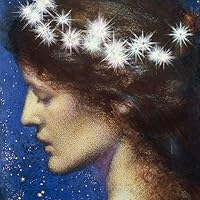
Side note: Did I pick up this book in part because of its gorgeous cover? Absolutely yes.
Ronald Hutton is one of those nonfiction authors who you can always trust to be thorough and (I think) impartial in their assessment of the evidence. In Queens of the Wild, he carefully weighs up various sources and takes you step by step through the birth of these various myths, how they have morphed and developed in the time since their earliest mentions. And in the end, you get a fascinating, in-depth and yet very readable book.
It definitely helps that I found the content in itself engrossing. I enjoyed seeing how the eponymous queens of the wild figures came to be as they are today, and particularly how some of them are less ancient than might be thought. It's very interesting to see how myths form and, especially, how they become popular myth, such as the Green Man, given as a final, additional example in this book.
Queens of the Wild is an excellent piece of nonfiction, both for people with a deeper knowledge of the topic and for those (like me!) who haven't read or thought much on it before. One I would highly recommend.
Ronald Hutton doesn't believe in fairies. Don't get me wrong, I don't believe in fairies, either. I know of only one person, who definitely believed in fairies - Arthur Conan Doyle, who created Sherlock Holmes. While reading "Queens of the Wild" I couldn't help imagining Ronald Hutton meeting Arthur Conan-Doyle and giving him a copy of his book. They would have shaked hands and Ronald Hutton would have smirked and said under his breath: "Read this, you nitwit". What a pity that poor Arthur is long gone.
Anyway, it was an interesting book with some boring repetitive parts, that dragged a bit. But I kept reading, because the book put all I knew about the pagan imaginary in the context and showed how opinions changed over the years. It was worth my time, but the author's smugness annoyed me at times. He is so sure of himself, he has it all figured out. The Great Mother? Nonsense created by eco-friendly feminists! Fairies? Poppycock created by troubadours! The Green Man? Bunkum and balderdash... it started as a nice decorative element in churches without any hidden meaning. In my humble opinion there are so many things we don't know, I wouldn't be so sure that the author got it right.
I received "Queens of the Wild" from the publisher via NetGalley. I would like to thank the author and the publisher for providing me with the advance reader copy of the book.
This book is a very, very, in depth look at the narrative surrounding female figures of supposedly pagan origins. But although the subject matter deserves to be explored further, I could not help but feel conflicted by this offering. Hutton offers up four main archetypes for the reader’s perusal, yet it is done in such a way that the reader becomes overwhelmed and unable to follow the examples given. This reader in particular had to set down and take the book up again multiple times in order to finish, having to parse and process what had been consumed every few pages. In truth, this review was difficult to write as I had so wanted to enjoy the topic being explored. The information presented is overall worth a read, but perhaps for the truly dedicated and not a casual reader.
Ronald Hutton is something of an iconoclast here, demolishing common ideas about folkloric figures by tracing the way they have been interpreted in the last 200 years. He considers four figures -- the "Earth Mother," the Fairie Queen, the "Queen of the Night," and the Cailleach -- and analyzes how each of these characters evolved, primarily through the lens of folklorists interpreting local stories, stone carvings, and other signs in the manifest culture of the British Isles. An epilog similarly dissects the "Green Man" and reveals him -- as he is widely understood today -- to be a 20th century creature.
The lore is fascinating and the interpretations fluid, evolving largely through the biases of the periods since the golden age of folk studies in the 19th Century. The Earth Mother figure in particular has taken a sound thrashing during the push and pull of feminism and ecological awareness in the late 20th. By the end of the book, folklore hardly seems like an academic pursuit and more of a series of educated wishes based on modern ideologies.
What keeps the volume from reading like a succession of "spoilers" is Hutton's open style -- the academic brawling mostly happens in the footnotes -- and the astonishing extent of his knowledge of the stories' sources. I especially like the chapter on the queen of night -- manifested as troupes of spectral visiting ladies, Perchta, and other haunts -- for its sheer strangeness.
Highly recommended but likely to upset anyone with a rigid notion of the subjects.
As an Arts student of the late 90s, who did do some mythology-type subjects, I have vaguely come across some of the ideas that Hutton explodes here. So that was quite the trip.
The main idea: that the four concepts, or beings, or narrative tools - Mother Earth, the Fairy Queen, The Lady of the Night, and the Cailleach - are in no way part of a pagan religion that has survived sin Europe since pre-Christian times. No matter all the stories about witches as pagans or Beltane feasts.
In the opening Hutton revives a differentiation (first proposed by himself in 1991) between two concepts: 'surviving paganism', where a pre-Christian religion has actually survived beneath/within Christianity; and 'pagan survival', where a belief of object has been redeployed from a pre-Christian to a Christian religious context.
This book has a LOT of historiography, as Hutton explores some of the why and some of the how for the development of the idea that four specific concepts have a long, pagan, pedigree. The very first chapter was probably my favourite, as he explores the development of the study of folklore and how various academic and non-academic types explored and theorised beliefs - especially peasant beliefs - and how attitudes to those sorts of things changed over time. Following the thread from one person to another - occasionally from just one article to an explosion of theories, books, films, and other academic articles - was astonishing.
In the four main chapters, Hutton seeks to find the four characters he has chosen to interrogate - to find the earliest mentions, to find their possible connections to pre-Christian ideas, to find the ways in which they've been used in the academic literature. In every case, he comes to the conclusion that none of these are true 'surviving paganism' - always with the caveat that more information may be found, and that of course there's a dearth of written information for so much of the early part of the pre-Christian/Christian boundary. He's pretty convincing, unsurprisingly.
Moderately academic, but I think accessible for a reader with only a basic knowledge of both the historiography and the characters he explores (which is me).
This is the first non fiction book I’ve read in a while that has made me want to have a discussion about it, and made me miss university seminars. It is very academic, to me this is a good thing but I do think it is perhaps not the most accessible book for a wider audience. I also think this book focused quite heavily on the historiography of the topic of a pagan survival, which again is something I really enjoyed and was very interested in, but I felt that it focused more on this than on the actual history itself.
Similarly, the first chapter and the epilogue/conclusion which focused on the historiography had a really compelling argument and discussion but it did feel like I was reading a different book to the middle chapters which I think could’ve been better incorporated into the larger discussion. Nevertheless, I really enjoyed and I will probably be reading more of Hutton’s work.
This treatise on the question of female-centric "pagan survivals" in Christian Western Europe – through the Middle Ages and Early Modern periods – was quite interesting overall, though it wasn't exactly what I had expected when I purchased it.
It is a fairly academic text in tone and I have to concede the writing can get pretty dry at times. I didn't really suffer from this, however, given the topic falls within a couple of my special interests: mythology/folklore and pagan religion. Still, the book is meant to look at the origins and significance of four female figures of Western European folklore - Mother Nature, The Faerie Queen, The Queen of the Night, and the Cailleach - and, whilst you do learn quite a bit about those figures through time and place, the historians and folklorists who studied (and often misinterpreted) them take up an almost equal amount of space in the book. As such, it is equally about folklore and about the way human beings study and understand folklore (and related religious phenomena when relevant).
I think the author remained decently unbiased throughout the book and seemed, overall, open-minded to the idea that the conclusions reached by historians or folklorists and those reached by mythologists or those who study religion need not perfectly align when analysing a specific phenomenon. In that sense, I found it interesting and enriching to learn about the distinction between a "surviving of pagan religion" and "pagan survivals" in popular and/or spiritual thought. That being said, given the author's conclusion, providing additional examples of properly attested pagan survivals would have been helpful to clarify his over-arching point.*
In conclusion: an enjoyable read, but not the most accessible nor satisfying.
Another book on characters held dear by women throughout history.
They lived on in popular belief because of "silly old women" who needed symbols to comfort them in a society that antagonized them in every single possible way (just like now).
It is so nice, however, to live in an age where we can look back at them and their original meaning to those women.
That being said, for such a short book, it sure took its time to be read. It's an academic work, despite the very commercial look of it. I took my sweet time to get used to the language and despite enjoying much of the content, I just wanted it to be over.
Hutton never writes the book I think I want, and always ends up writing something more interesting. This is not about fascinating ancient traditions, because most of the fascinating traditions aren't actually that ancient, relatively speaking. It is about a) careful, interesting scholarship and b) people and belief and imaginative generosity.
This book has a really interesting premise. The author examined four Goddess figures - the Fairy Queen, Mother Earth (or Gaia), the Mistress of the Night, and the Gaelic Old Woman - to determine if they predated Christianity. In other words, were they Pagan remnants that managed to survive the Christianization of Europe and the British Isles?
By examining literature, archaeology, and history from before the Middle Ages up to the present, the author explored the evolution of these figures, as well as other entities such as Greek Goddesses, the Green Man, witches, and more. I won’t throw out any spoilers as to his conclusions.
While I loved the figures under examination, I had a hard time getting through the book. It was a slog - almost like reading a textbook. And not because it was particularly dry. There was so much information presented, I became overwhelmed. It took awhile to read because I had to keep stepping away from the book to digest the information. Seriously, this is not a “sit down and read it straight through over a few nights” kind of book. This is a “spend a few minutes a day with it, digest what you’ve read, then continue on the next day” read. Or at least, it was for me. Maybe I’m too far removed from college (because I totally would have taken a course on this) and can’t digest this much information any more. Or maybe if it HAD been a college course, a semester or a few weeks would have been a better timeline for reading it.
Given the phenomenal amount of information in this book, it deserves to be studied slowly. Unfortunately, I didn’t have that kind of time to devote to it and ended up being a bit overwhelmed, which is the main thing that influenced my rating.
I rated this book 3 stars. ⭐⭐⭐
Thank you to NetGalley and Yale University Press for providing the ARC copy of this book in return for my honest review.
Very intrigued by the description of this book. In college I wrote my history thesis on female Celtic saints, so I was hoping to see at least some mention of the saints I had written about (which have connections in paganism).
A lot of information was presented here. It was very obviously well researched and reviewed different aspects of female characters in history and how they have been viewed.
This is not the type of book to sit and read for fun with no evaluation - it is a text for study and concentration.
I found this book to be very interesting, but I didn't enjoy it as much as I had hoped. This book was very academic and the author sites many sources, which was great, but it was a lot to take in as a novice in this area. It took awhile for me to read and digest this book and I still don't feel like I fully read it because I had to pick it up and put it down so many times. I feel like this book would more appeal to someone who already has some knowledge in this area or timeframe of history and wants to expand upon that, but not a novice like me.
I’m excited to be reading this, but I have to say off the bat that Prof. Hutton’s deserves better audiobook narrators. He delightful as a speaker but the narrator here does his writing no justice. It’s a shame.
Great book teaches people about the old religion and cross over in to Christianity etc Praises the strong females etc Found fascinating and very well written worth buying
A thorough and detailed examination of the available historical evidence on goddess beliefs and worship in pre Christian Britain and Ireland, compared with current and earlier theories on the continuation of belief from that period to the present day. Hutton considers Frazer and other writers who contended that the common people had retained beliefs drawn from pagan times, and the more recent works that show discontinuity,lack of actual evidence, the influence of classical education, whilst offering alternative explanations for the current rise in goddess worship and belief. Hutton also explores the Green Man mythology, demonstrating the probable misinterpretation of ecclesiastical carvings, a doubtful association with Robin Hood, and the influence of Green Man inn signs, although he recognises that the 20th century revival of goddess worship and belief is likely of benefit to its adherents in a spiritual sense. Copious notes and references are included.
As always with Hutton, it's a great work. It's a wonderful combination of original work and synthesis of others research. His fundamental argument, the necessity to move beyond the simplistic pagan-christian binary to describe divinities developed in European cultures since the conversion, is simple but convincing.
A review of how much of British folk traditions can be traced back to pagan worship, with a resounding answer of almost none.
This being established in the first chapter, and a claim I was willing to accept on the authority of Ronald Hutton, the rest of the book was less captivating to me as a layperson. I certainly respect the scholarship that went down into looking for hints of continuity and more often finding invention (or adoption of invented literary figures, rather than continuous worship), but I ended up being far more interested in the weird stories in the "Lady of the Night" chapter than Margaret Murray's errors.
This book is well researched and well written. I appreciated Hutton’s mix of academic research and cultural development regarding the subject of this book. It gives a comprehensive picture of how these concepts arose and shifted.
SO much is covered in Hutton's exploration of goddesses in Christianity. While most of the book is a discussion on how the pagan influences were spread through Christianity in Europe, a lot of the book covered specific areas and their own personal interpretations and folklore.
I really enjoyed this study and learned a lot of fascinating things.
Really fantastic handful of case studies and argument for the insufficiencies of the old Christian vs Pagan dichotomy when it comes to the history of European spirituality.
Queens of the Wild provides an in-depth look at four non-Christian female figures of Western European mythology: the Earth Mother or Nature, the Fairy Queen, the Lady of the Night and the Cailleach. I found the author's treatment of each to be thorough and well reasoned, drawing on a plethora of historical sources while also outlining how each figure has been interpreted and reinterpreted (sometimes almost created) in folklore studies from the Victorian era to the present. Three aspects, however, drag the book down.
The most fundamental flaw, in my opinion, is that, while I found the discussions of the history of folklore studies interesting, they took up a very large proportion of the book as compared to, you know, the actual folklore itself. The first chapter is dedicated to the history of folklore interpretation, which I found to be perfectly justified, providing a firm foundation of understanding in subsequent discussions. But as the book progresses, it becomes increasingly obvious that more attention is paid to how a particular mythological figure is and has been interpreted in folklore studies than to how that figure may have appeared further back in history. In other words, the author is more concerned with how people in the nineteenth and twentieth centuries thought that people in the Middle Ages perceived a mythological character than with how people in the Middle Ages perceived a mythological character. As such, this is not really a book on pagan goddesses in Christian Europe. It's primarily, at least in my estimation, a book about ideas of surviving paganism in Christian Europe held by early scholars of folklore.
My two other criticisms are less fundamental than the first one, but I still think they deserve mention. Firstly, the book is simply not structured that well. When individual chapters are dedicated to explorations of individual mythological figures, it would have worked really well to implement a simple structure such that each chapter was organised in a similar manner, which would have made comparison between different figures much easier. The lack of structure and the differing lengths of both whole chapters and sections within each chapter gives the discussion a very meandering feeling that I personally found a little difficult to stay engaged with.
Finally, the book concludes with an "epilogue" that is really just another chapter, dedicated to studying the origins of the folklore surrounding the Green Man. In my opinion, this is a rather clumsy way to include a chapter about a male figure in a book supposedly exclusively dedicated to female deities. Just calling this chapter an epilogue to avoid having a chapter titled "The Green Man" doesn't mean that it's not a full-fledged chapter in its own right. The "epilogue" is over twice the length of the chapter on the Cailleach. So although the book is heavily advertised as being about female deities, the discussion of a male deity takes up almost one quarter. Maybe not a direct criticism in itself, but an observation. A critical observation.
I've been lucky enough to meet Professor Hutton several times, and he's kindly endorsed my own books - just to put that out there before we start!
I've always admired this man's writing, both for the factual content and the absolutely pragmatism with which he writes. There is no 'fluffy nonsense' in his books, but also no dry academic prose. His humour and wit shine through, and even when stating some hard truths, he shows his sources and workings, focusing primarily on providing information and inspiring understanding in the reader.
So it's unsurprising that this book follows his usual standards. Refuting the modern mythologies surrounding ancient goddesses (and goddess figures), he explores where such stories come from as well as their possible origins. This is fascinating to me, as while it's interesting to (again) be told that much of what we take for granted was made up by upperclass British Victorians, that doesn't stop the archaeological digging into a far deeper history. While many modern Pagans tend to leap immediately from contemporary writing to 'ancient Celtic' times (with virtually no primary sources at all), it's always important to me to realize that there is a LOT of time inbetween, with Christian society retelling older myths - Shakespeare, Chaucer, etc - and allowing them to live on to reach us.
While realizing that so many of the tale-tellers were men, as the educated class, this books digs into the often-obscured women's history, both in real life and fiction. This is a good part of our heritage, after all, and while it's not always comfortable to acknowledge that women were so comparatively powerless during much of our history, they still definitely have lessons to pass along. These are our many-greats grandmothers, and while we don't necessarily know their true names, we can listen carefully for their voices.
If you're interested in exploration rather than empirical truths, this book will be for you. If you want Actual Facts - which are impossible to find without a time machine! - then head back to your personal gnosis and fictionalised accounts. I admit to appreciating both, but amend the latter when new facts are presented from the former - almost always by Professor Hutton.
My thanks to Yale University Press for an eARC via NetGalley of ‘Queens of the Wild: Pagan Goddesses in Christian Europe: An Investigation’by Ronald Hutton in exchange for an honest review.
Professor Hutton is a renowned British historian, who has written a number of works on British history and folklore as well as on Pre-Christian religions and Contemporary Paganism. While this meets the criteria for an academic work in terms of detailed footnotes and references, I found it an accessible and informative read.
Hutton draws on a wide range of disciplines and sources, including anthropology, archaeology, literature, and history, to explore the presence of goddess-like figures in Christian Europe. Specifically he debates the long held assertion that these are surviving remnants of pre-Christian goddesses.
Having presented this challenge in his opening chapter, ‘What is a Pagan Survival?’, he then seeks to make his case for what else these female figures might be. To do this he focuses on four figures found in the European imagination: Mother Earth, the Fairy Queen, the Mistress of the Night, and the Old Woman of Gaelic tradition.
In the Epilogue he then examines the figure of the Green Man. In this he cites an environmental project that I was employed by during the 1980s, ‘Trees, Woods, and the Green Man’. Until I read this section I was unaware of certain controversies that had arisen about one of our main publications. So that made for interesting reading!
While I might not agree with all of Professor Hutton’s ideas, overall I found ‘Queens of the Wild’ a well researched and thought provoking work. I read it fairly quickly though I expect to return to it for a more considered reading as well as following up on some of the material, including the Green Man debate.
I have purchased its hardback edition, which is elegantly bound with evocative cover art. It also contains a number of illustrations and an index.
‘Queens of the Wild’ is bound to appeal to readers interested in folklore, mythology, and the history of religion. It also may ruffle some feathers; though it is in the nature of scholarly texts to present new ideas and encourage informed debate.
In the 19th and 20th Centuries, a number of books and articles were published by scholars and amateur historians claiming paganism had survived in the West from ancient times to the modern era. This pagan worship, mostly of female goddesses, supposedly flourished alongside Christianity, even during the medieval period. Those accused of witchcraft in the witch hunts were supposedly proof of this fact. The author believes there is little to no evidence for such an argument. Although one cannot completely rule out a devil worshipper or two during the witch hunts, the author argues that it is almost certain that the great majority of those accused and punished for witchcraft during the medieval and early modern periods were orthodox Christians who somehow ran afoul of members of their community and authorities by being unusual and possibly practicing folk remedies in trying to heal the sick. Why the popularity of the idea that pagan goddesses thrived alongside Christianity in Europe during the medieval and modern period? The de-Christianization of intellectuals during modern times and the rise of feminism are the most likely reasons. The author spends much of the book talking about Mother Earth, the Fairy Queen, the Lady of the Night, the Cailleach, and the Green Man. Belief in these supernatural beings did arise and thrive during the periods in question, but they were not surviving ancient pagan deities and they were not Christian either. The author is a Professor of History at Bristol University and appears frequently on radio and TV as an expert in the history of the British Isles. Individuals interested in folklore and belief systems will enjoy this book.
Thank you to Netgalley and the author for providing me with an eARC of this book. However, all thoughts and opinions are my own.
As someone who is having a really great reading year with non-fiction, I was hoping that this book would carry on that trend. And while this book isn't bad, it isn't especially accessible for most readers. It reads like a resource for a university class, a well research resource, but there is just so much information. It's interesting to follow the author as he discusses the path of paganism, from pre-Christianity until the modern times, but this book needs to be read slowly so that all the information can be digested. He covers Mother Earth, the Fairy Queen, The Lady of the Night, and the Cailleach in extreme detail, with a bonus on the Green Man at the end. He uses archaeology, anthropology, and literature to expand and support his findings and is kind enough to provide a rather expansive notes section for those who want to find them. My favorite section was probably on the Lady of the Night, I hadn't really heard much about her before this and I find the idea of "traveling" with the Lady really compelling. I feel like I might be doing a little more research of my own in the future.
Overall, I think this is a good pick for readers already interested in this subject as long as they are aware that it is going to take a bit of mental energy to read. Don't expect to just breeze through this in a day. However, do expect to learn a fair bit about these enthralling figures who have followed humanity for centuries.
In the wake of the pagan revival and rising popularity of pre christian folklore in popular culture, the book provides a much needed breath of fresh air and stoicism in the matter.
Ronald Hutton did a meticulous effort and research on the topic of four popular European female figures that are proven to either have originated in times predating christianity, or to have evolved in the Middle Ages and survived despite christian influence over the collective conscience of the European peoples.
Very importantly, there is quite a bit of reasonable doubt present throughout the book; it is easy to fall into the popular counter christian pagan survival hype train, but it's important to stick to the sources, and not look for surviving pagan religions where simply there are none. The author debunks quite a few of such theories, which are not based on historical sources and cannot be confirmed, one of which is the supposed cult of the Green Man. After all, not all folk traditions stem from paganism and not all of them are rooted in the far away past, but it doesn't mean that they don't provide valuable and fascinating glimpses of the past.
The author's admirable humbleness and open mind are evident in this work. It's clear that he's a passionate and respectful scholar, even in cases when he disagrees with theories of the others or when he admits to having too little information. It's refreshing to witness an expert so educated and grounded, being so respectful towards unconventional spirituality or ways of thinking.