Jump to ratings and reviews
Rate this book

222 QI Answers to Your Quite Ingenious Questions

Rate this book
THE MUCH-ANTICIPATED FOLLOW-UP TO FUNNY YOU SHOULD ASK . . . ***UPDATED EDITION WITH NEW MATERIAL***

Which lottery numbers should I pick?
Is it true that we are made entirely of stardust?
Can dogs tell time?
Why do songs get stuck in my head?
If Rome wasn't built a day, how long did it take?
What is most expensive thing on earth?
Where is last Wednesday?

These are just a few of the questions put to the QI Elves by listeners of BBC Radio 2's The Zoe Ball Breakfast Show . This book is a collection of their cracking, unexpected and frequently hilarious answers. Chock full with extra facts and illustrations from the Elves, 222 QI Answers to Your Quite Ingenious Questions will spark wonder and joy.

256 pages, Paperback

Published January 24, 2023

32 people are currently reading
173 people want to read

About the author

QI Elves

8 books6 followers

Ratings & Reviews

What do you think?
Rate this book

Friends & Following

Create a free account to discover what your friends think of this book!

Community Reviews

5 stars
133 (35%)
4 stars
169 (45%)
3 stars
62 (16%)
2 stars
7 (1%)
1 star
2 (<1%)
Displaying 1 - 20 of 20 reviews
Profile Image for Brian Clegg.
Author 161 books3,170 followers
October 31, 2021
The BBC TV show QI has some very irritating characteristics. First, there's the twee reference to their researchers as 'elves'. Then there's the smugness. No quiz show has ever been so smug in the way it delights in the wrong answers of contestants. And it has featured some scientific bloomers, such as naming Galileo as the inventor of the telescope. But this book is based on the QI researchers (still nauseatingly called elves) appearance on Zoe Ball's breakfast show on BBC Radio 2, answering listeners' questions - making it far less cynical and a compendium of good, fun, surprising facts.

What we get here is a collection of one and two page articles answering questions from how an ant measures distance to why we don't say 'sheeps' (unless we are Jeremy Clarkson). Some of the topics are fairly well-known already - like there not being a licence to kill in MI6, why a computer mouse is called a mouse, or whether or clone would have the same fingerprints (they don't mention that you just need to look at identical twins). Others are obscure, but frankly hard to imagine why anyone would want to know. For example, which of our lips is more important or has there ever been a strike at a bowling alley. But there is a solid base of genuinely interesting and surprising answers, whether it's to why embedded spies are called moles or why unsavoury doesn't mean sweet. It's not a long book - I read it in under two hours - but there's plenty to enjoy and to want to tell whoever is near you.

There were a few small issues. The 'answers' don't always answer the actual question. The very first one in the book is 'Why do ladybirds have spots?' What they answer is 'Why are ladybirds brightly coloured?' - which isn't the same thing at all. Sometimes there are opportunities missed to go a bit further in what can be over-simplistic answers. So, for example, the section on why Christmas puddings are sometimes called plum puddings points out that the pudding is traditionally made on 'Stir-up Sunday', the Sunday before Advent. The implication is that the Sunday is called this because of the pudding. But it's much more interesting if you know that traditional collect (prayer) for that evening begins 'Stir up, O Lord...'

The biggest gaffe is in the section answering 'What's the difference between antlers and horns?' The text points out that unlike bony antlers, horns (found on cattle, sheep etc.) contain a 'little core of bone' with the external part being keratin. And the exception to this is the rhinoceros which 'doesn't have a horn at all' because the apparent horn is all keratin and 'lacks the bony core that normal horns have.' The book is somewhat randomly illustrated. This section is illustrated with a deer and its antlers... and a rhino with its horns have a bony core.

Mostly, though, the content is fine if sometimes the (groan) elves try a bit too hard to be funny. This title is clearly aimed at the gift book market and it would make an excellent present for teenagers and adults alike.
Profile Image for Remo.
2,553 reviews178 followers
January 28, 2024
Colección de datos curiosos pero inútiles, de los que tanto amamos por esta casa. En formato "pregunta del público respondida por nuestros elfos". Lo salpimentan con juegos de palabras atroces, en ocasiones, que me encantan también.

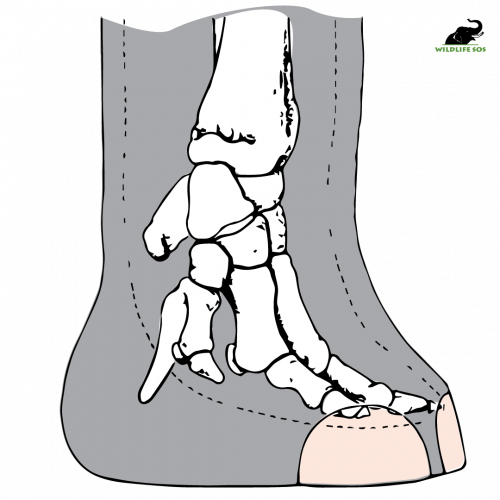
El libro es entretenido, aunque como siempre los elfos estos del programa QI de la BBC a veces dan un dato sin explicarlo y frustra mucho tener que ir a buscar la fuente (Ejemplo: "los elefantes siempre andan de puntillas"; una radiografía de una pata de elefante muestra en efecto que el equivalente al talón está más arriba de la pierna, por lo que técnicamente van de puntillas).


Algunos de mis subrayados:


Technically, James Bond isn’t a secret agent at all. In MI5 and MI6, ‘agent’ refers to a civilian who volunteers as an informant or ‘covert human intelligence source’. They’re not formally employed by the Secret Service, but they agree to pass information on to them. Bond, as a professional spy on the MI6 payroll, would be called an intelligence officer.

Why do we never get tinned broccoli?
Tinned broccoli would be a kind of off-green baby food that both smelled and tasted gross.
Other vegetables that don’t suit canning include cabbage, cauliflower, courgettes and (only Baldrick would care about this) turnips.

Beavers have a second set of lips behind their teeth so that they can bite wood under water without letting water into their mouths.

Should I just get [an artificial Christmas] tree instead? Possibly, but you have to use an artificial Christmas tree for 20 years before it becomes more environmentally friendly than a locally sourced real one.

How many Christmas songs are there?
Mariah Carey’s ‘All I Want for Christmas Is You’first reached No. 2 in 1994 but has charted every year since 2013, eventually reaching No. 1 in December 2020. ‘Last Christmas’by Wham! finally reached No. 1 on New Year’s Day 2021, 36 years after it was originally released, breaking the record for the longest time it has taken for a single to hit No. 1 after its initial release.

Why are cats’ tongues so much rougher than dogs’ tongues?

In bigger cats, such as tigers, tongue spines have another function, helping these predatory animals strip fur and meat from their prey when they eat them. A housecat’s lick just feels a little rough, like sandpaper; a tiger’s, on the other hand, is rough enough to draw blood.

What’s the difference between antlers and horns?
Antlers belong to animals in the deer family (technically known as the Cervidae). Made entirely of bone,
Horns are found on the Bovidae
Unlike antlers, they aren’t 100% bone; they have a little core of bone, but the majority is an exterior ‘sheath’made of keratin.

Two famous figures from ancient Greece are separately recorded as having died from laughter after seeing a donkey eating figs and drinking wine.

Why do you wait for a bus, then three come at once?
Why do you wait for a bus, then three come at once? There’s an explanation for this phenomenon, which is known as ‘bus bunching’. If a bus is delayed for any reason, then by the time it reaches its next stop there will be more people than usual waiting. This requires the driver to spend more time letting everyone on, which means the bus will be even later by the time it reaches its next stop, where the same thing will have happened, and this will continue around the route. Meanwhile, the bus behind the delayed one will find its stops emptier (because the waiting passengers caught the earlier delayed bus), so it will travel through the city more quickly than expected and gain on the original bus.

Australia was previously known as New Holland.

Why are New York’s taxis yellow?
One of the sources for yellow taxis was the appropriately named Yellow Cab Company in Chicago, which later expanded to other cities, including NYC. It was operated by John Hertz (of car-rental fame).

Why does my arm get pins and needles?
The scientific name for your limb going numb or tingling when you lean or lie on it at a weird angle for too long is ‘paresthesia’. It is not caused by a lack of blood flow to the nerves, although sometimes it can feel like that. The more likely culprit is nerve compression. You are simply squashing your nerves and making them malfunction.

Why are we told to keep eggs in the fridge, but supermarkets have them on a shelf?
The British Egg Industry Council [...] says that eggs should be stored at temperatures below 20ºC. Supermarkets are usually kept cooler than this, so they can keep

Why do I get brain freeze when I eat ice cream? When you take a mouthful of ice cream, it makes the back of your throat colder. This is where you find both the internal carotid artery (which sends blood to the brain) and the anterior cerebral artery (which is where your brain tissue starts). The cold causes these two blood vessels to contract and dilate, and receptors called the meninges between the two arteries pick this movement up and send signals to your brain. Your brain interprets these signals as pain, resulting in brain freeze –or sphenopalatine ganglioneuralgia, to give it its technical name.

Why do church organs have multiple keyboards, and how does the organist know which one to use?
If the player wishes to make the loudest possible noise, they activate every stop so that every note plays at once, and this is where we get the expression ‘pulling out all the stops’.
Why don’t we say ‘sheeps’?

A horse and a donkey are related species that can procreate to have a mule, but the mule will be infertile and unable to have children of its own. ‘Cum mula peperit’was an expression used in ancient Rome that translates as ‘when a mule gives birth’. It was the Roman equivalent of ‘when pigs fly’. But sometimes pigs do travel in aeroplanes and mules do give birth. There have been around 60 reported cases of mules having offspring, with one in 2007 that was verified through genetic testing. Ligers and tigons are cross-breeds between lions and tigers that often produce fertile offspring. Our ancestors even gave interspecies breeding a go, with the latest studies showing that Homo sapiens had fertile children with both Neanderthals and Denisovans.

What causes that beautiful smell after rain?

There’s a family of bacteria called Streptomyces, which live in soil all over the world. They get their energy from decaying vegetation and produce a chemical called geosmin, which gives soil its earthy smell. When raindrops hit the ground, tiny droplets of geosmin can fly up into the air and sometimes reach our noses. That’s the main element of what we’re smelling after a rainstorm –but it’s not aimed at us. The smell of geosmin is also extremely attractive to tiny, one-millimetre-long creatures called springtails. Whenever a springtail senses the chemical, it comes to eat the bacteria that produced it. This means the springtail gets a free meal, but the bacteria get something too. Streptomyces make spores, just like mushrooms, which they use to reproduce. When the hungry springtail turns up, the spores of the bacteria stick to it, and future generations of bacteria are carried to a whole new area where there might be plenty of fresh rotten vegetation to eat. Geosmin also repels fruit flies, so the bacteria have less competition for their food. Humans are very sensitive to the smell of geosmin. In fact, we can detect it in concentrations as low as 100 parts per trillion, meaning we’re 10,000 times more sensitive to it than sharks are to blood. There’s no definitive answer as to why we like the smell so much, but some experts think we might associate the smell of rain with new growth, new life and new things to eat. 219 The smell created by geosmin is known as petrichor. It sounds ancient but was actually coined in 1964 by the Australian scientists who first properly studied it, Isabel Joy Bear and Richard Thomas. It comes from two Greek words: petros, meaning ‘stone’, and ichor, a mythical word for ‘the blood of the gods’.


How much sugar can you fit in a cup of tea?
[...]
For a small cup of tea, that level of saturation will occur after about 150 teaspoons. Beyond that point, you could add more, but the sugar would retain its crystal form and give your tea an unpleasant grainy texture.
Profile Image for Kade Gulluscio.
975 reviews63 followers
November 14, 2022
Interesting concept for a book. There isn't a whole lot to say about this in a review. It's a collection of "questions" answered by the "QI elves." Apparently there's a tv show called QI on BBC. I'm from the United States so I wasn't aware of this show. I had randomly across this book on goodreads and decided to check it out.

It's definitely a fun, quick but interesting read. A lot of the answers are informative yet comical. Some of the "answers" don't actually answer the actual question that was asked, but that's me being nitpicky.

Definitely worth a read.
Profile Image for Kieran.
128 reviews5 followers
February 12, 2022
I have never ever seen QI, never read the original "Funny You Should Ask..." (I got this as a Christmas gift) but I enjoyed it! The tone is perfect, the humour was right up my alley, didn't overstay it's welcome, and it was pretty interesting! Just leafing through and reading the ones I didn't already know, I managed to read this in about 2 hours 👍
Profile Image for Kieran McAndrew.
3,061 reviews20 followers
October 18, 2021
When the QI Elves get involved, prepare for another set of fun facts, devious challenges and a mountain of trivia.

The book does not patronise the readers but rather encourages marvelling at just how strange the world can be.
Profile Image for Joel Duncan.
Author 1 book8 followers
July 29, 2022
I have never been a "non-fiction kinda guy" but these funny you should ask books really do make it easy and fun to learn. Information and I, usually have one night stands - when I wake up in the morning it's gone - but in this case it stuck around a while longer. I'll be having a random conversation about hiccups and as they're downing gallons of water, I'll say "there once was a guy that had hiccups for over 60 years, he burst a blood vessel in his brain after carrying a pig," and then toddle off as if I've always known that useless but interesting piece of information.

The QI Elves have the magic power to make anyone who reads their books instantly smarter. A fact a night, will make one bright. Well at least in theory...
Profile Image for Cloak88.
1,040 reviews19 followers
July 23, 2022
Answers to the weird questions you never new to ask.... Again.

Like their previous book, the QI Elves answer the weird and wonderful questions you never thought to ask. And like their previous book, this one is just as good as the first one. With just a bit more emphasis on a UK audience than book #1, there were a bit more Q's and A's that weren't of real interest to me, but even so kept me wondering for their outcome.

Overall a good, informative and fun book to read....Again!
Profile Image for Akash Das.
118 reviews1 follower
September 8, 2022
Again some funny and quite interesting questions with even more interesting answers. That man knows stuffs.
Profile Image for R.J. Southworth.
578 reviews10 followers
January 30, 2023
You know what to expect from a book like this: answers to questions you never thought to ask, and plenty of fascinating trivia to stimulate your curiosity and impress your friends.
328 reviews16 followers
January 3, 2024
Audiobook. Chock full of facts and trivia but rather charmless when read directly from the text.
Profile Image for Chloe.
297 reviews14 followers
June 14, 2023
Listened to the 1 Nov 2022 edition from Faber & Faber, titled as 222 QI Answers to Your Quiet Ingenious Questions.

A QI fact book. Best listened to in small chunks.

Only about four bits that made me stop and go "I want to make a note of this to investigate further/use in my own writing", but if you're a casual QI/Fish fan should be quite entertaining.
Profile Image for Shreya.
66 reviews1 follower
September 4, 2022
Wasn't as interesting as their first one. It felt like a lot of the information in this one was secondary school science.
Profile Image for Paul Williams.
18 reviews
January 23, 2022
These books by the QI research team are always entertaining and informative. The one slight disappointment I had was not realising how much of the book is taken up by the index and whatnot - about 45%! I might possibly have seen that coming if I were not reading the eBook edition but, as it is, I was caught a bit off guard by its end.
Displaying 1 - 20 of 20 reviews

Can't find what you're looking for?

Get help and learn more about the design.