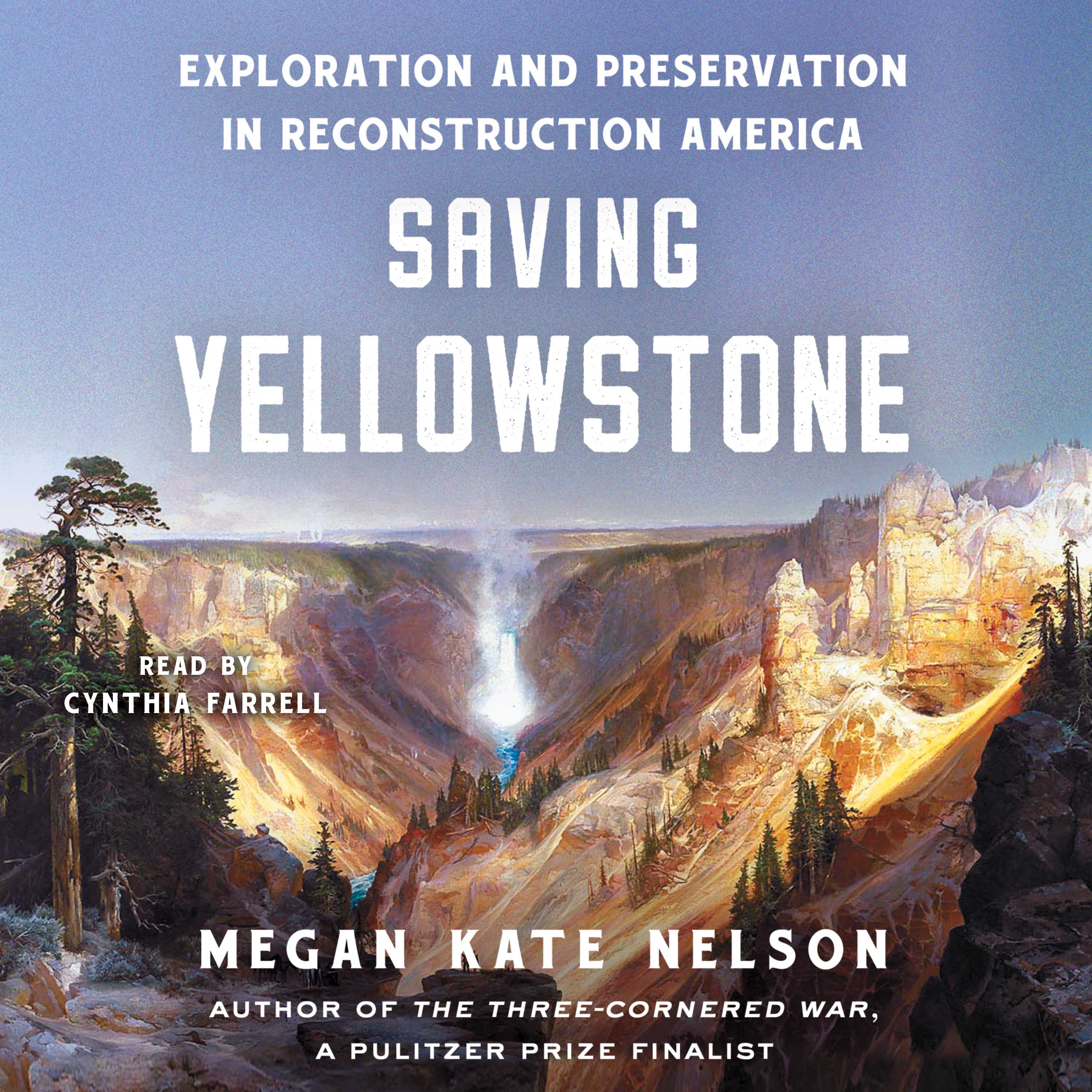
This is a short book (less than 200 pages), but it covers a lot of ground: the 1871 scientific expedition into the Yellowstone Basin, Reconstruction, the early 1870's conflict between the U.S. government and the tribes of the northern Plains, and the attempts to build a Northern Pacific Railroad. After finishing it, I can't really say what its point (or its thesis) actually was. The bulk of the book is spent on the expedition into Yellowstone, but it jumps around with each chapter: Jay Cooke trying the finance the railroad while vacationing on an island in Lake Erie, President Grant going after the Ku Klux Klan in South Carolina, Sitting Bull fighting the army (and railroad surveyors) in the Yellowstone River valley. The reader gets a smattering of each of these stories, but not a thorough discussion or analysis of any of them. The book's title is about Yellowstone, the world's first national park, and the cover is the famous Thomas Moran painting of Yellowstone Falls. Is the reader supposed to feel like dropping everything and driving to Wyoming to see this sublime spot in the Rockies? At times it seems as if this is the author's goal. But on other occasions she focuses on the injustice of having created this park by taking it from the indigenous groups who were native to the region, so I felt as if her purpose was to convince people to reject the entire park system. Personally, having been to Yellowstone three times, I am appreciative of the people who began the park system, battling the politicians of the day, as well as avaricious mining and lumber companies (among others) to set aside places where the natives' reverence for the natural world and its creatures is truly manifested. In addition, every time she lamented the way in which the Lakota were pushed aside in the interest of the white world, I wondered if she were being a tad simplistic. There is no shortage of examples of the injustices done to the native peoples of this land, but were the Lakota simply "victims?" Perhaps the author should visit Little Bighorn Battlefield (situated inside of the Crow Reservation), where the park ranger describing the battle is likely to be a member of the Crow tribe. This was one of the tribes that aided the U.S. Army in its fights against the Lakota. At the battlefield, she might hear a 21st Crow describe the 18th and 19th century Lakota tribe as imperialists themselves. In any event, for a short, but interesting description of the 1871 scientific expedition into Yellowstone, this book would be a good place to start. But if you are interested in learning about Reconstruction or the late 19th century conflict between the U.S. government and the tribes of the west, you should probably look elsewhere.