

What do you think?

World of Art
Marcel Duchamp (Second)
Genius, anti-artist, charlatan, guru, impostor? Since he arrived on the scene in 1914, Marcel Duchamp has been called all of these. Almost no other artist of the twentieth century has inspired more passion and controversy, nor exerted a greater influence on art. At the same time, Duchamp continually challenged the very nature of art and strove to redefine it as conceptual rather than as product by questioning why the medium was mostly a "retinal" experience.
Always the provocateur, Duchamp never ceased to be engaged, openly or secretly, in activities and works that transformed traditional artmaking. Through his works like Fountain; Bicycle Wheel; L.H.O.O.Q.; and Nude Descending a Staircase, No. 2, Duchamp played with the idea of what art can be, opening new possibilities for future generations.
This revised entry in the World of Art series, written by three leading experts on twentieth-century art, and published with support of Duchamp’s widow, is one of the most original books written on this enigmatic artist. Featuring a new chapter and preface, as well as updates throughout from specialist scholars who are active in their fields, this is the definitive introduction to Duchamp. Thoroughly illustrated, this volume combines thirty years of research by the authors and challenges history’s presumptions, misunderstandings, and pieces of misinformation about Marcel Duchamp and his legacy.
Always the provocateur, Duchamp never ceased to be engaged, openly or secretly, in activities and works that transformed traditional artmaking. Through his works like Fountain; Bicycle Wheel; L.H.O.O.Q.; and Nude Descending a Staircase, No. 2, Duchamp played with the idea of what art can be, opening new possibilities for future generations.
This revised entry in the World of Art series, written by three leading experts on twentieth-century art, and published with support of Duchamp’s widow, is one of the most original books written on this enigmatic artist. Featuring a new chapter and preface, as well as updates throughout from specialist scholars who are active in their fields, this is the definitive introduction to Duchamp. Thoroughly illustrated, this volume combines thirty years of research by the authors and challenges history’s presumptions, misunderstandings, and pieces of misinformation about Marcel Duchamp and his legacy.
- GenresArtNonfictionFrance
414 pages, Kindle Edition
First published June 1, 1999
Ratings & Reviews
Friends & Following
Create a free account to discover what your friends think of this book!
Community Reviews
Displaying 1 - 10 of 10 reviews

Want to Read
November 17, 2011Yesterday, and rather against our better judgement, we visited the Tate Gallery in Saint Ives, where they had just opened an exhibition called The Indiscipline of Painting. It was pretty much what you would expect from the title. As usual in these things, the name Marcel Duchamp came up a few times.
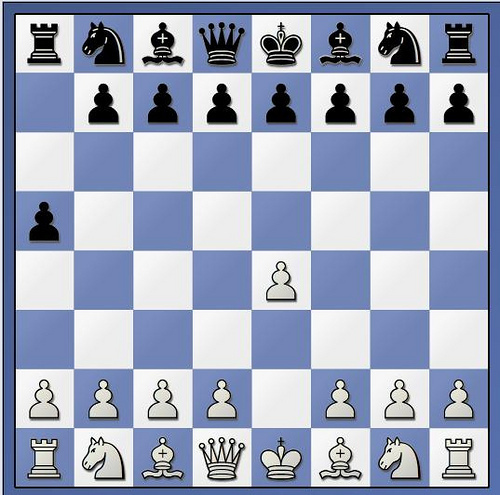
Duchamp was not just an artist but also a strong chess player. (He once beat Koltanowski as Black in 15 moves). I started to wonder, however, what his chess games would have looked like if he had followed the same principles at the chessboard as he did when composing his most famous works of art. Here's an attempt at a reconstruction:
NN - Duchamp
1. e4?
Banal and tired, without a shred of originality. White conventionally attempts to develop his pieces and control the center.
1... a5!!?
The rest of this review is available elsewhere (the location cannot be given for Goodreads policy reasons)
Duchamp was not just an artist but also a strong chess player. (He once beat Koltanowski as Black in 15 moves). I started to wonder, however, what his chess games would have looked like if he had followed the same principles at the chessboard as he did when composing his most famous works of art. Here's an attempt at a reconstruction:
NN - Duchamp
1. e4?
Banal and tired, without a shred of originality. White conventionally attempts to develop his pieces and control the center.
1... a5!!?
The rest of this review is available elsewhere (the location cannot be given for Goodreads policy reasons)

Read
April 25, 2025read for school

July 9, 2021
I got this book to try and understand what people see in Duchamp's work. After reading this I still feel that his art and reputation is built upon exploiting those who desire to be seen as smart and intelligent when really they aren't. Duchamp reminds me of the Emperor's New Clothes where everyone acts like they really like the Emperor's new clothes even though he is naked.
June 18, 2025
Decent introduction to Duchamp’s works with an emphasis on the period from the 1910s to the 1940s.
I would have liked a bit more detail on the latter stages of his life as well as his optical experiments but appreciated the coverage of his early background as a caricature/cartoon artist which I was not previously aware of.
I may want to look into a more comprehensive overview in the future.
I would have liked a bit more detail on the latter stages of his life as well as his optical experiments but appreciated the coverage of his early background as a caricature/cartoon artist which I was not previously aware of.
I may want to look into a more comprehensive overview in the future.

May 6, 2021
Great place to start!!!

June 13, 2022
decent read on Duchamp

August 4, 2022
An overly descriptive whirlwind tour of one of the most important artists of the last century.

January 30, 2025
marcel duchamp’s career is like boring boring boring CHANGE ART HISTORY FOREVER!!! boring boring boring
Read
September 8, 2007One of the authors of this text is the lovely David Hopkins, an old college professor of mine. I owe 90% of my art historical knowledge to him.
UPDATE! Having been granted "librarian" status on goodreads, I am excited and honored to serve my fellow readers by correcting spurious data around this website. I shall not take this responsibility lightly.
And I am delighted that the first action I've taken in this role has been to banish the "goodreads forgot to list an author" shelf from my list of shelves, by crediting the forgotten authors myself. Hurrah!
UPDATE! Having been granted "librarian" status on goodreads, I am excited and honored to serve my fellow readers by correcting spurious data around this website. I shall not take this responsibility lightly.
And I am delighted that the first action I've taken in this role has been to banish the "goodreads forgot to list an author" shelf from my list of shelves, by crediting the forgotten authors myself. Hurrah!
February 17, 2022
Mostly a chronology of Duchamp's art history.
Displaying 1 - 10 of 10 reviews