

What do you think?

Because Our Fathers Lied: A Memoir of Truth and Family, from Vietnam to Today
This unforgettable father and son story confronts the legacy of the Vietnam War across two generations; “an important book that should be read by every American” (Ron Kovic, Vietnam Veteran and author of Born on the Fourth of July).
Craig McNamara came of age in the political tumult and upheaval of the late 60s. While Craig McNamara would grow up to take part in anti-war demonstrations, his father, Robert McNamara, served as John F. Kennedy's Secretary of Defense and the architect of the Vietnam War. This searching and revealing memoir offers an intimate picture of one father and son at pivotal periods in American history. Because Our Fathers Lied is more than a family story—it is a story about America.
Before Robert McNamara joined Kennedy's cabinet, he was an executive who helped turn around Ford Motor Company. Known for his tremendous competence and professionalism, McNamara came to symbolize "the best and the brightest." Craig, his youngest child and only son, struggled in his father's shadow. When he ultimately fails his draft board physical, Craig decides to travel by motorcycle across Central and South America, learning more about the art of agriculture and making what he defines as an honest living. By the book's conclusion, Craig McNamara is farming walnuts in Northern California and coming to terms with his father's legacy.
Because Our Fathers Lied tells the story of the war from the perspective of a single, unforgettable American family.
Craig McNamara came of age in the political tumult and upheaval of the late 60s. While Craig McNamara would grow up to take part in anti-war demonstrations, his father, Robert McNamara, served as John F. Kennedy's Secretary of Defense and the architect of the Vietnam War. This searching and revealing memoir offers an intimate picture of one father and son at pivotal periods in American history. Because Our Fathers Lied is more than a family story—it is a story about America.
Before Robert McNamara joined Kennedy's cabinet, he was an executive who helped turn around Ford Motor Company. Known for his tremendous competence and professionalism, McNamara came to symbolize "the best and the brightest." Craig, his youngest child and only son, struggled in his father's shadow. When he ultimately fails his draft board physical, Craig decides to travel by motorcycle across Central and South America, learning more about the art of agriculture and making what he defines as an honest living. By the book's conclusion, Craig McNamara is farming walnuts in Northern California and coming to terms with his father's legacy.
Because Our Fathers Lied tells the story of the war from the perspective of a single, unforgettable American family.
288 pages, Hardcover
First published May 10, 2022
Ratings & Reviews
Friends & Following
Create a free account to discover what your friends think of this book!
Community Reviews
Displaying 1 - 30 of 90 reviews

October 28, 2022
I am nearly finished with this book and I wanted to share a few thoughts. Craig McNamara’s righteousness and moral superiority is unnerving. In fact I agree with his father’s premise that things are never completely black and white and there are a lot of grays. I don’t excuse the war in Vietnam, I think it was a colossal mistake. But, McNamara’s son has a clear inability of seeing the big picture and is adept on falling back on old-fashioned socialist propaganda talk. It reminds me of some of my college professor’s lectures 30 years ago. Furthermore, in his own confusion, Craig McNamara feels it is his responsibility to excuse his family’s sins (it made me wonder what his siblings thought of his book?) and he can’t even quite face his own ingratitude and lack of courage - as he most of the time conveniently forgets how or why he took certain decisions but procedes to narrate the most inane events of his life in vivid detail. With that said, he is successful in explaining his frustration in his inability to discuss openly Vietnam with his father and, in general, the distant relationship they had.

July 26, 2022
I remember watching The Fog of War in high school the year it came out, lights dimmed in history class. I was fascinated by the flickering ancient newsreels, the psychographic phonography of airpower, and above all else, McNamara himself, his planetary confidence in data which ultimately was merely confidence in himself, his earnest message to us that we should consider peace on the eve of another pointless American war, and also the limits of his responsibility and sorrow. Here was a man who had taken up the wheel of history and been broken by it. What could I learn from him?
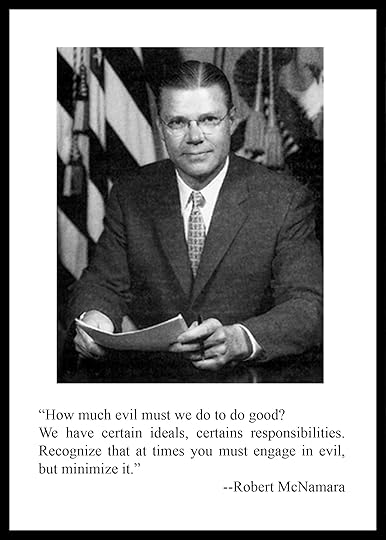
"How much evil must we do to do good?"
Craig's book is a surprisingly excellent memoir about coming to terms with his father's legacy. In one eye, there is Dad, a stern yet loving father in the Greatest Generation mold, an avid outdoorsman who shared his love of mountains, hiking, skiing, and swimming with his son. Dad was a family man who tried to leave work at the office to protect his loved ones from its burdens.
But that's the other eye, the historical figure and war criminal. McNamara's work wasn't something mundane, like teaching economics or managing an auto company. From 1961 to 1968, he was Secretary McNamara, one of the most powerful men in the world. He was part of small group of people who held our common destiny in his hands during the Cuban Missile Crisis. And he escalated and hobbled the Vietnam War, committing America to a war that he was privately skeptical of.
Vietnam was the wedge between Craig and his father. If you're expecting some special insight into McNamara's thinking, Craig has had to reconstruct his father from the same historical record we have. As the title suggests, Craig believes that his father's sin was a lie, and a subsequent life of silence and misdirection to cover up that lie. He believes his father's lifelong inability to hold himself accountable was rooted in what seemed to be good reasons, loyalty to the memories of Kennedy and Johnson, to the grand program of advancing American values and American empire. But the generalities in McNamara's later life, the "we made mistakes" rather than a firm "I lied, and because of that others lost everything and suffered so much", stood between them, and stands between McNamara and his legacy.
Craig was born in 1950, a core Boomer, eligible to be drafted in the despondent wake of the Tet Offensive. He writes about his radicalization through a miserable boarding school existence, looking to his father for personal assurance that the war with his name on it was just, and getting nothing as his classmates agitated for peace. Craig went to Stanford, became active in the antiwar movement, received his draft notice and got a medical deferment. A mediocre student, hampered by undiagnosed dyslexia and the fervent climate of the time, Craig dropped out of college and decided to motorcycle to Tierra del Fuego with some friends.
At this point, the book abruptly changes track to mid-20s bildungsromans. Somehow, with minimal Spanish and motorcycle skills, Craig and his friends managed not to crash, run out of gas money, or get knifed between California and Chile. Craig spent formative years in Chile and on Easter Island, where he lived in a cave and organized a dairy cooperative. He hung out with idealistic leftists and was enraptured at a speech by Fidel Castro, who he (still!) regards as the greatest American political figure. In these years, separated from his family and his country by thousands of miles, Craig figured out that he wanted to be a farmer.
And eventually, he made his way back to the states to do that. The only thing harder than being a family farmer is being a first-generation family farmer. Craig is upfront that a hefty loan from his father made his dream possible, but he also spent years paying off that loan, growing walnuts near Winters, California. This is a good life, if not a remunerative one. Meanwhile, Robert McNamara was settling into his third (fourth? fifth?) career as globe-trotting elder statesman, serving on boards and dispensing sage advice.
Yet the war and the silence came between them, and Robert was never truly able to be a father or grandfather, at least not the one Craig wanted. There is a final coda about finding yourself in the shadow of your historical parents, and Craig's kinship with the other children of Vietnam War statesmen, and the strange heavy incommensurability of that state.
When Robert McNamara died, all his physical goods, the lifetime of relics and heirlooms went to his second wife, who auctioned them off at Sotheby's. Craig and his sisters wound up ransoming back their father's 13 days in October silver calendar, a gift from Jackie Kennedy, for $100,000. They wanted but did not get the two Cabinet chairs from the Kennedy administration. But in a bit synchronicity, those chairs were acquired by the artist Danh Vo and deconstructed into an art exhibit. Danh and Craig became friends, and he seems this deconstruction of power, of reputation, of history, and as vital to the process of healing.
So yeah, these is a odd book. On the one hand, it's Old Farmer Craig talking about how he spent his youth bouncing around South America and got radicalized into agricultural work by Fidel Castro. It's also a look family trauma, lies, and silence, not so different from any other family's. I think everybody has a realization that their parents are not in fact omniscient. But most of us don't have fathers who lead their country into a war that we could very well have died in, if not for the random benevolence of a medical board.
There are definitely better histories of the Vietnam War and of McNamara himself, but as a McNamara-stan (frankly, that's the most honest way to describe my relationship with the Secretary of Defense), this is great reading.
"How much evil must we do to do good?"
Craig's book is a surprisingly excellent memoir about coming to terms with his father's legacy. In one eye, there is Dad, a stern yet loving father in the Greatest Generation mold, an avid outdoorsman who shared his love of mountains, hiking, skiing, and swimming with his son. Dad was a family man who tried to leave work at the office to protect his loved ones from its burdens.
But that's the other eye, the historical figure and war criminal. McNamara's work wasn't something mundane, like teaching economics or managing an auto company. From 1961 to 1968, he was Secretary McNamara, one of the most powerful men in the world. He was part of small group of people who held our common destiny in his hands during the Cuban Missile Crisis. And he escalated and hobbled the Vietnam War, committing America to a war that he was privately skeptical of.
Vietnam was the wedge between Craig and his father. If you're expecting some special insight into McNamara's thinking, Craig has had to reconstruct his father from the same historical record we have. As the title suggests, Craig believes that his father's sin was a lie, and a subsequent life of silence and misdirection to cover up that lie. He believes his father's lifelong inability to hold himself accountable was rooted in what seemed to be good reasons, loyalty to the memories of Kennedy and Johnson, to the grand program of advancing American values and American empire. But the generalities in McNamara's later life, the "we made mistakes" rather than a firm "I lied, and because of that others lost everything and suffered so much", stood between them, and stands between McNamara and his legacy.
Craig was born in 1950, a core Boomer, eligible to be drafted in the despondent wake of the Tet Offensive. He writes about his radicalization through a miserable boarding school existence, looking to his father for personal assurance that the war with his name on it was just, and getting nothing as his classmates agitated for peace. Craig went to Stanford, became active in the antiwar movement, received his draft notice and got a medical deferment. A mediocre student, hampered by undiagnosed dyslexia and the fervent climate of the time, Craig dropped out of college and decided to motorcycle to Tierra del Fuego with some friends.
At this point, the book abruptly changes track to mid-20s bildungsromans. Somehow, with minimal Spanish and motorcycle skills, Craig and his friends managed not to crash, run out of gas money, or get knifed between California and Chile. Craig spent formative years in Chile and on Easter Island, where he lived in a cave and organized a dairy cooperative. He hung out with idealistic leftists and was enraptured at a speech by Fidel Castro, who he (still!) regards as the greatest American political figure. In these years, separated from his family and his country by thousands of miles, Craig figured out that he wanted to be a farmer.
And eventually, he made his way back to the states to do that. The only thing harder than being a family farmer is being a first-generation family farmer. Craig is upfront that a hefty loan from his father made his dream possible, but he also spent years paying off that loan, growing walnuts near Winters, California. This is a good life, if not a remunerative one. Meanwhile, Robert McNamara was settling into his third (fourth? fifth?) career as globe-trotting elder statesman, serving on boards and dispensing sage advice.
Yet the war and the silence came between them, and Robert was never truly able to be a father or grandfather, at least not the one Craig wanted. There is a final coda about finding yourself in the shadow of your historical parents, and Craig's kinship with the other children of Vietnam War statesmen, and the strange heavy incommensurability of that state.
When Robert McNamara died, all his physical goods, the lifetime of relics and heirlooms went to his second wife, who auctioned them off at Sotheby's. Craig and his sisters wound up ransoming back their father's 13 days in October silver calendar, a gift from Jackie Kennedy, for $100,000. They wanted but did not get the two Cabinet chairs from the Kennedy administration. But in a bit synchronicity, those chairs were acquired by the artist Danh Vo and deconstructed into an art exhibit. Danh and Craig became friends, and he seems this deconstruction of power, of reputation, of history, and as vital to the process of healing.
So yeah, these is a odd book. On the one hand, it's Old Farmer Craig talking about how he spent his youth bouncing around South America and got radicalized into agricultural work by Fidel Castro. It's also a look family trauma, lies, and silence, not so different from any other family's. I think everybody has a realization that their parents are not in fact omniscient. But most of us don't have fathers who lead their country into a war that we could very well have died in, if not for the random benevolence of a medical board.
There are definitely better histories of the Vietnam War and of McNamara himself, but as a McNamara-stan (frankly, that's the most honest way to describe my relationship with the Secretary of Defense), this is great reading.
September 22, 2022
It has to be rough to be in your 50s and 60s and not be able to make peace with the fact that you won't get what you want or need out of your father. It's sad to see this guy struggle over the same thing decade after decade after decade. Way too repetitive, in fact -- to the point that I soon stopped feeling bad for him and started getting annoyed. Get a better therapist. Consider whether your father might have been on the spectrum. See the hypocrisy between struggling with your dad's legacy but idolizing Fidel Castro. I was glad to be done this book.

June 17, 2022
This was a beautiful and exceptional memoir, and I’m so glad he wrote it. I feel like this has depth at so many levels: it shows us what life can be like to have a controversial, famous father; it shows us what life might be like if you grow up awash in privilege and become disillusioned by it; it raises all sorts of questions about what kind of training civil servants should have (should a car manufacturer really be the number one in charge of plotting national defense strategy?); and in other ways it’s also just a routine coming-of-age story where the person decides to go into farming instead of a “white collar” job. I thought this book delivered at every level.
I admit to being particularly impressed because as a straight, white, upper class male from a prestigious family, Craig McNamara is basically the epitome of privilege—and I thought he was shockingly direct and scrutinizing about where he has come from and how he felt about that. He never would have had to write this autobiography, you know—I think it was extremely gutsy to publish this memoir.
I’m a bit surprised by some of the negative reviews on here, especially the ones that say the writing is choppy or weak. I thought this was incredibly well written! I was even brought to tears by the final acknowledgments. I wonder if some readers were disappointed that he didn’t solve everything perfectly by the end: he, to this day, has a very complicated relationship with his father. (It also seems that his father was a very complicated personality, on his own. So of course his personal relationships ended up being complicated.) This book does not solve any of that, and it would be unrealistic for it to do so. It leaves open questions, and Craig McNamara basically tells us that he’s continuing to process some of this. That sounds pretty normal and genuine and human to me.
An added perk for me were the references to DC, and the realization that the McNamaras had lived on my favorite street to walk down—Tracy Place NW! I’ve walked by that gorgeous house many times and had no idea who its former inhabitants were.
There were a few areas I wish Craig McNamara had given us a bit more detail on: his relationships with his sisters; whether he inherited money from his father and whether he feels guilt about that; and, frankly—*what* was going on in his head when he deserted his married “lover” in South America as a 20-something and does he have remorse about that whole relationship?! (I don’t see how he couldn’t, but I felt like we were left hanging on that one.)
But overall, I thought this was an excellent memoir and I feel fortunate that he was gutsy enough to share about his very, very complicated relationship with his father and what that has meant for his own life.
I admit to being particularly impressed because as a straight, white, upper class male from a prestigious family, Craig McNamara is basically the epitome of privilege—and I thought he was shockingly direct and scrutinizing about where he has come from and how he felt about that. He never would have had to write this autobiography, you know—I think it was extremely gutsy to publish this memoir.
I’m a bit surprised by some of the negative reviews on here, especially the ones that say the writing is choppy or weak. I thought this was incredibly well written! I was even brought to tears by the final acknowledgments. I wonder if some readers were disappointed that he didn’t solve everything perfectly by the end: he, to this day, has a very complicated relationship with his father. (It also seems that his father was a very complicated personality, on his own. So of course his personal relationships ended up being complicated.) This book does not solve any of that, and it would be unrealistic for it to do so. It leaves open questions, and Craig McNamara basically tells us that he’s continuing to process some of this. That sounds pretty normal and genuine and human to me.
An added perk for me were the references to DC, and the realization that the McNamaras had lived on my favorite street to walk down—Tracy Place NW! I’ve walked by that gorgeous house many times and had no idea who its former inhabitants were.
There were a few areas I wish Craig McNamara had given us a bit more detail on: his relationships with his sisters; whether he inherited money from his father and whether he feels guilt about that; and, frankly—*what* was going on in his head when he deserted his married “lover” in South America as a 20-something and does he have remorse about that whole relationship?! (I don’t see how he couldn’t, but I felt like we were left hanging on that one.)
But overall, I thought this was an excellent memoir and I feel fortunate that he was gutsy enough to share about his very, very complicated relationship with his father and what that has meant for his own life.
Read
March 1, 2022Because Our Fathers Lied: A Memoir of Truth and Family, from Vietnam to Today
Craig McNamara. Little, Brown, $29 (288p) ISBN 978-0-316-28223-9
Walnut farmer McNamara, founder of the Center for Land-Based Learning, debuts with a stunning, deeply personal look at his life as the son of the prime shaper of America’s Vietnam War policy, secretary of defense Robert S. McNamara. In searing detail, the younger McNamara reveals reams of hitherto unreported details about his controversial father’s family life and how the elder McNamara’s lies and obfuscations about the war led to their estrangement. Craig McNamara recounts hanging Viet Cong flags in his bedroom as a protest against his father; dropping out of Stanford to travel through Central and South America on a motorcycle; and ultimately becoming a dedicated practitioner of, and advocate for, sustainable farming. His unique perspective on the war’s “architect” reveals a man who was a “caretaker, loving dad, hiking buddy” as well as an “obfuscator, neglectful parent, warmonger.” Offering a complex, introspective look at how his relationship with his father turned into “a mixture of love and rage,” the author sheds light on an entire generation’s disillusionment with their forebears and reaches a depth of understanding about Robert S. McNamara that no previous book about his role in the Vietnam War has achieved. This is a must-read. (May)
DETAILS
Craig McNamara. Little, Brown, $29 (288p) ISBN 978-0-316-28223-9
Walnut farmer McNamara, founder of the Center for Land-Based Learning, debuts with a stunning, deeply personal look at his life as the son of the prime shaper of America’s Vietnam War policy, secretary of defense Robert S. McNamara. In searing detail, the younger McNamara reveals reams of hitherto unreported details about his controversial father’s family life and how the elder McNamara’s lies and obfuscations about the war led to their estrangement. Craig McNamara recounts hanging Viet Cong flags in his bedroom as a protest against his father; dropping out of Stanford to travel through Central and South America on a motorcycle; and ultimately becoming a dedicated practitioner of, and advocate for, sustainable farming. His unique perspective on the war’s “architect” reveals a man who was a “caretaker, loving dad, hiking buddy” as well as an “obfuscator, neglectful parent, warmonger.” Offering a complex, introspective look at how his relationship with his father turned into “a mixture of love and rage,” the author sheds light on an entire generation’s disillusionment with their forebears and reaches a depth of understanding about Robert S. McNamara that no previous book about his role in the Vietnam War has achieved. This is a must-read. (May)
DETAILS

June 15, 2022
Overall I am on the disappointed side ... I expected more. I don't feel I learned anything new about Robert McNamara which - I suppose given how little his own son knew him- isn't a surprise, but I don't feel I got to know Craig either. He's had a interesting and widely varied life but maybe he just isn't the kind of writer that can convey more than a factual account of those experiences. Again, I suppose I shouldn't be surprised the kind of writer that can really get to the heart of the matter and express themselves in a way that touches the reader ... well that kind of writer doesn't come along every day.
June 24, 2022
The first time I’ve ever read something that made me think of the family members of people who go down in infamy. This book explores all the ways a son grapples with his father’s misdeeds while still always loving him a lot. Complicated to think about for the author and for the readers!
PS I know someone from this book’s acknowledgments!
PS I know someone from this book’s acknowledgments!

August 22, 2022
The lies my father told me was a good book. I thought at first I would enjoy it but then I realized it was very dry reading. I guess I wasn’t in the mood for the book at the time.
May 15, 2022
On the one hand Craig McNamara's writing is choppy, disjointed and not particularly elegant. On the other hand, because of that, the words of the only son of former Defense Secretary and Vietnam War architect Robert McNamara add a poignancy to the choppy, disjointed and inelegant relationship between the two. As a child the son stood at the edge of history being made by John Kennedy and Lyndon Johnson. As a young man, the son's politics and understanding of that history and its outcome took a different path than the father. And even into the son's middle age and the father's death, while their paths repeatedly crossed, they never resolved.
This book is about a son seeking understanding and truth but, in the end, receiving only silence and obfuscation. In that important sense, this is a terribly sad and troubling book. But it also a journey into a son's unmistakable love for one of the most pivotal figures of the second half of America's 20th century despite the elder McNamara's silence and likes and failure to accept responsibility. That most Americans can't fathom McNamara is less surprising given that in 250 pages Craig McNamara couldn't spell out his father's inner secrets either.
This book is about a son seeking understanding and truth but, in the end, receiving only silence and obfuscation. In that important sense, this is a terribly sad and troubling book. But it also a journey into a son's unmistakable love for one of the most pivotal figures of the second half of America's 20th century despite the elder McNamara's silence and likes and failure to accept responsibility. That most Americans can't fathom McNamara is less surprising given that in 250 pages Craig McNamara couldn't spell out his father's inner secrets either.
January 16, 2023
We were already into the Nixon years by the time I became a teenager and was old enough and politically aware enough to be against the war in Vietnam, but there was still a strong group memory of Robert McNamara, and in that group memory he was Satan. He stood for bureaucratic efficiency, capitalist imperialism, mindless anticommunism and general lack of heart. Bad bad bad. In later years I mellowed on him a bit. I began to see him as a decent, smart guy who meant well and tried his best to serve his country and his ideals, but made some mistakes and believed too strongly in the myths that he was brought up on. Then he wrote his Vietnam book in which he acknowledged that mistakes were made, but didn't really apologize. That sent me back in the direction of being less forgiving. This book by Robert McNamara's son helped me to come to terms with my inconsistent feelings about the man because Craig McNamara has inconsistent feelings about his dad that mirror my own.
The picture of Robert McNamara that we get here is a loving and supportive, though sometimes distant father, who was a very good man in some ways, but who was also secretive and intensely loyal to the point that those traits became his tragic flaws that caused needless death and suffering and damaged our country. The book also hints that he was complicit in the overthrow of Salvatore Allende, so that many years after stepping down as Secretary of Defense, he was still an important cog in the machine of international imperialism. Still, Craig McNamara paints a picture of a man who I would have liked liked personally and who would have been fascinating to talk with. He did bad things, but was not a bad man.
The picture of Robert McNamara that we get here is a loving and supportive, though sometimes distant father, who was a very good man in some ways, but who was also secretive and intensely loyal to the point that those traits became his tragic flaws that caused needless death and suffering and damaged our country. The book also hints that he was complicit in the overthrow of Salvatore Allende, so that many years after stepping down as Secretary of Defense, he was still an important cog in the machine of international imperialism. Still, Craig McNamara paints a picture of a man who I would have liked liked personally and who would have been fascinating to talk with. He did bad things, but was not a bad man.
May 20, 2022
Eventually time reveals the truth. This book is by the son of Robert McNamara, secretary of defense under president Johnson. McNamara led the US deeper and deeper into the Vietnam War which he knew was not winnable. The consequences for Craig McNamara were enormous. He knew his father was lying about the war, but they could never talk about it. As I look at the world today and the lies that are being told about what we have all seen with our own eyes, I wonder what the consequences will be for the children of today’s liars as well as for all of us.
September 18, 2022
Sad memoir, a painful biography of his father in another bad time in our country’s history
December 23, 2024
If I had grown up in the same time frame as Craig McNamara, I think this book would have meant way more to me. Sadly, it felt more like a cathartic therapy dump than anything else
June 25, 2022
Outstanding book. Thanks for sharing your life with us, Craig.
June 29, 2022
"Because Our Fathers Lied: A Memoir of Truth and Family, from Vietnam to Today".
Book by Craig McNamara;
288 Pages, First published: May 10, 2022.
ويمكن ترجمة العنوان إلى/
لأن آباءنا كذبوا: مذكرات عن الحقيقة والعائلة، من فيتنام إلى اليوم".
كتاب يتكون من 288صفحة، تم نشره بتاريخ 10 مايو 2022، من تأليف/ كريج مكنمارا، وهو رجل أمريكي سبعيني العمر؛ أصغر ذرية السياسي الأمريكي الراحل/ روبرت مكنمارا، الذي يعتبر مهندس الولايات المتحدة الأمريكية في حرب فيتنام .. يتضمن الكتاب تعامل جيلين من أسرة واحدة مع حرب فيتنام (الإبناء المعارضون والآباء المؤيدون)، حيث يتطرق الكتاب لنتائج تلك الحرب التي يرى المؤلف أنها لا زالت تلقي بظلالها السيئة على وطنه لغاية الوقت الحاضر.
وللتذكير بملامح حرب فيتنام فهي الحرب التي كانت حرب نزاعٍ في في فيتنام ولاوس وكمبوديا من 1 نوفمبر 1955 إلى سقوط العاصمة الفيتنامية سايغون في 30 أبريل 1975، وتُعد الحرب الثانية من حروب "الهند الصينية"، ودارت رسمياً بين شطري فيتنام (الشمالي والجنوبي)، وقد بدأ دور الولايات المتحدة في تلك الحرب بعد حوالي عقدٍ من الحرب العالمية الثانية، ثم تصاعد دورها إلى التزام كامل ومباشر بين الأعوام من 1955 إلى 1973، وقد نشأ تورط الولايات المتحدة في جنوب فيتنام من مجموعة من العوامل الدولية المتشابكة، وبالرابط أدناه تسجيل لفيديو يصف بعض ملامح هذه الحرب التي خسرتها الولايات المتحدة الأمريكية بعد ملايين القتلى والجرحى والكثير من الكوارث (على الجانبين)/
https://youtu.be/FgcDYxVI1gw
أما عن روبرت مكنمارا، فقد كان قبل أن ينضم إلى حكومة كينيدي - مديراً تنفيذياً ساعد في تغيير مسار شركة فورد ونجاحها، وقد اشتهر بكفاءته الهائلة واحترافه، وأصبح اسمه آنذاك يرمز إلى "الأفضل والألمع".
ولأن الكتاب أمريكي ومتعلق بتاريخ أمريكا، فلا أجد لوصفه أفضل من ترجمة نصوص بعضاً من المراجعات المنشورة حوله بقلم متخصصون أمريكيون، وهي كما يلي/
1 - المراجعة الأولي، وهي بقلم/ فيليب توبمان، المدير السابق لمكتب نيويورك تايمز في واشنطن ومدير مكتبها في موسكو:-
"كتب كريج ماكنمارا مذكرات شجاعة ومؤثرة عن علاقته المتصدعة مع والده/ روبرت ماكنمارا، وهي صورة مصغرة للانقسامات المفجعة التي أفسدت الأمة خلال حرب فيتنام .. إنه سرد صادق لا هوادة فيه عن الأب والابن، قصة قوية عن الحب والخسارة والمرونة، قصة تلقي ضوءاً جديداً على واحدة من أكثر الفترات تشنجاً في التاريخ الأمريكي".
2 - المراجعة الثانية، وهي بقلم/ غاري ترودو، حائز على عدة جوائز مرموقة لإنتاجه الأدبي خصوصا في النقد السياسي من خلال رسومات تعبيرية (كرتونية) أهمها Doonesbury:-
"أكاذيب روبرت مكنمارا عن فيتنام لم تمزق أمتنا فحسب، بل مزقت قلب كريج - ابنه الصغير الحساس، وتحركت رحلة الإبن من الإرث المظلم إلى حياة هادفة .. هذا الكتاب قصة مؤثرة للغاية حول علاقة فريدة لم يتم حلها مثلما تم حل الحرب نفسها".
3 - المراجعة الثالثة بقلم/ دانيال السبرغ، وهو محلل سياسي أمريكي شغر عدة مواقع مرموقة:-
"كتب كريج مكنمارا قصة شخصية حميمة عن الحياة في أمريكا بعد التجربة الكارثية لحرب فيتنام، وقد أدت محاولاته لفهم والده، وهو أحد أكثر الشخصيات إثارة للجدل في القرن العشرين، إلى فتح فصل جديد في ذلك التاريخ .. صوت كريج مُركّز أخلاقياً مثل أي صوت قاوم الحرب وقت اشتداد أوارها".
4 - المراجعة الرابعة بقلم/ ديفيد ماس ماسوموتو، وهو مثقف يمتهن الزراعة العضوية، وهو كذلك مؤلف كتاب عنوانه/ "حكمة المزارع الأخير: حصاد الموروثات من الأرض"، حيث يقول في مراجعته لهذا الكتاب:-
"مثل المزارع الذي يرغب في العمل لموسم آخر، باحثاً عن محصول آخر، يدعونا كريج ماكنمارا إلى محادثة نادرة حول التاريخ تحددنا عندما يستكشف الخسارة بينما يهتم بمعنى الأسرة - صراع الابن مع الأب والظلال القاتمة لحرب فيتنام ".
5 - المراجعة الخامسة، وهي بقلم/ إيرول موريس، مخرج فيلم تاريخي وثائقي عنوانه
"The Fog of War: Eleven Lessons from the Life of Robert S. McNamara"
وفيما يلي ترجمة مراجعته:- "كل من عاش في الستينيات يتذكر حرب فيتنام، ويتذكر روبرت ماكنمارا، وشدة المشاعر حول الدور الذي لعبه في متابعة واستمرار تلك الحرب .. في الواقع، أكان ذلك صواباً أو خطأً، أصبحت تُعرف بإسم "حرب مكنمارا"؛ هذه قصة - قصة غير معروفة - عن علاقتهما [الأب روبرت والإبن كريغ]، وكيف امتد ضرر الصراع في فيتنام، وهو همٌّ وطني، إلى علاقة شخصية .. هذا الكتاب قصة عن صراع بين الأجيال بالإضافة إلى صراع دولي، وكتاب مهم في فهمنا لتلك الحقبة البعيدة الآن".
6- المراجعة السادسة، وهي بقلم/ أليس ووترز، مؤلف كتاب عنوانه/ المجيء إلى حواسي، وفيما يلي ترجمة نص مراجعته:- "هذه المذكرات رائعة ومفجعة في نفس الوقت. لقد أخذ كريج ماكنمارا الشخصية الضخمة لوالده الراحل/ روبرت ماكنمارا، ليعيده للحياة بطريقة حميمة للغاية .. هذا ليس مجرد كتاب مكتوب بشكل جميل عن التاريخ الماضي لبلدنا، إنه كتاب يروي قصة عاجلة عن الحاضر .. ومن خلال التجارب التي اكتسبها المؤلف عندما أصبح ناشطاً وسافر حول العالم، نفهم بعمق التزام كريج العاطفي بالمساواة والاستدامة ".
7- المراجعة السابعة، وهي بقلم/ جيري براون،
محامٍ ومؤلف وسياسي أمريكي شغل منصب الحاكم 34 و 39 لولاية كاليفورنيا خلال الأعوام من 1975 إلى 1983 ومن 2011 إلى 2019:-
" في هذه المذكرات الصادقة، يشارك كريج ماكنمارا، قصة كفاحه منذ نشأته في ظل والده ومرورا ببلوغه سن الرشد، وانتهاءً بوضعه الحالي وهو في عمر 72 عاما، وكيف كانت تطارده أهوال حرب فيتنام ودور والده فيها؛ رحلة مثيرة وممتعة، تشمل تمضية المؤلف وقتاً للتسكع في البيت الأبيض، ثم في الاحتجاج على الحرب في جامعة/ بيركلي التي درس فيها المؤلف، وتشمل ركوب المؤلف الدراجات النارية في رحلة إلى دولة تشيلي عبر أمريكا الوسطى والجنوبية، وانتهاءً بالعيش في جزيرة/ إيستر، ثم تعلم المزيد عن فن الزراعة وصنع ما يسميه العيش الكريم ليتفرغ المؤلف بعد ذلك ليصبح مزارعا للجوز في شمال ولاية كاليفورنيا، وليتصالح مع إرث والده - يروي ماكنمارا الإبن قصة مثيرة عن الأب والابن، المرتبطين عاطفياً ببعضهما البعض، ولكنهما منفصلان بشدة عن واقع الحياة، واختلاف نظرة كلا منهما للصدق وللولاء. كل ذلك بأسلوب واضح وصريح".
وفيما يلي وصف عام ومختصر لمحتويات الكتاب:-
بلغ كريج مكنمارا سن الرشد في الاضطرابات السياسية والاضطرابات في أواخر عقد الستينيات، وبينما كان كريج مكنمارا يكبر ليشارك في المظاهرات المناهضة للحرب، عمل والده/ روبرت مكنمارا كوزير دفاع لجون كينيدي، وكان المهندس الحقيقي لحرب فيتنام لمدة 10 أعوام، وتوقع الإبن أن والده خلال الفترة التي سبقت إعفاءه من العمل، كان يخفي في قرارة نفسه قناعته بأن الحرب لن تُحسم حسبما تسعى إليه الولايات المتحدة الأمريكية.
تقدم هذه المذكرات البحثية والكاشفة بكل صراحة - صورة حميمة لأب وابنه في فترات محورية ودقيقة من تاريخ الولايات المتحدة الأمريكية. هذا الكتاب أكثر من مجرد قصة عائلية - إنه قصة عن أمريكا، علما بأن مؤلفه قد اتخذ القرار بكتابته بعد بلوغه 68 عاما من العمر، واستغرقت كتابته وحتى نشره مدة 4 أعوام .. هذا وقد يحتاج القارئ العربي البعيد عن تلك الأحداث التي مضى عليها نصف قرن، وعن ذلك المجتمع - إلى البحث والتقصي عن خلفيات تلك الأحداث سواءً كانت داخل الولايات المتحدة الأمريكية أو خارجها.
Book by Craig McNamara;
288 Pages, First published: May 10, 2022.
ويمكن ترجمة العنوان إلى/
لأن آباءنا كذبوا: مذكرات عن الحقيقة والعائلة، من فيتنام إلى اليوم".
كتاب يتكون من 288صفحة، تم نشره بتاريخ 10 مايو 2022، من تأليف/ كريج مكنمارا، وهو رجل أمريكي سبعيني العمر؛ أصغر ذرية السياسي الأمريكي الراحل/ روبرت مكنمارا، الذي يعتبر مهندس الولايات المتحدة الأمريكية في حرب فيتنام .. يتضمن الكتاب تعامل جيلين من أسرة واحدة مع حرب فيتنام (الإبناء المعارضون والآباء المؤيدون)، حيث يتطرق الكتاب لنتائج تلك الحرب التي يرى المؤلف أنها لا زالت تلقي بظلالها السيئة على وطنه لغاية الوقت الحاضر.
وللتذكير بملامح حرب فيتنام فهي الحرب التي كانت حرب نزاعٍ في في فيتنام ولاوس وكمبوديا من 1 نوفمبر 1955 إلى سقوط العاصمة الفيتنامية سايغون في 30 أبريل 1975، وتُعد الحرب الثانية من حروب "الهند الصينية"، ودارت رسمياً بين شطري فيتنام (الشمالي والجنوبي)، وقد بدأ دور الولايات المتحدة في تلك الحرب بعد حوالي عقدٍ من الحرب العالمية الثانية، ثم تصاعد دورها إلى التزام كامل ومباشر بين الأعوام من 1955 إلى 1973، وقد نشأ تورط الولايات المتحدة في جنوب فيتنام من مجموعة من العوامل الدولية المتشابكة، وبالرابط أدناه تسجيل لفيديو يصف بعض ملامح هذه الحرب التي خسرتها الولايات المتحدة الأمريكية بعد ملايين القتلى والجرحى والكثير من الكوارث (على الجانبين)/
https://youtu.be/FgcDYxVI1gw
أما عن روبرت مكنمارا، فقد كان قبل أن ينضم إلى حكومة كينيدي - مديراً تنفيذياً ساعد في تغيير مسار شركة فورد ونجاحها، وقد اشتهر بكفاءته الهائلة واحترافه، وأصبح اسمه آنذاك يرمز إلى "الأفضل والألمع".
ولأن الكتاب أمريكي ومتعلق بتاريخ أمريكا، فلا أجد لوصفه أفضل من ترجمة نصوص بعضاً من المراجعات المنشورة حوله بقلم متخصصون أمريكيون، وهي كما يلي/
1 - المراجعة الأولي، وهي بقلم/ فيليب توبمان، المدير السابق لمكتب نيويورك تايمز في واشنطن ومدير مكتبها في موسكو:-
"كتب كريج ماكنمارا مذكرات شجاعة ومؤثرة عن علاقته المتصدعة مع والده/ روبرت ماكنمارا، وهي صورة مصغرة للانقسامات المفجعة التي أفسدت الأمة خلال حرب فيتنام .. إنه سرد صادق لا هوادة فيه عن الأب والابن، قصة قوية عن الحب والخسارة والمرونة، قصة تلقي ضوءاً جديداً على واحدة من أكثر الفترات تشنجاً في التاريخ الأمريكي".
2 - المراجعة الثانية، وهي بقلم/ غاري ترودو، حائز على عدة جوائز مرموقة لإنتاجه الأدبي خصوصا في النقد السياسي من خلال رسومات تعبيرية (كرتونية) أهمها Doonesbury:-
"أكاذيب روبرت مكنمارا عن فيتنام لم تمزق أمتنا فحسب، بل مزقت قلب كريج - ابنه الصغير الحساس، وتحركت رحلة الإبن من الإرث المظلم إلى حياة هادفة .. هذا الكتاب قصة مؤثرة للغاية حول علاقة فريدة لم يتم حلها مثلما تم حل الحرب نفسها".
3 - المراجعة الثالثة بقلم/ دانيال السبرغ، وهو محلل سياسي أمريكي شغر عدة مواقع مرموقة:-
"كتب كريج مكنمارا قصة شخصية حميمة عن الحياة في أمريكا بعد التجربة الكارثية لحرب فيتنام، وقد أدت محاولاته لفهم والده، وهو أحد أكثر الشخصيات إثارة للجدل في القرن العشرين، إلى فتح فصل جديد في ذلك التاريخ .. صوت كريج مُركّز أخلاقياً مثل أي صوت قاوم الحرب وقت اشتداد أوارها".
4 - المراجعة الرابعة بقلم/ ديفيد ماس ماسوموتو، وهو مثقف يمتهن الزراعة العضوية، وهو كذلك مؤلف كتاب عنوانه/ "حكمة المزارع الأخير: حصاد الموروثات من الأرض"، حيث يقول في مراجعته لهذا الكتاب:-
"مثل المزارع الذي يرغب في العمل لموسم آخر، باحثاً عن محصول آخر، يدعونا كريج ماكنمارا إلى محادثة نادرة حول التاريخ تحددنا عندما يستكشف الخسارة بينما يهتم بمعنى الأسرة - صراع الابن مع الأب والظلال القاتمة لحرب فيتنام ".
5 - المراجعة الخامسة، وهي بقلم/ إيرول موريس، مخرج فيلم تاريخي وثائقي عنوانه
"The Fog of War: Eleven Lessons from the Life of Robert S. McNamara"
وفيما يلي ترجمة مراجعته:- "كل من عاش في الستينيات يتذكر حرب فيتنام، ويتذكر روبرت ماكنمارا، وشدة المشاعر حول الدور الذي لعبه في متابعة واستمرار تلك الحرب .. في الواقع، أكان ذلك صواباً أو خطأً، أصبحت تُعرف بإسم "حرب مكنمارا"؛ هذه قصة - قصة غير معروفة - عن علاقتهما [الأب روبرت والإبن كريغ]، وكيف امتد ضرر الصراع في فيتنام، وهو همٌّ وطني، إلى علاقة شخصية .. هذا الكتاب قصة عن صراع بين الأجيال بالإضافة إلى صراع دولي، وكتاب مهم في فهمنا لتلك الحقبة البعيدة الآن".
6- المراجعة السادسة، وهي بقلم/ أليس ووترز، مؤلف كتاب عنوانه/ المجيء إلى حواسي، وفيما يلي ترجمة نص مراجعته:- "هذه المذكرات رائعة ومفجعة في نفس الوقت. لقد أخذ كريج ماكنمارا الشخصية الضخمة لوالده الراحل/ روبرت ماكنمارا، ليعيده للحياة بطريقة حميمة للغاية .. هذا ليس مجرد كتاب مكتوب بشكل جميل عن التاريخ الماضي لبلدنا، إنه كتاب يروي قصة عاجلة عن الحاضر .. ومن خلال التجارب التي اكتسبها المؤلف عندما أصبح ناشطاً وسافر حول العالم، نفهم بعمق التزام كريج العاطفي بالمساواة والاستدامة ".
7- المراجعة السابعة، وهي بقلم/ جيري براون،
محامٍ ومؤلف وسياسي أمريكي شغل منصب الحاكم 34 و 39 لولاية كاليفورنيا خلال الأعوام من 1975 إلى 1983 ومن 2011 إلى 2019:-
" في هذه المذكرات الصادقة، يشارك كريج ماكنمارا، قصة كفاحه منذ نشأته في ظل والده ومرورا ببلوغه سن الرشد، وانتهاءً بوضعه الحالي وهو في عمر 72 عاما، وكيف كانت تطارده أهوال حرب فيتنام ودور والده فيها؛ رحلة مثيرة وممتعة، تشمل تمضية المؤلف وقتاً للتسكع في البيت الأبيض، ثم في الاحتجاج على الحرب في جامعة/ بيركلي التي درس فيها المؤلف، وتشمل ركوب المؤلف الدراجات النارية في رحلة إلى دولة تشيلي عبر أمريكا الوسطى والجنوبية، وانتهاءً بالعيش في جزيرة/ إيستر، ثم تعلم المزيد عن فن الزراعة وصنع ما يسميه العيش الكريم ليتفرغ المؤلف بعد ذلك ليصبح مزارعا للجوز في شمال ولاية كاليفورنيا، وليتصالح مع إرث والده - يروي ماكنمارا الإبن قصة مثيرة عن الأب والابن، المرتبطين عاطفياً ببعضهما البعض، ولكنهما منفصلان بشدة عن واقع الحياة، واختلاف نظرة كلا منهما للصدق وللولاء. كل ذلك بأسلوب واضح وصريح".
وفيما يلي وصف عام ومختصر لمحتويات الكتاب:-
بلغ كريج مكنمارا سن الرشد في الاضطرابات السياسية والاضطرابات في أواخر عقد الستينيات، وبينما كان كريج مكنمارا يكبر ليشارك في المظاهرات المناهضة للحرب، عمل والده/ روبرت مكنمارا كوزير دفاع لجون كينيدي، وكان المهندس الحقيقي لحرب فيتنام لمدة 10 أعوام، وتوقع الإبن أن والده خلال الفترة التي سبقت إعفاءه من العمل، كان يخفي في قرارة نفسه قناعته بأن الحرب لن تُحسم حسبما تسعى إليه الولايات المتحدة الأمريكية.
تقدم هذه المذكرات البحثية والكاشفة بكل صراحة - صورة حميمة لأب وابنه في فترات محورية ودقيقة من تاريخ الولايات المتحدة الأمريكية. هذا الكتاب أكثر من مجرد قصة عائلية - إنه قصة عن أمريكا، علما بأن مؤلفه قد اتخذ القرار بكتابته بعد بلوغه 68 عاما من العمر، واستغرقت كتابته وحتى نشره مدة 4 أعوام .. هذا وقد يحتاج القارئ العربي البعيد عن تلك الأحداث التي مضى عليها نصف قرن، وعن ذلك المجتمع - إلى البحث والتقصي عن خلفيات تلك الأحداث سواءً كانت داخل الولايات المتحدة الأمريكية أو خارجها.
January 19, 2024
The author is a typical liberal from the baby boomer generation. This generation rejected everything good and decent, the legacy of fathers and uncles who fought and died in World War II. These men and women came back home and this is when America was at its greatest. But all of the success and desire to serve their communities was not something that their children were interested in. Instead, they revolted against everything America stood for and this legacy has led us to the disaster that is the United States today. So I reject anything that war protesters have to say! Because you could have protested the war and not spit on, throw food on, punch, kick, stomp, etc., in other words disgrace the American soldier who was drafted to serve on behalf of you and who fought for your right to be dumb and stupid.
I wanted to learn from this time period and especially about Robert McNamara. But it seems that his son had little to add to my understanding of his father. Again, a celebration of all things, liberal, and this in particular disgusts me!
I wanted to learn from this time period and especially about Robert McNamara. But it seems that his son had little to add to my understanding of his father. Again, a celebration of all things, liberal, and this in particular disgusts me!
October 9, 2025
Because Our Fathers Lied by Craig McNamara
Author: Craig McNamara
Published: 2022
Reviewer's Rating: ★★☆☆☆
A Memoir Haunted by Absence
The Vietnam War Divided a Country and This Family
Craig McNamara's Because Our Fathers Lied attempts to reckon with a profound father-son divide set against the backdrop of the Vietnam War. As the son of Robert McNamara, architect of America's Vietnam strategy, Craig carries both a famous name and deep psychological scars. Unfortunately, this memoir struggles to bridge the gap between its ambitious subject matter and its execution.
The Central Paradox
The book's most striking feature is also its greatest weakness: McNamara repeatedly admits he has no memory of crucial events, confessing every ten pages or so that he "wonders what he was thinking" or "wishes he could remember." For a memoir, this creates a fundamental credibility problem. How can readers trust a narrator who cannot trust his own recollections?
Yet this amnesia may be the point. The book inadvertently becomes a portrait of trauma and dissociation—a young man so conflicted about his father that he literally cannot remember his own life clearly.
The Burden of the Name
McNamara acknowledges that his father's prominence got him into Stanford, which he subsequently left. He candidly admits to cheating at St. Paul's School and struggling with dyslexia. These confessions suggest some self-awareness, but they raise questions the book never adequately answers: What responsibility does Craig bear for his own choices? How much can be blamed on his father?
The Missing Financial Thread
One glaring omission undermines the narrative throughout: McNamara never explains how he purchased a BMW motorcycle for his escape to Latin America or how he funded his two-year motorcycle journey through South America. For someone ostensibly rejecting his father's world, he seems to have benefited considerably from family resources while simultaneously denouncing them.
Searching for Alternative Fathers
Perhaps the book's most psychologically revealing—and troubling—passages involve McNamara's worship of Fidel Castro. He describes crawling on all fours between auditorium seats to reach Castro's feet in Rome in 1996, “As I approached his feet, I began to rise. It was like a rebirth.“ (p. 119). He admits: "If Robert McNamara had been a hero of my childhood, Fidel Castro held that place when I was in my early twenties" (p. 114).
This substitution of one authoritarian figure for another suggests that McNamara never truly escaped his father's shadow—he simply inverted it. His admiration for Castro as well as Salvador Allende, both responsible for significant human suffering, sits uncomfortably alongside his moral condemnation of his father's role in Vietnam.
The Moral Evasions
A most damning moment comes when McNamara refuses to testify at a trial of terrorists who had planned to kidnap and assassinate his father at their Snowmass, Colorado home. He was asked by his father to confirm that sketches found with the terrorists matched the house plans. His refusal (p. 148) ("I could not bring myself to testify") and subsequent wondering whether he "abandoned" his father (p. 149) reveals a man trapped by his own contradictions.
He condemns his father for Vietnam's deaths while celebrating revolutionaries responsible for their own atrocities. He accepts family money while rejecting family values. He craves his father's attention while building "anti-war shrines" in his childhood bedroom complete with Viet Cong flags and souvenir punji sticks his father had brought back from Vietnam.
What Works
The book does capture something authentic about generational conflict during the Vietnam era. McNamara's pain is real, even if his self-awareness is non-existent. His eventual path to walnut farming in California (aided by a loan from his father) represents some resolution, though the reconciliation feels incomplete.
His observation that his father never understood farming but kept requesting spreadsheets (p. 153) actually reveals Robert McNamara's tragedy more than Craig seems to realize: a brilliant man trapped by his own focus on what he was best at, “statistical fluency,” yet unable to connect with the human element.
The Sisters Who Weren't There
Tellingly, McNamara's two older sisters barely appear in this 250-page book. One suspects there are other perspectives on the McNamara family that might complicate Craig's narrative considerably.
Final Verdict
Because Our Fathers Lied is ultimately a frustrating read—a memoir that undermines itself at every turn, written by a man who seems not to have fully processed his own experience even decades later. It's less a coherent narrative than a symptom of unresolved trauma.
The book raises important questions about the children of powerful men, the costs of the Vietnam War on American families, and the difficulty of separating one's identity from a parent's legacy. Unfortunately, McNamara doesn't successfully answer most of these questions.
For readers interested in Robert McNamara, Errol Morris's documentary The Fog of War or Robert McNamara's own writings provide more insight. For those interested in the Vietnam generation's family conflicts, this memoir offers a case study—but one that reveals more through its omissions than its revelations.
Recommended for: Those studying the Vietnam War's domestic impact, family dynamics of public figures, or the psychology of conflicted privilege.
Not recommended for: Readers seeking clear-eyed memoir, coherent narrative, or moral clarity.
The Title's Promise, Unfulfilled
The title Because Our Fathers Lied suggests an exploration of deception and its consequences. But the book's central irony is that Craig McNamara may be lying most of all to himself—about his own complicity, his own privileges, and his own moral compromises. That might have made for a powerful memoir, had he been willing to examine it directly.
Author: Craig McNamara
Published: 2022
Reviewer's Rating: ★★☆☆☆
A Memoir Haunted by Absence
The Vietnam War Divided a Country and This Family
Craig McNamara's Because Our Fathers Lied attempts to reckon with a profound father-son divide set against the backdrop of the Vietnam War. As the son of Robert McNamara, architect of America's Vietnam strategy, Craig carries both a famous name and deep psychological scars. Unfortunately, this memoir struggles to bridge the gap between its ambitious subject matter and its execution.
The Central Paradox
The book's most striking feature is also its greatest weakness: McNamara repeatedly admits he has no memory of crucial events, confessing every ten pages or so that he "wonders what he was thinking" or "wishes he could remember." For a memoir, this creates a fundamental credibility problem. How can readers trust a narrator who cannot trust his own recollections?
Yet this amnesia may be the point. The book inadvertently becomes a portrait of trauma and dissociation—a young man so conflicted about his father that he literally cannot remember his own life clearly.
The Burden of the Name
McNamara acknowledges that his father's prominence got him into Stanford, which he subsequently left. He candidly admits to cheating at St. Paul's School and struggling with dyslexia. These confessions suggest some self-awareness, but they raise questions the book never adequately answers: What responsibility does Craig bear for his own choices? How much can be blamed on his father?
The Missing Financial Thread
One glaring omission undermines the narrative throughout: McNamara never explains how he purchased a BMW motorcycle for his escape to Latin America or how he funded his two-year motorcycle journey through South America. For someone ostensibly rejecting his father's world, he seems to have benefited considerably from family resources while simultaneously denouncing them.
Searching for Alternative Fathers
Perhaps the book's most psychologically revealing—and troubling—passages involve McNamara's worship of Fidel Castro. He describes crawling on all fours between auditorium seats to reach Castro's feet in Rome in 1996, “As I approached his feet, I began to rise. It was like a rebirth.“ (p. 119). He admits: "If Robert McNamara had been a hero of my childhood, Fidel Castro held that place when I was in my early twenties" (p. 114).
This substitution of one authoritarian figure for another suggests that McNamara never truly escaped his father's shadow—he simply inverted it. His admiration for Castro as well as Salvador Allende, both responsible for significant human suffering, sits uncomfortably alongside his moral condemnation of his father's role in Vietnam.
The Moral Evasions
A most damning moment comes when McNamara refuses to testify at a trial of terrorists who had planned to kidnap and assassinate his father at their Snowmass, Colorado home. He was asked by his father to confirm that sketches found with the terrorists matched the house plans. His refusal (p. 148) ("I could not bring myself to testify") and subsequent wondering whether he "abandoned" his father (p. 149) reveals a man trapped by his own contradictions.
He condemns his father for Vietnam's deaths while celebrating revolutionaries responsible for their own atrocities. He accepts family money while rejecting family values. He craves his father's attention while building "anti-war shrines" in his childhood bedroom complete with Viet Cong flags and souvenir punji sticks his father had brought back from Vietnam.
What Works
The book does capture something authentic about generational conflict during the Vietnam era. McNamara's pain is real, even if his self-awareness is non-existent. His eventual path to walnut farming in California (aided by a loan from his father) represents some resolution, though the reconciliation feels incomplete.
His observation that his father never understood farming but kept requesting spreadsheets (p. 153) actually reveals Robert McNamara's tragedy more than Craig seems to realize: a brilliant man trapped by his own focus on what he was best at, “statistical fluency,” yet unable to connect with the human element.
The Sisters Who Weren't There
Tellingly, McNamara's two older sisters barely appear in this 250-page book. One suspects there are other perspectives on the McNamara family that might complicate Craig's narrative considerably.
Final Verdict
Because Our Fathers Lied is ultimately a frustrating read—a memoir that undermines itself at every turn, written by a man who seems not to have fully processed his own experience even decades later. It's less a coherent narrative than a symptom of unresolved trauma.
The book raises important questions about the children of powerful men, the costs of the Vietnam War on American families, and the difficulty of separating one's identity from a parent's legacy. Unfortunately, McNamara doesn't successfully answer most of these questions.
For readers interested in Robert McNamara, Errol Morris's documentary The Fog of War or Robert McNamara's own writings provide more insight. For those interested in the Vietnam generation's family conflicts, this memoir offers a case study—but one that reveals more through its omissions than its revelations.
Recommended for: Those studying the Vietnam War's domestic impact, family dynamics of public figures, or the psychology of conflicted privilege.
Not recommended for: Readers seeking clear-eyed memoir, coherent narrative, or moral clarity.
The Title's Promise, Unfulfilled
The title Because Our Fathers Lied suggests an exploration of deception and its consequences. But the book's central irony is that Craig McNamara may be lying most of all to himself—about his own complicity, his own privileges, and his own moral compromises. That might have made for a powerful memoir, had he been willing to examine it directly.
June 2, 2022
Lots of people have difficult relationships with their fathers, but Craig McNamara’s father was also responsible for innumerable human deaths. What does that mean for Craig? He didn’t make the decisions, and in fact always opposed them, but does the fact that he loved Robert McNamara, looks like him, has his name, benefited from his fame and money, does this give Craig a share of responsibility? Craig seems to answer that question by moving through the world in a way that is different from his father’s. Is it atonement? Or just healthy detachment and self definition? Craig’s struggle with the meaning of his fathers legacy for him is a personal version of one we all need to have as a society, as we consider our responsibility for the harms inflicted by past generations that still reverberate today.
April 22, 2024
Disowning my father, getting rid of his image, would enable the conviction that he is not part of me, that I am not like him, that his actions do not to continue to weigh upon me, that they have faded from the lifeblood of the world and have run out on the reel of history. None of that would be true. [p. 263]When this oddly titled memoir was published in 2022, Craig McNamara was 72 years old, and still attempting to come to terms with his father, a "Whiz Kid" architect of the Vietnam War, who served as secretary of defense in both the Kennedy and Johnson administrations. Craig's filial love is apparent, despite conceding that Robert Strange McNamara (his real name!) was a war criminal.
The father-son relationship was warm in some respects, even though Robert -- a "numbers guy" -- comes across as emotionally distant. Whatever feelings RSM might have had about the carnage in Southeast Asia, and even the self-immolation of a protester under his office window, he kept to himself.
In his youth, Craig decorated his bedroom with an upside-down American flag and a punji stick that he had acquired from his father. And as a young college student, he became an antiwar protester, dropping out of Stanford after five quarters. Medically disqualified for military service due to ulcers, Craig joined a couple of friends on a motorcycle trip to South America; along the way, he became a fan of Fidel Castro. Eventually, he ended up living in a cave on Easter Island, and delivering milk to his agrarian neighbors. He acquired a taste for sustainable agriculture during those years, and finally became a walnut farmer in Northern California.
Robert McNamara lurks on virtually every page of this book. Once Craig had settled down on his farm with his family, Robert rarely visited, and never really got to know his grandchildren. He rebuffed his son's request to accompany him on a trip to Hanoi in 1995, and evaded him at a Telluride film festival that featured him in a documentary (The Fog of War). Craig's book is an unflattering portrait of a warmonger whose son was desperate to know him intimately, but only began to do so through the writing of a memoir. This is not a literary gem, but the honest presentation is entirely adequate.

September 12, 2023
If you watch the Errol Morris documentary The Fog of War, you can't help but retain this image of Robert McNamara, decades after the war he did so much to justify, prosecute, and lie about, staring owlishly into the camera and refusing to give in, He's not an unrepentant liar like Kissinger, but he constantly takes refuge in technicalities, reframings, alternate visions, hypotheticals, the impression being of someone constantly slipping history's blows and never quite getting pinned down or trapped against the ropes, except when Morris pitlilessly leaves the camera on him after McNamara finishes talking, which has the effect, on anyone I think, of making them look squirmy and dishonest. A collateral tragedy of this all is learning how much this was true in his private life as well, where McNamara never seems to have spoken openly about how he felt, even three decades later, and even refused to let his son accompany him on a visit to Vietnam in 1995. This book is almost painfully earnest in spots, with the son trying to make himself a life that was moral, connected, concrete, communal and traveling everywhere from South America to Easter Island to a Mexican ejido in search of a suitably committed alternative. (I'd assume I can buy his walnuts somewhere around here at a farmer's market, which feels like a fitting tribute.) And there are moments of what I can only call black-comic horror, as Dad, a co-investor in the farm and a whiz kid technocrat to the end, keeps asking to look at spreadsheets and barely has contact with his grandchildren; also, after his wife dies, he can't operate the dishwasher by himself, as she's done all of that for him for half a century. But the quality of moral excavation here is quite something, one of the most powerful and understated attempts I've seen of any American I've seen who was anywhere near power to deal unabashedly and straightforwardly with the ramifications of what evils that power unleashed on the people of Vietnam and America.
August 18, 2022
Craig McNamara is just 2 years younger than me, but what different lives we've had. He is the son of Defense Secretary Robert McNamara who guided the U.S. deeper and deeper into the Vietnam War between 1961-68. Craig grew up attending historic events in Washington D.C. and even played with the Kennedy children after their father died, attended an exclusive boarding school and had every privilege a kid could want. But he never had his father's emotional connection. He loved his father, he knew his father loved him, but only when they were hiking or camping or skiing in the Rockies could they feel free with each other. And even then his father disconnected from any serious conversation. So this book falls into the category of father-son conflict. Craig began questioning the Vietnam War by his late teens, and took off on an epic motorcycle trip of Latin America with the goal of reaching the tip of South America. He ends up spending more than a year living on Easter Island and wants to live in Chile with leftist friends. But the real world of home ties and the violent overthrow of the elected Chilean government and its replacement with a U.S. sponsored cruel dictatorship bring him finally back to the States. He has developed a deep love of agriculture, something his father cannot comprehend, but Craig ends up married with 3 children and a walnut orchard in California. All his life he hopes for some deeper conversation with his father, but his father rejects that to the very end. Craig matures through this book, and as an older adult becomes active in California agricultural organizations, travels to Vietnam and comes to term with losing all his father's memorabilia except one Cuban Missile Crisis calendar he had to bid at an auction to keep. When he delights in the chairs from his father's office being used for deconstructive art, he has come full circle in accepting the past and doing what he can to contribute to a peaceful future.

September 14, 2022
Living in the shadow of a father of notoriety, or infamy as some would say—including the author of this book, Craig McNamara, youngest child and son of former Vietnam-era Secretary of Defense Robert McNamara, was not easy. Growing up in the 50s-70s, around the likes of JFK and family, LBJ, and others of high influence, Craig’s realization of what his father did and stood for during those turbulent times come through clearly in the memoir. Born in Ann Arbor, MI., because that’s where his family lived when his father worked for Ford before his government service, the son of the chief Whiz Kid, realized as an older teenager that his father was involved in making decisions and prosecuting an ‘unwinnable war’ while countless American and South Vietnamese lives were being lost daily. Once conscious of this, he was determined to get away from home as fast as possible. This started with attending Stanford briefly while increasingly and aggressively protesting the war. Finding college not right for him, he and a couple buddies planned a motorcycle trip (Craig only had $320) to the southern tip of South America. Growing up quickly during this journey of self discovery Craig opens a window to his relationship (as he does throughout the book) with his father and mother. Making the journey he also discovers his love of farming. He meets some key people along the way that allow him to learn different facts of farming, some of which take him to Easter Island. Craig finds love along the way as well as a yearning to settle down while continuing to wrestle the demons around his relationship with his father. Craig comes across as distressed, shortchanged in life by his dad, and also feels much was unreconciled before his dad passed in 2009. Very insightful, Craig is very courageous to pen such a personal work, much of which was constructed from both journals and memories.
August 22, 2022
I was wholly unaware of the huge impact, the war in Vietnam had in America. I lived faraway, in the Indian state of Bihar, grappling with our own socio-political problems, fifty years ago, where education took a back seat to activism. This book helped me to understand the fallout of war, and the power of activism, especially, when one is made to believe that one is on the winning side.
Craig McNamara is consumed by the war in Vietnam, of which he mistakenly believes, his father is the sole architect. His father, Robert McNamara was the Secretary of State, during some of those turbulent years. There is hardly any talk about it at home, but it is everywhere in America. As a result, he, "was unable to articulate his own chaotic feelings." However, with time, he understands that Vietnam was no longer "a tragic mistake made by wise but flawed men. It now appeared to reflect an odious national mindset of imperialism.”
He regrets not talking to his father about war. So he can only make and state assumptions. This, in my view, results in an unfair assessment of his father and needless accusation of calling him a liar. However, it doesn't stop him from enjoying and accepting his largesse. However, he does mention his love for his mother. Otherwise, the Vietnam war looms like a shadow over his book.
Craig McNamara is consumed by the war in Vietnam, of which he mistakenly believes, his father is the sole architect. His father, Robert McNamara was the Secretary of State, during some of those turbulent years. There is hardly any talk about it at home, but it is everywhere in America. As a result, he, "was unable to articulate his own chaotic feelings." However, with time, he understands that Vietnam was no longer "a tragic mistake made by wise but flawed men. It now appeared to reflect an odious national mindset of imperialism.”
He regrets not talking to his father about war. So he can only make and state assumptions. This, in my view, results in an unfair assessment of his father and needless accusation of calling him a liar. However, it doesn't stop him from enjoying and accepting his largesse. However, he does mention his love for his mother. Otherwise, the Vietnam war looms like a shadow over his book.
October 25, 2022
Because our Fathers Lied by Craig Mcnamara
The writing is not too much; it is tolerable as an audio book; the ambivalence of the socialist gentleman farmer son to the repentant formerly warmongering father comes across loud and clear; I found the story of Danh Vo, the Vietnamese Danish artist and the Cathedral Walnut grove perhaps to be a metaphor for something, possibly the office furnishings of Dad, that went to auction by the second wife, instead of to the children, as they appear to have both anticipated and expected as their due.
The stories of Dean Rusk’s son’s trip to VietNam that never happened, and of Craig’s that did, appear to be intended to give some kind of closure both to relationships to fathers by wayward sons, and relationship to a war that we lost and never should have fought n the first place.
Perhaps to the war we can attribute the fall of the Soviet empire..?? who is to say??
There is no overarching thesis in this book; there is more than some broken family dynamics, and a considerable amount of entitlement and self importance. I am being generous with my three stars, but I did find the subject matter very interesting; it was hard to say if Craig loved/hated his father or Fidel or Salvador A more… and then there was also the therapist in the background, so who is to say how much is politics, and how much, broken family dynamics.
The writing is not too much; it is tolerable as an audio book; the ambivalence of the socialist gentleman farmer son to the repentant formerly warmongering father comes across loud and clear; I found the story of Danh Vo, the Vietnamese Danish artist and the Cathedral Walnut grove perhaps to be a metaphor for something, possibly the office furnishings of Dad, that went to auction by the second wife, instead of to the children, as they appear to have both anticipated and expected as their due.
The stories of Dean Rusk’s son’s trip to VietNam that never happened, and of Craig’s that did, appear to be intended to give some kind of closure both to relationships to fathers by wayward sons, and relationship to a war that we lost and never should have fought n the first place.
Perhaps to the war we can attribute the fall of the Soviet empire..?? who is to say??
There is no overarching thesis in this book; there is more than some broken family dynamics, and a considerable amount of entitlement and self importance. I am being generous with my three stars, but I did find the subject matter very interesting; it was hard to say if Craig loved/hated his father or Fidel or Salvador A more… and then there was also the therapist in the background, so who is to say how much is politics, and how much, broken family dynamics.

Read
January 15, 2023I think I was prepared to not like Craig McNamara for my perception that he was being somehow disloyal to his father, but ended up liking him very much and appreciating his honesty. This memoir covers his life from the early-1960s when his father, Robert McNamara of the Ford Motor Company, becomes secretary of Defense to John F. Kennedy and then Lyndon Johnson. The elder McNamara was an analytical wonder-kid of the "Best and the Brightest" and is remembered chiefly for his advocacy of escalating the Vietnam War with bombing and troops; (as it turned out, McNamara harped on sending troops to S.E. Asia from early in 1961 until Johnson actually did, and then within a few months secretly realized that the possibilities of changing the tide were remote.)
Anyway, Craig McNamara morphs from dutiful, if distracted, son to college student against the war, protests, drops out, rides a motorcycle to South America, spends time on a sugarcane farm and running a dairy on Easter Island before coming home and becoming a farmer. His relationship with his father remained full of barriers because they couldn't talk about the war, which became an elephant in the room. McNamara learns much about his father and himself, and the book is highly interesting and poignnant.
Anyway, Craig McNamara morphs from dutiful, if distracted, son to college student against the war, protests, drops out, rides a motorcycle to South America, spends time on a sugarcane farm and running a dairy on Easter Island before coming home and becoming a farmer. His relationship with his father remained full of barriers because they couldn't talk about the war, which became an elephant in the room. McNamara learns much about his father and himself, and the book is highly interesting and poignnant.

June 8, 2023
I don't think I've stayed up late reading - and finishing - a book for a long time, even though I am a voracious reader. But I was really taken with this memoir of Craig McNamara's sought for relationship with his father, the Secretary of Defense during the Viet Nam War. Craig wanted desperately to talk about the war with his father - and that conversation never happened. The book is a memoir of Craig's life - but through it, he explores the missing relationship with a man he loved but from whom he was distanced. I found elements of my own relationship with my father - and, to a certain extent, my relationship with one of my sons - in this book. Loving each other, but not having much in common - and not wanting to explore the interests of the other. And, with my father - and, of course, Craig's, differing radically politically and not being able to talk about those differences. Craig and I were born the same year, and lived parallel lives in the sense of the political and cultural climate of those years. Whether it was Craig or the ghost writer mentioned in the acknowledgements, but never listed elsewhere, the prose drew me in and kept me reading way past my bedtime. The book is thought provoking, and I feel as if, in Craig, I have a friend.
September 14, 2022
This book seems to me to be part autobiography (Craig who?) and part lamentation for the lack of real communication with the author's father. The title suggests that many of us may have had communications difficulty in our parental relationships, and I suppose that's true.
The author conveys regret ("I wish I had said" is well-used) over numerous situations throughout the book. In the end, he realizes his silence is inherited. Sad, but it's hard to feel sorry for someone who had a very privileged upbringing and who had strings pulled and financial favors given. His father arranged for him to attend Stanford, and his father provided financial backing when he needed it. Who's the villain?
Beautifully written and a quick read, I felt like I was there when hikes in the Sierras were described and shared the sadness of people passing on. A note of caution to potential readers: this book has the potential to stir up old memories / unfinished business.
The author conveys regret ("I wish I had said" is well-used) over numerous situations throughout the book. In the end, he realizes his silence is inherited. Sad, but it's hard to feel sorry for someone who had a very privileged upbringing and who had strings pulled and financial favors given. His father arranged for him to attend Stanford, and his father provided financial backing when he needed it. Who's the villain?
Beautifully written and a quick read, I felt like I was there when hikes in the Sierras were described and shared the sadness of people passing on. A note of caution to potential readers: this book has the potential to stir up old memories / unfinished business.

June 4, 2022
Craig McNamara has written an honest and heartfelt memoir about his relationship with Robert McNamara, JFK’s and LBJ’s Sec of Defense and architect of the Vietnam war. Yearning for a closeness that was always rebuffed Craig struggles with the horrors unleashed in Vietnam-and the remoteness of an emotionally distant father. Craig rebels by traveling through and living in South America ultimately becoming a walnut farmer in California. Throughout it all he tries to understand how his father could engineer a war he knows is unwinnable . the only answer he ever got from his Dad was “loyalty”. I had dinner with Craig and we talked extensively about his father’s culpability. It remains, for him, an unresolved but haunting question. Bob McNamara should have embraced this loving son who hated the war but remained steadfast in his love for his father.

February 1, 2023
In this raw autobiography, Craig McNamara documents his search for an identity outside of and despite of being the son of a national pariah. His relationship to his father, former Secretary of Defense Robert McNamara, propels "Because Our Fathers Lied" beyond discussion of the Vietnam War into a larger discussion of finding our own paths.
A man with no country and no truth, McNamara escapes to the literal ends of the earth as he overcomes myriad obstacles to traverse South America before living extensively in a cave on Easter Island. "Because Our Fathers Lied" at times has a bit of a "Forrest Gump" feel, but the author digs deep to find the vulnerability necessary to power such a story.
Though no revelations are to be found here, that's kind of the point. This book is a fascinating read and an important entry into the pantheon of writing about this moment in American history.
A man with no country and no truth, McNamara escapes to the literal ends of the earth as he overcomes myriad obstacles to traverse South America before living extensively in a cave on Easter Island. "Because Our Fathers Lied" at times has a bit of a "Forrest Gump" feel, but the author digs deep to find the vulnerability necessary to power such a story.
Though no revelations are to be found here, that's kind of the point. This book is a fascinating read and an important entry into the pantheon of writing about this moment in American history.

September 14, 2022
I read this in two days because I was fascinated by the historical time and things that have crossed our lives, Sidwell Friends, Washington, DC, St. Paul's School, etc. When I finished it, I handed it over to Tony who said there was a reference to his mother's class. when he said he had been assigned Peru as his country to research in sixth grade.
I am sorry that he expected so much from his father and felt that his father never gave him the affection he sought. Fathers were not buddies or pals in that generation. Things have changed in expectations of relationships. Craig comes across as very needy and self centered. He needs to grow up and acknowledge his own weaknesses and forgive his father and himself. Nuff said.
I am sorry that he expected so much from his father and felt that his father never gave him the affection he sought. Fathers were not buddies or pals in that generation. Things have changed in expectations of relationships. Craig comes across as very needy and self centered. He needs to grow up and acknowledge his own weaknesses and forgive his father and himself. Nuff said.
Displaying 1 - 30 of 90 reviews