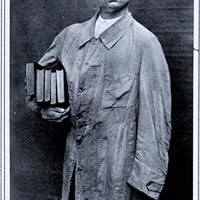
Published in 1943 (just a year before its author was arrested by the Gestapo for his Resistance activities), The Die Is Cast was a departure for Robert Desnos: a shift from his earlier, frenetic Surrealist prose to a social realism that borrowed as much from his life experience as his career as a journalist. Drawing on his own use of drugs in the 1920s and his doomed relationship with the chanteuse Yvonne George, Desnos here portrays a band of opium, cocaine and heroin users from all walks of life in Paris. It is a startlingly contemporary portrayal of overdoses, arrests, suicides and the flattened solitude of the addict, yet published in occupied Paris, years before “junkie literature” established itself with the Beat Generation. An anomaly both in his career and for having been published under the Occupation by an active member of the Resistance, The Die Is Cast now stands as timely a piece of work as it had been untimely when it first appeared.
From the former surrealist and one-time king of automatist trance comes one of the earliest examples of modern drug literature; based on direct experience, it's perceptive and surprisingly humane given the time, although the well-meaning if misguided assumption that an inability to deal with the world, a deepseated neurosis, is the primary cause of hard drug addiction gets a bit a irksome; personally, if that were the case I would've been using by adolescence and likely OD'd decades ago as opposed to just nodding off from secondhand opium fumes while tripsitting one time.
A very good, deeply felt addiction narrative; it’s clear that Desnos had seen addiction in his own social circles and despaired for lack of a remedy. At times it veers into a didactic mood, but it’d be hard to hold that against the author. Wakefield Press is one of the great publishing houses of the age and we’re blessed to have them making something like this — a brisk, readable addiction narrative by one of the leading surrealists — available in English.
Yes! A book about drugs that, instead of glorifying it, demonstrates the horrors of addiction, and this published in 1943 mind you. It's a little slow, but it's a nice realist depiction of how addiction can sneak up on you and ruin your life before you know it. As the translator says in their introduction: "This book is antidrug, but it's not anti-addict." And indeed, Desnos's ideas about reforming supression-based laws were incredibly prescient, making this not only a deeply humanising portrayal of the lives of drug addicts, but an exemplary social critique as well.
A fascinating and a surprising book by Robert Desnos, one of the ultimate Surrealists of the old school. "The Die is Cast" is the DRUG culture book of all time.
"When he grew older, recalling the years of his youth and thus the years of dissipation, he would be able to speak about strength of character, of willpower, of temperament. Lies. He'd been nothing more than the privileged extra in a tragedy, the actor unwittingly cast in the best role who, in the final act, is tasked with enumerating the names of the dead."
In the same lineage as Baudelaire and De Quincey, "The Die Is Cast" is a thorough exploration of its subjects' relationship with opium and heroin, a step-by-step guide to opiate addiction in the interwar period and an early plea to the public to regard its effects as a medical, rather than a criminal, problem. In this fairly grim, almost narcotic, account of the lives of a group of mostly upper class drug users outside of Paris, Desnos abandons the playful prose of his surrealist days for an unsparing, almost journalistic, writing style that probes his characters for the reasons behind their fascination with opium/herion and a detailed index of how their relationship with the drug slowly changes and overtakes them, one by one. There are still flecks of poetry in his examinations of the characters and their internal lives, and incredible skill in describing scenes of mundane excitement, panic and tragedy.
This one is great! Showing a group of "friends" who's only real connection is the drugs they take. Death, Insanity, and Suicide abound. There's some fantastic aphorisms and points regarding drug-addicts and how they think; showcasing a great sense of empathy for them. Highly recommend if you like books about people.
Amazing book! Reminded me a bit of f Scott Fitzgerald or Hemingway. Also, as one who had a group of drug friend in my youth I think the book captures what it’s like to be in a group like this. Barbara the main female character could be straight out of great gatsby. She is at once an object of desire and also a cold and heartless person. I feel for Antoine, who is in the friend zone with her but can’t help being in love anyway. The book is tragic but has some very funny moments and a lot of humor throughout.
An interesting novel about a group of opium and heroin addicts between the wars. Sympathetic, realistic and amazingly forward thinking. More straightforward than you might expect from this one time surrealist and sadly his last novel.
Pretty amazing that every novel written between the World Wars has at least one character suffering from PTSD from World War I (if not several) and yet we, as a society, still have trouble admitting this is possible from our troops.