Jump to ratings and reviews
Rate this book

Священная книга оборотня

Rate this book
Главная героиня, лисица-оборотень, родилась еще в Древнем Китае, но выглядит не старше шестнадцати лет: юный вид помогает привлекать клиентов, "портфельных инвесторов", богачей и прочих сильных мира сего, в московской гостинице "Националь". Однажды по вине лисицы умирает клиент — и ей приходится искать новое место "работы". Так она встретит генерал-лейтенанта ФСБ Александра — волка-оборотня, свою новую любовь, которому захочет открыть истину…

416 pages, Paperback

First published January 1, 2004

167 people are currently reading
4465 people want to read

About the author

Victor Pelevin

211 books1,969 followers
Victor Olegovich Pelevin is a Russian fiction writer. His books usually carry the outward conventions of the science fiction genre, but are used to construct involved, multi-layered postmodernist texts, fusing together elements of pop culture and esoteric philosophies. Some critics relate his prose to the New Sincerity and New Realism literary movements.

RU: Виктор Пелевин

Ratings & Reviews

What do you think?
Rate this book

Friends & Following

Create a free account to discover what your friends think of this book!

Community Reviews

5 stars
1,853 (32%)
4 stars
1,932 (33%)
3 stars
1,290 (22%)
2 stars
514 (8%)
1 star
180 (3%)
Displaying 1 - 30 of 435 reviews
Profile Image for Glenn Russell.
1,511 reviews13.3k followers
December 10, 2018


Even if you don't ordinarily read science-fiction or novels with werewolves, you will still enjoy The Sacred Book of the Werewolf since Victor Pelevin grounds his novel in a fund of everyday reality and tells his tale in easy-to-follow linear narrative. True, the narrator is a two thousand year old female werefox in the body of a sleek, shapely gorgeous sixteen year old girl, but, still, there is enough human-like traits to identify with her desires and aspirations and conflicts.

We follow our sly werefox, A Hu-Li by name, through a number of sexual encounters, frolicking adventures and emotionally charged relationships in Moscow 2005. What really adds a zesty flavor to this tale is the cross-species, supernatural qualities of several characters and how they transform and then interact with mere humans, or, in some cases, with other were-creatures, as per the below examples.

A Hu-Li also has a fox's tail, which she describes as follows : "When a fox's tail increases in length, the ginger hairs on it grow thinker and longer. It's like a fountain when the pressure is increased several times over (I wouldn't draw any parallels with the male erection). The tail plays a special part in our lives, and not only because of its remarkable beauty. I didn't call it an antenna by chance. The tail is the organ that we use to spin our web of illusion." And what a web of illusion! Enough to scramble the minds of any man she meets, any man, that is, who is fully human.

There are other magical, intuitive gifts that come along with being a werefox. A Hu-Li tells us about one such gift: "But thanks to our tail, we foxes find ourselves in a kind of sympathetic resonance with people's consciousness amplified when people take drugs. - his consciousness was hurtling along some kind of orange tunnel filled with spectral forms that he skillfully avoided. The tunnel kept branching sideways and Mikhalich chose which way to turn. It was like a bobsleigh - Mikhalich was controlling his imaginary flight with minute turns of his feet and hands that were invisible to the eye, not even turns really, simply microscopic adjustments of the tension in the corresponding muscles." Such a description is an example of the clear, vivid language we find in Andrew Bromfield's translation.

And here is a snippet from a section where A Hu-Li observes a special someone in her life metamorphosing into a full-fledged werewolf: "And then he sprouted fur all over him. The word `sprouted' isn't entirely appropriate here. It was more as if his tunic and trousers crumbled into fur - as if the shoulder straps and stripes were drawn in watercolour on a solid mass of wet hair that suddenly dried out and layered off into separate hairs." If you enjoy your literary fiction super-charged with such shape-shifting, you will love Victor Pelevin's spins of imagination and will gladly keep turning the novel's pages.

All of this fictional ingenuity and inventiveness combined with social commentary, especially commentary on Russian history and society, along with a healthy amount of metaphysics and Eastern mysticism makes for one first-rate novel. One last note: If you enjoy listening to Audiobooks, Cassandra Campbell's breezy, saucy voice is pitch-perfect as Pelevin's frisky werefox.
Profile Image for Algernon.
1,840 reviews1,163 followers
May 12, 2016

Think of this a a re-telling of a classic Russian Fairytale : a young redhead girl meets the big bad wolf in the urban jungle of Moscow, in the wildness of the post-perestroika social restructuring. Be prepared for some radical role inversions, some black humour and a lot, I mean A LOT, of metaphysical introspection with an Oriental flavour.

It's also a kind of love story with kinks in it (

The story is told in the form of the private journal of A Hu Li, an imported fairytale creature from the myths of China and Japan. She is a fox woman, a werefox. She can alter her appearance and induce illusions in the minds of men with the help of her prehensile tail. Alexander, her counterpart, is also an import, this time from the frozen lands to the north, a scion of Skandinavian legends about the end of the world (Fenrir). Their tale though is 100% Russian, and firmly anchored in the larger context of the modern world. The journal of A Hu Li is not a simple recap of her meeting with Alexander, but an ambitious study of social collapse, a critical analysis of literature and a metaphysical treatise on the nature of reality and illusion.

Paint me in the guise of a shallow reader, but I like a little more action and a little less philosophy in my werewolf novels. I enjoy Victor Pelevin's highbrow style and his bleak, coal-black style of humour, but I believe he was a tad heavy handed with the Oriental esoterism. Initially I was going to make this a three star review but, as usually happens with me, while reading through my bookmarks I realised there is a lot more depth and subtlety to the writing, enough to subdue my initial misplaced expectations.

I took Lolita's story very personally and very seriously. For me Dolores Haze was a symbol of the soul, eternally young and pure, and Humbert Humbert was the metaphorical chairman of this world's board of directors.

Early references to the oeuvre of Vladimir Nabokov serve as a warning to the casual reader to put his thinking cap on and to search for the universal meaning behind the hotel room assignations between an apparently nubile girl and rich businessmen looking for cheap thrills. If the barbed arrows launched by Pelevin at his readership were not clear enough, the werefox will later chide her boyfriend about his choice of literary fare, with similar Nabokovian disdain for the facile mass entertainment:

Reading is human contact, and the range of our human contacts is what makes us what we are. Just imagine you live the life of a long-distance truck driver. The books that you read are like the travellers you take into your cab. If you give lifts to people who are cultured and profound, you'll learn a lot from them. If you pick up fools, you'll turn into a fool yourself. Wasting time on detective novels is ... it's like giving an illiterate prostitute a ride for the sake of a blowjob.

Ohh ... hmm ... I will have to think a little more on this example / metaphor ... why do I have to defend my continuing interest in detective novels, Mr. Pelevin? Does this mean I am not only shallow, but also a pervert? A Hu Li is firmly in the camp of literature as education and not as escapism. She is a militant who mixes feminism with political rants and with Buddhism. She tends to get carried away by her theories, bragging and name dropping several philosophical schools, literary allusions (Aleister Crowley, Haruki Murakami, Tolstoy, etc.) and the movie Matrix in her efforts to convince the readers that reality is an illusion:

... But in fact everything's like in 'The Matrix', only without the warehouse. There's a dream, but there isn't anybody dreaming it. That is, they're part of the dream too. Some say the dream dreams itself. But strictly speaking there isn't any 'itself'.

Even giving the girl some credit for being more than a millenia old and justified in her research for the soul, I still found her theories condescending and unnecessarily long-winded. A Hu Li may or may not be aware of the irony of the following statement in her diary : ... a brief theoretical digression is required here, or else I'm afraid what I say will be incomprehensible. , but her digressions were anything but brief.

Even so, there are gems to be dug out of the dross for the patient reader, like some letters purported to describe opposing lifestyles in Moscow and London. I let you decide which is which from the following quotes:

You ask me what it is like here. To be brief, even the most hardened of optimists are now finding that any hope that the brown sea advancing on us from all sides consists of chocolate is melting away. And, as the advert puts it so wittily, it is melting not in their hands, but in their mouths.

>><<>><<>><<

The elite here is divided into two branches, which are called 'the oligarchy' (derived from the words 'oil' and 'gargle') and 'the apparat' (from the phrase 'upper rat').

>><<>><<>><<

Understand this - the West is just one big shopping mall. From the outside it looks magical, fantastic. But you had to live in the Eastern Bloc to take its shop windows for the real thing. [...] In actual fact, there are three roles you can play here - the buyer, the seller, or the product on the shelf. To be a seller is vulgar, to be a buyer is boring (and you still have to earn your living as a seller), and to be the product is repulsive. Any attempt to be anything else actually means 'not to be', as the market forces are quick to teach any and every Hamlet. All the rest is simply show.


My favorite parts of the novel are the ones when the esoteric and political conversations stop, and the fox and the wolf do something silly or out of character:

We foxes are keen hunters of English aristocrats and chickens. We hunt English aristocrats because English aristocrats hunt us, and it's a sort of point of honour. But we hunt chickens for our own enjoyment.

Hoping I'm not spoiling anything important to the plot, a point of (vicarious) interest in the relationship between A Hu Li and Alexander is the exploration of love as another form of illusion, the sort we create inside our own imagination and aplly to the object of our attentions, with mood swings from the sublime ( Alas, it is true: beauty is like fire, it burns and consumes, driving you insane with its heat, promising that in the place to which it drives its victim there will be calm, cool shade and new life - but that is deception. ) to the kinky. The last part appeals to the movie afficionado in me, when the bedroom role playing that every couple is dabbling in to a greater or lesser extent moves from Marvel Superheroes to Japanese Anime to arthouse existentalism and finally to some trueblood poetry under the direction of Wong Kar-Wai ("In The Mood For Love"). As in other bedroom sports, it seems that women are more accomplished and more liberated in spirit than us prude and timid males:

For instance, [we] turn ourselves into a pair of cartoon transformers who discover their attraction to each other on the roof of a Tokyo skyscrapper ... How dreadful! But when I wanted to become the German major in 'Casablanca' and take him from behind while he was the black pianist Sam playing it again, he was as horrified as if I'd been urging him to sell the motherland.

>><<>><<>><<

Recommended for readers who are ready to accept that a werewolf novel can be a literary gem that includes more than howling at the moon. Alternative (complementary) suggestions :

Kij Johnson - "The Fox Woman", "Fudoki" - for a lyrical study of oriental werecreatures

Robert McCammon - "The Wolf's Hour" - for the action junkies out there

Guy Endore - "A Werewolf in Paris" - for some of that nineteen century Romantic charm of the horror novel

Jasper Kent - "The Twelve" - for more werewolf goodies in a Russian setting
Profile Image for Greg.
1,128 reviews2,147 followers
August 23, 2010
Victor Pelevin has been one of those writers that has been calling out to me for years now. I see his books at work, and some of them I think, "I should buy this someday", and others look like books that would irritate me. And over the years the idea that his books will irritate me had been winning out over getting enjoyment out of his books.

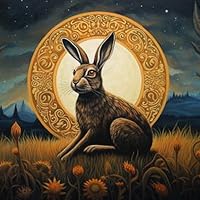
I don't know what I really expected from his books. Maybe a Russian Douglas Coupland mixed with Chuck Palanhuick? Look at this cover:


This looks like it could be annoyingly hip.

I might have read this (the one I'm 'reviewing', not the one in the picture above) book years ago if I had actually read what the book was about (but to be honest the book that always called to me was A Werewolf Problem in Central Russia and Other Stories). If I had read the back cover and known it was about a four thousand year old werefox that looks like a really beautiful fifteen year old virgin prostitute I probably would have read it a lot sooner. Werewolfs are kind of a blah idea to me, but uber-smart ancient fox people, well that is awesome.

The book itself is a bit more than mildly entertaining plot-wise, but bursting with enjoyment with the little details planted throughout the book. Right from the book's opening epigram taken from Lolita Pelevin sets up the book like Nabokov would construct one. With layered references that the reader is sure to only grasp psrts of, but which taunt the reader into paying more attention and play the game the author is constructing (of course I'm not really going to play this game with Pelevin, or with Nabokov, I'm a shitty and greedy reader, but I can appreciate the formal elements of a work even if I don't fully engage in it).

In a geeky way this book is very funny. In a line like this:

"But for specialists in the humanities words mean a lot, Derrida pointed that out."

I ended up laughing softly out loud on the subway. The same happened with this passage I also marked in my copy with the word HA! next to it (but which I'm stealing from Elizabeth's review, since she has already typed out the passage in full).

'Do you favour a review of the results of privatization?' asked Lord Cricket, who was listening carefully.

'And why not?' put in E Hu-Li. 'If you analyse it properly, the whole of human history for the last ten thousand years is nothing but a constant revision of the results of privatization. History is hardly likely to come to and end because a small number of people have stolen a large amount of money. Not even if the small number of people hire themselves three fukuyamas apiece!'

My sister E occasionally liked to express some radical, even seditious views - it suited her predatory beauty and instantly enchanted her future victim. And now I noticed how admiringly Alexander was gaping at her.

'Precisely!' he said. 'I ought to write that down. A pity, I haven't got a pen. But what's a fukuyama? A sort of geisha?'


To me, this is hilarious and like the Derrida related quote above it is taking a pot-shot at the serious vacuity of contemporary (Post-Berlin Wall / Pre 9/11) discourse.

Along with poking fun at contemporary theori(-es)/(-sts) and scientific proclamations that total understanding of everything is just one or two findings away, the book delves into some Buddhist type answers to the destructive silliness that makes up day to day life. This 'answer' I would have found really annoying a few years ago but in my post-defeatist frame of reference I didn't find it annoying at all (unlike how annoying I found the Buddhist nonsense thrown into that Bangkok Haunts book I read about a month ago).

I'd recommend this as a fun smart book. And I might even go as far as call it my 2010 Beach Read for geeks like me.
Profile Image for Michael Fierce.
334 reviews23 followers
February 18, 2015
  description

I don't know.

I wanted to like this book. The cool cover caught my eye and after reading the description - it being a tale about a werefox - I thought I would love it.

I'm afraid not.

It is lame, pretentious, and tries way too hard to be so slick and so post-moderne that it affected me in the same way as when some guy cuts you off while recklessly driving his damn annoyingly expensive car down the road - dressed in an overstuffy suit & tie no doubt - as he gabs away on his ultra-bling-blingy iPhone, completely oblivious to the fact that he all but sideswipes your car, probably killing you and himself in the process!

What could have been cool is just not.

And btw some @$$hole critic compared Victor Pelevin to Vladimir Nabokov. Yeah, right! What a joke! That's like comparing a mud guppy to Moby-Dick!

However, though I pretty much all but hated this book, I feel that someday I'm going to give it another chance. Why? I can't figure it out either. I guess because it has werewolves and a werefox in it and the cover is so striking and attractive.

One of the 3 or 4 most disappointing books I've purchased over the last 30+ years.

Only recommended if you like to brush your teeth with Pine-Sol.
Profile Image for Becca.
47 reviews
January 27, 2009
Not sure how a book about a werefox prostitute in post-Soviet Russia manages to be boring, but this novel managed to do just that. Color me seriously disappointed.
Profile Image for Michael.
218 reviews51 followers
October 6, 2008
Viktor Pelevin has given us a delightful critique of modern Russia inside a love story, which is inside a fairy tale, which is inside a meditation on the Tao, or perhaps it is the meditation on the Tao that is inside the fairy tale, which is inside the love story contained in a critique of modern Russia. Whichever way the elements of this magical narrative nest, the matruschka-doll nature of the novel is appropriate to the subject. What that subject may be is a bit harder to describe, since what can be spoken has already forfeited any claim to truth. Suffice it to say that the author leads the reader to the Rainbow Stream by such delightful detours through Russian literature, puns, folklore, and philosophy that the reader will forgive the author when the realization comes that the journey was unnecessary after all. Those who enjoy Bulgakov will find this novel pizdets in the appropriate sense of that most ambiguous word.
Author 6 books253 followers
July 15, 2020
"That's the way language works. It's the root from which infinite human stupidity grows. And we were-creatures suffer from it too, because we're always talking. It's not possible to open your mouth without being wrong."

I know it might sound like I'm reaching, drowned as I am in hyperbole after finishing this fantastic novel, but I think I have good grounds to say that Pelevin might be the living, rightful heir to Dostoevsky as far as Russian fiction goes.
My reason for that is difficult to put into words, and also makes this book very difficult to review. It has to do with literature being restored to its place as a kind of playground of different ideas, the way a psychologist might collate his patients' disturbances to pore through his own neuroses. This book is very much a book of ideas, often conflicting, but always beautiful, like Dostoevsky's work: the polemics become part of the art.
This novel is about a Chinese were-fox who is centuries old and living in Moscow working as a teenage prostitute (because she looks young). Thing is, because of the power her tail has to create illusions, she actually never has to do the unsavory, perverted things her clients want her to do. Instead, she is free to give them whatever illusion they want without them knowing it while she gets to feed, again through her tail, on their life-force.
Fox girl's life suddenly changes dramatically when she meets an FSB werewolf and encounters a bizarre prophecy involving a super were-creature that will clarify reality (or destroy it).
Much of the novel involves the fox-wolf love affair and hilarious philosophical debates on a variety of issues. No topic is really spared, whether as a scathing critique of postmodernism, philosophy in general, and modern Russia.
Probably one of the best books I've read this year so far. For the reader who likes some depth to their weirdness and absurdity.
Profile Image for Tim Pendry.
1,150 reviews489 followers
January 15, 2024

Two cautions. Waterstones put this on their horror shelf - it isn't a horror novel and it adds nothing consequential to the werewolf genre. It might just slip into the dark fantasy category but only at a stretch. It should sit nowhere else but under general fiction.

The second is the claim on the dust jacket that it is 'very funny' or 'outrageously funny'. It is not - in English. It can be mildly amusing at times but I think you have to be a post-Soviet Russian to get this book.

I would bet that it is 'funny' in Russian to Russians, though perhaps not 'very' or 'outrageously'. It is like that type of joke where the teller looks at you as you respond stony-faced and says, "ah, but you had to be there".

The big picture is that this is a book by a certain type of European intellectual for other European intellectuals - sardonic, a bit sly, too clever for its own boots or, rather, filled with cultural references that are really not quite as clever or as well thought out as either a naive reader or the author might think.

I am not sure that I want to say more out of courtesy. I finished it, though the vaguely occultist ending (no spoiler in that), did not convince and was certainly long-winded rather than 'funny' but, truth to tell, I was a bit bored from beginning to end.

Shame. The heroine - a several thousand year sexy little werefox - and the hero - a werewolf in the Russian security services - are interesting and well-drawn. So much more could have been done with them than have them act as half-baked agents for a bit of half-hearted sex, cod occultism and dull satire leading up to a somewhat conventional moral end. I suggest foxy gets another agent ...
Profile Image for Emirhan Aydın.
Author 21 books74 followers
September 25, 2020
"Aslan bakışı öğretisi bu," dedim aceleyle; gereksiz konuştuğumu hissetmiştim. “Dediklerine göre bir köpeğe sopa fırlattığında dönüp bu sopaya bakarmış. Ama bir aslana sopa fırlattığında gözlerini ayırmadan sopayı atana bakarmış. Eski Çin’de tartışmalar sırasında eğer konuştuğun kişi kelimelere takılır ve esas meseleyi görmeyi bırakırsa öyle derlerdi.”
Profile Image for Marie.
168 reviews3 followers
January 21, 2010
I hated this book. truly. There may have been great metaphors that I missed, but mostly it felt like a pretentious effort to link al ot of erudite stuff in what was really just a Beauty and the Beast- meets - Nabakovian pedophile effort of prurient crap.
Profile Image for Steffi.
1,123 reviews270 followers
December 24, 2016
Wertiere gibt es unterschiedlichste, nicht nur Werwölfe. Das habe ich in diesem Buch gelernt, in dessen Mittelpunkt eine Werfüchsin steht, die in Moskau als Prostituierte arbeitet (oder so ähnlich, denn Sex hat sie nicht, zumindest nicht so, wie wir es uns für gewöhnlich vorstellen). Sie verliebt sich in einen Werwolf, der für den Geheimdienst arbeitet (man darf nicht vergessen: diese Wertiere sind normalerweise von Menschen nicht zu unterscheiden).

Das klingt völlig verrückt und solch phantasisch angehauchte Geschichten sind eigentlich nicht mein Fall. Doch über Pelewin habe ich einmal eine interessante Rezension gelesen und dieses seiner Buch fiel mir kürzlich in die Finger. Bereut habe ich es nicht, denn im Gegensatz zu manch anderer Werwolf-Geschichte (ich gebe zu, ich beziehe mich hier eher auf Filmerfahrungen) ist das sehr gut erzählt, voller Witz und Anspielungen. Insbesondere über Literatur wird gerne mal räsoniert, zum Beispiel hält die Werfüchsin einem Freier einen Vortrag darüber, wie Nabokovs Lolita wirklich zu verstehen ist. Auch dass die Werfüchse uralt sind und ihr Gedächtnis ca. 2000 Jahre umfasst, führt dazu, dass sie sich an Begegnungen mit historischen Figuren und in jüngerer Zeit zum Beispiel an Auden oder Sartre erinnern. Nebenbei wird dann die Gesellschaft Moskaus oder auch des Westens (zum Beispiel die Füchse jagenden Engländer, die bei Werfüchsen natürlich nicht beliebt sind) aufs Korn genommen. Und dann spielt Sex eine wichtige Rolle – eben wegen der Profession der Erzählerin und den Informationen über das Liebesleben der Wertiere. Alles in allem also eine vergnügliche, gescheite Lektüre.

Leider nerven die Diskurse dann auch irgendwann, weil sie sehr zahlreich und raumgreifend sind und die Kriminalhandlung (wenn man sie denn als solche bezeichnen will. Die Frage: Was hat es mit dem Überwertier auf sich?) dabei ins Stocken gerät. So kommt es, dass ich, obwohl ich mich gut unterhalten fühlte, zum Ende hin die ein oder andere Seite nur noch überflogen habe. 100 Seiten weniger hätten dem Buch sicher gut getan. Ich hätte gerne wegen Originalität 4 Sterne vergeben, aber wegen Kürzungsbedarf gibt es nur 3. Dennoch würde ich nicht ausschließen, wieder ein Buch von Pelewin zu lesen.
Profile Image for Richard Derus.
4,189 reviews2,266 followers
Want to read
March 26, 2020
Well, how could I not want to read it after no less a literary luminary than Ursula K. Le Guin liked it? She offered this tit-bit in her review for the 16 Feb 2008 edition of The Guardian:
There are interesting discussions of the nature of reality. A Hu-Li's list of definitions of the word "real" ends with: "(4) a widely used adjective with the meaning 'having a dollar equivalent'. The latter meaning makes the term 'real' a synonym for the word 'metaphysical', since nowadays the dollar is an occult, mystical unit based entirely on the belief that tomorrow will be like today. And mysticism is something that should be practised not by were-creatures, but by those who are professionally obliged to do it - the PR consultants, political technologists, and economists."

I ask you.
Profile Image for Nate D.
1,653 reviews1,250 followers
March 22, 2016
This occupies that zone of the post-modern era where the stupid and the intelligent can coexist easily without contradiction. Thus it's an adventure story and supernatural romance (about Were-creatures?! Albeit written before all that rose to new prominence via the YA market) as conduit for post-Soviet satire, interspersed with philosophical discussion that I'm actually not really ready to discard out of hand. It says something that the latter were some of the most gripping parts (one of the things it says is that I have a weird sense of ideal pacing). This has a fantastic narrator, the kind who sometimes seems almost to get free of the limitations of the author creating her (he has some problematic bits here nonetheless). On the whole though, a singular and impressive concoction. At the very least, it has a much less irritating dalliance with Buddhism than Kerouac's.
Profile Image for Jason Lundberg.
Author 68 books163 followers
August 26, 2009
In modern Moscow, a werefox prostitute falls in love with a werewolf FSB (formerly KGB) agent, and seeks enlightenment through philosophy and Buddhism. Sexy and smart, and full of Nabokovian turns of phrase. Just as the fox's tail spins a glamour on her clients, Pelevin's wordplay ensorcells the reader, and a satire of contemporary Russia transmutes into a profound exploration of the very notion of existence itself.

The only quibble I had at all was a minor one, that of the werefox nomenclature; A Hu-Li is our first-person protagonist, and her name is set up as a linguistic joke in that, in Russian, it's a vulgar obscenity. In its original Chinese, it simply means "the fox named A," with "Hu-Li" as her surname. However, this is counter to Chinese naming, where the surname actually comes first, and the correct form should have been "Hu-Li A," although "A" would not be used as a Chinese given name (mostly because the letter by itself gives no clue as to its pronunciation); again, with the protagonist and her sisters ("A," "E," "U," and supposedly the other vowels as well), the linguistic conventions are expressed in a Russian mindset that just would not make sense for creatures who originated from China.

But as I say, this is a very minor beef for such an incredible novel. Absolutely brilliant, and easily the best book I've read this year. Highly recommended.
Profile Image for Cameron.
141 reviews33 followers
January 6, 2009
Every so often while reading the burgeoning urban fantasy genre, I long for a more literary text. Though I thoroughly enjoy my escapist and predictable werewolf yarns, the yearning for something with more weight often assails me at the novel's completion. Attesting to Pelevin's reputation as one of Russia's leading contemporary novelists, The Sacred Book of the Werewolf provides that density of subject and verbage. Knowing this is a translation, I am amazed at the translator's adept handling of Pelevin's wry humor and complex ideas voiced through his characters. This novel claims less kinship with urban fantasy than with some personal philosophical engagements.
The voice putting pen to story is A Hu-Li, a multi-milennia-old werefox and pursuant of the mysteries of life. She relates her current time in Russia, oftentimes commenting directly on the state of the country, but Pelevin often slips in a more subtle commentary through her interactions. As we are being told her story directly as she writes a memoir-like document, A Hu-Li is prone to comedic engagement with her intended audience, revealing the inner workings of her multi-layered and antediluvian mind. Rather than being burdened with the centuries she has witnessed, her perception is an engaging and almost innocent one. She reveals that werefoxes mostly forget what they know so as to avoid this very detrimental lassitude of long spans of time, remembering past events only with sincere effort.
This innocence translates into a comical love affair with a werewolf, the initial subject and eventual object of A Hu-Li's philosophical explanations. For someone who has seen several milennial turns and who makes a living as a sex worker, A Hu-Li's dearth of sexual knowledge and wide-eyed and tail-puffed, yet remarkably logical love are all the funnier, especially their sex scenes which seem to be a snarky commentary on genre urban fantasy and its proliferation of sex and the more outre expressions thereof.
If A Hu-Li tends to come off as sounding a bit superior, she at least tries to be humble about her superiority amidst an explanation of Taoist philosophies of nothing and merging with the infinite, wrapped of course in paradox and ouroboric logic. Pelevin manages to capably interweave these moments of philosophical musing without derailing the story, humorously pairing them with A Hu-Li then mundanely checking her email.
If the story ends on what should be a predictable resolution, it is more impressive that I did not anticipate it. And it speaks more to the depth of A Hu-Li as a character that she is even more surprised than I was, and she has had several thousand years to reach that understanding. Sometimes the most cunning fox fools the most gullible target: herself.
Profile Image for Darya.
478 reviews38 followers
November 24, 2023
Мусила ознайомитись, оскільки мене запросили дискусантом на захід, де поряд з речами, на яких я більше розуміюся, будуть говорити про цю книжку. (Зазначаю це, оскільки на оцінку читацького досвіду дуже сильно впливає, чи це книжка, яку береш до рук за власним вибором, чи щось, що мусиш для навчання\роботи - а ця книжка досить далека від того, що я читаю за своїм вибором).

У жанрі вестернів в якийсь момент (десь у 1880-х) автори потрапили в таке замкнене коло: читачі були вже призвичаєні до такої кількості крові й жорстокості у текстах жанру, що щоб далі читача вражати, авторам треба було додавати дедалі більше крові й жорстокості: дедалі кровожерливіші "дикуни", яких дедалі більшу кількість зарубав прекрасний герой.
До чого це я? Мені іноді здається, що в якесь подібне замкнене коло стосунків з читачами потрапили автори-постмодерністи: що далі, то більше треба стверджувати, що цінностей немає, усе дискурс, усе тільки інтелектуальний пінг-понг, усе це вже хтось до нас казав. Що далі, то більше, бо до якогось попереднього рівня відсутності сенсу і цінностей уявний читач уже призвичаївся, а треба ж казати щось наступного рівня, щоб ще більше вразити? Ме... У раннього Пєлєвіна було пару текстів, де був подібний гностичний мотив виходу з безсенсовного світу, але там був натяк на те, що на зовнішнього рівні сенси все-таки є, просто треба туди пробитися. В цій книжці на зовнішньому рівні є тільки велике "ніщо" - ну то і що; всі, хто не безсмертні лиси-перевертні, і так у це "ніщо" скоро зійдуть - що нам тут такого особливого розказали?
Іще, звісно, сатира на р-ке суспільство раннього п-зму: але не така сатира, яка виопуклює якісь суспільне явища, інакше не всім помітні, і заохочує про них замислитися і якось виправити, а просто абсурдизує очевидні речі, і так наявні в дискурсі, стверджуючи, що все одно альтернатива ("західне споживацьке суспільство") ще гірше. (Можливо, зараз, за 20 років, "очевидні", але я ж не можу вирвати свій читацький досвід з часу і контексту, в якому він відбувається.)
Не буду тут розказувати, що література кому повинна - література нічого нікому не повинна, але і читачі нічого нікому не повинні, зокрема вважати, що прочитали тут щось цінне.
Profile Image for Clair.
83 reviews19 followers
October 17, 2017

This is a weird book that was recommended to me by a friend. It certainly was strange enough to keep me entertained. Sometimes it makes you laugh, sometimes uncomfortable, sometimes enlightened but always I wanted to know what would happen next. Though I had to put the book down a few times and return to it later when my brain felt it had had enough. Its has elements of dark fairy-tales and a kind of magical mysticism but set in a realistically abrasive reality. There are many wordplays and puns which appear to have translated well from the original Russian. Original and complex ideas are littered through the pages but the novel just felt a bit pretentious and tedious. Overall it didn’t quite gel for me.

Full review is on the blog: https://clairsbookshelfblog.wordpress...
Profile Image for Lee Foust.
Author 11 books213 followers
June 21, 2018
Perfectly blended intertwining themes mark this, the first novel I've read by the much touted Victor Pelevin. Firstly and primarily--although it sneaks up on you as it goes along--the text is the fictional holy scripture of the pseudo-Buddhist concept of the super-werewolf. This is the part of the novel I liked least because, alas, I'm just not a spiritual or superstitious guy, despite my love of horror and ghost stories. (It irks me--a writer who wants to live the dark tragic romanticism of Byron and write with the precise passion of Shelley--but on aptitude tests I always score off the charts on logic and the linguistic double-talk of religious writing makes me laugh louder than satire. Plus you have to question a novel, written with words, that keeps telling you that words are totally insufficient for communication--why, then, did you bother?) Putting my own predilections aside for a moment, though, the Buddhist stuff is grounded in more familiar Western concepts and I enjoyed the philosophical ramblings of our werefox narrator A Hu-Li. So the Buddhism gets a pass although I must add that all of the sacred paradoxes of all of the great religions of the world are silly, juvenile, and life-denying for the most part to my way of thinking.

Beyond this one theme, however, we also get the themes of Russian history, society, politics, and the Russian character, if you will--patriotism, fatalism, and spiritualism. This fascinated me as I'm not Russian and am therefore very curious about a nation whose national character, I've heard frequently, is quite a bit like my own but with whom my nation spent the second half of the last century competing with and now seems to be surrendering to/allying with/joining in the new Mafia-style modern pseudo-fascist form that the nation states of the world seem to be adopting. Great stuff--the writing, not the decay of democracy. Took me back to High School when I fell in love with Russian literature and poured through Dostoevsky primarily but also Chekhov, Gogol, Tolstoy, and Turgenev--I didn't get around to Bulgakov until recently, and his "A Dog's Life" is a huge subtext in The Sacred Book of the Werewolf.

Also literature in the form of commentaries on Bulgakov and Nabokov for the most part, but other authors as well--Tolstoy next.

The other most pervasive theme besides spiritualism/philosophy, and the most interesting for me, was the exploration of gender roles, cleverly accentuated here via the romance between a werefox and a werewolf. Both being canines, the metaphor was a lot better than the usual dogs and cats or Mars and Venus dichotomies. This theme was perhaps less directly explored so it drew me in more as a reader and let me do the thinking and draw my own conclusions rather than the author (through his outspoken and foxsplaining narrator) just tell me things all the time.

It's also a very funny novel that trots jauntily along, like a fox itself, smirking at all of these themes as it explores them. The narrator is a great character and Pelevin, I thought, wrote convincingly in a woman/werefox's voice. In the end, though, there's not much to unpack critically as the novel pretty much tells you directly exactly what it wants to say--which is fine, just a thing.
Profile Image for Marko Radosavljevic.
150 reviews51 followers
July 31, 2016
Uf,namuči me Viktor,za njega zaista morate biti u pravom raspoloženju....Gomila referenci,oslanjanja i citata što klasika književnosti što filozofije upakovano u naizgled fiction priču.Kad ogolite sve maske,repove krzna i mitologije ostaje samospoznaja i odnos muškog i ženskog ,psihologija odnosa i ljubavi.
Profile Image for Kora.
7 reviews1 follower
January 11, 2009
tedious and pretentious -- what a waste of a good silly premise.
Profile Image for eM eR.
170 reviews16 followers
August 21, 2018
Naprawdę czuję się jak zwykła, bezogonista małpa po lekturze.
Profile Image for imaculata form.
22 reviews
February 24, 2020
Die beste Beschreibung für diesen Abgrund, an die ich mich erinnern kann, lieferte ein roter Kommandeur im Herbst 1919; ich hatte ihn mit Lachpilzen bewirtet, buchstäblich neben den Rädern seines Panzerzuges aus dem Sand geklaubt. Er drückte sich so aus: »Irgendwie leuchtet mir nicht mehr ein, wieso ich, nur weil ich das Gesicht eines Mädchens edel und schön finde, unbedingt ihre feuchte, wollige Möse ficken muss!« Das ist auf die grobe, männliche Art gesagt, aber das Wesen ist trefflich erfasst.
Profile Image for Vlad.
82 reviews6 followers
Read
January 31, 2022
a foreigner, an oriental messiah, stranded in a country with Western ambitions and Eastern ways, in a new, changed world, an attempt for salvation through love and spiritual ascension, humorous wordplays (starting with main character's name), lengthy philosophical reasoning, sensual peculiarities
Profile Image for ambyr.
1,078 reviews100 followers
March 16, 2016
A Russian-speaking friend expressed some doubt, when I said I was reading this, about whether it would work well in translation. Having finished, I share her feelings. Pelevin fills his pages with wordplay and puns, and while the translator makes a noble effort to translate them, too many fall flat--partly because, I suspect, English-speakers are less inclined to pun to begin with, which makes the constant barrage feel out of place.

Even so, I enjoyed a lot of the prose on a page-by-page basis. If I had to pick one word for this book it would be "clever"; the dialogue snaps and zings. But cleverness grows old after a while, and I was never quite sure there was enough of it to sustain this many pages. I liked the unexpected twist of the end, but I can't help but feel that we could have gotten there a great deal sooner.
Profile Image for Burak Kuscu.
564 reviews125 followers
May 19, 2022
Beni 20 günlük bir reading slumpa soktu bu kitap. Sıkıldım okurken. İthaki bilimkurgu klasiklerinin içinde bu tarz kitaplar var. Bazı dinsel öğretileri fantastik ya da bilimkurgu tarzına yedirerek bir olay örgüsü ve mesaj oluşturuyorlar yazarlar. Işık Tanrısı buna bir örnek olabilir. Bu kitap da öyle.

Budizm temelli bir düşün şekli, hiççilik sosuna bandırılmış bir fantastik tilki-kurtadam hikayesi. Bunun yanında bolca seks. Her şeyi anlatmak için seks.

Ben aslında yokum, nesneler vardır yoktur felsefi tartışmalarını seviyorsanız bunu da seversiniz. Ben sevmiyorum maalesef.
Profile Image for Irene.
452 reviews28 followers
May 6, 2009
Not at all to my liking. The author apparently turns himself on with constant name-dropping of authors. His self-proclaimed hipster status (as exhibited through the writing itself) is laughable. Also, here's a word (or two) of advice: if you're going to write an urban fantasy novel, it NEEDS a plot, fast moving action (chicken hunting in the woods does NOT count), and some sort of spine-tingling je ne sais quoi.

This novel is crap.
Profile Image for Marta.
61 reviews5 followers
April 23, 2020
Впевнена, що я зрозуміла з книги десь 50% в кращому варіанті, але вона всеодно зайшла.. і її потрібно перечитати пізніше, можливо навіть підготувались, "Лоліту" прочитати, як мінімум..

В певні моменти - аж занадто, в певні сидиш і думаєш, що ти тільки що прочитав (в хорошому сенсі швидше), а в певні справді відчуваєш, що ця книга надто розумна (також в хорошому сенсі швидше)

All in all - я не знаю 🤷 Спробуйте її, а там далі як піде)
Profile Image for Franc.
368 reviews
May 24, 2011
I'm enjoying this so far. It seems to be a perfect follow-up to Lolita, which I just finished, and which it is constantly referencing.
Profile Image for Giuseppe.
238 reviews
June 27, 2013
Una torta millefoglie
...che rende meno l'idea ma suona meglio di "Il libro cipolla"


Recentemente, come alcuni di voi sapranno, ho partecipato ad una conversazione su GR sul postmodernismo. All’interno di un thread per la scelta di un libro per un gruppo di lettura, ci si chiedeva quale potesse essere la definizione di postmoderno e quali autori possono essere ascritti a tale gruppo. Senza entrare nei dettagli della discussione, ché non è l’intento di questa recensione (per chi fosse interessato invece, rimando alla pagina di wikipedia, rigorosamente in inglese, visto che quella in italiano è piuttosto sbrigativa e lacunosa), mi sono chiesto, causa il mio interesse per gli autori russi degli ultimi cent’anni a queta parte (ho letto quasi tutto Bulgakov e niente Dostoyevsky per intenderci), se vi fossero autori russi che potessero essere inclusi in tale tipo di letteratura.
Una breve (e superficiale) ricerca ha prodotto subito i risultati sperati. La domanda principe “esiste una corrente postmoderna russa?” ha trovato subito risposta: si, esiste. E più precisamente la nascita corrisponde a due autori russi e a due libri in particolare. Il primo è Tra Mosca e Petuski di Erofeev, l’altro è Pushkin House di Bitov. Cosa hanno in comune queste opere? La morte dell’autore, come postulato da Barthes, e un’iperrealtà che si sostituisce al reale, di cui tende ad essere copia reinterpretata (mi rimane ancora da capire invece se gli autori afferenti alla soc-art. possano essere considerati postmoderni o moderni essendo un equivalente della pop-art americana, ma non divaghiamo). Gli autori postmoderni sono comunque emersi verso gli anni ’80, quando il regime della perestrojka, portò ad un allentamento dei rigidi criteri di censura sovietica nei confronti di diversi autori bollati come dissidenti. Morale della favola? Sull’esempio di questa prima nidiata, è venuta su una seconda generazione di autori russi postmoderni, che ha vissuto il crollo dell’impero comunista e la presa del potere prima degli oligarchi e poi di Putin. Pelevin è uno di questi. Trentenne all’epoca del crollo comunista, Pelevin nei suoi scritti si è occupato principalmente, in termini allegorici e satirici, di quello che è successo alla generazione che “è stata programmata per vivere un paradigma socioculturale ma si è trovata a viverne uno piuttosto differente”. Lui l’ha ribattezzata la Generazione P (da Pepsi). In più mettiamo sul piatto che è uno studioso di religioni (ma forse sarebbe più corretto parlare di filosofie, precisazione su cui ho avuto una feroce discussione ultimamente) orientali.

Chiariti questi punti, avrete capito da soli che il titolo, che potrebbe occhieggiare a qualche romanzo alla Twilight o al genere Young Adult, è ben lungi dall’essere assimilabile a qualcosa del genere.

In breve: una volpe mannara (una donna con la coda di volpe) di origine cinese, vive nella Mosca attuale facendo la squillo. Un incidente con un suo cliente la spinge ad utilizzare internet per i suoi affari. Questo la porterà a conoscere un generale del FSB (l’ex KGB) che è in realtà un lupo mannaro. Ne nascerà una storia d’amore che cambierà completamente la vita di entrambi.

Certo anche la trama, letta en passant sulla quarta di copertina, potrebbe trarre abbondantemente in inganno. Con questo non voglio negare che gli amanti del fantastico non possano trovare un certo piacere nel leggere questa storia. Così come il lato sentimentale/erotico della vicenda possa intrattenere un altro tipo di lettore con successo. Ma questi sono solo due aspetti della storia narrata e precisiamo sin da subito che sono i due forse più superficiali. Infatti, al di sotto di questi, ne possiamo trovare altri. Il libro di Pelevin è un’allegoria della Russia moderna, soprattutto intesa come un connubio mal riuscito di spirito originario russo e della relativa apertura al modello capitalistico occidentale. Il personaggio di Alexander, il lupo mannaro, è l’elemento discrasico di questa fusione. Alcuni passaggi sono emblematici al riguardo (ad es. quello sul significato della parola “liberale”, come viene inteso nella lingua inglese e come invece nella lingua russa, per bocca del personaggio in questione). Invece A Hu Li, la volpe mannara, è l’elemento filologico del romanzo (la sua esistenza di oltre 1200 anni, le permette una visione d’insieme non umana). E la stessa A Hu Li (il cui nome stesso è un gioco di parole dal cinese al russo) è anche il simbolo di un percorso di illuminazione taoista, altra chiave di lettura del romanzo. Insomma, in pieno stile postmoderno, il libro è un pastiche di riferimenti fantastici (tra cui la mitologia norrena nella figura del lupo Fenrir o a quella cinese nella figura della volpe mannara detta appunto Huli in cinese), di satira all’attuale autoritarismo russo e alla società capitalistica occidentale (Pelevin si diverte a sovvertire il rapporto tra volpi ed aristocratici inglesi), di digressioni e progressioni filosofiche (troverete di tutto, da Hegel a Kant, passando per Nietzsche, fino ad arrivare al fisico Stephen Hawking, nonché alle amate filosofie orientali, buddhismo, confucianesimo e taoismo su tutte). Un testo complesso, multistrato, che nasconde più facce al suo interno. Finito si ha la certezza di aver colto molto poco della totalità dei riferimenti: in primis per la conoscenza enciclopedica che questi richiederebbero (sto rileggendo alcune parti per, diciamo così, “codificarli”), in secundis perché molti significati nascosti si perdono nella traduzione dall’originale russo (e qua si potrebbe partire con tutta la discussione portata avanti nel libro dalla protagonista su quanto la parola stessa sia una “gabbia”). Il carico di briscola è poi rappresentato dal fatto che non esiste un’edizione italiana, quindi se vorrete leggerlo, a meno che non abbiate una padronanza da madrelingua dell’inglese, temo che altri pezzi di significato verranno persi.

In realtà, questa complessità di lettura fa da contralto alla linearità della trama, il che potrebbe deludere chi, come detto prima, attratto dal titolo a dal blurb cerca più uno svago che una lettura impegnata. Penso che il miglior stato d’animo con cui approcciarsi a questo testo sia quello della sfida. Della sfida nei confronti di se stessi, costringendosi ad approfondire ed a scavare nei concetti che Pelevin ci offre. In questa luce, questo romanzo ha molto (forse troppo) da offrire. Così tanto che, personalmente, sto già cercando di procurarmi gli altri suoi libri (di cui solo Omon Ra è in italiano, grazie alla lungimiranza degli editori nostrani). Così al prossimo che fa il figo vantandosi di aver letto tutto DFW, dall'hipster di periferia all'intellettualoide del cicchetto del sabato sera, replicherò sventolando il ditino "Eh eh, ma non hai letto niente di Pelevin!".

P.S: per chi fosse interessato, consiglio questa recensione del NYT, sicuramente più chiara ed interessante della mia, che ripercorre un po' le tappe dell'autore.
Profile Image for Radiantflux.
467 reviews500 followers
December 24, 2018
118th book for 2018.

I can imagine someone bought this book thinking they were getting some furry erotica with werefoxes and werewolves with a touch of BSDM in the GSR. I, on the other hand, naively thought this was going to be a quirky fable about Russia post-Glasnost told though the eyes of a 2000-year-old Chinese werefox/Confucian sage.

Sadly we were disappointed. The insights into Russia are fairly slight and the story itself while set in Moscow would relatively easily be transported to another city with little loss of context (e.g., Washington, DC). The "insights" offered by the Chinese sage are shallow at best and often sexist. The furry BSDM angle never eventuated. A disappointing read.

2-stars.
Displaying 1 - 30 of 435 reviews

Can't find what you're looking for?

Get help and learn more about the design.