Jump to ratings and reviews
Rate this book

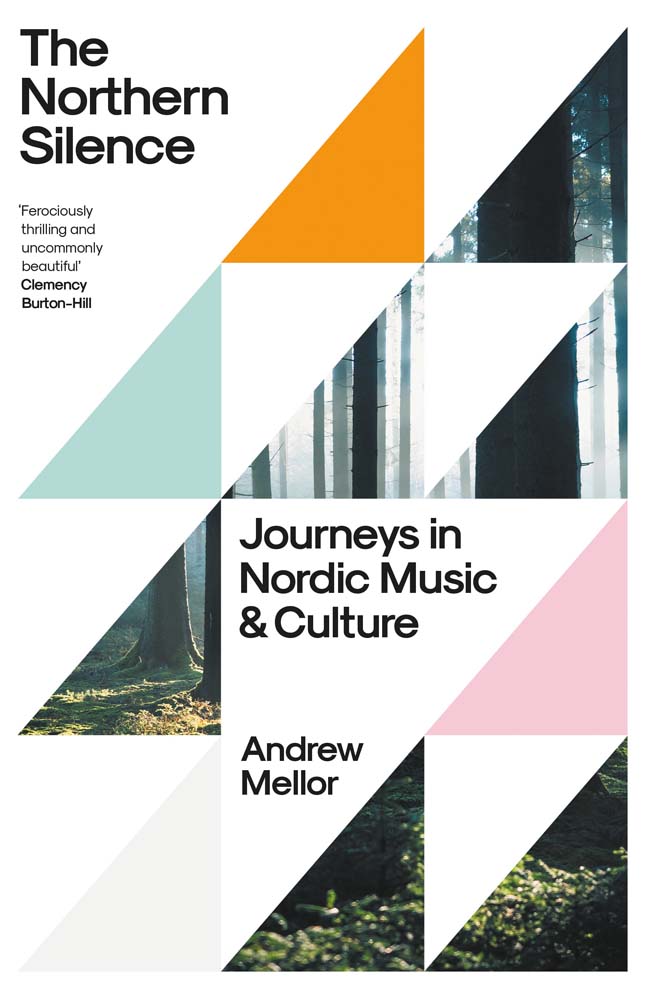
The Northern Silence: Journeys in Nordic Music and Culture

Rate this book
An essential exploration of Nordic composers and musicians, and the distinctive culture that continues to shape them
 
Once considered a musical backwater, the Nordic region is now a musical powerhouse. Conductors from Denmark and Finland dominate the British and American orchestral scene. Interest in the old masters Sibelius and Grieg is soaring and progressive pop artists like Björk continue to fascinate as much as they entertain.
 
Andrew Mellor journeys to the heart of the Nordic cultural psyche. From Reykjavik to Rovaniemi, he examines the success of Nordic music’s performers, the attitude of its audiences, and the sound of its composers past and present—celebrating along the way some of the most remarkable music ever written. Mellor peers into the dark side of the Scandinavian utopia, from xenophobia and alcoholism to parochialism and the twilight of the social democratic dream. Drawing on a range of genres and firsthand encounters, he reveals that our fascination with Nordic societies and our love for Nordic music might be more intertwined than first thought.

320 pages, Hardcover

Published July 26, 2022

8 people are currently reading
156 people want to read

About the author

Andrew Mellor

93 books2 followers

Ratings & Reviews

What do you think?
Rate this book

Friends & Following

Create a free account to discover what your friends think of this book!

Community Reviews

5 stars
22 (41%)
4 stars
19 (35%)
3 stars
11 (20%)
2 stars
1 (1%)
1 star
0 (0%)
Displaying 1 - 11 of 11 reviews
Profile Image for Alan (on December semi-hiatus) Teder.
2,708 reviews249 followers
July 6, 2024
Nordic Classics
Review of the Yale University Press hardcover (July 2022)

I started following music journalist Andrew Mellor on Twitter several years ago after some of his reporting from Estonia at Tallinn Music Week. The formerly UK based writer has lived in Copenhagen, Denmark for a while now and regularly reports on classical music and opera throughout Scandinavia and the Baltic.

Northern Silence is both a travelogue and a musical guide to the major composers of the Scandinavian countries. Mellor travels to various major festivals, premieres and events and the book incorporates some of his earlier review reports over the past years. It is not a collection of previous articles though but takes a broad view of Nordic composition in its overall environment:
As I write in the book’s preface Tapiola, I was keen to ‘trace some parallel lines’ between the musical, cultural, political, social and so on. As a Scandinavian taxpayer of seven years, I have become convinced that the music and culture of the Nordic countries are inextricable from the wider societal, geographical and topographical realities one experiences here…for better or worse.



Sections of the book concentrate on the most widely known composers in each of the Scandinavian countries: i.e. Edvard Grieg in Norway, Carl Nielsen in Denmark, Jean Sibelius in Finland, etc. but there is also an extensive amount of information about lesser known and present day contemporary composers as well. Some rather wonderful and humorous trivia also to be discovered, e.g. see the video for a composer dancing to his own orchestral music linked below. Or see the rather fun series of Danish composer Carl Nielsen taken in his early teenage years which is used to illustrate some of his music here and from which I've selected one below:


I would recommend this highly as an excellent introduction to the classical and contemporary music composition history of the Nordic countries. You don't need a musicological background to follow along. Only a curiosity about or a passion for composers and composed music is needed.

Soundtrack
Andrew Mellor complied his own playlist to accompany the book which you can listen to on Spotify here. Some folk and pop music is also included.

Trivia and Links
You can watch a showreel sample of Andrew Mellor introducing or discussing various musics on YouTube here.

You can see a rather unique video of composer Pelle Gudmundsen-Holmgreen dancing to his own orchestral work Triptycon (1985) at PGH Dances.
Profile Image for Ends of the Word.
543 reviews144 followers
February 1, 2025
I first came across the writings of Andrew Mellor in the (now discontinued) Classic FM Magazine and Gramophone, although he has also written for many other publications. As he explains in an article for Gramophone, it was working for this latter magazine which led Mellor from his first musical loves – Wagner and Britten – to his later enthusiasm for Nordic music. It was an enthusiasm which would turn out to be, literally, life-changing. In 2015, Mellor moved to Denmark where he is now “domiciled apparently for good” (Danish taxman take note!).

All these years of reviewing recordings and concerts of Nordic music, traipsing from festival to festival within sight of the Northern Lights, and interviewing luminaries of Nordic music, have surely earned Mellor the title of “Nordic music specialist” rather optimistically thrust upon him by his editor at Gramophone in the incipient phases of his “obsession” with the subject. This considerable experience – “15 years reporting from the region, 7 of them living there” – feeds into Mellor’s recently published book for Yale University Press – The Northern Silence: Journeys in Nordic Music and Culture. As its title suggests, this veritable labour of love is an exploration of Nordic music (chiefly classical music of the 20th and 21st century, with the odd foray into folk and rock/pop) within the wider context of the culture and psyche of the countries of the North. Mellor tells us, “what I report on here is what I have seen with my eyes, heard with my ears and interpreted through the lens of my lived experience”.

From its very first pages, this volume is an eye-opening one. For instance, Mellor explains that:

References in the text to ‘Scandinavia’ refer to Denmark, Norway and Sweden – the three Scandinavian kingdoms bound by common linguistic and political roots. Finland and Iceland, regarded locally as separate from Scandinavia, will be referred to in the text as such. The term ‘Nordic countries’ incorporates all five nations together with the Faroe Islands – like Greenland, an autonomous country within the Kingdom of Denmark”.

This necessary and helpful clarification challenges at the outset some lazy prejudices or assumptions to which the casual reader or listener may be prone: there are close links between the states of the region (and, frankly, there would otherwise be little point in Mellor’s book or, for that matter, the various festivals or recordings of “Nordic” music), but each of the countries generally included under the convenient “Nordic” label has its distinctive characteristics, as becomes increasingly apparent as one reads on.

Mellor is an assured and knowledgeable guide on this Northern journey. Suffice it to say that although I like to think of myself as quite well-versed in 20th century and contemporary classical music (for an amateur, of course), every few pages this book brought me across a composer who was new to me or a work which I was yet to explore. My Spotify playlist has become much richer over the past two weeks!

Yet, Mellor’s style is satisfying for both the specialist and the general reader – it never feels heavy-going despite the information packed into the volume. Indeed, one of the challenges with such a book is how to organise all this learning in a way which doesn’t read like a data sheet. Mellor opts for chapters which establish broad themes. The first one – “Landfall” – introduces some key founding figures of Nordic music – luminaries such as Grieg, Sibelius, Nielsen, Atterberg. The second chapter – “Performance” – focuses on Nordic orchestras and ensembles, and on the region’s attitudes to funding and arts management. “Off Piste” looks at unusual approaches to composing and performing music, including the interaction between different genres and styles. “Nordic Noir and Snow White” teases out some tantalising parallels between the phenomenon of Nordic dark and crime literature and the music of its composers, before moving to a quite detailed examination of the works of Hans Abrahamsen. In a similar exercise, the fifth chapter – “Scandinavian by Design” – explores common elements between Scandinavian music and Nordic design and architecture, focussing especially on the structure of the works of Danish composer Per Nørgård and the Aarhus School (including Poul Ruders) as well as the nature-inspired similarities between the symphonies of Sibelius and the architecture of Alvar Aalto. “Postlude. Silence” provides a brief epilogue in which Outi Tarkianen’s BBC Proms commission “Midnight Sun Variations” provokes meditations on nature and climate change (particularly hard-hitting in the Far North).

This organic approach allows for recurrence of certain themes and leitmotivs – in particular, Sibelius’s “Tapiola” gives its name to the volume’s introduction or “Prelude” and remains a point of reference throughout the book.

This book is essential reading for all lovers of Nordic music but should also prove illuminating to anyone interested in learning more about the countries and cultures behind the ubiquitous “Nordic” brand.

https://endsoftheword.blogspot.com/20...
Profile Image for Jack M.
333 reviews19 followers
Read
February 3, 2023
That it was a book predominantly about Nordic Classical music (ugh, don’t even know if that is the right term…orchestral?) eluded me at the bookshop. I flipped through and the pages I landed on had the author traveling through Scandinavia, and the clincher for me was in the photo section, which had the pews of one opera hall or another designed to look like logs of timber rolling down the river. Stunning, genius! But this sentence leads me to precisely the shortcomings of the book; far too much of it is spent on descriptions of world class architecture and pieces of classical music. Terms like ‘the crescendo fluctuates into a fortisimo before the Major E chord dissolves into the fifth’ are used casually, as if my saccharine pop trained ears would have an inkling of what such a thing could possibly mean.

Ok, for the music, when I could, I sought out the piece that he was describing on Spotify to see if I could match his narrative. Try as I might, there I was on my living room couch, angling the floor lamp to shine directly into my face, squinting my eyes, listening to try to comprehend if the music translated to what the author describes:

“At first, the piece appears to hold up a hand, shielding eyes and years from the light’s unfiltered strength”.

Unfortunately it didn’t. Thank god there was no one there to witness that debacle.

At least that’s one aspect of the music and it’s Scandinavian-ess that I could agree with, the solitude, as the albums could only be something that you would listen to by yourself. The other Nordic features that he tries to connect; minimalism, functionalist furniture, high-quality design, social order - I found a bit of a stretch, at least to my amateur ear.

It’s certainly a book that could be enhanced by some technology, if you read it, you’ll definitely want Spotify and it would be even better if the author or editors could make a list and time stamp exactly the moment he is referring to. Not sure if Kindle has such functionality. The other aspects, like taking a tour of a concert hall with a specific design, while a piece is playing, aren’t I describing that thingamajig; Web3? At least how I understood it. Come on porn industry, hurry up and crack that code to pave the way for everything else, like you always do.

Nevertheless, I did enjoy his attempts and the book certainly contains a thorough look at ‘Brand Scandinavia’ and what lies beneath. My playlist is richer, if not weirder.

[End of book review, obligatory social commentary continues below]

“In a part of the world where getting, spending, succeeding and manipulating are yet to entirely eclipse some sense of a deeper meaning to life, folk tend to accept a broader range of moods beyond those which semaphore ‘success’”

Must be nice! Say, just exactly how much has Norway profited from the Russia-Ukraine war and the ensuing spike in gas and energy rates. The book states that every Norwegian citizen is BORN into 200,000 EUR. So now we can safely double or triple that. Spend all the money you want on a cool looking building meant to resemble a fjord, my heart goes out when I hear that orchestral piece mimicking an iceberg breaking off - the fact is, is that states like these are culpable for the environmental crisis, among other things fucked up in the world. You give us Greta, well let me tell you, it’s going to take a helluva lot more than that.
Profile Image for Lihong Chew.
24 reviews6 followers
November 13, 2024
A disclaimer: I did not manage to finish reading this book before I had to return it, but I read 75% of it. I loved Andrew Mellor’s writing. Music isn’t really something I’m that well versed in, but I really enjoyed reading about Nordic cultures through Andrew’s lens of music. Some things fit in with what I experienced living in Sweden, some were surprising or added a deeper insight. Lots of aha moments that gave me more cultural touchpoints to understand Scandinavia.

The writing was compelling enough for me to have my laptop open while reading so I could google references and listen to the music that I was reading about. In this way this book was quite a multisensorial experience. I love memoirs and anthropological books and this did not disappoint.
Profile Image for Christopher.
1,441 reviews223 followers
June 30, 2023
This book is nearly insufferable. Andrew Mellor is a British journalist long resident in Denmark and covering classical music in the Nordic countries. Norway, Sweden, Denmark, Finland, and Iceland are remarkable for being classical-music powerhouses in spite of their relatively small populations, with a huge number of composers, orchestras and chamber forces, and modern concert halls. So, a book about the phenomenon might be welcome, but I wish someone else had written it.

Because Mellor is a journalist for periodicals like The Guardian, his writing so often hews to the polarizing modern trend of leading with descriptions of the scenery or a relatively insignificant local person’s own story before getting to the actual meat of the reportage. Time and time again, as Mellor shifts to a separate subject, we first have to read through a long and irrelevant description of his plane landing at an airport, his train passing through the countryside, or his meeting up with people over drinks. Once he does get to the point, there isn’t all that much here in the book, and what is here isn’t very new – my ultimate conclusion was that this book is largely a repackaging of older reportage that never got revisited, updated, and improved.

This book is written for a mass audience and no knowledge of music theory is expected. But Mellor’s attempts to simplify eggheaded theory seem misguided, he or someone could have done better. Whenever he has to refer to composers working with the natural overtone series (a popular aesthetic internationally since about the 1970s), he uses the same explanation “the often-inaudible notes produced by certain frequencies”. This misses the point, as the overtone series is better explained (and exploited by composers) as the foundation of timbre. When Mellor tries to use such oversimplified formulations to describe how a Hardanger fiddle works, I felt the vivid desire to have been present at the writing of that passage so I could muscle him out of the way and do it myself.

Then there are the factual errors. To give one example: no, Finnish is not related to Japanese. While this book is targeted at a mass audience, it comes from Yale University Press and so one expects some rigorous review before publication.

Finally, Mellor goes beyond music to try to describe other aspects of Nordic culture, but this is mostly superficial or even simply perpetuating stereotypes. He may have lived in Denmark, but much of his insight into life in the other countries comes from mere chatting with locals, or random materials available to him in English from which he draws wider conclusions than they ever should support (like Arto Paasilinna’s novel The Year of the Hare for Finland).

Can one learn a thing or two from The Northern Silence? Sure. But all in all, I will file this book away in my memory along crap pop-sci writers like Bill Bryson.
Profile Image for DeanJean.
162 reviews12 followers
March 21, 2023
"Silence is prevalent in the most sparsely populated countries in continental Europe. But the silence here, in climates prone to acoustically damping snow and in landscapes strewn with tall forests, is all its own. "I have long been interested in this," the German composer Sid Hille told me in 2015, reflecting on three decades living in Finland. "I first went to Lapland in the winter of 1995. I was in the middle of the forest, where the snow was reflecting what little light there was, and there was a complete and utter silence. I cannot imagine that it doesn't influence a person."

And what does silence, geographical formations, the overstaying sun and harsh climate have to do with this particular region? Plenty, it seems - nordic noir, experimental classical music, IKEA, a democracy that others envy, and many more.

Andrew Mellor explores the brethren of nineteenth and twentieth century classical music, along with some pop/rock musicians. Through interviews with various conductors, musicians, artists and his first hand experiences of the region, he reveals how the regions's geographical surroundings, mythological traditions and harsh climates have contributed to their unique cultural heritage, psyche and democracy. Nordic people are very cool, what can I say? 😎👌

The Northern Silence was one of those books with seductive titles, and this has been enjoyable to wade through. The book works best with Spotify/YouTube in hand, and chunks of time dedicated to listening. If you like Sibelius and want to improve your Nordic palate, or are just nosy about Nordic culture in general (particularly with their attention to the arts), this is a book you want to dive into.
Profile Image for Mikael Lind.
191 reviews62 followers
March 26, 2023
Mostly focused on classical music, with some alternative music and crossover artists also featured (such as Björk). Very passionately written, with lots of fascinating anecdotes and interesting comments on the Nordic style and culture, spiced with amusing thoughts on the psyche of its inhabitants. Teh book spends a lot of content on Iceland and Finland though, with Denmark somewhere in between, and Sweden somewhat in the shadow. Mellor has a lot of knowledge of the Icelandic scene, so if you’re into the Icelandic sound, you have lots to discover here. However, I feel the book lacks some more comments on the Swedish scene. Musicians and bands such as Anna von Hauswolff, Fever Ray/The Knife, José Gonzales and Karin Rehnqvist are not even mentioned. The split between the Nordic countries doesn’t have to be mathematically exact, but when the lack of focus on Sweden and partly also Norway gets too apparent, one feels that a book that sets out to describe the Nordic Sound misses its target a bit. But still, overall, a very readable book.
Profile Image for Mandy.
3,622 reviews330 followers
March 9, 2024
This is a detailed and comprehensive exploration of Nordic music in all its manifestations – mainly classical but with side excursions into modern and popular music too. I found it heavy-going at times, mainly when the author went into quite technical detail about the music he was talking about, and it’s obvious that some musical knowledge will help with reading the book, but overall there’s much here for the general reader to enjoy as well. I felt enlightened by the end of it – so many aspects of not just music but life in the Nordic countries in general; the Nordic psyche for one, which I found fascinating. The book is wide-ranging and comprehensive and there really is something new to learn in every chapter.
57 reviews4 followers
January 31, 2024
I appreciated the serious music analysis, but it was interspersed with a lot of travelogue and conversations-in-the-pub overviews that seemed both meandering and excessively focused on male musicians and composers (in part, to be fair, because of the significant attention to Sibelius, Grieg, etc.). Considering the contemporary significance of women in Scandinavian and, especially, Icelandic music, that seemed like an odd emphasis. And I understand that part of his goal is to illuminate the culture--and he has some interesting observations--but the reflections feel scattered.
Profile Image for Luciano.
328 reviews281 followers
November 15, 2023
The book is much more focused in classical music than the broad title sugests (no Swedish pop, very little Norwegian jazz, etc.), but it was still worth reading. Mellor is a passionate and thougtful observer, and he makes smart links between the extreme geography and the way Nordics chose to govern themselves and their culture.
Displaying 1 - 11 of 11 reviews

Can't find what you're looking for?

Get help and learn more about the design.