

What do you think?

Cehennemin Kapıları
“Evet... Korku... Size söyleyeceğim şeyin korkusu, zira o kadar korkunç bir şey ki, onu size açıklama düşüncesi bile tüylerimi diken diken ediyor ve onu işittiğinizde siz de korkudan buz keseceksiniz!” 1875-1926 yılları arasında yaşayan Fransız yazar Maurice Level’in öyküleri, korku verici oyunlarıyla ünlü Grand Guignol tiyatrosunda sahnelendi. Guy de Maupassant ve Edgar Allan Poe gibi yazarlarla birlikte anılan Level, özellikle gizemli öyküleri ve sürprizli finalleriyle dikkat çekerek karanlık ama gerçekçi bir edebiyat anlayışı sergiledi.
Level’in yirmi altı kısa öyküsünün bir araya geldiği Cehennemin Kapıları adlı eseri delilik, ölüm, intikam, suçluluk, cinayet ve intiharla dolu tekinsiz bir dünyaya ev sahipliği yapıyor.
“M. Level’e saygım sonsuz. Keşke ben de onun gibi enfes olay örgüleri yaratabilseydim.”
-H. P. Lovecraft
Level’in yirmi altı kısa öyküsünün bir araya geldiği Cehennemin Kapıları adlı eseri delilik, ölüm, intikam, suçluluk, cinayet ve intiharla dolu tekinsiz bir dünyaya ev sahipliği yapıyor.
“M. Level’e saygım sonsuz. Keşke ben de onun gibi enfes olay örgüleri yaratabilseydim.”
-H. P. Lovecraft
192 pages, Paperback
First published January 1, 1910
About the author
Maurice Level
96 books19 followersMaurice Level was a writer of fiction and drama who specialized in short stories of the macabre which were printed regularly in the columns of Paris newspapers and sometimes staged by Théâtre du Grand-Guignol, the repertory company in Paris's Pigalle district devoted to melodramatic productions which emphasized blood and gore.
H.P. Lovecraft observed of Level's fiction in his essay "Supernatural Horror in Literature" (1927): "This type, however, is less a part of the weird tradition than a class peculiar to itself — the so-called conte cruel, in which the wrenching of the emotions is accomplished through dramatic tantalizations, frustrations and gruesome physical horrors."
H.P. Lovecraft observed of Level's fiction in his essay "Supernatural Horror in Literature" (1927): "This type, however, is less a part of the weird tradition than a class peculiar to itself — the so-called conte cruel, in which the wrenching of the emotions is accomplished through dramatic tantalizations, frustrations and gruesome physical horrors."
Ratings & Reviews
Friends & Following
Create a free account to discover what your friends think of this book!
Community Reviews
Displaying 1 - 4 of 4 reviews

March 30, 2017

Detail from The Gates of Hell by the great French sculptor, Auguste Rodin. Maurice Level and Auguste Rodin were contemporaries. Jessica Sequeira thinks there is a good chance Level's collection is linked directly to the sculptor's work.
The Gates of Hell - Twenty-six tales of the macabre from French author Maurice Level (1875-1926), short tales, each one six or seven or eight pages in length, adapted and translated into clear, accessible English by Jessica Sequeira. Also included in this Black Coat Press edition is an informative introductory essay by Ms. Sequeira providing the cultural and literary context for Level's writing. Similar to French fin-de-siècle decadent literature, the setting for these stories is usually Paris and frequently presents men and women in the grip of extreme psychic states such as agony, terror, dread, fear or panic.
Level writes his stories with a particular economy and flair – in keeping within the French contre cruel tradition, the unfolding drama is based on human behavior and the mind rather than the supernatural and there is always a distinctive pop or twist at the end. No wonder Maurice Level has often been compared to Guy de Maupassant and Edgar Allen Poe. With all this in mind, I wouldn’t want to spoil a reader’s experience by saying too much about too many tales; however, as a way of providing a taste of the unmistakable power of Level's writing and how these tales raise many philosophical and psychological questions, I offer the following more detailed reflections on two of my personal favorites from the collection:
FASCINATION
Released after three months in prison, a jury having acquitted him of a woman's murder, the narrator sits alone in a hotel room writing down his reflections on the truth: how he, in fact, pointed his revolver and with full intention murdered his victim. Why? The judge and jury could not detect any real motive thus clearing him of the crime. But that’s just the point! For a man such as himself, as he tells us, there will never be any clear-cut motive.
For Fascination is a study of the murky hidden depths of the mind. Reading the narrator’s confession, we see how we can be taken over by a force beyond our control, a force described in Norse mythology as the giant, the destructive shadow-side of our personality. Or, alternately, how we can create chaos while remaining calm, cool and collected, for no other reason than to prove to the universe we don’t give a fig for its so called harmony. What? Is this sheer madness?
As Jessica Sequeira notes in her introduction: “It is significant that although these pieces were performed onstage at the Grand Guignol, they began as stories, for the psychological detail they accrue surpasses what can be acted out in physical gestures. This is the tragedy of the theater: even the most complex psychological subtleties must be depicted through movement of the body, props and sets. In the tales of Level, a sensitive writer who also knew how to entertain his rowdy audiences, this tension between theatrical outer events and inner understanding proved to be fertile territory, for it drew on the real philosophical source of terror: the possibility of meaninglessness.”
I can just imagine the theater set: a bare stage with the actor sitting in a chair with a revolver on a side table, relating via monologue the reasons he murdered and what he might do now with the revolver. Actually, better than theater, his inner states are revealed in the tale as when we read these lines from the first page: "I’d known the terrified sleep full of nightmares of the guillotine. With terror I’d passed sweating hands over my cold neck, guessing the narrow path the blade would trace there. I’d shuddered at the hostile murmurs of the crowd. In my ears, I’d heard the shout: “To death!”" And what does our brooding narrator do at the end with the revolver? You will have to read for yourself.
A MANIAC
This tale opens, “He was neither wicked nor bloodthirsty. He simply had a very special understanding of the pleasures of existence. Perhaps it was that having practiced them all, he no longer found anything unexpected.” We read along as the tale fleshes-out what is meant by “a very special understanding of the pleasures of existence” The unnamed main character attends the theater not to watch the play but in the hope a fire will break out; visits a fair in the hope beasts will attack their trainer; attends bullfights but is disappointed since the violence is too predictable. What he is after is the unexpected thrill. But when he experiences exactly what he is after, in the aftermath of these unexpected thrills, he becomes depressed, thinking there is no more reason to continue living.
Let’s pause here to ask: does this nineteenth century thrill-seeker anticipate an entire culture of thrill-seekers, people putting themselves or watching other people put themselves at risk on the edge for the sheer thrill of it? German philosopher Arthur Schopenhauer judged our human life as an alternating between frustration and boredom. Is this seeking of thrills a radical attempt to transcend frustration and boredom? If so, this is hardly a flattering commentary on our natural capacity for joy and harmonious living.
The tale continues. Our thrill-seeker sees a poster displaying a daredevil event. We read, “The man needed to hurtle down the narrow track at full speed, climb the loop and descend again. During this fantastic feat, for a second the acrobat would find himself with his head down and feet in the air.” Inspired, our thrill-seeker buys an entire box of seats at the end of the track so he can watch the daredevil cyclist night after night without distraction. But then one night after the performance the cyclist approaches him and, in the course of conversation, explains how he can accomplish his extraordinary feat by focusing on a fixed point, the fixed point being the man sitting by himself in a box at the end of the track.
The next night monsieur thrill-seeker takes his usual seat. The cyclist pushes off, heading for his death-defying loop. We read, “But at the same time, with the most natural movement in the world, the maniac stood up and sat on the other side of his box. A gruesome thing then happened. The acrobat gave a violent jump. His bike, which shot forward, gave a tremendous lurch, leaped off the track and crashed to the ground in the midst of terrified shrieks. With a businesslike gesture, the maniac put on his overcoat, smoothed his hat with the back of his sleeve and made his exit.”
Like the cyclist’s daredevil full circle death-defying stunt, the end of the tale brings readers full circle to the tale’s opening line where the main character is described as “neither wicked nor bloodthirsty”. Really? How would we characterize someone who would intentionally act in a way causing the death of others merely to have a thrill? Wicked? Cruel? Malicious? Bloodthirsty? Any of these words seem to fit. So, we may ask, does the tale’s narrator shares in the same madness as the man he is describing; or, to put it another way, is this tale-telling the product of a diseased mind, yet again another sick flower of decadent nineteenth century Baudelarean evil?
Max Nordau, a leading cultural and literary critic at the time, wrote an essay in 1894 where he used the term “decadent” and judged many French writers and artists and a large sector of the French population as having diseased minds, that is, minds that are confused, discouraged and despairing. Perhaps, on some level, Maurice Level would agree with the confused, discouraged and despairing part, since his stories are filled with such people. Fortunately, reading his finely crafted tales is just the opposite experience: sheer enjoyment, like popping a box of expensive French chocolates in your mouth, one by one.
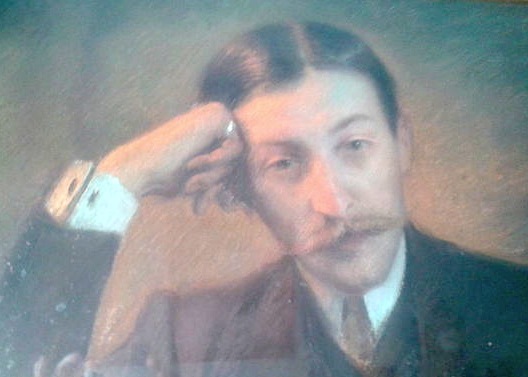
"Their brains went empty with fear, as they knew that every tick-tock was a note that drew a drop of their blood. Then, losing their heads, with that remnant of instinct that makes the condemn cling for existence to the foot of the scaffold, they’d wanted to take advantage of what time remained to them to live." from The Clock, one of riveting tales in this Maurice Level collection.
October 3, 2021
Maurice Level, önceden okumadığım, Çınar Yayınları ile tanışma şansına eriştiğim bir korku, gizem, öykü yazarı; büyük keyif aldım. Oldukça kısa öykülerin her birinde farklı bir gerilim seviyesi, karakteri var. Anlatı kısa olunca çok hızlı ilerlenebiliyor ama yavaş yavaş okunmasını tavsiye ediyorum.

October 16, 2018
The twenty-six tales of The Gates of Hell are not the supernatural horror I had come to expect from British and American short stories of this same period. Translator Jessica Sequeira's introduction discusses the French tradition of "dark realism" which relies instead on irony and psychology to depict events that could conceivably happen. In "The Debt Collector," for example, a humble accountant who finally gives in to temptation finds his carefully constructed plan thwarted when he forgets the alias he had used years earlier. Several other pieces center on the homeless and the Kafkaesque web of social prejudices surrounding them. "On the Road" tells of a beggar who finds a gold coin but, due to his ragged appearance and ecstatic manner, is believed to be a crazed thief and is unable to spend it.
I had initially found Level's portrayal of deranged mental states reminiscent of Poe, particularly in "Fascination," which reminded me of "The Tell-Tale Heart" with its unstable narrator driven to murder by his beloved's grating voice. Yet while the influence is obvious, he generally avoids most of Poe's overheated hysteria and explicitly macabre prose. Level felt more tightly crafted.
I had initially found Level's portrayal of deranged mental states reminiscent of Poe, particularly in "Fascination," which reminded me of "The Tell-Tale Heart" with its unstable narrator driven to murder by his beloved's grating voice. Yet while the influence is obvious, he generally avoids most of Poe's overheated hysteria and explicitly macabre prose. Level felt more tightly crafted.

October 27, 2023
"Mahsur kalmak" diyebiliriz, kitaptaki öykülerin ortak noktasına. Hapishane hücresinden kuyulara, kaybedilen gözlerden en yakın dost ile aldatan eşe, zindan olan yaşamlarla, dilencilerle, kasıtsız cinayetlerle, insanın kendi cehenneminde yani vicdanında ve çaresizliğinde yatıyor isminin gizi; bu kısa öykülerle dolu antolojinin. Öykülerin bu kadar -hiçbiri 10 sayfa sürmüyor- kısa olmasının bir dezavantajı, yukarıda saydığım temaların birçok kere tekrar edilmiş olması. En çok aklımda kalanlar, başta, sonda ve ortada yer almak suretiyle; "Bıçak Hakkı", "Horoz Öttü", "Duvar Saati", "Tahsildar", "Bir Manyak" ve kitabı beklenmedik bir duygusallıkla kapatan "Baba" oldu. Tek bir kalemden 26 öykülük derleme tek bir ciltte kütüphanenizde rahatlıkla yer alabilir, diye düşünüyorum. Son tahlilde, ara ara açıp okunabilecek, ortalama bir eser.
Displaying 1 - 4 of 4 reviews