A New York Times Best New Historical Novel of 2021"Potent... fast-paced..." - The New York Times Book Review"Wonderfully imagined and wonderfully written . . . Superb!" -- Lee ChildPart Wolf Hall, part The Name of the Rose, a riveting new literary thriller set in Restoration London, with a cast of real historic figures, set against the actual historic events and intrigues of the returned king and his court …The City of London, 1678. New Year’s Day. Twelve years have passed since the Great Fire ripped through the City. Eighteen since the fall of Oliver Cromwell and the restoration of a King. London is gripped by hysteria, and rumors of Catholic plots and sinister foreign assassins abound. When the body of a young boy drained of his blood is discovered on the snowy bank of the Fleet River, Robert Hooke, the Curator of Experiments at the just-formed Royal Society for Improving Natural Knowledge, and his assistant Harry Hunt, are called in to explain such a ghastly finding—and whether it's part of a plot against the king. They soon learn it is not the first bloodless boy to have been discovered. Meanwhile, that same morning Henry Oldenburg, the Secretary of the Royal Society, blows his brains out, and a disgraced Earl is released from the Tower of London, bent on revenge against the King, Charles II. Wary of the political hornet’s nest they are walking into – and using scientific evidence rather than paranoia in their pursuit of truth – Hooke and Hunt must discover why the boy was murdered, and why his blood was taken. The Bloodless Boy is an absorbing literary thriller that introduces two new indelible heroes to historical crime fiction. It is also a powerfully atmospheric recreation of the darkest corners of Restoration London, where the Court and the underworld seem to merge, even as the light of scientific inquiry is starting to emerge …
I grew up in the London suburbs, south of the river, and then in Sheffield. At school I wanted to be an artist, thinking I was going to be the next great English painter. I did a BA degree in Fine Art, in Coventry, but moved more into art theory, ideas, and writing. It was during my study for an MA in the History of Ideas, in Newcastle, that I discovered Robert Hooke's Diary, detailing his work as Curator of Experiments of the Royal Society, and as architect of the new London, after the Fire. The ideas and characters that I came across stayed with me; years of tinkering resulted in The Bloodless Boy and its sequel, The Clockwork Assassins. The Bloodless Boy uses real characters and real science, or 'experimental philosophy' as it was known. 17th century experiments in blood transfusion and preservation of bodies in a vacuum drag the young Observator of the Royal Society, Harry Hunt, (who was Robert Hooke's assistant), into the hysteria of the Popish Plot. It pits him against Titus Oates, Lord Shaftesbury, and a sinister villain called Lefèvre. The sequel to The Bloodless Boy, The Clockwork Assassins, finds Harry in the Fens of Norfolk, and then in Paris, where he becomes embroiled in the machinations of the 'Affair des Poisons'. He uncovers a plot to kill Queen Catherine, and so has to race back to London - with many obstacles in his way. Both books are to be published by Melville House Publishing. The new edition of The Bloodless Boy is due out in November 2021. The self-published versions are no longer available, unless you can find them second-hand. I'm represented by Gaia Banks at Sheil Land Associates literary agency. Many thanks are due to Gaia, who has championed both books with an astonishing energy and attention to detail. I'm married, with three splendid children and a very lovely wife, and I live in the Brecon Beacons. Follow me on Twitter as @robjlloyd. On Facebook, I'm Robert J Lloyd. I would love to hear from you if you've read all - or part - of the books. Reviews would be very welcome, too!
London, 1678. A very young boy is found dead. Sir Edmund Bury Godfrey, the powerful Justice of Peace for Westminster, believes that Hooke’s knowledge of blood and vacua will greatly assist in finding child’s murderer.
Robert Hooke is the Curator of Experiments of the Royal Society and architect of the new London, after the Fire. With his assistant Harry Hunt they conduct different experiments including blood transfusion. And that’s what attracted me to this story and learning about those two historical figures and their work.
However, the story is plot-driven and that it always my struggle to connect with any such story. I like character-driven stories, where the main character grasps my attention from the first pages, which doesn’t happen here. It is normal for plot-driven stories to start with some action as finding a dead body in this story. However, as soon as a chapter started about Robert Hooke, I thought we would learn something about him, but it jumps to introducing other people and facts.
At times, there are a lot of names and facts presented without any depth to it. Other times, the methodical descriptions are too detailed. There are times when a big chunk of story is driven by dialogue, which at least in this case is done with the right purpose; the dialogue moves the story forward.
The story is ambitious in its scope bringing scientific advances and politics, a lot of names and facts, but it feels as it’s out of balance with engagement.
If you like plot-driven stories, I recommend reading other reviews.
Source: ARC was provided by the publisher via NetGalley in exchange for an honest review.
The body of a child is found drained of blood. The search of the killer is starting in London. This is a great thriller. thank you Netgalley for this book.
The Bloodless Boy is a wonderful addition to the genre of historical mysteries with scientists/anatomists as their central characters. When a boy's body, drained of blood and accompanied by a ciphered message, is discovered in London, microscopist Robert Hooke and his former trainee Henry Hunt find themselves drawn into the search for answers to this crime. Hunt is young and eager to jump into the investigation. Hooke, having lived through the tumultuous years before the restoration is much more chary. Eager or not, both men are pulled into puzzle which quickly becomes volatile as events are connected to the work of supposed Catholic terrorists.
The cast of characters here, composed of figures both historical and fictitious, is a delight. The mystery itself is more complex than is often the case with such novels, making this a book that would appeal to readers not generally drawn to the genre. If you're looking for a lively mix of history, fiction, mystery, and dangerous politics, you've found your book.
I received a free electronic review copy of this title from the publisher; the opinions are my own.
the narrative was annoying. it seemed like it was trying way too hard to be literary & I think the storytelling suffers for it. unnecessary commas litter the text, as does a weird reliance on sentence fragments.
fragments can always be used to great effect in writing. but they can also be overused. this book, it’s definitely the latter.
random unrelated information, such as a single sentence mentioning Harry’s pale skin, are just kinda wedged into places. there’s no follow-up; there’s nothing added to further expound or expand upon it. it’s just thrown in there without purpose.
the dialog is awkward & devoid of personality. they all sound the same & the dialog could easily be mistaken for part of the narrative text.
don’t use $5 words when $1 does the job just fine.
I purchased this book after reading a review in the Times praising it. The story fails to grip the imagination, lists of documents encountered during the analysis of the reasons for the killing of the bloodless boy, not engrossing at all. I can read a good book in a matter of days once the story engages me, this took weeks.
‘The Bloodless Boy’ is the debut novel of British-based author, Robert J Lloyd, who transports us back to a dark and dismal post-Restoration England in January 1678. The story has a large cast so it is helpful to have them listed at the start of the book. The chapters are of even length with a good balance between dialogue and description. Whilst easy to understand, the choice of language definitely gives a feeling of the era in which the book has been set; for example, the Great Fire is referred to as the ‘conflagration’. The scene is set for the mystery of the boys’ bodies found drained of blood and left by Barking Creek, the Fleet River and Westbourne, to unfold.
Pre-industrial England in the 17th Century was a time of discovery, technology and invention. Knowledge of the human body was rudimentary and the thirst for understanding led to macabre experimentation. Against this backdrop, we meet Robert Hook, Curator of Experiments at the Royal Society and his assistant, Harry Hunt, who are called upon by Sir Edmund Bury Godfrey, Justice of the Peace in Westminster, to help discover what motive lies behind the bizarre deaths.
As the plot unfolds we are presented with various possibilities; were the boys’ deaths related to a Catholic plot to eliminate the king? Was the suicide of the Secretary of the Royal Society connected in some way? What did the well-bound package found in Secretary Oldenburg’s study contain? What is the meaning of the Red Cipher found on the bodies and can it be deciphered without a keyword? Can an elderly survivor of the Civil War help unravel the mystery? Who can Harry trust in his determination to find out the truth?
Greed seems to be a common denominator among many of the characters with the exception of Harry, who is keen to pursue several avenues of enquiry. His investigations lead him into dangerous territory and even the king himself shows an interest in discovering the truth.
By clever use of many literary devices, the author paints a vivid picture of life in that bleak and cold winter during the reign of Charles II, as we follow several threads until eventually we find out the awful truth.
I found the book challenging in places and needed to concentrate fully for fear of missing a vital clue in the early stages; however, the second half flowed extremely well.
This is a fascinating tale which will appeal to those who enjoy a historical social commentary as much as a good thriller. I complement the author on his research into the period in question and admire his ability to capture the volatile mood of the country. He has blended fact and fiction very well. The lighter moments were few and far between but I did appreciate the tender connection between Harry and Robert’s niece, Grace.
DNF at a third through. I had such high expectations for this book, maybe that was part of the problem. It may be perfect for some - the level of historical detail got the 3 star rating, but the characters didn’t do it for me. Really wanted to enjoy it - the premise seems good on paper, but the pairing didn’t gel for me (based on my previous Shardlake and Aldo reading experiences), so make of that what you will. I thought I’d give it a good go, but just wasn’t enjoying it enough to continue, when there’s so much more out there.
Tediously and well-written. The author has done a tremendous amount of research in the late 17th century London in the years after Cromwell to paint a realistic and vivid mystery. The book description compares it to a cross between The Name of the Rose and Silence of the Lambs. I don’t know about Silence of the Lambs (haven’t seen or read it), but there are definite similarities with The Name of the Rose with its intricate plot and unexpected ending. A long story for an historical mystery, but well worth the effort of reading. An addictive read!
This is an accomplished debut effort. Set in London in the 1670s, Robert Hooke and Harry Hunt of the Royal Society are asked to help with the investigation into macabre murders with a distinctively scientific bent. Fittingly, given the protagonists, the story focuses as much on the 'why' as the 'who' of the story, and the place and time (with all the unsettling legacy of the Civil War and the Great Fire of London) is well drawn without miring the book in detail. The writing style suits the book well and gives a period feel without becoming archaic in tone.
This book should not have been so boring. It has a fascinating premise. A young boy is found dead and drained of blood. Robert Hooke, historically significant scientist known for being the first person to visualize a micro-organism with a microscope, is on the case with a cast of other historic personalities. Unfortunately, this book was a terrible drag. It seemed to go on forever. I considered skipping to the last couple of chapters, but decided to skim all of the superfluous detail instead. Initially, the detail set the stage and established atmosphere. Then it became redundant. It seemed nothing was happening that contributed to the story in terms of building suspense or developing the plot. The reader finds out in the first few pages how the dead boy was drained of blood. This could have been used as part of the plot to build interest from the beginning. However, the scientists on the case had a good idea how it was done. Maybe that was supposed to realistically represent their body of knowledge (pun intended). All that remained for the next 400+ pages was solving the mystery. It was an interesting mystery that could have been far more suspenseful and exciting. I enjoyed all of the science tidbits, but they were not enough to keep the rest of the tedious story afloat. Whenever part of the mystery was revealed, I was hopeful that the book would get better; but, alas, it did not. There is a good story and interesting mystery buried amidst all of this filler. This book would benefit greatly from a rewrite. Thanks to the publisher and NetGalley for an ARC of this novel in exchange for an honest review.
Let me begin by saying how much I enjoyed this book. I found it fantastically well researched with a well developed, intricate plot.
The reader is transported back to 1678’s London where the body of a toddler is found on the river bank. The child’s body is drained of blood and Sir Edmund Godfrey, the Justice of Peace enlists Harry Hunt and Robert Hooke to perform an autopsy and help him with his investigation.
From that moment on, I was immediately hooked. I found the murder of such a young child a truly scary concept, and as you can imagine, more shocking discoveries soon follow.
On the child’s body, the killer leaves an encrypted note, a cipher, which Sir Edmund hands over to Hooke, who in turn entrusts Hunt to decipher it.
This leads Hunt down a path of deception, plotting, and intrigue. His life might even be endangered…
I found the two main characters, Hunt and Hooke, an interesting pair.
Hooke, a renowned Curator of Experiments and Professor of Geometry at Gresham’s College was a cautious, yet a brilliantly gifted individual. Hunt used to be Hooke’s apprentice, now he is an Observator of the Royal Society of London for the Improving of Natural Knowledge. He wishes to be his own man and he often took risks and disobeyed Hooke’s orders.
The plot and the setting are a true strength of this book. I loved the descriptions of the harsh winter, all the snow, and the killer wearing snowshoes. At times I could envisage myself walking alongside Hooke and Hunt in the dark streets of London.
Overall, it’s a great book, perfect for fans of historical fiction.
Overall disappointed with my first book finished in 2022- the synopsis made it sound much more interesting than it was. I loved the overall plot and murder case, but found it inundated with details that weren’t essential to the story. The language was also written true to the setting — 1800s England, which was another point of contention for me.
I really tried with this one, but it just wasn't for me. Not sure why I couldn't connect with it, but I felt restless from the start, and unengaged/disinterested. Having said that, I could see how this book has merit.
My head is still spinning from the rush that this story gave me. I have read historical novels before, but none with the depth of knowledge that this author goes into. The research must have been all-consuming as he writes with such passion, and reading it becomes compulsive.
It is New Years' day 1678. Londoners' the last twenty years have gone through horrendous times. The great fire of London and the end of Cromwell but there are still plots and scheming that make everyone wary of even close friends. King Charles II is very vulnerable from many avenues, so unusual crimes set alarm bells ringing where the king is concerned.
When the body of a young boy of only two or three is found on the riverbank drained of all his blood, it conjures a terrible site. Robert Hooke, the Curator of Experiments at the just-formed Royal Society for Improving Natural Knowledge, and his assistant Harry Hunt, are sent for. From the start, the case is complicated, but before the day is out, a suicide takes place that cannot just be a coincidence.
The story goes off in so many different directions, with clues in complicated coding, a royal connection and additional deaths of other young boys, all with the same gruesome endings. The city of London is becoming unsettled as rumours as to whom is behind these killings ripples through the street.
I liked the in-depth investigation mixed with a balance of heart-pounding chases, rescues and the personal side of how it affected the people involved. There are some very touching chapters and a true sense of helplessness at times that made me cringe at what now seems like barbaric medical cures.
I have to admit there were times that I dropped back a couple of chapters and read them again. There are a lot of characters to remember. I did not want to lose track of who was who. I felt by doing that, I got more out of this story. It will be one of those books that I will enjoy reading again in the future too. There is a listing of who is who at the beginning of the book, which helps tremendously.
It is a gripping book, with tremendous, fascinating detail of life in this era with a riveting storyline that will knock you for six! Highly recommended.
Set against the backdrop of a convincing portrayal of a wintry Restoration London, young Harry Hunt throws himself body and mind into solving the gruesome murders of young boys, which might be linked to a plot against the king himself. Lloyd's lyrical prose and believable dialogue drags the reader into the grimy streets of seventeenth century London, where danger lurks in every alleyway. A fantastic crime caper.
Robert J. Lloyd’s first novel begins on New Year’s Day 1678. The setting is London, a city still recovering from the Conflagration or Great Fire eleven years previous with the appearance of numerous true historical figures as well as many fictitious ones. Charles II, occupies the English throne and rumors abound concerning Catholic plots to assassinate him. The title of the novel, THE BLOODLESS BOY is very apropos as the drama that hovers over the story surrounds the discovery of the body of a three year old boy near the Fleet River with wounds providing evidence that the boy had all of his blood drained from his body. What makes matters worse is that as the plot evolves other bodies are found in a similar state.
The two most important protagonists are Robert Hooke and Henry Hunt. Hooke is the Curator of Experiments of the Royal Society of London for Improving Natural Knowledge, Gresham’s Professor of Geometry, and Surveyor of London. Hunt, a former protégé of Hooke’s, now on his own is an Observator of the Royal Society of London and both men have been tasked by Charles II and Sir Edmund Bury Godfrey, the Justice of the Peace for Westminster to assist in solving the murders. Hooke is very reluctant fearing it will interfere in what he believes to be his greater work for the Society, and Hunt is more than willing to cooperate as he sees it as an avenue to emerge from under his former mentor’s shadow.
Political intrigue and spies abound in the novel with the constant references to Popish plots against the government, assassination plans to remove Charles II, and a series of Ciphers that come into the possession of Hooke, Hunt, and others. As the plot meanders slowly for a number of chapters Hooke is very concerned that the murders may lead back to the earlier English Civil War and Charles II escape to France. Further, Lloyd expertly integrates the story of the Earl of Shaftsbury, the former Chancellor of the Exchequer, Lord Chancellor, and First Lord of Trade who upon writing a pamphlet arguing that the powers of the king should be restricted spends a year in the Tower of London until he expresses contrition for his beliefs. Despite this expression his life centers around seeking revenge. Another story that Lloyd weaves into the novel is that of Henry Oldenburg, Secretary of the Royal Society of London for the Improving of Natural Knowledge who commits suicide which Hooke and Hunt promise his widow to keep his cause of death a secret. The question is clear, what do the murders, political machinations, and suicide have to do with one another?
Lloyd possesses an excellent command of British history as is evidenced by his commentary centering on plots against the government, use of the views expressed by the historical figures he incorporates into his plot, and knowledge of natural philosophy and London and its environs. Lloyd uses Hooke and Hunt who make up an odd couple to solve the murders and their interactions provide a useful guide into scientific, philosophical, and political knowledge of the day. Lloyd’s descriptions of London as it existed after the devastating fire of 1666 which destroyed 13,200 houses, 87 Parish churches, The Royal Exchange, Guildhall, and St. Paul’s Cathedral are important as he reviews the architectural changes of the city focusing on older buildings that survived the fire, those that did not, and the newest structures that have been built or are under construction.
Lloyd’s use of late 17th century language and his attention to the smallest detail add authenticity to the dialogue and atmosphere reflected in the story. Based on the author’s commitment to detail the reader can smell the leather tanneries, the smell of the food served in the taverns, and the snow and rain that was a staple for 17th century London. Lloyd captures the ambiance of the Scientific Revolution and coming Enlightenment with references to the works of Sir Isaac Newton, William Harvey, and the writings of Thomas Hobbes and John Locke, among others.
The construction of the plot passes through many layers as Lloyd builds the tension surrounding the many conspiracies, murders, political machinations, religion, and ciphers at the same time the distrust the characters have for each drips in each interaction. The blend of fact and fiction make for an excellent historical mystery, and I hope to read Lloyd’s sequel which he is working on as soon as it is published. Let me add one caveat, after reading THE BLOODLESS BOY you are sure to develop a different view of the Scientific Revolution.
While the subject was interesting, I found the writing dense and the characters difficult to keep track of. I found several to be inconsequential to the story, and perhaps that contributed to my confusion.
This is an excellent novel. Robert Lloyd has created an exciting, rough, shadowy London, and I enjoyed every minute I spent in it. I love historical fiction, but it's very hard to find novels in which the real historical characters feel like part of the same story as the new characters - this is one of those rare books.
The Bloodless Boy is much more than a historical crime thriller: it's a rich exploration of the golden age of scientific discovery in the late 1600s. I really felt like I was experiencing the first autopsies and vacuum experiments. But it's also a believable, warm human story, whose characters draw you in: from a rugged, wry Charles II to the ambitious and shapeshifting Robert Hooke, and with a very sympathetic hero (Harry Hunt).
Without giving the plot away, don't read this while you are eating or drinking: there are some hair-raising sequences that made me choke on my dinner.
Above all, the writing is intelligent, evocative and rich. You feel like you're in the hands of an old-fashioned master storyteller like Patrick O'Brian. If you enjoyed An Instance of the Fingerpost or the Shardlake series, you'll love it; but it's also for readers who just love good fiction. Recommended.
“The Bloodless Boy” is the first in a new series featuring ‘Hunt and Hooke’ with the sequel “The Poison Machine” set to be published in the coming months. Set in 17th century ‘Restoration London’ and during a scientific revolution, this historical crime thriller is quite the read and an extremely accomplished debut novel, which the author should be highly commended for.
- “The Bloodless Boy” uses real characters and real science, or 'experimental philosophy' as it was known. 17th century experiments in blood transfusion and preservation of bodies in a vacuum, drag the young Observator of the Royal Society, Harry Hunt (who was Robert Hooke's assistant) into the hysteria of the Popish Plot. It pits him against Titus Oates, Lord Shaftesbury, and a sinister villain called Lefèvre —
This isn’t a book to pick up and put down, it does require some concentration from the reader but the cast of characters was helpful at the start, especially when your historical characters are a little rusty. The in-depth and rich descriptive prose, impressive and intricate plot line and eloquent timely dialogue keep you turning the pages and engrossed from the opening paragraph.
This book has without doubt, been tirelessly researched, proven by the author’s bibliography of books he studied. A very intelligent and passionate author, “The Bloodless Boy” is literally a work of art and although he has formed the facts into his own fictional account, I had quite a history lesson!
With evocative vocabulary and quite vivid atmospheric settings, this really set the scene for 17th century London and it’s inhabitants of the time. The social and political economy has been captured perfectly and I felt I was literally living myself in that era. Anyone born and bred in London and interested in its history would love the authentic streets and architectures mentioned. Recognising some of the names myself, it made the setting feel familiar and having always been in awe of historic London, I was captivated by it all. Well worth a read and I eagerly await “The Poison Machine”.
Robert J Lloyd grew up in the South London suburbs. After discovering Robert Hooke's Diary, detailing his work as Curator of Experiments of the Royal Society, and as architect for the new London after the Great Fire, the ideas and characters stayed with the author and the basis for his “Hunt & Hooke” series was born.
#TheBloodlessBoy - 4 stars
Many thanks to Nikki Griffiths and MPH Books for inviting me on this blog tour and for my copy of the book in return for an honest review.
“The Bloodless Boy” is an exceedingly well-researched historical mystery perfect for anyone interested in late 17th century London. Based on the science of the time, it tells the story of the murder of small boys and the removal of their blood. English author Robert J. Lloyd takes great pains to “build the world” of the Restoration for readers and is particularly successful in portraying, not only how base and elemental it was, but also how thirsty for discovery and new knowledge.
The writing is sometimes wonderful. As just one example, consider this scene-setting description: “Clocks stood about everywhere, most of them disembowelled, their innards spilt as if Hooke anatomised [dissected] the grand complication of time itself.”
But sometimes, Mr. Lloyd sacrifices clarity and readability in his pursuit of authenticity. He employs a ton of archaic words and terms, requiring (for me, at least) many trips to the dictionary or Wikipedia. I also found some of the prose and dialogue so formal and stilted that, even with a second read, I had trouble gleaning its meaning.
Nevertheless, I was otherwise very impressed with the high quality of Mr. Lloyd’s work. I would encourage anyone interested in London circa 1677, and/or the Enlightenment in England, to give "The Bloodless Boy" a try.
My thanks to NetGalley, the author, and the publisher for providing me with an electronic ARC. The foregoing is my independent opinion.
The Bloodless Boy is a superb historical crime mystery. Set in 17th Century London, the hysteria of Catholic plots and assassins are mixed cleverly with the discovery of a young boy drained of his blood and with a sequence of numbers enshrined on his skin. Using their scientific knowledge from the Royal Society, Hooke and Hunt are off on the search for the truth. Through the grey and dangerous streets of the City to the walls of Palace, this story takes you on an adventure. The research involved is extensive and the mix of fact and fiction intelligently written - I was gripped from the very start.
The City of London, 1678. New Year's Day. The body of a young boy, drained of his blood and with a sequence of numbers inscribed on his skin, is discovered on the snowy bank of the Fleet River. With London gripped by hysteria, where rumors of Catholic plots and sinister foreign assassins abound, Sir Edmund Bury Godfrey, the powerful Justice of Peace for Westminster, is certain of Catholic guilt in the crime. He enlists Robert Hooke, the Curator of Experiments of the Royal Society, and his assistant, Harry Hunt, to help his enquiry. Sir Edmund confides to Hooke that the bloodless boy is not the first to have been discovered. He also presents Hooke with a cipher that was left on the body. That same morning Henry Oldenburg, the Secretary of the Royal Society, blows his brains out. A disgraced Earl is released from the Tower of London, bent on revenge against the King, Charles II. Wary of the political hornet's nest they are walking into - and using evidence rather than paranoia in their pursuit of truth - Hooke and Hunt must discover why the boy was murdered, and why his blood was taken. Moreover, what does the cipher mean?
My Review
London, 1678, the body of a child is found - drained of blood, London is in a state of unrest, fear, distrust and blame is being laid toward the Catholics. Robert Hook, Curator of Experiments in the newly formed Royal Society for the Improvement of Natural Knowledge with his assistant Harry Hunt are called in to investigate. What has happened to the boy, why take the blood, why was he murdered and is it anything to do with a plot against the king?
Historical crime, politics, religion, scientists in their early discoveries - it is a busy book! You can tell a lot of research and work has gone into it. My history knowledge is super patchy so there is plenty of the factual stuff that was new to me. I do enjoy reading up and seeing what has been gleamed from fact and infused into a book, it has been really well done and I think folk actually familiar with those parts of history would be impressed.
The chapters are short which you know I love but I think in this book it works really well because there is so so much to take in. Loads of characters, developments, sidelines, political, medical, plotting, underhanded behaviour, murder. Political stuff doesn't engage me nor religious but there is enough going on and chapters wee enough you are never stuck on any one thing and it is all relevant to where the story is going.
Some of the scenes are graphic and not for the faint hearted, there isn't lots of gore/violence but enough to say probably best not be eating if of a weak stomach and vivid imagination. Characters - Harry Hunt I liked, he seems like such a nice guy, curious, loyal and not seeing himself as worthy in certain aspects, I think I have a soft spot for him, wanting him happy not fancying. This absolutely doesn't read like a debut and I am looking forward to book two to see where the story goes, 4/5 for me this time!
The plot got me, but wow was this boring. The characters just weren’t interesting to care enough about. I mostly got through it because the chapters were so short and I wanted to know how it wrapped up.
I began this book feeling as though I needed to be convinced, then I began to warm to it, finding it interesting and engrossing. However, by the end I was back where I started and remained unconvinced.
On the one hand, the book conjures up the atmosphere of 17th century London well. The characters are on the whole quite well drawn (although there are too many for my liking) and contemporary. I learned quite a bit about London (the Morris wheels, Alsatia) and the initial mystery of murdered boys drained of blood turning up all over London is guaranteed to pique any readers' interest.
However, this plot device isn't enough for the author and a whole load of other stuff about the civil war and Popist plots is thrown into the mix as well - not to mention ruminations on the nature of life and morality. So I'm afraid it becomes a bit of a mess, which is a shame as the central theme is a good one.
But what did for me was the transformation of the mild-mannered Observator, Harry Hunt (the book's main protagonist), into a kind of 17th century James Bond action man. Let's face it, he even has a name to go with it.
I see there is a Harry Hunt Adventures # 2. Not sure it will be for me. Disappointed, but you may love it.
This entire review has been hidden because of spoilers.
The Bloodless Boy by Robert J. Lloyd was just published November 4th with Melville House. and is described as ‘an absorbing literary thriller that introduces two new indelible heroes to historical crime fiction. It is also a powerfully atmospheric recreation of the darkest corners of Restoration London, where the Court and the underworld seem to merge, even as the light of scientific inquiry is starting to emerge…’
The background to The Bloodless Boy’s recent publication is a real good-news story. Originally self-published by the author in 2014, following twenty years of research, it was a bookseller who was the catalyst for its reincarnation today. Dennis Johnson of Melville House was recommended >The Bloodless Boy by a trusted bookseller and was so enthralled by Robert J. Lloyd’s writing, he offered him a publishing deal.
“I owe my thanks for getting to publish it to its deeply gifted author, of course…but also to a bookseller being a champion for a book. Something we all are, of course, at one point or another. But I think if you dip into this one, this could be an occasion where we all become champions together” – Dennis Johnson, Co-founder and publisher, Melville House
The Bloodless Boy is a lush read for anyone with a passion for historical fiction. Set in London in 1678, Lloyd takes his readers right into the streets of a city as it struggled to reinvent itself following the Great Fire in 1666, which completely gutted the medieval parts of the city. Oliver Cromwell was no more, with his head set on a spike outside Parliament, where it remained for the duration of Charles II’s reign. A time of great change was upon the city and its inhabitants with the restoration of the king and a new order was established. Catholics were not trusted and rumours of murderous plots abounded. Suspicion was rife and folk were mistrustful of others.
But in the midst of all the upheaval there was curiosity and progress among the academics as the research, and the knowledge accumulated, was opening up a whole new world of wisdom. Out of this grew the Royal Society for the Improving of Natural Knowledge where Mr Robert Hooke was the Curator of Experiments. Science, as we know it today, was at its cusp under the term ‘New Philosophy’ and there was a deep interest among many, leading all the way up to the king, Charles II, who apparently had his own ‘elaboratory’ in Whitehall.
When the body of a small boy is discovered one snowy, bleak winter’s morning on the banks of the Fleet River (which I understand is known as London’s best known lost river!) there is shock and horror, as his body has been drained of all its blood. The authorities, for fear of rumour and repercussions, plan to keep it under wraps as much as possible and look to Robert Hooke for assistance. The body is removed to his elaboratory, where it is immersed in a liquid to prevent further decomposition while they try to unearth the facts. But London is awash with speculation of a plot against the king and soon the Catholic are being targeted. Hooke is sceptical from the beginning and tries to wash his hands of the whole affair but his able colleague and former apprentice, Harry Hunt, is curious. Who is this mysterious boy? Why is there so much intrigue with every step forward and what is the meaning of the very cryptic, coded message that has come into his hands?
As the mystery deepens, conspiracy theories abound. Dangerous threats, evil foe, skulduggery and subterfuge with a dash of science and adventure all come together to create a seriously cracking and compulsive read. The level of research is quite extraordinary, becoming really evident when you are immersed in Restoration England, with all its smells and sounds. Robert J. Lloyd takes the atmospheric novel to a whole new level with The Bloodless Boy. The vivid descriptions, the macabre nature of the discovery of a bloodless young boy, the fascinating insights into the fundamentals of modern science and the factual nature of much of history, all combine to give an authentic and very educational reading experience.
Hooke and Hunt will be back, with two further books planned in this series, which will include some more renowned historical individuals. Although steeped in historical facts, these two intrepid investigators get involved in all sorts of adventures and capers, and, as early scientists, it is really fascinating to see how they use their scientific knowledge to investigate the case.
The Bloodless Boy highlights the harsh and brutal consequences that emanated from the early study of science and its experimentation. Brimming with in-depth and expertly depicted facts, intertwined around a fictional tale of murder and intrigue, The Bloodless Boy is an intricately woven tale, a really astute and insightful debut.
It is the first day of 1678, and snow is settling over a London that is mostly rebuilt after the great conflagration, but still has patches of nettle covered gaps where buildings used to be. Scientist Harry Hunt, assistant to the great polymath Robert Hooke, is summoned to his master’s side to attend what appears to be a a murder scene. On the muddy banks of the open sewer known as the Fleet River, an angler has found the dead body of a boy, perhaps two or three years of age. When examined by Hooke, a the behest of senior magistrate Sir Edmund Bury Godfrey, it is discovered that the boy has been expertly drained of blood. Found upon the body is a letter containing a single sheet of paper, a cypher consisting of numbers and letters arranged in a square.
Thus begins a thoroughly intriguing murder mystery, steeped in the religious politics of the time. For over one hundred and fifty years, religion had defined politics. Henry VIII and his daughters had burned their ‘heretics’, and although the strife between Charles I and Parliament was mainly to do with authority and representation, many of Oliver Cromwell’s adherents were strident in their opposition to the ways of worship practiced by the Church if England. Now, Charles II is King. He is reputed to have sired many ‘royal bastards’ but none that could succeed to the throne, and the next in line, his brother James, has converted to Catholicism. In most of modern Britain the schism between Catholics and Protestants is just a memory, but we only have to look across the Irish Sea for evidence of the bitter passions that can still divide society.
Harry Hunt is charged with breaking the code, and learns that it is a cypher last used over twenty years early when the current King was smuggled out of the country after his defeat at the battle of Worcester. Hunt and Hooke have another mystery death on their hands, however. With this one, Robert J Lloyd departs from recorded history, in its pages tell us that Henry Oldenburg, the German-born philosopher, scientist, theologian – and Secretary of The Royal Society – died of an undisclosed illness in September 1677, but the author has him shooting himself through the head with an ancient pistol. Lloyd jiggles the facts again – and why not? – with the killing of Sir Edmund Bury Godfrey, whose corpse is found strapped to the fearsome Morice water wheel under London Bridge (below). Sir Edmund was actually found dead in a ditch near Primrose Hill, impaled with his own sword.
We find ourselves immersed in a plot of dazzling complexity which weaves together political and military history, a plot to kill the king, and a highly secret medical experiment undertaken with the best of intentions, but turning into something every bit as horrific as those carried out by Joseph Mengele centuries later. In the middle of the turmoil stands Harry Hunt – an admirable and courageous hero who is underestimated at every step and turn by the men involved in the conspiracy.
How on earth this superb novel spent many years floating around in the limbo of ‘independent publishing’ is beyond reason. While not quite in the ‘Decca rejects The Beatles‘ class of short sightedness, it is still baffling. The Bloodless Boy has everything – passion, enough gore to satisfy Vlad Drăculea, a sweeping sense of England’s history, a comprehensive understanding of 17th century science and a depiction of an English winter which will have you turning up the thermostat by a couple of notches. The characters – both real and fictional – are so vivid that they could be there in the room with you as you read the book.
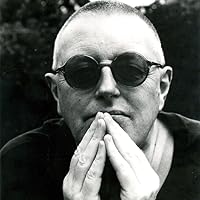
Looking back at my reviews over the last eighteen months, I see there is no shortage of novels set in 17th century London, but this is a tour de force. Lloyd (above right) doesn’t just rely on the period detail to bring the history to life, he lights the pages up with fascinating real-life figures who make the narrative sparkle with authenticity.